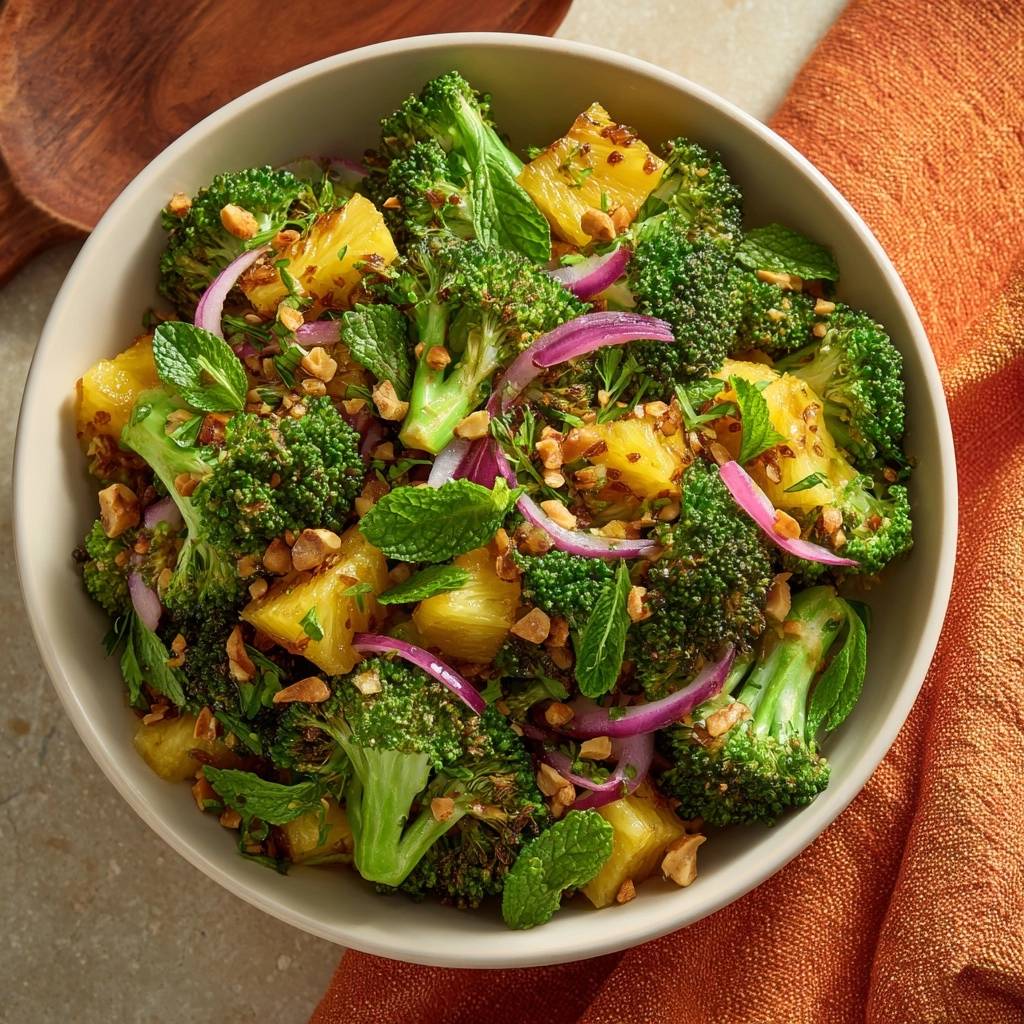
Most broccoli salads end up sitting in a pool of watery dressing or feature limp, sad vegetables that lack any real depth. You’ve likely experienced that “soggy bottom” at a potluck where the raw florets have leaked moisture into the bowl, turning the whole dish into a diluted mess. This recipe completely flips that script by using high-heat roasting to lock in structural integrity and create a vibrant, restaurant-quality experience.
The secret to this Roasted Broccoli and Pineapple Salad is all about moisture control and flavor concentration. By roasting the ingredients first, you transform the broccoli from a bitter, fibrous vegetable into a nutty, charred delight. Meanwhile, the pineapple loses its excess water and develops a deep, honey-like sweetness that pairs perfectly with the savory elements. It’s a sophisticated balance of textures that stays firm and crunchy even after you toss it with the vinaigrette.
For a similar zest, consider trying this zesty couscous veggie salad.
For a similar bright taste, try this shrimp avocado salad.
I’ve found that the absolute key to success here is the cooling period. If you toss hot roasted vegetables with a lime-based dressing, the residual heat will steam the greens and turn them mushy in seconds. Therefore, you must let the sheet pan rest until the ingredients are room temperature. This simple pause ensures the broccoli maintains its “snap” and the fresh herbs stay bright and green rather than wilting into a dark brown sludge.
The Science of High-Heat Moisture Control
When you blast broccoli and pineapple at 425°F, you’re triggering the Maillard reaction. This chemical process browns the natural sugars and proteins, creating complex flavors that raw vegetables simply can’t match. In addition, the intense heat causes surface moisture to evaporate rapidly. This is exactly what you want because it prevents the salad from becoming watery once the dressing is applied.
This specific temperature is the “sweet spot” for preventing cellular breakdown. If the oven is too cool, the broccoli will slowly steam in its own juices, resulting in a soft, olive-drab floret. However, at 425°F, the edges blister and crisp up while the interior remains tender-crisp. You’re essentially sealing the vegetable, concentrating the natural sugars and creating a barrier that holds up against the acidity of the lime juice.
Why Raw Broccoli Often Fails in Salads
Raw broccoli is notoriously difficult for the body to break down and often carries a sharp, sulfurous bite that overpowers other ingredients. Roasting breaks down the tough cellulose and goitrogens, making the vegetable much easier to digest and significantly sweeter. You get all the benefits of a hearty brassica without the aggressive “raw” taste that usually requires a heavy mayo-based dressing to mask.
Essential Components for the Perfect Char
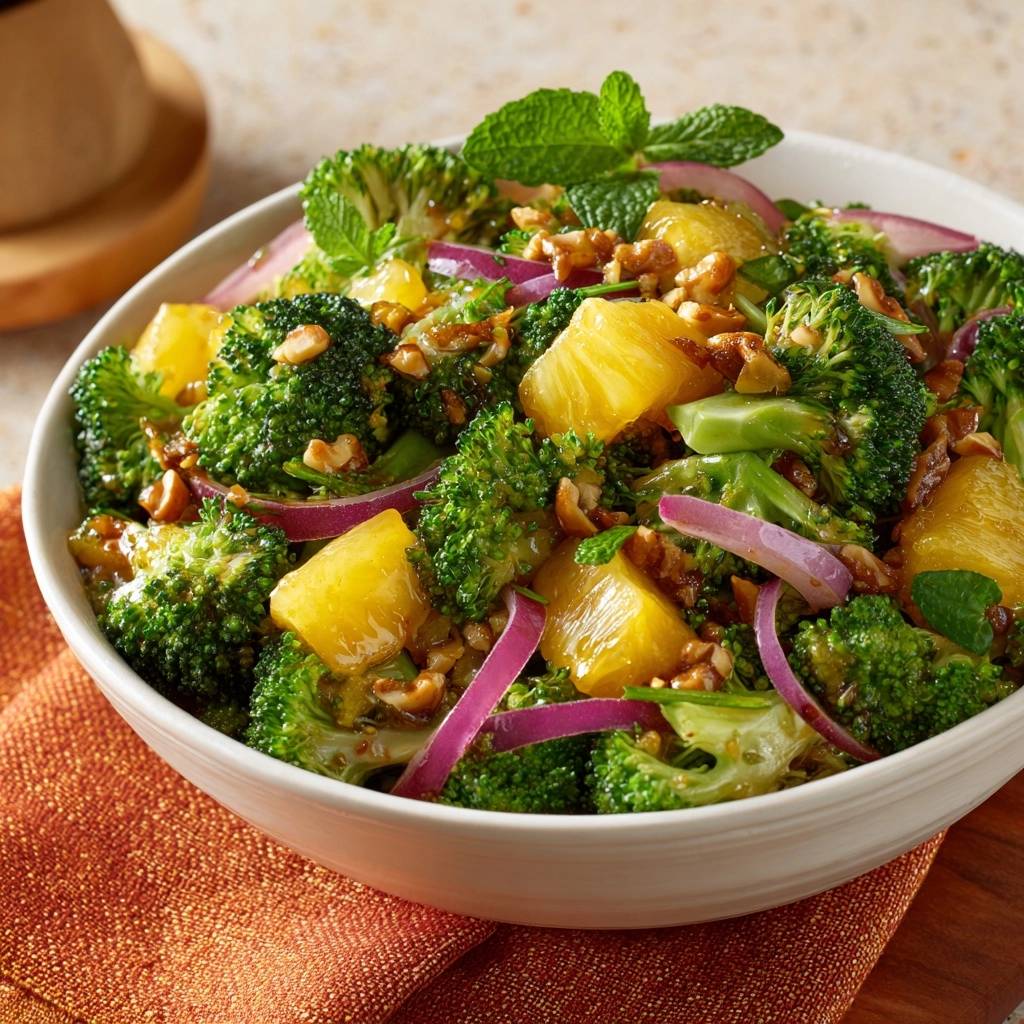
Quality starts with how you prep your produce. When cutting your broccoli, aim for long, elegant florets and don’t throw away the stems! Keep a bit of the stem attached to each floret; it provides a wonderful, crunchy contrast to the bushy tops and helps the vegetable hold its shape on the pan. Fresh pineapple is also non-negotiable here. Canned pineapple is far too soft and sits in syrup, which means it will turn into mush rather than caramelizing beautifully in the oven.
The supporting cast is just as important for the final flavor profile. Red onions provide a sharp, acidic bite that cuts through the sweetness of the roasted fruit. I also insist on using roasted peanuts that you crush yourself. Pre-crushed nuts often lose their oils and become stale, but freshly crushed peanuts provide a rich, fatty crunch that clings to the charred nooks and crannies of the broccoli florets.
For a vibrant, sweet contrast, consider this Roasted Beet Pineapple Feta Salad.
Selecting the Right Pineapple Ripeness
You need a pineapple that is sweet but still structurally sound. Look for a fruit that has a golden hue near the base and gives off a fragrant, tropical scent. If it smells fermented or like vinegar, it’s overripe and will release too much juice in the oven. A quick “tug test” on the inner leaves is a great indicator; if a leaf pulls out with just a slight resistance, the pineapple is ready for roasting.
Step-by-Step: Achieving the Perfect Blister
Start by preheating your oven thoroughly. Once you toss your broccoli and pineapple with olive oil, salt, and pepper, spread them out on a large sheet pan. You must ensure every piece has its own space. If the florets are touching or piled on top of each other, they will trap steam, and you’ll lose that coveted char. Use two pans if you have to; the extra airflow is the difference between a “good” salad and a “great” one.
Roast for about 12 to 15 minutes, but keep a close eye on the oven during the final few minutes. You are looking for the tips of the broccoli to turn dark brown—almost black in some spots—and the pineapple to look slightly shrunken and golden. Once you pull the pan out, resist the urge to mix it immediately. Let it sit for at least 10 minutes. This allows the fibers to firm back up as they cool, ensuring the salad has a satisfying bite.
The Importance of Surface Area and Airflow
Crowding the pan is the most common mistake home cooks make. When vegetables are packed tightly, the moisture they release has nowhere to go, so it surrounds the food in a cloud of steam. Therefore, you should see plenty of the metal pan visible between your broccoli pieces. This allows the hot air to circulate entirely around each floret, dehydrating the surface just enough to create those crispy, blistered edges.
Emulsifying the Lime and Rice Vinegar Vinaigrette
The dressing for this salad is light and bright, designed to enhance rather than mask the roasted flavors. By whisking together lime juice, rice vinegar, honey, and olive oil, you create a balanced emulsion. The honey is crucial here; it doesn’t just add sweetness, it acts as a stabilizer that helps the oil and acid stay together. This ensures the dressing coats the vegetables evenly instead of sliding off to the bottom of the bowl.
When you whisk, do it vigorously until the mixture looks slightly thickened and opaque. The rice vinegar provides a mellow, fermented back-note that bridges the gap between the citrusy lime and the earthy broccoli. If you find the dressing too sharp, add a tiny pinch more honey to mellow out the acidity before drizzling it over your cooled vegetables.
Flavor Variations and Ingredient Swaps
This recipe is incredibly flexible if you need to accommodate dietary restrictions. If you have a nut allergy, toasted sunflower seeds or pepitas make an excellent substitute for the peanuts, providing that necessary fatty crunch. For a vegan version, simply swap the honey for agave nectar or maple syrup. The flavor profile remains largely the same, though maple syrup will add a slightly deeper, woodsy note to the finished dish.
If you want to add even more texture, try tossing in some thinly shaved radish or fennel right before serving. These raw, crisp vegetables provide a cold, sharp contrast to the mellow, roasted components. It adds a layer of complexity that makes the salad feel even more like something you’d find at a high-end bistro.
Adding Heat: Beyond Red Pepper Flakes
While red pepper flakes provide a nice, subtle warmth, you can certainly push the boundaries if you love spice. For a more aggressive heat, finely mince a fresh bird’s eye chili and whisk it directly into the dressing. Alternatively, a small dash of sriracha or a spoonful of chili crisp can add both heat and a savory umami depth that complements the charred broccoli perfectly.
Strategic Pairing: What to Serve Alongside
Because this salad features both charred and sweet notes, it acts as a fantastic palate cleanser for rich, savory proteins. It pairs beautifully with grilled chicken thighs or a seared piece of salmon. The acidity in the lime vinaigrette cuts through the fat of the meat, while the roasted pineapple echoes the smoky flavors from the grill. It’s also hearty enough to serve as a light lunch on its own or alongside a warm quinoa pilaf.
What to Try Next
Round out your meal with these complementary dishes.
- If you’re craving something with a similar sweet and savory profile, pair your roasted broccoli and pineapple salad with creamy spicy peanut noodles.
- For a main course that echoes the tropical fruit notes, consider serving alongside pineapple glazed salmon.
Troubleshooting Common Texture Issues
If your broccoli comes out too soft, your oven temperature was likely too low or you didn’t preheat it long enough. You can sometimes “save” this by turning on the broiler for 60 seconds at the very end to get some quick color on the tips. If your pineapple releases too much juice and makes the pan wet, simply drain the excess liquid before letting the mixture cool. You can also add an extra handful of crushed peanuts at the end to help absorb any lingering moisture.
Preventing the “Soggy Bottom” in Leftovers
Roasted salads are always best served fresh, but you can definitely prep this in advance. The trick is to store the roasted broccoli and pineapple in one container and the dressing in another. Only combine them when you are ready to eat. If you have already dressed the salad and have leftovers, don’t try to reheat it in the microwave. Eat it cold or at room temperature to preserve as much of the texture as possible.
Expert Tips for Professional Presentation
For a stunning presentation, think about the “vertical build.” Instead of just tossing everything into a heap, layer the roasted components first, then tuck the fresh mint and cilantro leaves into the gaps. This keeps the herbs from getting crushed and ensures their bright green color pops against the charred broccoli. Add the crushed peanuts at the very last second so they stay perfectly dry and crunchy.
The Role of Fresh Mint and Cilantro
Fresh herbs are not just a garnish; they are a vital flavor component. The mint provides a cooling sensation that contrasts with the red pepper flakes, while the cilantro adds an earthy brightness. I recommend tearing the mint leaves by hand rather than chopping them with a knife. Tearing follows the natural cell structure of the leaf, which prevents the edges from bruising and turning black, keeping your salad looking fresh for much longer.
Frequently Asked Questions
Can I use frozen broccoli for this recipe?
I don’t recommend using frozen broccoli for this specific salad. Frozen vegetables are blanched before freezing, which breaks down their cell walls. When you roast them, they release a significant amount of water and will never achieve the firm, blistered “snap” that fresh broccoli provides. For the best results and to avoid a soggy salad, stick with a fresh, firm head of broccoli.
How do I convert this for an air fryer?
You can definitely use an air fryer! Set it to 400°F and cook the broccoli and pineapple for about 8 to 10 minutes. Because air fryers circulate air much more efficiently than a standard oven, you’ll get a great char even faster. Just make sure not to overfill the basket; you may need to work in batches to ensure the pieces roast rather than steam.
How long will the salad stay crunchy?
Once dressed, the salad is best enjoyed within 2 to 3 hours. The roasted broccoli is more resilient than raw broccoli, but the acids in the lime juice will eventually soften the vegetables. If you need it to last longer, keep the dressing and the crushed peanuts separate until the moment you sit down to eat. The roasted vegetables themselves will stay firm in the fridge for up to 2 days.
Is the broccoli stem actually edible?
Absolutely! The stem is often the sweetest part of the plant. For this salad, I recommend peeling the tough, woody outer skin of the main stalk with a vegetable peeler to reveal the tender, pale green pith inside. Slice this into rounds or batons and roast them right along with the florets. They caramelize beautifully and add a wonderful variety of shapes to your final dish.
What if I don’t have rice vinegar?
If you’re out of rice vinegar, apple cider vinegar is the best substitute. It has a similar mild acidity and a slight fruitiness that complements the pineapple. Avoid using heavy balsamic or plain white distilled vinegar, as these will either discolor the salad or provide a harsh, one-dimensional sourness that masks the delicate roasted flavors.
Roasted Broccoli and Pineapple
Course: SaladCuisine: AmericanDifficulty: easy4
servings15
minutes15
minutes195
kcal30
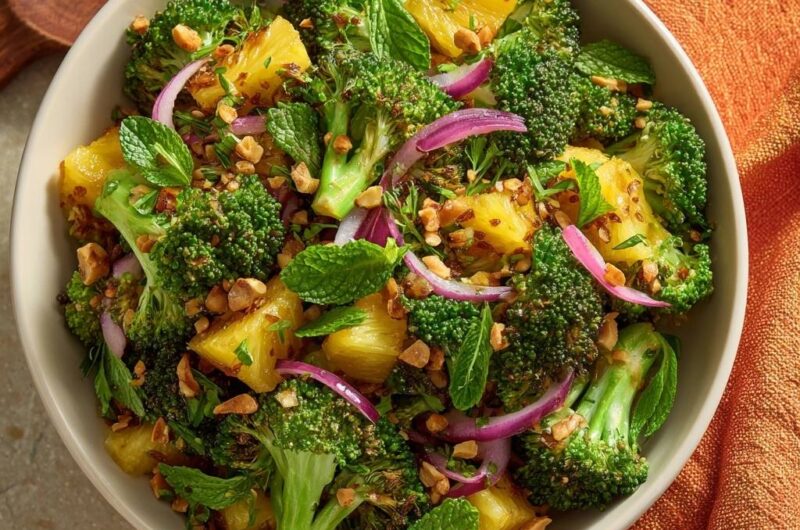
MinutesThis recipe solves the problem of soggy salads by roasting broccoli and pineapple at high heat to lock in texture and flavor. Combined with fresh herbs and a zesty dressing, it offers a satisfying crunch and caramelized sweetness.
Ingredients
1 large head of broccoli, cut into long, elegant florets (keep some stem attached)
2 cups fresh pineapple, cut into 1-inch cubes
1/2 red onion, thinly sliced into half-moons
1/2 cup roasted peanuts, finely crushed
1/2 cup fresh mint leaves, kept whole or torn
1/4 cup fresh cilantro, roughly chopped
3 tablespoons olive oil (divided)
1 tablespoon honey
1 tablespoon lime juice
1 teaspoon rice vinegar
1/2 teaspoon red pepper flakes
Sea salt and cracked black pepper to taste
Directions
- Preheat your oven to 425°F (220°C). This high heat is the critical step to ensure the broccoli chars quickly on the edges without becoming mushy in the center.
- On a large sheet pan, toss the broccoli florets and pineapple cubes with 2 tablespoons of olive oil, salt, and pepper. Spread them out in a single layer. If the pan is crowded, the ingredients will steam instead of roast; use two pans if necessary to ensure maximum airflow.
- Roast for 12 to 15 minutes. You are looking for “blistered” edges on the broccoli and a slight golden caramelization on the pineapple. Do not overcook; the broccoli should still have a vibrant green core and a firm “snap.”
- Remove from the oven and let the mixture cool on the pan for at least 10 minutes. Adding dressing to piping hot vegetables causes them to release internal steam, which is the primary cause of a soggy salad.
- In a small bowl, whisk together the remaining 1 tablespoon of olive oil, lime juice, rice vinegar, honey, and red pepper flakes to create a light, bright vinaigrette.
- In a large serving bowl, combine the cooled roasted broccoli and pineapple with the sliced red onion, fresh mint leaves, and cilantro.
- Drizzle the dressing over the salad and toss gently to coat.
- Top generously with the crushed peanuts right before serving. The fine texture of the crushed nuts adheres to the roasted florets, providing a consistent crunch in every mouthful.
Notes
- The secret to preventing a soggy salad is roasting at high heat and allowing the vegetables to cool for 10 minutes before adding the dressing. Use two sheet pans if necessary to avoid steaming the ingredients.