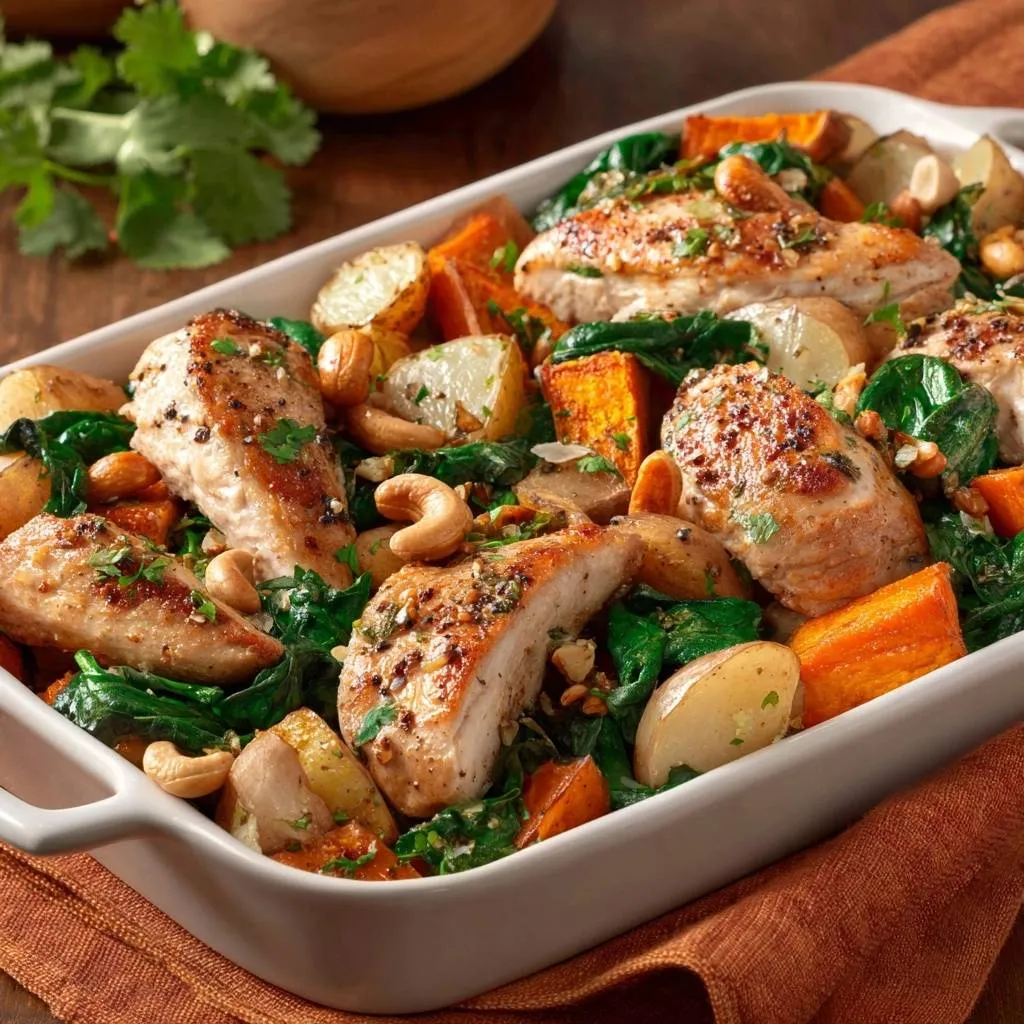
We’ve all been there. You pull a sheet pan out of the oven hoping for a vibrant, healthy dinner, but instead, you’re met with a depressing sight. The chicken is as dry as a desert, the potatoes are still crunching in the middle, and the spinach has turned into a pile of slimy, gray ribbons. It’s the classic “Sheet Pan Struggle” where different ingredients refuse to play nice with the same cooking time.
This Roasted Chicken and Sweet Potato Bake is the technical solution you’ve been looking for. By using a “Staggered Entry” method, we respect the unique needs of every ingredient. You’ll get caramelized root vegetables and juicy chicken that actually tastes like it was prepared by a professional chef rather than just tossed together in a hurry.
For similar even cooking, try this hearty sausage bake.
The secret to this recipe’s success lies in the searing step. Most home cooks skip the skillet and go straight to the oven, but that’s a mistake. Searing the chicken medallions first locks in moisture and creates a savory crust that the oven simply can’t replicate in 15 minutes. Trust me, that extra pan is worth the five minutes of effort for the flavor payoff you’ll get.
The Science of Texture: Why This Method Works
Using a ceramic baking dish is a deliberate choice for this recipe. Unlike thin metal pans that fluctuate wildly in temperature, ceramic holds onto heat and radiates it evenly. This creates a gentle, consistent environment that prevents the bottom of your potatoes from burning while the tops stay raw.
We also lean heavily on the Maillard reaction. When you sear the chicken in a hot skillet, the proteins and sugars transform into a complex, savory crust. If you put raw chicken directly into the oven with the vegetables, it would steam rather than roast, resulting in that rubbery texture everyone hates.
Finally, we account for the density of root vegetables. Sweet potatoes and baby whites need a head start because their cellular structure is much tougher than poultry. By roasting them for 15 minutes before the chicken even enters the dish, we ensure everything reaches the finish line at the exact same moment.
Essential Components for the Perfect Sheet Pan Bake
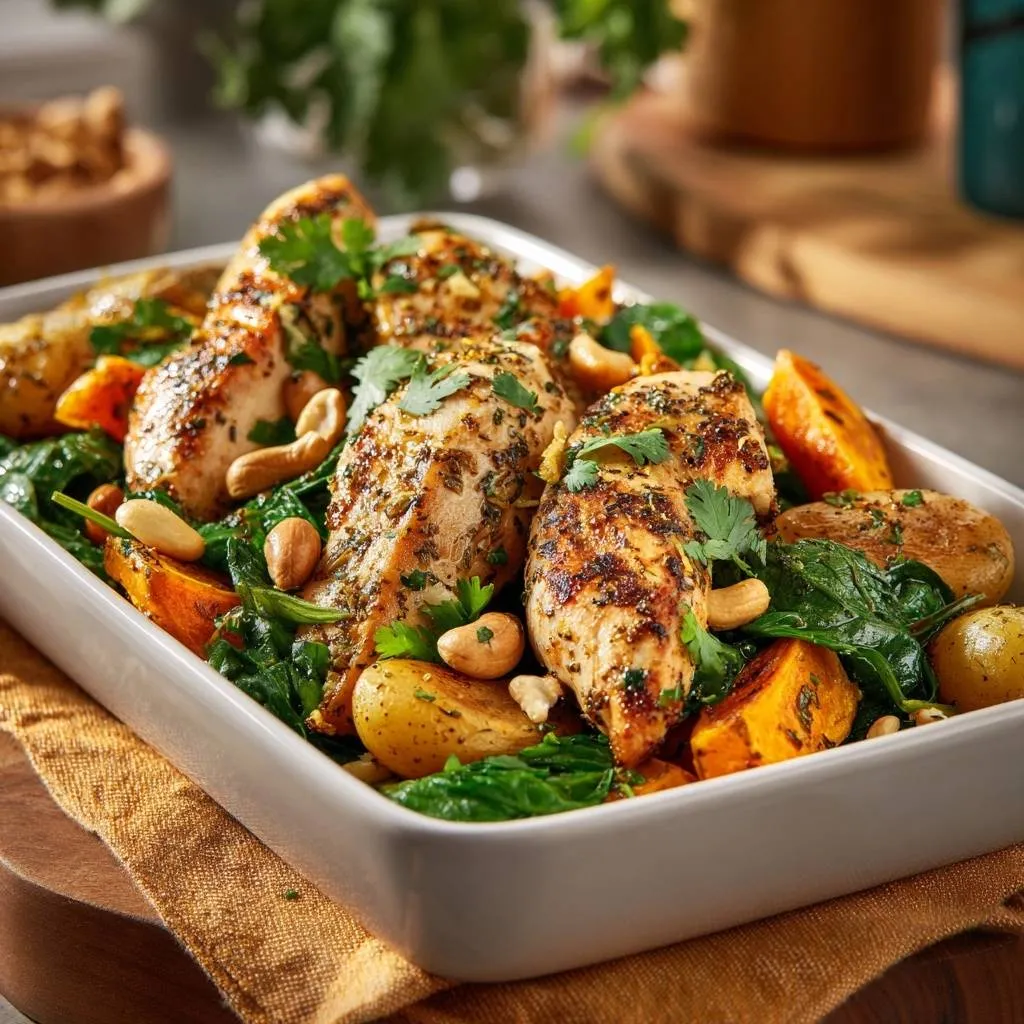
Quality ingredients are the backbone of a simple bake. I recommend cutting your chicken into thick, tapered medallions rather than small cubes. Larger pieces have less surface area relative to their volume, which means they stay much juicier during the high-heat roasting process.
The potato duo is equally important. Baby white potatoes offer a creamy, waxy texture that holds its shape, while sweet potatoes provide a soft, earthy sweetness. Using both creates a sophisticated flavor profile that keeps your palate interested with every bite.
Don’t forget the fat! Olive oil isn’t just for flavor; it’s a heat conductor. It helps the dry spices adhere to the food and ensures the heat from the pan penetrates the center of those potato cubes. Always use a high-quality oil that can stand up to 400°F without smoking.
Selecting the Right Poultry and Produce
When shopping, look for chicken breasts that are air-chilled if possible. These haven’t been soaked in water, so they’ll sear beautifully instead of releasing excess liquid into your pan. For the sweet potatoes, choose ones that feel heavy for their size and have smooth, taut skin, which indicates high moisture content.
Fresh baby spinach is a non-negotiable here. Mature spinach leaves have thick, woody stems that won’t wilt properly with residual heat. Baby spinach is delicate enough to soften in seconds while maintaining its vibrant green color and nutritional integrity.
For another way to use fresh greens, try these spinach stuffed chicken breasts.
The Role of Dry Spices and Aromatics
Dried oregano and garlic powder are the workhorses of this dish. In a high-heat oven, fresh garlic often burns and turns bitter, but garlic powder toasts into a mellow, nutty seasoning. It coats every nook and cranny of the chicken and potatoes perfectly.
I always insist on cracked black pepper over the fine, pre-ground stuff. Large cracks of pepper provide little bursts of heat and texture that cut through the richness of the roasted cashews. It adds a layer of sophistication that makes the whole dish pop.
Phase One: Preparing and Roasting Root Vegetables
Preheat your oven to a true 400°F. You want that initial blast of heat to hit the potatoes the moment they slide in. Cutting your sweet potatoes into uniform 1-inch cubes is vital; if they’re too big, they’ll be hard, and if they’re too small, they’ll turn to mush before the chicken is safe to eat.
The “Single Layer” rule is your best friend. If you crowd the potatoes or stack them on top of each other, they will trap steam. This leads to soggy, boiled-tasting vegetables. Give them space to breathe so the hot air can circulate and crisp up those edges.
Phase Two: Searing Chicken for Maximum Flavor
While the potatoes are getting their head start, get your skillet shimmering hot. You aren’t trying to cook the chicken all the way through right now. You are strictly looking for a deep, golden-brown crust on the outside. This should only take about 2 to 3 minutes per side.
Listen for the sizzle. If the chicken doesn’t hiss the second it hits the oil, your pan isn’t hot enough. A proper sear creates a barrier that keeps the juices inside the meat while it finishes roasting in the oven. It’s the difference between a “meh” dinner and a “wow” dinner.
Phase Three: The Integrated Roast and Temperature Control
Once the initial 15 minutes are up, pull the potatoes out and move them to the edges of the dish. Nestling the seared chicken into the center allows the meat to benefit from the heat of the ceramic bottom while being surrounded by the hot potatoes. It creates a little micro-climate of even cooking.
I highly recommend using an instant-read thermometer. You are aiming for exactly 165°F in the thickest part of the chicken. Pulling the dish out the moment it hits that mark ensures the meat remains tender. Even five extra minutes in the oven can turn a juicy breast into something tough and stringy.
The Residual Heat Technique for Perfect Spinach
This is the most important part of the recipe. Never, ever put your spinach in the oven. The intense dry heat will destroy the chlorophyll and turn the leaves into a watery, dark mess. Instead, we use the physics of residual heat to do the work for us.
As soon as the pan comes out of the oven, pile the fresh spinach on top. Use tongs to fold it into the hot chicken and potatoes. The steam trapped between the ingredients will wilt the spinach to a perfect, tender consistency in about 60 seconds. It stays bright green, tastes fresh, and won’t leak water all over your plate.
Troubleshooting Common Roasted Chicken and Sweet Potato Bake Issues
If your potatoes are still firm but the chicken has reached 165°F, remove the chicken to a plate and cover it with foil. Pop the potatoes back in for 5 minutes. This “rescue” ensures you don’t overcook the meat while waiting for the starch to soften.
If you notice excess moisture in the pan, it’s likely because the vegetables were damp when you oiled them. Always pat your produce dry with a paper towel before tossing. If the cashews lose their crunch, it’s usually because they were added too early and absorbed steam; always save them for the very final fold.
Flavor Variations and Ingredient Substitutions
This bake is incredibly versatile. If you aren’t a fan of white potatoes, try using parsnips or thick-cut carrots. They have a similar roasting time and offer a lovely sweetness that pairs well with the oregano. Just make sure to cut them into similar sizes for even cooking.
For the crunch factor, you can swap cashews for toasted walnuts or pumpkin seeds. If you want a bit more heat, double the red pepper flakes or add a pinch of smoked paprika to the chicken seasoning. The base method remains the same regardless of the specific spices you choose.
Optimal Side Dishes and Serving Suggestions
Since this is a hearty, earthy meal, I love pairing it with something bright. A simple side salad with a lemon-tahini dressing works wonders. The acidity of the lemon cuts through the richness of the roasted cashews and the sweetness of the potatoes.
Complementary Dishes
To round out your meal featuring the roasted chicken and sweet potato bake, consider these refreshing options.
- For a vibrant addition with similar fresh ingredients, you might enjoy our Strawberry Avocado Quinoa Salad.
- If you’re looking for another potato-based dish with bright, herbaceous notes, the Creamy Herb and Pea Potato Salad makes a lovely pairing.
You could also serve this with a dollop of Greek yogurt mixed with fresh garlic and lime juice. It acts as a cooling dip for the chicken and adds a creamy element that ties the whole plate together. It’s a fresh, vibrant way to round out the meal.
Storage, Reheating, and Meal Prep Strategies
If you’re meal prepping, store the roasted chicken and potatoes in an airtight container for up to four days. However, keep the fresh spinach in a separate bag. When you’re ready to eat, reheat the chicken and potatoes in the oven or microwave, then toss the fresh spinach in at the very end.
To maintain the best texture when reheating, use a toaster oven at 350°F for about 10 minutes. This helps the potatoes regain some of their crispness. Avoid freezing this dish, as sweet potatoes can become grainy and the spinach will lose its structure entirely once thawed.
Expert Tips for Success
Always pat your chicken medallions bone-dry with paper towels before seasoning. Moisture on the surface of the meat creates steam, which prevents that beautiful golden crust from forming in the skillet. A dry surface equals a better sear every single time.
Don’t forget about carry-over cooking. The internal temperature of the chicken will actually rise by 2 or 3 degrees after you take it out of the oven. Pulling it out at 162°F or 163°F is often the secret to that perfect, restaurant-quality juiciness.
How do I prevent the sweet potatoes from getting mushy?
Mushy sweet potatoes are usually caused by overcrowding the pan or using too much oil. When the cubes are too close together, they steam in their own moisture. Ensure every piece has a bit of “personal space” on the baking dish so the edges can caramelize and firm up.
Can I use chicken thighs instead of breasts?
Yes, you can definitely use boneless, skinless chicken thighs. Thighs are more forgiving because they have a higher fat content, but they do take slightly longer to cook. You may need to increase the final roasting time by 5 to 7 minutes to ensure the fat renders properly.
What is the best way to wash baby spinach?
The best way is to use a salad spinner. After washing the leaves in cold water, spin them until they are completely dry. If the spinach is wet when you fold it into the hot bake, it will create a watery pool at the bottom of your dish and ruin the texture of the potatoes.
Why are roasted cashews added at the very end?
Cashews contain delicate oils that can turn bitter if exposed to the intense, direct heat of a 400°F oven for too long. By adding them at the end, you preserve their natural sweetness and ensure they stay perfectly crunchy against the tender chicken and soft potatoes.
Roasted Chicken and Sweet Potato Bake
Course: Main CourseCuisine: AmericanDifficulty: easy4
servings15
minutes35
minutes440
kcal50
MinutesThis recipe solves the problem of dry chicken and slimy greens by using a searing technique and a staggered roasting method. The spinach is wilted using residual heat to maintain texture and color.
Ingredients
1.5 lbs chicken breast, cut into thick, tapered medallions
2 large sweet potatoes, peeled and cut into 1-inch cubes
1 lb baby white potatoes, halved
4 cups fresh baby spinach
1/2 cup whole roasted cashews
4 tablespoons olive oil, divided
1 teaspoon garlic powder
1 teaspoon dried oregano
1/2 teaspoon cracked black pepper
1 teaspoon kosher salt
Fresh cilantro and a pinch of red pepper flakes for garnish
Directions
- Preheat your oven to 400°F (200°C).
- In a large bowl, toss the cubed sweet potatoes and halved baby potatoes with 2 tablespoons of olive oil, salt, and pepper. Spread them in a single layer in a large 9×13 inch ceramic baking dish. Roast for 15 minutes.
- While the potatoes roast, prepare the chicken. Season the medallions with garlic powder, oregano, salt, and cracked black pepper.
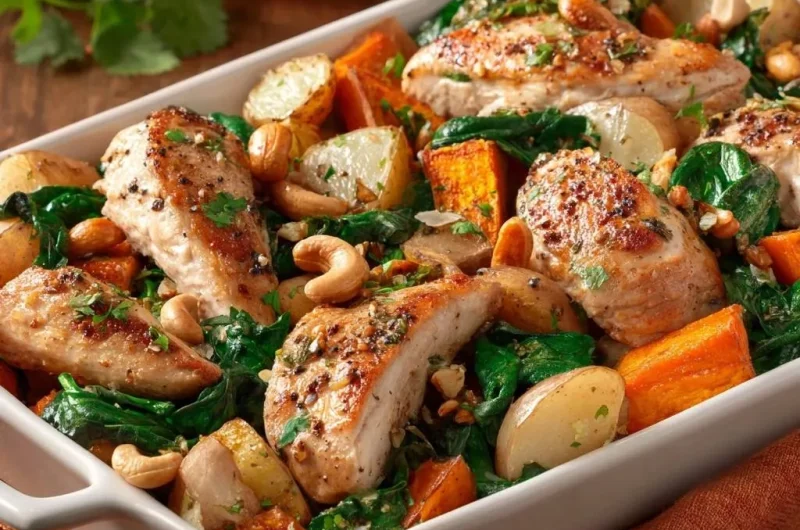
- Heat 1 tablespoon of olive oil in a large skillet over medium-high heat. Sear the chicken for 2-3 minutes per side until a deep golden-brown crust forms (the chicken will not be cooked through yet). This step is essential for the color and flavor shown in the image.
- Remove the baking dish from the oven. Move the potatoes to the perimeter and nestle the seared chicken medallions into the center. Drizzle any remaining oil from the skillet over the potatoes.
- Return the dish to the oven and bake for another 12-15 minutes, or until the chicken reaches an internal temperature of 165°F and the potatoes are fork-tender.
- Remove the dish from the oven. Immediately pile the fresh baby spinach and the cashews over the hot chicken and potatoes.
- Using tongs, gently fold the spinach into the hot ingredients. The residual heat from the pan and the roasted vegetables will wilt the spinach to a perfect, tender consistency in about 60 seconds without it becoming watery.
- Garnish with fresh cilantro and red pepper flakes. Serve immediately while the chicken is juicy and the cashews remain crunchy.
Notes
- Searing the chicken before baking is essential for achieving the golden-brown color and locking in juices. Ensure the spinach is added at the very end to prevent it from becoming rubbery or watery.