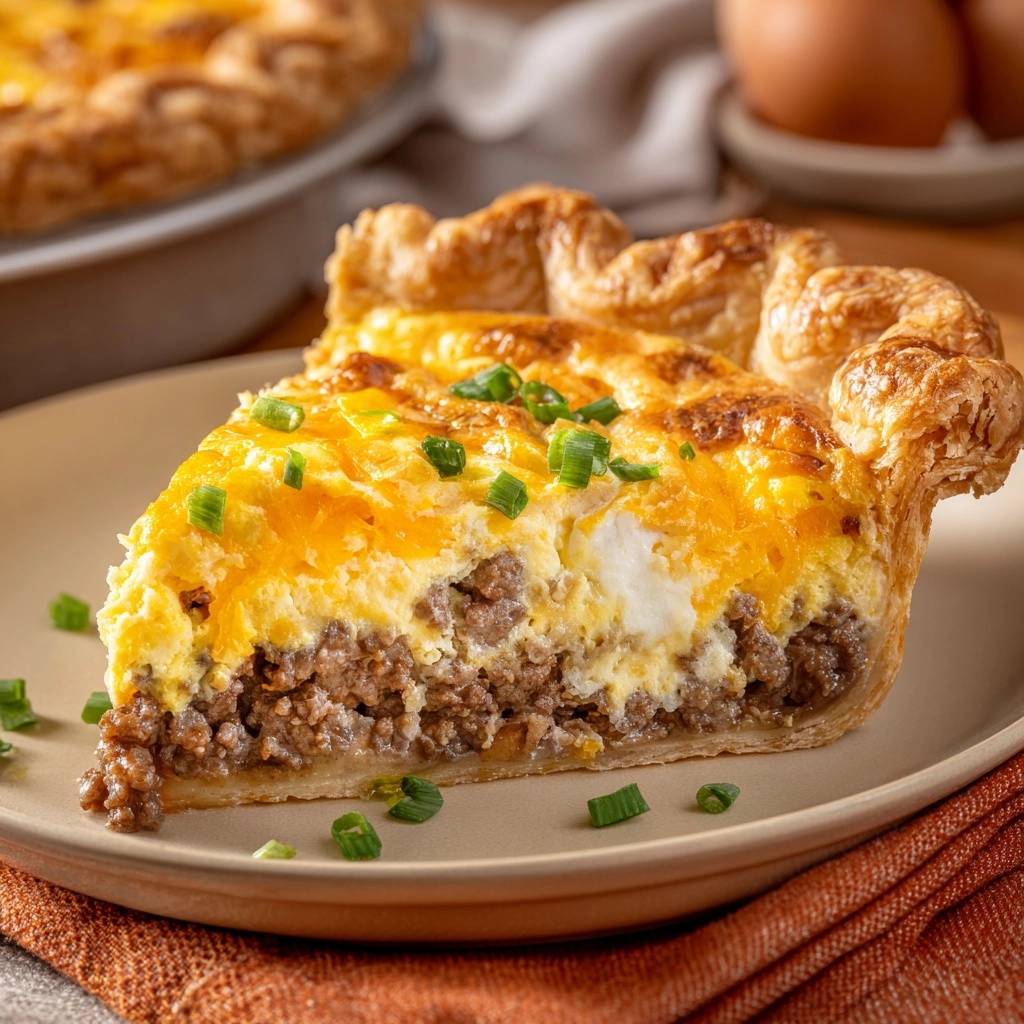
Nothing ruins a beautiful savory pie faster than a wet, limp crust that cannot hold its weight. You’ve likely experienced that disappointment before where the top looks golden, but the bottom is a gummy, unappealing mess. This Savory Beef and Cheddar Breakfast Pie is designed specifically to solve that “soggy bottom” heartbreak once and for all.
The secret lies in the textural contrast between the shatteringly flaky pastry and the dense, protein-rich beef filling. While a standard quiche often feels light and airy, this dish leans into a hearty, satisfying profile that feels like a true meal. It’s the ultimate comfort food that actually stays crispy from the first bite to the last.
I’ve found that the real trick to professional-level results is the temperature of your fat. Whether you’re using puff pastry or a traditional crust, you must keep that dough cold until the very second it hits the hot oven. This ensures the steam expands the layers rapidly, creating those airy pockets that resist moisture from the custard.
The Science of the Moisture Barrier
Preventing a soggy crust isn’t just about luck; it’s about physics and protein coagulation. When you par-bake the crust, you’re essentially pre-setting the structure of the dough so it can withstand the weight of the heavy beef and egg mixture. However, the real “pro move” is the egg wash seal.
By brushing a thin layer of beaten egg onto the hot, par-baked pastry, you create a hydrophobic barrier. The heat of the crust cooks the egg instantly, forming a microscopic waterproof film. This layer prevents the liquid custard from migrating into the pastry fibers, ensuring the bottom stays as crisp as the edges.
Furthermore, this seal provides structural integrity. As the proteins in the egg wash bond with the starches in the flour, they create a reinforced floor for your pie. Without this step, the heavy cream in the filling would slowly soak into the raw dough during the long bake, resulting in that dreaded grey, doughy layer.
Essential Components for the Beef Filling
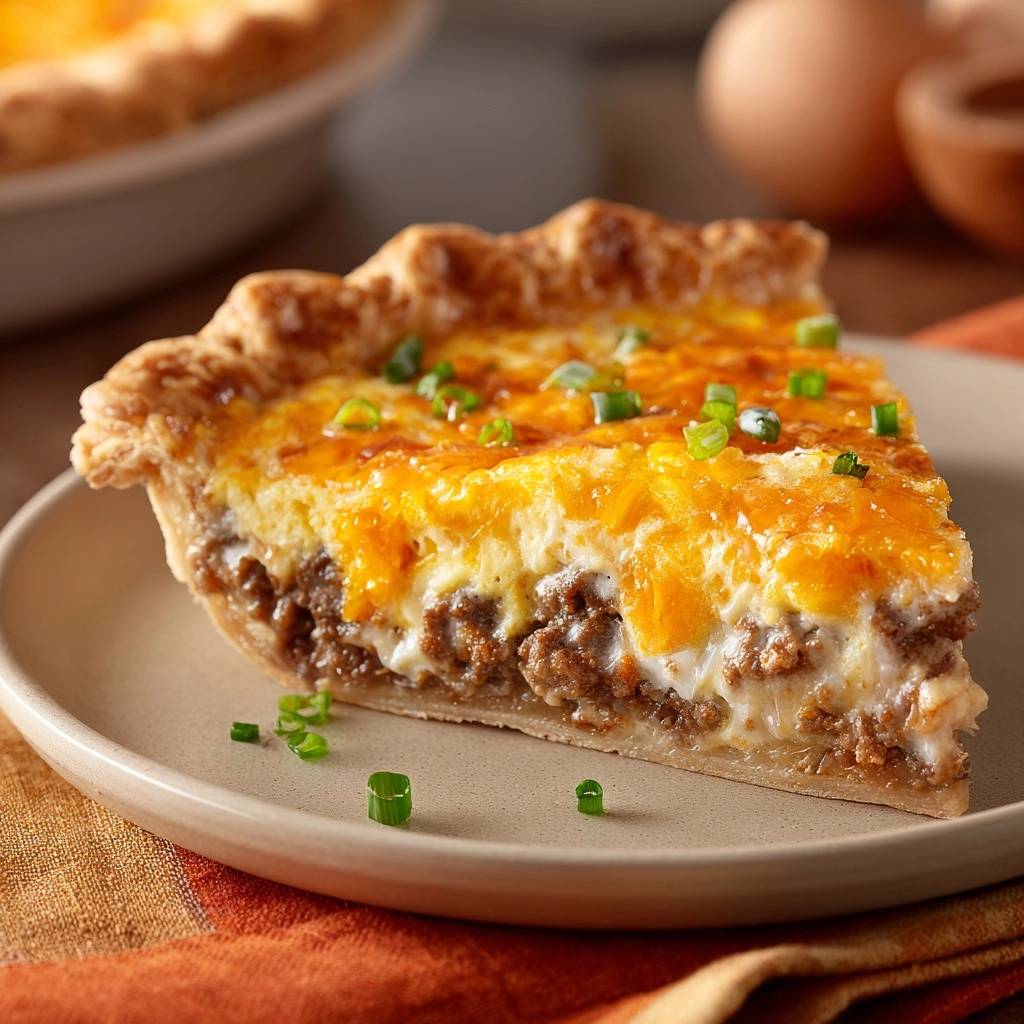
For this recipe, the quality of your beef dictates the final texture of the pie. I always recommend using lean ground beef, specifically a 90/10 or 93/7 ratio. Higher fat blends will release too much grease during the baking process, which can pool on top of the custard and make the dish feel heavy.
While fresh onions and garlic are staples in most kitchens, I prefer onion and garlic powder for this specific custard-based environment. Fresh aromatics release moisture as they cook, which can thin out your egg mixture. The powders provide a concentrated, savory punch without adding a single drop of extra liquid to the filling.
Selecting the Right Cheddar Profile
The choice of cheddar significantly impacts both the flavor and the “oil factor” of your breakfast pie. A mild cheddar melts beautifully but can get lost among the beef. Extra-sharp cheddar, while flavorful, has a lower moisture content and a higher oil-to-protein ratio due to the aging process.
I find that a standard sharp cheddar is the “Goldilocks” choice. It provides a distinct tang that cuts through the richness of the heavy cream while maintaining a stable melt. If you use an aged cheddar, be aware that it may release more oil, which is why the draining step for the beef becomes even more critical.
For a similar cheesy delight, explore this lemon cream cheese bread.
Pastry Options: Puff vs. Shortcrust
You have two main paths for your crust: the buttery, laminated layers of puff pastry or the sturdy, crumbly nature of a shortcrust pie dough. Puff pastry offers a more luxurious, “brunch-style” feel with maximum lift and airiness. However, it requires very careful thawing in the fridge to keep the butter layers intact.
A traditional deep-dish shortcrust is more structural and easier to handle if you’re a beginner. If you choose puff pastry, ensure it’s still cold to the touch when you fit it into the pan. If the dough gets too warm and the butter melts before it hits the oven, you’ll lose that beautiful lamination and end up with a flat, greasy base.
Step-by-Step: Preparing the Foundation
Start by fitting your pastry into a 9-inch deep-dish pie plate. Don’t just trim the edges flush with the rim; you want to crimp them high. This extra height acts as a “levee” against the liquid filling and accounts for the natural shrinkage that happens when the gluten in the dough hits the heat.
Press the dough firmly into the corners of the pan to eliminate air pockets. If you’re using puff pastry, try not to stretch the dough too much, as it will want to snap back like a rubber band in the oven. Once it’s fitted, give it a quick 10-minute chill in the freezer to firm up the fats before the initial bake.
Executing the Blind Bake and Seal
Preheat your oven to 400°F and line your crust with parchment paper. Fill it to the brim with pie weights or dried beans. This weight is essential because it prevents the bottom from puffing up and the sides from slumping down. Bake for 10 minutes until the edges just start to show a pale gold color.
After removing the weights, immediately brush the bottom and sides with your egg wash. You should see the egg turn opaque almost instantly. This is the protein bonding in action. Return it to the oven for just two minutes. When you pull it out, the surface should look shiny and dry, like a glazed ceramic bowl.
Managing Fat: Browning and Draining the Beef
While the crust is doing its thing, brown your ground beef in a skillet. You’re looking for a deep, mahogany brown color—this is the Maillard reaction, and it’s where all the savory depth comes from. Don’t rush this step; let the meat sizzle until the pink is completely gone and the edges are slightly crispy.
Once cooked, you must drain the beef in a colander. I take it a step further and pat the meat dry with paper towels. It might seem excessive, but any residual grease will separate from the meat during the 40 minutes in the oven, creating an oily film on top of your beautiful pie. Dry beef equals a clean, professional finish.
The Custard Ratio: Eggs to Heavy Cream
The secret to a silky, non-weeping filling is the ratio of eggs to fat. We use heavy cream instead of milk because the higher fat content prevents syneresis—the process where proteins contract and squeeze out water. This is why cheap quiches often have a puddle of water at the bottom of the plate.
Whisk your four eggs and one cup of cream until the mixture is slightly frothy. This aeration helps the pie “soufflé” or lift slightly as it bakes, giving it a lighter mouthfeel. Don’t over-whisk to the point of large bubbles, but a gentle foam on top is exactly what you want for that perfect, airy texture.
Assembly Strategy: Layering for Structural Success
The order in which you layer the ingredients is a strategic move for crust protection. Start by spreading the dry, seasoned beef across the bottom. Then, sprinkle one cup of the shredded cheddar directly over the meat. This creates a “secondary fat barrier” between the liquid custard and the crust.
When you pour the egg mixture over the top, do it slowly. You want the liquid to seep down through the crevices of the beef and cheese without disturbing the layers. Finish with the remaining cheese and half the chives. This top layer of cheese will brown into a delicious, lacy crust that protects the delicate eggs underneath.
Precision Baking and Temperature Control
Drop your oven temperature to 375°F before sliding the pie in. This lower heat allows the custard to set gently without curdling. If you keep the heat at 400°F, the outside of the eggs will overcook and become rubbery before the center is even warm. Watch the edges of your pastry closely during the first 20 minutes.
If the crust looks like it’s getting too dark, don’t panic. Simply “tent” the pie by loosely placing a piece of foil over the top or using a pie shield. This reflects the direct heat away from the delicate pastry while allowing the center to continue cooking. The pie is done when the center has a slight, jello-like jiggle but isn’t liquid.
The Importance of the 15-Minute Rest
I know it’s tempting to slice into the pie the moment it smells like heaven, but you must wait. A 15-minute rest is non-negotiable. During this time, carry-over cooking finishes the center of the custard, and the proteins firm up as they cool slightly.
If you cut it too early, the filling will slump and the steam will soften your perfectly crisp bottom crust. Waiting ensures you get those clean, photographic wedges where every layer is visible. Plus, the flavors of the beef and cheddar actually intensify as the temperature drops from “scorching” to “perfectly warm.”
Troubleshooting Common Savory Pie Issues
If your center is still jiggly after the recommended time, your oven might be running cold. Give it another 5 minutes, but check it frequently. If the crust is shrinking down the sides, it usually means the dough wasn’t chilled long enough or you didn’t use enough pie weights during the blind bake.
An oily top is almost always a result of skipping the “pat dry” step with the beef or using a very high-fat cheese. If this happens, you can gently blot the top with a paper towel before serving. Finally, if the pastry feels tough rather than flaky, you likely overworked the dough when fitting it into the pan, which developed too much gluten.
Make-Ahead Preparation and Storage Logistics
You can absolutely prep parts of this ahead of time. I often brown and season the beef a day in advance and store it in the fridge. This makes the morning assembly much faster. You can even shred your cheese and chop the chives the night before so you’re just whisking and pouring when you wake up.
Store leftovers in an airtight container in the fridge for up to three days. To reheat, avoid the microwave if you want to keep the crust crisp. Instead, pop a slice into a 350°F oven or toaster oven for about 10 minutes. This revives the pastry and melts the cheddar topping back to its original glory.
Complementary Side Dishes for a Balanced Meal
Because this pie is rich with heavy cream, beef, and butter, it pairs best with high-acid side dishes. A bright arugula salad tossed in a simple lemon vinaigrette provides a sharp contrast that cleanses the palate between bites. The peppery bite of the greens works beautifully with the savory beef.
Alternatively, try roasted tomatoes with a balsamic glaze. The sweetness and acidity of the tomatoes cut through the fat of the cheddar. If you’re serving this for a holiday brunch, a bowl of fresh berries or grapefruit segments offers a refreshing, tart balance to the savory, salty profile of the main dish.
Frequently Asked Questions
Can I use ground turkey or lamb instead of beef?
Yes, you can substitute the meat easily. If using ground turkey, I recommend adding a teaspoon of Worcestershire sauce to boost the savory “umami” flavor, as turkey is much leaner and milder. If using lamb, increase the garlic and perhaps add a pinch of dried oregano to complement the gamier notes of the meat.
How do I prevent the chives from burning in the oven?
The recipe calls for adding half the chives before baking and half after. The ones baked inside will mellow and flavor the custard, while the fresh ones added at the end provide that bright, oniony pop and a vibrant green color. If you find the top chives are browning too much, you can tuck them slightly under the top layer of cheese.
Can this be made in a springform pan?
I don’t recommend using a springform pan for this specific recipe. Because the filling is a liquid custard, there is a high risk of leakage through the bottom seal of the pan before the eggs have a chance to set. A standard glass, ceramic, or metal pie plate is much safer and provides better heat distribution for the bottom crust.
Is a glass or metal pie plate better for heat distribution?
Metal pans heat up and cool down the fastest, which is great for getting a very crisp crust quickly. However, glass (Pyrex) is excellent because it allows you to actually see if the bottom of the crust is browned before you pull it out of the oven. If you struggle with soggy bottoms, a glass pan is a great “training” tool to ensure you’re hitting that golden-brown mark.
Can I freeze the entire pie after baking?
You can freeze the baked pie, but the texture of the puff pastry will suffer slightly. If you must freeze it, wrap it tightly in plastic wrap and then foil. Thaw it completely in the refrigerator before reheating in the oven. Never reheat a frozen savory pie in the microwave, as the crust will become extremely tough and chewy.
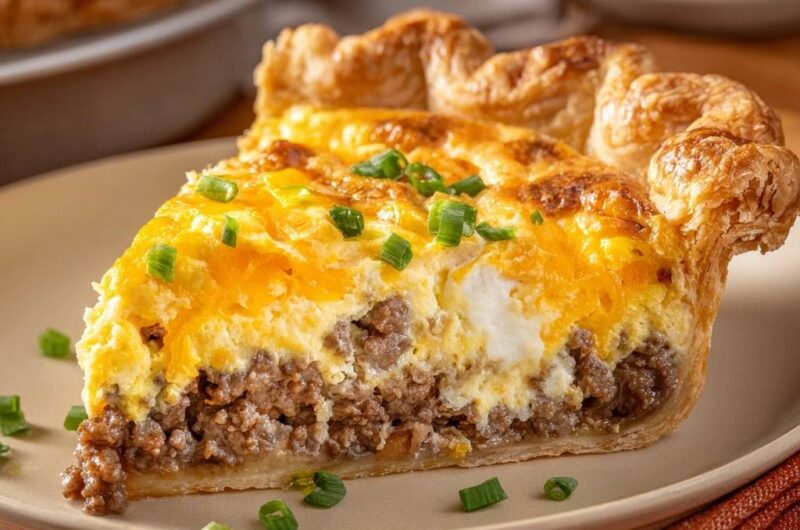
Beef and Cheddar Pie
Course: BreakfastCuisine: AmericanDifficulty: medium8
servings20
minutes55
minutes410
kcal75
MinutesThis hearty breakfast pie solves the problem of soggy crusts by using an egg-wash seal and strategic layering. Packed with seasoned beef, rich custard, and melted cheddar, it is a perfect brunch centerpiece.
Ingredients
1 sheet high-quality puff pastry (thawed) or deep-dish pie crust
1 pound lean ground beef
1/2 teaspoon onion powder
1/2 teaspoon garlic powder
1.5 cups sharp cheddar cheese, shredded (divided)
5 large eggs (4 for filling, 1 for egg wash/sealing)
1 cup heavy cream
1/2 teaspoon salt
1/4 teaspoon black pepper
1/4 cup fresh chives, chopped
Directions
- Preheat your oven to 400°F (200°C). Fit your pastry into a 9-inch deep-dish pie plate, crimping the edges high to match the visual height of the crust.
- The Seal: Prick the bottom of the pastry with a fork. Line with parchment paper and pie weights (or dried beans) and bake for 10 minutes. Remove weights and paper. Beat 1 egg with a splash of water; brush the bottom and sides of the hot crust with a thin layer of this egg wash. Return to the oven for 2 more minutes to set the seal. This creates a moisture barrier.
- While the crust par-bakes, brown the ground beef in a skillet over medium-high heat with the onion powder and garlic powder until fully cooked.
- The Moisture Control: Drain the beef in a colander and pat dry with paper towels. Excess grease is the primary cause of soggy pastry.
- Reduce oven temperature to 375°F (190°C).
- Spread the seasoned, drained beef evenly across the bottom of the par-baked crust.
- In a medium bowl, whisk together the remaining 4 eggs, heavy cream, salt, and pepper until fully combined and slightly frothy.
- Sprinkle 1 cup of the shredded cheddar cheese directly over the beef. This creates a secondary fat barrier between the custard and the crust.
- Pour the egg mixture slowly over the beef and cheese. Top with the remaining 1/2 cup of cheddar cheese and half of the chopped chives.
- Bake for 35 to 40 minutes. If the crust edges brown too quickly, tent them with foil. The pie is done when the center is set and the top is puffed and golden brown.
- Let the pie rest for at least 15 minutes before slicing. This allows the custard to set and the crust to firm up. Garnish with the remaining fresh chives and serve.
Notes
- To prevent a soggy bottom, ensure the beef is thoroughly drained and patted dry with paper towels. If the crust edges brown too quickly during the final bake, tent them with aluminum foil.