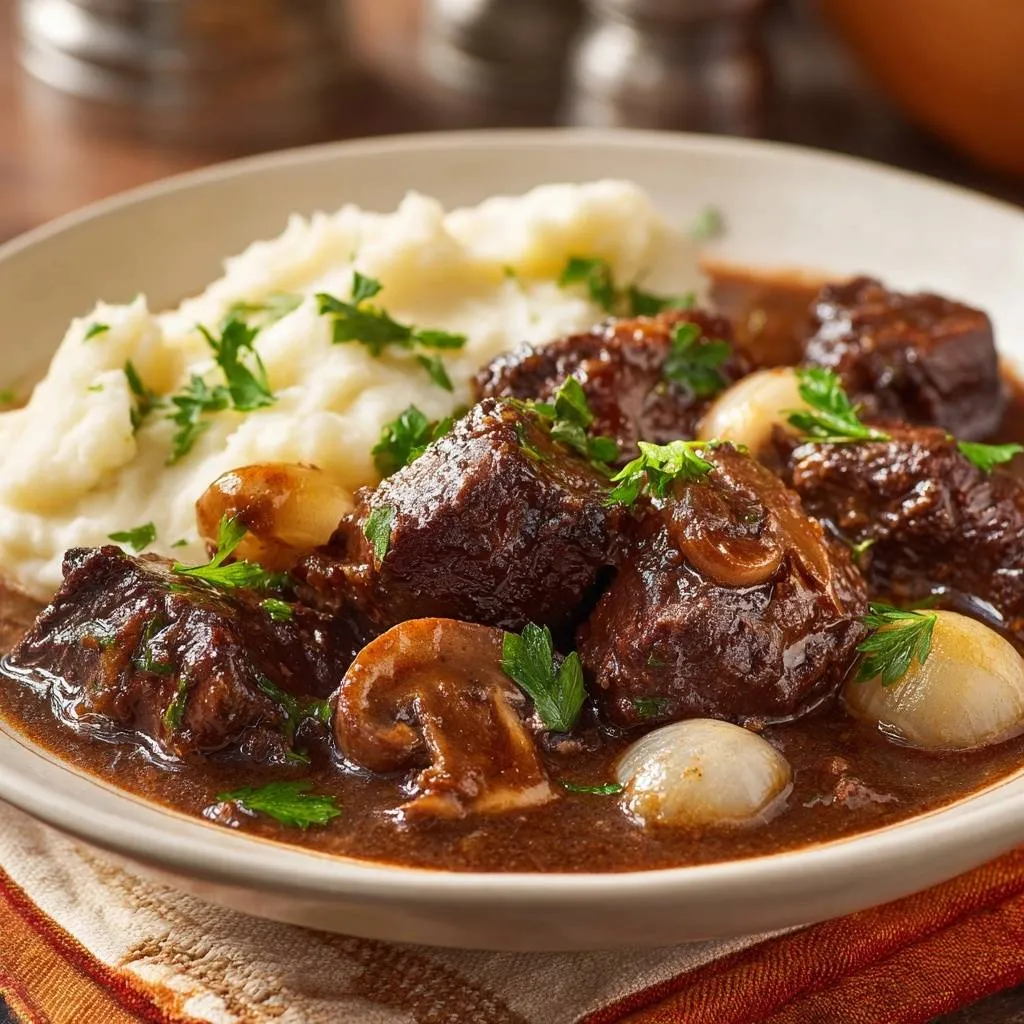
Most home cooks have experienced the disappointment of a watery, gray beef stew that looks more like a sad soup than a classic French masterpiece. You follow the steps, yet the meat feels stringy and the liquid lacks that deep, soul-warming richness. A true Slow-Braised Beef Bourguignon isn’t just a stew; it’s a study in patience and temperature control that results in a thick, mahogany-colored gravy and beef that yields to the slightest pressure of a fork.
The secret to avoiding a thin, lackluster sauce lies in two specific technical phases: the integrated roux and the final reduction. By searing the flour directly onto the aromatics and allowing the sauce to reduce uncovered at the very end, you create a natural thickness that coats the back of a spoon beautifully. This method ensures every bite is packed with concentrated flavor without ever needing a last-minute cornstarch slurry to fix a runny consistency.
Expertise in this dish comes down to understanding moisture management. If you don’t pat your beef bone-dry before it hits the pan, you’re steaming the meat rather than searing it. That initial crust, known as the fond, is the literal foundation of your sauce’s color and complexity. When you master these small, intentional movements, you transform basic ingredients into a restaurant-quality braise that feels like a warm hug in a bowl.
The Science of Achieving a Glossy Braise
Achieving that signature glossy texture in a Slow-Braised Beef Bourguignon is a matter of chemistry rather than luck. When you cook tough cuts of beef at low temperatures, specifically between 160°F and 180°F, a magical transformation occurs. The tough, white connective tissue known as collagen slowly melts and turns into gelatin. This gelatin doesn’t just make the meat tender; it dissolves into the cooking liquid, giving the sauce a rich, silky mouthfeel that coats the palate.
Furthermore, the deep mahogany color of the sauce is a direct result of the Maillard reaction. This is the chemical reaction between amino acids and reducing sugars that happens when you sear the beef over high heat. Those dark, caramelized bits left on the bottom of your Dutch oven are called “fond.” When you deglaze the pot with liquid, you’re essentially dissolving those concentrated flavor molecules back into your sauce, providing the structural foundation for the entire dish.
Maintaining a gentle simmer is vital because boiling the meat too aggressively will cause the muscle fibers to tighten and squeeze out all their moisture. By keeping the heat low and steady, you allow the fibers to relax while the gelatin works its way into the sauce. This balance of heat and time creates a sauce that is naturally viscous and shiny, reflecting the light in a way that a flour-heavy gravy never could.
Essential Components for Slow-Braised Beef Bourguignon
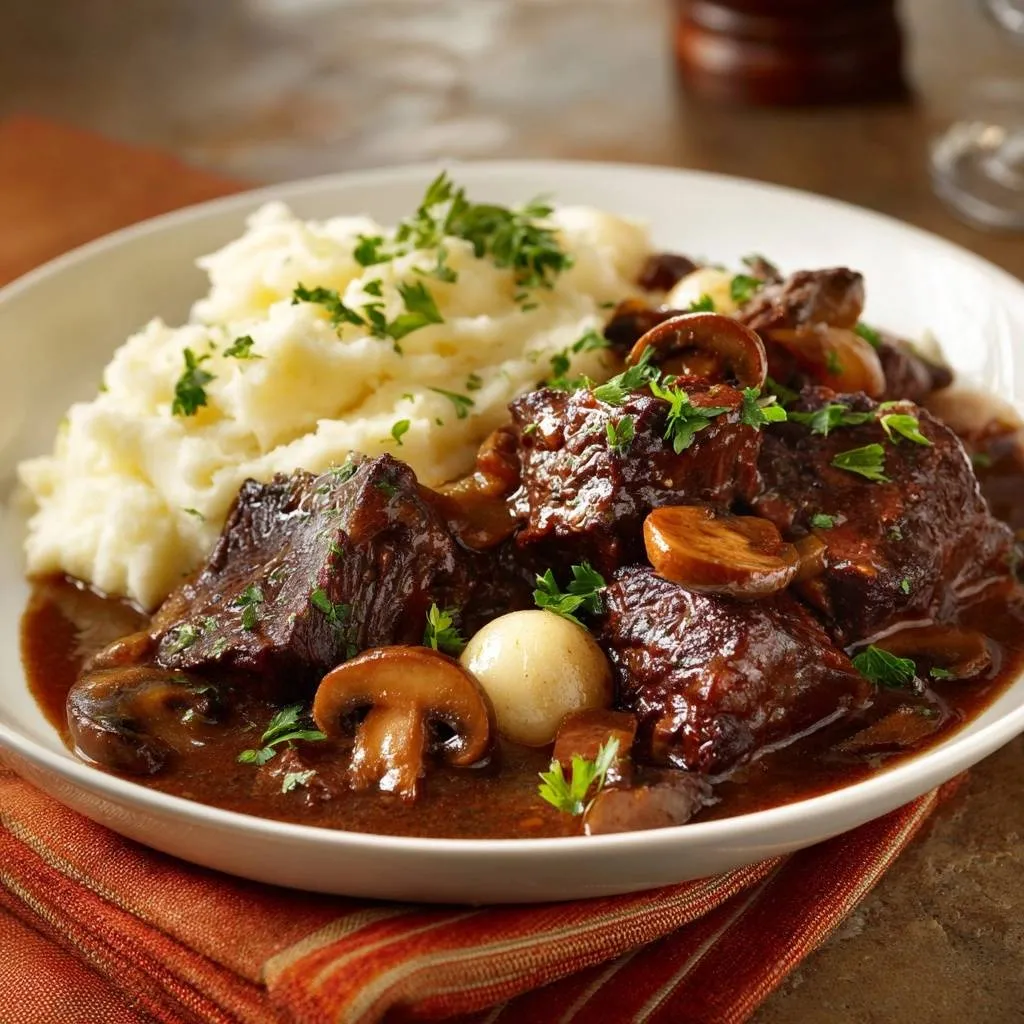
Choosing the right cut of meat is the most important decision you’ll make for this recipe. Beef chuck roast is the non-negotiable gold standard because it contains the perfect ratio of fat to collagen. While leaner cuts like sirloin might seem “fancier,” they will become dry and chalky during a long braise. Chuck roast, however, thrives under pressure, breaking down into succulent morsels that stay moist even after hours on the stove.
The aromatics also play a structural role in the flavor profile. While yellow onions provide a general sweetness, whole pearl onions offer a classic French aesthetic and a concentrated burst of onion flavor in every bite. If you’re looking for a deep, complex acidity without using wine, 100% unsweetened pomegranate juice is a brilliant substitute. Its natural tannins and tartness mimic the structural role of red wine, helping to cut through the richness of the beef and butter.
Selecting and Prepping the Beef Chuck
When you’re at the butcher counter, look for a chuck roast with plenty of white marbling throughout. I recommend cutting the beef into large 2-inch cubes rather than the smaller “stew meat” typically found in pre-packaged trays. Larger cubes are superior because they maintain a juicy, succulent core while the exterior develops a beautiful braised crust. Smaller pieces tend to overcook and shred into the sauce, losing their identity.
Before the beef ever touches the pan, you must pat it completely dry with paper towels. Any surface moisture will turn into steam the moment it hits the hot oil, preventing the Maillard reaction from occurring. If the meat is wet, it will turn gray and rubbery instead of developing that dark, flavorful crust that is essential for a rich gravy.
The Role of High-Quality Bone Broth
While standard beef stock is fine in a pinch, high-quality bone broth is a game-changer for this specific recipe. Bone broth is simmered for much longer, which extracts a higher concentration of protein and natural gelatin from the bones. This extra protein content is what allows the final sauce to achieve that professional “glaze” look, clinging to the beef and potatoes with ease.
Phase One: Developing the Flavor Foundation
The searing process is where you build the “soul” of the dish. You must sear the beef in batches, ensuring there is plenty of space between each cube. If you crowd the pan, the temperature of the oil will drop rapidly, causing the meat to release its juices and boil in its own liquid. This results in tough meat and a pale, flavorless sauce.
You are looking for a dark, crusty sear on at least two sides of every cube. Don’t be afraid of the dark brown bits forming on the bottom of the pot; as long as they aren’t black and burnt, they are pure flavor gold. This process takes about 4-5 minutes per batch, but the patience pays off in the depth of the final gravy.
Phase Two: Building the Integrated Roux
After the meat is set aside, the mushrooms and pearl onions go into the pot with a generous knob of butter. You must sauté them until the mushrooms have released all their liquid and it has completely evaporated. This step is crucial because mushrooms are like sponges; if you don’t cook out their water now, they will release it later and thin out your sauce.
Once the vegetables are golden, you’ll use the “Singer” method. This involves sprinkling the flour directly over the fat-coated vegetables and stirring constantly. You need to cook this mixture for at least two minutes to toast the flour. This removes the raw, pasty taste and ensures the flour is fully integrated into the fats, creating a stable thickening base that won’t clump when you add the liquid.
Phase Three: The Long Simmer and Reduction
The “Low and Slow” philosophy is what separates a mediocre cook from a great one. For the first 2.5 hours, a tight-fitting lid is your best friend. It creates a small, pressurized environment that forces heat into the center of the beef cubes, breaking down those stubborn fibers. During this time, the kitchen will start to smell incredible as the thyme and bay leaves infuse the liquid.
However, the most critical step happens in the final 20 minutes. You must remove the lid. This allows a portion of the water to evaporate, which concentrates the flavors and darkens the sauce to its signature mahogany hue. This reduction phase is the final “tightening” of the sauce, transforming it from a thin liquid into a rich, glossy gravy that looks like it came out of a professional French kitchen.
After removing the lid for that final flavor boost, consider trying this sweet and savory baked brie for your next appetizer.
Troubleshooting Common Braising Obstacles
If your meat is still tough after three hours, don’t panic; it simply hasn’t finished the collagen-to-gelatin conversion. Every cow is different, and some cuts just need an extra 30 minutes of low heat to reach that “melt-in-your-mouth” stage. Just keep the heat low and check it every 15 minutes until it yields easily to a fork.
If you find the sauce is still too thin for your liking after the reduction phase, remove the beef and vegetables with a slotted spoon and turn the heat up to medium-high. Boil the liquid on its own for 5 minutes to reduce it further, then stir the meat back in. If the flavor feels “flat,” it usually needs a pinch more salt or a tiny splash of acidity to wake up the heavy fats.
Optimal Pairings for Rich Beef Gravy
A sauce this rich demands a vessel that can soak up every drop. Buttery mashed potatoes are the traditional choice for a reason. I highly recommend using a high-starch potato like a Yukon Gold or a Russet. These varieties have a fluffy texture that acts like a sponge, whereas waxy potatoes like Red Bliss will just let the gravy slide right off.
If you want to deviate from potatoes, wide egg noodles are a fantastic secondary option. Their broad surface area provides plenty of space for the glossy sauce to cling to. Regardless of what you choose, make sure your side dish is seasoned simply so it doesn’t compete with the complex, savory notes of the Slow-Braised Beef Bourguignon.
Make-Ahead Strategy and Storage Logistics
It is a well-known secret among chefs that this dish actually tastes better on the second day. This is due to “flavor maturation,” a process where the aromatics and spices redistribute themselves within the fats as the dish cools. The beef continues to absorb the sauce, making it even more flavorful when reheated.
When storing leftovers, let the pot cool to room temperature before transferring the contents to an airtight container. This prevents excess condensation from forming on the lid, which could drip back into the sauce and thin it out. When you’re ready to eat, reheat it slowly on the stovetop over low heat to maintain the emulsion of the sauce; the microwave can sometimes cause the fats to separate.
Expert Tips for Professional Results
To get that high-end restaurant shine, you can use a technique called “monter au beurre.” Right before serving, whisk in a single tablespoon of cold butter into the hot sauce. This adds a final layer of silkiness and a beautiful sheen. Also, don’t toss those mushroom stems during prep; they contain a ton of umami and can be tossed into the pot for extra flavor, then discarded with the bay leaves.
Visual contrast is just as important as flavor. Use fresh parsley for the garnish rather than dried. The bright, grassy notes of fresh parsley provide a necessary “lift” to the heavy, earthy flavors of the braise. It also makes the deep brown colors of the beef and gravy pop on the plate, making the dish look as good as it tastes.
Freezing and Thawing Guidelines
This braise freezes exceptionally well for up to three months. To preserve the texture of the beef, always thaw the container in the refrigerator overnight rather than using the defrost setting on a microwave. Rapid temperature changes can make the beef fibers seize up and become tough. Once thawed, reheat it gently on the stove, adding a splash of broth if the sauce has thickened too much in the freezer.
Adjusting for Slow Cookers or Dutch Ovens
While a heavy cast-iron Dutch oven provides the best heat distribution and evaporation control, you can use a slow cooker. If you go the crockpot route, you must still perform the stovetop sear and roux-building steps first. Transfer everything to the slow cooker and cook on low for 6-8 hours. Keep in mind that slow cookers don’t allow for evaporation, so you may need to simmer the sauce on the stove for 10 minutes at the end to thicken it up.
How do I keep the beef from getting dry in the middle?
Dry beef in a stew is usually caused by boiling the meat rather than simmering it. When the liquid bubbles too aggressively, the muscle fibers contract and squeeze out their internal moisture. To keep the beef succulent, ensure the liquid is only showing a few lazy bubbles. Additionally, using a cut with high connective tissue like chuck roast ensures that even if the fibers lose some water, the melting gelatin keeps the meat feeling moist and tender.
Can I make this without any red wine?
Yes, you can absolutely achieve a world-class result without wine. The best substitute is 100% unsweetened pomegranate juice. It provides the necessary acidity to break down the meat fibers and the tannins to balance the rich fat of the beef. If you don’t have pomegranate juice, you can use extra beef bone broth with a tablespoon of balsamic vinegar added at the end to provide that missing acidic “bright” note.
Why is my sauce still thin after 3 hours of cooking?
A thin sauce usually happens if the lid was too tight for the entire duration or if the flour wasn’t cooked into a proper roux with the butter and vegetables. The final 20 minutes of cooking with the lid off is essential for evaporation. If it’s still too thin, simply remove the lid, turn the heat up slightly, and let it bubble for another 10-15 minutes. The flavors will concentrate and the sauce will naturally thicken as the water content reduces.
How long can I store leftovers in the fridge?
Slow-Braised Beef Bourguignon stays fresh and delicious in the refrigerator for up to 4 days. In fact, many people find the flavor improves after 24 hours. Always store it in an airtight container. When reheating, do so over low heat on the stovetop. If the sauce has become too thick (which happens as the gelatin sets in the cold), just add a tablespoon or two of water or broth to loosen it back up to its original glossy state.
What is the best way to peel pearl onions quickly?
Peeling 20 pearl onions can be tedious, but there is a chef’s trick to make it easy. Cut the root ends off the onions and drop them into a pot of boiling water for 30 seconds. Drain them and immediately plunge them into a bowl of ice water. Once they are cool enough to handle, you can simply squeeze the onion from the stem end, and it will pop right out of its skin. This saves time and keeps the onions perfectly whole for the braise.
Beef Bourguignon
Course: Main CourseCuisine: French-InspiredDifficulty: medium6
servings20
minutes3
hours510
kcal180
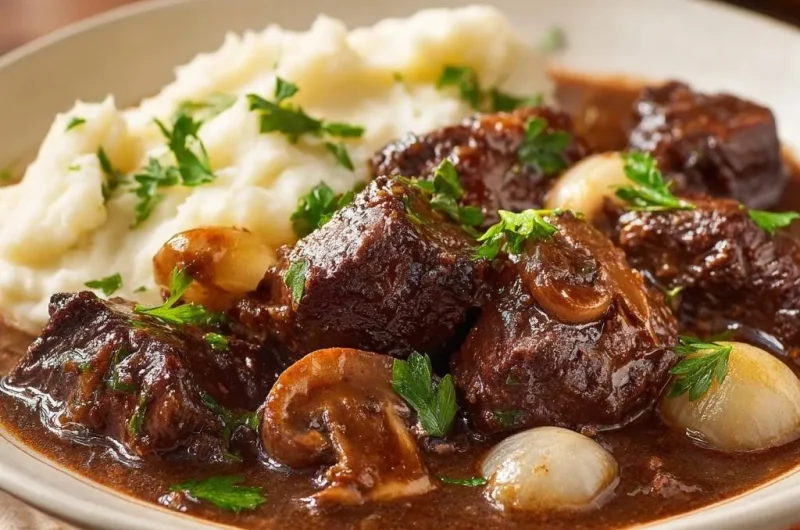
MinutesA hearty, deep-flavored beef stew made with chuck roast, pearl onions, and mushrooms. This version focuses on proper searing and reduction techniques to ensure a concentrated, velvety gravy served over buttery mashed potatoes.
Ingredients
3 pounds beef chuck roast, cut into large 2-inch cubes
1 pound cremini or white button mushrooms, sliced thick
15-20 whole pearl onions, peeled
4 cloves garlic, minced
2 cups high-quality beef bone broth
1 cup dry red wine (or unsweetened 100% pomegranate juice for a non-alcoholic deep color)
2 tablespoons tomato paste
1/4 cup all-purpose flour
4 tablespoons unsalted butter
2 tablespoons olive oil
1 teaspoon dried thyme
2 bay leaves
Salt and cracked black pepper to taste
1/2 cup fresh parsley, roughly chopped for garnish
4 cups buttery mashed potatoes for serving
Directions
- Pat the beef cubes completely dry with paper towels. This is the first step to preventing a watery result; moisture on the surface steams the meat instead of searing it. Season generously with salt and pepper.
- Heat olive oil in a large heavy-bottomed Dutch oven over medium-high heat. Brown the beef in batches, searing until a dark, crusty “fond” forms on the bottom of the pot. Remove beef and set aside.
- In the same pot, add the butter. Once foaming, add the mushrooms and pearl onions. Sauté for 8-10 minutes until the mushrooms have released their liquid and turned golden brown. This evaporation step is crucial for sauce consistency.
- Stir in the tomato paste and garlic, cooking for 1 minute until the paste darkens. Sprinkle the flour over the vegetables and stir constantly for 2 minutes to cook out the raw flour taste. This “roux” method built directly into the aromatics is the secret to a thick, stable sauce.
- Slowly pour in the red wine (or pomegranate juice) while scraping the bottom of the pot with a wooden spoon to release all the browned bits. Add the beef broth and stir until the liquid is smooth and beginning to thicken.
- Add the beef and any accumulated juices back into the pot along with the thyme and bay leaves. Bring to a gentle simmer.
- Cover with a tight-fitting lid and reduce heat to very low. Simmer for 2.5 to 3 hours, or until the beef is fork-tender. The low heat breaks down the collagen into gelatin, which naturally thickens the sauce into a glossy gravy.
- Remove the lid for the final 20 minutes of cooking. This allows the sauce to reduce and intensify in color to a deep mahogany.
- Remove bay leaves. Taste and adjust seasoning with salt and pepper. Serve the beef and rich gravy over a generous bed of creamy mashed potatoes. Garnish heavily with fresh parsley to match the visual brightness of the dish.
Notes
- For a non-alcoholic version, substitute the red wine with 100% unsweetened pomegranate juice to maintain the deep color and acidity. Ensure the beef is patted dry before searing to prevent steaming.