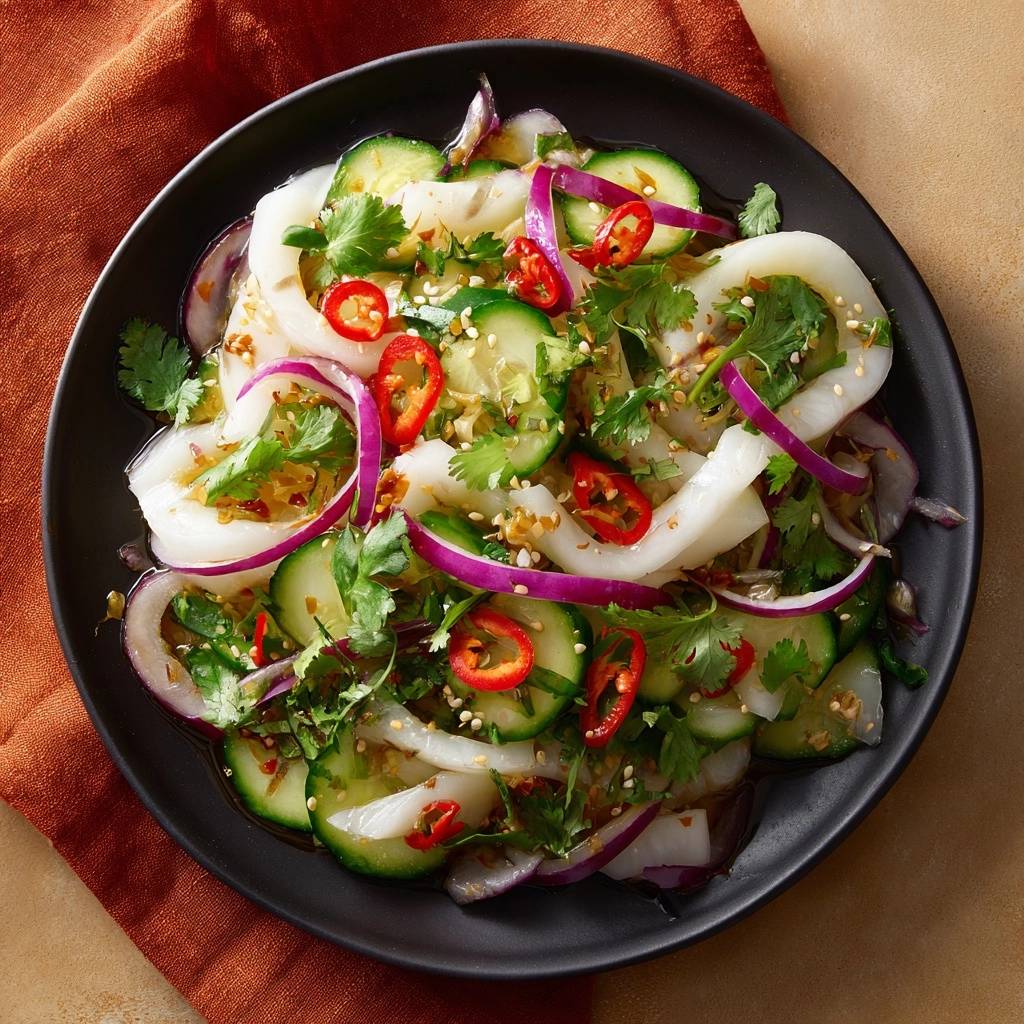
The beauty of a Spicy Thai Squid and Cucumber Salad lies in its dramatic contrast. You get the searing heat of Thai bird’s eye chilies immediately followed by the refreshing, watery crunch of chilled English cucumbers. It is a vibrant, high-protein dish that feels incredibly light yet delivers a massive punch of umami and citrus.
However, many home cooks hesitate to prepare squid because they fear the dreaded rubbery texture. There is a common misconception that calamari is naturally tough, but that only happens when it is overcooked. This recipe uses a specific technique to ensure every ring is tender and delicate, making it a perfect low-calorie centerpiece for a summer dinner.
The secret to success here is the precision of the flash-boil. By cooking the squid for less than ninety seconds and immediately halting the process, you preserve its natural sweetness. I’ve found that timing this to the literal second is what separates a mediocre salad from a restaurant-quality experience.
For more salad ideas, explore this roasted broccoli and pineapple salad.
The Secret to Tender Spicy Thai Squid
Squid is composed of dense collagen and muscle fibers that react violently to heat. If you cook it for three minutes, it becomes as tough as a pencil eraser. To keep it tender, you must either cook it for a very long time at low heat or, as we do here, for a very short time at high heat.
The “60-second rule” is your best friend in the kitchen. When you drop the squid into boiling water, the proteins begin to tighten instantly. You are looking for the exact moment the flesh transitions from translucent to a solid, opaque white. This usually happens between 60 and 90 seconds depending on the thickness of your rings.
Therefore, you must stay focused and keep your slotted spoon ready. As soon as that color change occurs, the squid is done. Any longer and the muscle fibers will contract so tightly that the moisture is squeezed out, leaving you with a chewy mess that no amount of dressing can fix.
Why Temperature Control Prevents Rubbery Calamari
Even after you pull the squid out of the boiling water, internal heat continues to cook the protein. This is known as carry-over cooking, and it is the primary reason most people fail at this dish. If you let the squid sit on a plate while it’s hot, it will continue to toughen up.
An ice bath is non-negotiable for this recipe. By plunging the hot rings into a bowl of ice and water, you shock the proteins and stop the cooking process instantly. This rapid temperature drop locks in the soft, buttery texture we want for a cold salad.
Essential Components for an Authentic Thai Profile
Authentic Thai cuisine relies on a delicate balance of four pillars: salty, sour, sweet, and spicy. In this salad, the fish sauce provides the salty backbone and a deep, fermented funk that salt alone cannot replicate. It is the soul of the dressing, so choose a high-quality brand that looks clear and amber in the bottle.
The sourness comes from fresh lime juice, which cuts through the richness of the seafood. Brown sugar adds a mellow sweetness to round out the sharp edges, while the red chilies provide a clean, piercing heat. When these four elements emulsify, they create a dressing that is bright, bold, and incredibly addictive.
Selecting the Best Fresh Squid and Produce
When shopping for squid, let your nose be the guide. Fresh squid should smell like the clean ocean, never fishy or like ammonia. Look for bodies that are shiny and firm to the touch. If you can find it pre-cleaned, it will save you a lot of prep time, but always double-check for any remaining bits of the clear, plastic-like cartilage inside.
For the vegetables, English cucumbers are the superior choice here. Unlike standard garden cucumbers, they have thinner skins and very few seeds. This means they won’t release as much water into your salad, which prevents the dressing from becoming diluted and bland. Their uniform shape also makes for beautiful, consistent rounds.
The Role of Aromatics: Ginger, Garlic, and Cilantro
Aromatics provide the top notes of flavor that make the salad sing. Grating the ginger rather than mincing it is a pro move because it releases the juice and creates a fine paste that blends seamlessly into the liquid dressing. This ensures you get a warm, spicy glow in every bite rather than a sudden chunk of raw ginger.
Don’t be afraid to use the cilantro stems! While many people only use the leaves, the stems actually hold more concentrated flavor and add a nice crunch. Finely chop the tender upper stems along with the leaves to maximize the herbal aroma of the finished dish.
Step-by-Step: Preparing the Spicy Thai Squid and Cucumber Salad
Success with this salad depends on your organization. Because the cooking happens so fast, you need to have your ice bath ready and your vegetables chopped before the squid ever touches the water. This is a fast-paced process that rewards preparation.
Phase 1: The Precision Flash-Boil and Ice Shock
Bring a large pot of salted water to a rolling boil. Once it’s bubbling vigorously, drop the squid rings in. Watch for the flesh to turn white and opaque. This happens quickly, so don’t walk away! Use your slotted spoon to move them directly into the ice bath for two minutes.
After the squid is chilled, drain it thoroughly. This is a crucial step that many skip. Use paper towels to pat the squid bone-dry. If the squid is wet, the dressing will slide right off the rings and pool at the bottom of the bowl, leaving your seafood tasteless.
Phase 2: Emulsifying the Chili-Lime Dressing
In your largest mixing bowl, combine the lime juice, fish sauce, brown sugar, chili garlic sauce, ginger, and garlic. Whisk these together vigorously. You want to make sure the brown sugar is completely dissolved so the dressing isn’t gritty.
Taste the dressing with a small piece of cucumber. It should taste punchy and strong. Remember, once you add the squid and the rest of the vegetables, the flavor will mellow out slightly, so it’s okay if the dressing tastes intense at this stage.
Phase 3: Assembly and Final Garnishing
Add the dried squid, cucumber slices, red onion, and chilies to the bowl. Use a large spoon or clean hands to toss everything gently. You want every nook and cranny of the squid rings to be coated in that vibrant, spicy liquid.
Wait until the very last second to fold in the cilantro and sprinkle the toasted sesame seeds. This keeps the herbs from wilting and ensures the sesame seeds stay crunchy. Serve it immediately while the contrast between the cold cucumbers and the spicy dressing is at its peak.
Flavor Variations and Ingredient Swaps
If you can’t find Thai bird’s eye chilies, don’t worry. Fresno chilies or even serranos are excellent substitutes. Fresnos offer a similar red color with a bit more sweetness and a milder heat. If you want to avoid shellfish entirely, you can actually use king oyster mushrooms sliced into rings as a “vegan squid” alternative.
For those who want even more crunch, try adding some shredded carrots or thinly sliced radishes. These vegetables hold up well to the acidic dressing and add a beautiful pop of color to the plate. Just ensure you slice them thinly so they don’t overpower the delicate texture of the squid.
For more crispness, consider building on this idea with a Thai slaw.
Optimal Pairings for Thai Seafood Salads
This salad is quite bold, so it pairs beautifully with neutral sides that can soak up the extra dressing. A bowl of steamed jasmine rice is the classic choice. The floral aroma of the rice complements the ginger and lime perfectly while providing a soft texture to balance the crunch.
Complementary Dishes
Explore these related Thai-inspired recipes for more bright flavors.
- For a dish featuring tender chicken and perfectly cooked noodles, try this Thai shredded chicken vermicelli recipe.
- Enjoy another noodle creation with this Thai basil chicken rice noodles recipe, known for its distinct, separate strands.
If you are hosting a full Thai-themed dinner, serve this alongside a green papaya salad or some grilled chicken satay. For a beverage, sparkling mineral water with a heavy squeeze of lime is the perfect palate cleanser. It cuts through the heat of the chilies and keeps the meal feeling light and refreshing.
Troubleshooting Your Thai Squid Salad
If you find the salad is too salty, it’s likely because the fish sauce was particularly strong. You can easily fix this by adding another squeeze of lime juice or a pinch more sugar to balance the sodium. Never add more water, as this will ruin the vibrant profile of the dressing.
If your cucumbers are releasing too much liquid and making the salad soggy, you can try “sweating” them beforehand. Toss the sliced cucumbers with a little salt, let them sit for ten minutes, then pat them dry before adding them to the salad. This removes excess moisture and keeps them extra crispy.
How to Adjust Heat Levels for Sensitive Palates
Thai bird’s eye chilies are significantly hotter than the chili garlic sauce used in the dressing. If you prefer a milder dish, remove the seeds and the white membranes from the chilies before slicing them. This is where most of the capsaicin lives.
You can also reduce the amount of fresh chilies and rely more on the chili garlic sauce, which has a more manageable heat level. Always remember that you can add more heat at the end, but you can’t take it away once it’s mixed in!
Maintaining Texture in Leftovers
This salad is definitely best when eaten fresh. The acid in the lime juice will eventually start to “cook” the vegetables, causing the cucumbers to lose their snap and the onions to become limp. However, if you must have leftovers, store them in an airtight container in the fridge for no more than 24 hours.
If you are meal prepping, the best strategy is to keep the dressing in a separate jar and the chopped solids in a container. Toss them together just before you are ready to eat. This prevents the squid from becoming rubbery in the acid and keeps the vegetables perfectly crisp.
Expert Tips for Professional Presentation
To make this dish look like it came from a high-end bistro, use a shallow, wide bowl rather than a deep one. This allows you to spread out the ingredients so the beautiful white squid rings and bright red chilies are all visible. It prevents the heavy ingredients from sinking to the bottom.
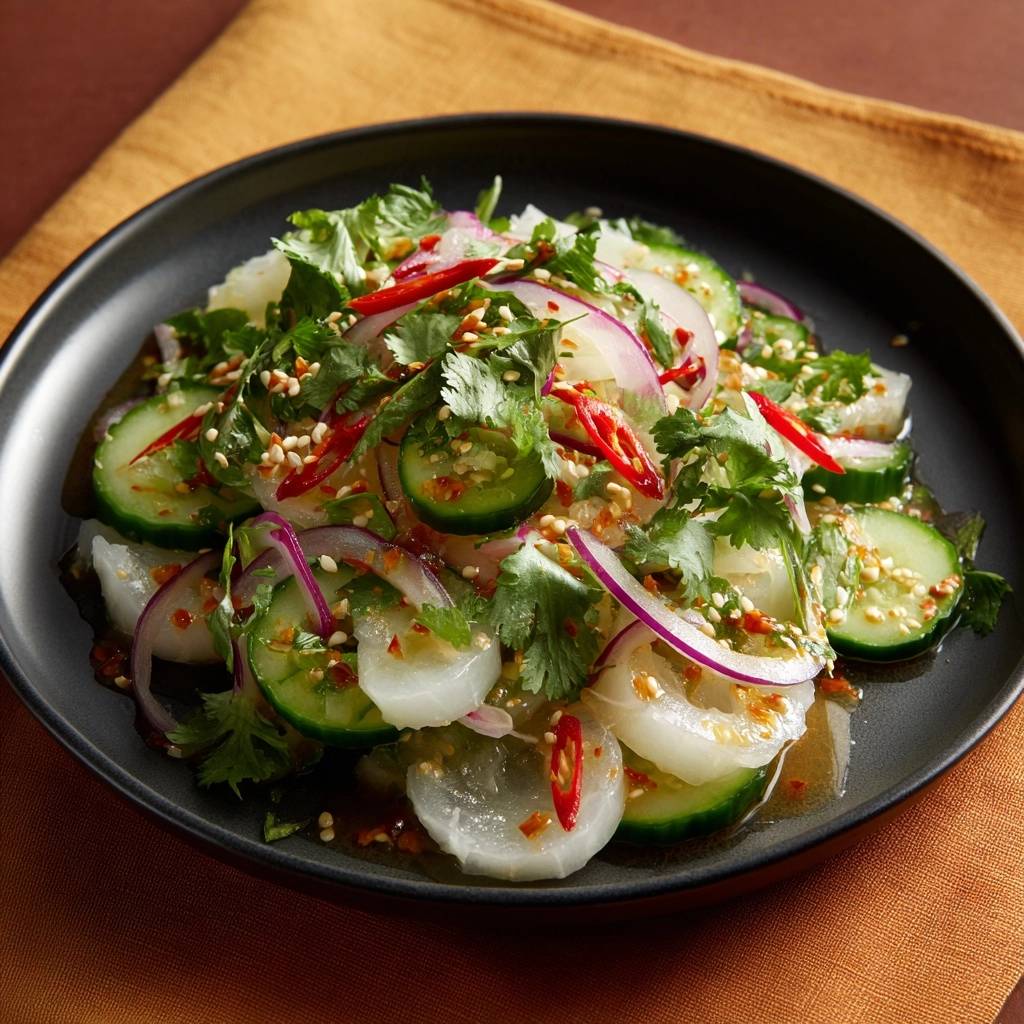
Try to build some height in the center of the plate. Pile the cucumber and squid mixture upward, then garnish the very top with a generous handful of cilantro and a final dusting of sesame seeds. The contrast of the green herbs against the red dressing creates an instant “wow” factor for your guests.
How long can I store the leftovers?
You should eat this salad within 24 hours for the best experience. While the squid remains safe to eat for about two days in the refrigerator, the cucumbers will release their water and become soggy very quickly. If you need to store it, keep the dressing and the salad components in separate airtight containers and mix them right before serving.
Why is my squid still tough even after 60 seconds?
Toughness usually happens because the squid wasn’t chilled fast enough or the water wasn’t at a true rolling boil. If the water is only simmering, the squid takes too long to reach temperature, which toughens the proteins. Ensure the water is boiling vigorously and that your ice bath is ready for an immediate shock to stop the cooking process.
Can I use frozen squid for this recipe?
Yes, frozen squid works perfectly well and is often more accessible. In fact, freezing can sometimes help break down the tough fibers in the squid. Just make sure to thaw it completely in the refrigerator and pat it extremely dry with paper towels before cooking. Any excess moisture on the squid will lower the temperature of your boiling water.
What is a good substitute for fish sauce?
If you cannot use fish sauce, a high-quality soy sauce or liquid aminos can work in a pinch. However, you will lose that specific “Thai” funk and depth. To get closer to the original flavor, you can mix soy sauce with a finely minced anchovy or a small amount of mushroom powder to replicate the umami punch of the fish sauce.
Is this salad very spicy?
As written, this recipe has a significant kick due to the Thai bird’s eye chilies. On a scale of 1 to 10, it sits at about a 7. You can easily control this by adjusting the number of chilies or removing the seeds. The chili garlic sauce provides a base level of heat (about a 3), so start there and add fresh chilies according to your personal preference.
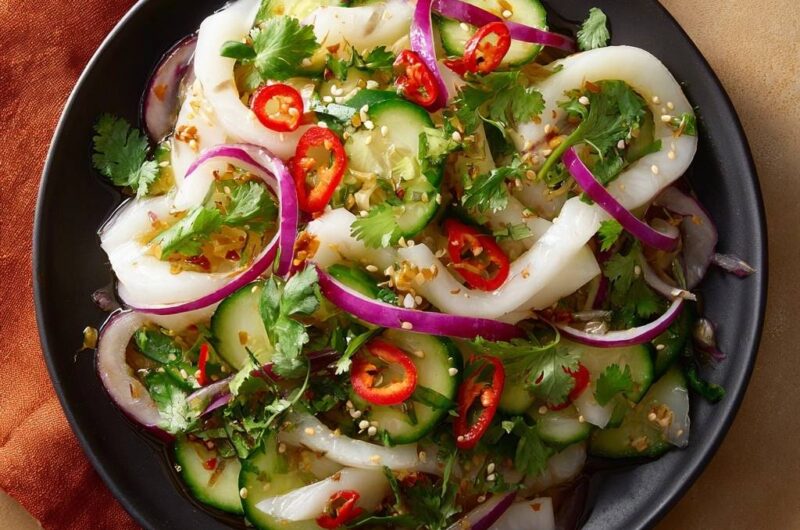
Spicy Thai Squid Salad
Course: SaladCuisine: ThaiDifficulty: easy4
servings15
minutes2
minutes195
kcal17
MinutesA vibrant and refreshing salad featuring melt-in-your-mouth calamari, crisp English cucumbers, and a zesty lime and chili dressing. The recipe utilizes a specific 60-second boiling technique to ensure the squid remains tender and never rubbery.
Ingredients
1 pound fresh squid, cleaned and sliced into thick rings
2 large English cucumbers, sliced into rounds
1 small red onion, thinly sliced into half-moons
2 red Thai bird’s eye or Fresno chilies, sliced into rings
1/2 cup fresh cilantro leaves, roughly chopped
2 tablespoons toasted sesame seeds
3 tablespoons fresh lime juice
2 tablespoons fish sauce
1 tablespoon brown sugar
1 tablespoon chili garlic sauce (or sambal oelek)
1 teaspoon grated ginger
1 clove garlic, minced
Directions
- The key to avoiding rubbery squid is the 60-second rule. Bring a large pot of salted water to a rolling boil. Prepare an ice bath in a separate bowl nearby.
- Drop the squid rings into the boiling water. Watch the clock closely. After exactly 60 to 90 seconds, or as soon as the flesh turns opaque and white, immediately remove them with a slotted spoon.
- Plunge the squid into the ice bath instantly. This stops the residual heat from overcooking the proteins, which is the primary cause of toughness. Once chilled, drain well and pat thoroughly dry with paper towels to ensure the dressing adheres.
- In a large mixing bowl, whisk together the lime juice, fish sauce, brown sugar, chili garlic sauce, ginger, and garlic until the sugar is fully dissolved.
- Add the chilled squid, cucumber slices, red onion, and sliced chilies to the bowl. Toss gently to ensure every piece is coated in the vibrant dressing.
- Fold in the fresh cilantro and sprinkle with toasted sesame seeds just before serving to maintain the crisp texture and bright visual appeal shown in the image. Serve immediately.
Notes
- The secret to tender squid is the 60-second rule. Do not exceed 90 seconds in boiling water and immediately plunge into an ice bath to stop the cooking process. Ensure the squid is patted dry so the dressing adheres properly.