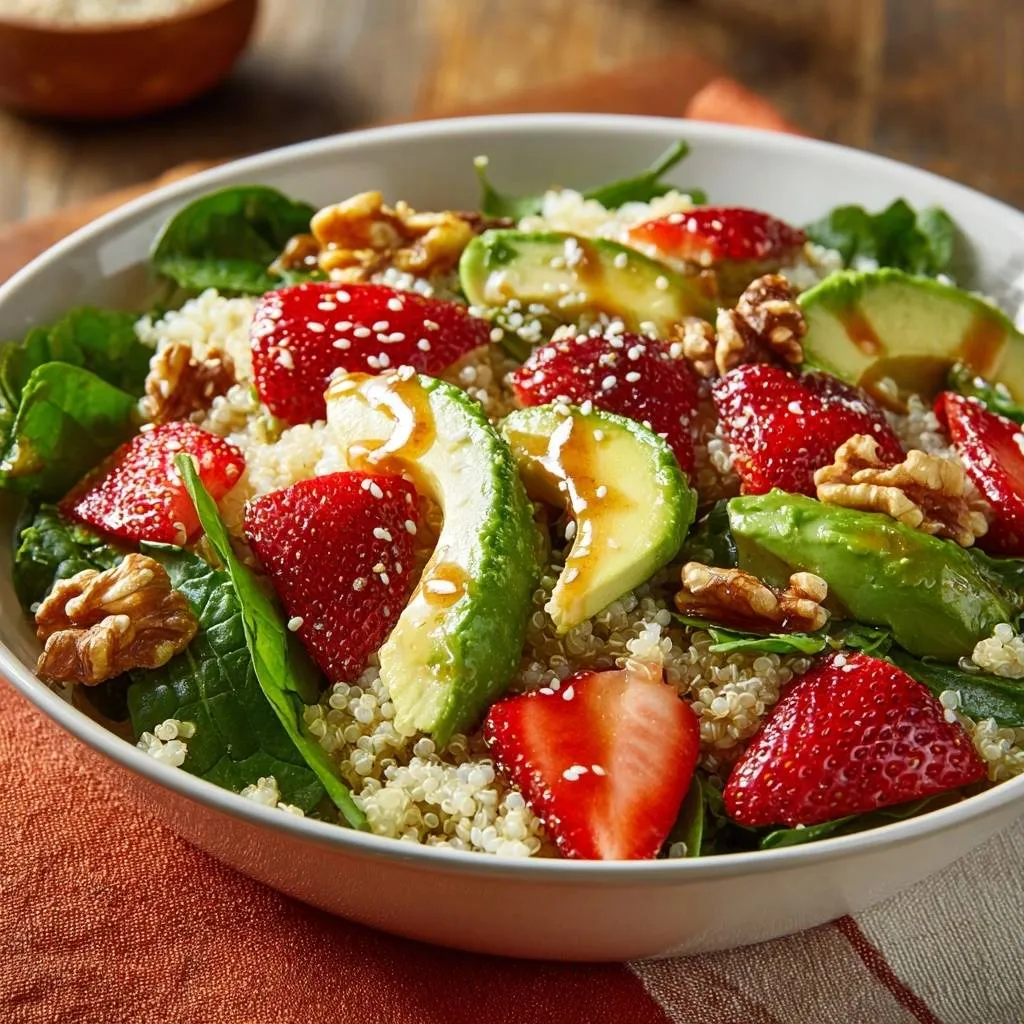
Most people struggle with grain salads because they end up with a soggy, unappealing mess at the bottom of the bowl. You want a dish where every forkful offers a distinct pop of texture, from the creamy richness of a ripe avocado to the bright, juicy snap of a fresh strawberry. This Strawberry Avocado Quinoa Salad solves the texture puzzle by focusing on moisture control and temperature management.
The beauty of this dish lies in the contrast between the earthy, nutty base and the vibrant, acidic fruit toppings. It provides a satisfying, nutrient-dense meal that feels light yet keeps you full for hours. By balancing healthy fats with complex carbohydrates, you create a plate that is as functional as it is beautiful.
The secret to success here is the cooling phase. If you toss hot quinoa directly onto baby spinach and fresh berries, the greens will wilt and the strawberries will turn mushy. I always spread my cooked grains out on a flat baking sheet to let the steam escape quickly. This simple professional trick ensures your salad stays crisp and restaurant-quality from the first bite to the last.
The Physics of Fluffy Quinoa
Achieving the perfect quinoa texture is more about physics than luck. When you simmer quinoa, the starch granules inside the seeds absorb water and swell, a process known as gelatinization. However, if you keep the heat on until every drop of liquid is gone, you risk scorching the bottom or overcooking the exterior of the grain while the inside remains tough.
The “Steam-Dry” method is the ultimate fix for mushy grains. By stopping the active boil while a tiny amount of moisture remains and leaving the lid tightly sealed, you allow the residual heat to finish the job gently. This trapped steam penetrates the core of each grain evenly. It results in a “tail” that uncoils perfectly without the grain bursting into a paste-like consistency.
After the ten-minute rest, the grains need to shed their surface moisture. Spreading the quinoa onto a large plate or baking sheet is a non-negotiable step for a high-end salad. This allows the air to circulate around each individual seed. It stops the cooking process instantly and prevents the grains from clumping together into a heavy mass.
Essential Components for the Base
Quality ingredients are the foundation of this recipe, starting with the choice of quinoa. While red and black varieties offer a beautiful color, white quinoa is the best choice for this specific salad. It has a more delicate texture and a milder, slightly buttery flavor that doesn’t compete with the sweetness of the strawberries.
Baby spinach serves as the structural base, providing a mild, earthy flavor and a soft crunch. It is important to use “baby” leaves because they are tender enough to eat without removing stems. When you layer the cooled quinoa over the spinach, the weight of the grains helps the leaves stay in place without crushing them.
Fresh strawberries are the star of the show, and how you prep them matters. By hulling and halving them, you expose the porous interior of the fruit. This allows the balsamic glaze to cling to the berry rather than just sliding off the waxy skin. This ensures that the acidity of the dressing interacts directly with the natural sugars of the fruit.
Selecting Ripe Avocados and Fresh Berries
The success of this salad depends on the “window of ripeness.” For the avocado, use the gentle squeeze test in the palm of your hand. You want it to give slightly, like the firmness of your cheek. If it feels mushy, it will turn into a brown paste when you try to slice it; if it is too hard, it will lack that signature creaminess.
When shopping for strawberries, let your nose lead the way. Truly ripe berries should smell intensely sweet even through the plastic container. Look for a deep red color that reaches all the way to the stem. Avoid any berries with white or green shoulders, as they will be tart and crunchy rather than sweet and soft.
The Role of Walnuts and Sesame Seeds
Texture isn’t just about the soft elements; you need a distinct “crunch factor” to make the salad interesting. Walnut halves provide a rich, fatty crunch and a hint of earthy bitterness. This bitterness is essential because it cuts through the intense sweetness of the balsamic glaze and the strawberries, creating a more sophisticated flavor profile.
White sesame seeds might seem like a small addition, but they play a vital role. They add a subtle toasted aroma and a tiny, poppy texture that mimics the seeds of the strawberries. These small details are what elevate a simple home salad into something that feels curated and professional.
Step-by-Step: Preparing the Quinoa Foundation
Before you even turn on the stove, you must rinse the quinoa. Quinoa is coated in saponins, a natural compound that tastes incredibly bitter and soapy. Place your grains in a fine-mesh strainer and run cold water over them for at least 30 seconds. You will see the water turn slightly cloudy or even sudsy; keep rinsing until it runs clear.
The water-to-grain ratio is the next critical factor. For this recipe, use exactly 1.5 cups of water for every 1 cup of quinoa. Many packages suggest a 2:1 ratio, but that often leads to the very mushiness we are trying to avoid. Combine the water and rinsed grains in a pot and bring it to a rolling boil over medium-high heat.
Once it boils, turn the heat down to the lowest possible setting and cover the pot. Now comes the hardest part: the “No-Peeking” rule. Every time you lift the lid to check the progress, you let out the steam and drop the internal temperature. Trust the timer for 15 minutes. When the time is up, move the pot off the burner but keep that lid shut for the full 10-minute rest period.
Assembling the Strawberry Avocado Quinoa Salad
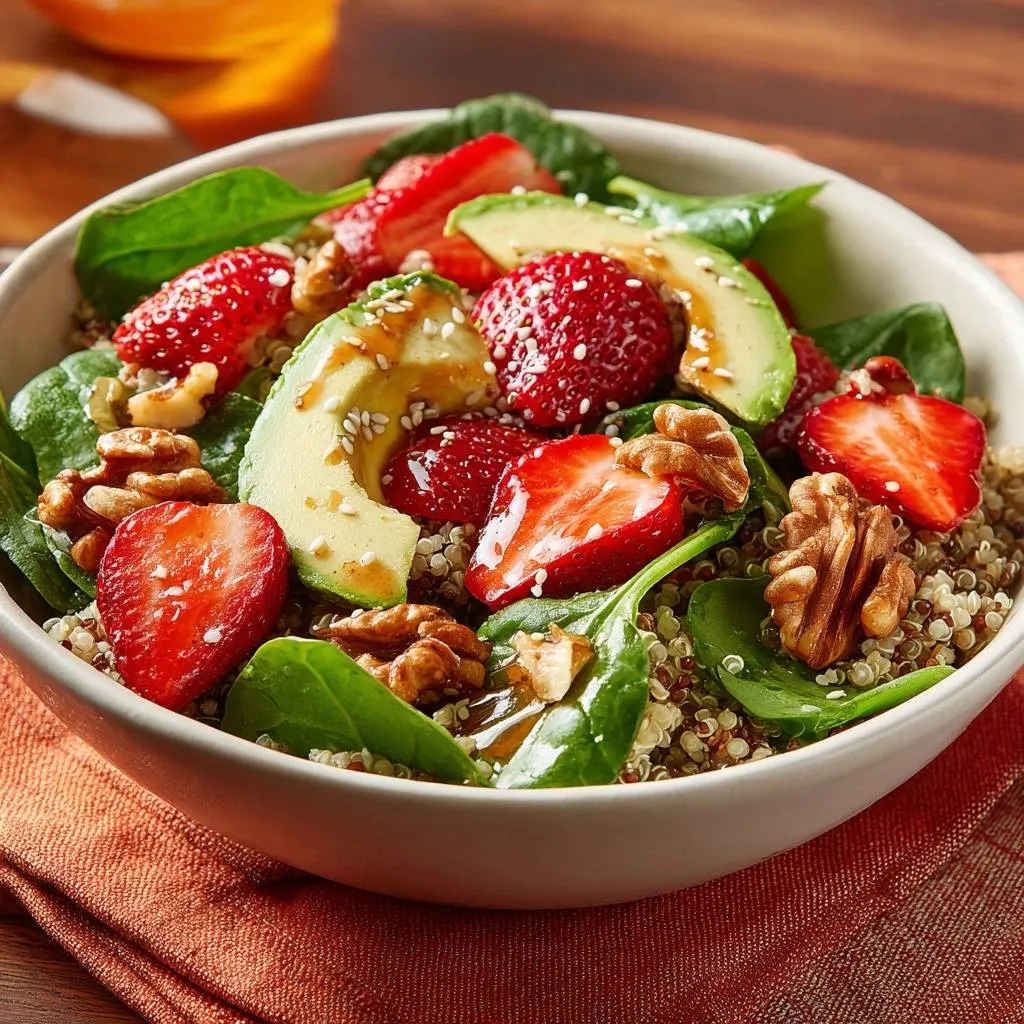
Assembly is where you turn individual ingredients into a cohesive dish. Start with a wide, shallow bowl rather than a deep one. This allows you to spread the ingredients out so the toppings don’t all sink to the bottom. Lay down your bed of spinach first, ensuring it covers the base of the bowl completely.
Next, sprinkle your cooled, fluffed quinoa over the greens. Because the quinoa is cool, the spinach will stay vibrant and crisp. Now, arrange your avocado wedges and strawberry halves. I like to tuck the avocado slices in between the berries to create a beautiful color contrast of green and red against the pale quinoa.
Before adding the heavy glaze, you need to apply a “base coat” of seasoning. Whisk your extra virgin olive oil with sea salt and cracked black pepper. Drizzle this over the entire salad. This ensures that even the plain quinoa and spinach have a savory foundation of flavor before the sweet and acidic elements are added.
Achieving Visual Balance with Balsamic Glaze
There is a big difference between balsamic vinegar and balsamic glaze. The glaze is a reduction, meaning it has been simmered down until it is thick, syrupy, and intensely sweet. It has a much lower water content, which means it won’t make your spinach wilt or your quinoa soggy like a thin vinaigrette would.
When applying the glaze, think of it as a decorative element. Use a spoon or a squeeze bottle to create thin, sweeping lines across the avocado and strawberries. This ensures a concentrated hit of acidity in every bite without overwhelming the delicate flavors of the fruit. It also makes the dish look stunning on the table.
For a similar sweet and savory experience, explore this strawberry spinach quinoa salad.
Finish the dish with a final sprinkle of sesame seeds and the walnut halves. The seeds will stick to the balsamic glaze, ensuring they stay distributed throughout the salad. Serve this immediately. The contrast between the cool fruit, the room-temperature grains, and the crunchy nuts is at its peak right after assembly.
Flavor Variations and Ingredient Swaps
While walnuts are classic, you can easily swap them for toasted pecans or slivered almonds for a different nutty note. If you prefer a bit more “bite” in your greens, try mixing the baby spinach with a handful of wild arugula. The peppery flavor of arugula pairs beautifully with the sweetness of the strawberries.
For an herbal twist, chiffonade some fresh mint or basil and toss it in with the spinach. Mint, in particular, highlights the freshness of the berries and makes the salad feel even more like a summer staple. If you want to add more bulk, roasted chickpeas are a fantastic addition that keeps the dish hearty and satisfying.
If you find yourself without balsamic glaze, you can make a quick substitute by whisking together honey and a splash of lemon juice with your olive oil. While it won’t have the same dark, syrupy look, it provides the necessary sweetness and acidity to balance the creamy avocado. Just remember to keep the flavors bright and fresh.
Optimal Pairings for a Complete Meal
This salad is a powerhouse on its own, but it also pairs beautifully with other clean flavors. For a refreshing drink, try a chilled cucumber and lime infusion. The crispness of the cucumber mirrors the freshness of the spinach, while the lime juice echoes the acidity in the balsamic glaze.
If you are looking to add more protein, grilled lemon-herb chicken breast is a perfect match. Slice the chicken thinly and lay it right on top of the quinoa. The savory herbs on the chicken will complement the nutty walnuts. For a plant-based protein boost, a side of warm, seasoned lentils or extra roasted seeds works wonders.
Sparkling hibiscus tea is another excellent beverage choice. Its natural tartness and deep red color complement the strawberries perfectly. Because this salad is quite light, you want to avoid heavy or overly sweet drinks that might mask the subtle flavors of the avocado and quinoa.
Troubleshooting Common Texture Issues
If you find that your quinoa is still a bit crunchy after the 15-minute simmer, don’t panic. Simply add two tablespoons of water, put the lid back on, and steam it for another five minutes on low heat. This usually happens if your stove’s “low” setting is a bit too cool or if your lid isn’t perfectly airtight.
To prevent the avocado from browning if you aren’t eating the salad the very second it’s made, toss the wedges in a tiny bit of lemon or lime juice before adding them to the bowl. The citric acid slows down the oxidation process. However, for the best flavor and texture, I always recommend slicing the avocado last.
The most common mistake is dressing the salad too early. If the salt and oil sit on the spinach for more than twenty minutes, the leaves will begin to break down and release water. This leads to a pool of liquid at the bottom of the bowl. Always wait until you are ready to sit down and eat before applying the final drizzle of glaze.
Preventing Bitter Aftertastes
If your salad tastes “soapy” or unpleasantly bitter, it is almost certainly because the quinoa wasn’t rinsed well enough. Saponins are the plant’s natural defense mechanism against insects, and they are quite potent. Even if the box says “pre-washed,” I strongly recommend doing a 30-second rinse at home.
This step is vital because the bitterness of the saponins will clash with the delicate sweetness of the strawberries. You want the nutty flavor of the quinoa to shine through, not a chemical-like aftertaste. A quick rinse ensures the grain provides a clean, neutral canvas for the rest of your high-quality ingredients.
Managing Moisture in Leftovers
If you want to make this salad for meal prep, the “deconstructed” method is your best friend. Store the cooked and cooled quinoa in one airtight container and the washed spinach in another with a paper towel to absorb moisture. Keep the strawberries and avocado whole until you are ready to eat.
When you are ready for lunch, simply assemble the layers and add the dressing fresh. This prevents the fruit from bleeding into the grains and keeps the spinach from wilting. If you have already mixed the salad, it will stay edible in the fridge for about 24 hours, though the avocado will likely lose its bright green color and the nuts may soften.
Frequently Asked Questions
How long does cooked quinoa stay fresh in the refrigerator?
Cooked quinoa will stay fresh in an airtight container for up to five days. This makes it an excellent candidate for meal prepping. If you plan to use it for salads, ensure it is completely cooled before sealing the container to prevent condensation from making the grains soggy.
Can I freeze the leftovers of this salad?
You can freeze the plain, cooked quinoa for up to three months, but you should never freeze the assembled salad. Spinach, strawberries, and avocado have high water contents; once frozen and thawed, they will lose their structural integrity and turn into a mushy mess. Only freeze the grains separately.
Why is my quinoa clumping together?
Clumping usually happens for two reasons: too much water or not enough cooling time. If you use a 2:1 water ratio, the grains often burst and release excess starch, which acts like glue. Additionally, if you don’t spread the quinoa out to cool, the trapped steam continues to cook the grains and binds them together.
What can I use if I don’t have balsamic glaze?
If you don’t have a store-bought glaze, you can make a quick reduction by simmering half a cup of balsamic vinegar with a teaspoon of honey in a small saucepan until it reduces by half. Alternatively, a simple dressing of olive oil, lemon juice, and a touch of maple syrup provides a similar sweet-and-sour balance.
Is it necessary to use white quinoa?
While you can use red, black, or tri-color quinoa, white quinoa is preferred for this recipe because of its softer texture. Red and black varieties have a thicker outer hull that remains quite firm even after cooking. For a salad with delicate ingredients like strawberries and avocado, the softer white quinoa provides a better mouthfeel.
How do I keep the avocado from turning brown in my lunchbox?
The best way to prevent browning is to limit the avocado’s exposure to air. If you are packing this for later, press a piece of plastic wrap directly onto the surface of the avocado slices, or toss them thoroughly in an acidic juice like lemon or lime. The acid acts as a barrier against oxidation.
Strawberry Avocado Quinoa Salad
Course: SaladCuisine: AmericanDifficulty: easy4
servings15
minutes15
minutes340
kcal30
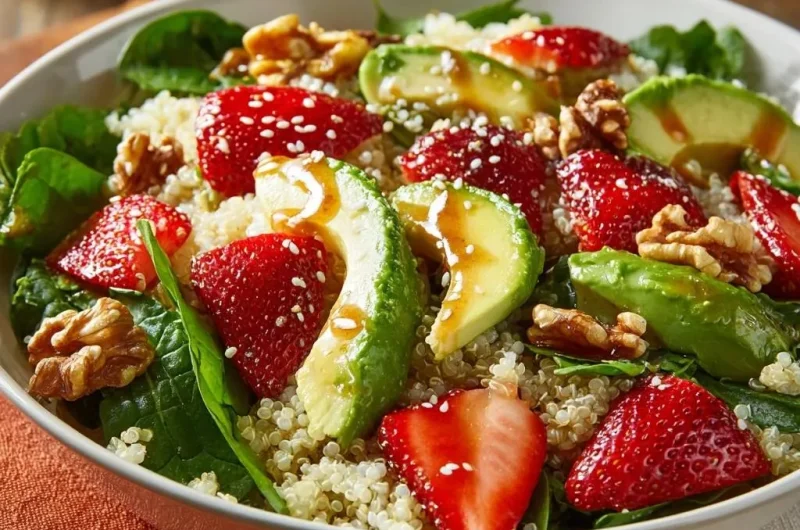
MinutesA fresh and vibrant salad featuring fluffy quinoa, creamy avocado, sweet strawberries, and crunchy walnuts, finished with a balsamic glaze and sesame seeds.
Ingredients
1 cup white quinoa, thoroughly rinsed
1.5 cups water
2 cups fresh baby spinach
1.5 cups fresh strawberries, hulled and halved
1 large avocado, sliced into wedges
1/2 cup walnut halves
1 tablespoon white sesame seeds
3 tablespoons balsamic glaze
2 tablespoons extra virgin olive oil
1/2 teaspoon sea salt
1/4 teaspoon cracked black pepper
Directions
- To solve the mushy quinoa problem, start by rinsing your quinoa in a fine-mesh strainer for 30 seconds to remove bitter saponins.
- Place rinsed quinoa and 1.5 cups of water in a pot. Bring to a boil, then reduce heat to the lowest setting. Cover with a tight-fitting lid and simmer for exactly 15 minutes.
- Here is the critical fix for perfect texture: Once the water is absorbed, remove the pot from the heat but do not open the lid. Let it sit undisturbed for 10 minutes. This allows the steam to finish cooking the grains evenly without adding extra water.
- After 10 minutes, remove the lid and fluff gently with a fork. Spread the quinoa out on a large plate or baking sheet to cool for 5-10 minutes. This prevents the residual heat from wilting your spinach or softening the strawberries.
- In a large shallow bowl, create a bed of fresh baby spinach. Layer the cooled, fluffy quinoa over the greens.
- Arrange the halved strawberries, avocado wedges, and walnut halves over the quinoa.
- In a small jar or bowl, whisk together the olive oil, sea salt, and black pepper. Drizzle this mixture evenly over the salad to provide a base coat of seasoning.
- Finish by drizzling the thick balsamic glaze in a decorative pattern over the avocado and strawberries. Sprinkle the white sesame seeds over the entire dish. Serve immediately to maintain the contrast between the crisp spinach and the tender grains.
Notes
- The secret to non-mushy quinoa is letting it sit covered off the heat for 10 minutes, then spreading it on a plate to cool before assembling the salad.