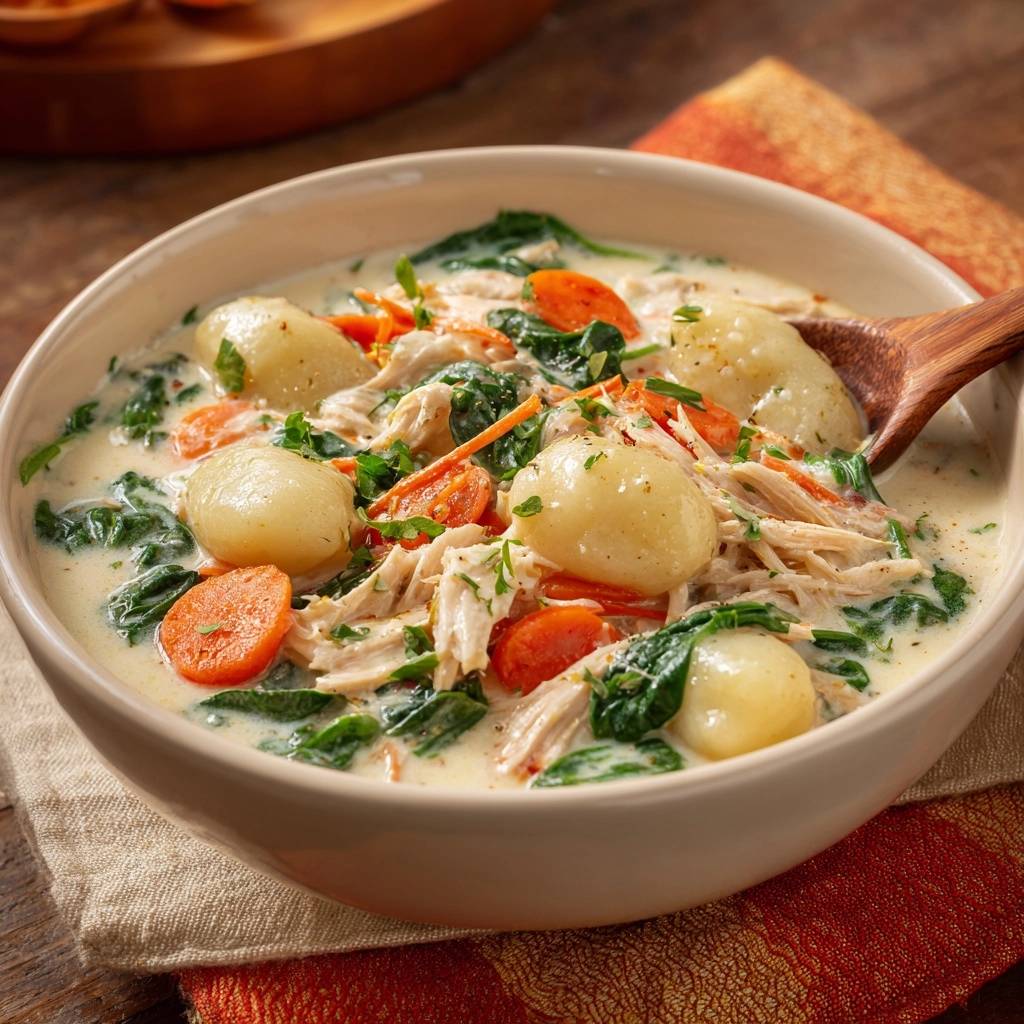
There is nothing quite like the embrace of a thick, velvety soup when the weather turns chilly. However, many home cooks find themselves disappointed by a bowl of “gummy” dumplings that have dissolved into the broth. This recipe changes that by focusing on the structural integrity of the gnocchi, ensuring every bite is as pillowy as a cloud.
When you’re craving a comforting bowl, try this creamy chicken and corn chowder.
The secret to a restaurant-quality result lies in moving beyond basic assembly. Instead of tossing everything into one pot and hoping for the best, we use a specific par-boil and shock method. This technique stops the starch from turning your dinner into a thick, sticky mess and keeps the broth silky and refined.
I’ve found that the most common mistake is boiling the gnocchi directly in the soup for too long. By treating the dumplings with a little extra care, you preserve that smooth, glossy finish. Let’s dive into the science and steps that make this the ultimate comfort meal.
The Science of Starch and Gnocchi Texture
Potato gnocchi are essentially delicate little bundles of starch and moisture. When you drop them directly into a simmering soup, the surface starch begins to gelatinize immediately. This process releases a thick, slimy film into your broth, which often leads to that dreaded “gummy” mouthfeel that ruins the experience.
By using the “shock” method, you essentially seal the exterior of the dumpling. Rinsing the par-boiled gnocchi in cold water removes the excess surface starch before it has a chance to thicken the soup base. This keeps the broth clear and allows the heavy cream to do the heavy lifting for the texture instead of the potato starch.
Furthermore, using a low-sodium chicken broth is a strategic move for flavor control. As the soup simmers and reduces, the salt concentrates. Starting with a low-sodium base ensures you can season the dish perfectly at the end without it becoming an salt bomb. The small amount of flour used creates a stable emulsion with the butter and cream, preventing the fats from separating.
Essential Components for a Silky Broth Base
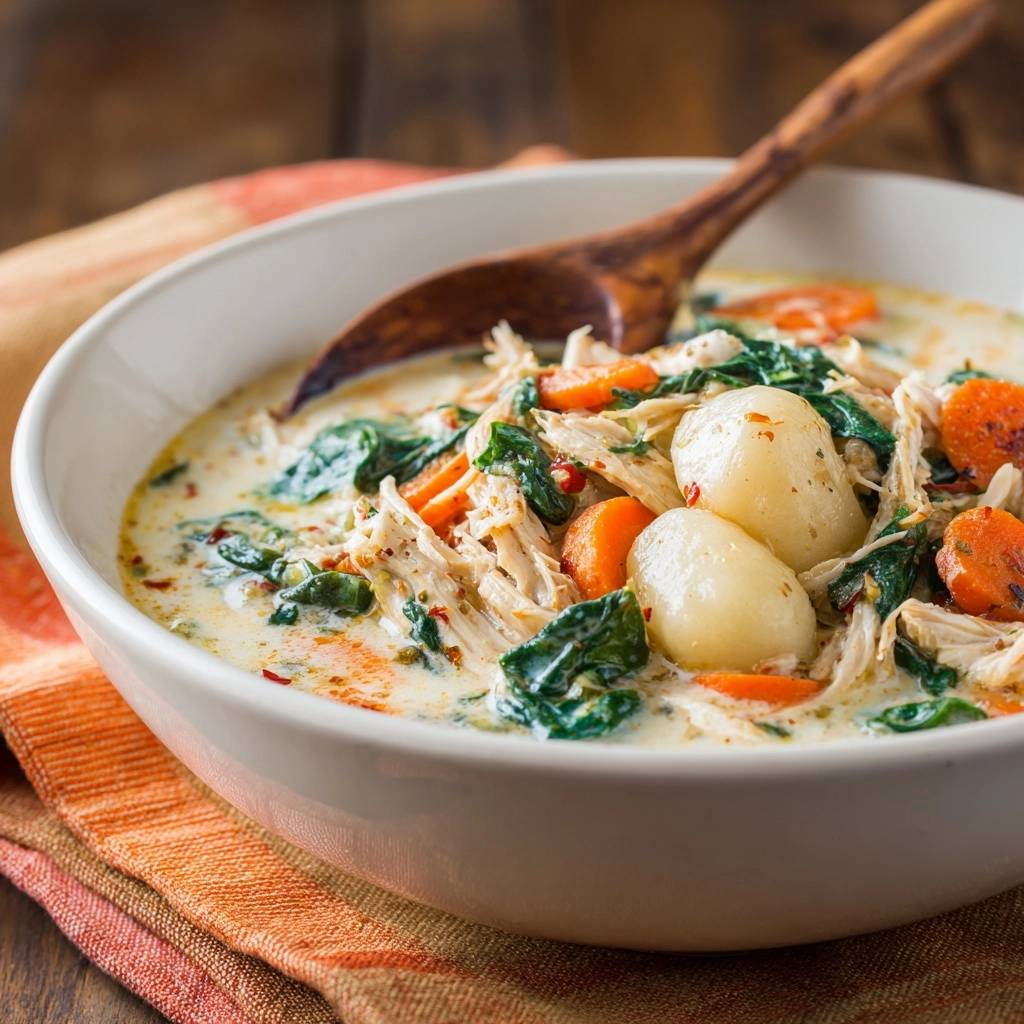
Quality ingredients are the backbone of any great soup. I always reach for a yellow onion because it provides a deep, mellow sweetness that white onions just can’t match. When you sauté them in butter, they melt into the background, providing flavor without a harsh bite.
For the carrots, I recommend thinly sliced rounds rather than a rough dice. These thin coins cook evenly and look beautiful against the white cream and green spinach. They also provide a consistent texture in every spoonful, ensuring you don’t bite into a crunchy, undercooked chunk of vegetable.
Dried thyme is the unsung hero here. It offers a woody, earthy backbone that cuts right through the richness of the heavy cream. While fresh herbs are great, dried thyme holds up better during the simmering process, infusing the entire pot with a classic, savory aroma. Using rotisserie chicken is another pro move; it’s already seasoned and tender, which saves you time and adds a layer of roasted depth.
Selecting the Right Potato Gnocchi
You’ll find gnocchi in three main spots: the pasta aisle (shelf-stable), the refrigerated section, and the freezer. For this recipe, shelf-stable or refrigerated work best. They hold their shape well during the par-boiling process and don’t release as much moisture as frozen varieties might.
I strongly suggest sticking to traditional potato gnocchi. While cauliflower or sweet potato versions are popular, they often lack the structural strength to survive a soup. They tend to break apart or become mushy much faster than the classic potato-based dumplings.
The Role of High-Fat Dairy in Soup Stability
Heavy cream is non-negotiable if you want that luxurious, “clings-to-the-spoon” consistency. Milk or half-and-half are much thinner and are prone to curdling if the soup gets too hot. The high fat content in heavy cream acts as a stabilizer, creating a rich mouthfeel that feels indulgent.
However, even heavy cream has a breaking point. You must maintain a gentle simmer once the dairy is added. If you let the soup reach a rolling boil, the proteins in the cream can clump together, resulting in a grainy texture rather than a silky one.
Phase One: The Par-Boil and Shock Technique
Start by bringing a separate pot of salted water to a boil. This is the most important step for texture. Drop your gnocchi in and watch them closely; they only need about 60 to 120 seconds. As soon as they bob to the surface like little corks, they are ready to come out.
Immediately drain them and hit them with cold tap water. This “shocks” the gnocchi, stopping the internal cooking process instantly. It also washes away the sticky starch that causes them to clump together. Set them aside on a tray or in a colander while you build the rest of the soup.
Phase Two: Building the Aromatic Foundation
In your main pot, melt the butter over medium heat. Add your onions and carrots, but don’t rush this part. You want to “sweat” them, which means cooking them until the onions are translucent and soft, not browned. This builds a sweet, savory base without any bitter charred notes.
Once the vegetables are soft, stir in the garlic and thyme. You’ll know it’s time for the next step when the kitchen starts smelling incredible—usually after about a minute. Sprinkle the flour over the top and stir it in. This “Roux Minute” is vital; it cooks out the raw, “cereal” taste of the flour while ensuring your soup thickens into a beautiful velvet consistency later.
Phase Three: Simmering and Emulsifying the Liquid
Slowly pour in your chicken broth. I like to add a splash at a time at first, whisking constantly to incorporate the flour and butter into the liquid. This prevents any lumps from forming. Once all the broth is in, turn the heat up slightly to bring it to a simmer.
Let the soup bubble gently for about 8 to 10 minutes. This gives the carrots time to become fork-tender and allows the thyme to fully hydrate and release its oils. You’ll notice the broth starts to take on a slightly thicker, more opaque body during this stage.
Phase Four: Integrating Protein and Finishing Touches
Now it’s time to bring everything together. Stir in your shredded chicken and the heavy cream. Keep the heat low; you want the soup to be hot, but never boiling. The chicken just needs to warm through since it’s already cooked.
Finally, fold in your par-boiled gnocchi and the fresh baby spinach. Use a gentle hand here so you don’t break the dumplings. The heat from the soup will wilt the spinach in about 60 seconds. Taste the broth now and add your salt and pepper. Since the chicken and broth both contain salt, seasoning at the very end prevents the dish from becoming too salty.
Troubleshooting Common Soup Consistency Issues
If your soup feels a bit too thin, don’t panic. You can mix a teaspoon of cornstarch with a tablespoon of cold water to create a slurry, then stir it into the simmering soup. It will thicken up almost instantly. If it’s too thick, simply splash in a little extra broth or a tiny bit of water to loosen it up.
If you notice the cream looks a bit “broken” or grainy, it usually means the heat was too high. You can sometimes fix this by removing the pot from the heat and whisking in a tablespoon of cold heavy cream to bring the temperature down and re-emulsify the fats. Always check your gnocchi; if they feel too firm, let them sit in the hot soup for an extra minute.
Flavor Variations and Ingredient Swaps
While spinach is the classic choice, you can easily swap it for kale if you want more texture. Just keep in mind that kale is heartier, so you’ll need to add it a few minutes earlier than you would with spinach to ensure it softens properly. Roasted turkey is also a fantastic substitute for chicken, especially after the holidays.
If you want to add a little “zing,” a tiny pinch of ground nutmeg or a few red pepper flakes can work wonders. Nutmeg enhances the creaminess of the dairy, while red pepper flakes provide a subtle heat that cuts through the richness. Just a little goes a long way!
Optimal Pairings for Creamy Poultry Soups
Since this soup is quite rich and starchy, you want sides that offer a sharp contrast. A crusty piece of sourdough bread is perfect for mopping up the extra broth. The acidity of the sourdough balances the heavy cream beautifully.
A simple arugula salad with a bright lemon vinaigrette is another excellent choice. The peppery greens and citrus dressing act as a palate cleanser between bites of the savory, creamy soup. Avoid serving this with heavy pasta or potato sides, as the gnocchi already provide plenty of heartiness.
Storage, Reheating, and Texture Preservation
Gnocchi soup can be tricky to store because the dumplings act like little sponges, soaking up the broth as they sit in the fridge. If you have leftovers, store them in an airtight container for up to three days. When you go to reheat it, you’ll likely find the soup has turned into a thick porridge.
To rescue your leftovers, place the soup in a small saucepan over low heat. Add a splash of chicken broth or a tablespoon of cream and stir gently as it warms. This restores the silky consistency without overcooking the gnocchi. Avoid using the microwave if possible, as it can heat the gnocchi unevenly and make them rubbery.
Expert Tips for Professional Presentation
We eat with our eyes first, and a creamy soup can sometimes look a bit monochromatic. That is why a heavy garnish of fresh parsley is so important. The bright green color pops against the white broth and adds a hit of freshness that wakes up the whole dish.
I prefer serving this in wide, shallow bowls. This allows the soup to cool slightly faster so you can dig in sooner, and it showcases the gnocchi and vegetables better than a deep, narrow mug. A final crack of fresh black pepper over the top adds a sophisticated touch that makes the meal feel special.
Frequently Asked Questions
Can I cook the gnocchi directly in the soup to save time?
You can, but I don’t recommend it if you want the best results. Cooking them in the soup releases a lot of starch, which can make the broth unpleasantly thick and the gnocchi “gummy.” The par-boil and shock method only takes an extra five minutes and makes a massive difference in the final texture.
How do I prevent the heavy cream from curdling?
Curdling happens when cold cream hits boiling liquid or when the soup gets too hot after the cream is added. To prevent this, let your cream sit on the counter for a few minutes to take the chill off, and always keep the soup at a gentle simmer rather than a rolling boil once the dairy is in the pot.
Is it possible to make this recipe dairy-free?
Yes, you can substitute the butter with a plant-based alternative and use full-fat coconut milk or a cashew-based cream in place of the heavy cream. Keep in mind that coconut milk will add a slight tropical flavor, while cashew cream will maintain a more neutral, savory profile similar to the original.
Can I freeze Creamy Chicken Gnocchi Soup?
I generally advise against freezing this soup. Both heavy cream and potatoes (the main ingredient in gnocchi) tend to change texture when frozen and thawed. The cream can separate and become grainy, while the gnocchi can become mushy. It is much better enjoyed fresh or kept in the fridge for a few days.
What is the best way to shred the chicken for this soup?
I prefer shredding the chicken into long, thin strands rather than cubing it. Shredded chicken has more surface area, which allows the creamy broth to “cling” to the meat better. You can easily do this with two forks while the chicken is still slightly warm, or even use a stand mixer with the paddle attachment for a quick result.
Chicken Gnocchi
Course: Main CourseCuisine: AmericanDifficulty: easy4
servings15
minutes25
minutes495
kcal40
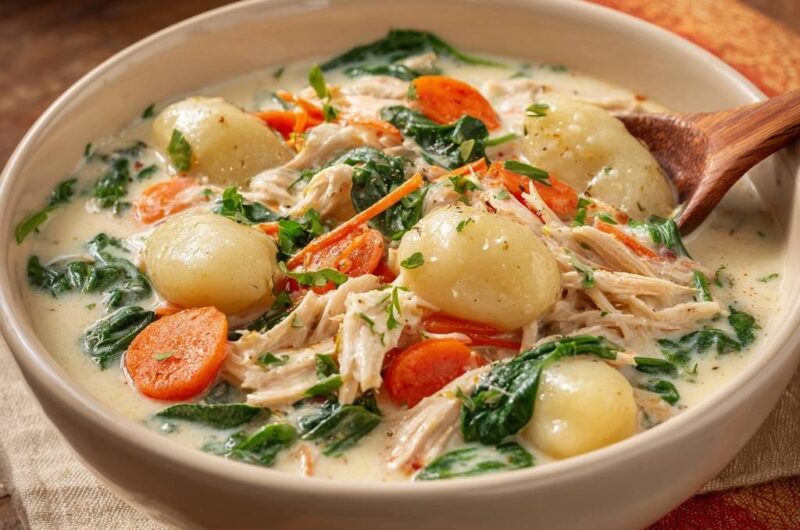
MinutesThis Creamy Chicken Gnocchi Soup uses rotisserie chicken, fresh spinach, and carrots in a savory broth. By par-boiling and shocking the gnocchi separately, this recipe achieves a professional texture and a glossy finish that avoids the common mistake of mushy dumplings.
Ingredients
1 pound potato gnocchi
2 cups shredded rotisserie chicken
4 cups low-sodium chicken broth
1 cup heavy cream
2 cups fresh baby spinach
2 large carrots, thinly sliced into rounds
1 small yellow onion, diced
2 cloves garlic, minced
2 tablespoons butter
1 tablespoon all-purpose flour (for thickening)
1 teaspoon dried thyme
Salt and black pepper to taste
Fresh parsley, finely chopped for garnish
Directions
- Bring a separate pot of salted water to a boil. Add the gnocchi and cook for only 1-2 minutes, or until they just begin to float. Immediately drain and rinse with cold water to stop the cooking process. This removes excess surface starch and prevents the “gummy” texture shown in overcooked soups. Set aside.
- In a large heavy-bottomed pot or Dutch oven, melt the butter over medium heat. Add the diced onion and sliced carrots. Sauté for 5-6 minutes until the onions are translucent and carrots begin to soften.
- Add the minced garlic and dried thyme. Cook for 1 minute until fragrant. Sprinkle the flour over the vegetables and stir constantly for 1 minute to cook out the raw flour taste; this creates a light roux to ensure the broth has the creamy body seen in the image.
- Slowly pour in the chicken broth while whisking or stirring constantly to prevent lumps. Bring the mixture to a simmer and cook for 8-10 minutes until the carrots are fork-tender.
- Stir in the shredded chicken and heavy cream. Bring the soup back to a very gentle simmer. Do not let it reach a rolling boil once the cream is added to maintain a smooth, silky texture.
- Add the pre-cooked gnocchi and fresh baby spinach to the pot. Stir gently for 1-2 minutes until the spinach is wilted and the gnocchi are heated through.
- Season generously with salt and black pepper to taste. Serve immediately in warm bowls, topped with a heavy garnish of fresh chopped parsley to match the visual presentation.
Notes
- To prevent a gummy texture, always boil gnocchi separately for 1 to 2 minutes and rinse with cold water before adding to the soup. Avoid a rolling boil after adding heavy cream to maintain a smooth consistency.