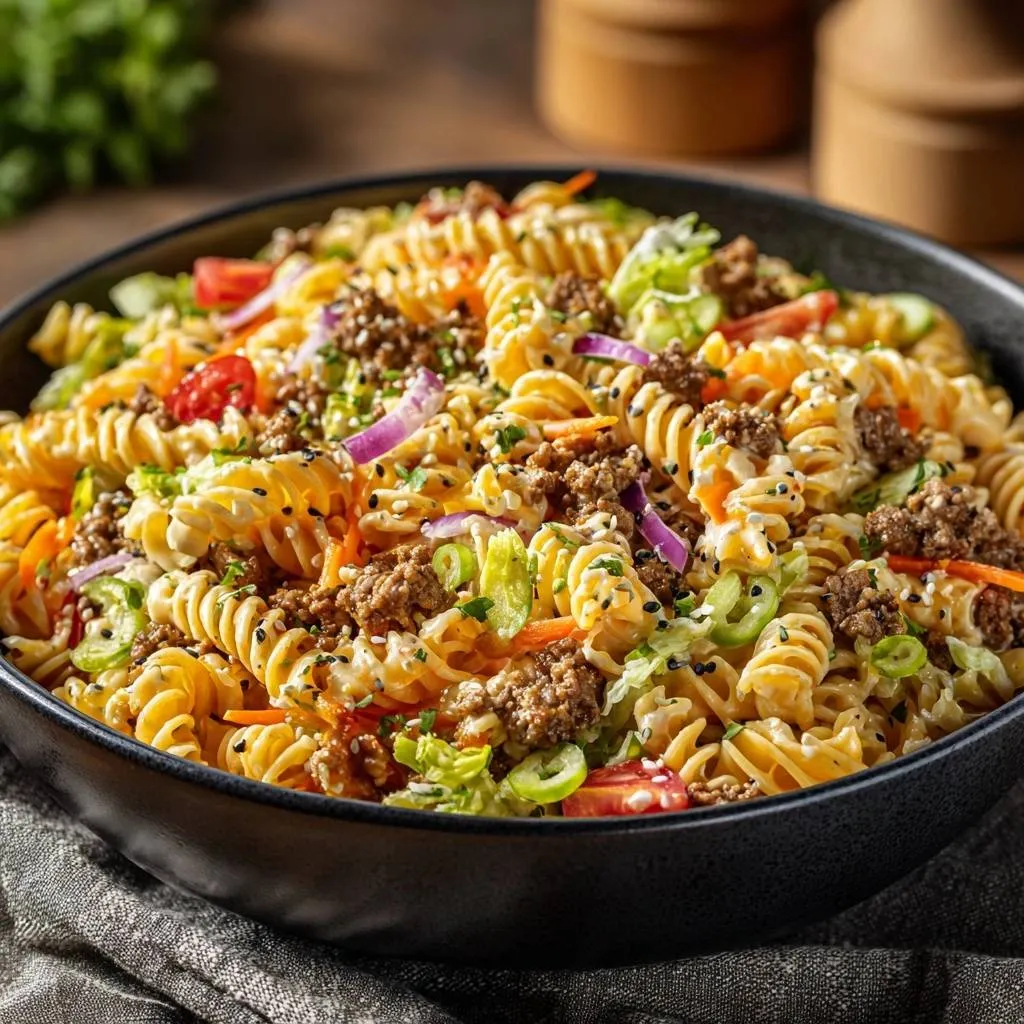
The backyard barbecue has evolved far beyond basic charred burgers and a side of potato chips. However, the side dishes often feel like an afterthought, especially the dreaded, mushy pasta salad that sits in a pool of its own liquid. We’ve all been there, picking through a bowl of gummy noodles that taste more like cardboard than a gourmet side.
This Zesty Cheeseburger Pasta Salad changes the game by deconstructing a classic American icon into a high-texture, “burger-in-a-bowl” experience. The “zesty” profile comes from a sharp, mustard-forward dressing and the acidic snap of chopped pickles, creating a flavor profile that actually wakes up your palate. It’s bold, creamy, and surprisingly refreshing for a dish centered around ground beef.
The real secret to this recipe’s success is the “Anti-Soggy Noodle Secret,” a professional technique that ensures your pasta stays firm even after it’s tossed in dressing. By mastering the temperature-shock method, you’ll create a salad that maintains its structural integrity from the first scoop to the last. Forget everything you know about limp macaroni; we’re building something with real bite.
The Science of the Cold-Shock Technique
Most home cooks make the mistake of letting their pasta air-dry or, worse, rinsing it with lukewarm tap water. This leads to starch retrogradation, where the noodles continue to soften and eventually turn into a gummy mess. When you boil your pasta for exactly one minute less than the package’s al dente instructions, you leave the core of the noodle slightly undercooked.
Immediately plunging those hot noodles into a massive bowl of ice water creates a thermal shock that stops the cooking process in its tracks. This physics-based hack locks the outer starch layer, preventing it from becoming porous. If the starch remains tight, it won’t absorb the moisture from your dressing, which is the primary cause of bloated, flavorless noodles.
Furthermore, this ice bath removes the excess surface starch that usually makes pasta stick together. You’ll notice the water becomes cloudy as the starch washes away, leaving you with individual spirals that slide against each other perfectly. Once you drain them and pat them dry, you have the ideal canvas for a creamy sauce that coats the outside without soaking into the center.
Why Rotini is the Superior Pasta Shape
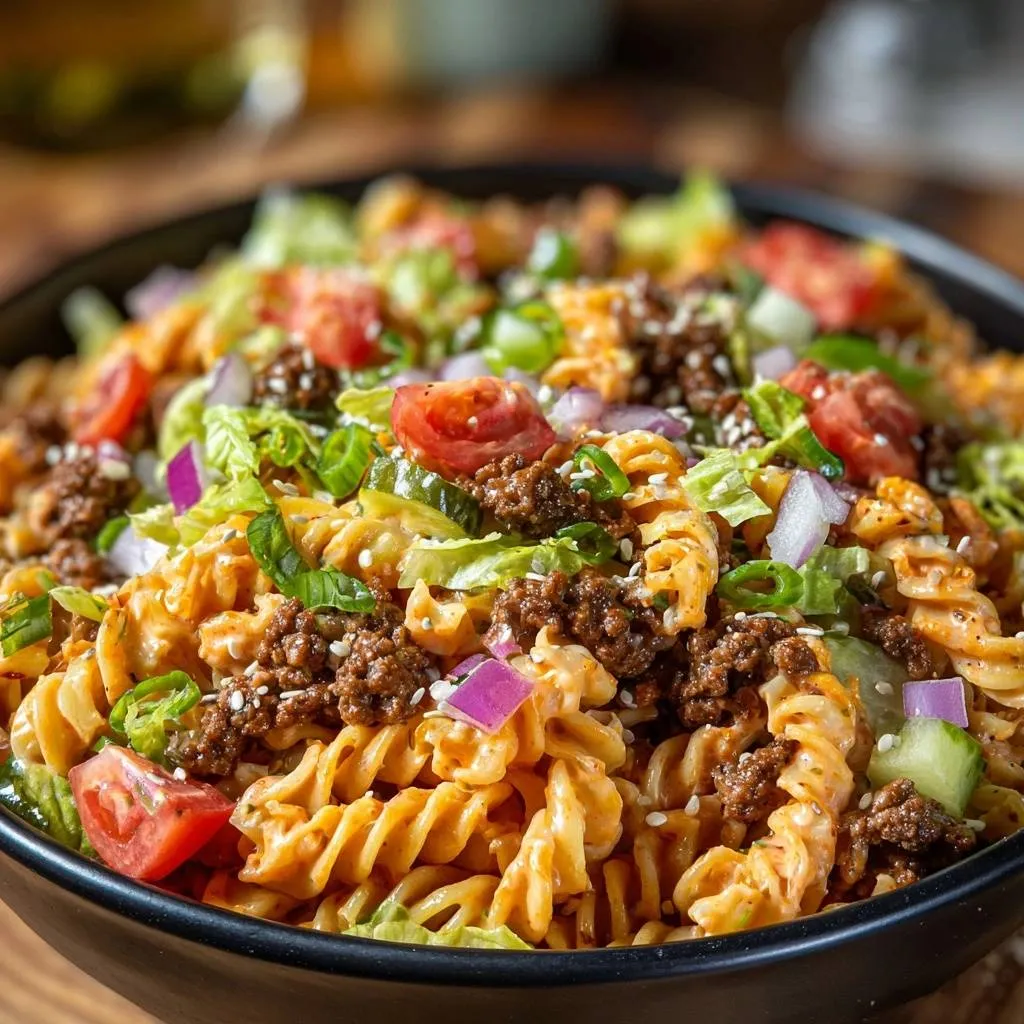
When you’re dealing with a heavy, creamy burger sauce and chunky ingredients like ground beef and cherry tomatoes, shape matters. Rotini is the undisputed champion here because its tight “screws” act as a mechanical trap. The spirals catch the dressing, the sesame seeds, and the tiny bits of beef, ensuring every forkful is a complete bite.
If you can’t find rotini, cavatappi or fusilli are excellent backups because they offer similar ridges and hollows. However, stay far away from flat pastas like fettuccine or smooth shapes like penne lisce. These shapes allow the dressing to slide right off, leaving your flavor at the bottom of the bowl while you’re left chewing on plain, naked dough.
Essential Components for the Burger Salad Base
The foundation of a great cheeseburger salad is the protein, and quality matters immensely here. You should always reach for lean ground beef, specifically a 90/10 or 93/7 blend. Since this salad is served cold or at room temperature, any excess fat will solidify into a waxy, greasy coating on the roof of your mouth, which is definitely not the vibe we’re going for.
Texture is the secondary goal, which is why shredded carrots and cherry tomatoes are non-negotiable. The carrots provide a consistent, earthy crunch that contrasts with the soft pasta, while the cherry tomatoes offer acidic bursts that cut through the richness of the cheese. Always halve your tomatoes so their juices can mingle slightly with the dressing, adding a natural sweetness to the bowl.
Don’t underestimate the power of the aromatics. Thinly sliced red onions and green onions provide two different layers of “bite.” The red onion offers a sharp, spicy punch, while the green onions provide a fresh, herbal finish. Together, they mimic the classic toppings of a high-end bistro burger.
Selecting the Right Cheddar and Produce
For the cheese, skip the mild varieties and go straight for a sharp or extra-sharp cheddar. Because the dressing is creamy and the beef is savory, a mild cheese will simply disappear into the background. A sharp cheddar has enough personality to stand up to the “zesty” mustard and pickles, providing a distinct salty tang in every bite.
When prepping your red onions, use a mandoline or a very sharp knife to get them paper-thin. You want the flavor of the onion to weave through the salad rather than having to crunch down on a thick, pungent chunk. If the onions feel too strong, you can soak the slices in cold water for ten minutes to mellow them out before tossing them in.
The Everything Bagel Garnish Strategy
We use a blend of black and white sesame seeds to finish the dish, and this isn’t just for aesthetics. This garnish is a clever sensory cue that mimics the experience of eating a toasted brioche bun. The black seeds add a subtle nuttiness and a striking visual contrast, while the white seeds provide that classic “hamburger bun” aroma.
Step-by-Step: Building the Zesty Cheeseburger Pasta Salad
Building this salad is an exercise in temperature management and layering. If you rush the cooling process, you’ll end up with wilted lettuce and melted cheese, which ruins the “fresh” appeal of the dish. Follow these three phases to ensure a professional-grade result every time.
Phase 1: Precision Boiling and Temperature Control
Start by bringing a large pot of water to a rolling boil. You must salt the water heavily—it should literally taste like the sea. This is your only chance to season the pasta itself from the inside out. Set your timer for one minute less than the “al dente” suggestion on the box.
While the pasta boils, prepare your ice bath in a large mixing bowl. As soon as the timer dings, drain the pasta and dump it into the ice. Let it sit for two minutes until the noodles are cold to the touch. Drain them again and spread them out on a clean kitchen towel, patting them dry. Any residual water will dilute your dressing and make the salad taste bland.
Phase 2: Searing the Beef for Maximum Flavor
Heat a skillet over medium-high heat and add your lean ground beef. Don’t just grey the meat; you want to sear it. Break it into small crumbles and let it sit undisturbed for a minute or two to develop a brown crust. This Maillard reaction creates those little crunchy, savory bits that provide a massive flavor boost.
Once the beef is fully cooked and slightly crispy, drain every drop of excess fat. Season it generously with salt and pepper while it’s still hot. Now, here is the most important part: let the meat cool completely to room temperature. If you add hot beef to the salad, it will turn your cheddar into a gooey mess and turn your crisp vegetables into mush.
For more ideas on incorporating flavorful ground beef, check out this cheesy beef macaroni.
Phase 3: Emulsifying and Folding the Dressing
In your largest bowl, combine the chilled pasta and the room-temperature beef. Add your tomatoes, onions, carrots, and pickles. Pour the creamy burger sauce over the top. Instead of stirring vigorously, use a large spatula to “fold” the ingredients together. This gentle motion keeps the pasta spirals intact and ensures the beef crumbles are evenly distributed.
The very last step is the iceberg lettuce. Iceberg is chosen specifically for its high water content and structural “snap.” Fold it in just seconds before you plan to serve. This prevents the salt in the dressing from drawing out the moisture in the lettuce, which would otherwise make it limp and soggy within twenty minutes.
Crafting the Signature Creamy Burger Sauce
The dressing is the soul of this dish. It’s a balanced emulsion of mayonnaise for richness, yellow mustard for tang, and ketchup for a hint of sweetness. However, the real “secret” is the relish. Relish provides a chunky texture and a vinegary brightness that bridges the gap between a standard pasta salad and a true cheeseburger experience.
If you want to take the “zesty” factor to the next level, whisk in a tablespoon of the juice from your pickle jar. The extra vinegar and dill notes will sharpen the flavors. For a smoky depth, a pinch of smoked paprika can mimic the flavor of a charcoal-grilled burger patty, adding complexity without needing a grill.
Troubleshooting Common Pasta Salad Pitfalls
If your salad feels too dry after sitting for an hour, it means the pasta was still too warm when you added the dressing, causing it to absorb the moisture. You can fix this by folding in an extra tablespoon of mayonnaise or a splash of milk just before serving to loosen it back up.
If the salad feels oily or leaves a film on your tongue, the beef wasn’t drained well enough or the meat was too fatty. To prevent this, always use lean beef and pat the cooked crumbles with a paper towel. If the flavors feel “flat,” you likely didn’t salt the pasta water enough. A tiny extra pinch of salt and a squeeze of fresh lemon juice can usually brighten it back up.
Flavor Variations and Dietary Swaps
You can easily pivot this recipe to suit different tastes. For a “California Style” version, swap the cheddar for Monterey Jack and add fresh avocado chunks right at the end. If you prefer heat, a “Spicy Jalapeño” version works beautifully—just swap the pickles for pickled jalapeños and add a dash of hot sauce to the dressing.
For those using gluten-free pasta, be extra vigilant with the cold-shock process. Gluten-free noodles are notoriously high in starch and can fall apart quickly. Reducing the boil time by two minutes instead of one often helps them maintain their shape during the ice bath. Always choose a corn or brown rice-based rotini for the best structural results.
Optimal Serving and Storage Practices
While many salads need to sit overnight, this one is best enjoyed within 30 minutes to two hours of assembly. This window allows the flavors to meld without the lettuce losing its signature crunch. If you are preparing this for a party later in the day, mix everything except the lettuce and the sesame seeds. Keep those in separate containers and toss them in at the very last second.
Leftovers will stay safe in an airtight container in the fridge for up to three days. However, be aware that the lettuce will soften significantly by day two. It will still taste delicious, but it will lose that “fresh from the grill” texture. This dish does not freeze well, as the mayonnaise-based dressing will break and the vegetables will become watery upon thawing.
What to Serve Alongside Your Pasta Salad
Since this salad is quite rich and savory, it pairs perfectly with bright, clean sides. Grilled corn on the cob with a squeeze of lime provides a nice sweetness that complements the beef. A simple vinegar-based coleslaw or fresh fruit skewers can also provide a refreshing palate cleanser between bites of the creamy pasta.
Expert Tips for Large Crowd Catering
If you’re scaling this up for a crowd of 20 or more, simply triple the recipe. When serving outdoors, the biggest challenge is food safety and texture. Place your serving bowl inside a slightly larger bowl filled with ice. This keeps the mayonnaise dressing at a safe temperature and ensures the vegetables stay “snappy” even in the summer heat.
How long can this pasta salad sit out at a BBQ?
Because this recipe contains mayonnaise and cooked beef, you should not leave it out at room temperature for more than two hours. If the outdoor temperature is above 90°F, that window drops to one hour. Always keep the bowl nestled in a larger container of ice to extend its freshness and keep the ingredients crisp.
Can I substitute the ground beef with something else?
Absolutely. Ground turkey or ground chicken are excellent lean alternatives that work perfectly with the zesty dressing. If you want a vegetarian version, crumbled plant-based meat substitutes provide a similar texture. Just ensure whatever protein you use is cooked until slightly crispy and cooled completely before mixing.
Why is my pasta salad bland even though I used the dressing?
The most common culprit is under-salting the pasta water. Pasta doesn’t absorb salt well once it’s cold, so that initial boil is your only chance to season the noodle itself. If it’s already made and tastes flat, try adding a teaspoon of yellow mustard or a splash of pickle juice to the mix to boost the acidity and salt levels.
How do I keep the lettuce from wilting?
The salt and vinegar in the dressing will naturally draw moisture out of the lettuce, causing it to wilt. The only way to prevent this is timing. Never fold the lettuce in until you are ready to walk the bowl to the table. If you’re bringing this to a potluck, keep the shredded lettuce in a separate bag and mix it in once you arrive.
Can I use a different type of cheese?
While sharp cheddar is the classic choice for a cheeseburger profile, you can use pepper jack for a spicy kick or smoked gouda for a “BBQ burger” flavor. Avoid soft cheeses like mozzarella or feta, as they don’t quite fit the cheeseburger theme and can become too creamy or salty when combined with the burger sauce.
Is there a way to make this ahead of time?
Yes, you can prep the pasta, cook the beef, and chop the vegetables up to 24 hours in advance. Store the cooked pasta and beef in separate containers so the pasta doesn’t absorb any residual oils. Whisk the dressing and keep it in a jar. When you’re ready to serve, simply toss everything together and add the fresh lettuce and sesame seeds.
Cheeseburger Pasta Salad
Course: Main CourseCuisine: AmericanDifficulty: easy6
servings15
minutes10
minutes550
kcal25
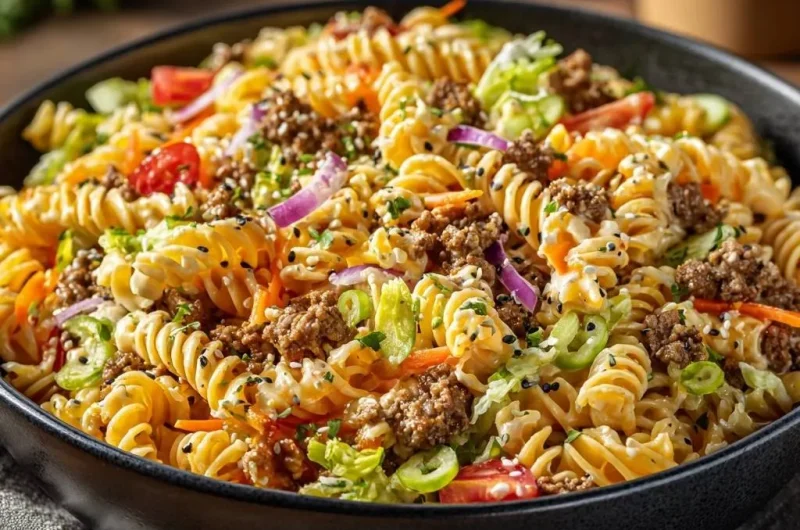
MinutesThis innovative pasta salad mimics the flavors of a classic cheeseburger while using a cold-shock method to ensure the rotini stays firm. It features lean ground beef, fresh vegetables, and a signature creamy dressing, topped with sesame seeds for a burger-bun finish.
Ingredients
1 pound rotini pasta
1 pound lean ground beef
1 cup shredded cheddar cheese
1 cup cherry tomatoes, halved
1/2 cup red onion, thinly sliced
1/2 cup shredded carrots
1/2 cup sliced green onions
1/2 cup chopped pickles
2 cups shredded iceberg lettuce
2 tablespoons black and white sesame seeds (Everything Bagel style)
1 tablespoon fresh parsley, finely chopped
1 cup creamy burger sauce dressing (mayonnaise, yellow mustard, ketchup, and relish base)
Salt and pepper to taste
Directions
- To solve the soggy noodle problem, boil your pasta in heavily salted water for exactly one minute less than the package directions for al dente.
- Immediately drain the pasta and plunge it into a large bowl of ice water. This stops the cooking process instantly, preventing the starch from breaking down and becoming gummy when the dressing is added later. Drain thoroughly after two minutes and pat dry.
- While the pasta cools, brown the ground beef in a skillet over medium-high heat until fully cooked and slightly crispy. Drain the excess fat and season with salt and pepper. Let the meat cool completely to room temperature to prevent it from melting the cheese or wilting the fresh vegetables.
- In a large mixing bowl, combine the chilled pasta, cooled beef, shredded cheddar cheese, tomatoes, red onion, carrots, green onions, and pickles.
- Pour the creamy burger sauce dressing over the mixture and toss gently until every spiral is coated. The firm, cold-shocked pasta will hold its shape perfectly against the heavy dressing.
- Just before serving, fold in the shredded lettuce. Garnish the top with a generous sprinkle of black and white sesame seeds and fresh parsley to match the visual texture of the dish. This ensures the lettuce stays crisp and the salad maintains its perfect texture.
Notes
- The secret to preventing soggy noodles is the ice water bath, which stops the starch from breaking down. Ensure the beef is completely cooled before mixing to keep the vegetables crisp and the cheese intact.