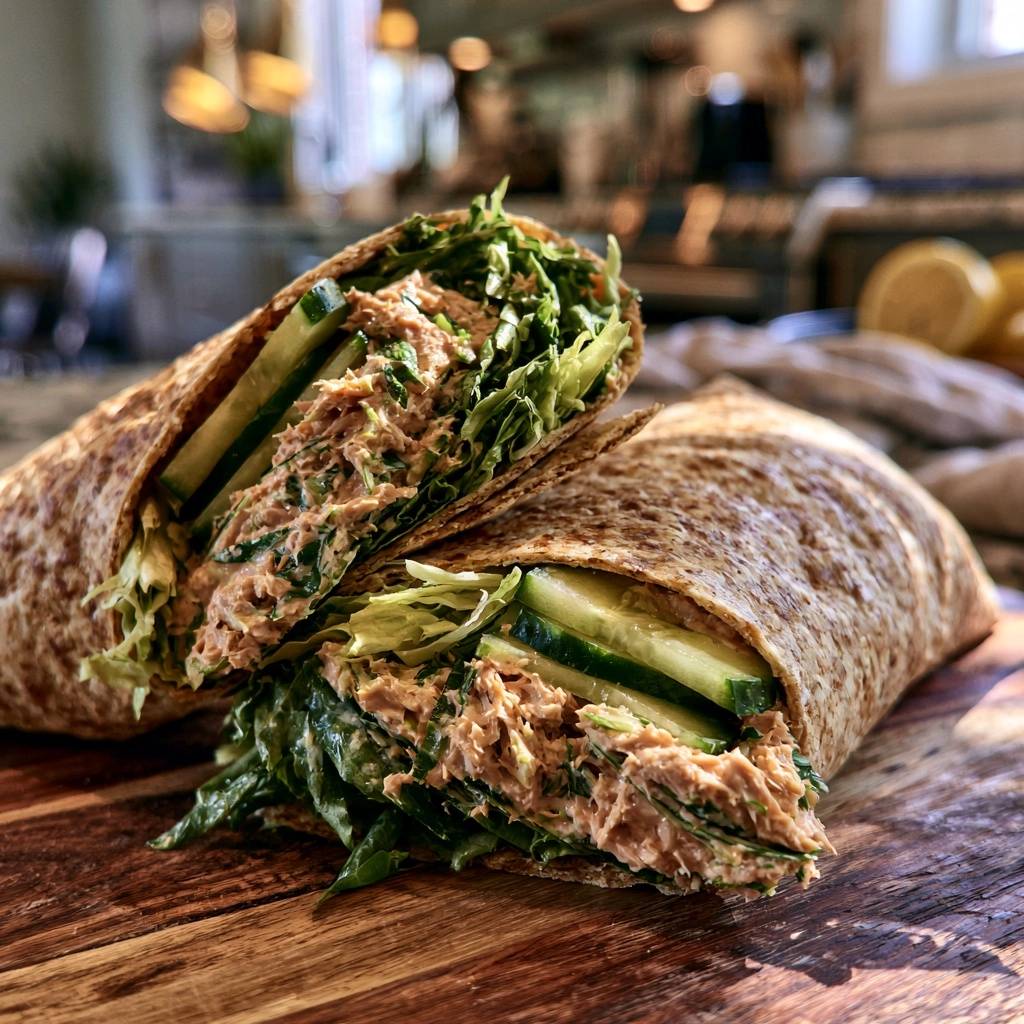
Nothing ruins a midday break faster than reaching into your lunch bag only to find a mushy, leaking mess. We’ve all been there, peeling back damp paper to find a tortilla that’s lost its structural integrity. These Zesty Tuna Salad Wraps change the game by focusing on a bright, acidic flavor profile and a construction method that defies the laws of sogginess.
The secret to a professional-grade wrap isn’t just about what goes inside, but how you layer it. By balancing the richness of the tuna with sharp Dijon and fresh lemon, you create a filling that feels light and vibrant. This recipe prioritizes a crisp, handheld experience that stays firm from the first bite to the last.
Expertise in wrap-making comes down to moisture management. The most critical tip I can give you is to treat your greens like a waterproof jacket for your tortilla. If you don’t create a physical barrier between the wet salad and the dry bread, the starch will absorb the liquid every single time. Let’s look at how to build a wrap that actually holds its shape.
The Anatomy of a Non-Soggy Tuna Wrap
Understanding the physics of a sandwich is the first step toward meal prep mastery. Moisture naturally wants to migrate from areas of high concentration, like your tuna salad, to areas of low concentration, like your tortilla. This process, known as moisture migration, is the primary reason why most wraps fail within an hour of assembly.
To combat this, we use a “moisture barrier” technique. This involves placing hydrophobic ingredients, such as waxy spinach leaves, directly against the tortilla. These leaves act as a shield, preventing the mayonnaise and lemon juice from soaking into the grain. When you control the water, you control the texture.
Furthermore, the way you prep your vegetables determines the longevity of the wrap. Even a small amount of surface water on your lettuce can compromise the entire structure. By ensuring every component is bone-dry before it hits the tortilla, you ensure a firm, satisfying crunch that lasts until lunchtime.
Why Flaxseed and Sprouted Grain Tortillas Excel
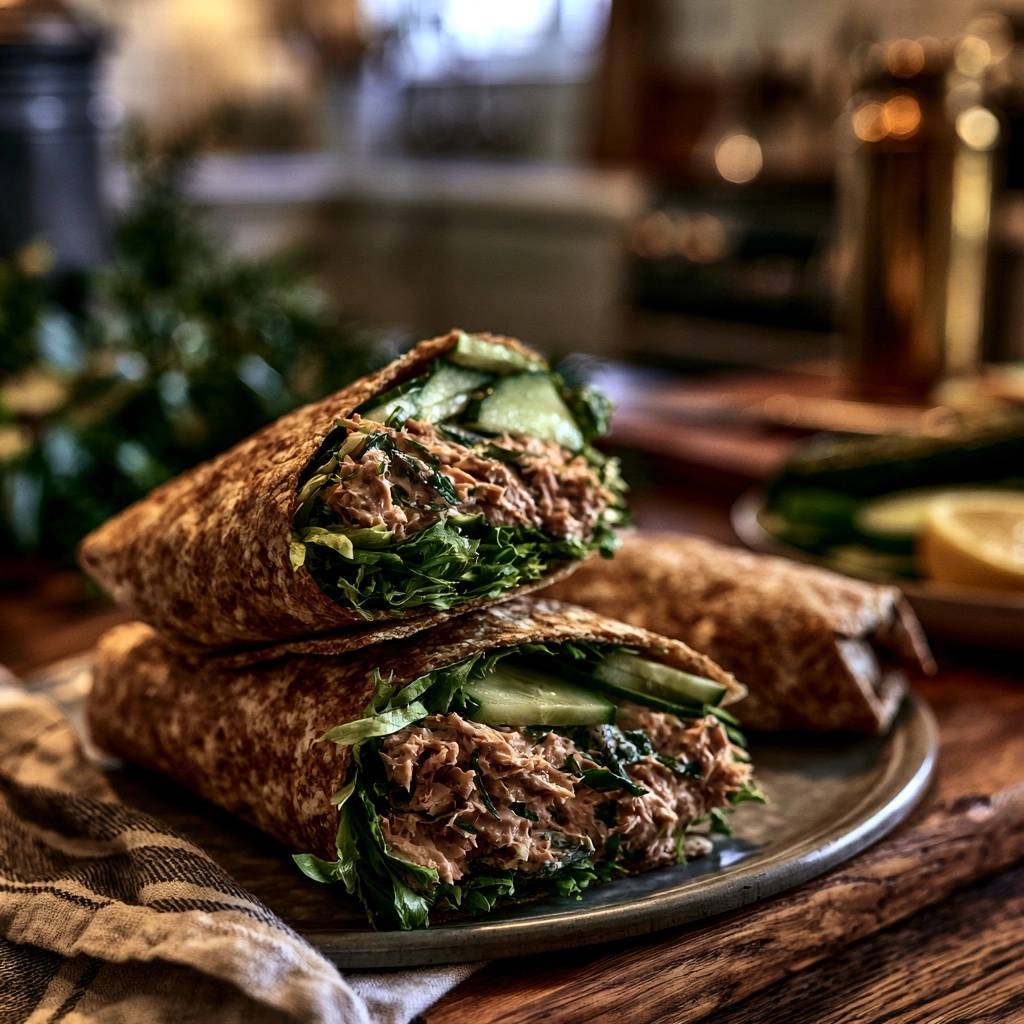
Standard white flour tortillas are highly processed and act like a sponge when they touch liquid. In contrast, sprouted grain and flaxseed tortillas offer a much denser, more resilient structure. The visible fibers and seeds provide a sturdy framework that doesn’t tear easily under the weight of the filling.
These tortillas also bring a nutty, complex flavor that complements the “zesty” elements of the tuna. Because they contain more protein and fiber, they don’t get gummy when chewed. They provide a reliable, durable exterior that can handle the tension of a tight roll without snapping or leaking.
The Role of Acid in Zesty Tuna Salad Wraps
Lemon juice and Dijon mustard are the unsung heroes of this recipe. Beyond providing a sharp, tangy kick, these acidic components serve a functional purpose. They cut through the heavy fats in the mayonnaise, ensuring the tuna salad feels refreshing rather than cloying on the palate.
Additionally, the acid helps maintain the vibrant green color of your herbs and spinach. It acts as a natural preservative for the flavors, keeping the tuna tasting “clean” even if you prep it a few hours in advance. This brightness is what earns these wraps their “zesty” title.
Essential Components for the Zesty Filling
Quality ingredients are the foundation of a great tuna salad. When selecting your fish, look for tuna packed in water rather than oil. Oil-packed tuna is delicious, but for a wrap, it adds an extra layer of liquid that is difficult to fully drain, increasing the risk of a greasy or soft tortilla.
Skipjack tuna is often a great choice for wraps because it has a smaller flake and a milder flavor than Albacore. This smaller texture allows the mayonnaise and mustard to coat every piece evenly, creating a cohesive filling that stays put. You want a creamy, bound consistency that doesn’t crumble out of the wrap when you take a bite.
The binder is just as important as the protein. Using a high-quality mayonnaise provides the necessary fat to carry the flavors of the garlic and parsley. However, the key is moderation; you want just enough to hold the tuna together, not so much that the salad becomes a liquid sauce.
Selecting and Prepping the Canned Protein
The most common mistake in tuna salad preparation is lazy draining. Simply pressing the lid into the can isn’t enough to remove the hidden pockets of water. For a truly “dry” tuna base, you need to be more aggressive with your technique.
I recommend dumping the tuna into a fine-mesh strainer and pressing it firmly with a spoon. For even better results, place the tuna in a clean kitchen towel and squeeze it over the sink. You’ll be surprised how much extra liquid comes out. This extra step ensures your mayo-based dressing stays thick and creamy instead of turning into a watery mess.
Fresh Herbs vs. Dried Aromatics
Fresh flat-leaf parsley is non-negotiable for that “zesty” finish. It provides a grassy, clean note that dried herbs simply cannot replicate. It also adds tiny flecks of bright green that make the wrap look as good as it tastes.
However, when it comes to garlic, a high-quality powder is actually superior to fresh minced cloves in this specific application. Garlic powder distributes evenly throughout the creamy binder, providing a consistent umami backbone without the harsh, spicy bite of raw garlic. It’s all about balancing the fresh and the functional.
Step-by-Step: Constructing the Moisture Barrier
Assembly is where the magic happens. Start by laying your tortilla on a flat, dry surface. If your tortilla feels stiff, you can warm it for five seconds in the microwave to make it more pliable, but let it cool slightly before adding ingredients so it doesn’t create steam.
The order of operations is vital. You aren’t just tossing ingredients inside; you are building a structural system. By following the “Shield Method,” you ensure that the wettest ingredients are insulated in the center, far away from the vulnerable tortilla walls.
Layering Spinach as a Physical Shield
Your first layer should always be the baby spinach. Lay the leaves flat, overlapping them like shingles on a roof. Spinach leaves have a naturally waxy surface that is remarkably effective at repelling moisture. This creates a waterproof floor for your tuna salad to sit on.
Make sure to remove any long, woody stems from the spinach. Stems can poke holes in the tortilla when you start rolling. You want a smooth, continuous bed of greens that covers the center of the wrap while leaving a clear border for sealing.
Strategic Placement of Cucumber Planks
Instead of cutting your cucumber into rounds, slice them into long, thin planks. These planks act like structural “ribs” for the wrap. When you bite into the wrap, these vertical strips provide a consistent crunch and prevent the tortilla from collapsing inward.
Placing the cucumbers directly on top of the tuna salad also helps lock the protein in place. It creates a flat surface for the next layer of greens, ensuring the wrap stays rectangular and even rather than lumpy and difficult to handle.
The Importance of Bone-Dry Romaine
Romaine lettuce provides the essential “big crunch,” but it is also a notorious water-carrier. After shredding your romaine, you must use a salad spinner or pat it thoroughly with paper towels. Even a few drops of water trapped in the leaves will eventually soak into the wrap.
Once dry, pile the romaine generously over the cucumbers. This top layer of lettuce provides a final cushion. When you roll the wrap, the romaine compresses, filling any air gaps and creating a tight, dense interior that looks beautiful when sliced.
Flavor Variations and Ingredient Swaps
While the zesty lemon and parsley combo is a classic, you can easily adapt this recipe to suit your mood. The key is to ensure that any additions don’t introduce excess liquid that could compromise the structural integrity we’ve worked so hard to build.
If you want to change the flavor profile, think about “dry” additions first. Spices, zest, and finely chopped hard vegetables are your best friends. Always consider how a new ingredient will affect the moisture balance before you toss it into the bowl.
Adding Heat Without Adding Liquid
If you crave a spicy kick, avoid pouring hot sauce directly into the wrap. Instead, mix a small amount of sriracha or cayenne pepper into the mayonnaise before combining it with the tuna. This incorporates the heat into the binder without making the filling runny.
Alternatively, use finely diced jalapeños with the seeds and ribs removed. Dicing them small ensures the heat is distributed evenly. Red pepper flakes are another excellent “dry” way to add a slow-burning heat that won’t affect the texture of the tortilla.
Creamy Alternatives to Mayonnaise
For those looking to swap out mayo, mashed avocado is a fantastic substitute. It provides a similar creamy mouthfeel and healthy fats. Just be sure to add a little extra lemon juice to the avocado to prevent it from browning if you aren’t eating the wrap immediately.
Greek yogurt is another option, but be careful. Yogurt has a much higher water content than mayonnaise. If you use it, strain the yogurt through a coffee filter for 20 minutes first to thicken it. This prevents the “yogurt weep” that can quickly turn a wrap soggy.
Expert Tips for Professional Wrap Rolling
The “Tuck and Roll” is a skill that separates home cooks from deli pros. Start by folding the left and right sides of the tortilla inward over the filling. Then, take the bottom edge and pull it tightly over the ingredients, tucking it under the tuna log as you begin to roll.
Maintain firm tension as you roll upward. You want the ingredients to be compressed so there are no air pockets. A tight wrap is a sturdy wrap. Once finished, let it sit on the seam for a minute; the moisture from the filling will act as a slight “glue” to hold the edge down.
When it’s time to eat, use a sharp serrated knife. A straight blade can squash the wrap and squeeze the filling out the ends. A gentle sawing motion with a serrated knife will give you a clean, diagonal cut that shows off those beautiful, distinct layers of spinach, tuna, and cucumber.
Troubleshooting Common Texture Issues
If your wrap still ends up soft, the culprit is usually hidden moisture. Check your tuna again; was it truly dry? Also, consider the temperature of your ingredients. If you use warm, freshly washed lettuce, the residual heat can create steam inside the wrap, which leads to instant sogginess.
Another common trap is overstuffing. It’s tempting to pile on the tuna, but if the wrap is too full, you won’t be able to get a tight enough seal. This allows air and moisture to move more freely, breaking down the tortilla. Aim for a balanced ratio of filling to bread.
Managing High-Moisture Add-ins
If you absolutely must have tomatoes or pickles in your wrap, you need to prep them specifically. For tomatoes, slice them and then use a spoon to scrape out the watery seeds and pulp. Only use the firm outer “meat” of the tomato.
For pickles, pat them dry with a paper towel until they no longer feel slippery. You can even dice them and mix them directly into the tuna salad binder. This “traps” their moisture within the mayo, preventing it from leaking out onto the spinach or tortilla.
Storage Solutions for Long-Term Freshness
If you are making these for a lunch later in the day, the “Parchment Paper Tight-Wrap” is your best friend. After rolling the wrap, roll it again tightly in a square of parchment paper or wax paper. Twist the ends like a candy wrapper.
This paper wrap serves two purposes. First, it holds the tortilla in a compressed state, helping the structure set. Second, it absorbs any tiny amounts of external condensation. Keep the wrapped sandwich in the refrigerator until the moment you are ready to head out the door.
Optimal Side Dish Pairings
Since the Zesty Tuna Salad Wrap is soft and creamy, you want side dishes that offer a sharp textural contrast. Avoid bready sides like crackers or chips that might feel too heavy. Instead, look for items that cleanse the palate and provide a satisfying snap.
Root vegetable chips or a handful of radishes are excellent choices. A light bean salad with a vinegar-based dressing also complements the lemon in the tuna without adding too much weight to the meal. If you want something sweet, chilled grapes or apple slices provide a refreshing finish that matches the “zesty” theme perfectly.
How do I store leftover tuna wraps?
Store any leftover wraps by wrapping them tightly in parchment paper and placing them in an airtight container in the refrigerator. They are best consumed within 24 hours. While the moisture barrier technique helps, the tortilla will eventually soften after a full day. Do not freeze these wraps, as the fresh vegetables will lose their texture and become watery upon thawing.
Why did my wrap fall apart when I tried to roll it?
This usually happens for two reasons: the tortilla was too cold or it was overstuffed. If your tortilla is cold, it loses its elasticity and will crack. Try warming it for a few seconds to make it pliable. Also, ensure you leave at least a 2-inch border around the edges. If the filling is too close to the sides, the tortilla won’t have enough surface area to “grip” itself and stay closed.
Can I use a different type of fish for this recipe?
Absolutely. Canned salmon or even canned chicken works beautifully with this exact same “zesty” flavor profile. If using salmon, be sure to remove any skin or bones first. The same rules for moisture apply: drain the protein thoroughly and squeeze out any excess liquid before mixing it with the mayonnaise and mustard.
What can I use if I don’t have lemon juice?
If you’re out of lemons, apple cider vinegar or white wine vinegar are the best substitutes. They provide the necessary acidity to balance the mayo. Use about half the amount of vinegar compared to lemon juice, as vinegar is more pungent. Lime juice also works well and gives the wrap a slightly more tropical, citrusy flair.
How can I make this wrap gluten-free?
To make this recipe gluten-free, simply swap the sprouted grain tortilla for a certified gluten-free wrap. Look for wraps made from almond flour, cassava, or teff, as these tend to be more flexible than corn-based tortillas. Be extra careful with the moisture barrier, as gluten-free tortillas can sometimes be more prone to breaking when they get damp.
Is there a way to add more crunch without using more lettuce?
Yes! Finely diced celery or water chestnuts are incredible additions to the tuna mixture itself. They provide a consistent, watery-free crunch that stays firm even after being mixed with the dressing. You can also add toasted sunflower seeds or slivered almonds for a nutty texture that doesn’t add any moisture to the wrap.
Zesty Tuna Salad Wraps
Course: Main CourseCuisine: AmericanDifficulty: easy2
servings15
minutes15
Minutes360
kcalAmerican
Ingredients
2 large flaxseed or sprouted grain tortillas
1 can (5 oz) tuna in water, drained very well
2 tablespoons mayonnaise
1 teaspoon Dijon mustard
2 tablespoons fresh parsley, finely chopped
1/2 teaspoon lemon juice
1/4 teaspoon garlic powder
Salt and black pepper to taste
2 cups shredded romaine lettuce, patted very dry
1/2 English cucumber, sliced into long, thin planks
1/2 cup fresh baby spinach leaves, stems removed
Directions
- The most important step to prevent sogginess is draining the tuna. Press the tuna into a fine-mesh strainer or squeeze it through a clean kitchen towel to remove every drop of excess liquid.
- In a small bowl, combine the dry tuna, mayonnaise, mustard, parsley, lemon juice, garlic powder, salt, and pepper. Mix thoroughly until the tuna is well-flaked and creamy.
- To build the moisture barrier, lay your tortilla flat. Place a dense, overlapping layer of dry baby spinach leaves across the center, leaving a 2-inch border on the sides. This acts as a physical shield between the tuna and the bread.
- Spread the tuna mixture directly onto the spinach layer in an even log shape.
- Layer the cucumber planks directly on top of the tuna.
- Pile the shredded romaine lettuce generously over the cucumbers. Ensure your lettuce has been spun or patted dry with a paper towel; surface water on greens is the leading cause of soggy wraps.
- Fold the sides of the tortilla inward over the filling, then roll tightly from the bottom up, keeping the tension firm to ensure the ingredients stay compressed.
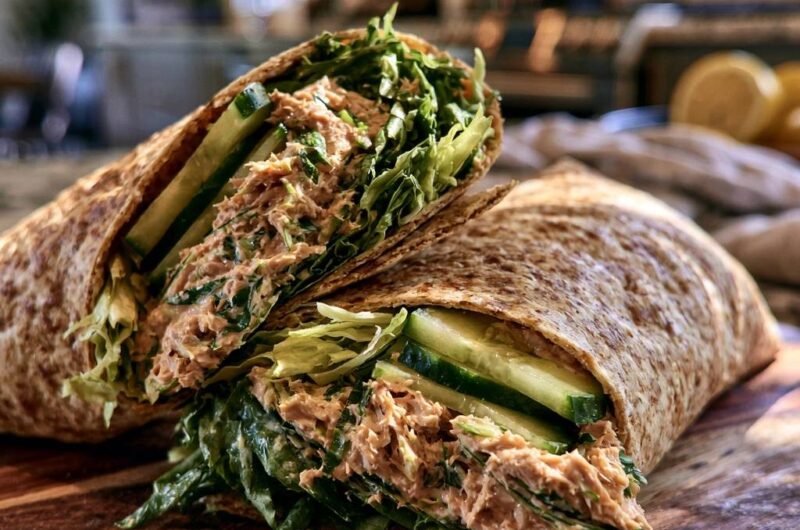
- Slice diagonally with a sharp serrated knife to reveal the distinct layers. Serve immediately or wrap tightly in parchment paper for a lunch that stays fresh and firm.
Notes
- The key to success is removing all excess liquid from the tuna and ensuring the lettuce is patted completely dry. The spinach layer acts as a physical shield to protect the tortilla from moisture.