Ever bite into pumpkin bread that crumbles like sawdust? Most home bakers face that letdown every fall. However, this moist pumpkin bread recipe changes everything with its oil-pumpkin blend that locks in tenderness for days.
Therefore, you get ultra-moist pumpkin bread that stays soft slice after slice. No more dry disappointment. In addition, the gentle folding keeps the crumb light and perfect.
For a similar soft texture, consider making these pull-apart parsley butter rolls.
The secret lies in the oil-pumpkin emulsification. It traps moisture so your loaf doesn’t dry out post-bake. Plus, that butter-honey topper melts right in for pure comfort.
Essential Ingredients for Moist Pumpkin Bread
You’ll need 2 cups all-purpose flour, 1 teaspoon baking soda, 1 teaspoon ground cinnamon, 1/2 teaspoon ground nutmeg, and 1/2 teaspoon salt for the dry base. These create lift and warm flavor without toughness. However, fresh spices make all the difference in that cozy aroma.
For the wet side, grab 1 cup granulated sugar, 1/2 cup vegetable oil, 2 large eggs, a 15-ounce can of pumpkin puree, and 1/4 cup water. Vegetable oil emulsifies better than butter alone, staying liquid to keep the crumb soft. In addition, pumpkin puree adds natural moisture, but pick pure canned stuff without added sugar or spices.
Finish with 4 tablespoons softened unsalted butter and 1/4 cup honey. Unsalted butter melts evenly without sogginess, and honey adds shine plus subtle sweetness. If you’re out of vegetable oil, coconut oil works but solidifies less.
Sugar tenderizes by drawing out moisture from the puree. Therefore, don’t skimp. For gluten-free, swap in a 1:1 flour blend, but add 1/4 teaspoon xanthan gum for structure.
Oil and Pumpkin Puree Ratio
This 1:2 oil-to-puree ratio creates emulsified fats that trap moisture even after cooling. Butter-based recipes often dry out because fats solidify. However, oil keeps things tender.
Your batter turns glossy and smooth. That’s the sign it works. In addition, it beats typical dry loaves hands down.
Spices and Leavening Agents
Baking soda reacts with pumpkin’s acidity for perfect lift. Cinnamon and nutmeg add warmth without overpowering. Therefore, measure precisely to avoid bitterness.
Freshly ground nutmeg smells incredible as it blooms. It pairs with cinnamon for that fall vibe you crave.
Science of Moisture in Pumpkin Bread Baking
Emulsification happens when oil, eggs, and pumpkin form a fat-in-water suspension. This prevents steam from escaping during baking, so your moist pumpkin bread stays soft. In addition, it limits gluten development for tenderness.
Gentle folding preserves air pockets. Overmixing squeezes them out, leading to density. However, 350 degrees F ensures even starch gelatinization for prolonged softness.
High oven temps create a thick crust that traps steam inside, causing gumminess. Therefore, stick to the recipe temp. Dry failures often come from poor emulsion or excess flour absorbing moisture.
Emulsification Locks in Tenderness
Egg lecithin binds oil and pumpkin into a stable mix. Before mixing, it’s separate; after, it’s smooth and glossy. That suspension holds moisture through baking.
You’ll see the batter thicken slightly. Perfect sign it’s locked in.
Gentle Folding Prevents Overmixing
Fold just 10-12 strokes with a spatula. It preserves air for light texture. Whisks overwork it fast.
No flour streaks means stop. Glossy batter smells sweet already.
Prep Your Pan for Perfect Moist Pumpkin Bread
Grease a 9×5-inch loaf pan with oil, then line with parchment overhanging sides. This ensures zero-stick release. In addition, the size optimizes bake time and even crumb.
Metal pans conduct heat better than glass, preventing soggy bottoms. Pro tip: chill the pan first for sharper edges. However, avoid overcrowding the oven for steady temp.
Step-by-Step Mixing for Moist Pumpkin Bread
Start with room-temp eggs to avoid curdling. Beat sugar and oil until smooth and pale, about 2 minutes. Then add eggs one by one, just until combined.
Stir in pumpkin puree and water next. The mix turns thick and orange, smelling earthy-sweet. This base emulsifies perfectly for moisture.
Room-temp ingredients blend seamlessly. Cold ones cause lumps that toughen the loaf.
Whisk Dry Ingredients Precisely
Sift flour first for even aeration. Whisk in soda, spices, and salt thoroughly. This prevents bitter pockets later.
Smell that spice whiff? You’re on track.
Beat Wet Base Smoothly
Order matters: sugar-oil first, then eggs, puree, water. Water hydrates without separating fats. Smooth ribbon stage means emulsion success.
Folding and Baking Moist Pumpkin Bread Batter
Add dry to wet all at once. Fold gently 10-12 strokes until no streaks. Pour into pan; it levels smoothly.
Bake at 350 F for 55-65 minutes. Toothpick should come out clean or with moist crumbs. Cool in pan 10 minutes to set structure.
Wire rack finish lets vapor escape evenly. No collapse. Internal temp hits 195-205 F for doneness.
Master the 10-12 Fold Technique
Scrape bottom each stroke. Stop at glossy, streak-free batter. It feels velvety on the spatula.
Overdo it, and gluten toughens. Trust the count.
Bake and Cool for Optimal Texture
Rotate pan halfway for even browning. Pan-cool prevents sinking by firming edges first. Rack finish keeps bottom crisp yet moist.
Butter-Honey Topping Seals Moist Pumpkin Bread
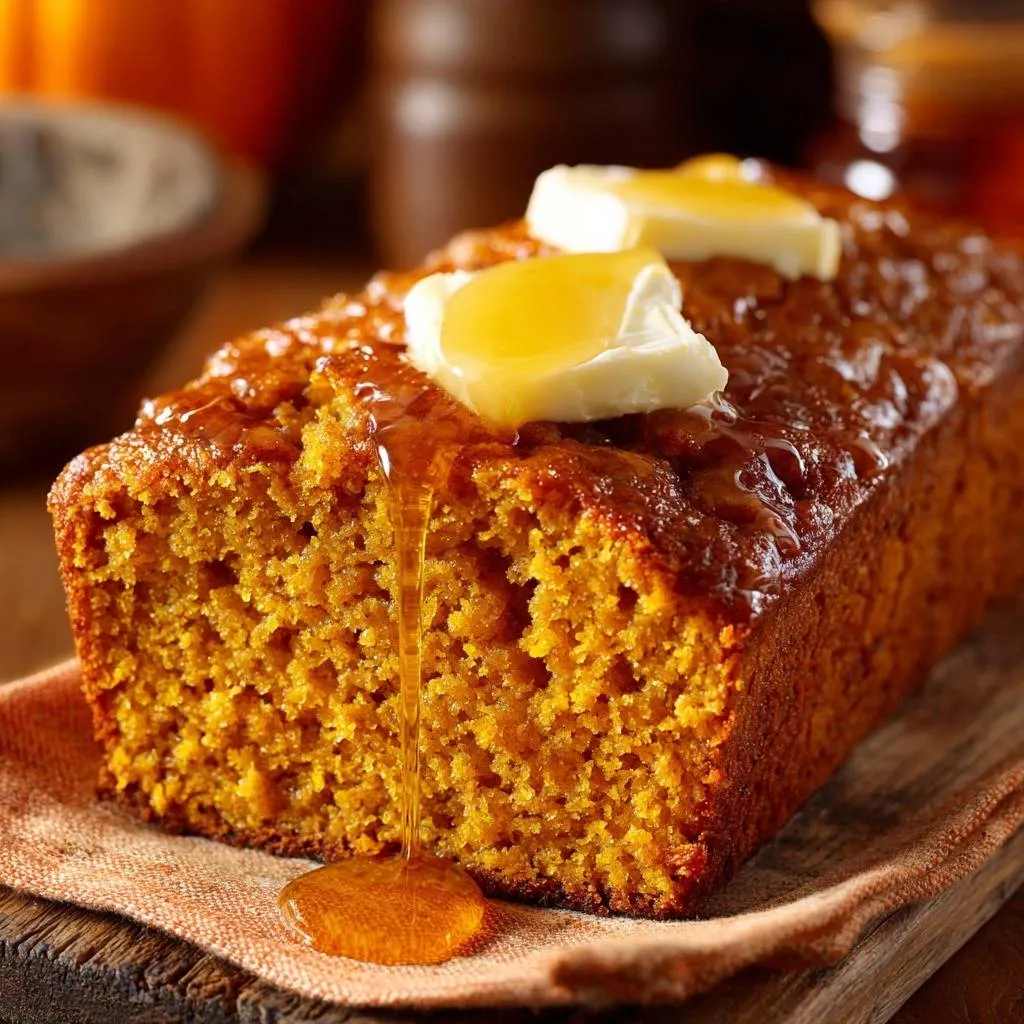
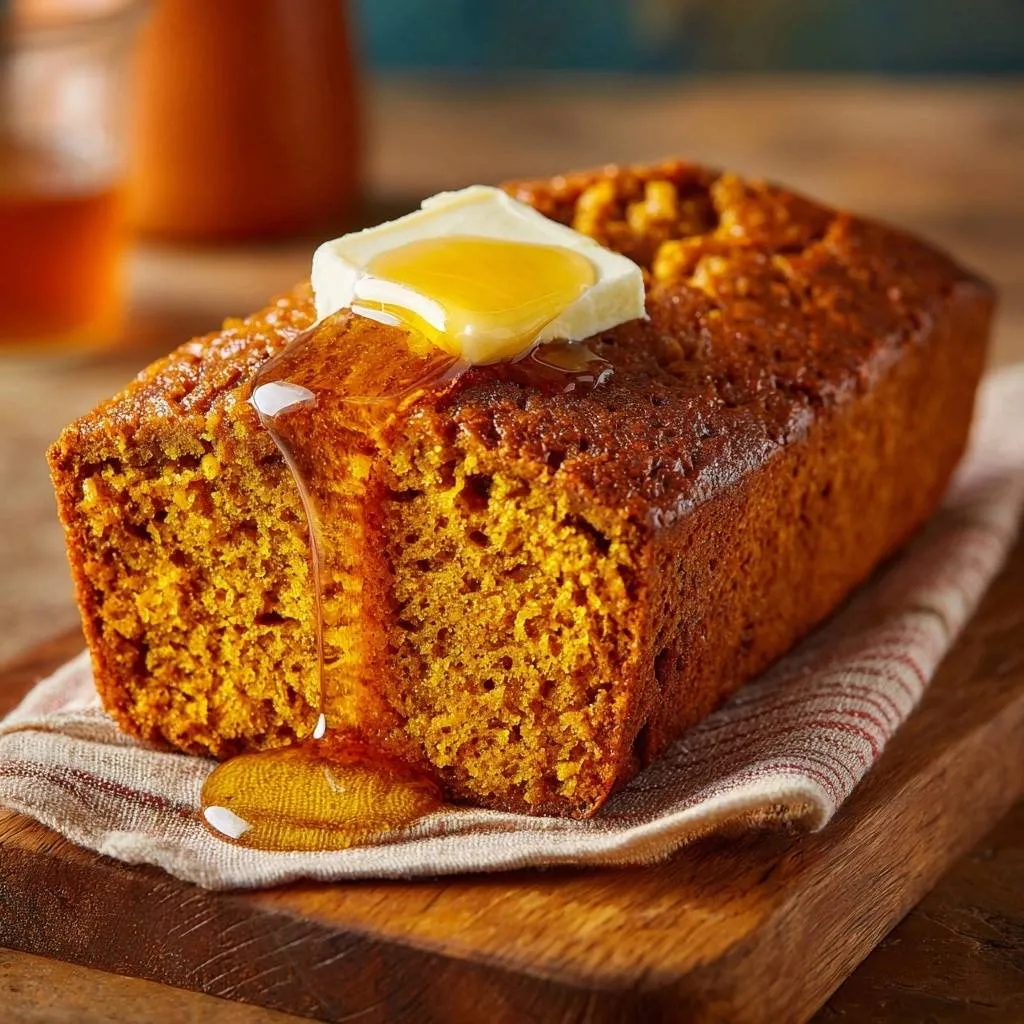
Slice warm bread thick. Spread 1/2 tablespoon softened unsalted butter per slice; watch it melt into golden pools. Drizzle 1 teaspoon honey over top for glossy shine.
This combo enhances moisture perception with fat and subtle sweet. Therefore, it tastes fresher longer. Store covered at room temp up to 4 days; it stays soft.
Freeze slices wrapped in plastic then foil for 3 months. Thaw at room temp for best texture.
Avoiding Dry Moist Pumpkin Bread Mistakes
Overmixing develops gluten, squeezing out moisture for toughness. Too much flour absorbs liquids, drying the crumb. High oven heat crusts too fast, trapping steam.
Measure flour by spooning into cup and leveling, not scooping. Check puree consistency; drain excess liquid. In addition, calibrate your oven with a thermometer.
These fixes turn failures into success. Your loaf slices tender every time.
Overmixing and Gluten Traps
Overworked batter looks dense and dull. Gentle folds keep it airy. Practice shows quick improvement.
Flour and Puree Measurement Errors
Spoon-level flour; fluff-packed dries it out. Canned puree has consistent water vs. homemade. Test by squeezing a bit dry if watery.
Flavor Variations for Moist Pumpkin Bread
Add 3/4 cup walnuts or chocolate chips after folding, but toast nuts first for crunch without moisture loss. Maple extract swaps for 1 teaspoon vanilla if you want.
For vegan, use flax eggs (2 tablespoons flax + 5 tablespoons water). Coconut oil sub keeps it moist. Applesauce cuts sugar by 1/4 cup without drying.
Almond flour for 1/2 cup all-purpose adds nuttiness. Always fold add-ins last.
Nutty and Chocolate Add-Ins
Chop walnuts coarse; fold at end. Chocolate chips sink less in thick batter. Both amp texture contrast.
Oil and Sugar Swaps
Avocado oil brings mild flavor boost. Brown sugar pulls extra moisture for deeper taste. Both enhance without changes.
Pairings That Elevate Moist Pumpkin Bread
Breakfast with Greek yogurt and berries cuts richness. Afternoon snack? Cream cheese spread. Dinner side to soups warms it up.
Coffee or chai tea balances spices. Apple slices add tart crunch. Contrasts make each bite pop.
Make-Ahead Guide for Moist Pumpkin Bread
Rest batter in fridge up to 24 hours; flavors meld deeper. Bake fully, cool, then freeze slices 3 months. Thaw overnight for peak moisture.
Pro tip: wrap loaves tight for gifting. It stays moist longer than store-bought.
Troubleshooting Moist Pumpkin Bread Issues
Sunken center means undermixing or early oven open. Gummy middle? Too much puree or low temp. Cracked top is normal from steam; trim for neat slices.
Pale crust signals oven calibration issue. Dense loaf? Check altitude; add 1-2 tablespoons flour extra above 3000 feet. Fixes keep it foolproof.
Sunken or Dense Loaf Fixes
Use oven thermometer always. At high altitude, bake 25 F hotter. Firm bake prevents sinks.
Gummy or Dry Crumb Solutions
Drain puree if soupy; measure oil precisely. Dry? Next time up puree by 2 tablespoons.
FAQ
How do I store leftovers of moist pumpkin bread?
Keep it covered at room temperature in an airtight container for up to 4 days; the oil-pumpkin emulsion keeps it soft without refrigeration drying it out. For longer, slice and freeze in a single layer on a sheet, then transfer to a freezer bag for up to 3 months. Thaw slices at room temp or toast straight from frozen to restore moisture and warmth.
Why did my moist pumpkin bread turn out dry?
Dryness usually hits from overmixing, which develops tough gluten, or packing flour instead of spoon-leveling it. Too little oil or watery puree also sucks moisture. Fix it next time by folding just 10-12 strokes, measuring flour by weight (240g for 2 cups), and using full-fat canned pumpkin without draining unless soupy.
Can I substitute ingredients in moist pumpkin bread?
Yes, swap vegetable oil for coconut or avocado oil 1:1 for similar moisture lock. No eggs? Use 2 flax eggs (2 tbsp ground flax + 5 tbsp water, rested 5 min). Gluten-free flour works 1:1, but add 1/4 tsp xanthan gum. Reduce sugar with 1/4 cup applesauce, keeping the wet balance intact for tenderness.
Why is my pumpkin bread gummy or dense?
Gumminess comes from excess moisture like undrained puree or inaccurate water, trapping steam inside. Density signals overmixing or old baking soda failing to lift. Test puree by squeezing; drain if wet. Whisk dry ingredients well, use fresh leaveners, and bake to 200 F internal temp for even crumb.
How do I know when moist pumpkin bread is fully baked?
A toothpick in the center should come out clean or with a few moist crumbs, not wet batter. Edges pull from pan sides, and top springs back lightly. Internal temp of 195-205 F confirms it without drying; cooler risks sinking, hotter toughens. Rotate pan midway for evenness.
Can I make moist pumpkin bread ahead for holidays?
Absolutely, refrigerate batter up to 24 hours for deeper spice flavor, then bake fresh. Fully baked loaves freeze best sliced, up to 3 months. Thaw wrapped overnight, or warm slices in a 300 F oven 5 minutes to revive steam and softness, perfect for gifting or brunches.
Pumpkin Bread
Course: DessertCuisine: AmericanDifficulty: medium1
loaf (about 12 slices)15
minutes1
hour250
kcal75
MinutesDry pumpkin bread ruins fall baking every time. This foolproof recipe uses a simple oil-pumpkin blend and gentle folding technique to lock in moisture for tender, flavorful slices that stay soft for days. Top with melting butter and honey for pure bliss.
Ingredients
2 cups all-purpose flour
1 teaspoon baking soda
1 teaspoon ground cinnamon
1/2 teaspoon ground nutmeg
1/2 teaspoon salt
1 cup granulated sugar
1/2 cup vegetable oil
2 large eggs
1 (15-ounce) can pumpkin puree
1/4 cup water
4 tablespoons unsalted butter, softened
1/4 cup honey
Directions
- Preheat oven to 350 degrees F. Grease a 9×5-inch loaf pan with oil and line with parchment paper for easy release.
- In a medium bowl, whisk together flour, baking soda, cinnamon, nutmeg, and salt. Set aside.
- In a large bowl, beat sugar and oil until smooth. Add eggs one at a time, beating just until combined. Stir in pumpkin puree and water until fully blended. This oil-pumpkin ratio is the key moisture lock-in, preventing dryness by emulsifying fats that stay soft even after cooling.
- Add dry ingredients to wet mixture all at once. Fold gently with a spatula 10-12 strokes max, until no flour streaks remain. Overmixing squeezes out air and moisture, so stop early for that perfect tender crumb.
- Pour batter into prepared pan. Bake 55-65 minutes, until a toothpick inserted in center comes out clean. Cool in pan 10 minutes, then transfer to wire rack.
- Slice warm bread. Top each slice with 1/2 tablespoon softened butter, letting it melt in. Drizzle 1 teaspoon honey over butter for glossy, addictive shine. Store covered at room temp up to 4 days, still moist.
Notes
- The oil-pumpkin ratio is the key to moisture lock-in. Fold gently 10-12 strokes max to avoid dryness. Store covered at room temp up to 4 days.