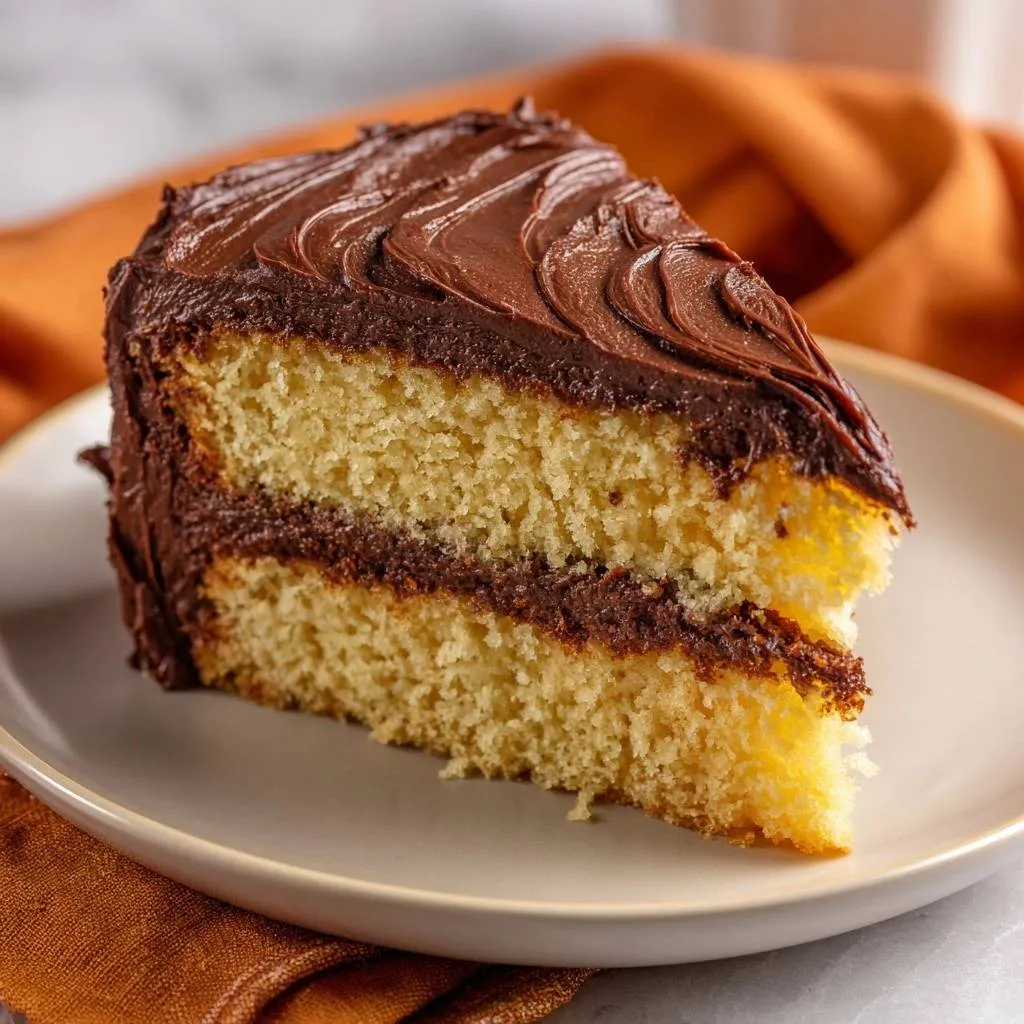
Ever bitten into a homemade yellow cake that crumbled like sawdust? This moist yellow layer cake with chocolate frosting changes everything. You’ll get tender, fluffy layers that stay soft for days, thanks to one key step that most recipes skip.
Picture slicing through rich chocolate frosting into a crumb so fine and moist it practically melts. That’s the joy here. You control the freshness, and it beats any store-bought mix hands down.
Similar to this moist crumb, you’ll find that red velvet cheesecake cookies also benefit from careful hydration.
Here’s the expertise boost: cream the butter and sugar for a full 8 to 10 minutes on medium-high. This traps air bubbles that expand in the oven, locking in moisture for that perfect tender crumb every time.
For more ideas on rich chocolate creations, explore this chocolate pistachio layer cake.
Why This Moist Yellow Layer Cake Succeeds
Classic American baking evolved this cake from simple 19th-century butter recipes to the fluffy favorites we crave today. Room-temperature ingredients blend seamlessly, while precise ratios keep everything balanced. However, most home bakers end up with dry results from rushed steps.
In addition, this version uses an extended creaming method that outperforms box mixes. You avoid the common pitfalls like overmixing or cold dairy, which cause toughness. Therefore, your cake stays moist and light.
Classic Appeal of Yellow Layer Cakes
Yellow layer cakes trace back to the 1800s, when butter and eggs created golden treats for celebrations. By mid-century, they paired perfectly with chocolate frosting at birthdays and potlucks. Today, they still bring that joyful, nostalgic comfort to any table.
Key to Beating Dry Cake Texture
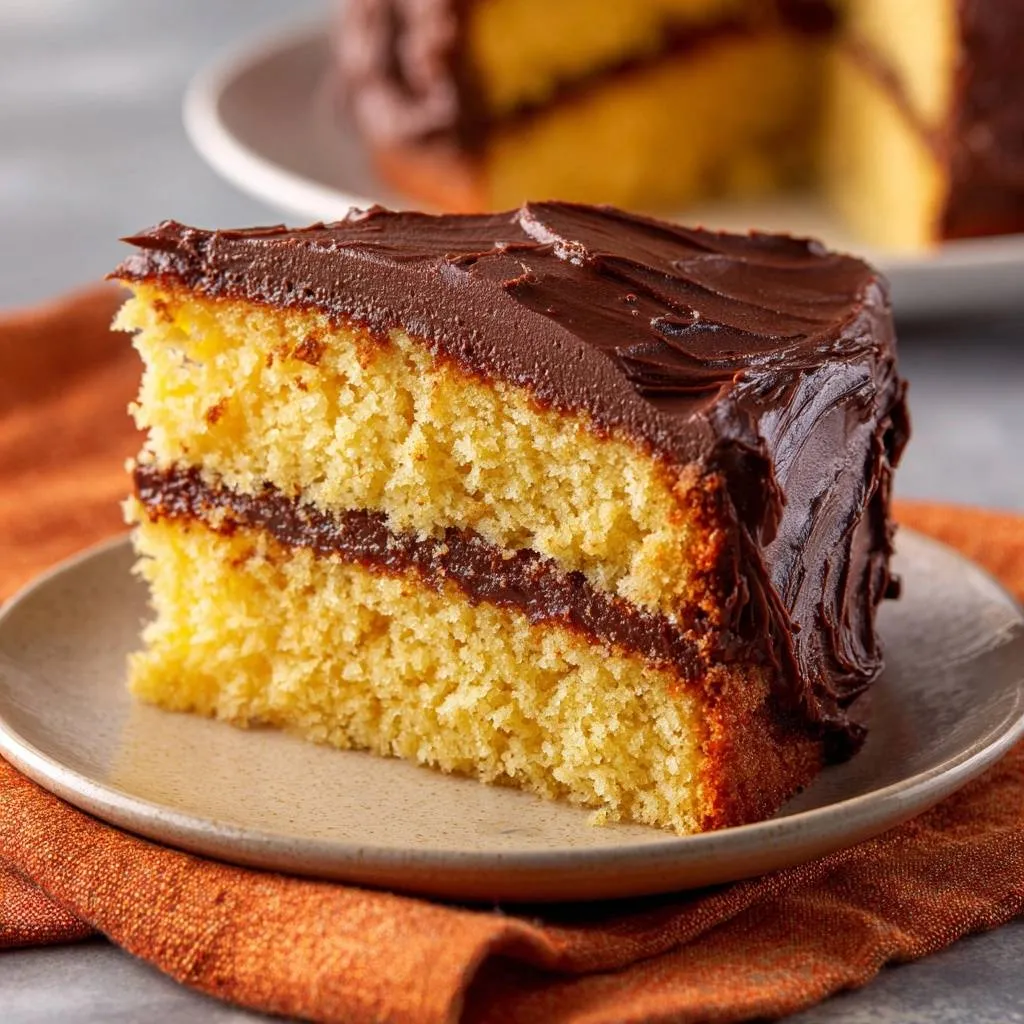
Standard recipes fail because they skimp on creaming time, leading to dense, dry cakes. Overmixing develops too much gluten too. This recipe’s 8-10 minute creaming step aerates the batter fully, ensuring even moisture and fluffiness.
Cake Flour and Dry Ingredients Breakdown
Cake flour’s low protein content makes all the difference for tenderness. You’ll need 2 1/4 cups, plus 2 1/2 teaspoons baking powder for lift and 1/2 teaspoon salt to enhance flavors. Sift them together for even distribution; no lumps means smoother batter.
Therefore, measure by weight if possible, about 270 grams for flour. If you lack cake flour, mix all-purpose with cornstarch. Fresh baking powder reacts best, so check the date on yours.
Why Cake Flour Ensures Moist Crumb
Cake flour has 7-9% protein versus 10-12% in all-purpose, so it forms less gluten. That results in a soft, moist crumb instead of chewiness. In addition, it absorbs liquid evenly without compacting.
Baking Powder Activation Science
Baking powder triggers an acid-base reaction, releasing CO2 bubbles for rise. Double-acting types work once when wet and again in heat. Therefore, it gives steady lift without collapse.
Butter Creaming for Maximum Moisture
Start with 3/4 cup softened unsalted butter; beat it 1 minute until creamy. Gradually add 1 1/2 cups sugar, then cream on medium-high for 8-10 minutes total. Watch it turn pale, fluffy, and nearly double, filling your kitchen with sweet buttery aroma.
This step incorporates air that steams during baking, keeping the cake moist. Scrape the bowl often for even texture. Short creaming leads to flat, dry results, but this method guarantees fluff.
Science of Prolonged Creaming Technique
Extended creaming forms a stable emulsion, trapping tiny air bubbles. These expand in the oven, creating steam that tenderizes the crumb. Fat coats starches, blocking excess gelatinization for ultimate moistness.
Room Temperature Eggs Integration
Add 3 room-temp eggs one at a time, beating 1 minute each to prevent curdling. Then mix in 2 teaspoons vanilla and optional yellow food coloring. Room-temp eggs emulsify smoothly, so your batter stays silky.
Alternating Wet and Dry Mixing Method
On low speed, add dry mix in three parts, alternating with 1 cup room-temp whole milk, starting and ending with flour. Mix just until combined; you’ll see no dry streaks. Overmixing toughens the cake, so stop promptly.
Divide batter evenly between pans, about 1 1/2 cups each. This ensures uniform layers. Pro tip: tap pans gently to release air bubbles for even rise.
Pan Prep for Even Moist Baking
Grease two 8-inch rounds, line with parchment, grease again, and flour. This prevents sticking and promotes even browning. Position in the center oven rack for uniform heat.
Baking and Cooling Precision
Bake at 350°F for 25-30 minutes; toothpick should come out clean. Cool in pans 10 minutes, then invert onto racks. Inversion speeds cooling and avoids soggy bottoms.
Rich Chocolate Frosting Components
Beat 1 cup softened butter until creamy, then gradually add 3 1/2 cups powdered sugar, 3/4 cup unsweetened cocoa, 1/2 cup whole milk, 2 teaspoons vanilla, and a pinch of salt. Beat on medium-high 3-4 minutes for light, spreadable frosting.
Cocoa provides intense flavor without melting issues of chocolate. Sift dry ingredients first to avoid lumps. This makes about 4 cups, perfect for generous frosting.
Cocoa Powder’s Flavor Intensity
Unsweetened cocoa delivers deep chocolate taste; sift it to nix lumps. Whole milk creates creaminess without runniness. Dutch-processed works too, but natural gives brighter flavor.
Layer Assembly and Pro Frosting Finish
Level domes if needed, then place one layer on a plate. Spread 1 cup frosting on top, add second layer. Frost top and sides smoothly, then swirl the top with an offset spatula.
For clean slices, chill 30 minutes first. Store covered at room temp up to 3 days. Pro tip: crumb coat first to trap crumbs for a flawless finish.
Achieving Smooth Chocolate Frosting
Beat 3-4 minutes on medium-high to aerate and fluff. If too soft, chill 10 minutes. An offset spatula smooths like a pro.
Science Behind Moist Yellow Layer Cake
Creaming aerates batter for lift, while fat coats flour to limit gluten. Even mixing hydrates starches gently. Proper cooling retains oven moisture, and frosting seals it in.
Therefore, air bubbles from creaming expand into steam, tenderizing every bite. This beats quick breads, which lack that structure.
Air Bubbles and Steam Dynamics
Creaming traps air that heat expands into steam, lifting and moistening the cake. Unlike quick breads, this creates fine, even crumb. Stability prevents sinking.
Avoiding Dry Cake Pitfalls
Overbeating after eggs deflates air, leading to density. Cold ingredients cause lumps and poor emulsion. Measure flour by spooning lightly, not packing.
In addition, check oven temp with a thermometer; hot spots dry edges. Underbaking leaves gummy centers, so use the toothpick test religiously.
Overmixing and Gluten Warnings
Overmixing builds tough gluten; stop when batter just combines. Look for a smooth, thick flow off the spatula. That keeps it tender.
Temperature Control Fixes
Use a thermometer for butter at 65-67°F, milk and eggs similar. Oven at true 350°F prevents cracks or dryness.
Flavor Variations for Yellow Layer Cake
Add lemon zest or almond extract to the batter for brightness. Swap whole milk for coconut milk in dairy-free versions. For frosting, stir in espresso powder or peanut butter.
Sprinkles or berry puree work as add-ins without hurting moisture. However, keep liquids minimal to maintain structure.
Chocolate Frosting Adaptations
Mix in brewed coffee for mocha depth. Or try almond milk for lighter texture. Ganache alternative: heat cream and pour over chopped chocolate.
Make-Ahead Strategies for Layer Cakes
Bake layers, cool fully, wrap tightly, and freeze up to 2 months. Thaw overnight in fridge for peak moistness. Frost day-of for best results.
Assembled cake keeps in fridge 2 days; bring to room temp before serving. Therefore, it’s party-ready without last-minute stress.
Perfect Pairings for Chocolate Frosted Cake
A cold glass of milk cuts through the richness perfectly. Fresh berries or banana slices add tart contrast. Coffee enhances the chocolate depth.
Great for birthdays or tea time. Sprinkle chopped nuts on top for crunch.
Complementary Creations
To enhance your yellow layer cake and chocolate frosting experience, consider these delightful pairings.
- For a sweet start to your morning or a delightful brunch addition, try these cinnamon sugar waffles, offering a warm spice that complements the cake’s sweetness.
- For a savory contrast that balances the sweetness of the cake, explore the rich flavors of a loaded sausage gravy tater tot bowl.
Troubleshooting Moist Yellow Layer Cake
How do I store leftovers of moist yellow layer cake with chocolate frosting?
Store covered at room temperature up to 3 days in an airtight container. For longer, refrigerate up to 5 days; let it warm up before serving to restore moistness. It freezes well unfrosted: wrap layers tightly for 2 months, thaw in fridge, then frost.
Why is my yellow layer cake dry, and how do I fix it?
Dry cake usually comes from short creaming, overmixing, or inaccurate flour. Next time, cream butter and sugar a full 8-10 minutes until fluffy, and mix batter just until combined. Also, spoon flour into the cup lightly, and ensure all ingredients are room temp.
Can I substitute ingredients in this moist yellow layer cake recipe?
Yes, use 2 1/4 cups all-purpose flour minus 1/4 cup plus 2 tablespoons cornstarch for cake flour. Swap whole milk for 2% or plant-based, but keep room temp. No unsalted butter? Use salted and reduce added salt by 1/4 teaspoon.
Why did my chocolate frosting turn out grainy?
Graininess happens from unsifted powdered sugar or cocoa, or cold butter. Sift dry ingredients first, and beat on medium-high 3-4 minutes after all additions. If needed, add milk 1 tablespoon at a time while beating for smoothness.
How can I prevent my cake layers from sinking in the middle?
Avoid opening the oven door early, which drops heat and deflates rise. Ensure baking powder is fresh, and don’t overfill pans. Test doneness at 25 minutes; fully baked centers hold structure.
Is yellow food coloring necessary for this layer cake?
No, it’s optional for that classic golden hue from egg yolks alone. Without it, you’ll get a pale yellow from the batter. Add 1/4 teaspoon gel color after vanilla for vibrant color without altering taste or texture.
Yellow Layer Cake
Course: DessertCuisine: AmericanDifficulty: medium12
servings30
minutes30
minutes550
kcal120
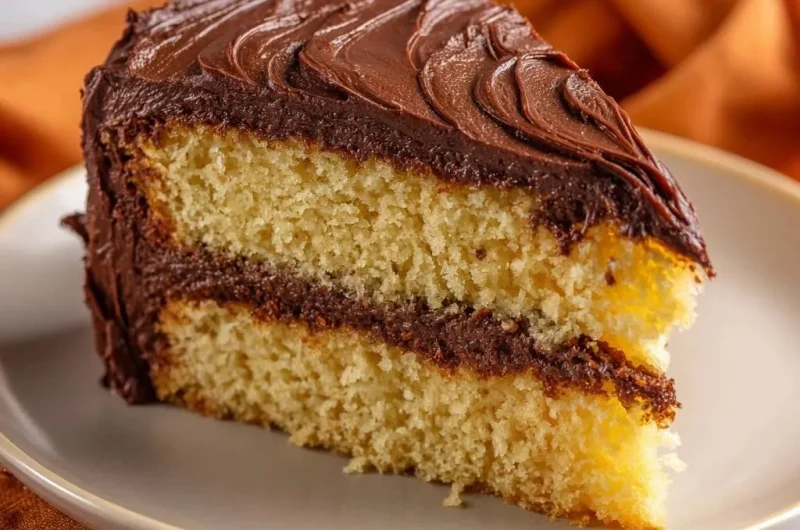
MinutesDry, crumbly homemade cake ruining your bake? This recipe fixes it with one game-changing creaming step that locks in air and moisture for tender, fluffy layers every single time. Perfect with a glass of milk.
Ingredients
Cake:
2 1/4 cups cake flour
2 1/2 teaspoons baking powder
1/2 teaspoon salt
3/4 cup unsalted butter, softened
1 1/2 cups granulated sugar
3 large eggs, room temperature
2 teaspoons vanilla extract
1 cup whole milk, room temperature
1/4 teaspoon yellow food coloring (optional, for classic yellow hue)
Chocolate Frosting:
1 cup unsalted butter, softened
3 1/2 cups powdered sugar
3/4 cup unsweetened cocoa powder
1/2 cup whole milk
2 teaspoons vanilla extract
Pinch of salt
Directions
- Preheat oven to 350 degrees F. Grease two 8-inch round cake pans, line bottoms with parchment, grease parchment, and dust with flour. Tap out excess.
- Whisk flour, baking powder, and salt in a bowl. Set aside. In a large bowl, beat butter on medium speed 1 minute until creamy. Add sugar gradually, then beat on medium-high 8 to 10 minutes total until pale, fluffy, and nearly doubled in volume. This extended creaming traps maximum air bubbles, preventing dry cake by ensuring even moisture distribution and tender crumb.
- Add eggs one at a time, beating well after each (1 minute per egg). Beat in vanilla and food coloring if using.
- On low speed, add flour mixture in three parts, alternating with milk (start and end with flour). Mix just until combined, scraping bowl as needed. Do not overmix.
- Divide batter evenly between pans. Bake 25 to 30 minutes until toothpick in center comes out clean. Cool in pans 10 minutes, then invert onto wire racks, remove parchment, and cool completely.
- For frosting: Beat butter until creamy. Gradually add powdered sugar, cocoa, milk, vanilla, and salt. Beat on medium-high 3 to 4 minutes until light and spreadable.
- Level cake tops if needed. Place one layer on serving plate, spread 1 cup frosting on top. Add second layer, frost top and sides smoothly. Swirl top with offset spatula for that pro look. Slice and serve! Store covered at room temp up to 3 days.
Notes
- Use room temperature ingredients for best results. Extended creaming (8-10 minutes) is key to trapping air for fluffy texture. Store covered at room temperature up to 3 days.