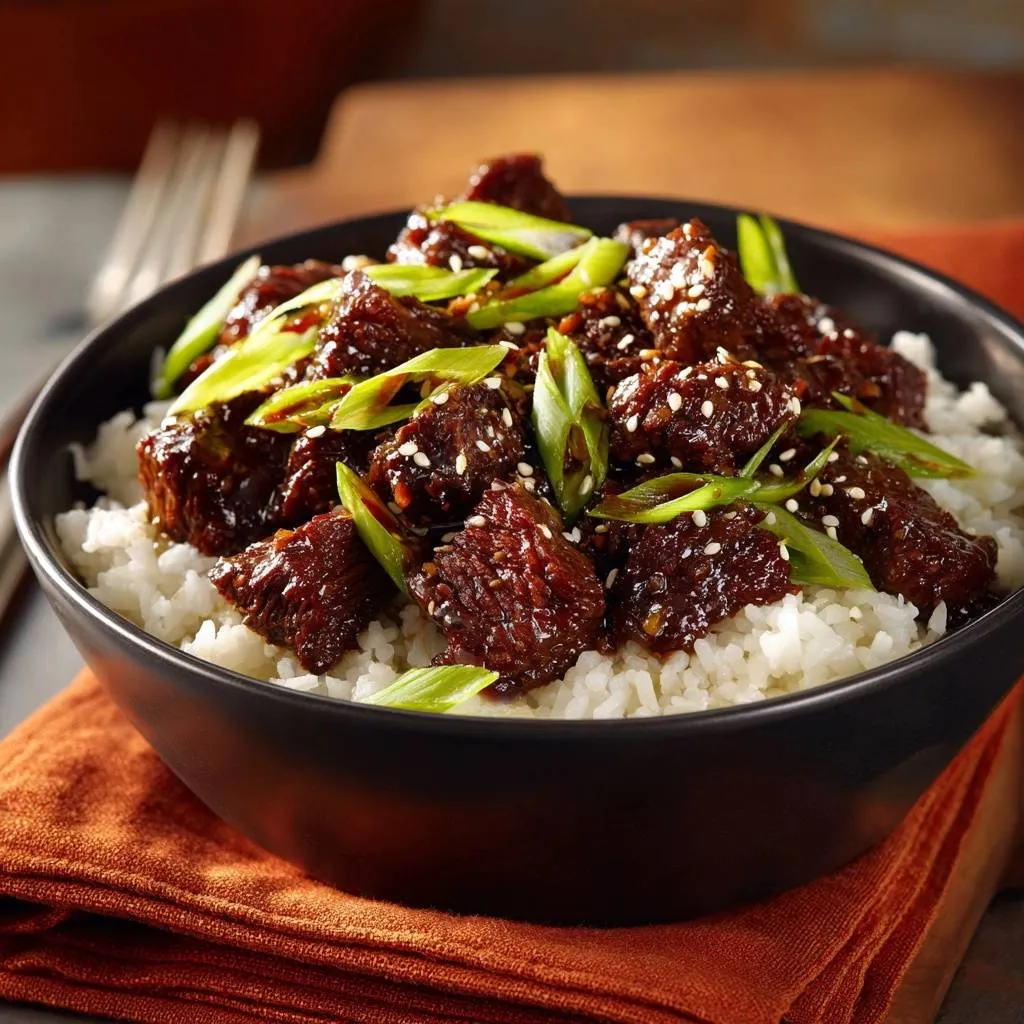
Tired of chewy beef that ruins your Mongolian Beef Bowls? This recipe fixes that fast. You’ll have dinner ready in 20 minutes, with juicy, crispy-edged beef that beats takeout every time. No fancy gear required, just a quick cornstarch marinade and a screaming-hot wok.
Here’s why it works so well. Thin slicing against the grain shortens the muscle fibers, and velvetting seals in juices. Most home cooks skip these steps, ending up with tough meat. But this method delivers restaurant results for 4 servings.
The real secret? That 10-minute cornstarch rest. It forms a thin barrier that locks tenderness during the high-heat sear. You’ll taste the difference immediately.
Why Mongolian Beef Bowls Deliver Juicy Results
Mongolian Beef Bowls trace back to American-Chinese fusion, not actual Mongolia. Restaurants adapted the dish into easy bowls for weeknights. Thin slicing plus velvetting beats old myths about complicated velveting with egg whites.
Takeout versions often steam the beef, making it tough. However, this recipe uses a quick cornstarch coat for superior tenderness. In addition, the glossy sauce clings perfectly to every piece.
Therefore, you get bold flavors without chewiness. It’s perfect for busy evenings, and variations like adding veggies keep it fresh.
For a sweet finish, try these cinnamon sugar baked peaches.
Velvetting Science for Tender Beef
Cornstarch creates a protective barrier around the beef. During cooking, it traps juices and prevents toughness. This simplified version skips egg whites from traditional Chinese methods.
First, slice sirloin against the grain. Look for the lines in the meat and cut perpendicular to them. That shortens fibers for melt-in-your-mouth results.
High-Heat Wok Sear Explained
High heat triggers the Maillard reaction for crispy edges. A smoking-hot wok sears fast without overcooking the inside. Therefore, cook in a single layer to avoid steaming.
Don’t crowd the pan. Otherwise, moisture releases and you get boiled beef instead of crispy.
Key Ingredients for Mongolian Beef Bowls
Grab 1 lb beef sirloin, thinly sliced; 2 tbsp cornstarch; 2 tbsp soy sauce; 1/4 cup brown sugar; 2 tbsp water; 1 tbsp sesame oil; 4 green onions, sliced (whites and greens separated); 1 tsp sesame seeds; and 4 cups cooked white rice. These make Mongolian Beef Bowls shine.
Sirloin offers affordability and flavor over pricier flank. Low-sodium soy prevents oversaltiness. Brown sugar caramelizes better than honey for that sticky glaze.
Green onions add freshness, with whites building aroma and greens as garnish. Sesame oil brings nutty depth. Simple pantry staples deliver big taste in Mongolian Beef Bowls.
Beef Choices: Sirloin Slicing Guide
One pound of sirloin slices thin for quick cooking. Cut against the grain to tenderize. Flank works too, but sirloin stays juicier and cheaper.
Ribeye adds richness if you splurge. Always freeze beef 20 minutes first for easier slicing.
Sauce Builders: Soy, Sugar, Sesame Balance
The 2:1/4 cup soy-to-brown sugar ratio creates glossy perfection. Water thins it for even coating. Green onions play dual roles in flavor and finish.
Equipment Essentials for Mongolian Beef Bowls
A wok or large skillet does the job. Carbon steel retains heat best for sears. Sesame oil’s high smoke point handles intense heat without burning.
No wok? A cast iron skillet works fine. Heat it until smoking. An instant-read thermometer hits 450°F if you want precision.
Prepping Your Wok for Perfect Sear
Heat over high for 2 minutes until it smokes. Swirl in sesame oil to coat evenly. Cast iron takes a touch longer but holds heat well.
Step-by-Step: Velvet and Sear Mongolian Beef
Start with the velvetting for your Mongolian Beef Bowls. Toss beef with cornstarch and rest 10 minutes. This step transforms tough cuts into tender bites.
Marinate Beef Slices with Cornstarch
In a bowl, toss 1 lb thinly sliced sirloin with 2 tbsp cornstarch. Use your hands to coat evenly. Let sit exactly 10 minutes; longer makes it gummy.
You’ll see a light, velvety sheen. That’s the barrier forming. Perfect for juicy Mongolian Beef Bowls.
Blazing Wok Sear for Crispy Edges
Heat wok until smoking, add sesame oil, and swirl. Add beef in a single layer. Sear undisturbed 1-2 minutes for crispy edges, then flip for 1 minute.
Remove to a plate fast. This prevents overcooking. The beef smells amazing now, with browned bits forming.
Build Glossy Sauce for Mongolian Beef Bowls
White parts of green onions go in next. Stir 30 seconds, then add soy, brown sugar, and water. Boil 2 minutes for a thick, glossy sauce.
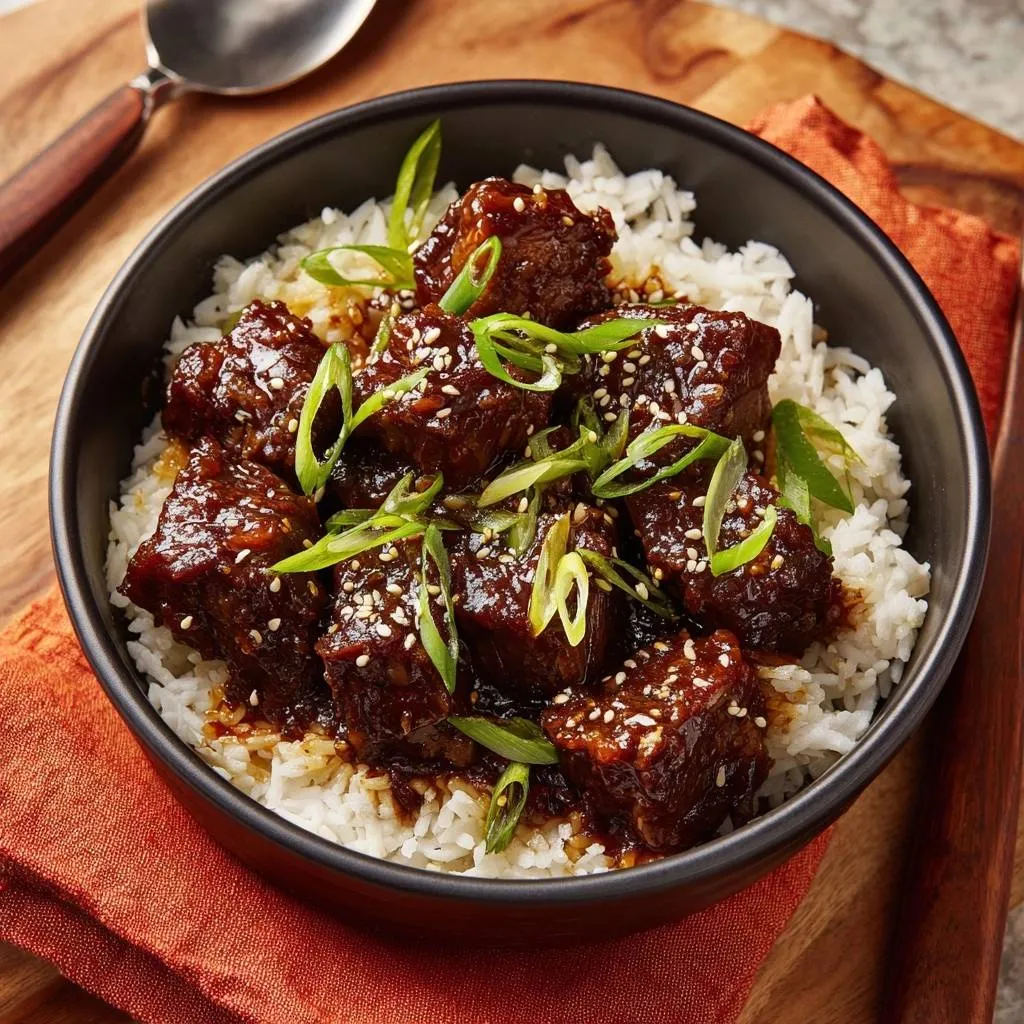
Return beef and toss 1 minute. It clings perfectly. Serve over rice with green onions and sesame seeds.
Boil-Down Technique for Sticky Glaze
Boil the sauce 2 minutes; evaporation thickens it to syrupy. Stir often to avoid burning sugar. Look for glossy bubbles as your cue.
Avoiding Pitfalls in Mongolian Beef Bowls
Common mistakes kill Mongolian Beef Bowls. Overcrowding steams the beef. Skipping velvet leaves it tough. Low heat boils instead of sears.
Therefore, work in batches if needed. Always velvet first. High heat is non-negotiable for crispiness.
Fixing Tough or Soggy Beef
If beef’s tough, you skipped velvet or used low heat. Verify smoke point next time. For soggy, pat dry before coating and sear hotter.
Sauce Too Thin? Quick Thickening Hacks
Mix 1 tsp cornstarch with water for a slurry. Stir in and boil 1 minute. Balance with a pinch more sugar if needed.
Flavor Twists on Mongolian Beef Bowls
Boost with minced ginger and garlic. Add hoisin for umami depth. Spice it up with sriracha. These keep Mongolian Beef Bowls exciting.
Broccoli or peppers add crunch. Stir-fry veggies first, then sauce. Perfect for variety.
Vegetable-Packed Mongolian Beef Variations
Slice bell peppers thin and add after searing beef. Snap peas go in last to stay crisp. This bumps nutrition without mushiness.
Perfect Pairings for Mongolian Beef Bowls
Serve over 4 cups jasmine rice for the base. Add cucumber salad or steamed bok choy. Green tea or iced jasmine tea refreshes the palate.
Assemble bowls with rice bottom, beef and sauce on top. Garnish generously.
Quick Sides to Complete the Bowl
Slice cukes thin, toss with rice vinegar, salt, and chili flakes for 5-minute pickles. Upgrade rice with frozen peas stirred in while hot. Contrasts crisp with sticky.
Make-Ahead Strategies for Mongolian Beef Bowls
Marinate beef up to 24 hours ahead. Sauce keeps in fridge 3 days. Full dish freezes 2 months, rice batches easily for meal prep.
Freezing and Reheating Without Texture Loss
Portion into bags, flatten for quick thaw. Reheat in hot wok with a splash of water. Crisp returns fast.
Troubleshooting Mongolian Beef Bowls
Sauce Not Sticking? Fixes Here
Boil longer or add cornstarch slurry. Toss beef vigorously for 1 full minute.
Scaling for Family Batches
Double ingredients but sear in two wok batches. Sauce scales evenly.
How do I store leftovers of Mongolian Beef Bowls?
Keep in an airtight container in the fridge for up to 3 days. Reheat in a hot skillet with a teaspoon of water to revive the sauce. It doesn’t freeze well because the texture gets soggy; eat fresh instead.
Why is my beef chewy in Mongolian Beef Bowls?
Chewiness comes from skipping the cornstarch velvet or low-heat cooking. Always rest the coated beef 10 minutes and sear on smoking-hot wok undisturbed for crispy edges. Slice against the grain too, or fibers stay long and tough.
Can I substitute ingredients in Mongolian Beef Bowls?
Use tamari for gluten-free soy sauce. Coconut sugar swaps for brown sugar, but reduce by 1 tbsp as it’s sweeter. Flank steak works if sirloin’s unavailable; slice extra thin. Avoid frozen beef; thaw fully first to prevent ice crystals toughening it.
Why is my sauce not glossy in Mongolian Beef Bowls?
It needs a full 2-minute boil for evaporation and thickening. Stir constantly after adding sugar to prevent burning, and use room-temp water for even reduction. If still thin, a quick cornstarch slurry (1 tsp in 1 tbsp water) fixes it instantly.
How do I make Mongolian Beef Bowls spicier?
Stir in 1-2 tsp sriracha or chili garlic sauce with the soy. For heat lovers, add dried red chilies during the onion step. Taste the sauce before tossing beef; adjust gradually to balance sweet-savory.
Can I make Mongolian Beef Bowls vegetarian?
Swap beef for sliced mushrooms or extra-firm tofu pressed dry. Velvet the tofu same way for crispiness. Double veggies like broccoli for heartiness; sauce clings perfectly to plant-based options.
Mongolian Beef
Course: Main CourseCuisine: AsianDifficulty: easy4
servings15
minutes10
minutes550
kcal25
MinutesTired of chewy beef ruining your stir-fry? This recipe uses a quick cornstarch marinade and blazing-hot wok sear to lock in juicy tenderness every single time, no fancy equipment needed.
Ingredients
1 lb beef sirloin, thinly sliced against the grain
2 tbsp cornstarch
2 tbsp soy sauce
1/4 cup brown sugar
2 tbsp water
1 tbsp sesame oil
4 green onions, sliced (white and green parts separated)
1 tsp sesame seeds
4 cups cooked white rice
Directions
- Toss beef slices with cornstarch in a bowl. Let sit 10 minutes. This velvetting step tenderizes by forming a protective coating that seals juices during cooking, preventing toughness.
- Heat a wok or large skillet over high heat until smoking hot, about 2 minutes. Add sesame oil and swirl to coat.
- Add beef in a single layer. Sear undisturbed 1-2 minutes until browned and crispy-edged. Flip and sear other side 1 minute. Remove beef to a plate. High heat flash-cooks without steaming, keeping it tender.
- In same wok, add white parts of green onions. Stir 30 seconds. Add soy sauce, brown sugar, and water. Boil 2 minutes until thick and glossy.
- Return beef to wok. Toss to coat 1 minute.
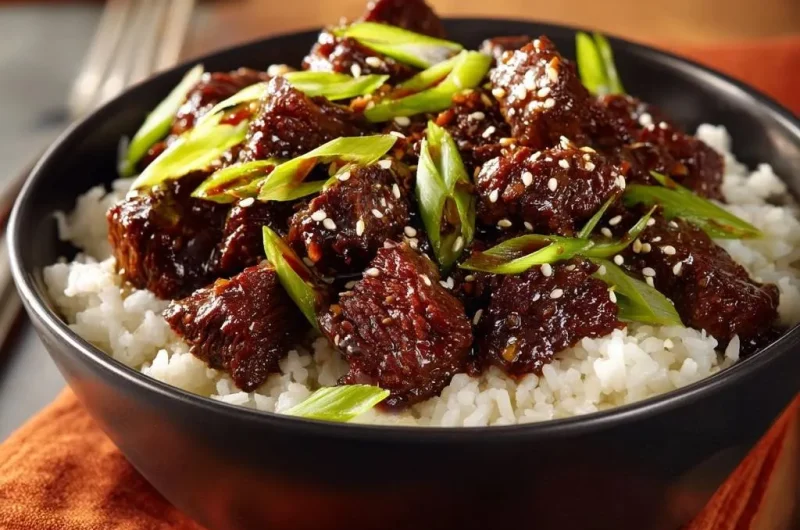
- Serve over rice, topped with green onion greens and sesame seeds.
Notes
- Slice beef thinly against the grain for maximum tenderness. Use a wok or skillet that can handle high heat.