Why Velveting Transforms Mongolian Beef Rice Bowls
Picture this: you crave Mongolian Beef Rice Bowls, fire up a copycat recipe, and end up chewing through tough, leathery meat that ruins the whole bowl. It happens all the time because most home cooks skip the velveting step. However, this recipe fixes that with a simple cornstarch marinade that coats the beef, keeping it juicy and tender like restaurant takeout.
Therefore, you’ll get melt-in-your-mouth bites every time. The velveting technique, straight from Chinese cooking, creates a barrier around the proteins so they don’t tighten up during the high-heat sear. In addition, no fancy equipment or baking soda is needed; just 10 minutes at room temp does the trick.
Oh man, the first time I nailed this, the beef practically dissolved on my tongue, glossy sauce clinging to every piece. Here’s the pro tip: use exactly 1 tablespoon cornstarch in the marinade. It breaks down tough fibers without turning the meat mushy, guaranteeing perfect Mongolian Beef Rice Bowls.
Key Ingredients for Juicy Mongolian Beef Rice Bowls
Start with 1 pound beef chuck or sirloin, cut into 1-inch cubes. Chuck brings budget-friendly marbling for extra juiciness, while sirloin stays leaner yet tender. Therefore, both work great in Mongolian beef bowls since the velveting handles any toughness.
Low-sodium soy sauce, 1/4 cup total, prevents the dish from getting overly salty. Brown sugar, also 1/4 cup, balances the savory with caramelized sweetness that thickens into a sticky glaze. In addition, 3 tablespoons cornstarch mixed with water forms the slurry for that glossy sauce shine.
Fresh garlic, 4 minced cloves, and 1 tablespoon grated ginger deliver pungent aromatics that bloom under heat. Vegetable oil, 2 tablespoons, handles high temps without burning. Finally, 4 cups cooked white rice, sliced green onions, and sesame seeds add sticky base, fresh crunch, and nutty finish.
Beef Cuts Ideal for Mongolian Beef Rice Bowls
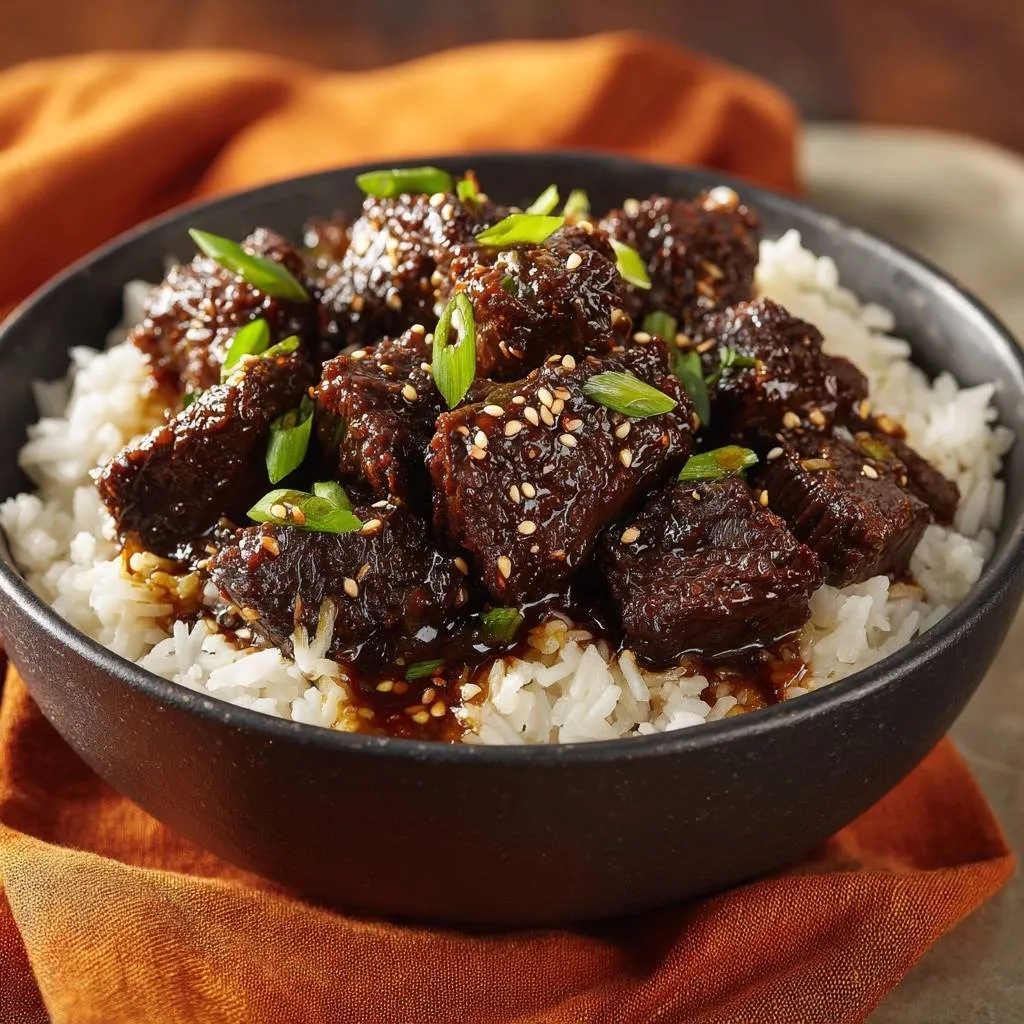
Chuck excels for flavor from its fat content, staying moist after velveting. Sirloin offers a leaner bite with less chew. Cut into 1-inch cubes for even cooking; thin strips overcook too fast here. Therefore, cubes sear perfectly in Mongolian Beef Rice Bowls.
Sauce Builders: Soy, Sugar, and Aromatics
The 1:1 soy-to-sugar ratio creates umami-sweet harmony. Fresh ginger and garlic pack way more punch than powdered versions, which lose volatility. However, whisk them into the slurry early so flavors meld before cooking.
Science of Velveting in Mongolian Beef Rice Bowls
Velveting in Mongolian beef rice bowls uses cornstarch to coat proteins like actin and myosin. At high heat, it forms a moisture barrier, preventing contraction and juice loss. Therefore, your beef stays succulent, unlike standard stir-fries that toughen up.
This no-bake-soda method denatures proteins gently during the 10-minute marinade. In addition, the sear triggers Maillard reaction for a crispy crust without drying the interior. You’ll notice the milky coating on the beef turns golden and locks in tenderness.
Western pitfalls come from low heat or skipping marinade, squeezing out moisture. However, follow this, and Mongolian Beef Rice Bowls velveting delivers pro-level results at home.
Protein Chemistry Behind Tender Beef
The marinade’s enzymes tenderize in 10 minutes without mushiness. High-heat sear then creates crust via Maillard browning. Therefore, juices stay trapped, giving fork-tender bites in every Mongolian Beef Rice Bowl.
Equipment Essentials for Mongolian Beef Rice Bowls
A carbon steel wok or large skillet retains heat best for shimmering oil. Nonstick works but cools too fast. Therefore, use high-BTU burners to hit that sear point quickly.
Tongs flip beef in a single layer, avoiding steam. In addition, a rice cooker ensures fluffy 4 cups of rice. Skip thermometers if you watch for medium-rare color; overcooking kills tenderness.
Phase 1: Marinate Beef for Mongolian Beef Rice Bowls
Toss 1 pound beef cubes with 1 tablespoon each soy sauce, cornstarch, and water. Coat evenly for a milky sheen. Let sit 10 minutes at room temp; fridge slows tenderizing and risks bacteria.
For incredibly tender beef in your stir-fries, discover the secret to perfect beef and broccoli.
Therefore, proteins start breaking down now. You’ll smell subtle soy as it works. Pro tip: don’t exceed 10 minutes, or beef gets slimy.
Phase 2: Whip Up Glossy Sauce for Rice Bowls
Whisk remaining soy sauce, brown sugar, cornstarch, water, minced garlic, and ginger. Taste for sweet-savory balance; add a pinch more sugar if needed. Set aside so it doesn’t clump early.
Aromatics release ginger’s zing and garlic’s depth when heated. Therefore, this slurry thickens fast into sticky perfection.
Phase 3: High-Heat Sear Mongolian Beef Perfectly
Heat 1 tablespoon oil until shimmering, almost smoking. Add beef in one layer; sear undisturbed 1-2 minutes for brown crust. Stir-fry 2 more minutes to medium-rare, then plate to rest.
Avoid crowding, or it steams instead of sears. Therefore, juices redistribute during rest, keeping Mongolian Beef Rice Bowls ultra-tender. Listen for sizzling pops.
Phase 4: Thicken Sauce and Reunite Beef
Add second tablespoon oil, pour in sauce, and stir 1-2 minutes until bubbly and glossy. Return beef, toss 1 minute to coat. Turn off heat; sauce thickens more from residual warmth.
It clings perfectly now. Pro tip: glossy sheen means it’s ready, not watery.
Assemble and Garnish Mongolian Beef Rice Bowls
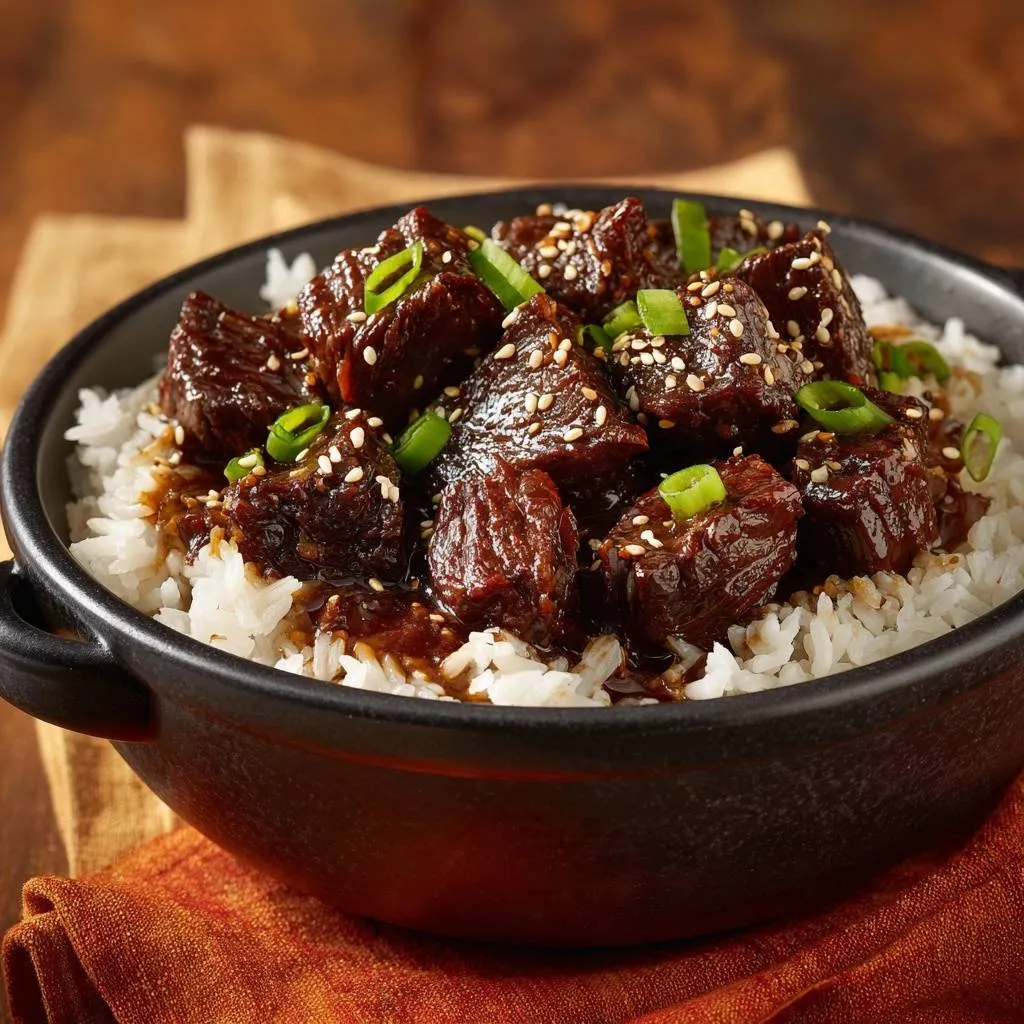
Fluff 4 cups hot white rice into bowls. Spoon beef and glossy sauce over top. Scatter green onions and sesame seeds for crunch and color pop.
Serve immediately for peak texture. Each bowl packs about 600 calories, loaded with protein and carbs.
Avoiding Pitfalls in Mongolian Beef Rice Bowls
Tough beef? You likely skipped velveting or used low heat. Sauce too thin means undercooked slurry; boil longer. Therefore, always high heat and full marinade for Mongolian beef rice bowls mistakes.
Mushy rice comes from unrinsed grains; rinse until water clears. Overcrowding steams everything. In addition, sub coconut aminos for soy if gluten-free.
Fixing Tough Beef Every Time
Stick to 10-minute room-temp marinate and high-heat sear. Low heat contracts proteins. Therefore, shimmer your oil first for crusty, juicy results.
Flavor Twists on Mongolian Beef Rice Bowls
Swap flank steak for chew if velveted right. Use hoisin instead of sugar for deeper sweetness. Add sriracha or chili flakes for heat that cuts the sticky glaze.
Stir in broccoli post-sear for veggies. Go low-carb with cauliflower rice. For vegan, velvet tofu the same way; it crisps beautifully.
Pairing Sides with Mongolian Beef Rice Bowls
Crisp cucumber salad cools the rich sauce. Steamed bok choy adds earthy green bite. Egg drop soup starts light before the hearty bowls.
These contrasts tame the sticky heat. Iced green tea refreshes, or try sparkling water with lime.
Make-Ahead Strategies for Mongolian Beef Rice Bowls
Marinate beef overnight in fridge safely. Sauce keeps 3 days chilled. Cooked beef freezes 1 month; thaw and reheat gently in skillet with splash of water.
Batch rice ahead, portion into bowls. Therefore, weeknight dinners assemble in minutes. Pro tip: reheat beef low to avoid toughness.
Mongolian Beef Rice Bowls: Common Questions
How do I store leftovers of Mongolian Beef Rice Bowls?
Store in airtight containers in the fridge for up to 3 days. Beef stays tender if you don’t reheat too long. It freezes well for 1 month; thaw overnight and stir-fry with a bit of water to revive gloss. Rice freezes separately to avoid mush.
Why is my beef tough in Mongolian Beef Rice Bowls?
Toughness hits from skipping the cornstarch marinade or low-heat cooking. The 10-minute velveting coats proteins to lock juices; sear on high for crust without drying. Always single-layer to prevent steaming.
Can I substitute ingredients in Mongolian Beef Rice Bowls?
Yes, use coconut aminos for low-sodium soy, 1:1 ratio. No brown sugar? Coconut sugar works for caramelization. Fresh garlic and ginger can’t be powdered; they lose punch, but jarred minced is okay in a pinch.
Can I use frozen beef for Mongolian Beef Rice Bowls?
Thaw fully in fridge first, pat dry, then marinate. Frozen straight to pan adds water, steaming instead of searing. Dry surface ensures crispy edges and tender center.
How do I make a spicy version of Mongolian Beef Rice Bowls?
Add 1 teaspoon chili flakes or sriracha to the sauce whisk. For heat lovers, fresh Thai chilies minced with ginger kick it up. Taste before cooking; it mellows slightly.
Can I adapt Mongolian Beef Rice Bowls for the air fryer?
Yes, preheat to 400°F. Air fry velveted beef 8 minutes, shaking halfway for even crust. Make sauce stovetop, toss together. It works but lacks wok char; still tender and quick.
Mongolian Beef
Course: Main CourseCuisine: AsianDifficulty: easy4
servings15
minutes10
minutes650
kcal25
MinutesTired of chewy beef ruining your takeout copycats? This recipe uses a foolproof cornstarch marinade that velvets the meat, locking in juices for melt-in-your-mouth tenderness every single time.
Ingredients
1 pound beef chuck or sirloin, cut into 1-inch cubes
1/4 cup low-sodium soy sauce
1/4 cup brown sugar
3 tablespoons cornstarch
2 tablespoons water
4 garlic cloves, minced
1 tablespoon grated fresh ginger
2 tablespoons vegetable oil
1/4 cup sliced green onions (scallions)
1 tablespoon sesame seeds
4 cups cooked white rice
Directions
- In a bowl, toss beef cubes with 1 tablespoon soy sauce, 1 tablespoon cornstarch, and 1 tablespoon water. Mix well to coat evenly. Let marinate for 10 minutes at room temperature. This velveting step breaks down tough proteins for guaranteed tender beef that stays juicy.
- In a small bowl, whisk remaining soy sauce, brown sugar, remaining cornstarch, water, garlic, and ginger to make the sauce. Set aside.
- Heat 1 tablespoon oil in a large skillet or wok over high heat until shimmering. Add beef in a single layer. Sear undisturbed for 1-2 minutes until browned, then stir-fry 2 more minutes until just cooked. Remove beef to a plate.
- Add remaining oil to skillet. Pour in sauce and cook 1-2 minutes, stirring until thickened and glossy.
- Return beef to skillet, toss to coat in sauce for 1 minute to finish cooking. Remove from heat.
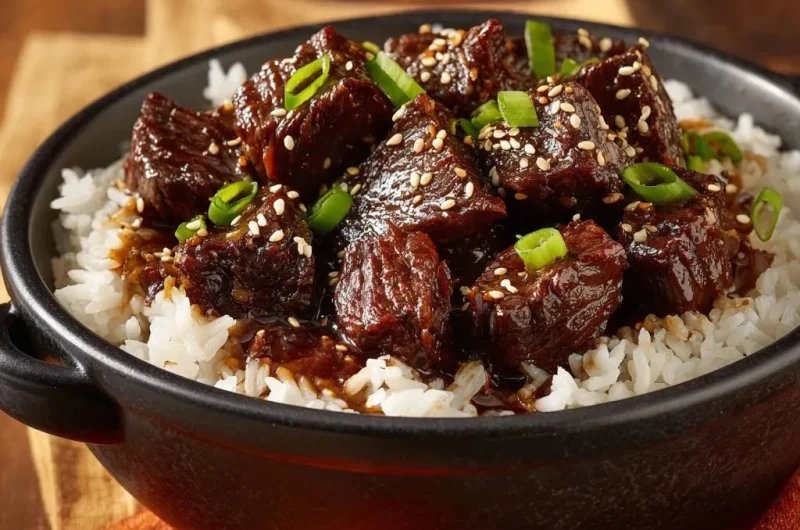
- Serve over warm rice, topped with green onions and sesame seeds. Enjoy tender, sticky beef perfection!
Notes
- The velveting step with cornstarch marinade is key to breaking down tough proteins for guaranteed tender, juicy beef.