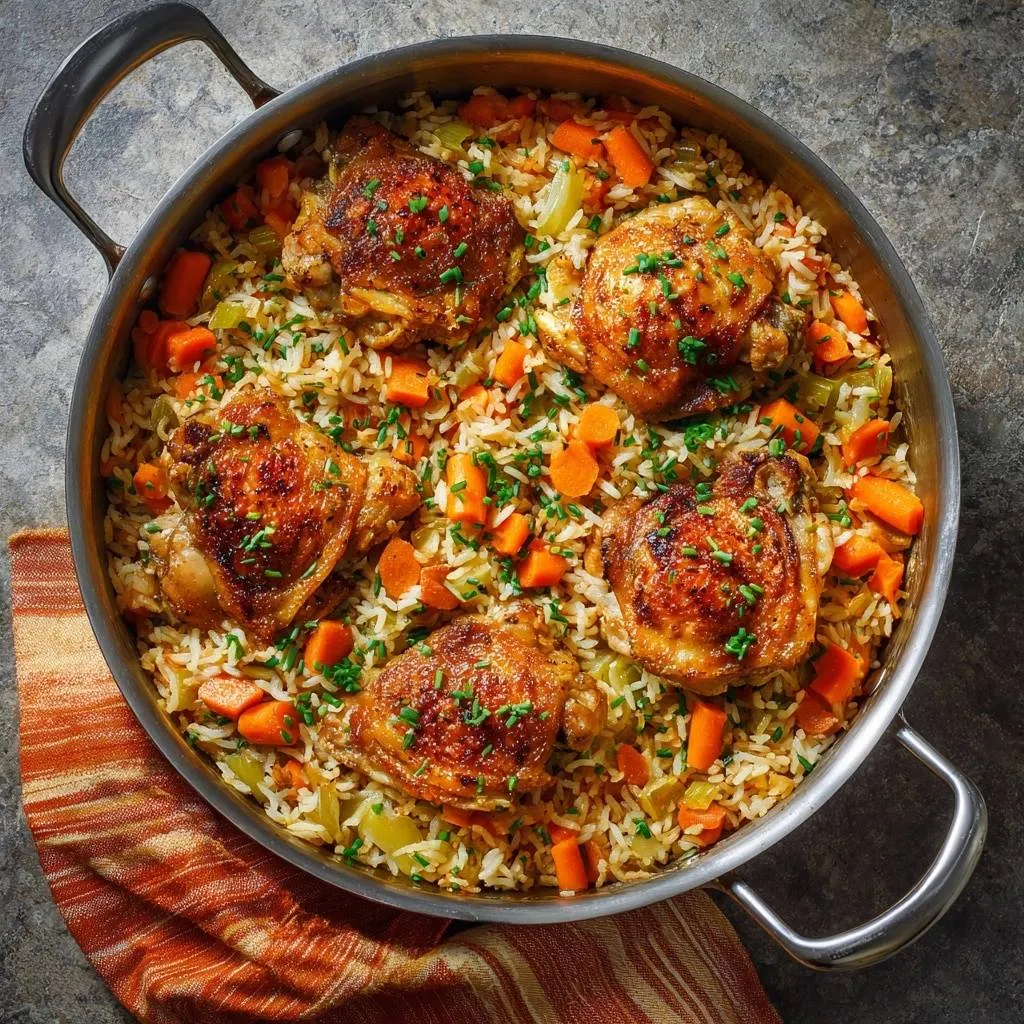
Why This One-Pan Crispy Chicken Thighs with Carrot Rice Wins Dinner
Nothing ruins a one-pan meal faster than soggy, glued-together rice. You’ve been there, right? That frustrating mush under overcooked chicken. But this crispy chicken thighs with carrot rice recipe changes everything in just 45 minutes with zero cleanup.
Here’s why it works so well. You toast the rice in the chicken’s own rendered fat first. That simple step seals each grain for fluffiness while the veggies add sweet crunch. Plus, it’s family-friendly and hits the table before takeout arrives.
The real secret? Pat those thighs bone-dry before searing. That ensures ultra-crispy skin that renders just enough fat. No guesswork, just perfect results every time.
Key Ingredients for Crispy Chicken Thighs with Carrot Rice
Start with 6 bone-in, skin-on chicken thighs. They render fat that flavors the entire dish. Boneless won’t crisp the same or give you that rich base for carrot rice.
Grab 1 1/2 cups long-grain white rice. It stays fluffy unlike short-grain, which clumps. Dice 3 medium carrots and 3 celery stalks into 1/4-inch pieces for even cooking with the rice.
Don’t skip 3 cups low-sodium chicken broth. It controls salt so your seasoning shines. Add 2 tablespoons olive oil, 1 teaspoon salt, 1/2 teaspoon black pepper, and 1/4 cup chopped fresh parsley for a bright finish.
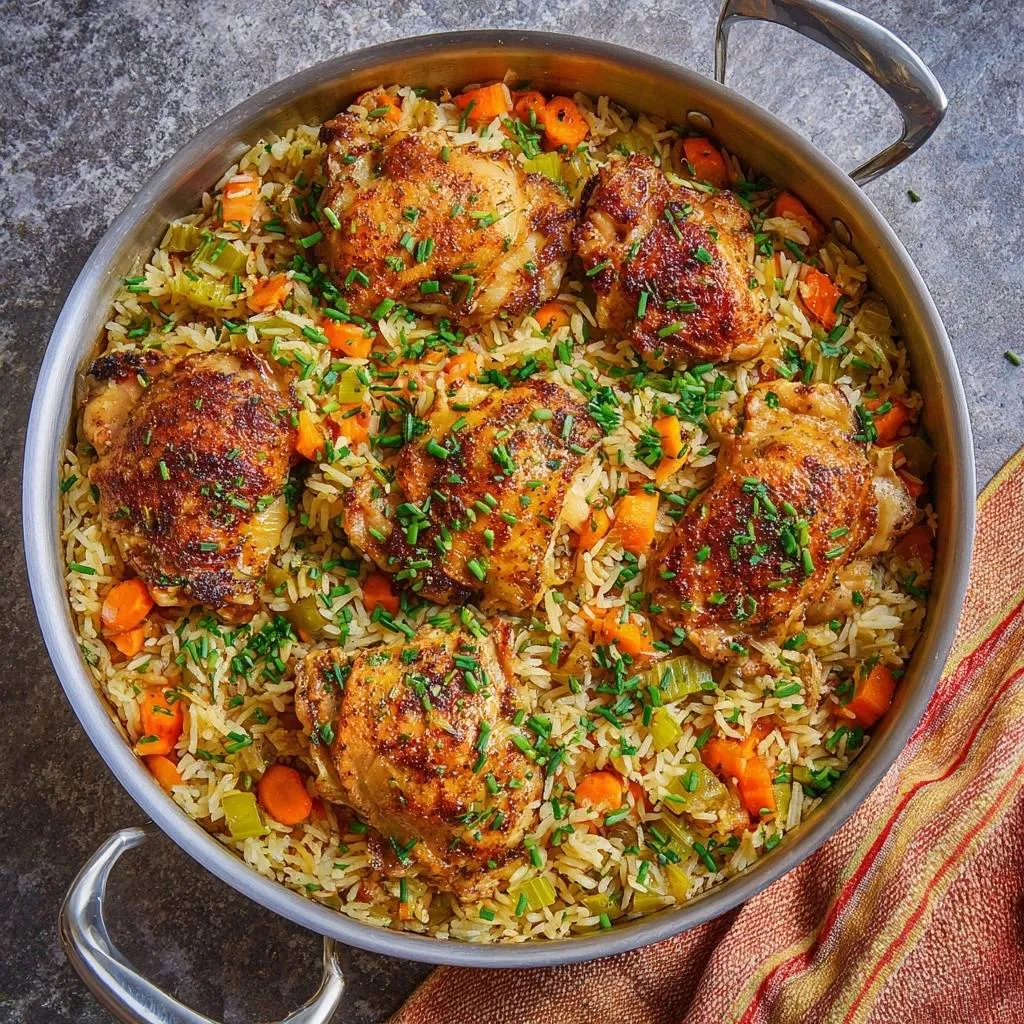
Bone-In Chicken Thighs: Fat-Rendering Powerhouse
Bone-in, skin-on thighs beat boneless every time. The skin crisps deeply while fat melts out. That golden liquid coats your carrot rice for unbeatable flavor.
Science backs it: the bone keeps meat juicy during simmering. You’ll see fat pooling after searing, ready to transform plain rice.
Long-Grain Rice and Veggie Dice Essentials
Long-grain rice absorbs broth without sticking. Short-grain releases starch and turns gummy in one-pan setups. Rinse it first to remove excess starch.
Dice carrots and celery small, about 1/4-inch. They soften perfectly in 4 minutes and match rice absorption rates. Larger chunks stay crunchy and uneven.
Science of Toasting Rice in Chicken Fat
Toasting rice triggers the Maillard reaction. It creates nutty flavors and a sealed surface on each grain. No more boiled-rice mush in your crispy chicken thighs carrot rice.
Rendered chicken fat acts as the medium. It transfers savory depth to the carrot rice. Stir until grains turn translucent, and you’ll smell that toasty aroma.
Without this, broth soaks in unevenly. Boiled rice fails because starch blooms freely. But fat-coated grains stay separate and fluffy.
Rendered Fat Seals Rice Grains
The fat forms a thin protective coating. It blocks excess moisture during simmering. That’s why your one-pan carrot rice stays fluffy, not soggy.
Each grain gets an even layer. Stir constantly for 2-3 minutes to build it right.
Nutty Aroma from Translucent Stage
Watch for rice turning opaque to translucent. That’s your cue, around medium heat. A nutty smell rises, signaling perfect toast without burning.
Higher heat scorches the fat. Keep it steady for that sensory win.
Equipment Choices for Perfect One-Pan Results
Use a 12-inch skillet with a tight lid. It spreads heat evenly for rice fluffiness. Cast iron excels at holding steady temps for chicken thigh crisping.
Stainless steel works too if preheated right. Skip small pans; they cause overflow. A thermometer ensures chicken hits 165°F safely.
No fancy tools needed. Just reliable basics for crispy chicken thighs carrot rice success.
Skillet Size Impacts Rice Fluffiness
A 12-inch skillet gives enough surface for a thin rice layer. It cooks evenly without steaming pockets. Tight lid traps steam for perfect absorption.
Smaller pans crowd it. Rice steams unevenly and sticks.
For a different take on seasoned poultry, explore these juicy parsley chicken meatballs.
Phase 1: Crisping Chicken Thighs Skin-Side Down
Pat chicken thighs dry with paper towels. Season both sides with 1/2 teaspoon salt and 1/4 teaspoon pepper. Heat 2 tablespoons olive oil in your skillet over medium-high until it shimmers.
Place skin-side down. Cook undisturbed 6-8 minutes for deep golden crisp. Fat renders out, pooling beautifully. Flip, cook 3 minutes more, then remove to a plate.
Don’t fidget early; it tears the skin. You’ll hear sizzling quiet as fat releases.
Drying and Seasoning Chicken Thighs
Paper towels remove surface moisture for crisp skin. Let thighs sit at room temp 15 minutes if you can. Salt draws out water, concentrating flavor.
Phase 2: Sautéing Carrots and Celery in Fat
Reduce heat to medium. Add diced carrots and celery to the rendered fat. Sauté 4 minutes until softened but not browned.
Scrape up browned bits as you stir. A sweet veggie aroma builds. This infuses flavor into your carrot rice base.
Medium heat prevents burning the fat. Soft edges mean they’re ready for rice.
Phase 3: Toasting Rice for Fluffy Carrot Rice
Stir in 1 1/2 cups rice. Coat every grain in the fat. Toast 2-3 minutes, stirring constantly, until translucent and nutty-smelling.
This hero step seals grains against sogginess. You’ll see edges turn pearl-like. Pro tip: taste a grain; it shouldn’t burn your tongue.
Skipping it dooms you to mush. Constant motion keeps it even.
Coating Grains Evenly
Use a wooden spoon to scrape and turn. Every grain needs fat contact. Stop if fat smokes; add a splash of oil if dry.
Phase 4: Simmering Chicken atop Carrot Rice
Pour in 3 cups broth, scraping browned bits. Bring to a simmer. Nestle chicken skin-side up into the rice without stirring.
Season with remaining salt and pepper. Cover tightly, reduce to low, and simmer 20-25 minutes until rice absorbs liquid and chicken hits 165°F.
Rest covered 5 minutes off heat. No peeking; steam finishes the job. Fluff gently at the end.
Avoiding Soggy Rice in One-Pan Chicken Thighs
Mistake one: skipping the toast. Rice soaks up broth raw and clumps. Always coat in fat first.
Too much rice or loose lid lets steam escape. Use exact measurements and seal tight. High heat burns the bottom while top stays wet.
Over-stirring after broth breaks the seal. Hands off post-simmer for fluffy carrot rice.
Over-Stirring Destroys Texture
Once broth’s in, don’t touch it. Stirring releases starch into liquid. Fluff only after resting.
Heat Control Prevents Burning
Low simmer means gentle bubbles, not boils. Adjust burner if you hear crackling. Lid stays on tight.
Flavor Twists on Carrot Rice Chicken Thighs
Add minced garlic with veggies for punch. Lemon zest at the end brightens it. Swap parsley for thyme for earthiness.
Boost with paprika or cumin in seasoning. Try zucchini dice instead of celery. Basmati rice works for fragrance without changing method.
If you’re looking for another chicken option, try this hearty chicken soup for a comforting meal.
These keep one-pan ease. Nutrition stays balanced with veggie swaps.
Herb and Citrus Enhancements
Fresh thyme or dill swaps parsley nicely. Lemon zest cuts richness without liquid. Sprinkle post-rest for max aroma.
Pairing Sides with Crispy Chicken Thighs Carrot Rice
A crisp green salad adds freshness. Roasted broccoli brings char contrast. Yogurt sauce cools any spice.
What to Try Next
Round out your meal with these fresh chicken and vegetable dishes.
- For a vibrant salad with a satisfying protein, consider the grilled chicken kale and cabbage power salad, offering a light yet filling complement.
- If you’re in the mood for a hearty, comforting potato creation, the creamy herb and pea potato salad brings fresh flavors that pair well with the crispy chicken.
Pickled veggies cut the richness. Fresh bread soaks up juices. Sparkling cranberry juice pairs perfectly with the savory notes.
Storing and Reheating One-Pan Chicken Rice
Store leftovers in the skillet, covered, in the fridge up to 4 days. Portion into airtight containers for grab-and-go.
Freeze chicken separate from rice up to 2 months; rice gets grainy otherwise. Thaw overnight.
Reheat covered in a 350°F oven with a broth splash. Microwave works too, but skin softens; crisp under broiler 2 minutes.
Troubleshooting One-Pan Crispy Chicken Thighs with Carrot Rice
Skin not crispy? Pat drier next time and wait for full sear. Rice mushy? Toast longer to seal grains.
Chicken dry? Check temp early; bone-in stays juicier. Veggies underdone? Dice smaller or sauté 1 minute more. Broth gone fast? Add 1/4 cup water and lower heat.
Skin Sticking to Pan Fixes
Heat oil to shimmer fully. Don’t flip too soon; skin releases when ready. More oil if pan’s dry.
Rice Glue Prevention
Validate toast: grains must turn translucent. Rinse rice well pre-cook. Exact broth ratio matters.
FAQ
How do I store leftovers of One-Pan Crispy Chicken Thighs with Carrot Rice?
Keep it in the skillet or transfer to an airtight container. Refrigerate up to 4 days. For freezing, separate chicken from rice in freezer bags; rice texture suffers after thawing, so eat fresh if possible. Reheat gently with a splash of broth to restore moisture.
Why is my rice still soggy in this crispy chicken thighs carrot rice recipe?
The top culprit is skipping or rushing the rice toasting step. Without that 2-3 minute coat in chicken fat, grains absorb broth unevenly and release starch, causing glue. Double-check for the translucent, nutty stage next time, and avoid stirring after adding broth.
Can I substitute the long-grain white rice in One-Pan Crispy Chicken Thighs with Carrot Rice?
Basmati or jasmine works great; they stay fluffy like long-grain. Avoid short-grain or brown rice, as brown takes longer to cook and short-grain clumps badly in one-pan methods. Rinse any substitute well to cut starch. Stick to 1 1/2 cups for broth balance.
What if my chicken skin isn’t crispy after cooking?
Pat thighs extra dry and sear undisturbed 7-8 minutes skin-down first. Ensure oil shimmers hot. If storing, re-crisp under broiler 2 minutes post-reheat. Bone-in skin-on always outperforms boneless here.
How can I make this recipe spicier?
Sprinkle smoked paprika or cumin on chicken before searing. Add red pepper flakes with veggies. A dash of hot sauce in the broth builds heat without overpowering the carrot rice sweetness.
Is low-sodium broth necessary for this one-pan chicken thighs carrot rice?
Yes, it prevents oversalting since chicken skin and added salt build flavor. Regular broth makes it too intense. If using regular, cut added salt by half and taste broth before simmering. Always opt for quality homemade or boxed low-sodium.
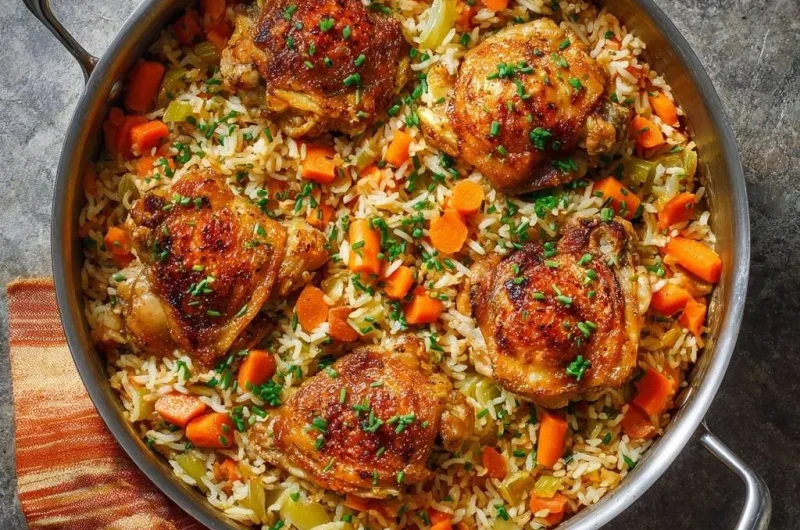
Crispy Chicken Thighs
Course: Main CourseCuisine: AmericanDifficulty: easy6
servings15
minutes40
minutes550
kcal55
MinutesSick of mushy one-pan chicken rice? Toast rice in rendered chicken fat for fluffy, separate grains. Features crispy chicken thighs, diced carrots, celery, and parsley in a simple, no-stir method.
Ingredients
6 bone-in, skin-on chicken thighs
1 1/2 cups long-grain white rice
3 medium carrots, diced
3 celery stalks, diced
1/4 cup chopped fresh parsley
3 cups low-sodium chicken broth
2 tablespoons olive oil
1 teaspoon salt
1/2 teaspoon black pepper
Directions
- Pat chicken thighs dry with paper towels and season both sides with 1/2 teaspoon salt and 1/4 teaspoon pepper. Heat olive oil in a large skillet over medium-high heat until shimmering.
- Place chicken skin-side down in the skillet. Cook undisturbed for 6 to 8 minutes until skin is deeply golden and crispy, and fat renders out. Flip and cook 3 more minutes. Remove chicken to a plate.
- Reduce heat to medium. Add diced carrots and celery to the skillet with the rendered chicken fat. Saute 4 minutes until softened.
- Stir in rice, coating every grain in the fat. Toast for 2 to 3 minutes, stirring constantly, until rice turns translucent and nutty-smelling. This is the key step that locks in fluffy texture and prevents sogginess by creating a protective seal on each grain.
- Pour in chicken broth, scraping up browned bits. Bring to a simmer, then nestle chicken thighs skin-side up back into the rice without stirring. Season with remaining salt and pepper.
- Cover skillet tightly, reduce heat to low, and simmer 20 to 25 minutes until rice absorbs liquid and chicken reaches 165 degrees F internally. Remove from heat and let rest covered 5 minutes.
- Fluff rice gently with a fork, scatter chopped parsley on top, and serve. Enjoy crispy chicken atop perfectly fluffy rice!
Notes
- Key trick: Toast rice in chicken fat for fluffy texture. Use long-grain white rice for best results. Ensure chicken reaches 165°F internally.