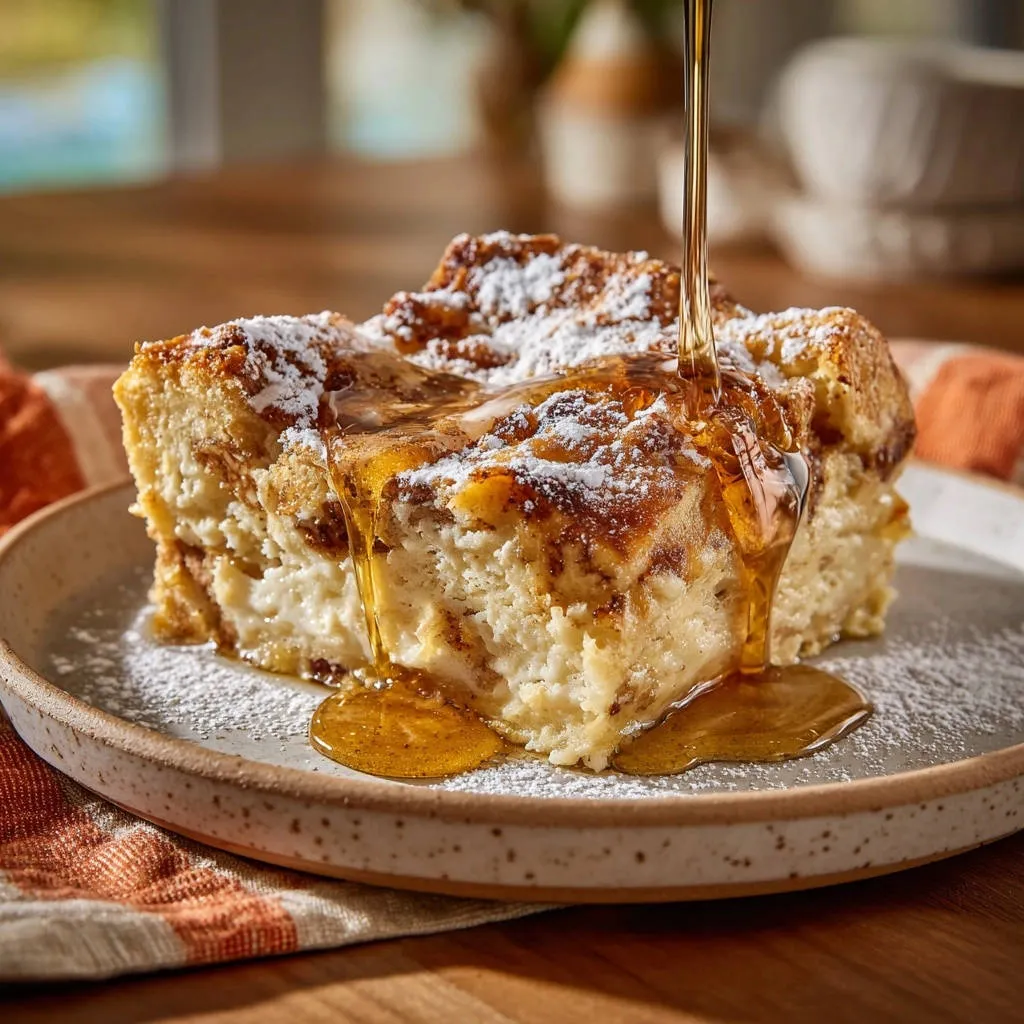
There is nothing worse than prepping a gorgeous French toast bake only to discover the bottom layer is a cold, gummy mess that ruins breakfast. After years of testing, I cracked the secret ratio and timing that locks in a creamy, custardy center without ever getting dense or wet at the base.
This foolproof method guarantees that perfect texture every single time you prepare this Overnight Cinnamon Swirl French Toast Bake, transforming rushed mornings into pure indulgence.
The Secret Ratio: Why This Overnight Cinnamon Swirl French Toast Bake Is Never Dense
Achieving that coveted light, yet deeply custardy texture requires precise engineering, not luck. This recipe focuses entirely on structural integrity and slow, even saturation, eliminating the core reasons French toast bakes fail.
The Crucial Role of the High Egg-to-Dairy Ratio
The success of the internal texture hinges on a high egg-to-dairy ratio in the custard mixture.
This rich concentration of eggs ensures the custard sets up firmly during baking, coagulating properly into a silky filling rather than remaining a loose, liquid pool at the bottom of the dish.
The Anti-Soggy Bottom Lock: Mastering the Long Soak
The minimum 8-hour soak is non-negotiable and acts as the crucial “anti-soggy bottom lock.”
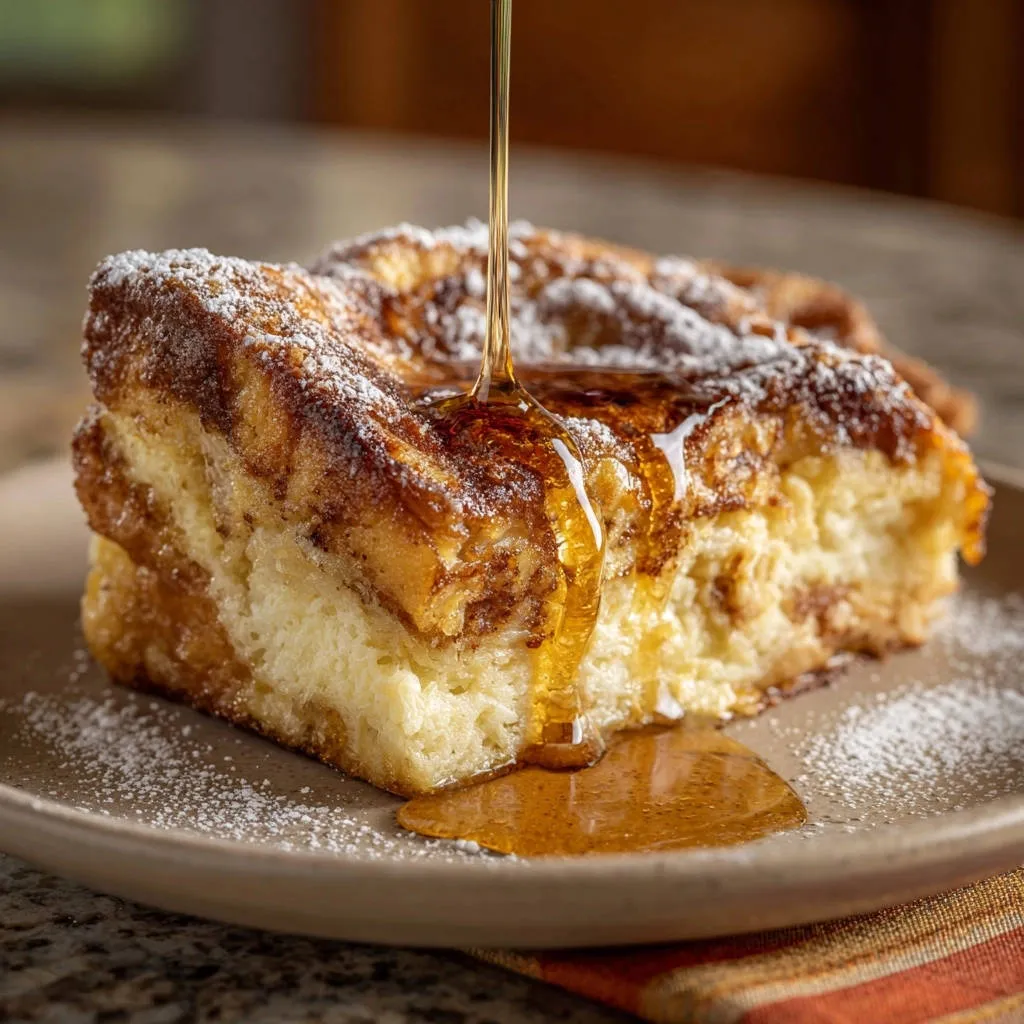
When bread absorbs liquid rapidly (as in same-day French toast), the outer crust saturates quickly, but the inner structure often remains wet and collapses into gumminess. A long, slow soak allows the starch granules within the bread to fully hydrate evenly from the inside out.
Why Challah or Brioche is the Only Way to Go
Using a dense, enriched bread like Challah or Brioche provides the structure needed to withstand the prolonged soak and baking time.
Unlike standard sandwich bread, these loaves have a higher fat content and a tighter crumb, allowing them to hold their shape and absorb the custard slowly without disintegrating.
Building the Perfect Custard: Essential Ingredients and Substitutions
Selecting the Ideal Bread Base
The foundation of a great bake starts with the right bread preparation.
Stale is Best
Day-old or slightly dried bread is essential because fresh bread absorbs liquid too quickly, leading directly to a gummy interior. Leaving the bread uncovered overnight helps dry it out perfectly.
Cubing Technique
Cut the loaf into roughly 1-inch cubes. This size ensures there is enough surface area for the custard to permeate fully, while still providing a substantial texture once baked.
The Richness of the Custard Components
The combination of whole milk and heavy cream provides essential richness and fat, contributing to a luxuriously smooth and creamy final texture.
The vanilla extract and a crucial pinch of salt are added to balance the granulated sugar, elevating the overall flavor profile beyond mere sweetness.
Crafting the Signature Cinnamon Swirl Topping
The signature swirl is a simple blend of melted unsalted butter, packed brown sugar, and extra ground cinnamon.
Brown sugar is necessary here because its molasses content adds moisture and helps create a rich, slightly chewy, caramelized crust that contrasts beautifully with the soft custard interior.
For a similarly smooth texture, check out this creamy pecan praline ice cream recipe.
Preparing Your Workspace: Essential Equipment for Overnight Success
Having the right tools ensures efficient assembly and perfect results.
The 9×13 Inch Baking Dish
This standard size is necessary to achieve the proper bread-to-custard depth; using a pan that is too large will result in a dry, thin bake.
Reliable Whisk and Mixing Bowls
It is vital that the custard is mixed until completely uniform-no clumps of sugar or unmixed egg yolk should remain, as these can scorch or prevent proper setting.
Aluminum Foil and Plastic Wrap
Plastic wrap is required for tight coverage during the overnight soak, while aluminum foil is used to cover the dish during the initial, crucial baking phase.
Overnight Magic: Step-by-Step Guide to Assembling the French Toast Bake
Step 1: Preparing and Arranging the Bread
Generously grease the 9×13 inch baking dish with some of the melted butter. This simple step prevents sticking and contributes to a delicious, subtly crispy bottom crust.
Place the 1-inch bread cubes evenly in the prepared dish, ensuring they are loosely packed.
Step 2: Whisking the Custard to Smoothness
In a large bowl, whisk together the eggs, dairy, sugar, vanilla, cinnamon, and salt. Whisk thoroughly until fully incorporated.
Whisk vigorously enough to combine, but avoid incorporating too much air; excessive froth can sometimes lead to separation during the long refrigeration period.
Step 3: Saturating and Pressing the Cubes
Pour the custard mixture evenly over the bread cubes, coating them completely. Gently press the bread down to ensure all pieces are submerged and fully saturated.
Ensure every piece of bread makes contact with the liquid; this prevents any dry, hard spots from developing on the top layer of the Overnight Cinnamon Swirl French Toast Bake.
Step 4: The Critical Overnight Soak (8 Hours Minimum)
Cover the baking dish tightly with plastic wrap and refrigerate for a minimum of 8 hours, or preferably overnight.
This tight covering prevents the top layer of bread from drying out or developing freezer burn while the bread slowly absorbs the custard, triggering the anti-soggy bottom lock.
Step 5: Mixing and Drizzling the Cinnamon Swirl
Just before baking, stir together the remaining melted butter, packed brown sugar, and a generous dash of cinnamon.
Drizzle this mixture evenly over the top of the soaked bread cubes. Crucially, do not mix it into the bread; you want the topping to remain on the surface for that beautiful ‘swirl’ effect and texture.
Achieving Golden Perfection: The Two-Stage Baking Method
Proper baking is a two-stage process designed to guarantee a set center and a golden, caramelized top.
Step 6: Covered Baking for Internal Setting
Preheat your oven to 375°F (190°C). Bake the casserole, covered tightly with aluminum foil, for 30 minutes.
Covering tightly with foil traps steam, which helps the custard cook gently and evenly throughout, ensuring the center sets perfectly before the crust begins to brown.
Step 7: Uncovered Baking for Color and Crisp
Remove the foil and bake for an additional 15 to 20 minutes, or until the top is golden brown and puffy. Test for doneness by inserting a knife into the center; it should come out clean of raw liquid custard.
Watch closely during this final stage. If the top gets too dark before the center is cooked, loosely tent the dish with foil again to slow the browning process.
Step 8: The Mandatory Rest Period
Allow the French Toast Bake to rest on a cooling rack for 10 to 15 minutes before slicing and serving.
Do not cut immediately! This resting period is critical as it allows the hot, liquid custard interior to firm up, preventing the slices from collapsing into a messy pile when cut.
Troubleshooting and Chef’s Secrets for a Flawless Breakfast Casserole
Address these common issues to ensure your bake is successful every time.
How to Prevent Your French Toast Bake From Drying Out
Ensure your foil is tightly sealed during the initial 30-minute covered baking phase to trap all necessary moisture.
Do not overbake the casserole. Once the knife test is clean and the internal temperature reaches about 185°F (85°C), remove it promptly.
Solving the “My Custard Didn’t Set” Problem
Confirm the egg-to-dairy ratio was followed exactly; using too little egg or too much liquid compromises the structural integrity of the custard set.
Always perform the “knife test” directly in the center of the bake, which is the last part to cook, before removing it from the oven.
Making It Ahead (The Ultimate Time-Saving Tip)
This recipe is designed for overnight preparation, making it the ultimate holiday or weekend breakfast solution.
While the overnight soak is best, if you are genuinely pressed for time, a 3-hour minimum rest in the refrigerator is required to ensure some level of slow, deep absorption.
Presentation and Shelf Life: Serving, Storing, and Reheating
Elevating Your Serve: The Best Toppings and Garnishes
While classic maple syrup is perfect, enhance the flavor of this classic breakfast casserole with these additions:
Freshly grated orange zest for a bright, aromatic contrast to the rich cinnamon.
A sprinkle of sea salt flakes across the top to enhance the caramel notes of the brown sugar swirl.
A simple dusting of powdered sugar right before serving for a beautiful, classic finish.
Storing Leftovers Safely
Leftovers of the Overnight Cinnamon Swirl French Toast Bake can be stored safely in an airtight container in the refrigerator for 3 to 4 days.
Always allow the bake to cool completely before covering and refrigerating to avoid condensation, which can lead to rapid sogginess.
The Best Way to Reheat French Toast Bake
To retain those desirable crispy edges and the firm custard texture, reheat individual slices in a 350°F (175°C) oven until warmed through (about 10 to 12 minutes).
For speed, slices can be microwaved, but be aware this method will soften the outer crust significantly.
Common Questions About Overnight Cinnamon Swirl French Toast Bake
Can I make this recipe gluten-free?
Yes, you can successfully make this recipe gluten-free by using a dense, sturdy gluten-free loaf.
Ensure the gluten-free bread is slightly stale or dried out before soaking for the best absorption results and to maintain its structure.
Can I freeze the baked casserole?
The baked French toast casserole freezes extremely well. Cool completely, then wrap tightly first in foil and then in plastic wrap.
It can be frozen for up to 3 months. Thaw it overnight in the refrigerator before reheating in the oven.
What if I don’t have heavy cream?
While heavy cream provides the richest and most decadent texture, you can substitute it with half-and-half or even additional whole milk.
Be aware that these substitutions will result in a slightly lighter, less rich final custard texture.
Ready for Rave Reviews? Enjoy Your Perfect Overnight Bake!
You now have the exact techniques and ratios needed to master the truly flawless Overnight Cinnamon Swirl French Toast Bake-no more guesswork, no more gummy messes.
This recipe is designed to impress with minimal morning effort. Try this ultimate breakfast casserole this weekend, and don’t forget to share your photos and tell us about your perfect, custard-set slices!
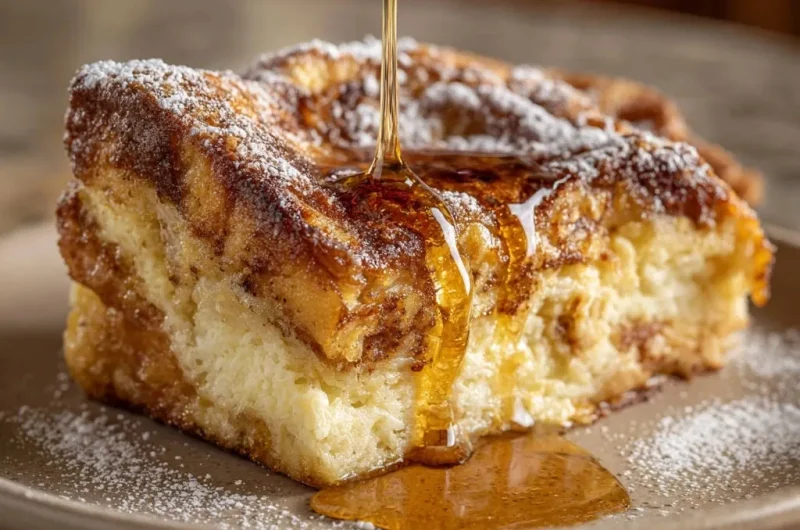
Cinnamon Swirl French Toast Bake
Course: BreakfastCuisine: AmericanDifficulty: medium8
servings15
minutes50
minutes450
kcal480
minutesThis guaranteed method uses a high egg-to-dairy ratio and an essential overnight soak to deliver a creamy, custardy French toast bake every time. Say goodbye to gummy bottoms and enjoy perfectly saturated bread topped with a sweet, melted cinnamon swirl. Ideal for feeding a crowd or a leisurely weekend breakfast.
Ingredients
1 loaf (1 pound) Challah or Brioche bread, day old or slightly dried
8 large eggs
2 cups whole milk
1 cup heavy cream
1/2 cup granulated sugar
2 teaspoons vanilla extract
1 teaspoon ground cinnamon, plus extra for swirl
1/4 teaspoon salt
4 tablespoons unsalted butter, melted (for swirl/dish)
1/4 cup brown sugar, packed (for swirl)
Powdered sugar, for dusting
Maple syrup, for serving
Directions
- Prepare the Bread and Dish The Pain Point Solution Prep
- Cut the bread into roughly 1 inch cubes. Stale or slightly dried bread is essential here, as fresh bread absorbs too much liquid too quickly and leads to a gummy texture. Generously grease a 9×13 inch baking dish with some of the melted butter. Place the bread cubes evenly in the dish.
- Mix the Custard for Proper Setting
- In a large bowl, whisk together the eggs, whole milk, heavy cream, granulated sugar, vanilla extract, cinnamon, and salt until completely smooth. The high egg to dairy ratio here is key to ensuring the custard sets up properly and avoids the liquid pooling at the bottom of the dish.
- Pour and Soak Thoroughly
- Pour the custard mixture evenly over the bread cubes. Gently press the bread down to ensure all pieces are submerged and fully saturated.
- The Overnight Technique (The Anti-Soggy Bottom Lock)
- Cover the baking dish tightly with plastic wrap and refrigerate for a minimum of 8 hours, or preferably overnight. This long soak allows the bread to absorb the custard slowly and evenly, preventing the core cause of the soggy bottom. If you skip this step, the bottom will often be too wet and the top too dry.
- Prepare the Swirl Topping
- Before baking, stir together the remaining melted butter, brown sugar, and a generous dash of cinnamon. Drizzle this mixture over the top of the soaked bread cubes.
- Bake to Perfection
- Preheat your oven to 375 degrees F. Bake the casserole, covered tightly with aluminum foil, for 30 minutes. This ensures the center bakes and sets without the top browning too quickly.
- Achieve Golden Crust
- Remove the foil and bake for an additional 15 to 20 minutes, or until the top is golden brown and a knife inserted into the center comes out clean of raw custard. If the top gets too dark, loosely tent it with foil.
- Set and Serve
- Allow the French Toast Bake to rest on a cooling rack for 10 to 15 minutes before slicing and serving. This rest period allows the custardy interior to firm up and prevents it from collapsing when cut. Dust generously with powdered sugar and serve warm with plenty of maple syrup.
Notes
- Must use day-old or slightly dried Challah or Brioche bread for the best, non-gummy texture.