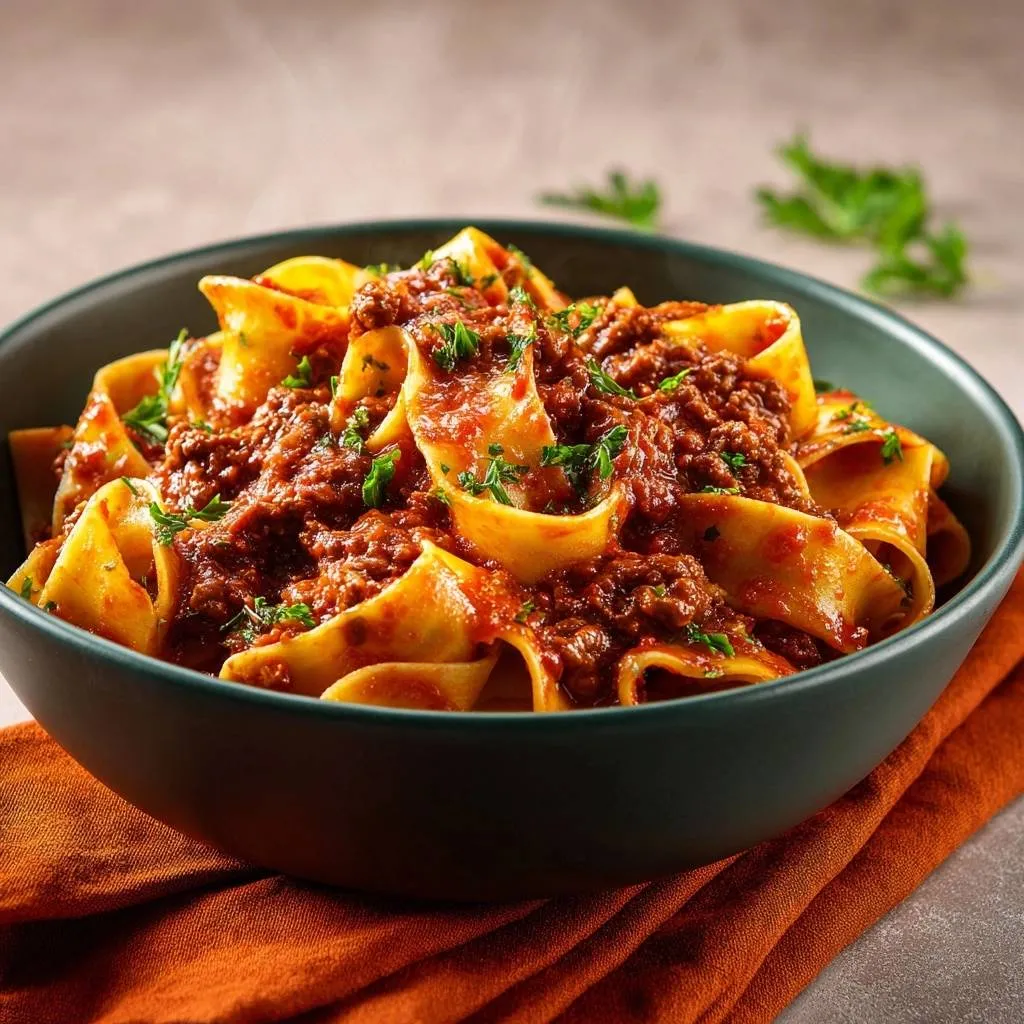
Why This Pappardelle Bolognese Stays Thick
Watery Bolognese sauce ruins the whole plate, doesn’t it? Most folks crank up the heat and end up with a soupy mess that slides off the pasta. However, this recipe uses a low-simmer reduction that evaporates liquid naturally over 30 minutes, creating a thick ragu without flour or cornstarch.
Therefore, you get that perfect clingy texture every time. The beef fat renders first, then tomatoes reduce slowly, locking in deep flavor. In addition, it beats high-heat boiling, which splatters and leaves you with thin sauce.
Oh man, I’ve obsessed over this texture for years. The secret? Cook the beef deeply browned before adding tomatoes. That builds a flavor base that thickens as it simmers, proving why this method works foolproof.
Core Ingredients for Pappardelle Bolognese
Start with 8 ounces of pappardelle pasta. Its wide ribbons trap the thick sauce better than thinner noodles. Therefore, every bite delivers ragu perfection.
One pound of ground beef forms the heart. The fat renders out during browning, creating a rich base that emulsifies with tomatoes. In addition, use 80/20 beef for ideal moisture and flavor.
A 28-ounce can of crushed tomatoes brings natural pectin. They thicken as they simmer low and slow, unlike fresh tomatoes that release too much water. However, always choose quality canned ones without added sugar.
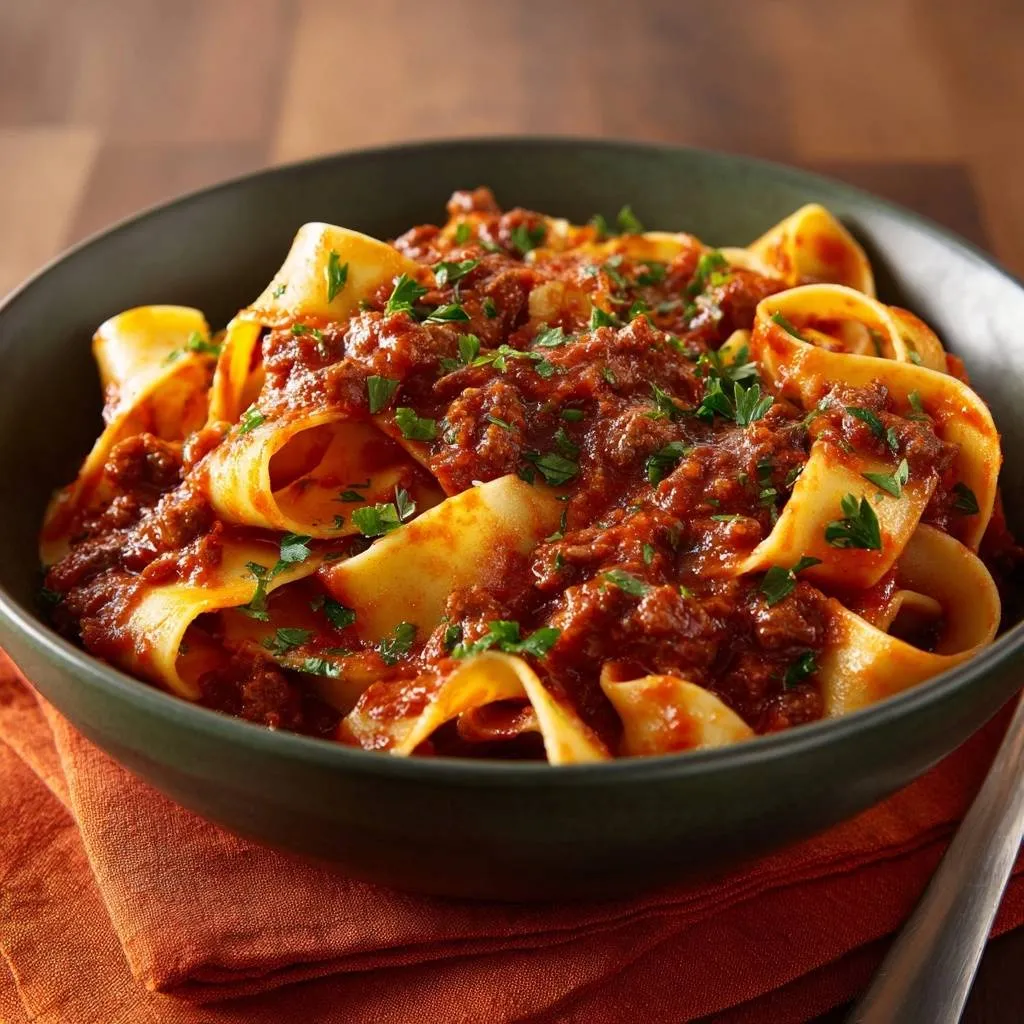
Two tablespoons of olive oil starts the sear. Its smoke point handles medium-high heat without burning. Salt and pepper season simply, while 1/4 cup chopped fresh parsley adds a bright finish right before serving.
Selecting Ground Beef for Rich Ragu
Pick 80/20 ground beef for the best fat-to-meat ratio. That fat renders into a glossy sauce base. Grass-fed works too, but it leans leaner, so watch the browning closely.
Avoid super lean beef here. It dries out fast. Therefore, the rendered fat keeps everything lush and thick.
Pappardelle Pasta: Wide Ribbons Matter
Pappardelle’s broad, flat shape scoops up ragu like nothing else. Spaghetti just lets sauce slip away. Dried pappardelle from good brands holds up best to the toss.
Fresh pasta cooks quicker but can turn gummy. Stick to dried for al dente bite that clings perfectly.
Browning Beef: Foundation of Flavor
Heat olive oil in a large skillet over medium-high until it shimmers. Add the ground beef and break it up with a spoon. Cook 8 to 10 minutes, stirring occasionally, until deeply browned.
This sparks the Maillard reaction for umami depth. The fat renders fully, forming a thick base. Therefore, don’t rush; that crust makes the ragu unforgettable.
Rendered fat coats everything later. It prevents watery sauce by emulsifying with tomatoes.
Achieving Deep Brown Crust
Look for dark, caramelized edges, not just pink-to-brown. Stir minimally to build crust. If it steams instead of sears, your pan’s overcrowded; use a bigger skillet next time.
Pat beef dry first if needed. Dry surfaces brown faster.
Low-Simmer Reduction for Clingy Sauce
Stir in crushed tomatoes, salt, and pepper. Bring to a gentle simmer, then drop heat to low. Cook uncovered 30 to 35 minutes, stirring every 5 minutes.
Low heat evaporates liquid steadily without splattering. Sauce transforms from soupy to spoon-coating thick. If bubbles get vigorous, lower further for control.
This method activates tomato pectin naturally. Therefore, no thickeners required; just patience pays off with glossy ragu.
Monitoring Sauce Thickness
Test at 25 minutes: drag a spoon through; it should leave a trail that holds. Adjust per your stove; electric runs hotter. By 35 minutes, it’s velvety and ready.
Stirring prevents sticking. Scrape the pan bottom each time for max flavor.
Cooking Pappardelle to Al Dente Perfection
Bring a large pot of salted water to a boil. Generously salt it, like seawater. Cook pappardelle per package, about 8 minutes for al dente.
Reserve 1/2 cup pasta water before draining. That starchy liquid emulsifies sauce later. Therefore, don’t skip it; it’s key for cling.
Taste one noodle at 7 minutes. It should have a firm bite, not mush.
Combining Pasta and Pappardelle Bolognese Sauce
Add drained pappardelle to the skillet with sauce. Toss over low heat for 1 minute. Splash reserved pasta water only if needed to loosen without thinning.
The starch helps sauce cling like velvet. Parsley goes in last for freshness. Therefore, serve immediately in bowls, hot and steaming.
This final toss marries flavors perfectly. You’ll smell the richness building.
Science of Non-Watery Pappardelle Bolognese
Low heat activates pectin in crushed tomatoes, gelling naturally around 30 minutes. Beef fat emulsifies into it, creating body. Evaporation kinetics remove water precisely without scorching.
High boil? It shocks proteins dry. Here, steady simmer keeps meat tender. In addition, 30-35 minutes hits the sweet spot before over-reduction.
Flour-thickened versions turn pasty. This pure method shines with just beef, tomatoes, and time.
History and Origins of Bolognese Ragu
Ragù alla Bolognese traces to 18th-century Bologna, Italy. Meat simmered slow in tomatoes defined it. The 1982 official recipe used soffritto, but this meat-focused version adapts for thick results.
Pappardelle paired later for its sauce-holding power. In Bologna, etiquette demands twirling pasta properly, no cutting. Therefore, it evolved into a comfort staple worldwide.
Regional pride keeps it simple. No frills, just deep flavor from tradition.
Avoiding Common Pappardelle Bolognese Mistakes
High heat causes splatter and thin sauce. Stick to low simmer. Over-stirring meat prevents browning; let it crust first.
Forget pasta water? Sauce won’t cling. Rush the simmer, and it’s soupy. Therefore, time it right for success.
Pro tip: taste sauce at 20 minutes. Adjust salt then; tomatoes mellow it.
Fixing Too-Thin Sauce
Extend simmer 10 more minutes uncovered. Heat low to evaporate more. Never add flour; it dulls flavor.
Preventing Dry, Overcooked Meat
Stir every 5 minutes during simmer. Medium-high only for initial brown. Fat from beef keeps it moist if heat stays controlled.
Make-Ahead and Freezing Pappardelle Bolognese
Sauce stores in an airtight container up to 4 days in fridge. Freeze portions up to 3 months; thaw overnight. Reheat low with a splash of water for gloss.
Cook pasta fresh each time. Batch sauce Sundays for easy weeknights. Therefore, flavors deepen on day two.
Pro tip: label freezer bags with dates. Portion into single meals.
Pairing Sides with Pappardelle Bolognese
Balance richness with a simple green salad of arugula and lemon. Garlic bread soaks up sauce perfectly. Roasted zucchini adds earthiness without overwhelming.
Chianti cuts through the beefy depth. Sangiovese matches tomato brightness. Therefore, keep sides light for harmony.
Fresh bread’s crunch contrasts the silky ragu. You’ll crave seconds.
Pappardelle Bolognese FAQ
Can I Use Ground Turkey?
Yes, ground turkey works, but it lacks beef’s fat. Add an extra tablespoon of olive oil during browning to compensate. Simmer same time; it’ll thicken but taste leaner. Texture stays clingy with the low reduction.
How Long Does Sauce Last?
Fridge leftovers in an airtight container for up to 4 days. Freeze sauce alone in portions for 3 months; it reheats beautifully without separating. Avoid freezing cooked pasta; it gets mushy. Thaw overnight and warm low with water for best results.
Substitute for Pappardelle?
Tagliatelle is closest; its width holds sauce well. Avoid thin spaghetti; sauce slips off. Fettuccine works in a pinch but lacks the dramatic cling. Stick to wide, flat pasta for authentic texture.
Why No Vegetables in This Bolognese?
This version keeps meat-forward purity for maximum thickness and beef flavor. Veggies like carrot or onion release water, risking soupiness. If you want them, finely dice 1/2 onion and 1 carrot, sauté first, but extend simmer 10 minutes to reduce extra liquid.
For another take on rich pasta, consider this shredded beef ragu.
Vegetarian Pappardelle Bolognese Version?
Swap beef for lentils or finely chopped mushrooms. Use 1 pound mushrooms sautéed dry first to release moisture, plus 1/2 cup cooked lentils. Add extra olive oil for body; low-simmer still thickens via pectin. It’ll mimic richness without meat.
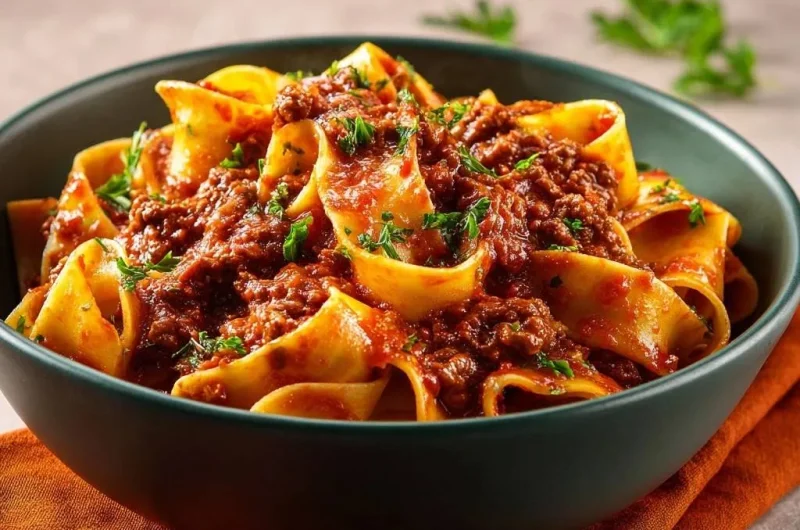
Pappardelle Bolognese
Course: Main CourseCuisine: ItalianDifficulty: easy4
servings15
minutes45
minutes650
kcal60
MinutesTired of meat sauces that stay thin and soupy? This recipe delivers a thick, clingy ragu every time thanks to a low-simmer reduction method that evaporates excess liquid naturally while locking in rich flavor.
Ingredients
8 ounces pappardelle pasta
1 pound ground beef
1 (28-ounce) can crushed tomatoes
2 tablespoons olive oil
1 teaspoon salt
1/2 teaspoon black pepper
1/4 cup fresh parsley, chopped
Directions
- Heat olive oil in a large skillet over medium-high heat until shimmering. Add ground beef, breaking it up with a spoon. Cook for 8 to 10 minutes, stirring occasionally, until deeply browned and all fat is rendered. This builds flavor and starts the thickening base.
- Stir in crushed tomatoes, salt, and pepper. Bring to a gentle simmer.
- Reduce heat to low. Simmer uncovered for 30 to 35 minutes, stirring every 5 minutes. The key to never watery sauce: low heat allows steady evaporation without splattering or drying out the meat. Sauce will thicken to coat the back of a spoon. If it bubbles too much, lower heat further.
- Meanwhile, bring a large pot of salted water to a boil. Cook pappardelle according to package for al dente, about 8 minutes. Reserve 1/2 cup pasta water, then drain.
- Add drained pasta to the thickened sauce. Toss over low heat for 1 minute, adding a splash of reserved pasta water only if needed to help sauce cling perfectly without thinning.
- Divide into bowls and garnish with chopped parsley. Serve hot.
Notes
- Low heat is key for steady evaporation without splattering. Use reserved pasta water sparingly to maintain thick texture.