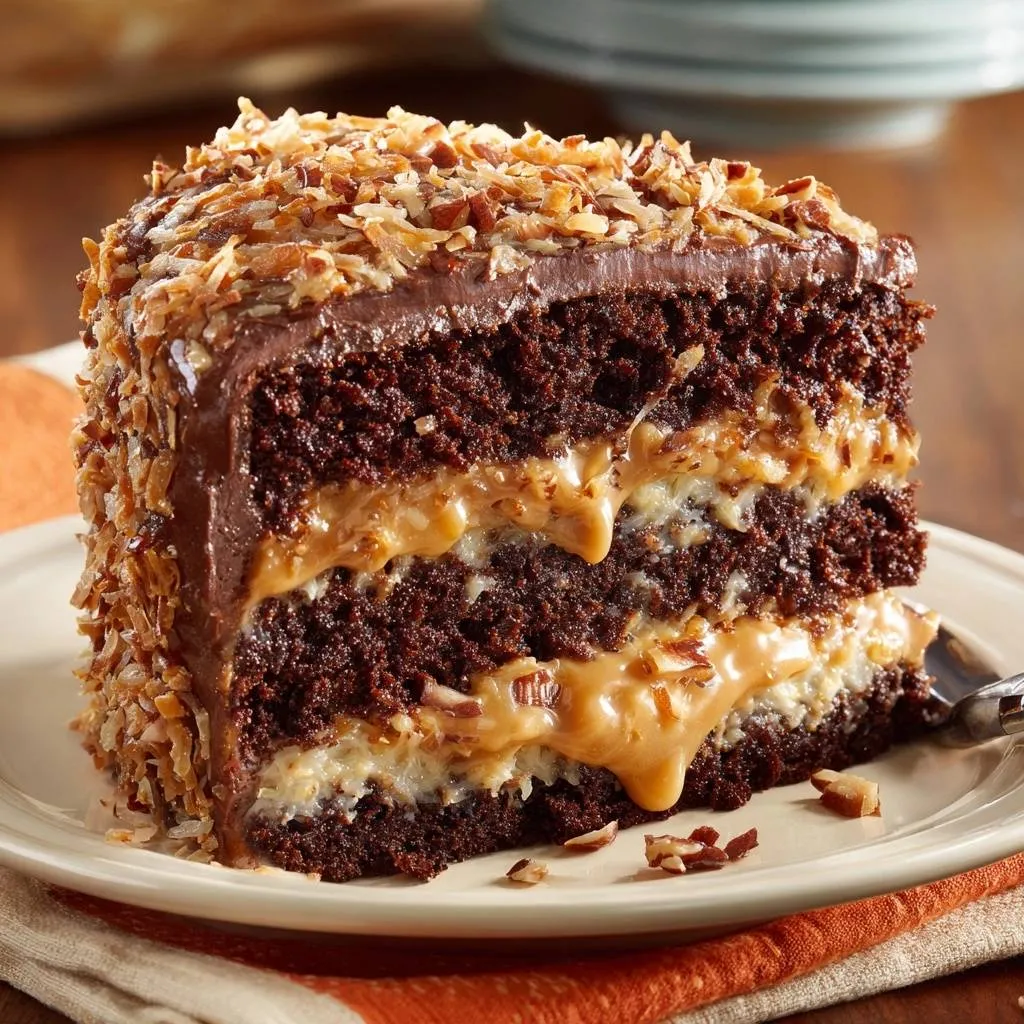
Picture this: you’re at a party, slicing into a German Chocolate Cake, and the pecan filling just slides right off the layers in a gooey mess. I’ve been there, watching my creation turn into a frosting disaster while everyone stares. But this German Chocolate Cake recipe changes everything with its low-slow cooking trick and cold plate test. You’ll get thick, stable coconut-pecan filling that holds firm between rich chocolate layers.
So why does this version stand out? Most recipes rush the filling, leading to runny disasters that ruin assembly. Here, however, we cook it gently over medium-low heat. That evaporates just enough liquid for perfect texture without curdling. In addition, the science of emulsion stability keeps everything locked in place for mess-free slices.
The real expertise shines in the cold plate test. Drop a bit of filling on a chilled plate; if it mounds without spreading, it’s ready. This simple step proves the filling’s set before you stack. You’ll end up with a superior German Chocolate Cake: moist chocolate layers, gooey pecan hold, and chocolate frosting that seals the deal beautifully.
Understanding German Chocolate Cake Layers
Flour and Cocoa Foundation
All-purpose flour gives your German Chocolate Cake that tender crumb without heaviness. Two cups provide structure, but they don’t toughen up thanks to the wet ingredients. Therefore, it balances perfectly with the 3/4 cup unsweetened cocoa powder.
Natural cocoa works best here because its acidity reacts with the leaveners for better rise. Dutch-processed versions are smoother but less reactive, so they can flatten your cake. Plus, check cocoa brands for fat content; higher fat means more moisture in every bite.
Leavening Agents Role
Baking soda, at 2 teaspoons, teams up with buttermilk’s acidity for serious lift in this batter. It creates bubbles that expand with the hot water’s steam. Meanwhile, 1 teaspoon baking powder adds a steady rise to prevent any dense spots.
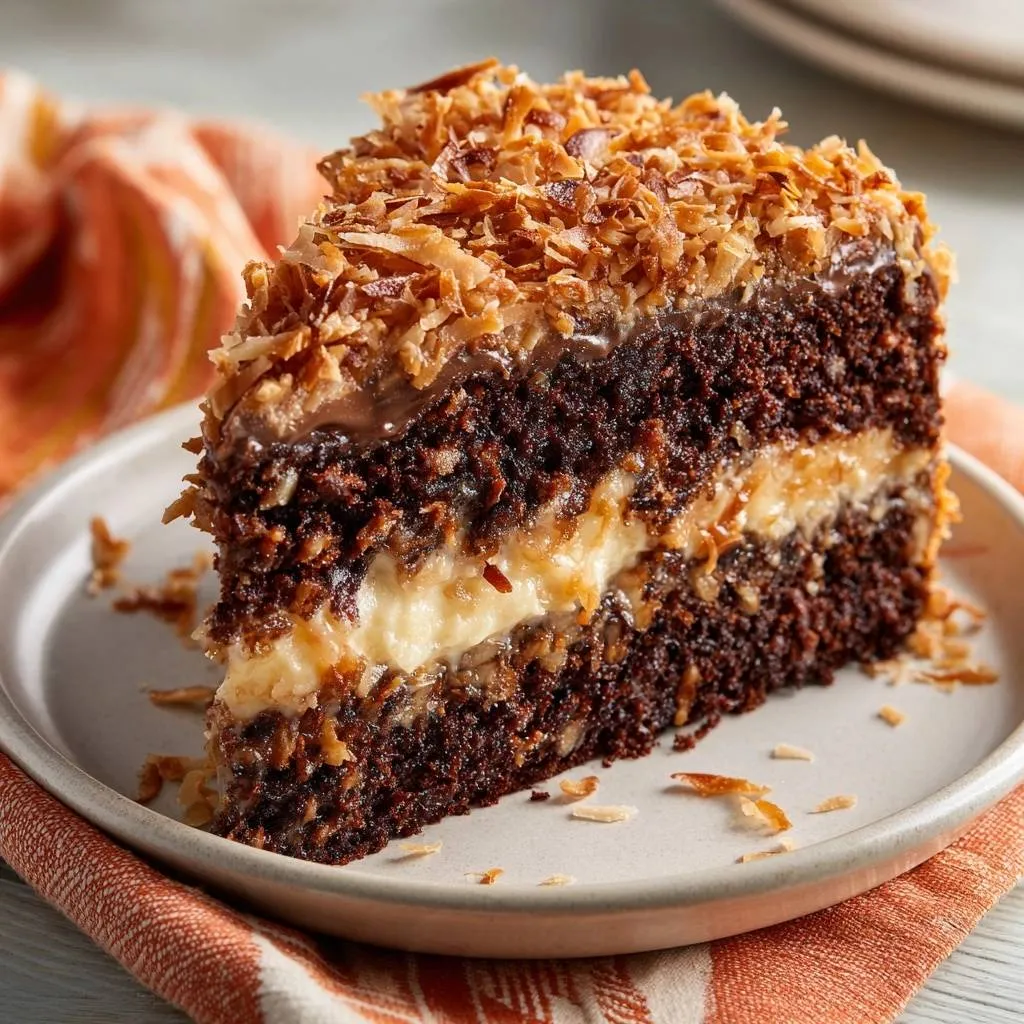
Salt enhances all the flavors without overpowering. Just 1 teaspoon sharpens the chocolate and sweetness. Together, these keep your German Chocolate Cake light and airy, not sunken or tough.
Wet Ingredients Balance
Buttermilk tenderizes the gluten while adding tang that cuts the sugar’s sweetness. One cup keeps things moist. Vegetable oil, at 1/2 cup, stays soft longer than butter would.
Two large eggs bind everything, and 1 teaspoon vanilla brings warmth. Then, stir in 1 3/4 cups sugar and 1 cup hot water last; the batter thins out for steam-powered rise. However, don’t worry about the pourable consistency; it bakes up perfect.
History of German Chocolate Cake Origins
Samuel German’s Invention
Back in 1852, Samuel German created Baker’s German’s Sweet Chocolate for a Boston baking company. It wasn’t from Germany; the name honored him. Then, in 1957, a Dallas Morning News recipe using it exploded nationwide.
This set German Chocolate Cake apart from Germany’s Black Forest cake with cherries and cream. In the American South, it evolved with coconut-pecan frosting. Regional twists made it a potluck staple, rich and indulgent.
Evolution of Frosting Techniques
Traditional recipes often rushed the filling, causing runny messes. Modern takes, like this low-slow method, fix that by evaporating liquids gently. Southern cooks added bigger Texas pecans for crunch.
Therefore, this version honors the origins but perfects stability. You’ll get that classic gooey texture without the slide. It’s the best of tradition and smarts.
Science Behind Stable Pecan Filling
Low-Slow Heat Emulsion
Combine 1 1/2 cups evaporated milk, 1 1/2 cups sugar, 3 egg yolks, and 3/4 cup butter over medium-low heat. Whisk constantly for 12 to 15 minutes. This low-slow approach evaporates water while sugars caramelize via Maillard reaction for golden color.
Constant stirring keeps egg proteins from seizing and curdling. It thickens to coat the spoon, forming a stable custard base. That’s the heart of non-runny pecan filling in German Chocolate Cake.
Cold Plate Test Mechanics
Chill a plate in the freezer first. Drop a teaspoon of filling on it; if it mounds and holds shape, pull the pan off heat. This tests cooling behavior, mimicking the cake assembly chill.
Coconut pectin gels as it cools, locking structure. After 30 minutes at room temp, it thickens more. Compare it to candy’s soft-ball stage; physics ensures no sliding layers.
Coconut and Pecan Integration
Two cups sweetened shredded coconut soaks up any extra moisture for chewiness. Stir it in off heat to avoid sogginess. Toasted pecans, 1 1/2 cups chopped, add crunch and nuttiness.
One teaspoon vanilla emulsifies it all. This combo defies gravity, holding firm in your stacked German Chocolate Cake. Toasting amps flavor without burning.
Essential Tools for German Chocolate Cake
Precise Cake Pan Prep
Grease and flour three 9-inch metal rounds. Metal conducts heat evenly for flat tops on thin batter. Parchment bottoms release layers cleanly if flouring fails.
This prep prevents sticking and ensures even baking. Your German Chocolate Cake layers come out perfect every time.
Saucepan and Whisk Must-Haves
Grab a medium heavy-bottomed saucepan to avoid scorching the filling. A silicone whisk stirs constantly without scratching. Optional thermometer hits 160°F for egg safety.
These tools prevent disasters. You’ll nail that thick texture effortlessly.
Mastering Moist Chocolate Cake Layers
Precise Oven Preheat
Preheat to 350°F. Divide batter evenly among pans; it smells chocolatey as it bakes 25 to 30 minutes. Toothpick clean means done; cool in pans 10 minutes first.
Then rack-cool fully to avoid dome collapse. Hot water blooms the cocoa for deep flavor. Pro tip: rotate pans halfway for evenness.
For an equally delightful chocolate treat, explore this moist chocolate bundt cake.
Batter Mixing Technique
Whisk dry ingredients first. Beat in buttermilk, oil, eggs, and vanilla till smooth. Stir hot water last; batter thins but steams up tall.
Avoid overmixing for tender crumb. Watch for glossy shine before baking. This method guarantees moist layers.
Flawless Chocolate Frosting Method
Ganache-Style Simmer
Simmer 1 cup heavy cream and 1/2 cup butter. Pour over 12 ounces chopped semisweet chocolate and 1 teaspoon vanilla. Stir till glossy and smooth.
Chop chocolate evenly for quick melt. Cool 1 hour to fudgy spreadable stage. It seals your German Chocolate Cake beautifully.
Temperature Control Tips
Never heat chocolate directly; it seizes. Assemble at room temp so filling stays put. Chill finished cake 30 minutes for clean slices.
This keeps textures distinct and pro-level.
Never-Runny Coconut Pecan Filling Recipe
Ingredients and Proportions
Evaporated milk beats regular for richness without dilution. Mix 1 1/2 cups each with sugar, 3 yolks, and butter. Toast pecans at 350°F for 8 minutes till fragrant.
This balance ensures gooey hold. Shredded coconut adds chew.
Cook and Cool Sequence
Medium-low heat, whisk 12 to 15 minutes till golden and spoon-coating. Test on cold plate. Off heat, stir in coconut, pecans, vanilla.
Cool 30 minutes; it firms up. If curdled, strain and rewhisk gently over low heat.
Layered Assembly for German Chocolate Cake
Bottom Layer Setup
Level cakes if domed. Spread 1 cup filling edge-to-edge on first layer. Thickened texture won’t ooze out.
Stack second, repeat. Top with third plain.
Frosting and Topping Finish
Frost top and sides smooth. Press on 1 cup toasted coconut and 1/2 cup pecans. Chill 30 minutes to set.
Serrated knife slices gooey centers cleanly. Pro tip: warm knife in hot water first.
Avoiding Common German Chocolate Cake Mistakes
High-Heat Filling Pitfalls
High heat separates filling into curds. Stick to low-slow; whisk nonstop. If grainy from overcooking, add hot milk and whisk smooth.
Signs of trouble: lumps or whey separation. Patience pays off.
Batter and Bake Errors
Skip hot water, and cakes dry out. Overbake if toothpick has crumbs; check at 25 minutes. Cool properly to avoid warped layers.
For a deeper dive into avoiding cake sinkage, explore double chocolate layer cake techniques.
Measure accurately for success.
Flavor Variations for German Chocolate Cake
Nut and Coconut Swaps
Swap pecans for walnuts or almonds for different crunch. Use unsweetened coconut to dial back sweet. Dark chocolate in frosting adds bitterness.
Bourbon extract deepens vanilla notes. Keep proportions same.
Layer Count Adjustments
Two layers for mini; scale filling half. Four layers need 1.5x filling. Sheet pan bakes 30 to 35 minutes for crowds.
Adjust bake time accordingly.
Storage and Make-Ahead Guide
Freezing Cake Components
Wrap cooled layers airtight; freeze up to 2 months. Thaw overnight in fridge. Filling keeps in fridge 5 days or freeze portions 1 month; thaw and stir.
Assembled cake fridges 3 days max. Don’t freeze whole; filling weeps.
Reviving Day-Old Slices
Room temp 30 minutes softens it up. Microwave 10 seconds resets gooey filling. Flavors meld overnight for even better taste.
Pairing Sides with German Chocolate Cake
Classic Beverage Matches
Black coffee cuts the richness perfectly. Vanilla ice cream melts into gooey bliss. Fresh berries add tart contrast.
Milk balances casual servings.
Event Serving Ideas
Stack for birthday towers; serves 12 to 16. Holiday platters with slices shine. Add edible flowers for pop.
More Sweet Ideas
Round out your dessert spread with these other delightful chocolate and nutty treats.
- For a breakfast or brunch option that features similar fruit and nut notes, consider these fluffy cranberry maple pancakes.
- If you enjoy the toasted nut flavor in your German Chocolate Cake, you’ll love the texture and sweetness of these glazed pecan cinnamon rolls.
Troubleshooting German Chocolate Cake Issues
Filling Too Thin Fixes
Recook gently 2 to 3 minutes or chill longer. Retest cold plate. Prevent with strict low heat.
Cake Dryness Solutions
Brush simple syrup on layers. Verify oven temp with thermometer. Measure batter precisely.
Frosting Seizing Remedies
Add warm cream slowly while stirring. Chop finer next time. It smooths out.
FAQ
How do I store leftovers of this German Chocolate Cake?
Keep assembled cake in an airtight container in the fridge for up to 3 days. The filling holds well chilled, but don’t freeze the whole cake as coconut can weep when thawed. For longer storage, freeze unwrapped layers up to 2 months; wrap tightly once frozen solid, thaw in fridge overnight, and remake filling fresh since it fridge-stores 5 days max. Slices revive best at room temp 30 minutes before serving.
Why did my pecan filling turn out runny?
Rushed high heat evaporates too fast, preventing proper thickening and causing separation. Always use medium-low for 12 to 15 minutes with constant whisking till it coats a spoon. If thin, recook gently off heat with a cornstarch slurry (1 tsp cornstarch in 1 tbsp milk), or chill 1 hour and retest on cold plate. Low-slow builds stable emulsion from egg yolks and milk sugars every time.
Can I substitute ingredients in the German Chocolate Cake filling?
No evaporated milk? Use full-fat coconut milk for similar richness, but reduce to 1 1/4 cups to avoid excess liquid. Swap pecans for toasted walnuts or almonds (same amount) for varied crunch; toast them too for flavor. If no shredded coconut, finely chop flake coconut, but sweetened keeps the chew. Egg yolks are key for custard; whole eggs make it watery, so stick close.
Why use hot water in the German Chocolate Cake batter?
Hot water blooms the cocoa, releasing deep chocolate flavor that cold liquids can’t. It thins the batter for even steam rise from leaveners, preventing dense cake. Don’t skip; room-temp water dries it out. The batter looks soupy but bakes moist and tender, toothpick-clean at 25 to 30 minutes.
How do I prevent the chocolate frosting from seizing?
Pour hot cream-butter mix over chopped chocolate off heat; never direct heat. Stir gently in one direction till glossy. If seizing starts (grainy look), add 1 to 2 tbsp warm cream slowly while whisking vigorously. Even chop ensures quick melt; cool undisturbed 1 hour to spreadable fudginess.
Can I make this German Chocolate Cake ahead for a party?
Yes, bake layers 2 days ahead, wrap, and fridge. Make filling 1 day ahead; it thickens more overnight. Assemble and frost morning-of; chill 30 minutes to set. Flavors peak day two, so it’s ideal. For freezing, components only; full cake best fresh within 3 days fridge. Serves 12 to 16 perfectly.
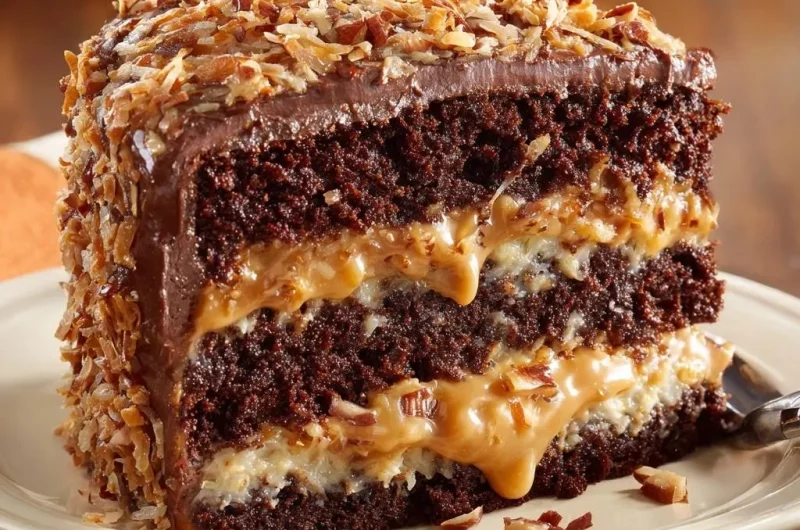
German Chocolate Cake
Course: DessertCuisine: AmericanDifficulty: medium12
servings30
minutes45
minutes650
kcal120
MinutesSick of runny German Chocolate Cake frosting? This recipe delivers thick, gooey coconut-pecan filling every time with low slow heat and the cold plate test. No more sliding layers!
Ingredients
Cake:
2 cups all-purpose flour
1 3/4 cups granulated sugar
3/4 cup unsweetened cocoa powder
2 teaspoons baking soda
1 teaspoon baking powder
1 teaspoon salt
1 cup buttermilk
1/2 cup vegetable oil
2 large eggs
1 teaspoon vanilla extract
1 cup hot water
Filling (makes enough for layers):
1 1/2 cups evaporated milk
1 1/2 cups granulated sugar
3 large egg yolks
3/4 cup unsalted butter
2 cups sweetened shredded coconut
1 1/2 cups chopped pecans, toasted
1 teaspoon vanilla extract
Frosting:
1 cup heavy cream
1/2 cup unsalted butter
12 ounces semisweet chocolate, chopped
1 teaspoon vanilla extract
Topping:
1 cup sweetened shredded coconut, toasted
1/2 cup chopped pecans, toasted
Directions
- Preheat oven to 350 degrees F. Grease and flour three 9-inch round cake pans.
- For cake: Whisk flour, sugar, cocoa, baking soda, baking powder, and salt in a large bowl. Add buttermilk, oil, eggs, and vanilla; beat until smooth. Stir in hot water (batter will be thin). Divide into pans. Bake 25 to 30 minutes until toothpick comes out clean. Cool in pans 10 minutes, then on racks completely.
- For filling (the never-runny secret): In a medium saucepan over medium-low heat, combine evaporated milk, sugar, egg yolks, and butter. Cook, stirring constantly with a whisk, for 12 to 15 minutes until thickened and golden (key: keep heat low to avoid curdling; it should coat the back of a spoon). Test readiness by dropping a bit on a cold plate; it should mound and not spread. Remove from heat, stir in coconut, pecans, and vanilla. Cool to room temperature (about 30 minutes); it will thicken more as it cools. This low-slow method evaporates just enough liquid for perfect hold without graininess.
- For frosting: Heat cream and butter in a saucepan until simmering. Remove from heat, add chocolate and vanilla. Stir until smooth. Cool until spreadable (about 1 hour).
- Assemble: Place one cake layer on plate. Spread 1 cup filling evenly (it stays put thanks to the thickened texture). Repeat with second layer. Top with third layer. Frost top and sides with chocolate frosting. Press toasted coconut and pecans onto frosting. Chill 30 minutes to set. Slice and serve the mess-free way!
Notes
- Key to never-runny filling: Cook on medium-low heat, stirring constantly for 12-15 minutes until it mounds on a cold plate. Toast pecans and coconut for extra flavor. Chill assembled cake 30 minutes before slicing.