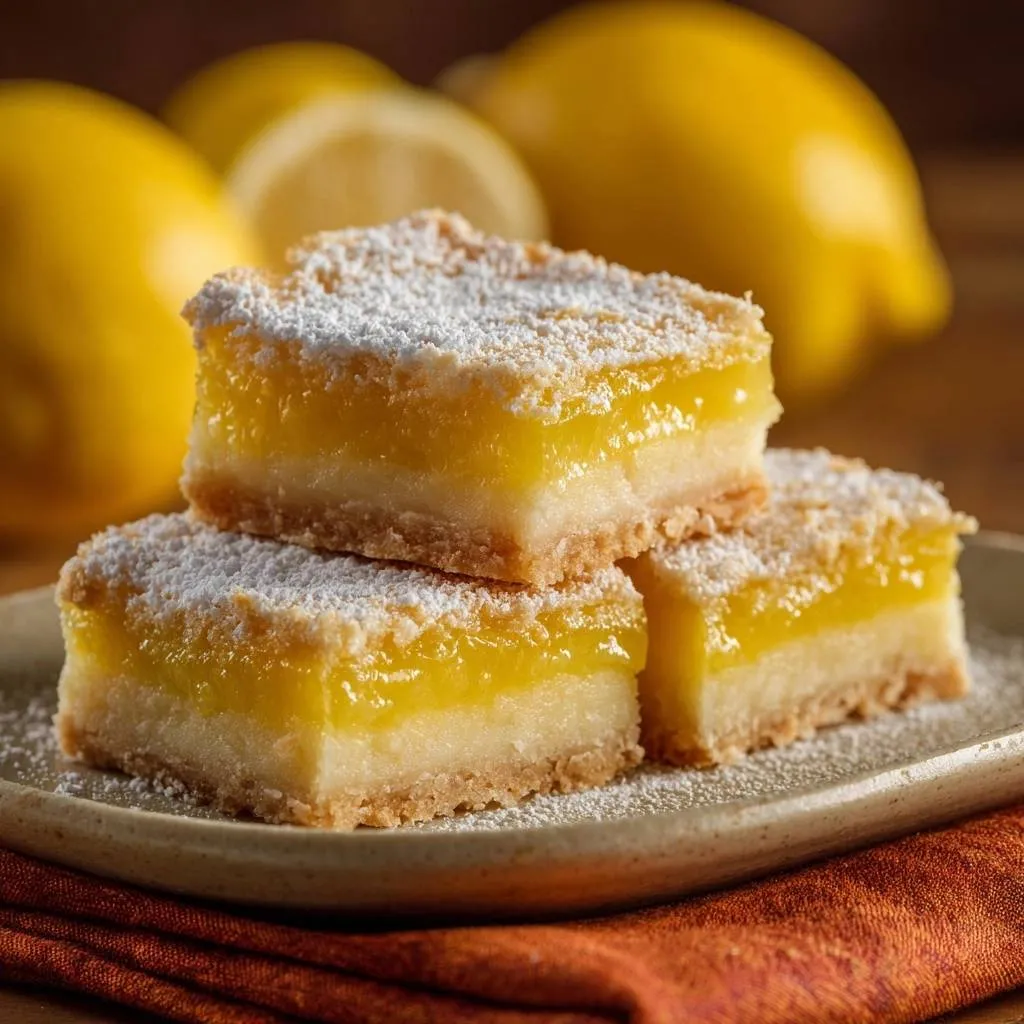
Sick of lemon bars that ooze into a puddle when you cut them? This recipe fixes that frustration fast. You’ll get firm, sliceable lemon bars every time, thanks to a smart cornstarch boost in the filling. No more messy disasters on your plate.
Traditional lemon bars fail because their custard-like filling lacks stability. It wobbles too much or runs when warm. However, this version balances a buttery shortbread crust with a tart, glossy topping that holds its shape perfectly.
The secret lies in whisking the eggs and sugar vigorously for two full minutes until pale and thick. That emulsion sets the stage. In addition, the precise cornstarch amount locks everything in without muting the zing.
For a similarly firm result, explore the techniques in glazed cherry pie bars.
Why These Lemon Bars Never Runny
Most lemon bars flop from unstable custards that separate under heat. Eggs curdle, and flour alone can’t stabilize the lemon’s pectin. Therefore, classic recipes leave you with runny messes.
This recipe adds 1/4 cup cornstarch to the filling. It gelatinizes early, creating a firm set while keeping the tart brightness alive. You’ll slice clean bars that taste just as vibrant as takeout versions, but fresher.
Excitement builds when you pull them from the oven with that slight center jiggle. No cracks, no goo. These lemon bars deliver foolproof joy every bake.

Common Lemon Bars Pitfalls Exposed
First, egg separation happens without thorough whisking. Second, lumps from poor flour mixing weaken structure. Third, wrong bake times lead to liquid centers or cracked tops.
This recipe counters with a two-minute whisk to ribbon stage. It also specifies a slight jiggle for doneness. Therefore, you avoid those pitfalls easily.
Crust Foundation: Buttery Shortbread Base
Softened unsalted butter creates the flaky, tender crust you crave. It creams smoothly with sugar for even distribution. In addition, the 1/2 cup granulated sugar adds subtle sweetness without sogginess.
Two cups of all-purpose flour provide structure, while 1/4 teaspoon salt sharpens flavors. Don’t overmix, or it toughens. Press it crumbly into the pan for that perfect shortbread bite.
This base stays crisp under the filling. It contrasts beautifully with the tart top. Oh man, that first bite melts in your mouth just right.
For a similar contrast between a crisp base and a soft filling, check out creamy lemon crumble bars.
Butter Choices for Lemon Bars Crust
Softened butter beats melted for a tender crumb. Melted makes dense bars. Use unsalted to control salt levels precisely.
Room temperature ensures even pressing and baking. It avoids greasy pools. Therefore, your crust bakes uniformly golden.
Pressing Even Crust Layers
Line your 9×13 pan with parchment, leaving overhang handles. Press dough to 1/4-inch thickness using a glass bottom. Check corners for evenness to prevent burnt edges.
Bake at 350°F for 20 minutes. Look for light gold and a firm feel. This sets a strong foundation.
Lemon Filling Mastery: Tart and Stable
Start with six large eggs and two cups sugar. Whisk vigorously two minutes until pale and thick, like ribbons. This emulsifies for smoothness.
Add one cup fresh lemon juice from about six lemons, plus zest from four. Then whisk in 1/2 cup flour and 1/4 cup cornstarch until lump-free. The duo creates glossy stability.
Pour over the hot crust right away. It jumpstarts setting. You’ll love the bright, puckery tang that shines through.
Extracting Peak Lemon Zest Juice
Zest four lemons finely with a microplane, avoiding bitter white pith. Squeeze six for one full cup juice. Fresh delivers unmatched brightness over bottled.
Prep ahead? Store zest and juice separately in fridge up to two days. Strain juice for clarity. This maximizes zing without cloudiness.
Cornstarch Role in Firm Lemon Bars
Cornstarch gelatinizes at lower temps than flour, around 144°F. It thickens lemon pectin fast for a firm hold. Use exactly 1/4 cup; more dulls shine, less risks runniness.
Combined with 1/2 cup flour, it prevents cracks too. Science makes these lemon bars slice like a dream.
Science of Baking Lemon Bars Precisely
Custard sets between 160-180°F as proteins coagulate. Hot crust raises filling temp quickly for even cooking. Therefore, pour immediately after first bake.
Use the jiggle test, not toothpick; center should quiver slightly, not wave. Cool one hour room temp, then chill three hours. This allows starch retrogradation for clean cuts.
Overnight chill intensifies flavors too. It’s worth the wait for pro results.
Preheat and First Bake Dynamics
Preheat to 350°F for steady crust browning via Maillard reaction. Bake 20 minutes until edges lift slightly. Parchment stops sticking and eases removal.
Second Bake: Set Without Cracks
Bake filling 25-30 minutes. Edges set first, signaling center readiness. Pull at slight jiggle to avoid curdling or shrinkage from overheat.
Baking Lemon Bars: Phase-by-Phase Guide
1. Preheat oven to 350°F. Line 9×13 pan with parchment overhang.
2. Beat softened butter and 1/2 cup sugar until creamy, about two minutes. Mix in two cups flour and 1/4 teaspoon salt to crumbly dough. Press evenly; bake 20 minutes until golden.
3. Whisk six eggs and two cups sugar two minutes until thick. Add one cup lemon juice, zest from four lemons, 1/2 cup flour, 1/4 cup cornstarch. Whisk smooth.
4. Pour over hot crust. Bake 25-30 minutes until edges set, center jiggles slightly. Cool one hour, chill three hours minimum.
5. Lift out, dust with powdered sugar, slice into 24 bars. Total time: about four hours with chilling.
Post-Bake Cooling Protocol
Cool one hour at room temp to avoid condensation sogginess. Refrigerate three hours for starch to firm up. Overnight yields the best texture and flavor bloom.
Slicing and Powdered Sugar Finish
Lift with parchment. Use sharp knife, wiping between cuts for clean edges. Dust powdered sugar last to prevent melting into filling. Yields 24 perfect bars.
Avoiding Lemon Bars Disasters
Runny filling? Undercook or skip chill. Cracked top means overbake; watch the jiggle. Soggy crust from pouring cold filling; always use hot base.
Tweak with extra cornstarch if high altitude. Whisk lumps aggressively. These fixes ensure success.
Fixing Runny Filling Issues
Boost cornstarch to 1/3 cup, whisk lumps fully, chill overnight. At altitude, add five minutes bake. Strain filling pre-pour for silkiness.
Storage and Make-Ahead for Lemon Bars
Store airtight in fridge up to five days. They taste even better day two as flavors meld. Freeze wrapped bars up to three months; thaw overnight in fridge.
Make-ahead: Bake crust, mix filling, store separately up to two days. Assemble and bake fresh. Chilling enhances the tart snap.
Lemon Bars Flavor Variations
Swap for lime: Use one cup juice, zest from four limes. Keeps the set perfect. Or add one tablespoon grated ginger to zest for spicy warmth.
What to Try Next
If you enjoyed these bright lemon bars, you might like these other sweet baked goods.
- For a delightful breakfast treat, consider these Cinnamon Sugar Churro Waffles, offering a warm, spiced counterpoint.
- Or, for another fluffy baked item, whip up some Fluffy Diner-Style Pancakes for a comforting bite.
Berry swirl: Dot raspberry jam atop filling pre-bake, swirl lightly. For dairy-free, sub coconut oil for butter in crust, one cup. Cornstarch stays key for firmness.
Pairing Lemon Bars with Drinks Desserts
Herbal teas like chamomile cut the tartness gently. Sparkling water with lemon refreshes alongside. Pair with shortbread cookies or fresh berries for a simple tray.
Serve seasonally at picnics or brunches. They shine without heavy sweets stealing the show.
Lemon Bars Troubleshooting FAQ
Why does this recipe use cornstarch in lemon bars?
Cornstarch gelatinizes at lower temperatures than flour alone, locking in the lemon pectin for a firm, glossy set. It prevents runniness without dulling tartness. Exactly 1/4 cup stabilizes six eggs and two cups sugar perfectly.
Do I need fresh lemons for the best lemon bars?
Yes, fresh juice from six lemons and zest from four deliver peak brightness and oils bottled lacks. Bottled tastes flat and dull. Squeeze and zest just before mixing for max punch.
How do I fix a soggy crust in lemon bars?
Always pour hot filling over hot crust; it seals the base instantly. Bake crust fully golden first. Parchment prevents steam buildup too.
Are these lemon bars freezer safe?
Absolutely, freeze sliced bars in single layers, wrapped tightly, up to three months. Thaw in fridge overnight; dust sugar after. Texture holds firm, no sogginess.
Can I scale this lemon bars recipe for a 9×9 pan?
Halve all ingredients for 9×9. Bake crust 18-20 minutes, filling 22-26 minutes. Same jiggle test applies. Yields about 16 bars with perfect thickness.
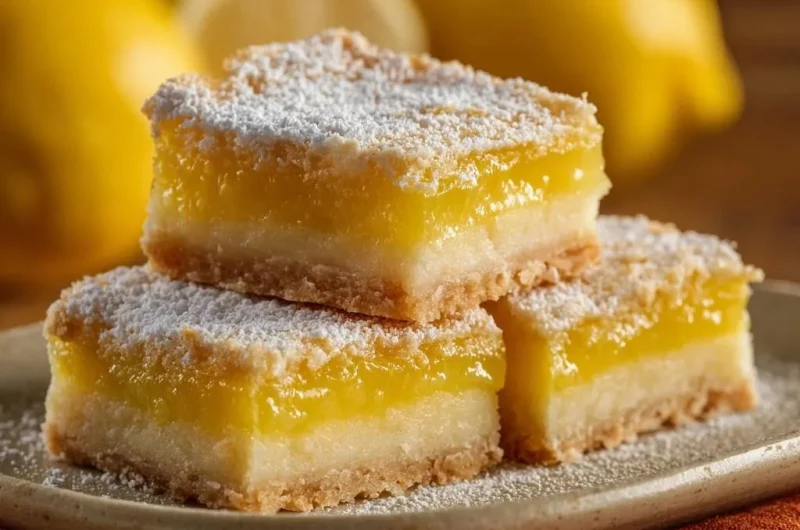
Lemon Bars
Course: DessertCuisine: AmericanDifficulty: medium24
bars20
minutes50
minutes220
kcal240
MinutesSick of lemon bars that collapse into a gooey mess when sliced? This recipe nails the perfect set with a simple cornstarch boost in the filling and exact bake cues, delivering firm, sliceable bars every time.
Ingredients
Crust:
1 cup unsalted butter, softened
1/2 cup granulated sugar
2 cups all-purpose flour
1/4 teaspoon salt
Filling:
6 large eggs
2 cups granulated sugar
1 cup fresh lemon juice (about 6 lemons)
Zest of 4 lemons
1/2 cup all-purpose flour
1/4 cup cornstarch
Powdered sugar, for dusting
Directions
- Preheat oven to 350°F. Line a 9×13-inch baking pan with parchment paper, leaving overhang for easy removal.
- For the crust: Beat butter and sugar until creamy. Mix in flour and salt until crumbly dough forms; do not overmix. Press evenly into prepared pan. Bake 20 minutes until lightly golden.
- For the filling (the no-runny secret): Whisk eggs and sugar vigorously for 2 minutes until pale and thick. Add lemon juice, zest, flour, and cornstarch; whisk until smooth with no lumps. This cornstarch locks in the set while keeping it glossy and tart.
- Pour filling over hot crust. Bake 25 to 30 minutes until edges are set and center has a slight jiggle (not liquid waves). Overbaking cracks it; underbaking runs it. Cool 1 hour at room temp, then chill 3 hours minimum for full firm-up.
- Lift out using parchment, dust with powdered sugar, and slice into bars. Stores airtight in fridge up to 5 days.
Notes
- Cool 1 hour at room temp, then chill 3 hours minimum for full firm-up. Stores airtight in fridge up to 5 days. Use fresh lemon juice for best flavor.