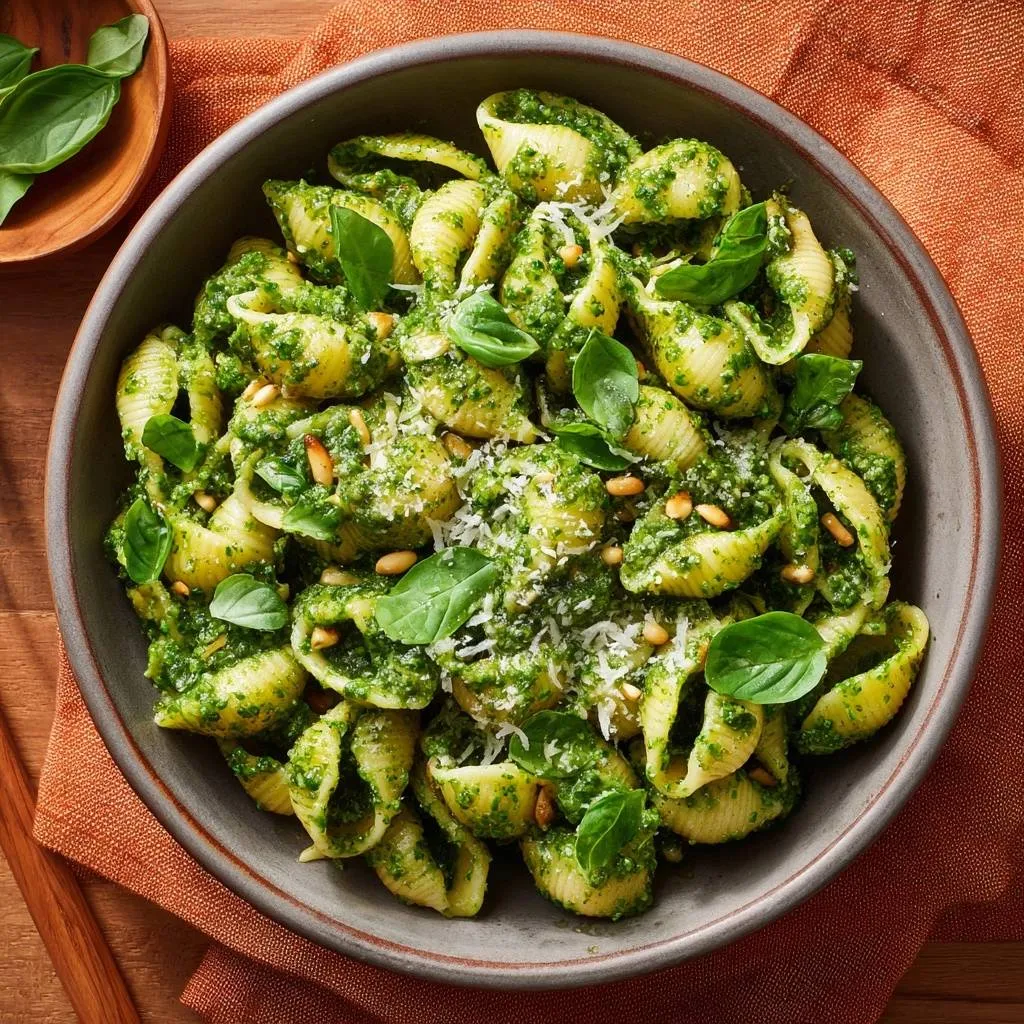
Ever scoop up a forkful of pesto pasta only to watch oily pools slide off into the bowl? That frustration ends here. This pesto shell pasta delivers a creamy, clingy sauce that coats every ridge perfectly, all thanks to starchy pasta water. You’ll have dinner ready in under 20 minutes, no greasy mess left behind.
Here’s why it works so well. Traditional pesto relies on too much oil, leading to separation and waste. However, adding hot pasta water creates a natural emulsion that binds everything into silkiness. In addition, the shell shape traps that sauce like a dream.
The real secret? Reserve that half-cup of pasta water while it’s still steaming hot. It activates the starch molecules to lock in flavors without extra oil. Trust me, one taste and you’ll crave this emulsified pesto shell pasta every week.
Core Ingredients for Clingy Pesto Shell Pasta
Shell Pasta: Why Shape Enhances Sauce Grip
You’ll need 12 ounces of shell pasta, also called conchiglie. These ridged shells grip the emulsified pesto far better than smooth spaghetti. The curves create pockets that hold onto every bit of creamy sauce.
Cook them al dente to release maximum starch. Brands like Barilla or De Cecco offer the best texture. Therefore, they won’t turn mushy and dilute your pesto shell pasta.
Fresh Basil and Pine Nuts Breakdown
Pack 2 cups of fresh basil leaves tightly. Fresh ones give vibrant green color and punchy flavor, so avoid wilted bunches that bruise easily. Gently tear them before processing to preserve aroma.
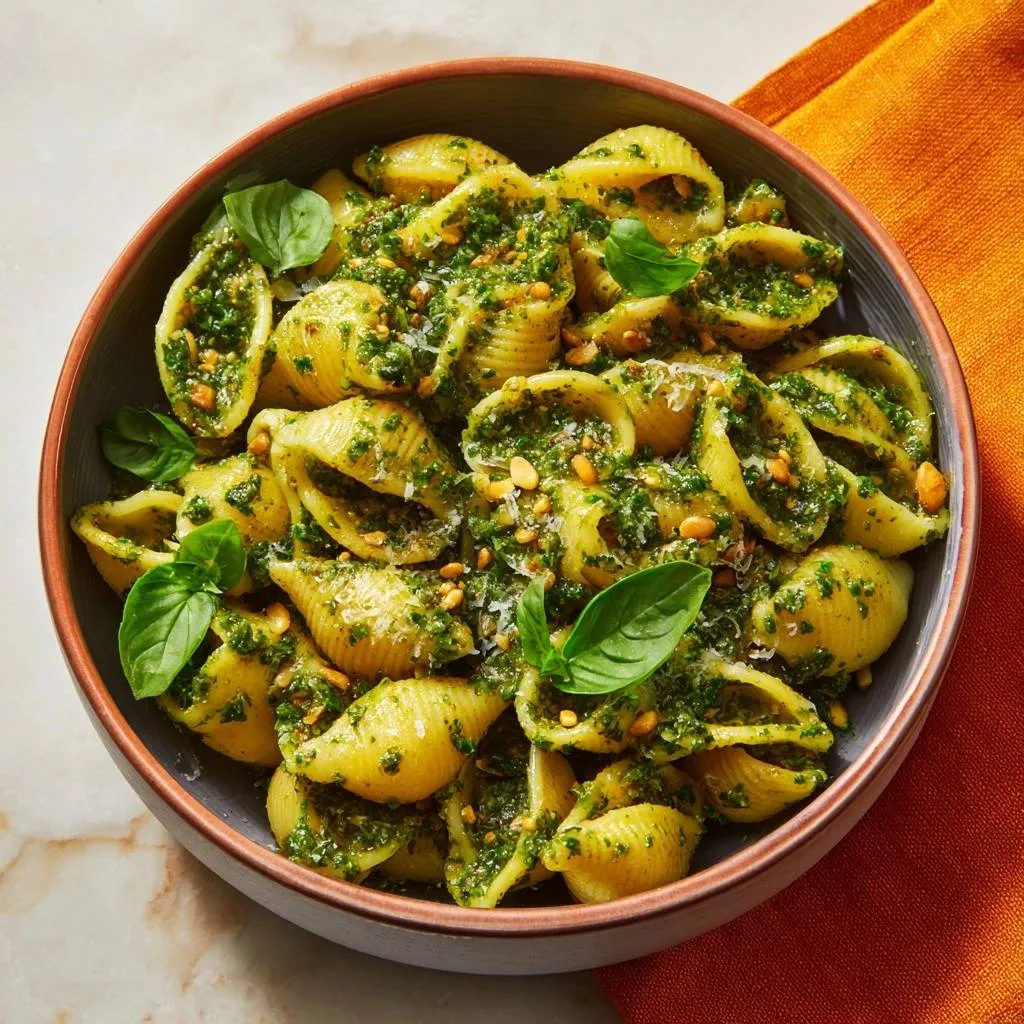
Use 1/3 cup pine nuts, split for dual purposes. Raw ones blend into the pesto base, while toasted add nutty crunch. This contrast elevates your pesto shell pasta from good to unforgettable.
Parmesan, Garlic, and Olive Oil Ratios
Grate 1/2 cup Parmesan fresh for superior melt and umami bind. Pre-shredded often has anti-caking agents that make sauce grainy. In addition, 2 garlic cloves deliver sharp punch without raw bite when pulsed.
Stick to 1/4 cup quality extra-virgin olive oil. It prevents greasiness in pesto shell pasta. Season with salt and pepper to taste, adjusting after blending for perfect balance.
Starchy Pasta Water: Emulsification Secret
Reserve 1/2 cup pasta cooking water right before draining. The starch acts as a natural emulsifier, binding oil and water in pesto for a stable, silky coat. This slashes oil needs by half.
Timing matters, so use it hot for max effect. Cold water won’t activate the starch properly. Therefore, your pesto shell pasta stays creamy, not separated.
Step-by-Step: Building Silky Pesto Shell Pasta
Boil Shells to Al Dente Perfection
Bring a large pot of salted water to a rolling boil. Add 12 ounces shell pasta and cook per package minus 1 minute for al dente bite. The salt seasons every strand from the inside.
Before draining, scoop out 1/2 cup starchy water. Hot pasta is crucial here. It helps the pesto emulsify smoothly in your pesto shell pasta.
Quick Food Processor Pesto Method
While pasta boils, pulse 1/4 cup pine nuts, 2 cups basil, 2 garlic cloves, 1/2 cup Parmesan, 1/4 cup olive oil, salt, and pepper. Go 20 seconds for chunky texture. Over-processing turns it bitter and watery.
Taste and tweak seasoning. You want vibrant basil punch. This keeps your pesto shell pasta fresh and lively.
Toast Pine Nuts for Crunch Contrast
Heat a dry skillet over medium. Add remaining pine nuts and stir 2 to 3 minutes until golden. Watch closely to avoid burning, which adds bitterness.
They’ll smell nutty and irresistible. This crunch contrasts the silky pesto shell pasta beautifully. Set aside to cool slightly.
Emulsify Pesto with Pasta Water Magic
Return hot drained pasta to the pot on low heat. Add pesto and 1/4 cup reserved water. Toss vigorously for 1 full minute, adding water tablespoon by tablespoon until creamy and coating every shell.
The sauce transforms from separated to emulsified silk. Stir in toasted pine nuts. Serve right away with extra Parmesan for peak pesto shell pasta bliss.
Science of Starchy Water in Pesto Shell Pasta
Starch Emulsification Explained
Pasta starch molecules surround oil droplets and water, creating a stable emulsion. Heat from the hot pasta activates this binding. Unlike traditional oily pesto shell pasta, it won’t separate on the plate.
This method clings to shells without pools. Therefore, you use less oil but get more flavor cling. It’s simple physics for restaurant-quality results at home.
For a similarly satisfying side, explore creamy garlic orzo with a bit of crunch.
Why Shells Maximize Sauce Adhesion
Shells’ hydrophobic ridges repel excess water while trapping starchy sauce. Smooth pasta lets it slide off. Imagine the ridges like tiny hooks grabbing every bit of emulsified pesto shell pasta.
This shape maximizes grip. In addition, al dente cooking amps up starch release for even better hold.
Avoiding Common Mistakes in Pesto Shell Pasta
Over-Processing Pesto Pitfalls
Pulsing too long releases basil oils, making pesto bitter and watery. Stick to 20 seconds for chunky vibrancy in pesto shell pasta. Use low speed if your processor is powerful.
A mortar and pestle works too for control. It preserves texture better than blades.
Pasta Water Temperature Errors
Cold water fails to emulsify, leaving oily separation. Always reserve hot liquid right after cooking. Drain timing is key for pesto shell pasta silkiness.
If it cools, gently reheat before using. Hot is non-negotiable.
Insufficient Tossing Technique
Half-hearted stirring leaves oily pools. Use tongs on low heat for 1 full minute of vigorous tosses. This builds the emulsion in pesto shell pasta.
Spoons work but tongs grip shells better. Patience prevents failure.
Flavor Variations for Pesto Shell Pasta
Nut-Free or Walnut Swaps
Swap pine nuts for walnuts or sunflower seeds to save money. Toast walnuts lightly as they intensify fast. This keeps crunch in budget pesto shell pasta.
Sunflower seeds mimic pine nut butteriness perfectly. Blend and proceed as usual.
Arugula or Spinach Pesto Twists
Mix 1 cup basil with 1 cup arugula or spinach for peppery depth. Arugula adds bite, spinach mellows with nutrition. Both shift color to pretty green hues in pesto shell pasta.
Boosts vitamins without overpowering. Pulse gently to avoid toughness.
Lemon Zest and Chili Boosts
Add 1 teaspoon lemon zest and a pinch red pepper flakes. Zest brightens basil, chili adds subtle heat to pesto shell pasta. Balance with extra Parmesan if needed.
Grate zest finely for even distribution. It wakes up the dish instantly.
Pairing Sides with Pesto Shell Pasta
Crisp Green Salads Complement
Toss arugula with halved cherry tomatoes and balsamic vinaigrette. The acidity cuts through pesto richness perfectly. Add shaved Parmesan for echo flavors with pesto shell pasta.
Simple, fresh, and ready in minutes. Keeps the meal light.
For another simple, quick meal with bright flavors, try burst cherry tomato orecchiette.
Simple Grilled Veggies Match
Grill zucchini slices and bell pepper strips until charred. Their sweet smokiness pairs with herby pesto shell pasta. Season with salt and a squeeze of lemon.
Quick on a grill pan indoors. Synergy makes every bite pop.
What to Serve Alongside
To complete your pesto pasta meal, consider adding a vibrant vegetable dish.
- For some satisfying roasted vegetables, try this Crispy Parmesan Roasted Zucchini, which uses similar herbs.
- If you prefer a cool and fresh salad, this Caprese Fusilli Salad offers bright tomato and basil flavors that complement pesto well.
Bread Options for Sauce Sop-Up
Serve crusty sourdough or garlic focaccia alongside. They sop up any extra emulsified sauce from pesto shell pasta. Warm it first for best results.
Nothing wasted. Pure carb heaven.
Make-Ahead Guide for Pesto Shell Pasta
Prep Pesto Up to 3 Days Early
Make pesto ahead and store airtight with a thin oil film on top. It prevents oxidation and browning. Re-emulsify with fresh pasta water when ready for pesto shell pasta.
Flavor deepens slightly. Perfect for weeknights.
Freezing Pasta and Sauce Separately
Freeze cooked shells up to 1 month in bags. Thaw, then toss with fresh pesto and hot water for revival. Don’t freeze pesto itself, as basil turns black.
This method keeps pesto shell pasta texture spot-on. Reheats like new.
Pesto Shell Pasta FAQ
Can I Use Store-Bought Pesto?
Yes, it works great. Add extra pasta water and toss vigorously over low heat to emulsify jarred pesto into silky pesto shell pasta. Avoid super oily brands like Classico; Rao’s holds up best with less separation.
How to Fix Separated Sauce?
Return pasta to low heat, add 1-2 more tablespoons hot starchy water, and toss hard for 30 seconds. The starch revives the emulsion instantly for smooth pesto shell pasta. Don’t add oil, it’ll worsen it.
Gluten-Free Pesto Shell Pasta Options?
Chickpea or brown rice shells from Banza or Jovial shine here. They release even more starch, boosting emulsification for creamier pesto shell pasta. Cook 1 minute less to avoid mush.
Vegan Version of This Recipe?
Swap Parmesan for nutritional yeast or vegan Parmesan alternative. Use 1/3 cup for cheesy umami in vegan pesto shell pasta. The emulsion holds perfectly, tasting rich and creamy.
Scaling for Crowd-Sized Batches?
Double everything and use your widest pot for even cooking. Reserve 1 cup pasta water to ensure full emulsified coating on larger pesto shell pasta batches. Toss in a wok if needed for space.
Shell Pasta
Course: Main CourseCuisine: ItalianDifficulty: easy4
servings10
minutes15
minutes550
kcal25
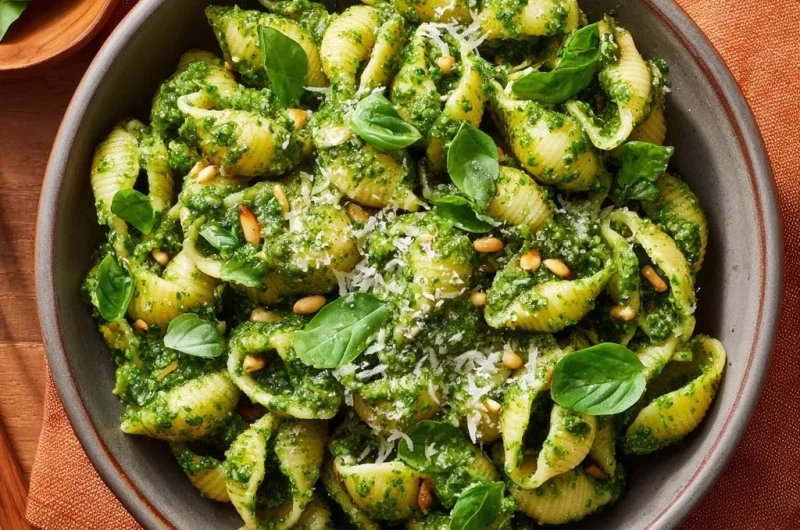
MinutesSick of pesto pasta drowning in oil? This method uses reserved starchy pasta water to emulsify the pesto into a creamy coating that clings perfectly, slashing oil and locking in flavor.
Ingredients
12 ounces shell pasta
2 cups packed fresh basil leaves
1/3 cup pine nuts, divided
1/2 cup grated Parmesan cheese, plus more for serving
1/4 cup olive oil
2 garlic cloves
Salt and black pepper to taste
1/2 cup reserved pasta cooking water
Directions
- Cook pasta in a large pot of salted boiling water according to package directions until al dente. Before draining, reserve 1/2 cup pasta water, then drain pasta.
- While pasta cooks, make pesto: In a food processor, pulse 1/4 cup pine nuts, basil, garlic, Parmesan, olive oil, a pinch of salt, and pepper until mostly smooth but slightly chunky, about 20 seconds. Do not over-process.
- Toast remaining pine nuts in a dry skillet over medium heat for 2 to 3 minutes until golden, stirring constantly to avoid burning. Set aside.
- Return hot drained pasta to the pot over low heat. Add pesto and 1/4 cup reserved pasta water. Toss vigorously for 1 minute, adding more pasta water 1 tablespoon at a time until pesto emulsifies into a creamy sauce that evenly coats every shell without oiliness or separation. The starch from the water binds it perfectly.
- Stir in toasted pine nuts. Serve immediately topped with extra Parmesan and fresh basil leaves.
Notes
- Do not over-process the pesto; keep it slightly chunky. Toss vigorously with pasta water over low heat for perfect emulsification. Adjust pasta water 1 tablespoon at a time to achieve creamy consistency.