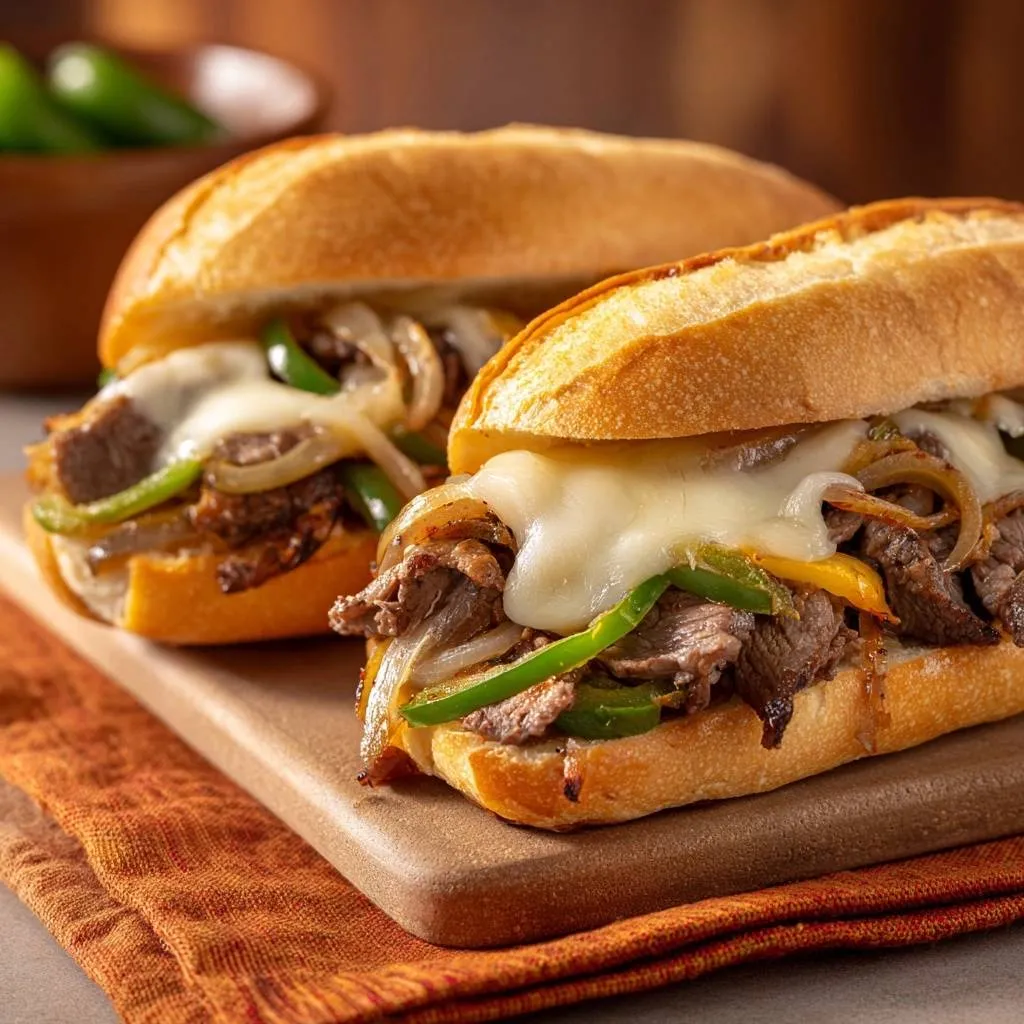
Nothing beats that first bite of a Philly cheesesteak sandwich where the steak stays juicy and tender, not dry like so many home versions. You’ve probably bitten into tough, overcooked disappointment before. But this recipe changes everything with a simple freezer-slice and high-heat blast that delivers restaurant-level Philly cheesesteak sandwiches every time.
So why do these Philly cheesesteak sandwiches work so well? They tackle the core problem head-on: thin beef slices dry out fast without the right prep. Instead, we use ribeye’s marbling and quick cooking to lock in all that flavor and moisture. You’ll get that perfect pink center surrounded by caramelized peppers and onions.
Here’s the expertise-proven tip that seals the deal. Partially freeze the ribeye for 20-30 minutes before slicing super thin against the grain. This prevents shredding and keeps every strip juicy during the high-heat sear. Trust me, it’s the trick pros swear by for flawless Philly cheesesteak sandwiches.
Why Philly Cheesesteak Sandwiches Fail at Home
Overcooking Thin Beef Slices
Thin beef slices in Philly cheesesteak sandwiches overcook in seconds on home stovetops. Without enough fat, like ribeye’s marbling provides, moisture escapes fast through protein contraction. Therefore, lean cuts turn chewy and dry, unlike the juicy restaurant versions.
Ribeye solves this because its fat melts during cooking and bastes the meat. In addition, the high-heat method we use sears the outside while keeping the inside pink. You’ll notice the difference immediately in tenderness.
Skipping the Freezer Trick
Without partial freezing, slicing ribeye into paper-thin strips tears the fibers. This leads to uneven cooking and dryness in your Philly cheesesteak sandwiches. However, a quick freezer stint firms it up just right, like pros do at butcher counters.
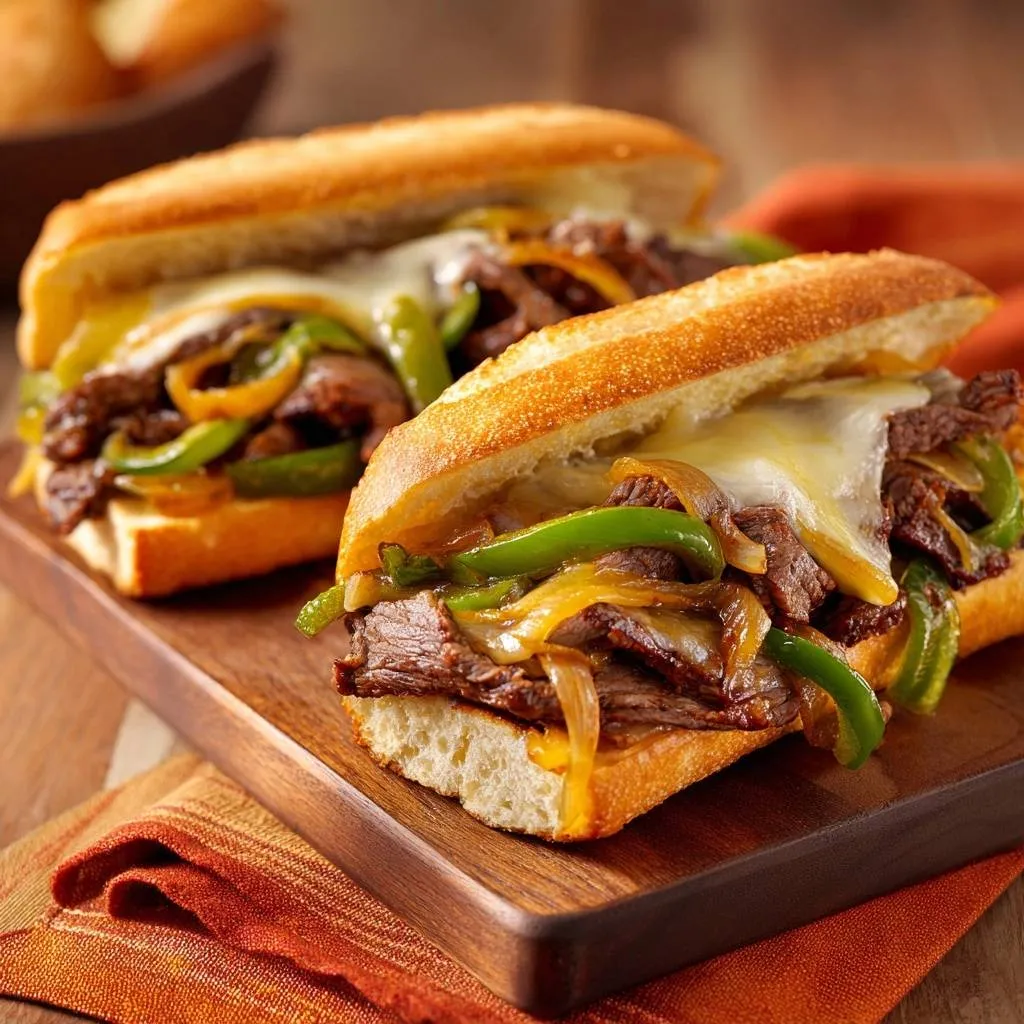
Think of it as turning soft butter into sliceable pats. You get clean cuts that cook uniformly fast. That’s why this step transforms home attempts into successes.
Essential Ingredients for Authentic Philly Cheesesteak Sandwiches
Choosing Ribeye for Juicy Philly Cheesesteak Sandwiches
Ribeye’s generous fat marbling keeps Philly cheesesteak sandwiches juicy, unlike lean sirloin that dries out. Source well-marbled cuts from your butcher for best results. In addition, the partial freeze makes it slice perfectly thin.
Don’t swap for sirloin; it lacks the fat needed for tenderness. Ribeye melts in your mouth after our quick sear.
Vegetables: Peppers and Onions Balance
Slice green bell peppers and yellow onions thin for even caramelization in Philly cheesesteak sandwiches. Green peppers add that classic tangy crunch without overpowering sweetness. Therefore, they balance the rich steak perfectly.
Onions sliced paper-thin soften fast and char lightly for depth.
Cheese Melting Secrets in Philly Cheesesteak Sandwiches
White American cheese oozes smoothly in Philly cheesesteak sandwiches without greasiness, better than provolone’s milder melt. It clings to every steak strip. Provolone works too but lacks that signature gooey pull.
Hoagie Rolls and Oil Foundations
Hoagie rolls hold up to juices in Philly cheesesteak sandwiches better than soft sub rolls, thanks to their crusty exterior. Vegetable oil’s high smoke point handles the searing heat without burning. Therefore, it lets flavors shine.
Science of Tender Philly Cheesesteak Sandwiches
Freezer Slicing Locks in Juices
Partial freezing tightens myosin proteins in ribeye, allowing clean slices against the grain for Philly cheesesteak sandwiches. Slicing with the grain makes meat tough; against it shortens fibers for tenderness. In addition, pat dry to remove excess moisture that steams instead of sears.
This method keeps juices locked in during cooking. You’ll see the pink centers stay intact.
High-Heat Searing Seals Flavors
Medium-high heat triggers the Maillard reaction on ribeye surfaces for nutty, caramelized crust in Philly cheesesteak sandwiches. Cook undisturbed for one minute to build that sear without squeezing out juices. Stirring too soon toughens it up.
Therefore, the inside stays juicy pink. It’s the key to restaurant texture at home.
For a similar crispness, try ultimate beef patty melts.
Residual Heat Melts Cheese Perfectly
Off-heat melting uses skillet residual warmth to gently soften cheese over steak and veggies in Philly cheesesteak sandwiches. Direct heat makes it rubbery. In addition, covering traps steam for even ooze in just one minute.
Equipment That Elevates Philly Cheesesteak Sandwiches
Skillet Size for Even High-Heat Cooking
A 12-inch skillet fits everything for Philly cheesesteak sandwiches without overcrowding, ensuring crisp sears. Cast iron holds heat for perfect residual cheese melt. Smaller pans steam the meat instead.
Sharp Knife for Paper-Thin Ribeye Slices
Post-freeze, a sharp chef’s knife at a 45-degree angle slices ribeye thin for Philly cheesesteak sandwiches. Dull blades tear fibers. A meat slicer works great if you have one.
Step-by-Step: Building Juicy Philly Cheesesteak Sandwiches
Phase 1: Freeze and Precision-Slice Ribeye
Freeze ribeye 20-30 minutes until firm. Slice 1/8-inch thin against the grain; look for visible lines in the meat. Pat dry thoroughly, then season with salt and pepper. This prevents steaming and locks in juices for your Philly cheesesteak sandwiches.
Phase 2: Caramelize Peppers and Onions
Heat one tablespoon oil until shimmering, about two minutes. Add sliced peppers and onions; stir occasionally 8-10 minutes until soft with light char and sweet aroma. Push to side. Don’t let them burn; lower heat if needed.
Phase 3: High-Heat Ribeye Sear Technique
Add remaining oil to empty side, then steak in a single layer. Sear undisturbed one minute for crust, stir 1-2 minutes until browned outside and pink inside. Mix with veggies. High heat seals juices perfectly for Philly cheesesteak sandwiches.
Phase 4: Cheese Melt and Roll Assembly
Divide eight cheese slices over filling. Cover skillet, remove from heat; melt one minute for gooey perfection. Meanwhile, lightly toast split hoagie rolls. Fill generously, add jalapeños if you want heat.
Avoiding Common Mistakes in Philly Cheesesteak Sandwiches
Overcrowding the Skillet Pitfalls
Overcrowding steams steak instead of searing it in Philly cheesesteak sandwiches. Cook in batches if needed. Therefore, you get that crisp exterior every time.
Skipping the Pat-Dry Step
Wet steak boils in the pan, preventing browning for Philly cheesesteak sandwiches. Pat with paper towels firmly. Kitchen towels work too in a pinch.
Low-Heat Cooking Dryness Trap
Low heat overcooks thin slices, drying out Philly cheesesteak sandwiches. Medium-high is essential; test by flicking water, it should sizzle away. No compromises here.
Flavor Variations for Philly Cheesesteak Sandwiches
Spicy Jalapeño and Pepper Jack Twists
Add sliced jalapeños atop melted cheese for heat in Philly cheesesteak sandwiches. Swap to pepper jack for extra spice. Mushrooms sautéed with veggies add earthiness too.
Provolone vs. American Cheese Profiles
Provolone brings mild tang to Philly cheesesteak sandwiches; American delivers ultra-melty creaminess. Both authentic, but American wins for ooze. Taste both and pick your favorite.
Perfect Pairings for Philly Cheesesteak Sandwiches
Crisp Fries and Pickle Sides
Seasoned crisp fries cut the richness of Philly cheesesteak sandwiches perfectly. Pickles or vinegar slaw add bright crunch contrast. It’s a match made in heaven.
Serving Suggestions
Round out your cheesesteak experience with these complementary dishes.
- For a fresh contrast to your Philly cheesesteak sandwiches, consider this Harvest Apple and Walnut Salad, offering a pleasant crunch and fruity notes.
- Enhance the savory elements of your cheesesteaks with crispy Fried Onion Strings, adding a satisfying texture.
Beverage Matches Without Alcohol
Iced tea refreshes against the savory Philly cheesesteak sandwiches. Cola or root beer balances the fat with fizz and sweetness. They all enhance that juicy bite.
For a truly juicy sandwich experience, discover more Philly Cheesesteak juicy ribeye secrets.
History and Origins of Philly Cheesesteak Sandwiches
Pat Olivieri’s 1930s Street Cart Birth
In 1930s Philadelphia, Italian immigrant Pat Olivieri ditched hot dogs for grilled beef and onions on his cart. Customers went wild, birthing the Philly cheesesteak sandwich. It started simple, no cheese yet.
Word spread fast among cab drivers and workers. That street food vibe still defines it today.
Evolution to Modern Hoagie Icon
Cheese joined in the 1950s, with provolone first, then American. Rival spots like Geno’s and Pat’s fueled Philly cheesesteak sandwich fame with heated debates. Now it’s a global icon, but roots stay in those hoagie rolls.
Troubleshooting Philly Cheesesteak Sandwiches Issues
Steak Still Tough After Slicing?
Check grain direction; reslice perpendicular if needed. Avoid full freezing, which makes it chewy. Cook less next time for pink centers.
Cheese Not Melting Smoothly?
Use a tight lid to trap steam. Shred cheese first for faster melt in Philly cheesesteak sandwiches. Residual heat works best.
Onions Burning Before Soft?
Lower heat slightly and add a splash of water to deglaze. Stir more frequently early on.
Roll Sogging from Juices?
Toast interiors with butter for Philly cheesesteak sandwiches. Drain filling slightly before stuffing. Keeps them crisp.
Philly Cheesesteak Sandwiches FAQ
Can I Use Frozen Steak Directly?
No, fully frozen steak shatters when sliced, ruining thin strips for Philly cheesesteak sandwiches. Thaw partially first, then refreeze 20-30 minutes for firm slicing. This ensures clean cuts and juicy results without waste.
Best Substitutes for Ribeye?
Top round works if sliced extra thin, but lacks marbling so add a teaspoon oil per pound. Flank steak needs against-grain slicing and quick cooking. However, ribeye’s fat makes the best Philly cheesesteak sandwiches; subs dry faster.
How to Scale for Crowds?
Double ingredients and batch-cook steak in the skillet, keeping veggies warm. Finish in a hot oven at 400°F on sheet pans for even melting. Keeps Philly cheesesteak sandwiches juicy for 8-12 servings without toughness.
Make-Ahead Storage Tips?
Store assembled Philly cheesesteak sandwiches in airtight containers up to 3 days in fridge; separate rolls from filling to avoid sogginess. Reheat filling in skillet over medium, adding cheese last. Don’t freeze; steak gets grainy and tough upon thawing.
Vegetarian Philly Cheesesteak Sandwiches Option?
Swap ribeye for sliced portobello mushrooms or seitan, treated with freezer trick for texture. Caramelize same way with peppers and onions. Use provolone or vegan cheese for authentic Philly cheesesteak sandwich chew without meat.
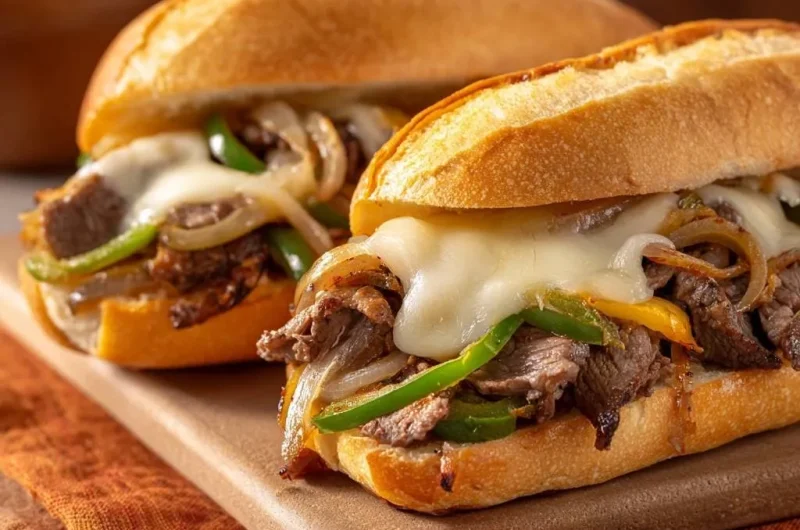
Philly Cheesesteak
Course: Main CourseCuisine: AmericanDifficulty: easy4
sandwiches30
minutes15
minutes650
kcal45
MinutesHome cheesesteaks often turn out dry and tough because thin beef overcooks fast. Our freezer-slice and high-heat blast method locks in juices for tender, restaurant-wow results every time.
Ingredients
1 pound ribeye steak, partially frozen
2 green bell peppers, sliced
1 large yellow onion, sliced thin
8 slices white American or provolone cheese
4 hoagie rolls, split
2 tablespoons vegetable oil
Salt and black pepper to taste
Optional: sliced jalapeños for topping
Directions
- Place ribeye in freezer for 20-30 minutes until firm but not fully frozen. This is the key trick: it slices paper-thin without shredding, preventing dryness later. Slice against the grain into 1/8-inch strips. Pat dry with paper towels and season with salt and pepper.
- Heat 1 tablespoon oil in large skillet over medium-high heat until shimmering hot, about 2 minutes. Add peppers and onions. Cook, stirring occasionally, until softened and caramelized with light char, 8-10 minutes. Push to side of skillet.
- Add remaining 1 tablespoon oil to empty side. Add sliced steak in single layer. Cook undisturbed 1 minute for sear, then stir and cook 1-2 more minutes until just browned and juicy pink in center. This high-heat quick-cook seals juices inside, solving dry steak forever. Mix with veggies.
- Divide cheese over filling. Cover skillet, remove from heat, and let melt 1 minute from residual heat for perfect ooze without rubberiness.
- Toast hoagie rolls lightly. Fill with steak mixture. Add jalapeños if desired. Serve hot.
Notes
- Partially freeze the ribeye for 20-30 minutes to slice paper-thin without shredding. High-heat quick-cook seals in juices for tender results. Use white American or provolone cheese. Optional jalapeños for heat.