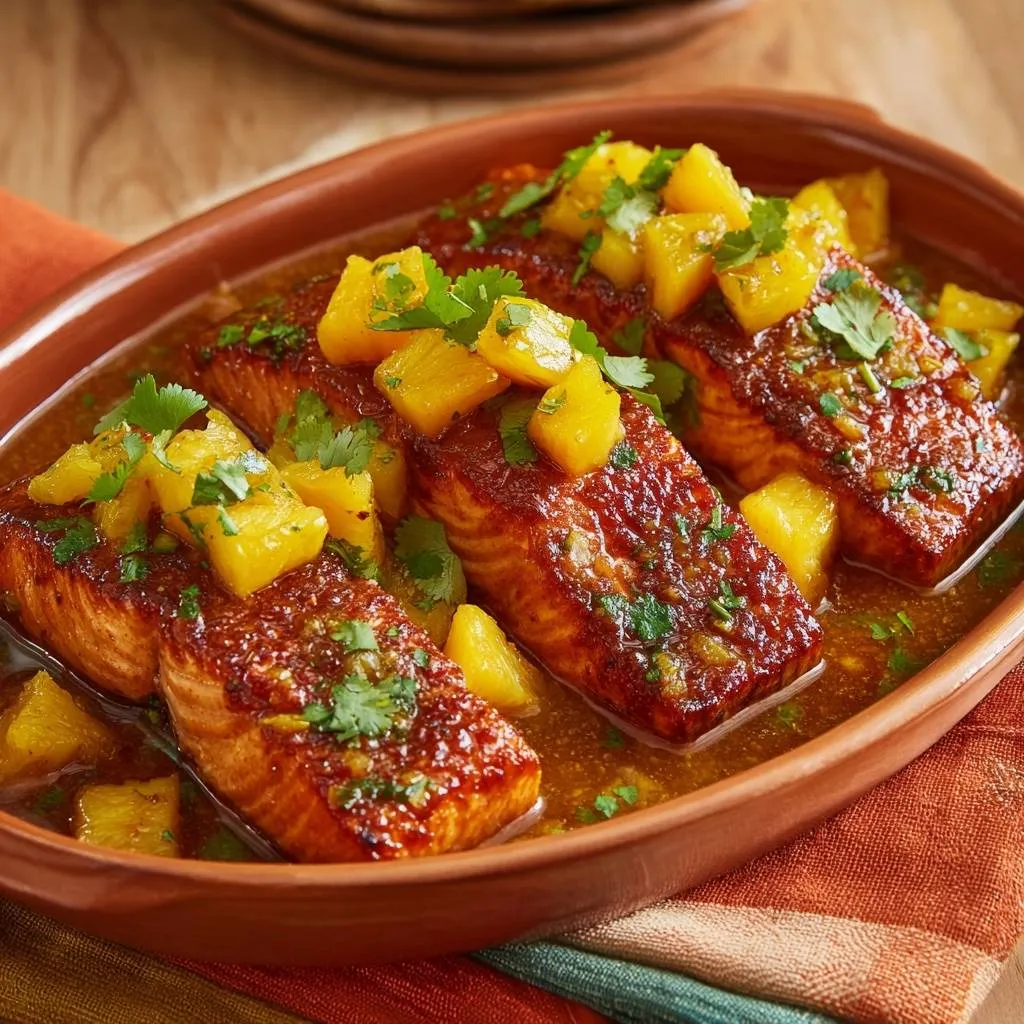
Ever bite into salmon that’s dry as cardboard? This pineapple glazed salmon recipe ends that nightmare. You get dinner on the table in under 30 minutes with a low-slow bake that locks in every drop of moisture, then a quick broil for that irresistible caramelized crust. No more takeout temptations when you’ve got this flaky, juicy perfection waiting.
Here’s why it works so well. Pineapple’s natural enzymes tenderize the fish while the glaze steams it gently at 275 degrees. In addition, the sweet-tangy combo balances the salmon’s richness perfectly. You’ll crave that glossy, golden top every time.
The real secret? Pat the fillets bone-dry before seasoning. This ensures the pineapple glaze clings tight and seasons deeply, unlike wet fish that just steams blandly. Trust me, one bite and you’ll never go back to dry salmon dinners.
Why Pineapple Glaze Transforms Salmon
Pineapple glaze elevates salmon like nothing else. Firstly, the fruit’s acidity cuts through the fish’s fattiness for bright contrast. Therefore, you avoid that heavy, oily mouthfeel from traditional methods.
During the broil, natural sugars trigger the Maillard reaction. This creates a crispy, caramelized top without drying the interior. High-heat searing often overcooks salmon, but this pineapple glazed salmon recipe keeps it moist and flaky.
Plus, the low-slow bake contrasts sharply with pan-searing pitfalls. You end up with restaurant-quality results at home. Oh man, that sweet glaze bubbling up smells incredible.
Enzyme Magic in Pineapple Chunks
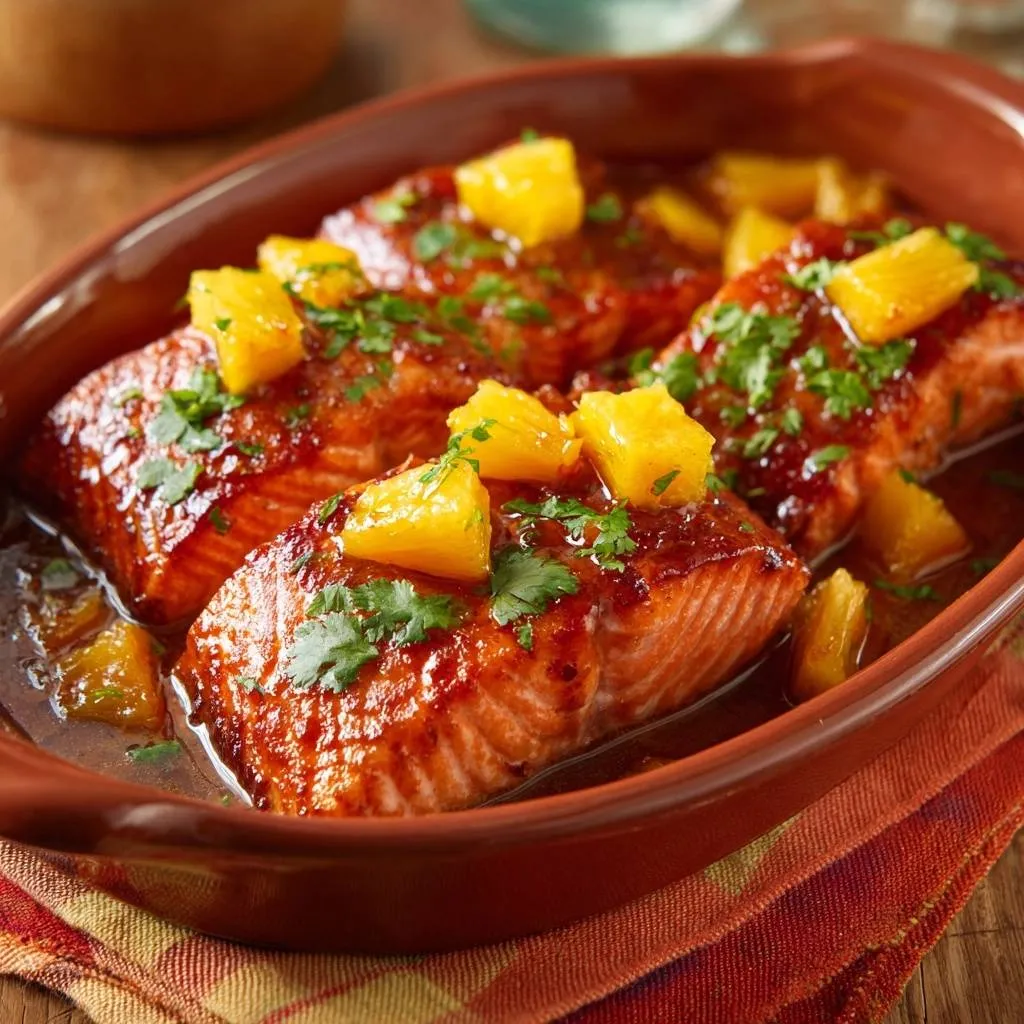
Pineapple contains bromelain, an enzyme that breaks down salmon proteins for supreme tenderness. Scatter chunks around the fillets, and they release juices that infuse flavor deeply. However, don’t marinate longer than 15 minutes, or it turns mushy.
Fresh pineapple packs more enzymes than canned, so it tenderizes faster. Canned works fine if drained well, though. Either way, this step ensures your pineapple glazed salmon flakes effortlessly.
Low-Slow Baking vs. High-Heat Searing
At 275°F, salmon gently reaches 125°F internally, breaking down collagen for silky texture. High-heat methods hit 140°F fast, squeezing out moisture. Therefore, low-slow wins for juiciness.
Here’s a quick temp guide: 1-inch thick fillets need 12 minutes; 1.5-inch take 15. Use an instant-read thermometer to hit perfection every time.
Key Ingredients for Pineapple Glazed Salmon
Start with 4 salmon fillets, 6 ounces each, skin-on or skinless. Next, 2 cups pineapple chunks (fresh or canned in juice, drained) provide enzymes and sweetness. Then, 1/2 cup pineapple juice forms the glaze base.
Don’t skip 3 tablespoons brown sugar, 2 tablespoons low-sodium soy sauce, 1 tablespoon honey, and juice of 1 lime. These balance sweet, salty, and tangy notes. Finally, salt, pepper, and 1/4 cup chopped fresh cilantro finish it fresh.
For substitutions, use coconut aminos instead of soy if needed. Fresh lime is key for zing; bottled lacks punch. This lineup makes pineapple glaze salmon shine.
Picking Perfect Salmon Fillets
Go for wild-caught if possible; it’s firmer and less fatty. Skin-on crisps nicely under broil, but skinless works too. Aim for even 1-inch thickness to cook uniformly.
Store in the fridge wrapped tightly up to 2 days. Pat dry before use to prevent wateriness.
Balancing Sweetness: Brown Sugar and Honey
Brown sugar caramelizes better than white due to molasses. It gives that glossy pineapple glaze depth. Honey adds floral smoothness that pairs with pineapple’s tropical vibe.
The 3:1 ratio creates perfect viscosity, not too runny. Taste and tweak if your pineapple is super sweet.
Essential Tools for Flawless Results
You need an oven-safe dish, like 9×13 glass or ceramic, for even heat. Heavy-duty foil seals in steam tightly. An instant-read thermometer checks doneness precisely.
Position the rack 3-4 inches from the broiler. No fancy gear required; basic kitchen tools deliver pro results. Therefore, anyone can nail this pineapple glazed salmon.
Broiling Distance Matters
Keep it 3-4 inches to bubble the glaze without charring. Ovens vary, so test your rack position first. Watch like a hawk those last 2 minutes.
Mastering the Low-Slow Pineapple Glaze Method
Preheat to 275°F. Pat salmon dry, season lightly with salt and pepper, and place in a single layer. Dry surface grabs the glaze better.
Prep and Season Salmon Base
A snug dish prevents glaze from pooling too deep. Light seasoning lets pineapple flavors lead. You’re set for juicy success.
Whisking the Shiny Glaze Base
Whisk 1/2 cup pineapple juice, brown sugar, soy, honey, and lime until sugar dissolves fully. Taste for balance; add lime if too sweet. Pour evenly over pineapple chunks and salmon.
Covered Bake for Juicy Interior
Seal foil tightly to trap steam. Bake 12-15 minutes until salmon flakes easily at 125°F. Spoon juices over midway for extra gloss.
Quick Broil for Golden Crust
Uncover, broil high 2-3 minutes until glaze bubbles golden. Rest 2 minutes; juices redistribute. Garnish with cilantro and serve.
Science of Caramelized Pineapple Glazed Salmon
Under broil, sugars invert and brown via Maillard, creating nutty depth. Low heat poaches in glaze, retaining moisture. The lime’s pH prevents white albumin from forming on the surface.
This combo yields caramelized pineapple glazed salmon that’s flaky inside, crisp outside. Simple science, big payoff.
For caramelized pineapple perfection, check out these grilled pineapple rings.
Trapping Steam for Flake-Perfect Texture
Foil creates a humid oven, gently gelatinizing proteins like poaching. Hit 120-125°F internal for ideal flake. Over 130°F toughens it fast.
Avoiding Dry Salmon Pitfalls
Common mistakes include loose foil seals letting steam escape and over-broiling the delicate top. Use thick fillets? Add 2-3 minutes bake time. Always thermometer-check.
Pro tip: Extra glaze midway keeps everything basted. Therefore, your pineapple glazed salmon stays succulent.
Timing Tweaks by Fillet Thickness
1-inch: 12 minutes bake. 1.5-inch: 15 minutes. Broil same for all. Insist on thermometer; eyes deceive.
Flavor Twists on Pineapple Glazed Salmon
Add 1 teaspoon grated ginger for warmth. Swap lime for orange juice for citrus pop. Try chipotle powder for smoke. Upgrade with basil instead of cilantro.
These keep the core method but boost excitement. Nutrition stays lean and protein-packed.
Spicy Sriracha Pineapple Upgrade
Stir 1-2 teaspoons sriracha into glaze for heat. Scale to taste; it mellows in bake. Pairs with cooling coconut rice perfectly.
Ideal Pairings for Pineapple Glazed Salmon
Serve with coconut rice to soak up sauce, grilled zucchini spears, or quinoa salad. Spoon pan juices generously. Garnish cilantro brightens everything.
Crisp white like sauvignon blanc cuts the sweetness nicely. Simple plating wows guests.
Quick Coconut Rice Complement
Cook 1 cup rice in 1 can coconut milk plus water. Fluff and season lightly. It balances the tangy pineapple glaze beautifully.
Pineapple Glazed Salmon FAQ
Can I Use Frozen Pineapple?
Yes, thaw fully and drain excess water to avoid watery glaze. It retains juice well but has milder enzymes than fresh. Pat dry chunks before using.
Broiler Not Working Fixes?
Use a kitchen torch for caramelization or sear stovetop in a hot skillet 1 minute per side after baking. Watch closely to mimic broil bubble.
Make-Ahead Storage Rules?
Store leftovers in an airtight container in fridge up to 3 days. Freeze salmon separately from glaze up to 1 month; thaw overnight. Reheat gently in 275°F oven with foil to avoid drying.
Skinless Salmon Adjustments?
Flip halfway through broil and spoon extra glaze underside. It cooks evenly without skin protection. Same bake time applies.
Scaling for Meal Prep?
Double ingredients but increase glaze by 1.5x for coverage. Use larger dish to avoid crowding. Bake times extend slightly; check temps individually.
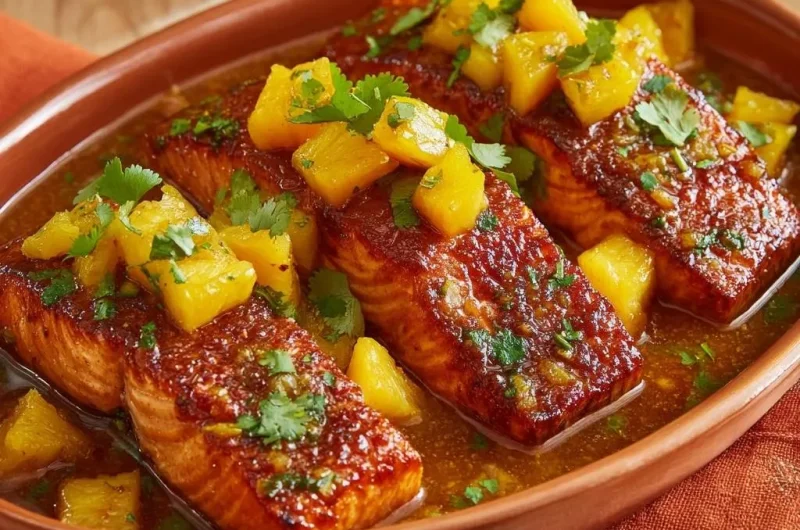
Pineapple Glazed Salmon
Course: Main CourseCuisine: AmericanDifficulty: easy4
servings10
minutes18
minutes480
kcal28
MinutesDry salmon ruining your dinners? This recipe fixes it forever with a low-slow bake in juicy pineapple glaze that locks in moisture, followed by a quick broil for perfect caramelization.
Ingredients
4 salmon fillets (6 ounces each, skin-on or skinless)
2 cups pineapple chunks (fresh or canned in juice, drained)
1/2 cup pineapple juice (reserved from chunks or canned)
3 tablespoons brown sugar
2 tablespoons low-sodium soy sauce
1 tablespoon honey
Juice of 1 lime
Salt and black pepper to taste
1/4 cup fresh cilantro leaves, chopped
Directions
- Preheat oven to 275 degrees F. Pat salmon fillets dry with paper towels, season both sides lightly with salt and pepper, and place in a single layer in an oven-safe dish.
- In a small bowl, whisk pineapple juice, brown sugar, soy sauce, honey, and lime juice until sugar dissolves. This creates the glossy glaze base.
- Scatter pineapple chunks around and over salmon. Pour glaze evenly over everything. Cover dish tightly with foil.
- Bake covered for 12 to 15 minutes. This low-slow method is the key: it gently cooks salmon in the steamy pineapple glaze, trapping moisture so it stays juicy and flakes perfectly without drying out.
- Remove foil, spoon pan juices over salmon, and switch oven to broil on high. Broil 3 to 4 inches from heat for 2 to 3 minutes until glaze bubbles and caramelizes golden-brown on top. Watch closely to avoid burning.
- Garnish with chopped cilantro. Serve salmon with pineapple chunks and pan sauce spooned over. Enjoy restaurant-worthy juicy salmon every time!
Notes
- Low-slow baking at 275°F is key to preventing dry salmon. Watch closely during broiling to avoid burning.