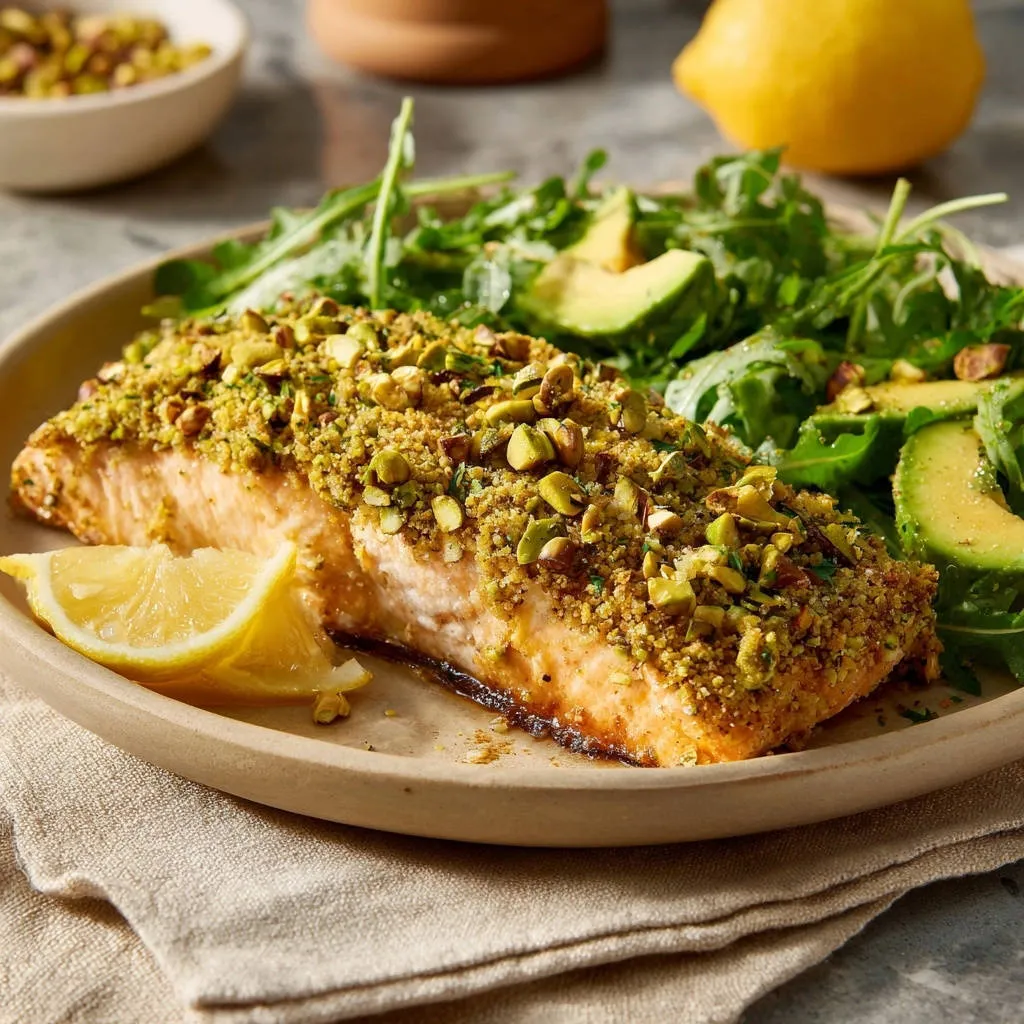
I spent years battling soggy, flaking crusts that always slid right off the fish when transferring it to the plate. This recipe for Pistachio-Crusted Baked Salmon solves that common frustration using one specific, low-flavor binding trick.
It guarantees you a satisfying, crunchy coating that adheres perfectly to the fillet, elevating this simple dinner to a true restaurant-quality meal.
Why This Pistachio-Crusted Salmon Recipe Stands Above the Rest
The Foolproof Adhesion Technique
Crust failure usually stems from excess moisture on the fish surface or an unstable binder like egg wash. Our secret is the thin layer of Dijon mustard, which provides unparalleled tackiness without breaking down under heat.
For a similarly juicy finish on fish, consider the simple goodness of lemon herb baked salmon.
This technique, combined with moisture control, ensures the coating locks immediately onto the protein and stays firmly in place.
Gourmet Results in Under 30 Minutes
Achieving a complex, gourmet meal often requires extensive prep and cooking time, which is impractical for most weeknights. This recipe is designed for efficiency, delivering beautiful, crispy results from start to finish in less than half an hour.
Complementary Plates
Round out your meal with these dishes that pair well with baked fish.
- For a satisfying vegetable option, consider the Crispy Garlic Parmesan Cauliflower, which offers a similar baked texture.
- Enjoy another seafood preparation with the Crunchy Baked Mussels with Garlic Butter, featuring complementary garlic notes.
A Flavor Profile That Balances Texture and Zest
The balance of flavors is key: the rich, buttery texture of the salmon contrasts beautifully with the intense, salty crunch of the pistachio crust. A bright hint of fresh lemon zest cuts through the richness, preventing the dish from feeling heavy or monotonous.
The Simple Building Blocks: Essential Ingredients for Success
Choosing the Perfect Salmon Fillets
We prefer 6-ounce, center-cut fillets, as this standardized size cooks evenly in the required 12 to 15 minutes. Opting for skin-on salmon provides a protective layer against the intense oven heat, ensuring the flesh stays moist.
If you use skinless fillets, ensure your parchment paper is lightly oiled to prevent the delicate fish from sticking during the final transfer. Uniform thickness is critical for consistent baking.
The Crusting Trio: Pistachios, Panko, and Citrus
Shelled Pistachios (Raw vs. Roasted)
Using raw, unsalted pistachios allows the nuts to toast perfectly during the baking process without burning. This gives you complete control over the nutty flavor development and ensures they reach optimal crispness.
Panko Breadcrumbs
Panko breadcrumbs are essential because their larger, airy structure provides a superior, light crispness compared to dense, traditional crumbs. They add necessary bulk and integrity to the crust texture.
Fresh Lemon Zest
Fresh lemon zest is non-negotiable for its volatile oils and vibrant aroma. It brightens the entire dish and is far superior to any shelf-stable, dried lemon powder.
Dijon Mustard: The Low-Flavor, High-Grip Binder
Dijon mustard is the perfect binding agent because it contains enough moisture to activate adhesion without oversaturating the dry crust mix. Unlike thick egg wash or melted butter, its slight acidity mellows completely during baking, leaving behind only the crunchy texture you desire.
Mise en Place: Setting Up Your Baking Station
Prepping the Pistachios: Achieving the Ideal Texture
Pulse the pistachios quickly in a small food processor or chop them finely by hand until a coarse meal forms. Avoid grinding the nuts into a paste; large, visible chunks are necessary to guarantee a satisfying snap and crunch.
The Crucial Moisture Control Step
Always pat the salmon fillets completely dry with paper towels immediately before applying the binder. This is essential because the Dijon needs a dry, slightly tacky surface to stick to, creating the necessary foundation for flawless crust adhesion.
Essential Tools and Supplies
- Parchment Paper or Silicone Mat
- Shallow Dish for Crusting
- Small Food Processor (or sharp knife for chopping)
Crafting the Ultimate Pistachio Crust: Step-by-Step Instructions
-
Preheat and Prepare the Pan
Preheat the oven to 400°F (200°C) and line your baking sheet with parchment paper or a silicone mat. A lined sheet prevents any sticking and makes the cleanup process incredibly simple.
-
Mix the Dry Crust Ingredients
Combine the coarsely chopped pistachios, Panko, salt, pepper, dried parsley, and fresh lemon zest in a wide, shallow dish. Stir this mixture thoroughly to ensure the seasoning is evenly distributed for a homogenous crust.
-
Apply the Dijon Binder
Using a pastry brush, lightly brush the top of the salmon fillets with a thin, even coat of Dijon mustard. Remember, a thin layer is all you need for superior grip; do not glob it on heavily.
-
Lock the Crust in Place
Firmly press the mustard-coated side of the fish into the pistachio mixture, ensuring full coverage. The critical technique here is to flip the fillet and press gently down on the crust with your palm to physically “lock” the nuts and Panko into the binder.
-
The Baking Process and Temperature Check
Drizzle the crusted fillets lightly with olive oil to promote browning, then bake for 12 to 15 minutes, adjusting based on thickness. The internal temperature should reach 145°F (63°C), and the crust should be visibly golden and fragrant.
Troubleshooting Your Bake: Ensuring a Flawless Crust Every Time
Problem: The Crust is Soggy, Not Crunchy
If your oven is running cool, the crust steams instead of crisps. Ensure the oven is fully preheated to 400°F (200°C) and avoid overcrowding the baking sheet, which traps steam.
A generous, light drizzle of olive oil before baking is also key, as this fat promotes even browning and a superior textural result.
Problem: Salmon is Dry or Flaky Too Easily
Overcooked salmon is the most common error when baking fillets. Use a reliable instant-read thermometer to pull the fish from the oven when it reaches 140°F (60°C).
It will safely coast to the required 145°F (63°C) during the resting period due to carryover cooking, guaranteeing moist, tender fish.
Problem: Crust Burns Before the Fish is Done
If the nuts are browning too rapidly before the salmon reaches the proper internal temperature, simply tent the fillets loosely with aluminum foil halfway through the baking cycle.
This protects the delicate pistachio crust from direct heat while allowing the salmon to finish cooking gently.
Beyond the Bake: Serving Suggestions and Perfect Pairings
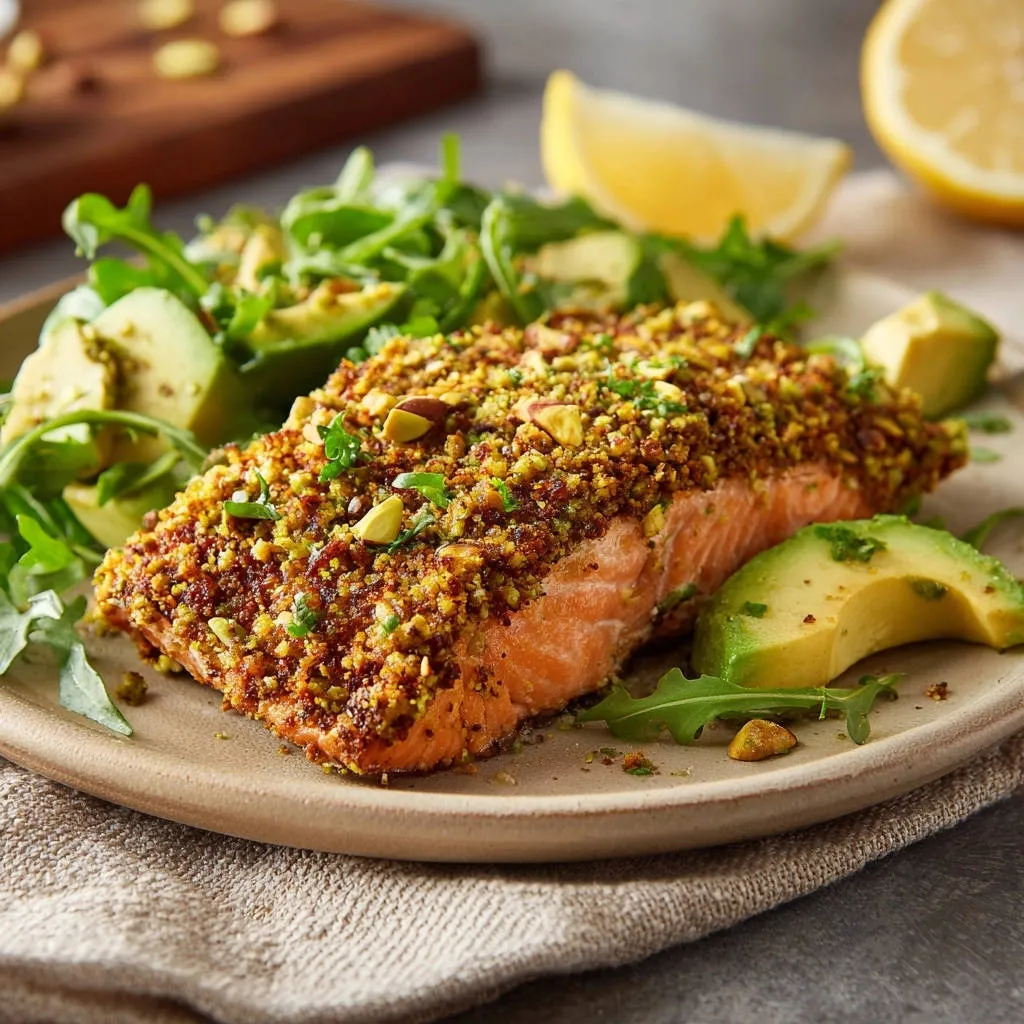
Our Signature Fresh Arugula and Avocado Salad
The peppery bite of fresh arugula provides a dynamic, cleansing contrast to the rich, oily texture of the Pistachio-Crusted Baked Salmon. Sliced avocado adds a creamy element and healthy fat, balancing the entire plate beautifully.
Complementary Side Dish Ideas
- Lemon-Garlic Roasted Asparagus
- Fluffy Quinoa or Rice Pilaf
- Garlic Parmesan Zucchini Noodles
- Mashed Sweet Potatoes with Brown Sugar
drink pairing Suggestions for Pistachio-Crusted Baked Salmon
The brightness of the citrus and the richness of the fish demand a crisp, high-acidity white grape juice. Look for a dry sparkling grape juice, whose herbaceous notes echo the seasoning, or an Italian sparkling grape juice, which offers a lovely mineral counterpoint to the nuts and fish.
For a similarly moist salmon experience, consider the gentle approach of grapefruit fennel salmon.
Common Questions About Pistachio-Crusted Baked Salmon
Do I Have to Use Dijon Mustard as the Binder?
While alternatives like mayonnaise or a thin egg wash can work, Dijon is superior because it provides the highest grip with minimal flavor intrusion. Mayonnaise can sometimes melt or thin out too much, causing the crust to shift.
Can I Make This Recipe Gluten-Free?
Absolutely. You can easily substitute the traditional Panko breadcrumbs with gluten-free Panko for a similar texture. Alternatively, finely ground almond flour or a mix of almond flour and certified gluten-free oats will work as a binder base.
What is the Best Way to Store and Reheat Leftovers?
Store leftover salmon in an air-tight container in the refrigerator for up to three days. To best preserve the crunch, reheat the salmon in an air fryer at 350°F (175°C) for 5-7 minutes, or in a low-temp oven until warmed through.
Avoid the microwave, as it softens the crust and dries out the fish.
Can I Use Other Nuts Instead of Pistachios?
Yes, you can substitute pistachios with pecans, walnuts, or even macadamia nuts. However, be aware that these alternatives are often fattier than pistachios, meaning you should reduce the added olive oil drizzle slightly to prevent a greasy crust.
Ready to Impress? Share Your Pistachio-Crusted Masterpiece!
Achieving flawless, crunchy, and beautiful crusted fish is now within easy reach thanks to this reliable technique. Trust the Dijon binder and the essential dry-pat method-they are the key to mastering this impressive dinner.
Once you experience the audible crunch and stunning presentation of your perfectly adhered Pistachio-Crusted Baked Salmon, you’ll realize how truly simple restaurant-quality cooking can be.
Try this recipe tonight and share your successful results! We are confident this will become your new favorite way to prepare salmon.
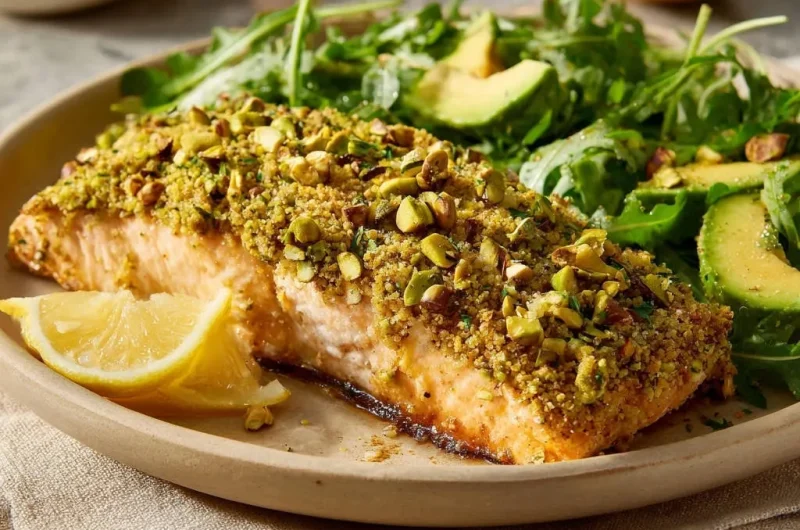
Pistachio-Crusted Salmon
Course: Main CourseCuisine: InternationalDifficulty: easy2
servings15
minutes15
minutes650
kcal30
minutesTired of flaky crusts? This simple, foolproof technique uses Dijon mustard as a binder to ensure your crunchy pistachio topping stays locked onto the salmon fillet. Achieve restaurant-quality fish in under 30 minutes with a golden, fragrant crust that provides a satisfying crunch every single bite.
Ingredients
2 Salmon fillets (6 ounces each, skin on or off)
1/2 cup Shelled pistachios (raw, unsalted)
1/4 cup Panko breadcrumbs
1 tablespoon Olive oil (plus more for pan)
1 teaspoon Lemon zest
1 teaspoon Dried parsley (or fresh if available)
1/2 teaspoon Salt
1/4 teaspoon Black pepper
2 teaspoons Dijon mustard (the adhesion secret)
Arugula and sliced avocado (for serving)
Lemon wedges (for serving)
Directions
- Prepare the Oven and Crust Mix Preheat your oven to 400 degrees F. Lightly grease a baking sheet or line it with parchment paper. In a small food processor or by hand, pulse or finely chop the pistachios until a coarse meal forms, reserving a few whole halves for garnish. Mix the crushed pistachios, Panko breadcrumbs, lemon zest, salt, pepper, and dried parsley in a shallow dish.
- Address the Pain Point The crucial step for adhesion is moisture control. Pat the salmon fillets completely dry on all sides using paper towels. This creates a tacky surface for the binder to stick to.
- Apply the Binder and Crust Lightly brush the top (flesh side) of each salmon fillet with a thin, even layer of Dijon mustard. The Dijon acts as the foolproof glue without adding a strong flavor.
- Lock the Crust Firmly press the mustard-coated side of the salmon into the pistachio and Panko mixture, ensuring the crust is thick and fully adhered. Flip the fillet and press down gently on the crust with your palm to lock the nuts firmly onto the fish. Drizzle the fillets lightly with olive oil.
- Bake Cook the salmon in the preheated oven for 12 to 15 minutes, or until the fish is cooked through and flakes easily with a fork, and the pistachio crust is golden and fragrant. Cooking time will vary based on fillet thickness.
- Serve Carefully transfer the finished salmon from the baking sheet to your plates. Serve immediately alongside a fresh salad of arugula and avocado, and a squeeze of fresh lemon juice. The crust will remain intact, guaranteeing a satisfying crunch with every bite.
Notes
- Pat salmon fillets completely dry before applying mustard for maximum crust adhesion.