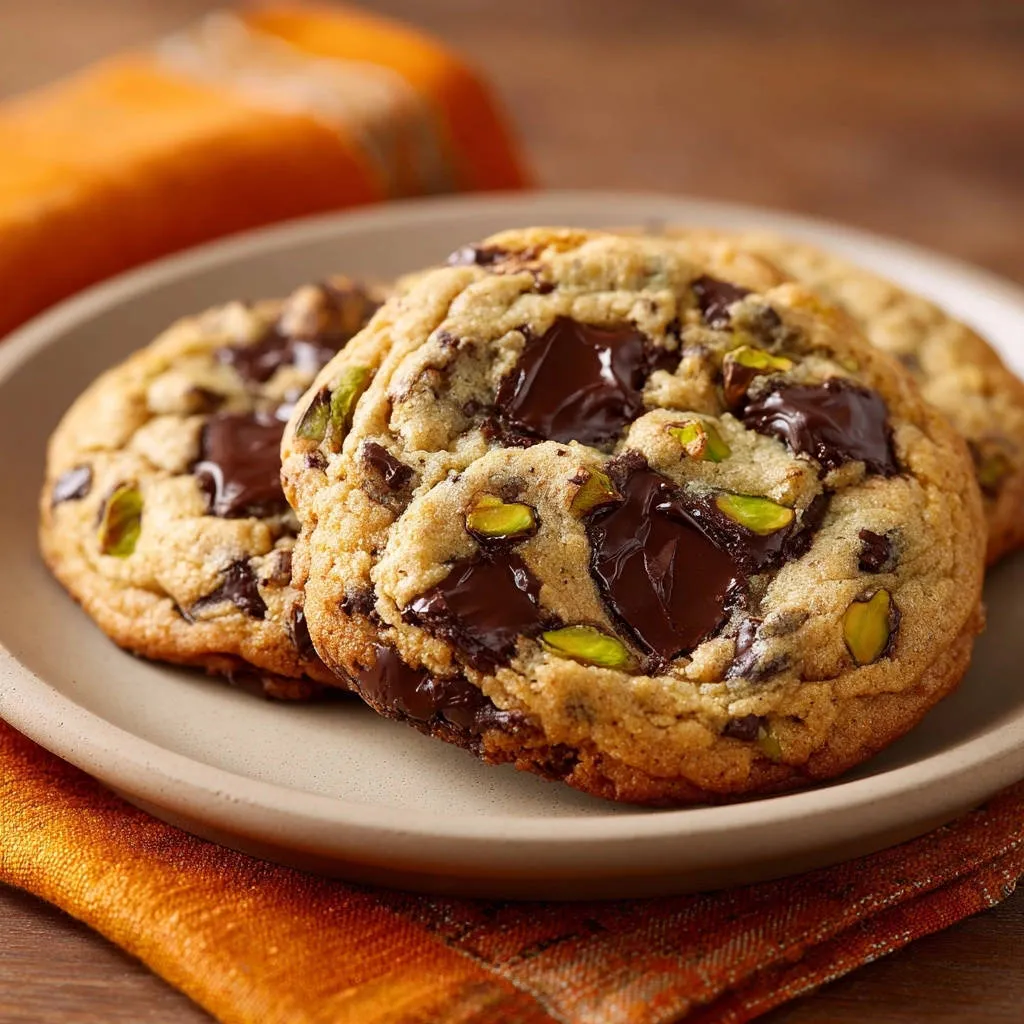
I spent years battling flat, greasy cookie disks until I cracked the code for true bakery-style texture that holds its height beautifully. This specific recipe for Pistachio Dark Chocolate Chunk Cookies uses a precise “Anti-Spread Method” to guarantee thick, chewy centers and perfectly set edges every single time.
Trust me, once you master the careful chilling and limited mixing techniques detailed here, your cookie baking will be permanently transformed.
Stop the Spread: Why These Pistachio Dark Chocolate Chunk Cookies Stay Thick
Achieving that bakery-style height and chewiness is often the biggest cookie baking hurdle. This recipe tackles that challenge head-on by controlling the factors that cause butter to melt too quickly.
For more insight into preventing spread, check out glazed raspberry thumbprint cookies.
The Science of Structure: Controlling Butter and Temperature
Flat cookies occur when the butter melts rapidly before the flour and egg proteins have time to set the structure of the dough.
More Sweet Things to Try
If you enjoyed these pistachio dark chocolate chunk cookies, you might like these other sweet recipes.
- For a breakfast treat that also features chocolate, consider these S’mores Pancakes with their campfire vibes.
- If you appreciate warming spices alongside your sweets, give these Cinnamon French Toast Stacks a try for their crispy edges.
We manage this by starting with butter that is softened but still cool, and, crucially, by chilling the scooped dough for an extended period.
This drastic temperature control significantly slows the melting process in the oven, allowing the dough to rise vertically rather than immediately collapsing outward.
The Crucial Difference: Why Over-Creaming Ruins Cookie Texture
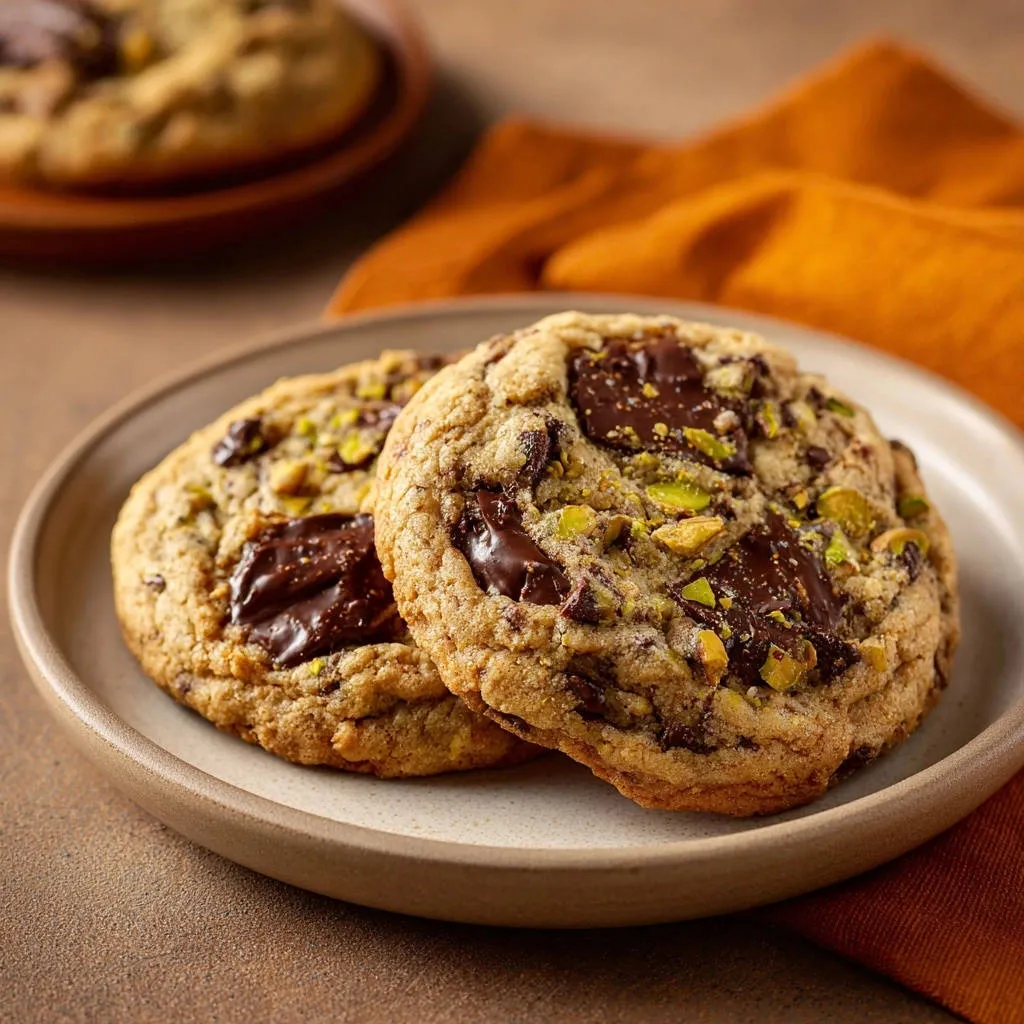
Conventional recipes often call for creaming butter and sugar until light and fluffy, incorporating significant air into the mixture.
While that aeration works well for lighter baked goods, excessive air inclusion creates a delicate structure in cookie dough that collapses upon hitting high heat, leading to immediate and excessive spread.
We limit the creaming time to just 2 minutes maximum, ensuring the sugars are incorporated without whipping in too much volume or air that would work against our goal of a truly thick cookie.
The Building Blocks of Flavor: Essential Ingredients and Substitutions
The Fat Foundation: Softened, But Still Cool Butter
The butter must be pliable enough to incorporate the sugar easily during the brief creaming phase, yet still firm to the touch.
If the butter is overly warm or greasy, it’s already halfway to melting, eliminating the essential structural advantage we gain from the chilling step.
Sugar Dynamics: Balancing Chewy Brown and Crisp Granulated
The high proportion of packed light brown sugar delivers deep moisture, chewiness, and a richer molasses flavor to the final cookie.
Granulated sugar provides the necessary structure and helps the cookie edges crisp up before the center sets, creating that perfect textural contrast.
The Stars of the Show: Pistachios and Dark Chocolate Chunks
Using roughly chopped dark chocolate chunks ensures large, molten pockets of chocolate that truly ooze through the cookie, unlike chips which often hold their shape.
For more ideas on rich chocolate creations, see frosted dark chocolate toffee cookies.
We prefer roughly chopped pistachios over finely ground nuts because they offer distinct, satisfying bites and add textural resistance against the soft, buttery dough.
The Right Leavening: Baking Soda vs. Baking Powder
We use baking soda because it reacts with the mild acidity present in the brown sugar, providing a quick burst of lift during baking.
This rapid activation is key to setting the external structure quickly at high heat, which is essential for our thick cookie profile.
Mastering the Dough: Your Step-by-Step Guide to Perfection
-
Preparation of Dry Ingredients:
Ensure the flour, baking soda, and salt are completely whisked together in a separate bowl. This uniform blending is mandatory to prevent pockets of unmixed leavening agents and ensures an even rise.
-
The 2-Minute Rule for Creaming:
Combine the softened butter and sugars and beat only until just incorporated, precisely 2 minutes maximum, scraping down the sides frequently. Exceeding this time actively works against our goal of a thick cookie by introducing too much air.
-
Incorporating Wet Ingredients:
Beat in the eggs one at a time, followed by the vanilla extract. Ensure each egg is fully combined before adding the next, but avoid beating vigorously at this stage.
-
The Final Dough Mix:
Reduce the mixer speed to the lowest setting and gradually add the dry mixture. Stop mixing the moment no streaks of flour remain; over-mixing develops tough gluten strands, which result in a dense cookie.
-
Folding in the Inclusions:
Remove the bowl from the mixer and fold in the dark chocolate chunks and chopped pistachios by hand using a rubber spatula. This technique prevents crushing the additions and ensures the dough is not accidentally over-mixed by the machine.
Mandatory Step: Executing the Anti-Spread Chill Method
Scooping for Success: Uniformity and Size
Utilize a 3-tablespoon capacity scoop for uniformity, ensuring every cookie bakes consistently and achieves the desired thick, bakery-style size.
It is essential to scoop the dough immediately onto the sheet pan before chilling, as cold dough will be too hard to scoop effectively without crumbling.
The Science Behind the 4-Hour Minimum Rest
During the chilling period, the butter fat solidifies completely, making the dough incredibly resistant to spread when it first hits the hot oven.
Equally crucial, chilling allows the flour to fully hydrate and absorb the moisture from the sugars and eggs, which is the key mechanism for achieving ultimate chewiness.
Without adequate chilling, the cookie structure collapses, no matter how perfectly you mixed the ingredients.
Overnight Chilling vs. Quick Chill: Which is Best?
While 4 hours is the minimum required for achieving structural integrity, chilling the dough overnight allows the flavors to truly deepen and meld.
For maximum flavor payoff, overnight chilling is the preferred method, yielding more complex and satisfying Pistachio Dark Chocolate Chunk Cookies.
Baking for Texture: Heat, Time, and the Golden Center
Oven Temperature Precision: 375°F
The specific high temperature of 375°F is intentional, designed to set the exterior crust rapidly upon entry to the oven.
This quick crust formation prevents the chilled interior from collapsing and ensures the height of the dough is locked in before the butter fully melts.
The Visual Cue: Knowing When They Are Done
Bake for 11 to 13 minutes, looking for edges that are richly golden brown but still soft.
The centers must look slightly puffy and underdone when you pull them out; they will finish setting up using residual heat.
The 5-Minute Wire Rack Rule
Allowing the cookies to rest for five minutes directly on the hot baking sheet is essential.
This brief rest uses residual heat to finalize the cooking process in the center without risking a dry cookie, ensuring they maintain their thick and chewy texture when transferred.
Chef’s Secrets: Elevate Your Pistachio Dark Chocolate Chunk Cookies Game
The Final Sprinkle of Salt: Before baking, sprinkle a few flakes of coarse sea salt (like Maldon) on top of each chilled dough ball. This simple addition dramatically enhances the dark chocolate and pistachio notes.
Toast the Pistachios (Optional): For a deeper, more complex nutty flavor, lightly toast the chopped pistachios in a dry pan for 5 minutes before adding them to the dough. Ensure they are fully cooled before mixing.
The “Cookie Doctor” Trick: If a cookie comes out slightly misshapen, immediately after removing it from the oven, use a large circular cookie cutter (slightly bigger than the cookie) to gently swirl around the cookie. This forces the hot dough into a perfect circular shape.
Troubleshooting Common Cookie Pitfalls
Problem: My Cookies Still Spread Too Thinly
Ensure your butter was truly “softened but cool,” not melted or overly warm before mixing. The primary culprit is often not chilling the dough long enough or accidentally over-creaming the butter and sugar in Step 2, which aerates the dough.
Problem: The Centers Are Dense or Cakey
You likely overmixed the dough after adding the flour, which develops gluten and results in a tough structure. Remember, stop the mixer as soon as the flour disappears.
Additionally, verify your measurements with a scale, as too much flour will always result in a dense, dry texture.
Problem: My Pistachio Dark Chocolate Chunk Cookies Are Too Pale
Your oven temperature may be inaccurate; use an oven thermometer to confirm the 375°F setting is correct. If the edges are not golden by 13 minutes, continue baking for another 1-2 minutes, watching carefully for the edges to set.
Make-Ahead, Storage, and Serving Suggestions
Freezing Dough for Future Cravings
Scoop the dough balls onto a baking sheet and flash freeze them uncovered for one hour until completely solid.
Transfer the frozen dough balls to an airtight freezer bag for storage up to three months.
Bake the frozen dough directly from the freezer, simply adding 3-5 minutes to the total baking time listed in the recipe.
Optimal Storage for Freshness
Store baked cookies in an airtight container at room temperature for up to five days.
To maintain maximum softness, place half a slice of plain bread inside the container; the cookies will absorb the moisture from the bread.
Perfect Pairings for Pistachio Dark Chocolate Chunk Cookies
The intense richness of the dark chocolate and the underlying saltiness of the pistachios pair perfectly with a strong, hot espresso or a cold glass of whole milk.
For an incredible elevated dessert, serve these warm treats alongside a scoop of high-quality vanilla bean or sea salt caramel ice cream.
Frequently Asked Questions About Pistachio Dark Chocolate Chunk Cookies
Can I Substitute Other Nuts for Pistachios?
Yes, walnuts, pecans, or almonds are all excellent substitutes and provide the necessary crunch. Ensure they are roughly chopped, just like the pistachios, to provide similar structural support and resistance in the finished cookie.
Is the Dough Chilling Step Truly Necessary?
For achieving the promised thick, bakery-style texture, the chilling step is absolutely mandatory. Attempting to bake the dough immediately will result in significantly flatter cookies because the butter will melt too quickly upon hitting the heat.
How Do I Adjust for High Altitude Baking?
High altitude often requires slight adjustments: Increase the oven temperature slightly (by 15-25 degrees F), slightly reduce the sugar (by 1-2 tablespoons), and slightly increase the liquid (add a splash of milk or half an egg yolk) to compensate for faster liquid evaporation and increased leavening action.
Ready to Impress? Share Your Pistachio Dark Chocolate Chunk Cookies Masterpiece!
By following the “Anti-Spread Method” and paying close attention to the critical 2-minute creaming time, you now possess the secret to baking extraordinary Pistachio Dark Chocolate Chunk Cookies every single time.
We encourage you to share your results with us and let us know how this guaranteed method transforms your cookie baking game!
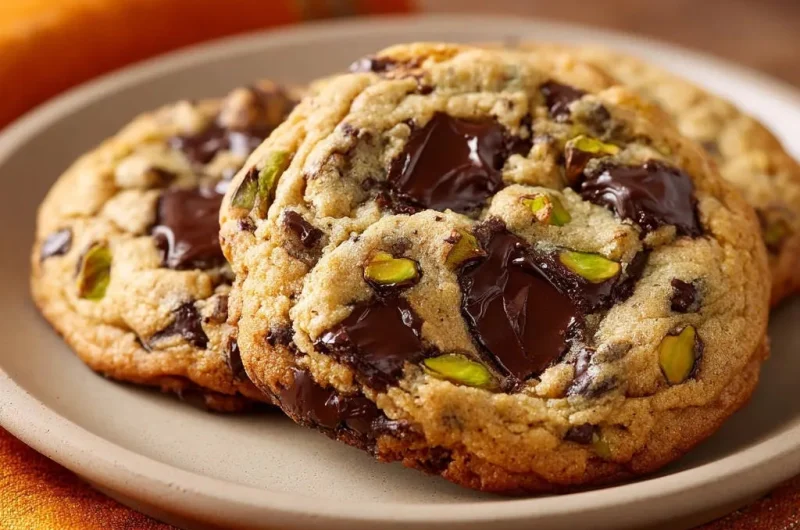
Pistachio Dark Chocolate Chunk Cookies
Course: DessertCuisine: AmericanDifficulty: medium4
(Large Cookies)20
minutes13
minutes650
kcal33
minutesThis recipe provides the secret to bakery-style cookies that are thick, chewy, and perfectly textured. The technique controls fat and temperature, preventing flat, greasy disks. A mandatory cold rest locks in the structure, ensuring perfect results every time.
Ingredients
1 cup unsalted butter (softened but still cool)
3/4 cup granulated sugar
1 1/2 cups packed light brown sugar
2 large eggs
2 teaspoons vanilla extract
2 3/4 cups all-purpose flour
1 teaspoon baking soda
1/2 teaspoon salt
1 1/2 cups dark chocolate chunks (or roughly chopped bar)
1/2 cup shelled, roughly chopped pistachios
Directions
- Prepare the dry ingredients. In a medium bowl, whisk together the flour, baking soda, and salt. Set aside.
- Cream the butter and sugars. In a large bowl or stand mixer, combine the softened butter, granulated sugar, and brown sugar. Beat on medium speed for only 2 minutes, stopping frequently to scrape down the sides. Crucially, do not overmix at this stage; we want the sugars just incorporated, not light and fluffy, as over-creaming incorporates too much air which leads to excessive spread.
- Finish the dough. Beat in the eggs one at a time, followed by the vanilla extract. Reduce the mixer speed to low and gradually add the dry ingredients until just combined. Fold in the chocolate chunks and chopped pistachios by hand.
- Execute the Anti-Spread Method. This step is mandatory for thickness: Scoop the dough using a 3-tablespoon measure onto a parchment-lined baking sheet. Cover the sheet tightly with plastic wrap and refrigerate the dough balls for a minimum of 4 hours, or preferably overnight. The cold temperature locks in the structure, preventing the butter from melting too quickly upon hitting the heat.
- Bake the cookies. Preheat your oven to 375 degrees F. Place the chilled cookie dough balls 2 inches apart on a baking sheet lined with parchment paper.
- Bake for 11 to 13 minutes, or until the edges are golden brown but the centers are still slightly soft and puffy.
- Let cool on the baking sheet for 5 minutes before transferring to a wire rack. This allows the centers to finish setting while maintaining the thick, chewy texture.
Notes
- Refrigerating the dough balls for a minimum of 4 hours (preferably overnight) is mandatory for achieving thick, non-spreading cookies.