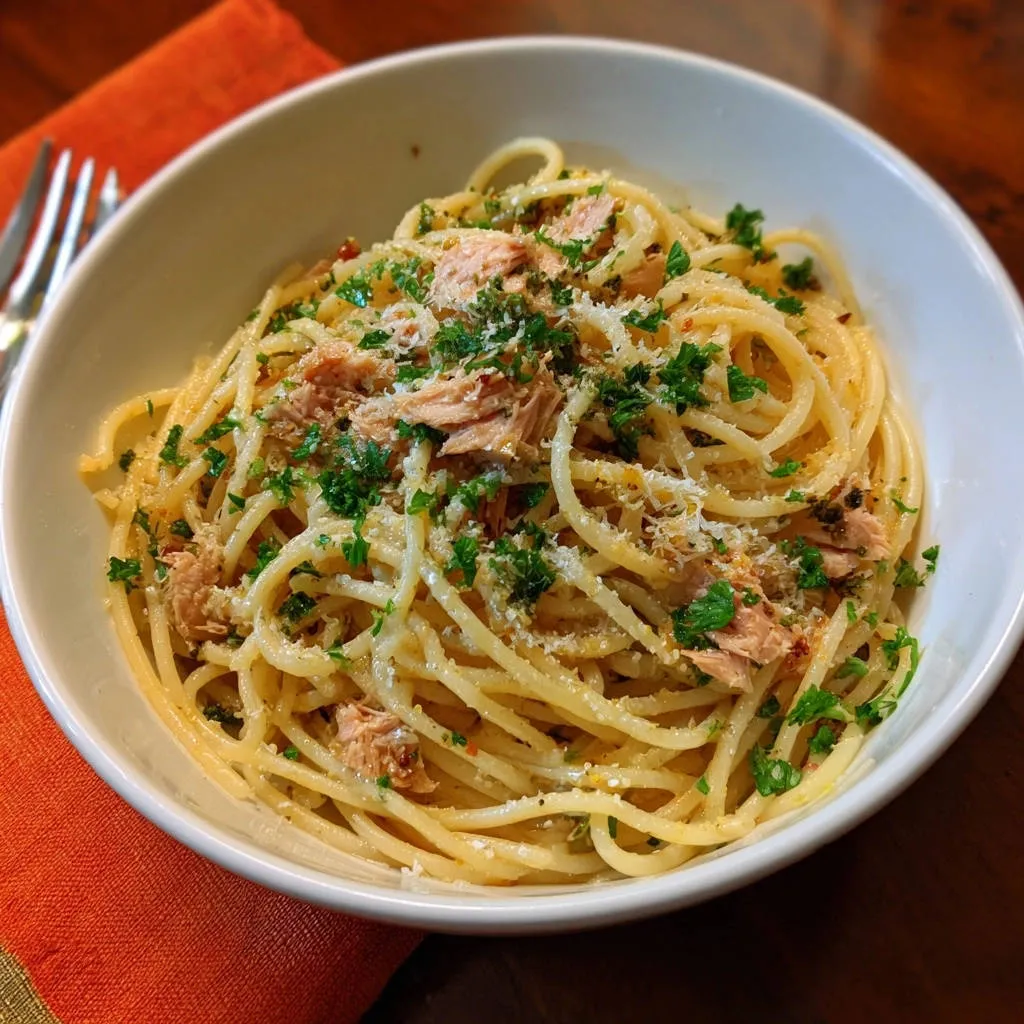
There’s nothing more frustrating than a promising pasta dish that ends up dry, with a sauce that refuses to coat every strand. I’ve been there countless times, but after years of perfecting my method, I discovered the ultimate secret to truly exceptional Quick Tuna Spaghetti.
This recipe isn’t just fast; it’s designed to deliver an incredibly satisfying meal with a luxuriously silky sauce that clings perfectly, making every single bite a delight.
Why This Quick Tuna Spaghetti Will Be Your New Favorite
The “No More Dry Pasta” Promise
Many quick pasta dishes suffer from a dry, unappealing texture because the sauce separates or doesn’t bind well. Our specific technique ensures each strand of spaghetti is beautifully coated, eliminating dryness entirely.
Unlocking the Silky, Clinging Sauce Secret
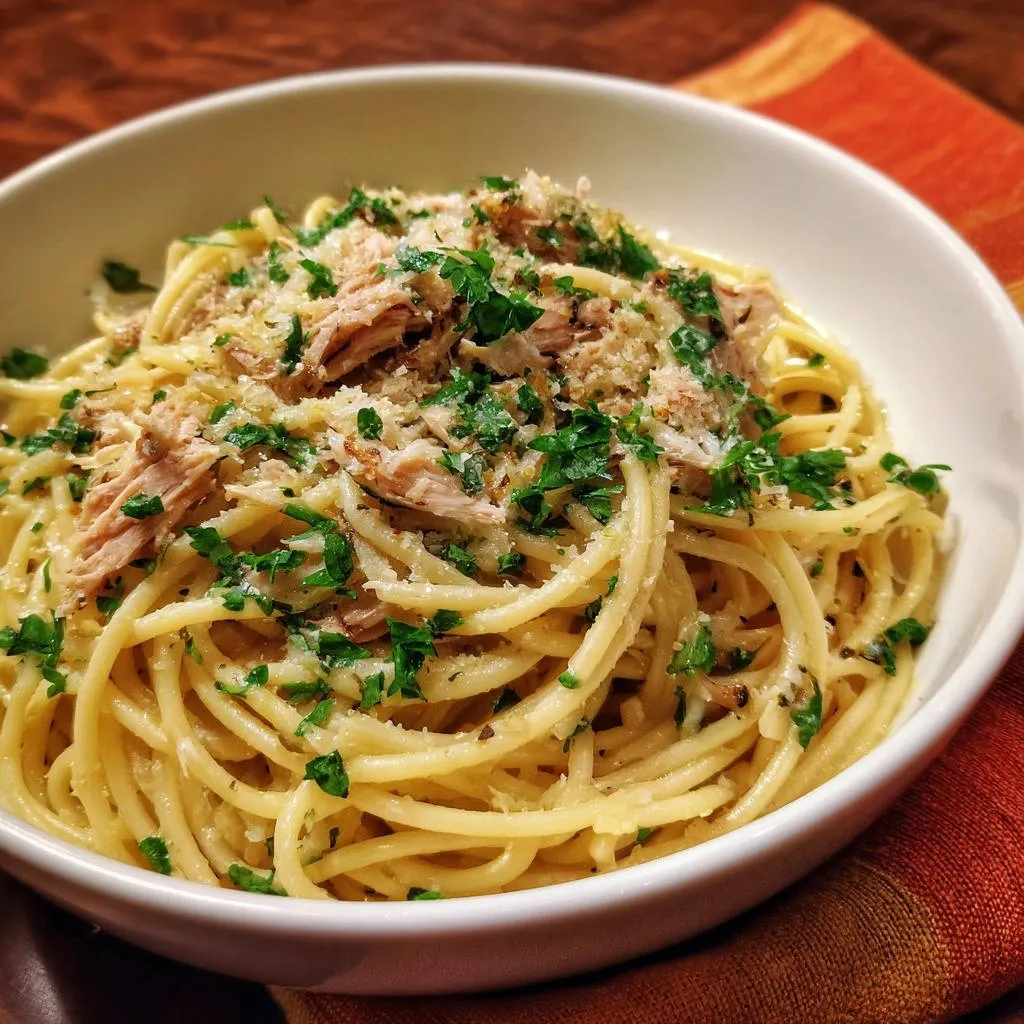
The magic lies in the emulsification process. We leverage the hot pasta’s starch, reserved pasta water, rich olive oil, and Parmesan cheese to create a glossy, cohesive sauce that perfectly adheres to the noodles.
Lightning-Fast & Fuss-Free Weeknight Meal
When time is tight, this Quick Tuna Spaghetti recipe comes to the rescue. It’s designed for maximum flavor with minimal effort, making it ideal for busy weeknights without compromising on taste.
Simple Ingredients, Maximum Impact
You don’t need exotic ingredients to achieve incredible flavor. By understanding how to best utilize pantry staples, this dish proves that simplicity, when executed expertly, can be profoundly delicious.
The Simple Building Blocks: What You’ll Need
Spaghetti: The Canvas for Flavor
Spaghetti provides the perfect surface area for our silky sauce to cling to. Cooking it to al dente is crucial for texture and for its ability to absorb the sauce without becoming mushy.
Tuna in Olive Oil: Your Flavorful Protein Star
Opting for tuna packed in olive oil elevates this dish significantly. The oil contributes richness and depth to the sauce, while the tuna itself offers a robust, savory flavor profile and satisfying protein.
Parmesan & Parsley: Freshness and Depth
Freshly grated Parmesan cheese is a non-negotiable for its umami and its vital role in emulsifying the sauce. Bright, fresh parsley adds a pop of color and a clean, herbaceous finish, balancing the richness.
Garlic & Red Pepper Flakes: Aromatic Essentials
These two ingredients form the aromatic backbone of our Quick Tuna Spaghetti. Minced garlic provides a foundational savory note, while red pepper flakes add a subtle warmth and gentle heat that awakens the palate.
Extra Virgin Olive Oil & Pasta Water: The Unsung Heroes
A good quality extra virgin olive oil delivers fruitiness and healthy fats, contributing to the sauce’s luxurious mouthfeel. The starchy pasta water is the secret ingredient, essential for creating that coveted silky, emulsified sauce.
Tools for Triumph: Essential Kitchen Gear
Pots & Skillets: Sizing It Right
A large pot is essential for cooking spaghetti properly, allowing the noodles to move freely and prevent sticking. A spacious skillet or pan ensures enough room to toss the pasta vigorously without spills, crucial for sauce development.
Tongs & Utensils: For Seamless Tossing
High-quality tongs are your best friend for this recipe. They allow for effortless, continuous tossing, which is vital for coating every strand of spaghetti and achieving a perfectly emulsified sauce.
Your Quick Tuna Spaghetti Journey: Step-by-Step
Perfect Pasta: Al Dente is Key
Step 1: Boil the Spaghetti & Reserve Pasta Water. Bring a large pot of generously salted water to a rolling boil. Add the spaghetti and cook according to package directions until al dente. Before draining, reserve about 1 1/2 cups of the starchy pasta water. Drain the spaghetti and set aside.
Cooking to al dente ensures the pasta retains a pleasant bite and won’t turn mushy when mixed with the sauce. The reserved starchy water is your secret weapon for a silky, cohesive sauce, full of natural emulsifiers.
Infusing Aromatics: Building the Flavor Base
Step 2: Sauté Aromatics. While the pasta cooks, heat 1/4 cup extra virgin olive oil in a large skillet or pan over medium heat. Add the minced garlic and red pepper flakes. Cook for 1 minute, stirring constantly, until fragrant. Be careful not to burn the garlic, as burnt garlic turns bitter and can ruin the dish’s flavor.
This quick sauté gently extracts the essential flavors from the garlic and chili, infusing the olive oil. This aromatic base sets the stage for the rest of the dish, building layers of savory warmth.
Warming the Tuna: Gentle Integration
Step 3: Add the Tuna. Add the drained tuna to the skillet and gently break it apart with a spoon. Cook for another 1 to 2 minutes, allowing the tuna to warm through and absorb the aromatic flavors from the infused olive oil.
Using tuna packed in olive oil significantly enhances the richness and flavor profile, complementing the sauce beautifully. Gently breaking it ensures the tuna disperses evenly throughout the spaghetti, guaranteeing tuna in every bite.
The Emulsification Magic: Crafting the Silky Sauce
Step 4: Combine & Emulsify. Add the cooked spaghetti directly to the skillet with the tuna mixture. Immediately add 1/2 cup of the reserved pasta water along with the 1/2 cup grated Parmesan cheese. Toss vigorously and continuously using tongs.
This is the pivotal moment for our Quick Tuna Spaghetti. The heat from the pasta, the starch from the pasta water, the richness of the olive oil, and the fat from the Parmesan all work together to create a luscious, emulsified sauce that coats every strand without feeling heavy or greasy.
Fine-Tuning Consistency: When to Add More Pasta Water
Step 5: Adjust Sauce Consistency. If the sauce still seems a little dry or too thick, add more reserved pasta water, one tablespoon at a time, continuing to toss vigorously until you reach your desired consistency. The goal is a light, glistening coat on the noodles, not a watery mess.
Don’t be shy with the tossing; it’s absolutely key to achieving that perfect, cohesive sauce. Trust your judgment on the amount of additional pasta water needed; you’re looking for a smooth, uniform coating.
The Grand Finale: Freshness and Seasoning
Step 6: Finish & Serve. Remove from heat, stir in the chopped fresh parsley, and season with salt and black pepper to taste. Serve immediately, topped with extra grated Parmesan cheese if desired.
Adding fresh parsley at the very end preserves its vibrant color and delicate fresh flavor, providing a beautiful contrast. Tasting and adjusting seasoning is crucial for a perfectly balanced dish that hits all the right notes.
Chef’s Insights: Elevate Your Quick Tuna Spaghetti
Mastering the Pasta Water Reserve
The starchy pasta water is truly the backbone of any great pasta sauce, especially for a dish like Quick Tuna Spaghetti. It contains emulsifiers released from the cooking pasta, helping oil and water to combine into a velvety sauce.
Always reserve at least 1.5 cups, even if you don’t think you’ll need it all. It’s far better to have too much than not enough when adjusting sauce consistency.
Beyond Basic Tuna: Quality and Type Variations
While standard tuna in olive oil works wonderfully, explore options like albacore for a milder flavor or ventresca (belly tuna) for ultimate richness. High-quality tuna transforms this simple dish into something extraordinary.
Consider brands that pack their tuna in high-quality olive oil, as this oil becomes an integral part of your sauce, adding depth and nuanced flavor.
If you enjoy this rich sauce, consider trying lemony tuna angel hair pasta for another satisfying meal.
Customizing Your Spice Level
The red pepper flakes add a gentle kick, but feel free to adjust to your preference. For more heat, add a pinch more at the sauté stage, or for a smokier spice, consider a dash of smoked paprika.
If you prefer a milder dish, reduce or omit the red pepper flakes entirely. You can always add a pinch more at the table if someone desires extra warmth.
Fresh Herbs: More Than Just Parsley
While fresh parsley is classic, don’t hesitate to experiment with other herbs. A sprinkle of fresh basil or chives can add another layer of aromatic complexity to your Quick Tuna Spaghetti.
Always add fresh herbs at the very end to preserve their bright flavors and vibrant colors.
A Touch of Lemon Zest: A Bright Finish
For an extra burst of freshness and to cut through the richness of the tuna and olive oil, a fine grating of lemon zest over the finished dish is a game-changer. It awakens the palate and brightens every bite.
For a brighter tang, explore the lemony tuna spaghetti sauce.
Only use the zest, avoiding the white pith, which can be bitter. Add it just before serving for maximum impact.
Enjoying Every Bite: Serving & Storage Tips
Creative Ways to Serve Your Spaghetti
This Quick Tuna Spaghetti shines on its own but also pairs beautifully with a simple green salad dressed with a vinaigrette. A side of crusty bread is perfect for soaking up any leftover sauce.
For an elevated touch, garnish with a few capers or finely chopped sun-dried tomatoes before serving.
Storing Leftovers: Keeping It Fresh
Store any leftover Quick Tuna Spaghetti in an airtight container in the refrigerator for up to 2-3 days. The flavors often meld and deepen overnight.
Reheat gently on the stovetop over low heat, adding a splash of water or broth if the sauce seems too thick. Avoid microwaving for best texture.
Can You Prep Ahead?
While this dish is best made fresh, you can mince your garlic and chop your parsley ahead of time. You can also drain your tuna. Having these mise en place elements ready will make the cooking process even faster.
Cooking the pasta just before serving is crucial to maintain its al dente texture and ensure proper sauce emulsification.
Problem Solved: Common Quick Tuna Spaghetti Hiccups
“My Sauce is Too Dry/Doesn’t Cling!”
This usually means you didn’t add enough pasta water, or didn’t toss vigorously enough. The starch in the pasta water is essential for creating an emulsion.
To fix, return the pasta to the pan over low heat, add another tablespoon or two of reserved pasta water, and toss continuously and aggressively until the sauce emulsifies and clings.
“My Garlic Burned/Is Bitter!”
Burnt garlic happens when the heat is too high or it’s cooked for too long. Garlic cooks quickly and can turn bitter in an instant.
Ensure your skillet is only medium heat and keep the garlic moving constantly for just about a minute. If it does burn, it’s best to start the aromatic step again for the best flavor.
“The Pasta Is Sticky/Overcooked!”
Overcooked pasta becomes mushy and sticky, making it difficult for the sauce to cling properly. Always cook spaghetti according to package directions, aiming for al dente.
To avoid, set a timer and taste a strand a minute or two before the package suggests. Once drained, try to incorporate it into the sauce quickly to prevent sticking.
Your Top Questions About Quick Tuna Spaghetti, Answered
Can I use canned tuna in water instead of oil?
Yes, you can, but you’ll lose some richness. If using tuna in water, consider adding an extra tablespoon of high-quality extra virgin olive oil to the sauce base to compensate for the flavor and texture difference.
What other vegetables can I add?
For added nutrients and flavor, consider stirring in some blanched green peas, finely chopped spinach (added at the very end), or quartered cherry tomatoes (sautéed briefly with the garlic) into your Quick Tuna Spaghetti.
Is this recipe gluten-free friendly?
Absolutely! Simply substitute regular spaghetti with your favorite gluten-free spaghetti. The cooking method and sauce development will remain the same, ensuring a delicious and compliant meal.
Can I substitute Parmesan cheese?
While Parmesan is ideal for its salty, umami depth and emulsifying properties, you could experiment with Pecorino Romano for a sharper, saltier kick, or a hard, aged Italian cheese. Avoid soft, melting cheeses.
Ready to Dive In? Your Quick Tuna Spaghetti Awaits!
Now that you’re equipped with all the secrets and insights, it’s time to create your own perfectly silky, incredibly flavorful Quick Tuna Spaghetti. Prepare to be amazed at how such a simple dish can deliver such profound satisfaction.
What Else to Try
Round out your meal with these simple additions.
- For that perfect cheesy crunch alongside your tuna spaghetti, try making Cheesy Garlic Bread.
- If you prefer a more dippable option, the Cheesy Garlic Breadsticks offer a similar satisfying flavor.
Share Your Culinary Success!
I can’t wait to hear how this recipe transforms your weeknight meals! Share your Quick Tuna Spaghetti creations and let me know your favorite tips and tricks in the comments below.
Tuna Spaghetti
Course: Main CourseCuisine: Italian-AmericanDifficulty: easy4
servings10
minutes15
minutes650
kcal25
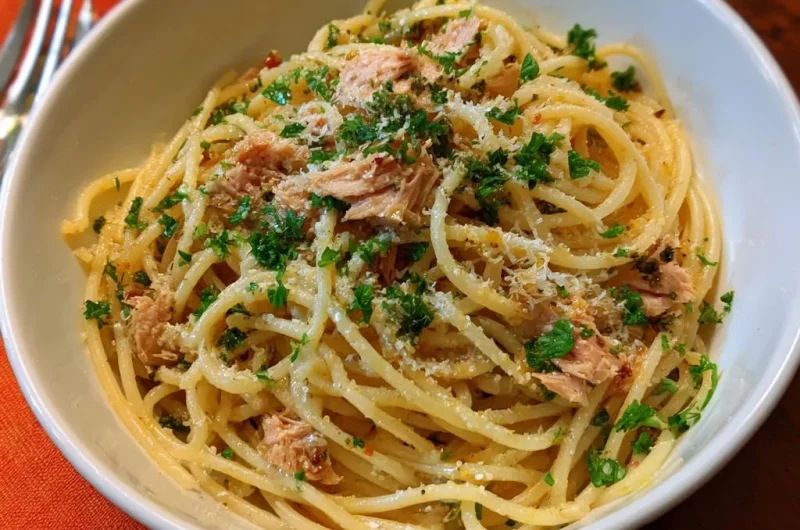
minutesTired of dry pasta? This Quick Tuna Spaghetti recipe reveals the secret to a perfectly silky sauce that beautifully clings to every strand. Enjoy an effortless and incredibly tasty pasta night with a simple trick.
Ingredients
12 ounces spaghetti
2 cans (5 ounces each) tuna in olive oil, drained
1/2 cup grated Parmesan cheese, plus more for serving
1/2 cup fresh parsley, chopped
2 cloves garlic, minced
1/2 teaspoon red pepper flakes (or to taste)
1/4 cup extra virgin olive oil
Salt and freshly ground black pepper to taste
Directions
- Bring a large pot of generously salted water to a rolling boil. Add the spaghetti and cook according to package directions until al dente. Before draining, reserve about 1 1/2 cups of the starchy pasta water. Drain the spaghetti and set aside.
- While the pasta cooks, heat the 1/4 cup olive oil in a large skillet or pan over medium heat. Add the minced garlic and red pepper flakes. Cook for 1 minute, stirring constantly, until fragrant. Be careful not to burn the garlic.
- Add the drained tuna to the skillet and gently break it apart with a spoon. Cook for another 1 to 2 minutes, allowing the tuna to warm through and absorb the flavors.
- Here’s the trick to no more dry pasta: Add the cooked spaghetti directly to the skillet with the tuna mixture. Immediately add 1/2 cup of the reserved pasta water along with the 1/2 cup grated Parmesan cheese. Toss vigorously and continuously using tongs. The starchy pasta water, hot pasta, and oil will emulsify, creating a glossy, cohesive sauce that clings beautifully to every strand, preventing dryness.
- If the sauce still seems a little dry or too thick, add more reserved pasta water, one tablespoon at a time, continuing to toss vigorously until you reach your desired consistency. The goal is a light, glistening coat on the noodles, not a watery mess.
- Remove from heat, stir in the chopped fresh parsley, and season with salt and black pepper to taste. Serve immediately, topped with extra grated Parmesan cheese if desired.
Notes
- Don’t be afraid to add a little extra pasta water if your sauce seems a bit dry; it helps create a lovely, emulsified coating for the spaghetti. For an extra burst of flavor, consider toasting the garlic for about 30 seconds before adding the tuna.