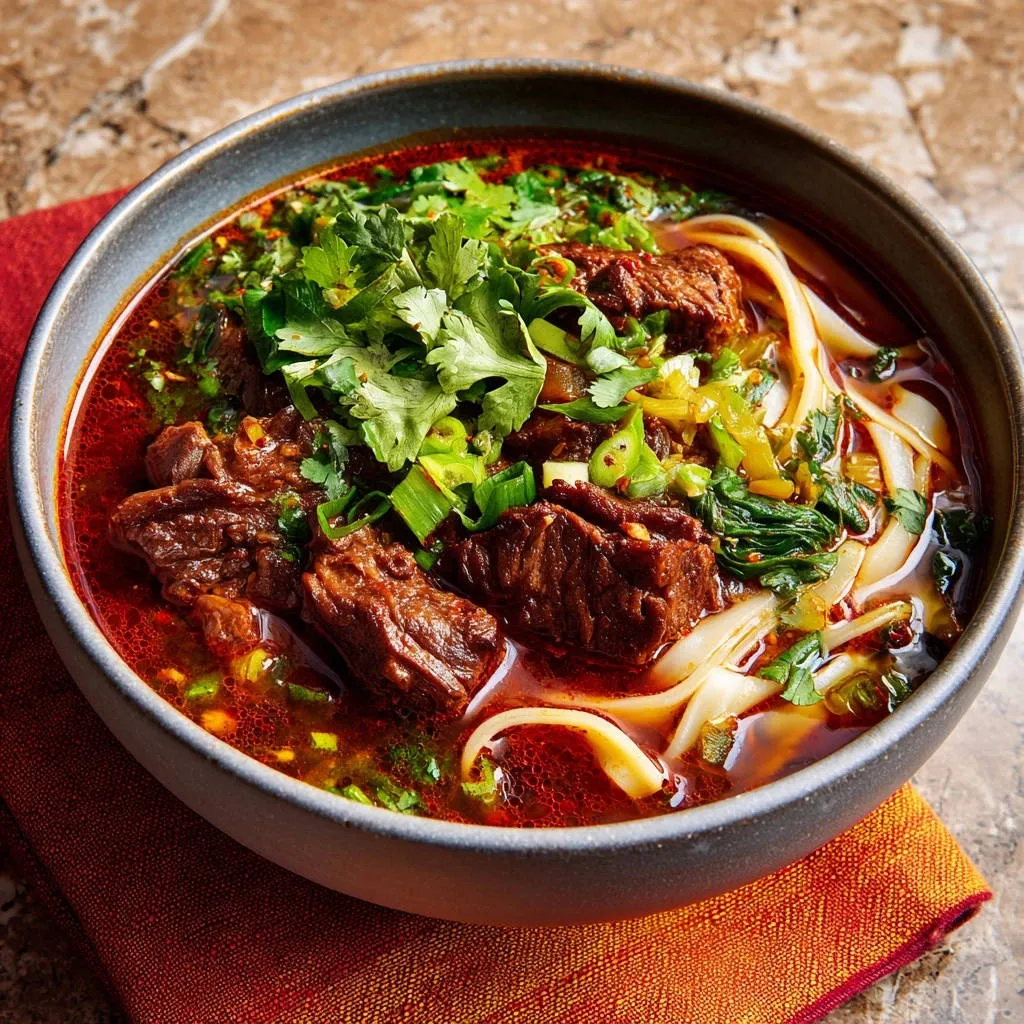
For years, I struggled to achieve that glossy, deeply savory broth and perfectly tender meat found in authentic Asian noodle shops when making soup at home. This recipe for Restaurant-Quality Spicy Beef Noodle Soup is the result of years of refinement, finally delivering that melt-in-your-mouth texture.
The difference lies entirely in mastering the gentle braise technique, ensuring your beef chuck roast becomes luxuriously soft without ever tasting dry or fibrous.
The Secret to Melt-In-Your-Mouth Beef Noodle Soup (No More Chewy Meat!)
Achieving truly tender beef is not about guesswork; it requires specific heat management and ingredient activation.
For another take on tender beef, try this saucy beef ramen.
We combine a high-heat sear to lock in surface flavor with an extremely low, prolonged braise to fully break down the tough collagen fibers.
Why Gentle Braising is Non-Negotiable
The beef chuck roast contains high levels of tough connective tissue (collagen), which requires long, moist heat to dissolve.
By braising for 2.5 to 3 hours at the absolute lowest temperature-a bare simmer-the collagen converts into luscious gelatin, guaranteeing a rich broth and tender meat.
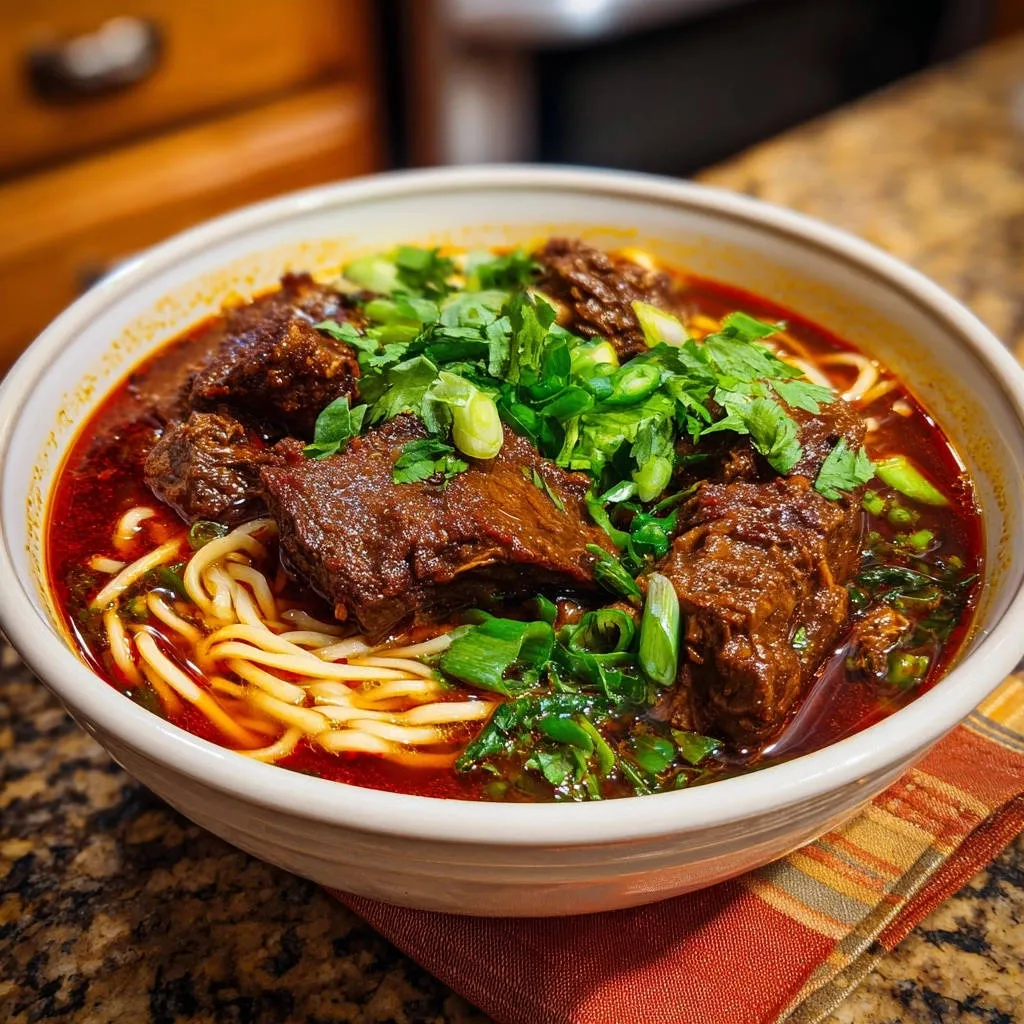
High heat will cause the meat to seize up and dry out, but this gentle, prolonged cooking ensures maximum moisture retention.
The Power of the High-Heat Sear
The Maillard reaction, achieved through a high-heat sear, creates a deep, savory crust that forms the essential flavor base of the entire dish.
It is crucial to pat the beef completely dry and sear it in small, separate batches to ensure browning, not steaming.
Deep Color, Robust Flavor: The Role of Fermented Chili Bean Paste (Doubanjiang)
Doubanjiang is a salty, deeply savory, and fermented chili bean paste that provides the characteristic robust flavor, umami depth, and rich red color of the soup.
Cooking this paste in hot oil for two minutes is essential, as this process activates and releases the essential flavor oils, preventing a raw or muted taste.
Building the Umami Foundation: Key Ingredients for Deep Flavor
Choosing the Best Cut: Chuck Roast Explained
Boneless beef chuck roast is the ideal cut because of its high collagen content, which melts into gelatin during the long braise.
For similar results, try these sticky soy braised beef cubes next.
Cutting the beef into uniform 1.5-inch cubes ensures even searing and guarantees that all pieces finish cooking simultaneously.
The Dual Soy Strategy: Light vs. Dark
Light soy sauce primarily provides the necessary salinity and baseline umami, without drastically altering the broth’s color.
Dark soy sauce is used specifically for achieving a deep, rich mahogany color and adding a subtle layer of sweetness and complexity.
Essential Aromatics and Spices
Fresh ginger and smashed garlic create a warming, aromatic counterpoint to the spice and richness of the braised beef.
Ideas to complement your Spicy Beef Noodle Soup
Round out your meal with these flavorful dishes that pair well with hearty noodle soups.
- For a light starter that offers a contrast in texture, consider making classic wonton soup, featuring tender dumplings in a savory broth.
- If you’re craving something with a bit of crunch and glaze, the crispy glazed chicken wings recipe provides a satisfying, savory addition to your spread.
Star anise infuses the broth with a warm, licorice-like note that is indispensable for authentic flavor.
Sichuan peppercorns add a layer of complex, tingling numbness, which can be excluded if you prefer less textural heat.
Noodle Selection: Fresh vs. Dried
This recipe specifies thick, fresh wheat noodles because they offer a superior, springy chewiness (Q texture) when compared to standard dried pasta.
Fresh noodles also cook very quickly, ensuring they can be added to the bowl at the last minute for the best texture.
Prepping for Perfection: Essential Tools and Mis En Place
Non-Negotiable Prep: Drying and Seasoning the Beef
If the beef is moist, the heat energy goes toward evaporating water rather than browning the surface, resulting in a poor sear.
Aggressive seasoning with salt and pepper must happen right before searing to properly penetrate the meat and build the initial seasoning layer.
The Dutch Oven Advantage
A heavy-bottomed Dutch oven or similar pot is critical because its substantial weight retains heat exceptionally well.
This heat retention allows you to maintain the incredibly stable, ultra-low simmer required for the hours-long, gentle braise.
Speeding Up Assembly: Pre-Chopping Your Garnishes
Noodle soup assembly is fast, so preparing all garnishes ahead of time ensures the finished dish is hot and ready when the noodles are done.
Chop the green onions, cilantro, and pickled mustard greens/bok choy and arrange them so they are ready for the final step.
From Sear to Simmer: The Step-by-Step Method for Restaurant-Quality Spicy Beef Noodle Soup
- Prepare and Sear the Beef:
Pat the beef cubes completely dry and season aggressively with salt and pepper.
Heat the oil until shimmering, and sear the beef in small batches until deeply browned on all sides (6-8 minutes total per batch).
Do not overcrowd the pot, as this will steam the meat instead of searing it.
- Bloom the Aromatics:
Reduce heat to medium. Add the ginger, garlic, star anise, and peppercorns, cooking until extremely fragrant (about 1 minute).
- Activate the Chili Paste:
Add the fermented chili bean paste (doubanjiang) and stir constantly for 2 minutes.
This critical step releases the paste’s deep red color and robust flavor oils into the cooking fat.
- Combine Liquids and Bring to Heat:
Return the beef to the pot. Stir in the soy sauces, brown sugar, broth, and water.
Bring the liquid to a rolling boil, then immediately reduce the heat to the absolute lowest setting.
- The Gentle Simmer Technique:
Cover the pot tightly and braise for 2.5 to 3 hours.
Ensure the liquid maintains only a bare simmer-a low-temperature cooking environment that guarantees the melt-in-your-mouth tenderness.
- Final Seasoning and Preparation:
Taste the broth and adjust for salt, sugar, or soy sauce.
Carefully remove the star anise and ginger slices before serving.
- Noodle Prep (The Quick Rinse):
Cook the fresh noodles exactly according to package directions, drain, and rinse very briefly under warm water.
This quick rinse removes excess starch, which prevents the noodle soup broth from becoming thick and murky.
- Final Assembly:
Divide the noodles into bowls, ladle the hot broth and tender beef over them, and garnish generously with cilantro, green onions, and pickled greens/bok choy.
Phase 1: Maximizing the Deep Crust
Phase 2: Layering the Broth Depth
Phase 3: The Critical Low-and-Slow Braise
Phase 4: Finishing and Assembly
Chef’s Corner: Tips to Elevate Your Spicy Beef Noodle Soup Beyond Expectation
The Power of the Overnight Rest: For truly exceptional flavor depth, allow the finished soup (broth and beef) to cool and rest in the refrigerator overnight. The flavors will meld and intensify dramatically.
Checking the Bare Simmer: A true bare simmer should show activity only every few seconds, with perhaps one or two small bubbles breaking the surface at any time. If you see rolling bubbles, your heat is too high and you risk drying out the beef.
Testing for Tenderness: Instead of relying only on time, use a fork or spoon to check the beef around the 2.5-hour mark. If it doesn’t easily shred, continue cooking in 15-minute intervals.
Handling the Noodle Starch: If you are serving a large crowd, always cook and rinse the noodles separately and add the broth just before serving. Never store the noodles in the braising liquid, as they will absorb the precious broth and release starches.
Serving Suggestions and Smart Storage for Leftovers
Ideal Garnishes: Cilantro vs. Pickled Greens
Fresh cilantro provides bright, herbal contrast to the richness of the beef broth.
Pickled mustard greens (or bok choy) are crucial, adding a necessary acidic crunch and salinity that cuts through the fat.
Make-Ahead Strategy and Freezing the Broth
The broth, like many braises, improves significantly after being refrigerated overnight, making it perfect for preparing one day in advance.
You can freeze the braising liquid (without the noodles) in airtight containers for up to three months, making this Restaurant-Quality Spicy Beef Noodle Soup a great freezer staple.
Reheating the Beef and Broth
To reheat, place the braise gently in a pot and warm it slowly over low heat, stirring minimally.
Avoid reheating at a rapid boil, which can cause the meat fibers to contract and release moisture, making the beef less tender.
Troubleshooting Your Braise: Fixing Common Beef Noodle Soup Mistakes
Problem: The Beef is Still Tough After 3 Hours
If your beef is tough, the simmer likely wasn’t low enough, or the lid was not tight, causing too much liquid evaporation and high localized heat.
Add a half cup of extra water or broth, ensure the heat is minimized (perhaps using a heat diffuser), and continue braising for another 30 to 45 minutes.
Problem: The Broth Lacks Deep Red Color
This usually means you didn’t use enough doubanjiang, or the paste wasn’t cooked in the oil long enough to activate its color pigments.
To remedy this near the end, heat a separate spoonful of doubanjiang in a little oil until fragrant and red, then stir this chili oil directly into the main broth.
Problem: The Broth is Too Salty or Thin
If the broth is too salty, add a splash of water and a tiny pinch of brown sugar to help balance the aggressive salinity.
If the broth is too thin, remove the lid for the final 30 minutes of cooking to allow some natural evaporation and concentration.
Frequently Asked Questions About Restaurant-Quality Spicy Beef Noodle Soup
What is doubanjiang and can I substitute it?
Doubanjiang is a fermented broad bean and chili paste, known for its complex umami, saltiness, and heat profile.
The best, though imperfect, substitution would be a blend of Korean gochujang (for sweetness and heat) mixed with dark miso (for fermentation and salinity), but the flavor will be less robust.
Can I make this soup in an Instant Pot or Slow Cooker?
Yes, but the method requires adjustment. You must still perform the high-heat sear outside the device.
In a pressure cooker, the braising time reduces dramatically to about 45-60 minutes on high pressure, followed by a natural release.
How spicy is this recipe?
The heat level is moderate and controllable, primarily driven by the quality and quantity of the doubanjiang used.
To increase the heat, add more doubanjiang or a pinch of dried chili flakes. To decrease it, replace a spoonful of the paste with unseasoned tomato paste.
What other vegetables work well in this soup?
While pickled greens provide essential acidity, other delicious alternatives include quick-blanched Chinese broccoli, shiitake mushrooms, or thin slices of bamboo shoots.
The key is to add fresh vegetables only at the end to maintain their vibrant color and texture contrast.
The Perfect Cold Weather Meal: Sharing Your Success
Mastering the low-and-slow gentle braise is the key differentiator that transforms a standard stew into this spectacular, fall-apart Restaurant-Quality Spicy Beef Noodle Soup.
This technique guarantees you will never serve dry or chewy beef in your broth again, making this recipe a cornerstone for cozy winter meals.
We encourage you to try this method and share your success-get ready for a truly authentic, deeply satisfying noodle experience.
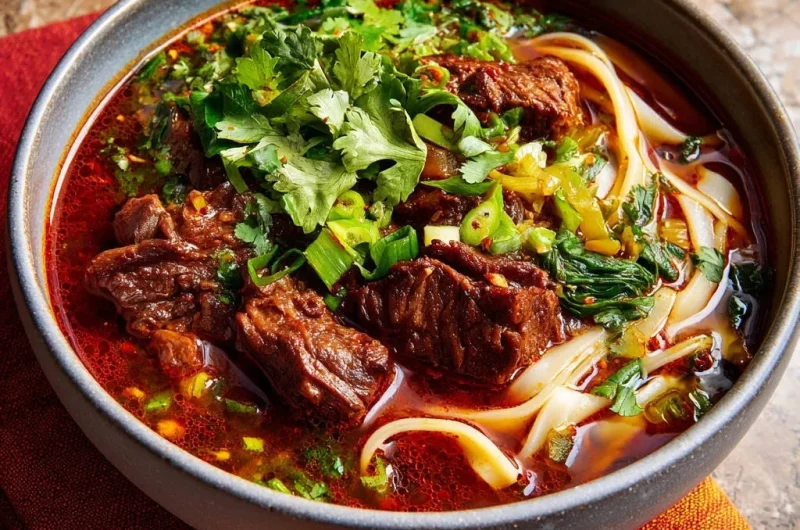
Spicy Beef Noodle Soup
Course: Soups-StewsCuisine: ChineseDifficulty: medium4
servings15
minutes3
hours750
kcal195
minutesThis method guarantees the most tender, fall-apart beef in a deeply flavorful, spicy broth. The secret lies in a perfect sear followed by a prolonged, gentle braise that transforms tough chuck roast into pure silk. Serve over thick noodles with crisp toppings for an unforgettable meal.
Ingredients
For the Beef and Broth:
2 pounds boneless beef chuck roast, cut into 1.5 inch cubes
1 tablespoon neutral oil (like canola or vegetable)
4 cups beef broth (low sodium)
2 cups water
1/4 cup light soy sauce
2 tablespoons dark soy sauce
1/4 cup fermented chili bean paste (doubanjiang)
2 tablespoons fresh ginger, sliced
4 cloves garlic, smashed
1 tablespoon brown sugar
2 star anise
1 teaspoon Sichuan peppercorns (optional)
Salt, to taste
For Serving:
1 pound thick, fresh wheat noodles
1 cup chopped pickled mustard greens (or chopped bok choy, lightly blanched)
1/2 cup chopped fresh cilantro
1/4 cup sliced green onions (scallions)
Directions
- Prepare the Beef for Maximum Tenderness: Pat the beef cubes completely dry with paper towels. Season aggressively with salt and pepper. This step is crucial for the perfect sear.
- The Sear and Flavor Base: Heat the neutral oil in a large Dutch oven or heavy pot over high heat until shimmering. Sear the beef in batches, ensuring there is plenty of space between the pieces. Sear until all sides are deeply browned (about 6 to 8 minutes total per batch). Remove the seared beef and set aside.
- Build the Broth Depth: Reduce the heat to medium. Add the ginger, garlic, star anise, and peppercorns to the residual oil. Cook for 1 minute until fragrant. Add the fermented chili bean paste and cook for 2 minutes, stirring constantly. Cooking the paste releases its oils, guaranteeing the deep red color and robust flavor seen in the image.
- The Gentle Braise Technique (The Solution): Return the seared beef to the pot. Stir in the light and dark soy sauces, brown sugar, beef broth, and water. Bring the liquid to a boil, then immediately reduce the heat to the absolute lowest setting possible. The liquid should barely produce a bubble (a bare simmer).
- Cook Low and Slow: Cover the pot tightly. Braise the beef for a minimum of 2.5 hours, or up to 3 hours, checking occasionally to ensure the simmer remains gentle. The key to melt-in-your-mouth beef is this prolonged, extremely low-temperature cooking, which slowly breaks down the collagen without leaching moisture or making the meat dry. The beef is ready when you can easily shred it with a spoon.
- Finishing Touches: Taste the broth and adjust the seasoning with additional salt or soy sauce if necessary. Remove the star anise and ginger slices before serving.
- Noodle Prep: Cook the fresh noodles according to package directions. Drain immediately and rinse very briefly to remove excess starch (to prevent the broth from thickening).
- Assemble: Divide the noodles among serving bowls. Ladle the hot beef and broth over the noodles. Top generously with the pickled greens, fresh cilantro, and sliced green onions. Serve immediately.
Notes
- The simmer must be kept at the absolute lowest setting (a bare simmer) for the beef to achieve maximum tenderness; avoid a rolling boil.