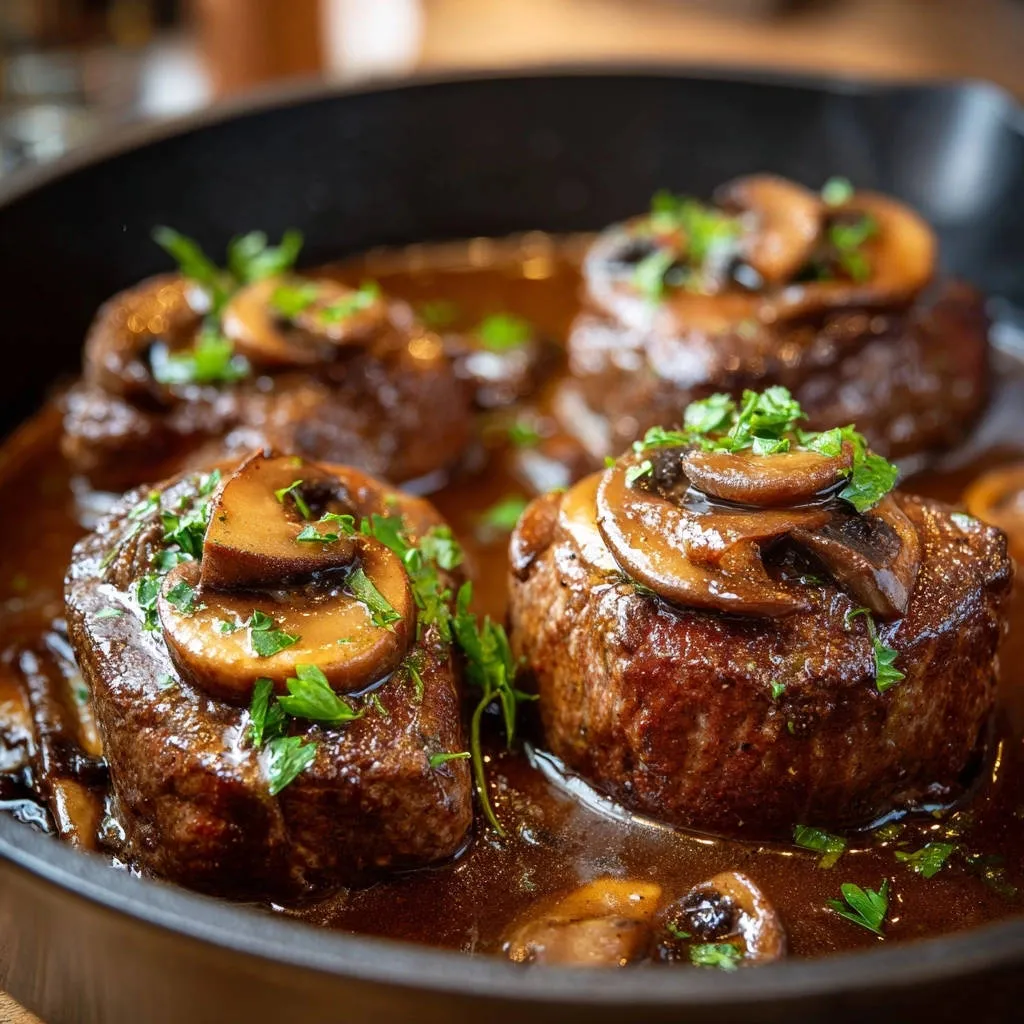
I spent years frustrated by brilliant seared steak ruined by a thin, gray sauce that tasted more of water than umami richness. Mastering this one technique-the secret to truly thick, luxurious mushroom gravy-is the key to achieving true Restaurant Quality Steak Medallions with Mushroom Sauce at home.
This foolproof method guarantees deep umami flavor and a velvet texture, proving that elegant, high-impact dining is always within your reach.
Ditch the Watery Glaze: Why This Foolproof Mushroom Sauce Recipe Works
The biggest disappointment in steakhouse cooking is a beautiful sear compromised by a weak, watery sauce that slides off the plate.
This recipe eliminates that risk by focusing obsessively on two foundational steps that ensure optimal texture: thoroughly drying the mushrooms and incorporating a fast, powerful quick roux.
The Secret to Deeply Flavored, Never-Thin Sauce
Mushrooms naturally contain significant water; if this liquid isn’t fully released and evaporated before the broth is added, it inevitably dilutes the final sauce.
Cooking the mushrooms for 8 to 10 minutes until they brown is mandatory for concentrating their flavor, preventing the dilution that leads to a watery result.
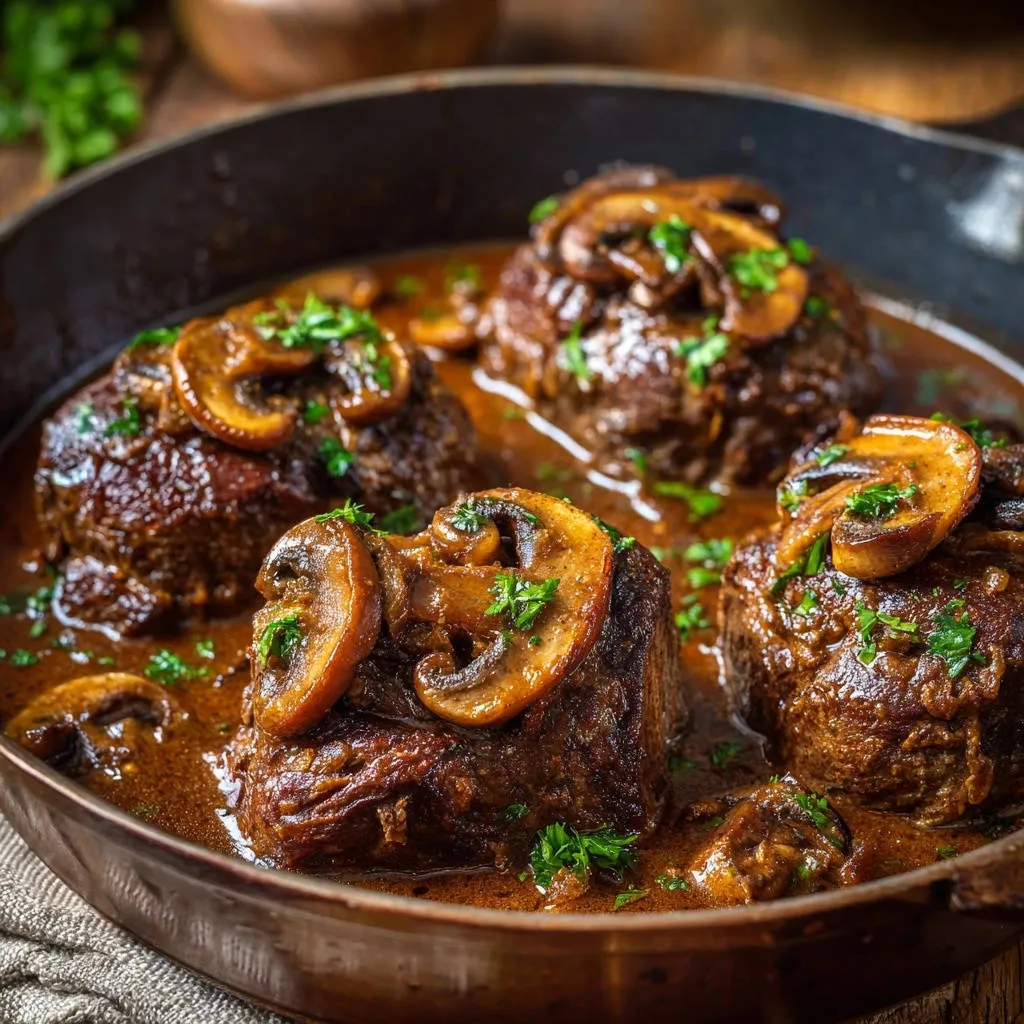
The quick roux-a fast cooked mixture of butter, aromatics, and flour-then acts as a powerful stabilizer, binding the fat and liquid into a creamy, cohesive emulsion.
The Advantage of Steak Medallions
Steak medallions are typically cut uniformly from tender muscles like filet mignon or thick sirloin, offering excellent portion control and consistency.
Their smaller, even thickness is ideal for achieving a rapid, high-heat sear without risking an overcooked interior.
Because they cook so quickly, they transition perfectly from a sear to a short rest period, ready to be returned to the pan and coated in the thick mushroom sauce.
Selecting Your Flavor Foundation: Ingredients for Perfection
The Primary Proteins and Fats
Steak Medallions: Choosing a cut like Filet Mignon or the tender eye of sirloin ensures minimal connective tissue and a buttery texture.
These cuts sear beautifully and remain tender, which is exactly what this quick-saucing technique demands.
For a similar satisfying texture, check out this crispy gnocchi.
Butter and Oil: Using a high-smoke point neutral oil (like canola or grapeseed) is essential to achieve the initial high searing temperature.
We add butter during the sear for flavor but rely on the oil to prevent burning; butter is then used later to build the sauce base.
The Aromatic Depth and Texture Builders
Mushrooms: Cremini mushrooms (baby bellas) provide deeper, earthier flavor than standard white button mushrooms.
Ensure the mushrooms are sliced evenly so they cook consistently and release their moisture at the same rate.
Shallot and Garlic: Shallots lend a sweeter, milder onion flavor than regular onions, perfectly complementing the subtle beef notes.
Finely dicing both the shallot and garlic ensures they soften quickly in the butter without burning during the brief sauté.
All-Purpose Flour (The Binder): All-purpose flour creates a classic, reliable roux foundation for a velvety sauce consistency.
If preparing this dish gluten-free, substitute the flour with two tablespoons of cornstarch mixed into water, added near the end of the simmering process.
Boosting the Umami: Broth and Seasonings
Low-sodium beef broth is crucial because it gives you precise control over the final salt content, which is already influenced by the highly seasoned steak.
We utilize aromatic dried thyme during the mushroom cooking phase to infuse the fats, reserving fresh parsley solely as a bright, herbaceous garnish for visual pop and freshness.
Essential Kitchen Gear for Searing and Sauce Building
Heavy-Bottomed Skillet (Cast Iron Recommended): A heavy pan holds heat consistently across the entire surface, which is vital for an even sear and developing rich fond (browned bits).
Tongs: Tongs allow you to handle the medallions gently and flip them without piercing the meat, thereby preserving internal juices.
A Sturdy Whisk: A sturdy wire whisk is non-negotiable for integrating the flour and broth quickly, preventing any lumps from forming in the rich mushroom sauce.
Precision Cooking: Mastering the Steak and Sauce Technique
- Preparation and Seasoning:
Excess moisture on the surface of the steak actively fights against searing and inhibits the formation of a dark, flavorful crust, so pat them until they are entirely dry.
Seasoning aggressively means applying a very generous coating of kosher salt and fresh black pepper just before cooking, allowing the intense heat to drive the flavor into the meat surface.
- The Perfect Sear and Rest:
Wait for the oil and butter mixture to shimmer and just begin to smoke before adding the medallions; this extreme heat is necessary for the Maillard reaction.
Sear for 3 to 4 minutes per side for a perfect medium-rare; immediately remove the steaks to rest on a cutting board, allowing the muscles to relax.
Do not clean the pan! The remaining oil, butter, and especially the savory brown bits, or fond, are the essential foundation for the sauce base.
- Building the Flavor Base: The Crucial Mushroom Water Evaporation Step:
Add the sliced mushrooms and dried thyme to the skillet and cook on medium heat for the full 8 to 10 minutes, stirring occasionally.
The visual cue for success is when the pan goes quiet, the released moisture has completely evaporated, and the mushrooms start to take on a distinct brown color and slightly caramelize.
If you rush this step, the trapped moisture will inevitably dilute and ruin your final Restaurant Quality Steak Medallions with Mushroom Sauce.
- Creating the Quick Roux (The Thickening Agent):
Push the concentrated mushrooms to the side of the pan and melt the remaining butter in the cleared space in the center.
Add the diced shallots and garlic, sautéing for about one minute until fragrant, then sprinkle the flour directly over the aromatics and mushrooms.
Stir the mixture constantly for 60 seconds (a full minute) to ensure the raw, starchy flavor of the flour is cooked out before adding any liquid.
- Developing the Rich Sauce:
Slowly stream in the beef broth while rigorously whisking the flour mixture into the liquid; this careful technique is key to achieving a perfectly smooth, lump-free sauce.
Bring the sauce to a gentle simmer, continuously scraping the bottom of the pan to lift all the savory fond into the liquid, concentrating the depth of flavor.
Simmer for 3 to 5 minutes until the sauce thickens enough to coat the back of a spoon; taste and adjust salt, pepper, or thyme as needed.
- Finish and Serve:
Carefully return the rested steak medallions, along with any accumulated resting juices, to the pan.
Spoon the luxurious mushroom sauce generously over the steaks and allow them to reheat briefly-no longer than one minute-before plating.
Garnish immediately with vibrant fresh parsley to complete the presentation and add a necessary herbal lift.
Chef’s Corner: Troubleshooting and Temperature Management
Internal Temperature Guide for Steak Medallions
Rare (125°F): Removed from heat. Allow 5 minutes of rest.
Medium-Rare (130-135°F): Ideal texture for medallions. Remove them 5°F below the target temperature to account for carryover cooking during resting.
For more tender, juicy results, consider trying these creamy skillet meatballs.
Medium (135-140°F): Firmer texture, still juicy. Resting is crucial to prevent the loss of moisture when slicing.
My Mushroom Sauce Is Grainy or Lumpy-What Went Wrong?
This lumpiness or grainy texture occurs when the flour wasn’t thoroughly cooked during the roux stage, or when the cold liquid was added too fast without constant whisking.
To fix it immediately, remove the pan from heat and use an immersion blender to quickly smooth out the lumps, or strain the sauce if necessary.
Dealing with Steaks That Cook Unevenly
Consistent thickness is critical for even cooking. If some medallions are thicker than others, use the flat side of a meat mallet to gently pound them into a uniform thickness before seasoning.
Quick Tip: Handling Resting Juices
Never discard the clear or pink juices that pool beneath the resting meat; these juices are concentrated flavor and moisture that must be stirred back into the final sauce during the finishing step.
Beyond the Basics: Serving Suggestions and Adaptations
Ideal Side Dishes for Restaurant Quality Steak Medallions with Mushroom Sauce
Creamy mashed potatoes or Parmesan polenta are classic choices, providing a perfect starch base to soak up every drop of the luxurious mushroom sauce.
Complementary Dishes to Try
To round out your steak dinner, consider these delicious options that share common ingredients or complementary flavors.
- For a satisfying vegetarian option that also features mushrooms, try the crispy pan-seared halloumi kale bowl, which offers a different texture and a fresh green component.
- If you enjoy rich, savory flavors, the caramelized onion and gruyere puff pastry swirls make a wonderful accompaniment with their sweet onions and cheesy pastry.
For a lighter counterpoint, serve roasted green beans tossed with flaked almonds or tender, steamed asparagus with lemon zest.
Making It Gluten-Free: A Seamless Substitution
To convert this to a seamless gluten-free dish, skip the flour in Step 4 entirely and proceed with sautéing the aromatics and deglazing with the broth.
At the end of Step 5, mix 2 tablespoons of cornstarch or arrowroot with 2 tablespoons of cold water (a slurry) and whisk it into the simmering sauce until it thickens.
Storage and Make-Ahead Instructions
Store leftover steak and the foolproof mushroom sauce separately in airtight containers in the refrigerator for up to three days.
The sauce can be made a day ahead; reheat it gently on the stovetop over low heat, whisking constantly to ensure the emulsion does not “break” and become oily.
Common Questions About Restaurant Quality Steak Medallions with Mushroom Sauce
Can I use dried herbs other than thyme?
Yes, you can substitute other strong herbs like dried rosemary or oregano, but use them sparingly-about half a teaspoon-as their flavor is often more potent than thyme.
I don’t have beef broth. Can I substitute chicken or vegetable stock?
Chicken or vegetable stock can be substituted, but the final flavor profile will be lighter and less robustly savory.
To compensate for the lost umami, whisk in a small amount (about half a teaspoon) of concentrated beef base or a dash of Worcestershire sauce during the simmering stage.
What is ‘fond’ and why is scraping it up so important?
Fond is the French term for the highly concentrated, caramelized protein and sugar residue left stuck to the pan bottom after searing the meat.
Scraping up this savory residue (a process called deglazing) is absolutely critical, as it is the secret weapon for building immense depth into the flavor profile of your mushroom sauce.
Ready to Impress? Share Your Steak Medallions Masterpiece!
You now possess the expert knowledge to conquer the watery glaze and produce genuinely Restaurant Quality Steak Medallions with Mushroom Sauce right in your own kitchen.
Mastering this searing technique combined with the foolproof sauce method guarantees a deeply satisfying and impressive meal every time. We encourage you to try this recipe tonight and share your results!
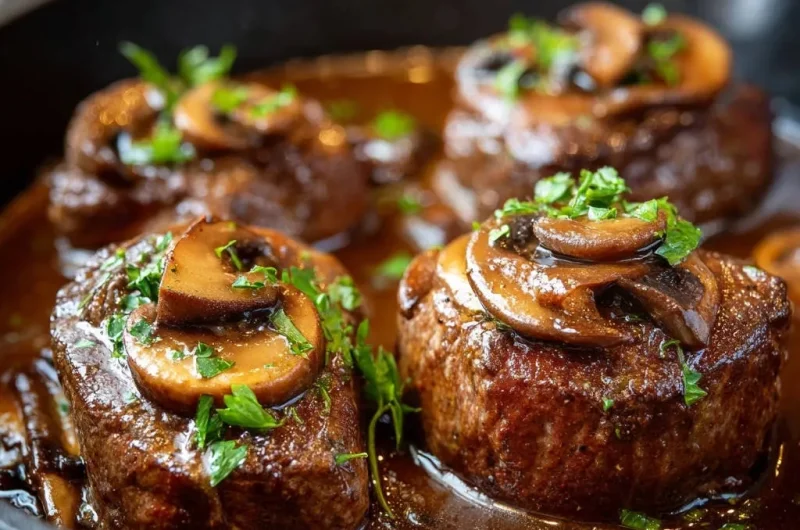
Steak Medallions
Course: Main CourseCuisine: American/French-inspiredDifficulty: medium4
servings15
minutes25
minutes450
kcal40
minutesThis foolproof method guarantees restaurant quality steak medallions paired with a thick, deeply flavorful mushroom sauce. Learn the crucial step to prevent a watery sauce by developing a rich base and locking in texture. Ready in under 45 minutes, this recipe is perfect for an elegant dinner.
Ingredients
4 (6 ounce) beef steak medallions (such as filet mignon or thick sirloin)
1 tablespoon neutral oil (like canola or grapeseed)
2 tablespoons unsalted butter, divided
1 pound cremini or button mushrooms, sliced
1 small shallot, finely diced
1 teaspoon minced garlic
2 tablespoons all purpose flour (or cornstarch for gluten free)
1 cup beef broth (low sodium)
Salt and black pepper to taste
1 teaspoon dried thyme
1 tablespoon fresh parsley, chopped for garnish
Directions
- Prepare the Steaks: Pat the steak medallions completely dry with paper towels. Season aggressively on all sides with salt and black pepper.
- Sear the Steaks: Heat the neutral oil and 1 tablespoon of butter in a heavy bottomed skillet (cast iron works best) over medium high heat until shimmering. Sear the steaks for 3 to 4 minutes per side for medium rare (or to desired internal temperature). Remove steaks from the pan and set them aside to rest, retaining the fat and browned bits (fond) in the skillet.
- Cook the Mushrooms (Crucial Step): Lower the heat to medium. Add the sliced mushrooms and dried thyme to the skillet. Cook, stirring occasionally, for 8 to 10 minutes. The mushrooms will release a significant amount of water. It is essential that you continue cooking until all of that moisture has evaporated and the mushrooms begin to brown slightly. This prevents your final sauce from becoming thin.
- Build the Sauce Base (The Anti-Watery Secret): Push the cooked mushrooms to the side of the pan. Add the remaining 1 tablespoon of butter, the diced shallot, and the garlic to the center of the pan. Saute until the shallot is softened, about 1 minute. Sprinkle the 2 tablespoons of flour directly over the shallot and mushroom mixture (this creates a quick roux). Stir constantly for 60 seconds to cook out the raw flour taste.
- Create the Rich Sauce: Slowly pour in the beef broth while constantly whisking the flour mixture into the liquid. Bring the sauce to a simmer, scraping up all the browned bits from the bottom of the pan as the liquid heats (this is where the depth of flavor comes from). Let the sauce simmer and reduce for 3 to 5 minutes, or until the sauce has thickened significantly and coats the back of a spoon. Taste and adjust seasonings.
- Finish and Serve: Return the rested steak medallions and any accumulated juices to the pan and spoon the mushroom sauce generously over the top of the steaks to reheat briefly (about 1 minute). Garnish immediately with fresh chopped parsley before serving.
Notes
- Use cornstarch instead of flour for a gluten-free sauce base.