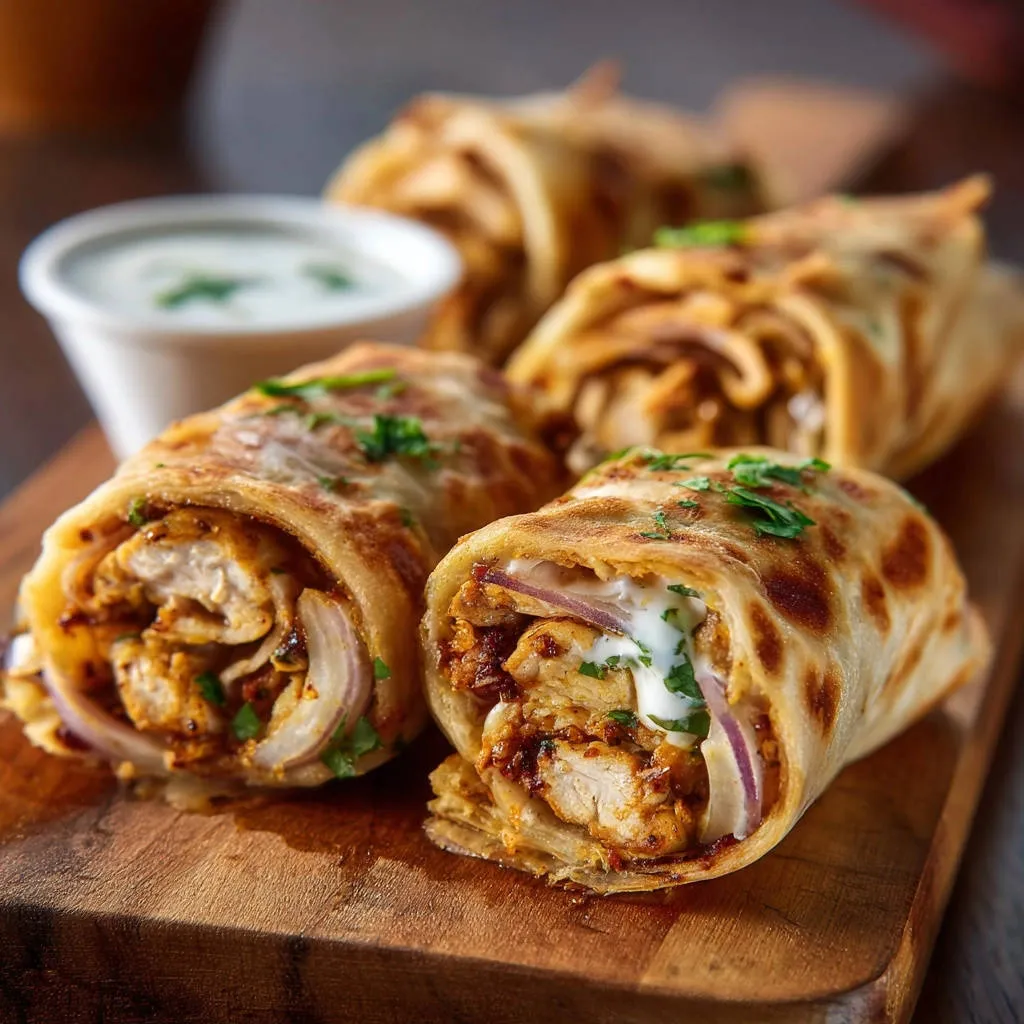
I spent years frustrated by homemade rolls; the warm, juicy filling always soaked through the wrap instantly, leaving me with a torn, damp disaster. Discovering the secret egg barrier technique changed everything, allowing me to finally create sturdy, flavorful Restaurant-Style Chicken Rolls right in my kitchen.
This method guarantees a flaky, structurally perfect wrap that holds up to the juiciest filling every single time, making this recipe reliable and truly special.
The Breakthrough Technique: Why These Rolls Never Fall Apart
The Common Kathi Roll Dilemma (And How We Solve It)
Traditional chicken rolls often fail structurally because the juicy, warm meat filling and the cooling yogurt dressing are placed directly onto the warm paratha or tortilla.
For chicken that’s always juicy and full of flavor, consider the charred chicken masala.
This immediate saturation softens the bread fibers, leading to instant tearing and a complete loss of structural integrity the moment the roll is picked up.
The Egg and Butter Barrier: Our Secret to Sturdy Wraps
We solve the moisture problem by introducing a thin, impermeable layer between the chicken filling and the bread itself. This is achieved using a beaten egg and a touch of fat.
Brushing the wrap with melted ghee or butter first helps the egg adhere instantly and seamlessly when poured onto the hot surface.
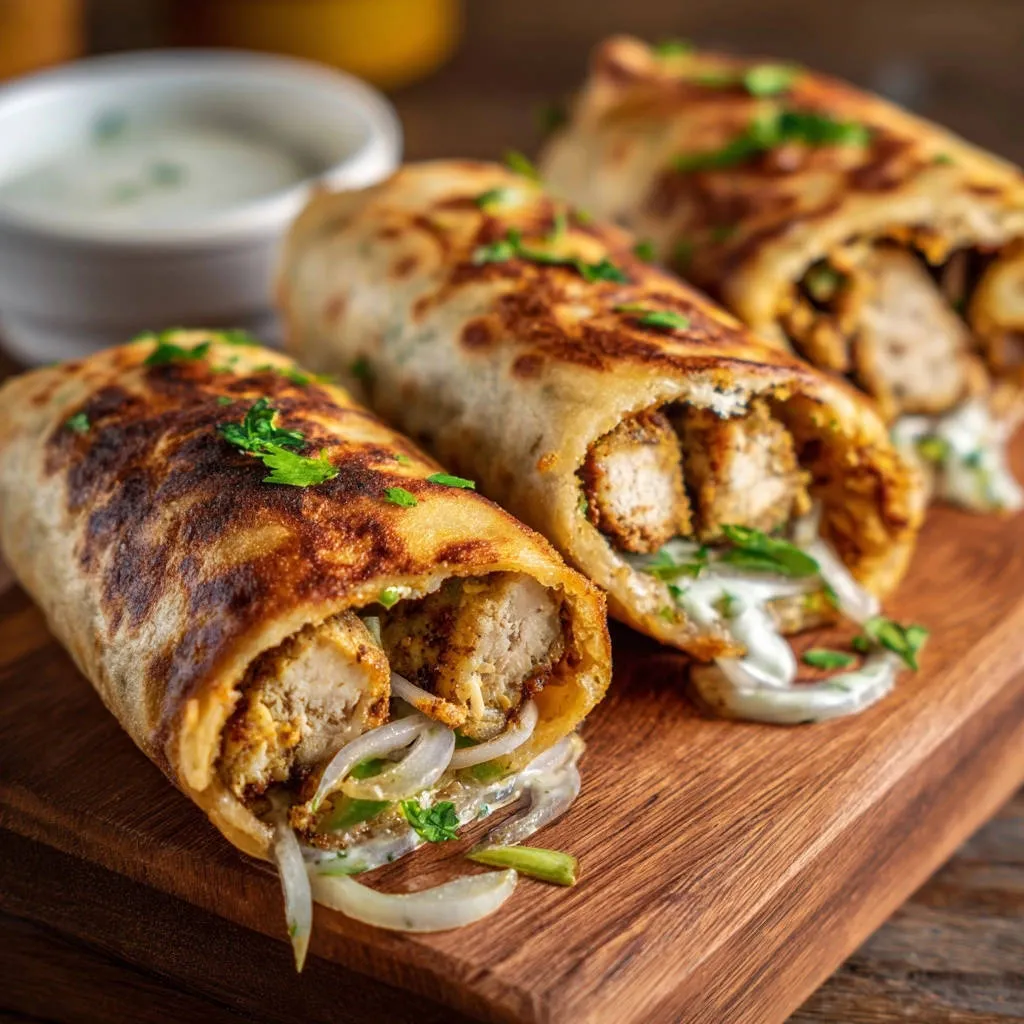
The resulting egg crepe layer acts as a sturdy shield, preventing moisture migration while simultaneously reinforcing the paratha without adding unnecessary bulk.
Flavor Foundations: Essential Ingredients for Authentic Chicken Rolls
The Rich, Tangy Marinade: Key to Tender Chicken
The marinade is the heart of this dish, responsible for both flavor depth and the incredibly moist texture of the chicken.
Yogurt and Acid: These are dual tenderizers. The lactic acid in the yogurt and the citrus from the lemon juice mildly break down the chicken proteins, guaranteeing a succulently moist result.
The Spice Blend: Garam Masala provides warmth and earthiness, while Turmeric and Chili Powder balance the heat. This blend is crucial for achieving an authentic flavor profile.
Ginger-Garlic Paste: Using fresh or high-quality ready-made paste makes an immense difference in the final aroma and foundational flavor complexity. Do not skip this fresh element.
The Assembly Components: Wraps, Dressings, and Fresh Accents
The supporting cast of ingredients is just as important for balancing the richness of the chicken filling.
Choosing the Best Wrap: Pre-made parathas, which are slightly flaky and thick, are preferred for their texture and ability to handle the filling weight. Thick flour tortillas are the best alternative.
Yogurt or Raita Dressing: This cool, creamy component serves a vital purpose as a balancing counterpoint to the spicy, rich chicken. It cuts through the heat beautifully.
The Role of Red Onion and Cilantro: These fresh additions provide crucial textural contrast, delivering a sharp bite from the onion and necessary herbaceous freshness to brighten the overall taste of the roll.
Mastering the Method: A Detailed Guide to Perfect Rolling
- Phase 1: Deepening the Flavor Through Marination
Ensure all ingredients-especially the thick yogurt and spice blend-are thoroughly mixed into the chicken, coating every piece completely.
If possible, prioritize the longer marinade time (up to 4 hours) in the refrigerator; this allows for maximum flavor absorption and a noticeably more tender chicken.
For more ideas on flavorful chicken, check out this chipotle chicken burrito bowl.
- Phase 2: Achieving Perfectly Coated and Cooked Chicken
Heat your oil in a large skillet over medium-high heat. You must avoid overcrowding the pan; cook the chicken in batches if necessary.
The goal is to cook the chicken while simultaneously reducing the yogurt-based marinade into a thick, concentrated coating that clings to the meat, rather than creating a watery sauce.
- Phase 3: Creating the Crucial Moisture-Proof Wrap (The Egg Barrier)
Warm the paratha for about 30 seconds on each side first. Then, lightly brush the warmed bread with melted butter or ghee.
Pour the lightly beaten egg directly over the paratha in the skillet, gently tilting the pan to coat one side evenly, creating a thin, egg crepe layer.
Cook the egg until it is mostly set-it should be firmly adhered to the wrap but still slightly moist on top-before flipping for a final 30 seconds to heat the bread through.
Immediately transfer the finished wrap to a plate. For proper assembly, the cooked egg side must be facing up.
- Phase 4: Assembly and The Tight Roll Technique
Place the wrap egg-side up on a flat surface. Spoon a quarter of the warm chicken filling down the center, followed by the sliced red onion and a drizzle of the yogurt dressing.
The trick to a sturdy roll is to start by folding the bottom edge of the paratha up slightly over the filling first; this creates a secure, sealed base.
Then, roll the wrap tightly from one side to the other, making sure the contents are compact inside. Serve immediately while the chicken is still warm.
Chef’s Corner: Pro Tips and Troubleshooting for Flawless Results
Maximizing Tenderness: Selecting and Prepping the Chicken
Thigh vs. Breast: While chicken breast is lean, using boneless, skinless chicken thighs guarantees a much juicier result. Thighs contain more fat and are more forgiving under high heat.
Slice Thinly and Evenly: Cutting the chicken into thin, uniform strips or ribbons maximizes the surface area for the marinade to work. This also ensures rapid, even cooking time for every piece.
Troubleshooting Common Mistakes
Why is My Egg Barrier Peeling Off?
This critical issue occurs if the paratha was not warm enough before the fat was applied, or if the skillet temperature was too low when the egg was added.
The heat must be sufficient to set the egg rapidly, ensuring it bonds firmly to the surface of the bread and prevents separation during the rolling process.
My Filling is Watery, Not Thick and Coated. What Went Wrong?
A watery filling means the heat was too low, or the pan was overcrowded, causing the chicken to steam and the yogurt to separate rather than reduce.
To fix this, maintain medium-high heat and ensure there is ample space in the skillet to allow liquids to evaporate quickly, achieving that signature thick, spicy coating.
Complementary Dishes
To round out your meal with these chicken rolls, consider these vibrant additions.
- For a fresh contrast, try this Grilled Paneer & Roasted Squash Salad, bringing a different kind of crispness to your table.
- Add a cooling element with this Onion Bell Pepper Raita, offering a creamy texture alongside your chicken.
Adapt and Serve: Storage, Variations, and Pairing Suggestions
The Best Sides to Serve with Restaurant-Style Chicken Rolls
Since these chicken rolls are rich and hearty, they pair perfectly with light, fresh, or crunchy sides.
Consider serving them alongside crisp Masala Fries, a simple cucumber and tomato salad, or a side of refreshing mint and cilantro chutney.
Make-Ahead and Storage Guidance
Can I Make the Chicken Filling Ahead of Time?
Yes, you can prepare the marinated chicken up to 4 hours in advance, keeping it raw in the fridge until ready to cook.
Alternatively, the fully cooked chicken filling stores well in an airtight container for 3-4 days and must be reheated thoroughly before you assemble the rolls.
Storing Assembled Chicken Rolls
These rolls are always best eaten immediately for maximum crispness.
If necessary, assembled rolls can be wrapped tightly in foil and refrigerated for up to 2 days; reheat them gently in a toaster oven or air fryer to maintain the wrap’s essential sturdiness and avoid sogginess.
Recipe Variations: Customizing Your Rolls
Vegetarian Version: Easily swap the protein for hearty pan-fried paneer cubes or marinated chickpeas. Use the exact same yogurt and spice marinade proportions for the foundational flavor.
High-Protein Upgrade: For extra texture and richness, incorporate a generous half-cup of crumbled Indian cottage cheese (paneer) or shredded mozzarella directly into the finished chicken filling.
Frequently Asked Questions About Homemade Chicken Rolls
What is the Best Substitute for Parathas if I Can’t Find Them?
Thick, high-quality flour tortillas are the best and most easily accessible substitute; look for ones designed for burritos, as they provide better structural support.
You can also use homemade chapati, but ensure they are rolled slightly thicker than usual to handle the weight and moisture of the filling. Avoid thin corn tortillas as they will tear easily.
Do I Have to Use Ghee or Butter for the Egg Barrier?
Using some form of fat is essential to prevent sticking and dramatically aid in the adhesion of the egg to the wrap, which is the key to the moisture barrier.
While you can use a neutral vegetable oil, ghee or butter is highly recommended as it provides a richer, nutty flavor profile that authentically complements the paratha.
Why is Marinating in Yogurt So Important?
Yogurt is critical because it acts as a mild tenderizer and keeps the chicken incredibly moist as it cooks.
More importantly, the thick texture of the yogurt allows the spices to cling firmly to the chicken during cooking, ensuring they caramelize into a flavorful coating instead of separating into a thin, watery sauce.
Ready to Impress? Share Your Restaurant-Style Chicken Rolls Masterpiece!
The secret to perfect, non-soggy rolls is now yours. By implementing the simple yet brilliant egg barrier technique, you can confidently create sturdy, deeply flavorful Restaurant-Style Chicken Rolls that truly rival your favorite takeout spot.
This recipe delivers on flavor, structure, and impressive results. We encourage you to try this breakthrough method tonight and share your creations or leave a comment with your favorite fresh toppings!
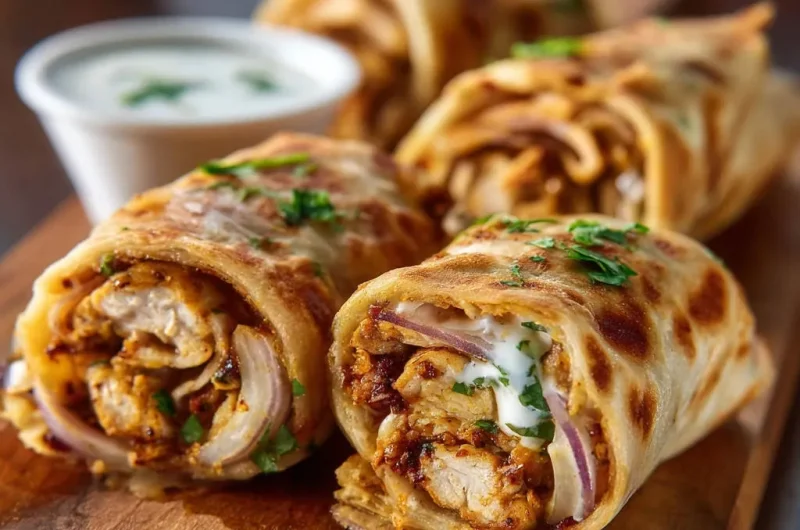
Chicken Rolls
Course: Main CourseCuisine: IndianDifficulty: easy4
rolls15
minutes15
minutes650
kcal60
minutesSay goodbye to soggy wraps! This recipe for savory, marinated chicken Kathi rolls includes the secret technique for moisture-proofing the paratha using an egg barrier. The result is a sturdy, flaky, and flavor-packed roll perfect for dinner or lunch.
Ingredients
For the Chicken Filling:
1.5 lbs chicken breast or thighs, thinly sliced
1/2 cup plain yogurt
2 tablespoons ginger-garlic paste
1 tablespoon lemon juice
1 tablespoon garam masala
1 teaspoon turmeric powder
1 teaspoon red chili powder (or paprika)
1 teaspoon salt
1 tablespoon oil
For Assembly:
4 pre-made parathas or thick tortillas (about 8 inches)
2 tablespoons butter or ghee
1/2 cup plain yogurt or raita (for dressing)
1/4 cup finely chopped cilantro
1 medium red onion, thinly sliced
4 large eggs
Directions
- Marinate the Chicken: In a bowl, combine the sliced chicken, yogurt, ginger-garlic paste, lemon juice, garam masala, turmeric, chili powder, and salt. Mix well and let marinate for at least 30 minutes, or up to 4 hours in the refrigerator.
- Cook the Chicken: Heat 1 tablespoon of oil in a large skillet over medium-high heat. Add the marinated chicken and spread it into a single layer. Cook for 6 to 8 minutes, stirring occasionally, until the chicken is fully cooked through and the marinade has reduced to a thick coating. Set the chicken aside and keep warm.
- Prepare the Wraps (The Moisture Barrier Solution): Heat a flat skillet or griddle over medium heat. Place one paratha on the skillet. Warm it for 30 seconds on each side.
- Add the Egg Barrier: Lightly brush the warm paratha with melted butter or ghee. Crack one egg into a small bowl and beat lightly. Pour the beaten egg directly over the paratha in the skillet, gently tilting the pan to coat one side evenly (like an egg crepe). Season lightly with salt.
- Cook the Barrier: Cook the egg until it is mostly set, about 60 to 90 seconds. Flip the paratha so the cooked egg side is now facing up. Cook for another 30 seconds until the bread is heated through and the egg is firmly adhered. Immediately transfer the wrap to a plate, egg-side up. Repeat with the remaining wraps and eggs.
- Assemble the Roll: Place the paratha on a flat surface, with the egg-side facing up. Spoon a quarter of the warm chicken filling in a line down the center of the egg-coated bread. Top the chicken with a generous pinch of sliced red onion and a drizzle of the yogurt dressing.
- Roll Tight: Fold the bottom edge of the paratha up slightly over the filling, then tightly roll the wrap from one side to the other. Garnish the top with chopped cilantro before serving immediately. The fully cooked egg layer will protect the bread from getting soggy from the juicy chicken and yogurt dressing.
Notes
- The fully cooked egg layer is essential; it creates the moisture barrier protecting the paratha from the juicy filling. Raita can be used instead of plain yogurt for extra flavor.