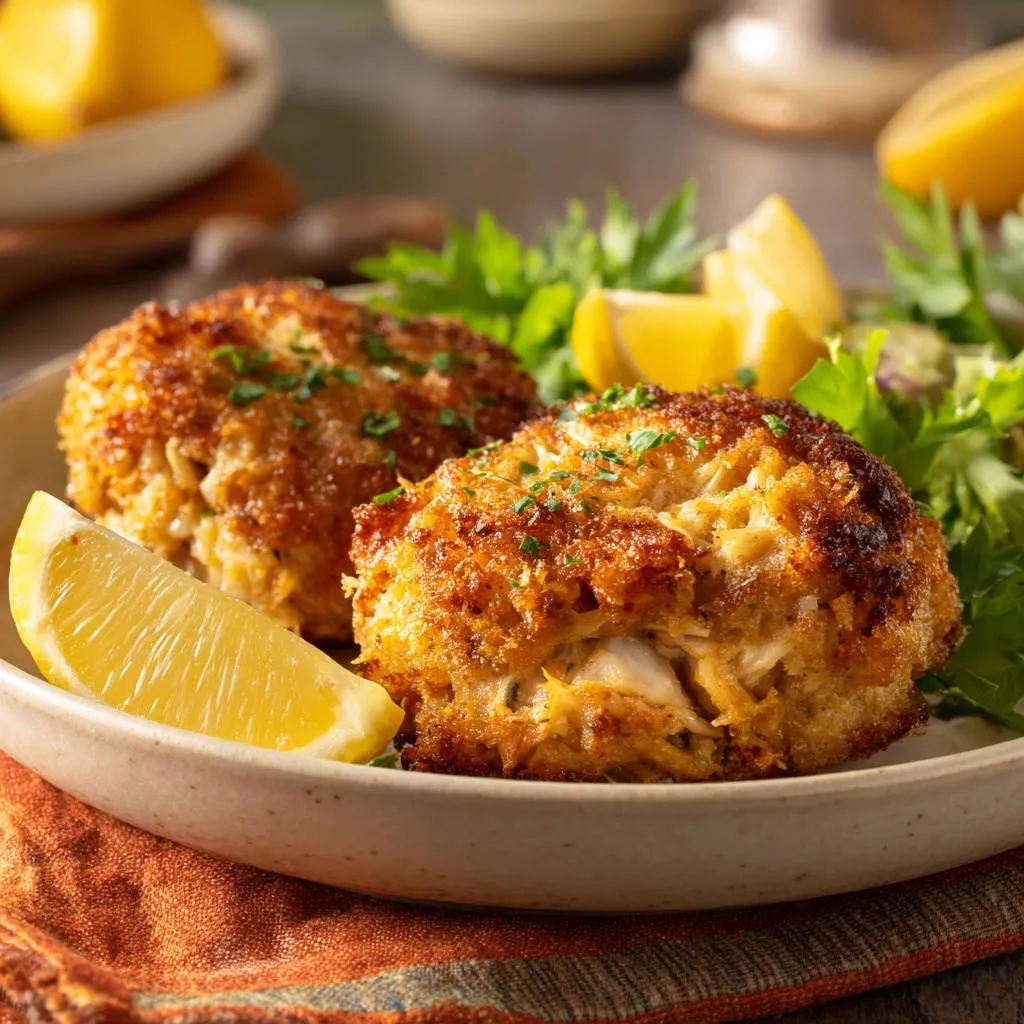
There is nothing more disappointing than ordering a crab cake only to find it’s a dense disk overloaded with breadcrumbs and filler.
I spent years refining this method to guarantee delicate, tender, and intensely flavorful Restaurant-Style Crab Cakes every single time, focusing on showcasing the sweet, flaky lump crab meat.
The secret lies in two key techniques-a precise binder-to-crab ratio and a critical chilling step-that ensures a light, airy result without ever resorting to excessive dry fillers.
The “Never Dense” Promise: Why This Recipe is Your New Go-To
This recipe transforms the often intimidating process of making high-quality crab cakes into a fail-safe routine.
We prioritize the flavor and integrity of the crab meat above all else, resulting in a product that is undeniably restaurant-quality.
Understanding the “Hockey Puck” Problem
Most homemade crab cakes become dense because they rely heavily on dry breadcrumbs or flour to hold the mixture together.
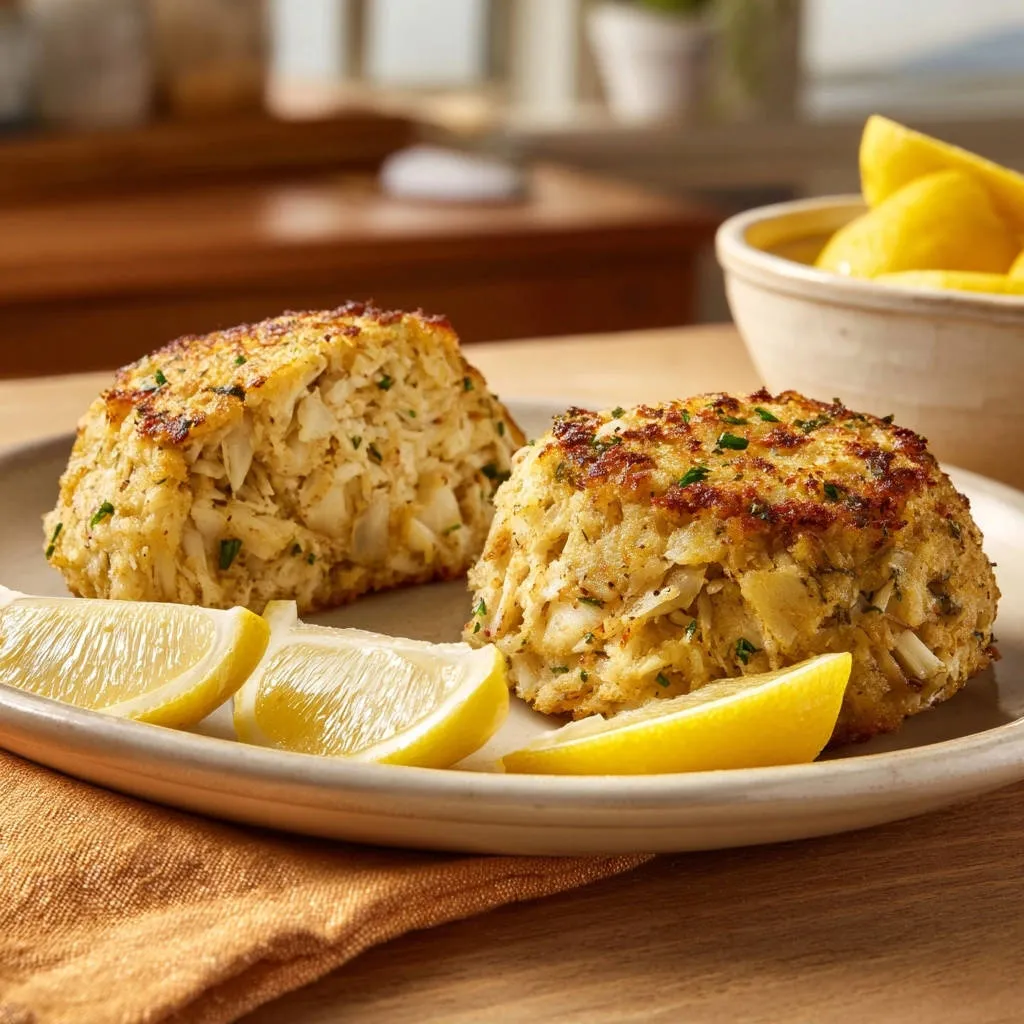
Additionally, aggressive mixing is a common culprit; overworking the mixture releases proteins and breaks the fragile crab lumps, creating a tough, rubbery texture.
Minimal Binder, Maximum Crab Flavor
Our method utilizes a small amount of wet ingredients-mayonnaise, egg, and mustard-to create a flavorful paste that coats the crab instead of submerging it.
This strategic binder provides the necessary moisture and cohesion without masking the delicate flavor of the sweet lump crab meat.
The Power of Chilling: Stability and Flakiness Combined
The required 30-minute chilling period is non-negotiable for success.
Refrigeration solidifies the fatty components in the binder paste, dramatically increasing the stability of the cakes.
This crucial step allows you to form the patties lightly and ensures they hold together during cooking, preventing disintegration without adding extra dry filler.
Assembling the Perfect Foundation: Key Ingredients Breakdown
Choosing the Best Crab Meat: Lump is Non-Negotiable
For true Restaurant-Style Crab Cakes, you must use high-quality lump crab meat.
Lump provides large, distinct pieces of meat, guaranteeing that sought-after flaky texture in every bite.
While Jumbo Lump is luxurious, standard Lump meat is the required minimum for achieving proper texture; avoid using only shredded or claw meat.
The Essential Flavor Agents: Old Bay and Dijon
The binder mixture provides balanced moisture and regional depth.
Dijon mustard adds a subtle, tangy sharpness, balancing the richness of the mayonnaise.
Old Bay seasoning is the signature flavor agent, providing complexity and the unmistakable East Coast profile.
A non-alcoholic Worcestershire substitute adds depth and umami without compromising the delicate nature of the crab.
Panko vs. Traditional Breadcrumbs: The Crispy Edge
Panko breadcrumbs are specified for both the internal mix and the external coating.
Panko absorbs moisture effectively but retains its structure, contributing to a much lighter interior than traditional, fine breadcrumbs.
When fried, the coarser Panko creates a magnificent, light, and crispy crust that provides essential textural contrast.
Mastering the Technique: Achieving Lightness in Every Step
Step 1: Preparing the Flavor-Packed Binder Paste
Begin by whisking the mayonnaise, Dijon mustard, non-alcoholic Worcestershire substitute, Old Bay, egg, and a pinch of salt and pepper in a medium bowl.
It is essential to whisk until the mixture is completely smooth and homogeneous.
This ensures that the salt and spices are evenly distributed, preventing pockets of concentrated flavor later in the mix.
Step 2: The Gentle Fold – Why Overmixing is the Enemy
Add the ¼ cup of Panko breadcrumbs and the chopped fresh parsley to the binder mixture, stirring just until combined.
Now, add your chilled lump crab meat, which should already be meticulously picked over.
The most crucial technique for achieving a flaky texture is the gentle folding motion using a rubber spatula.
Fold the ingredients together just until the crab meat is barely coated; you should still see distinct lumps of crab.
Over-mixing releases proteins and destroys the structure of the lump meat, resulting in the dense, tough texture we are trying to avoid.
For another great way to achieve flaky results, check out these easy homemade crab cakes.
Step 3: The Critical Chill and Forming the Patties
Cover the bowl of crab mixture and refrigerate it for a minimum of 30 minutes, or up to an hour.
This mandatory chilling firms up the binder paste, making the mixture easy to handle and minimizing the risk of breakage during the forming and cooking stages.
Gently form the chilled mixture into four equal patties, aiming for a thickness of about one inch.
Handle the cakes with extreme lightness during formation to preserve the structural integrity of the crab meat lumps.
From Patty to Plate: Frying Your Restaurant-Style Crab Cakes
Coating for Maximum Crunch: Achieving Perfect Panko Adhesion
Pour the remaining ½ cup of Panko breadcrumbs onto a shallow plate.
Roll the gently formed crab cakes in the Panko, ensuring the entire exterior is fully covered.
Press lightly but firmly to help the coating adhere securely; a complete Panko coating is vital for developing a beautiful, crispy crust.
Achieving the Golden Sear: Oil Temperature is Key
Heat the vegetable oil in a large, heavy-bottomed skillet over medium-high heat until the oil is shimmering but not smoking.
Carefully place the Restaurant-Style Crab Cakes in the hot pan, ensuring there is plenty of space between them to maintain even oil temperature.
Sear the cakes for 3 to 4 minutes per side; the visual cue for doneness is a deep, uniform golden-brown, crispy crust.
Avoid overcrowding the pan, as this lowers the oil temperature and leads to soggy crab cakes.
Alternative Cooking Methods: Baking or Air Frying
While searing provides the best texture, you can opt for oil-free methods.
To bake: Preheat the oven to 400°F (200°C), lightly spray the coated cakes with cooking oil, and bake for 15 to 18 minutes, flipping halfway through.
To air fry: Preheat the air fryer to 375°F (190°C), lightly spray the cakes, and cook for 10 to 12 minutes, or until deeply golden brown.
Troubleshooting and Pro Tips for Restaurant-Quality Results
Chef’s Secret #1: Ensuring Zero Excess Moisture
Any excess water in the crab meat will thin the binder, resulting in a soggy, unstable cake.
If your crab meat seems wet, gently pat it dry with paper towels before mixing.
This step ensures the binder paste maintains its proper thick consistency, leading to stability during cooking.
Why Did My Crab Cakes Fall Apart? Common Mistakes and Fixes
The primary reason crab cakes disintegrate is insufficient chilling time or too much moisture.
If the mixture feels overly loose after forming, place them back in the freezer for 10 minutes to firm the exterior rapidly.
If the mixture is too wet, fold in half a teaspoon of Panko breadcrumbs at a time, very gently, until the mixture feels manageable.
The Best Substitutions: What If I Don’t Have Old Bay?
Old Bay seasoning is critical, but a quick homemade blend works in a pinch.
Combine paprika, celery salt, dry mustard powder, black pepper, and a tiny dash of cayenne for a similar flavor profile.
Serving Your Masterpiece: Pairings and Presentation
The Classic Accompaniment: Simple Lemon Wedges
Serving with fresh lemon wedges is mandatory for presentation and flavor.
A simple squeeze of fresh acidity cuts through the richness of the mayonnaise binder and brightens the sweet notes of the lump crab meat.
Elevated Sides: What to Serve with Crab Cakes
Choose sides that are light and fresh to complement the delicate nature of the crab.
Fresh Corn Salad: A quick salad utilizing fresh or grilled corn kernels, mixed with bell peppers and a light vinaigrette, provides a summery contrast.
Quick Coleslaw: A vinegar-based or very lightly dressed slaw offers necessary crunch without being heavy or overly creamy.
Asparagus with Hollandaise: Steamed or roasted asparagus paired with a light, homemade hollandaise offers a sophisticated, classic pairing.
The Perfect Sauce Pairing: Remoulade or Tartar?
A classic remoulade, made with capers, cornichons, and Cajun seasoning, provides a complex, spicy kick that complements rich seafood wonderfully.
Traditional tartar sauce, relying on simple pickles and herbs, is a familiar, tangy option that allows the pure flavor of the crab to shine.
Frequently Asked Questions About Restaurant-Style Crab Cakes
Can I prepare the crab cakes ahead of time?
Yes, you can prepare the entire crab cake mixture up to 24 hours in advance; keep it covered tightly in the refrigerator.
For best results, form the patties no more than 12 hours before cooking, storing them uncooked and covered on a baking sheet lined with parchment paper.
What is the best way to freeze leftover cooked crab cakes?
Flash freeze the fully cooked cakes on a baking sheet until solid, then transfer them to an airtight container or freezer bag, separated by parchment.
Reheat from frozen in a 350°F (175°C) oven or air fryer for 15 to 20 minutes until heated through and the crust is restored to crispiness.
Is there a reliable alcohol-free substitute for Worcestershire sauce?
A common, easily accessible substitute is a mixture of soy sauce or tamari, combined with a tiny pinch of brown sugar and a few drops of white vinegar.
This combination replicates the fermented, savory depth required in the binder without the use of alcohol.
Why is gentle folding so crucial for the final texture?
Gentle folding protects the integrity of the lump crab meat, ensuring those large, sweet pieces remain intact.
It also prevents the overworking of the binder, which would otherwise develop excess protein structure, resulting in a dense, bread-like internal texture instead of a flaky one.
Ready to Impress? Share Your Restaurant-Style Crab Cakes Masterpiece!
By mastering the gentle folding technique and respecting the power of the mandatory chill, you have unlocked the secret to consistently delicate, flaky crab cakes.
This recipe ensures your homemade seafood stands up to the finest restaurant versions, delivering that sought-after crispy crust and moist, lump crab interior.
Now, go put these expert techniques into practice and share your flawless Restaurant-Style Crab Cakes success with your table!
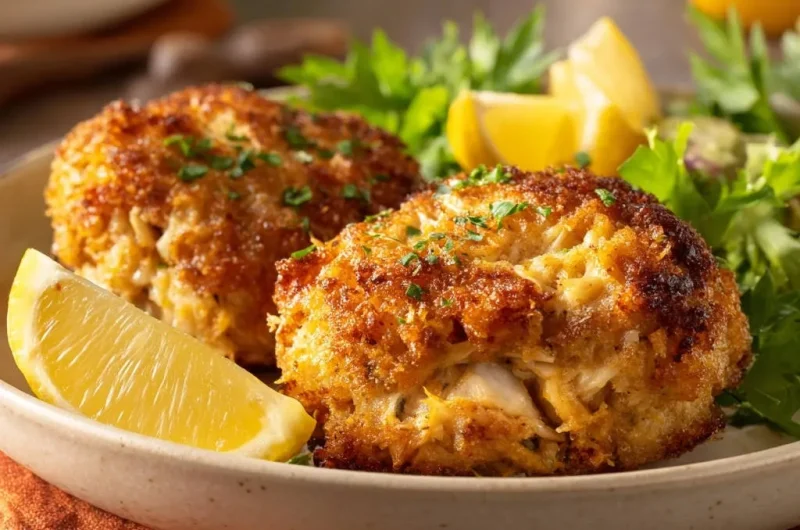
Crab Cakes
Course: Main CourseCuisine: AmericanDifficulty: easy4
servings15
minutes8
minutes350
kcal53
minutesThis recipe guarantees delicate, airy, restaurant-quality crab cakes packed with sweet lump crab meat. The secret is a light binder and gentle folding, followed by a quick chill that prevents them from falling apart. Finish them with a deep, golden, crispy Panko sear.
Ingredients
1 pound lump crab meat, fully picked over and chilled
1/4 cup mayonnaise
1 tablespoon Dijon mustard
1 teaspoon non-alcoholic Worcestershire sauce substitute
1/2 teaspoon Old Bay seasoning
1 large egg, lightly beaten
1/4 cup finely chopped fresh parsley
1/4 cup Panko breadcrumbs (for the mix)
1/2 cup Panko breadcrumbs (for the coating)
2 tablespoons vegetable oil (for frying)
Salt and black pepper to taste
Lemon wedges and fresh greens (for serving)
Directions
- Prepare the Binder Paste: In a medium bowl, whisk together the mayonnaise, Dijon mustard, non-alcoholic Worcestershire substitute, Old Bay, egg, and a pinch of salt and pepper until completely smooth. This paste will provide the necessary moisture and flavor without relying on excessive dry filler.
- Gently Fold the Crab: Add the 1/4 cup of Panko breadcrumbs and the chopped parsley to the binder mixture. Stir to combine thoroughly. Now, add the chilled lump crab meat. The most crucial step is to fold the mixture together very gently with a rubber spatula, taking care not to shred or break up the large crab lumps. Mix only until the crab is just coated; over-mixing is what creates dense crab cakes.
- Chill and Form: Cover the bowl and refrigerate the crab mixture for at least 30 minutes. This chilling time is vital because it firms up the binder paste, allowing you to form the cakes without crushing the crab meat and reducing the chance of them falling apart during cooking.
- Coat the Cakes: Pour the remaining 1/2 cup of Panko breadcrumbs onto a shallow plate. Gently form the chilled mixture into four equal patties (about 1 inch thick). Handle them lightly. Roll the formed cakes gently in the Panko, ensuring the exterior is fully coated for maximum crispiness.
- The Perfect Sear: Heat the vegetable oil in a large skillet over medium-high heat. Once the oil is shimmering, carefully place the crab cakes in the pan, ensuring they are not touching. Sear the cakes for 3 to 4 minutes per side until they develop a deep, golden brown, crispy crust.
- Serve Immediately: Remove the cakes from the pan, garnish with fresh parsley, and serve hot alongside fresh lemon wedges and salad greens. The gentle folding and chilling technique ensures the interior remains light, flaky, and full of crab flavor.
Notes
- The 30-minute chill time is essential for firming the binder paste and ensuring the cakes hold their shape perfectly during frying.