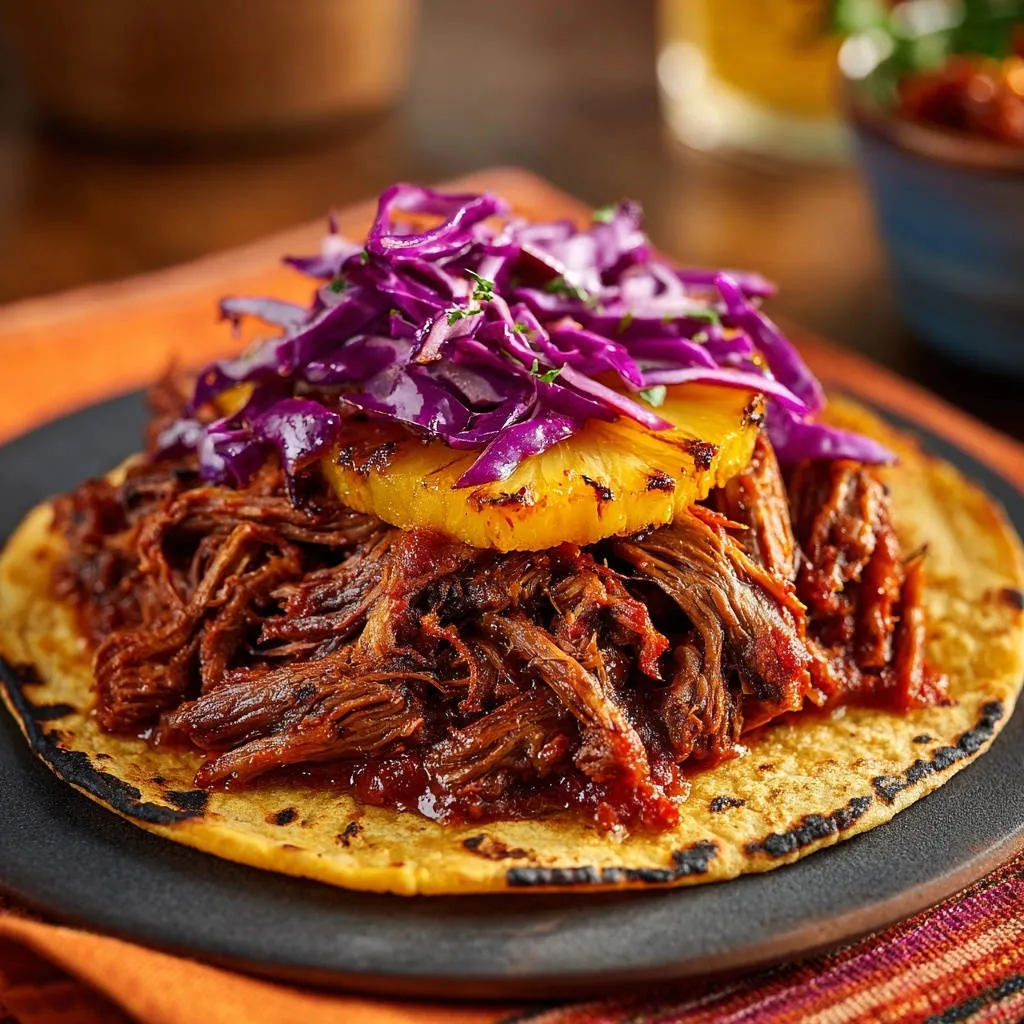
If you’ve ever spent hours slow-cooking a beautiful piece of beef only to shred it and find it disappointingly dry and stringy, you know the frustration. This recipe offers the definitive solution to that common kitchen letdown.
We leverage a critically important finishing technique-not just the spices-to guarantee deeply flavored, juicy, and perfect Restaurant-Style Shredded Beef Tacos every single time.
Why These Shredded Beef Tacos Will Become Your New Go-To Recipe
Unlike standard shredded beef recipes that rely solely on slow cooking, our method features a critical finishing step that guarantees moisture and deep flavor saturation.
Guaranteed Moisture: Eliminates the pain point of dry, stringy meat.
Complex Flavor Depth: Uses a powerful blend of chipotle, smoked paprika, and tomato paste for an authentic, restaurant-quality taste.
Perfect Balance: Designed specifically to balance the rich, spicy beef with fresh, cooling toppings (pineapple/cabbage).
The Building Blocks: Ingredients and Flavor Architects
Selecting the Foundation: Beef and Oil
The 3-pound boneless beef chuck roast is essential for its fat content and connective tissue, which break down into gelatin during the long braise, resulting in tenderness.
Vegetable oil is used for the high-heat searing step, ensuring a deep crust forms quickly without burning.
Crafting the Rich Braising Liquid and Spice Paste
The use of tomato paste cooked directly into the aromatics is crucial; this step, known as pincer, concentrates the sugars and creates a deeper, umami-rich foundation.
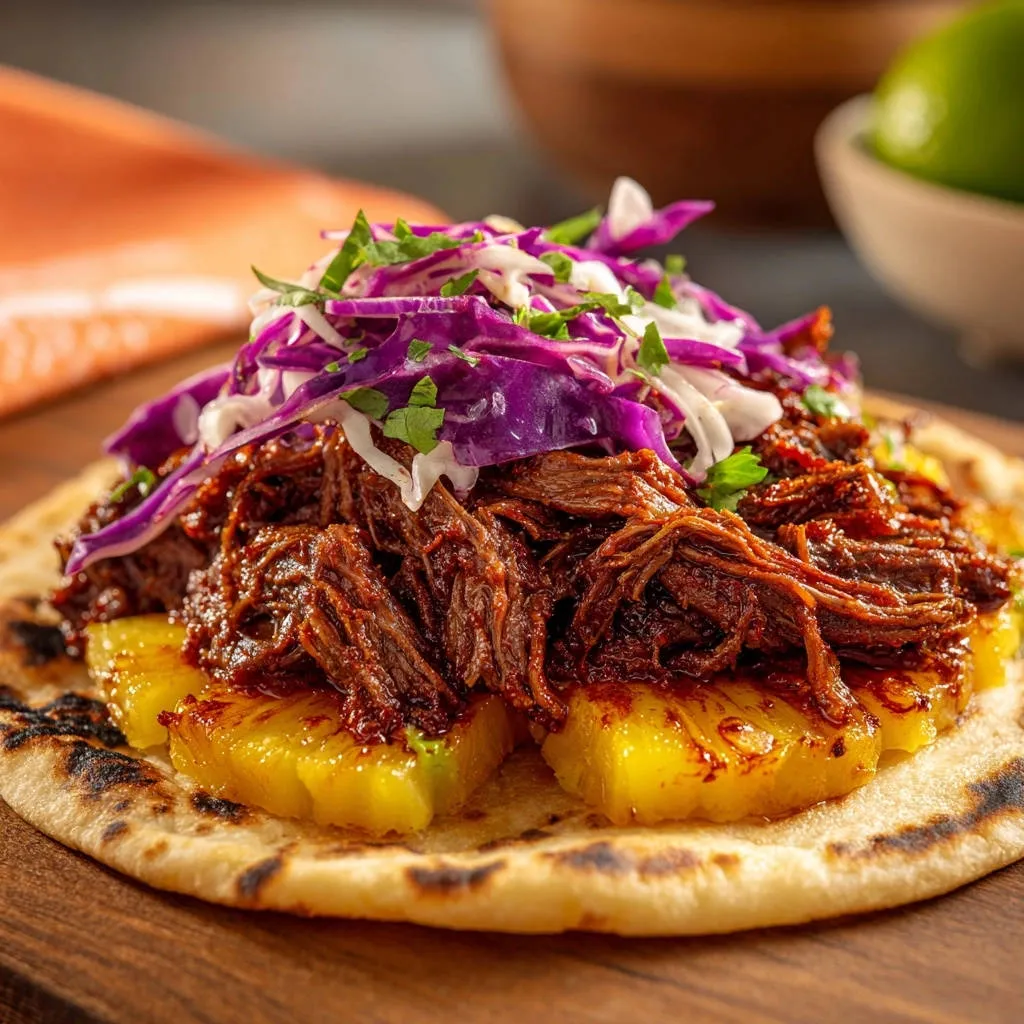
The combination of cumin, oregano, and smoked paprika provides the classic Mexican/Tex-Mex aroma, while chipotle peppers in adobo sauce deliver smokiness and necessary heat.
Beef broth ensures the braise remains liquid enough for several hours of cooking without drying out.
Essential Tools for Oven Braising Success
Achieving the perfect braise requires the right equipment to maintain consistent heat and depth of flavor.
For an even richer, tender braised perfection, explore our shredded beef barbacoa recipe.
Heavy-Bottomed Pot or Dutch Oven: Necessary for heat retention and even searing on the stovetop and slow cooking in the oven.
Sturdy Roasting Pan/Cutting Board: For easy transfer and the shredding process after cooking.
Tongs or Two Large Forks: Essential for handling the meat during searing and for the final shredding step.
Step-by-Step: From Sear to Simmer (Recipe Steps 1-3)
Follow these initial steps precisely to build the foundational flavors before we introduce the unique moistening technique.
-
Prepare and Sear the Beef: Pat the beef roast completely dry and season heavily with salt and pepper.
The dry surface is critical for developing a deep, dark crust-this is where the initial layer of flavor, known as the Maillard reaction, is built.
Sear the beef on all sides until a deep brown crust has formed. Remove the beef and set aside, reserving the rendered fat.
-
Build the Flavor Base and Aromatics: Reduce heat and sauté the chopped onion until softened. Stir in the minced garlic and dried spices, cooking only until fragrant (about 60 seconds).
Be careful not to burn the garlic or spices; burnt aromatics will result in a bitter final sauce.
-
Create the Braising Liquid and Slow Cook: Stir in the tomato paste and cook it down for two minutes. Add the chipotle peppers and beef broth, bringing the mixture to a simmer.
Return the seared beef to the pot. Cover tightly and transfer to an oven preheated to 325°F.
Braise for 3 to 4 hours, monitoring occasionally, until the meat is completely fork-tender. Time is less important than texture here.
The Moist Shreds Technique: Guaranteeing Juicy, Glistening Beef Every Time (Recipe Step 4)
This is the secret weapon against dry meat. Do not skip or rush this process of concentrating the sauce and saturating the meat.
Post-Cook Separation: Why We Shred Outside the Pot
Carefully remove the tender beef from the pot and place it on a large cutting board. Leave the braising liquid behind. Shred the beef thoroughly using two forks.
Shredding the beef while it is hot allows the meat fibers to separate easily, and separating the meat from the liquid prevents the shredded beef from absorbing only a thin, watery sauce.
Reducing the Liquid: Creating the ‘Concentrated Flavor Sauce’
Return the pot of braising liquid to high heat and bring it to a vigorous boil. Boil rapidly, stirring frequently, until the liquid has reduced by approximately half and thickened into a rich, concentrated sauce.
This reduction step intensifies all the initial flavors-the spices, tomato, and chipotle-resulting in a deeply flavored sauce that coats, rather than just wets, the meat.
Saturation is Key: How to Properly Toss and Finish the Meat
Return the shredded beef directly into the reduced sauce. Toss aggressively until every single strand of meat is completely saturated and glistening.
This process locks the intense moisture and flavor into the beef fibers, which is the only way to achieve truly “restaurant-style” juicy shredded beef.
The Perfect Bite: Balancing Flavors with Fresh Toppings and Assembly (Recipe Step 5)
The best shredded beef tacos require contrast. The assembly relies on balancing the deep, smoky heat of the meat with fresh, bright ingredients.
Complementary Recipes
Round out your taco night with these dishes.
- For a creamy, cool addition that complements the savory beef, try the Southwestern Macaroni Salad.
- Add a touch of sweet heat with this Hot Honey Jalapeño Cornbread, perfect alongside your shredded beef tacos.
Quick Charring: Warming Tortillas for Best Texture
Lightly charring the corn tortillas on a dry skillet or griddle is essential. This not only warms them but activates the corn flavor and prevents them from tearing under the wet beef.
Alternatively, you can briefly warm the tortillas in a slightly damp cloth in the microwave if you are short on time.
The Sweet and Crunchy Contrast: Pineapple and Cabbage
The grilled pineapple slice provides essential acidity and sweetness, cutting through the richness of the smoky beef.
Finely shredded red cabbage offers a necessary crunch and cooling element, contrasting the tender, warm meat.
Chef’s Corner: Pro Tips for Troubleshooting and Customization
Adjusting the Heat Level: Strategies for Taming the Chipotle
If you prefer less heat, remove the seeds and veins from the chipotle peppers before adding them to the braising liquid. Alternatively, use only the adobo sauce and omit the peppers entirely.
For additional heat, stir in a pinch of cayenne pepper during the final reduction stage.
Make-Ahead Mastery: Cooking Now, Eating Later
The shredded beef is fantastic for meal prepping. Cook the recipe entirely, including the saturation step, then cool and store the beef in an airtight container for up to 4 days.
For best results, reheat the beef slowly on the stovetop with a tablespoon or two of extra beef broth to ensure it remains moist.
Storage and Freezing Best Practices
The shredded beef freezes extremely well. Portion the completely cooled meat and sauce into freezer-safe bags, removing as much air as possible.
It can be frozen for up to three months. Thaw overnight in the refrigerator before reheating.
Burning Questions Answered: FAQs About Shredded Beef Tacos
Can I make this in a slow cooker or instant pot?
Yes, you can adapt this recipe. For a slow cooker, follow the sear and flavor-building steps on the stovetop, then transfer to the cooker and cook on low for 6-8 hours.
You must still perform the liquid reduction step separately on the stovetop before returning the shredded beef to the sauce; do not reduce the liquid in the slow cooker itself.
What is the difference between barbacoa and this shredded beef?
Barbacoa traditionally refers to a method (cooking the meat low and slow, often underground or wrapped in leaves) and typically uses different cuts of meat like cheek or shoulder.
While both are shredded, our recipe emphasizes the smoky chipotle flavor and uses the critical final reduction step for maximum moisture control, resulting in a distinct texture and flavor profile tailored for these savory tacos.
For equally delightful results with crispy tortillas, consider trying quesabirria tacos too.
What substitutions work if I don’t have tomato paste?
While tomato paste provides depth and acidity, you can substitute it with 1/4 cup of good quality canned crushed tomatoes, though you may need to cook them down a bit longer to concentrate the flavor before adding the broth.
Ready to Impress? Share Your Restaurant-Style Shredded Beef Tacos Masterpiece!
Mastering the technique of perfectly juicy shredded beef is a game-changer for taco night, burritos, nachos, and more. Once you experience the difference that intense sauce reduction makes, you’ll never settle for dry, stringy meat again.
We encourage you to try this recipe for Restaurant-Style Shredded Beef Tacos and tell us what you paired it with! Share your photos and flavor ideas below.
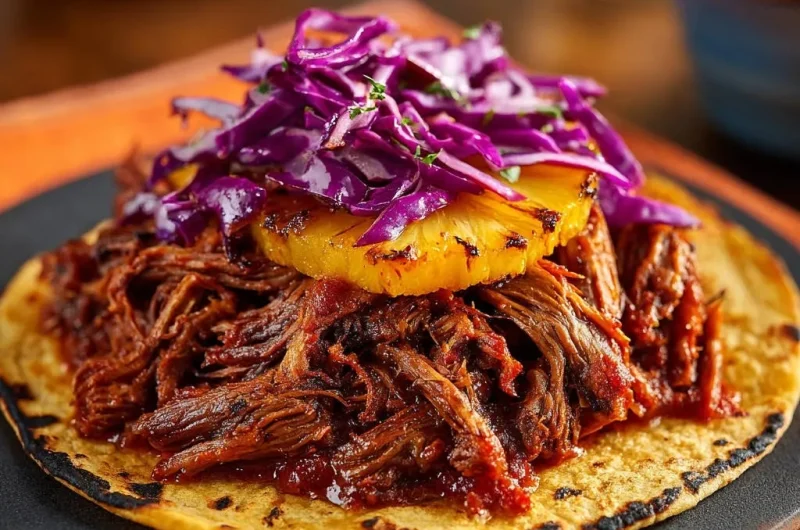
Shredded Beef Tacos
Course: Main CourseCuisine: MexicanDifficulty: medium12
tacos20
minutes4
hours450
kcal260
minutesThe secret to incredibly juicy, never-dry shredded beef tacos is mastering the technique of returning the shredded meat directly to a reduced, concentrated sauce. This recipe features deep smoky flavors from chipotle and cumin, guaranteeing restaurant-quality results at home.
Ingredients
For the Shredded Beef
3 pound boneless beef chuck roast
1 large yellow onion roughly chopped
4 cloves garlic minced
1 can (7 ounces) chipotle peppers in adobo sauce
1 cup beef broth
1/4 cup tomato paste
2 tablespoons cumin
1 tablespoon dried oregano
1 tablespoon smoked paprika
2 teaspoons salt
1 teaspoon black pepper
3 tablespoons vegetable oil
For the Assembly
12 corn tortillas
1 small head of red cabbage finely shredded
4 pineapple rings grilled or pan-seared
Directions
- Prepare and Sear the Beef
- Pat the beef roast completely dry and season heavily with salt and pepper. Heat 3 tablespoons of vegetable oil in a large Dutch oven or heavy pot over high heat. Sear the beef on all sides until a deep brown crust has formed. Remove the beef and set aside.
- Build the Braising Liquid
- Reduce the heat to medium. Add the chopped onion to the pot and sauté until softened, about 5 minutes. Stir in the minced garlic, cumin, oregano, and smoked paprika. Cook for 1 minute until fragrant. Stir in the tomato paste, cooking for 2 minutes to deepen its flavor.
- Slow Cook
- Add the chipotle peppers (use fewer if you prefer less heat) and the beef broth. Bring the mixture to a simmer. Return the seared beef roast to the pot. The liquid should cover at least half of the meat; add more broth or water if necessary. Cover the pot tightly and transfer to an oven preheated to 325 degrees F. Cook for 3 to 4 hours, or until the beef is incredibly fork-tender and easily falls apart.
- The Moist Shreds Technique (Pain Point Solution)
- Carefully remove the tender beef from the pot and place it on a large cutting board. Leave the braising liquid in the pot. Shred the beef thoroughly using two forks.
- Return the pot containing the braising liquid to the stove and bring it to a vigorous boil over high heat. Boil rapidly, stirring occasionally, until the liquid has reduced by approximately half and thickened into a concentrated, rich sauce. This should take 10 to 15 minutes.
- Return the shredded beef directly into the reduced sauce. Toss aggressively until every single strand of meat is completely saturated and glistening with the thick sauce. This step locks in the flavor and guarantees the beef will be moist, not dry or stringy. Taste and adjust seasoning if needed.
- Prepare Toppings and Assemble
- Lightly char the corn tortillas on a dry skillet or griddle for 30 seconds per side. Place a generous scoop of the saucy shredded beef onto a warm tortilla. Top with a grilled pineapple slice and a handful of the shredded red cabbage. Serve immediately.
Notes
- The key to moist beef is reducing the braising liquid by half after cooking and then fully saturating the shredded meat in the thick sauce.