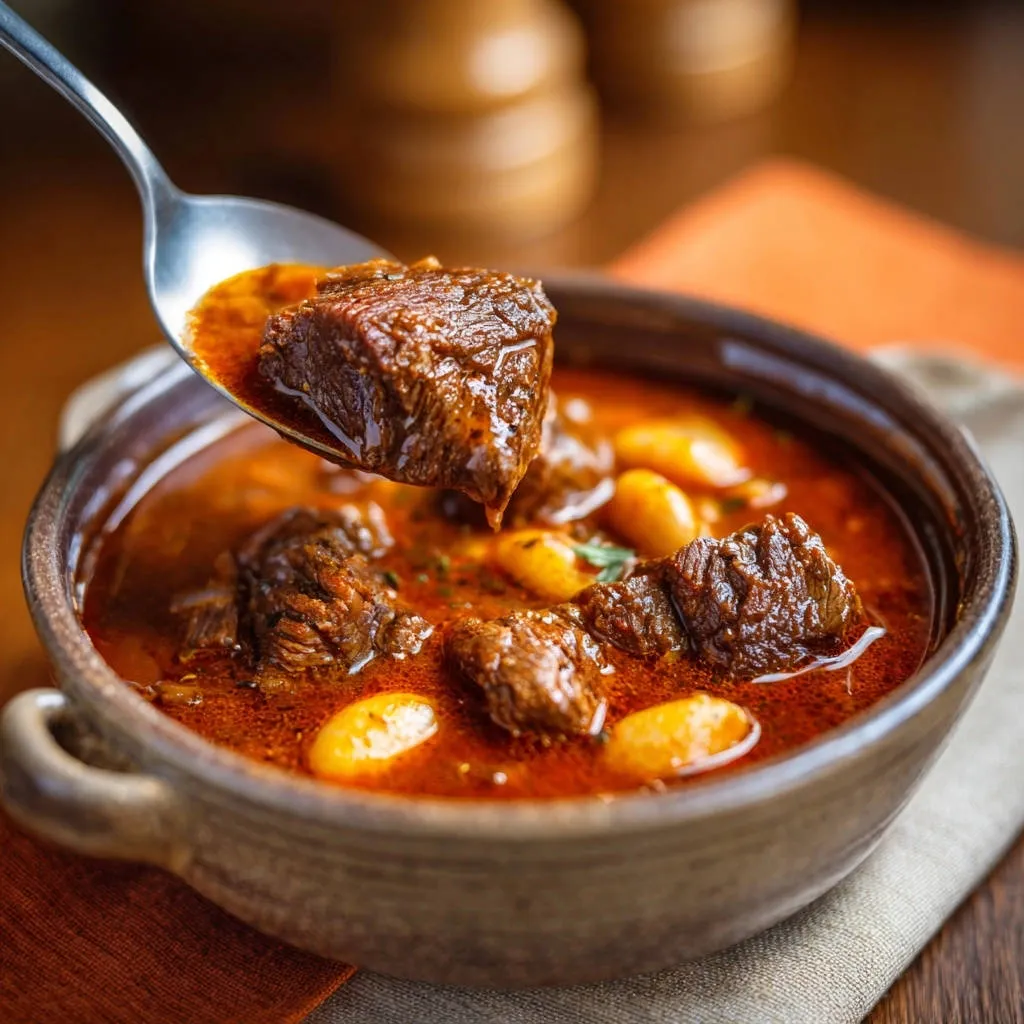
There is nothing worse than waiting hours for a hearty stew only to bite into dry, chewy meat. This technique, focusing on a perfect initial sear followed by a 300°F slow braise, guarantees the beef achieves luxurious, melt-in-your-mouth tenderness.
Mastering this simple method ensures your Rich Beef and White Bean Stew is reliable, deeply flavorful, and supremely satisfying every single time.
The Secret Weapon for Tender Beef Stew (No More Dry Meat!)
Achieving true, fall-apart beef requires patience and understanding of how muscle fibers and connective tissues react to heat.
For that same tender texture, explore a hearty beef and eggplant stew.
This recipe avoids the common mistake of high-heat cooking and relies instead on proven techniques that focus on flavor development and gentle collagen breakdown.
Understanding the Power of the Tenderizing Sear
Searing beef at a very high heat caramelizes the natural sugars and proteins on the surface, creating hundreds of complex flavor compounds that form the foundation of the stew.
This intense, brief heat creates a crust that protects the interior of the beef cubes from losing moisture rapidly, greatly contributing to the final melt-in-your-mouth tenderness.
Why Low and Slow is Non-Negotiable for Collagen Breakdown
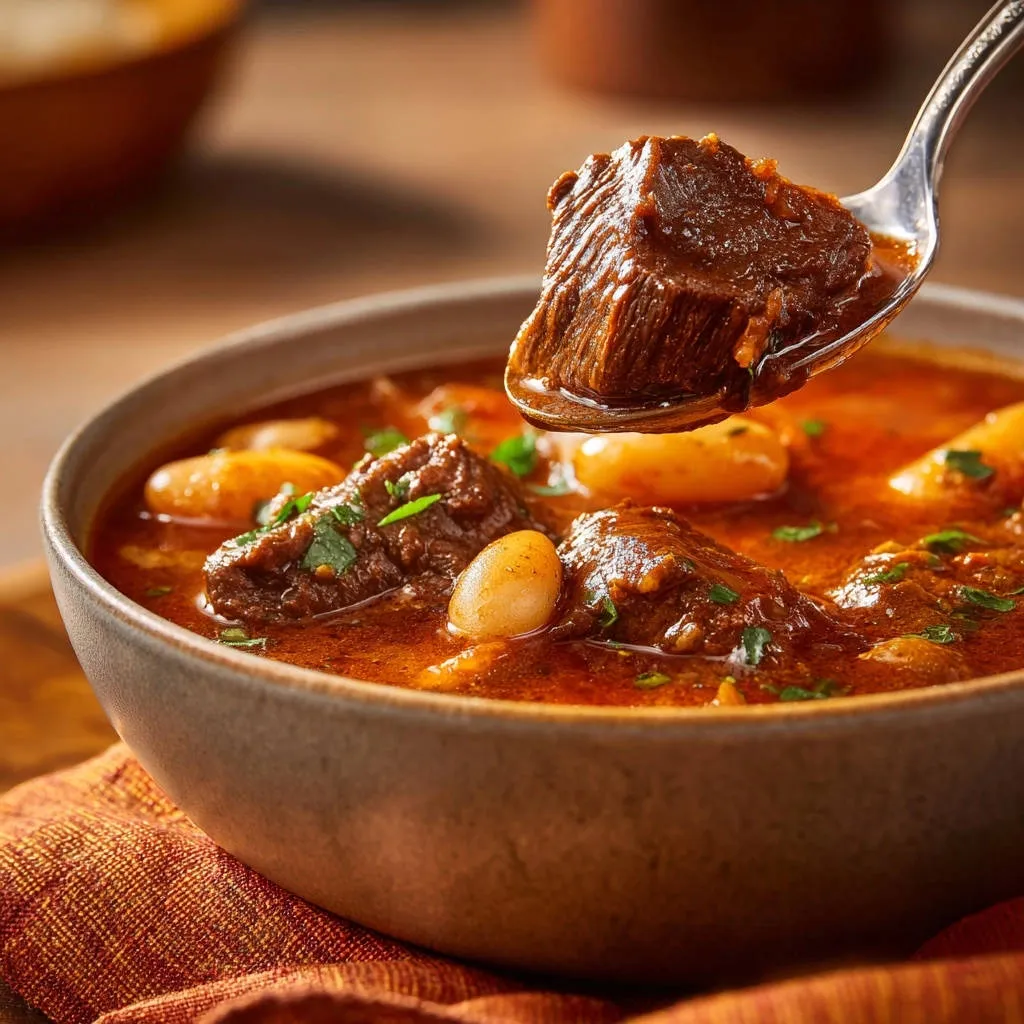
Connective tissue, or collagen, is abundant in cuts like chuck roast and requires sustained, low heat (ideally 300°F) to break down.
When cooked gently over 3 to 3.5 hours, the tough collagen melts into gelatin, enriching the stewing liquid and preventing the meat fibers from drying out, resulting in a succulent texture.
For even deeper tenderness, explore the techniques in slow-braised beef and white bean stew.
The Perfect Balance: Rich Beef and Creamy White Beans
We incorporate cannellini or butter beans late in the cooking process to add a desirable creamy texture and heft without sacrificing the structure of the beans.
Their subtle, earthy flavor is the perfect counterpoint to the deep, rich intensity of the slow-braised beef and tomato base, creating a truly hearty stew.
Building the Rich Flavor Profile: Ingredients Explained
Choosing the Right Cut: Beef Chuck Roast
The best cuts for stew are those rich in connective tissue.
Chuck roast, while tough initially, breaks down beautifully during the long braise, resulting in the desired “melt-in-your-mouth” texture.
Essential Aromatics and Spices
Smoked paprika provides depth and warmth that sets this stew apart from traditional versions.
Oregano complements the beef and tomato base perfectly, adding an earthy Mediterranean note.
Toasting Tomato Paste: The Crucial Umami Boost
Cooking the tomato paste for two minutes before adding liquids eliminates the metallic taste while deepening its color and concentrating the powerful umami flavor it provides to the broth.
Selecting and Preparing the White Beans
Cannellini or butter beans hold their shape well, but it is essential to drain and rinse canned beans thoroughly to remove excess sodium and starchy liquid before adding them to the stew.
Preparing for Perfection: Essential Tools and Prep
Having the right equipment ensures even cooking and allows the braise to develop its full flavor potential.
The Power of the Dutch Oven
A heavy-bottomed Dutch oven provides superior heat retention and distribution, which is necessary for achieving a uniform sear and a gentle, consistent braise.
Why a Sturdy Spatula is Necessary
Use a heatproof spatula or wooden spoon designed for heavy-duty cooking; you’ll need it to scrape up the fond (brown bits) after searing the beef.
Mastering the Braise: Step-by-Step Rich Beef and White Bean Stew
Prepare and Season the Beef
Start by patting the beef cubes completely dry with paper towels. Residual moisture prevents searing, so this step is crucial for flavor development.
Season the meat generously with salt and pepper immediately before searing.
Executing the Tenderizing Sear
Heat the oil until shimmering over high heat. Sear the meat in small, uncrowded batches until deeply caramelized on all sides (2-3 minutes per batch).
If you crowd the pot, the temperature drops, and the meat steams instead of searing, compromising the final texture.
Building the Aromatic Base
Reduce the heat to medium-low. Cook the onion until soft and translucent before adding the garlic and dried spices.
Cooking the spices briefly (about 1 minute) “blooms” them, releasing their full essential oils into the fat before liquid is added.
Developing the Deep Sauce
Stir in the tomato paste and cook, stirring frequently, for 2 minutes. This crucial step toasts the paste, deepening its color and eliminating any harsh, metallic notes.
Setting Up the Long Simmer
Return the seared beef and its juices to the pot. Pour in the broth and crushed tomatoes, and add the bay leaf.
Bring the stew just to a boil, then immediately reduce the heat to the lowest possible setting-the temperature control is key here.
The Low and Slow Lock-In (Braising)
Cover the Dutch oven tightly. Braise gently for 3 to 3.5 hours at 300°F in the oven, or on the stovetop on the lowest possible setting, until the beef shreds easily.
Do not rush this phase. The low temperature allows the connective tissue to slowly dissolve, guaranteeing zero dryness in the finished Rich Beef and White Bean Stew.
Finishing Touches and Serving
Stir in the rinsed white beans during the last 30 minutes of cooking to heat them through without allowing them to break down.
Before serving, remove the bay leaf, taste, and adjust the seasoning with salt and pepper as needed for maximum flavor impact.
Chef’s Corner: Guaranteeing Fall-Apart Beef and Perfect Texture
Achieving the Ideal Sear: The Finger Test
Before placing the beef, ensure the oil is hot enough. If a piece of meat sizzles violently but evenly, the temperature is right. If it smokes or burns, it’s too high. If it just sits there, it’s too low.
The Role of Acidity and Salt in Tenderness
The small amount of acid from the tomato paste and crushed tomatoes helps tenderize the meat fibers. Ensure you season generously before the sear-don’t wait until the end.
Why Oven Braising Often Beats Stovetop
The oven offers 360-degree heat, ensuring truly even, low temperatures for the entire surface of the stew, whereas a stovetop element can sometimes create hot spots at the bottom.
Troubleshooting Your Stew: Common Questions Answered
Help! My Beef Is Still Tough After 3 Hours. What Went Wrong?
Tough meat almost always indicates the stew temperature was too high. The liquid must be barely simmering, not actively bubbling. Cover the pot and drop the oven temperature slightly, or ensure your stovetop setting is truly on its lowest possible heat for the braise.
Continue cooking until the internal temperature of the meat rises slowly and achieves tenderness, which may take another hour or more depending on heat consistency.
My Rich Beef and White Bean Stew Is Too Thin. How Do I Thicken It?
Remove the lid during the last 30 minutes of cooking to allow some liquid to reduce naturally. If it is still too thin, scoop out about 1/2 cup of the white beans and mash them with a fork, then stir them back in. The starch acts as a natural thickener.
Can I Make This Stew Gluten-Free?
This Rich Beef and White Bean Stew recipe is naturally gluten-free as it contains no flour or thickeners. Always ensure your beef broth is certified gluten-free if catering to strict dietary needs.
Serving, Storing, and Elevating Your Comfort Classic
The Best Accompaniments for White Bean Stew
This hearty stew is excellent served simply over a thick slice of crusty bread to soak up the juices, or alongside a generous scoop of creamy mashed potatoes or polenta.
Complementary Dishes
To round out your meal, consider these dishes that pair well with hearty beef stews.
- For a bright contrast to the stew’s richness, try these Spicy Jalapeño Marinated Carrots, offering a tangy kick.
- Add a fresh element with an Arugula and Seared Pear Salad, bringing a peppery bite and sweet fruit notes.
A simple side salad dressed with vinaigrette offers a bright, acidic contrast to the richness of the beef.
Make-Ahead and Freezing Instructions
This Rich Beef and White Bean Stew is a fantastic make-ahead meal; the flavors deepen significantly overnight. Store it in an airtight container in the refrigerator for up to 4 days.
To freeze, cool the stew completely, then transfer it to freezer-safe containers, leaving about an inch of headspace. It can be frozen for up to 3 months. Thaw overnight in the refrigerator before gently reheating on the stovetop.
Ready to Impress? Share Your Rich Beef and White Bean Stew Masterpiece!
This Rich Beef and White Bean Stew is more than just a meal; it’s a cold-weather ritual built on patience and proven technique. By mastering the high-heat sear and the low, slow braise, you guarantee a tender, flavorful experience every time.
Try this recipe this week and share your success with us. You’ll quickly find that this technique for melt-in-your-mouth beef will become your new go-to method for any hearty stew.
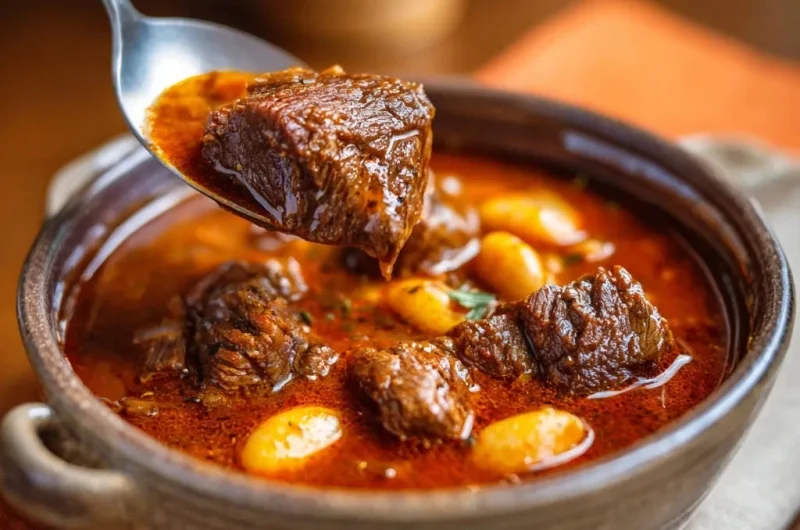
Beef and White Bean Stew
Course: Soups-StewsCuisine: InternationalDifficulty: medium6
servings20
minutes3
hours550
kcal240
minutesThis recipe guarantees fall-apart tender beef every time by using a critical initial searing technique. Combined with savory tomato, smoked paprika, and hearty white beans, this low-and-slow braised stew is the ultimate comfort meal.
Ingredients
2.5 pounds beef chuck roast, cut into 1.5 inch cubes
2 tablespoons vegetable oil, divided
1 large yellow onion, diced
4 cloves garlic, minced
1 tablespoon smoked paprika
1 teaspoon dried oregano
1/4 teaspoon cayenne pepper (optional, for heat)
1 (6 ounce) can tomato paste
4 cups beef broth (low sodium)
1 (15 ounce) can crushed tomatoes
1 (15 ounce) can cannellini beans or butter beans, drained and rinsed
1 bay leaf
Salt and black pepper to taste
Fresh parsley, chopped (for garnish)
Directions
- Prepare the Beef: Pat the beef cubes completely dry using paper towels. Season generously all over with salt and black pepper. This step is critical for a great sear.
- The Tenderizing Sear: Heat 1 tablespoon of the vegetable oil in a large Dutch oven or heavy-bottomed pot over high heat until shimmering hot. This is the step that guarantees tenderness: Sear the meat in small batches, ensuring there is space between the cubes and the pan temperature does not drop. Do not crowd the pan. Sear on all sides until deep brown and caramelized, about 2 to 3 minutes per batch. Remove the browned beef to a clean plate and set aside.
- Build the Base: Reduce the heat to medium-low and add the remaining 1 tablespoon of oil to the pot. Add the diced onion and cook until softened and translucent, about 5 minutes. Add the minced garlic, smoked paprika, oregano, and cayenne (if using). Cook for 1 minute until fragrant.
- Develop the Sauce: Stir in the tomato paste and cook for 2 minutes, allowing it to deepen in color and flavor. This toasts the paste and eliminates the metallic taste.
- Braise and Simmer: Return the seared beef and any accumulated juices to the pot. Pour in the beef broth and crushed tomatoes. Add the bay leaf. Bring the stew to a boil, then immediately reduce the heat to the lowest setting possible so the stew is barely simmering.
- The Low and Slow Lock-In: Cover the Dutch oven tightly and place it in the oven (if your pot is oven-safe) set to 300 degrees F, or continue to simmer very gently on the stovetop. Braise for 3 to 3.5 hours, or until the beef is impossibly tender and shreds easily with a fork. The low temperature and long cook time are essential for collagen breakdown, ensuring zero dryness.
- Finish and Serve: Stir in the rinsed white beans during the last 30 minutes of cooking, just enough time to heat them through without letting them become mushy. Remove the bay leaf. Taste and adjust seasoning with additional salt and pepper as needed. Garnish with fresh parsley before serving.
Notes
- The long, slow braise (300°F oven or lowest stovetop setting) is essential for achieving melt-in-your-mouth tender beef.