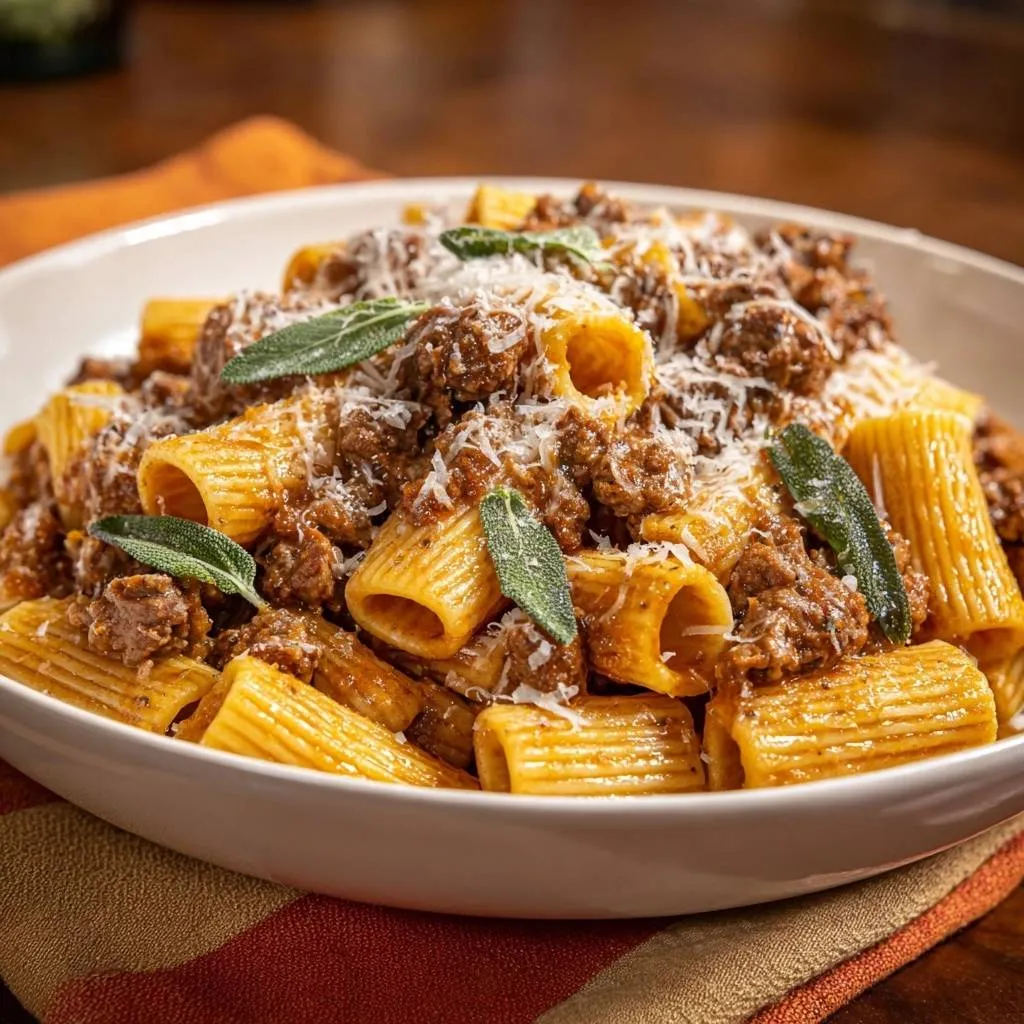
Why This Rigatoni with Beef Ragu Recipe Succeeds
Ever ended up with dry, crumbly beef in your ragu? Most home cooks do because they skip the high-heat sear. This rigatoni with beef ragu and sage fixes that in just 30 minutes. You get juicy, tender meat with a restaurant crust, no hours of simmering needed.
Here’s why it works so well. The hot-pan trick creates a Maillard reaction that locks in juices. Meanwhile, fresh sage adds an earthy lift to balance the tomatoes. In addition, the quick braise tenderizes everything fast.
I’ve burned through too many pots of tough ragu before nailing this. The real secret? Let the beef sear undisturbed for 2-3 minutes until a deep brown crust forms. That single step changes rigatoni with beef ragu forever. Oh man, the first bite melts in your mouth with that savory depth.
Key Ingredients for Juicy Beef Ragu Sauce
You don’t need fancy stuff for killer rigatoni with beef ragu and sage. However, each ingredient pulls its weight. Ground beef gets seared hot for tenderness, crushed tomatoes braise it quick with their acidity, and fresh sage infuses earthiness.
Olive oil heats to shimmering for the crust. Rigatoni’s tubes trap every bit of sauce. Finally, Parmesan brings umami that ties it all together. Salt and pepper go on early to season the meat right.
Ground Beef Selection for Tender Ragu
Grab 1 pound of 80/20 ground beef. That fat ratio keeps it juicy during the sear. Lean meat dries out fast, so don’t skimp here. Therefore, your rigatoni with beef ragu stays fork-tender.
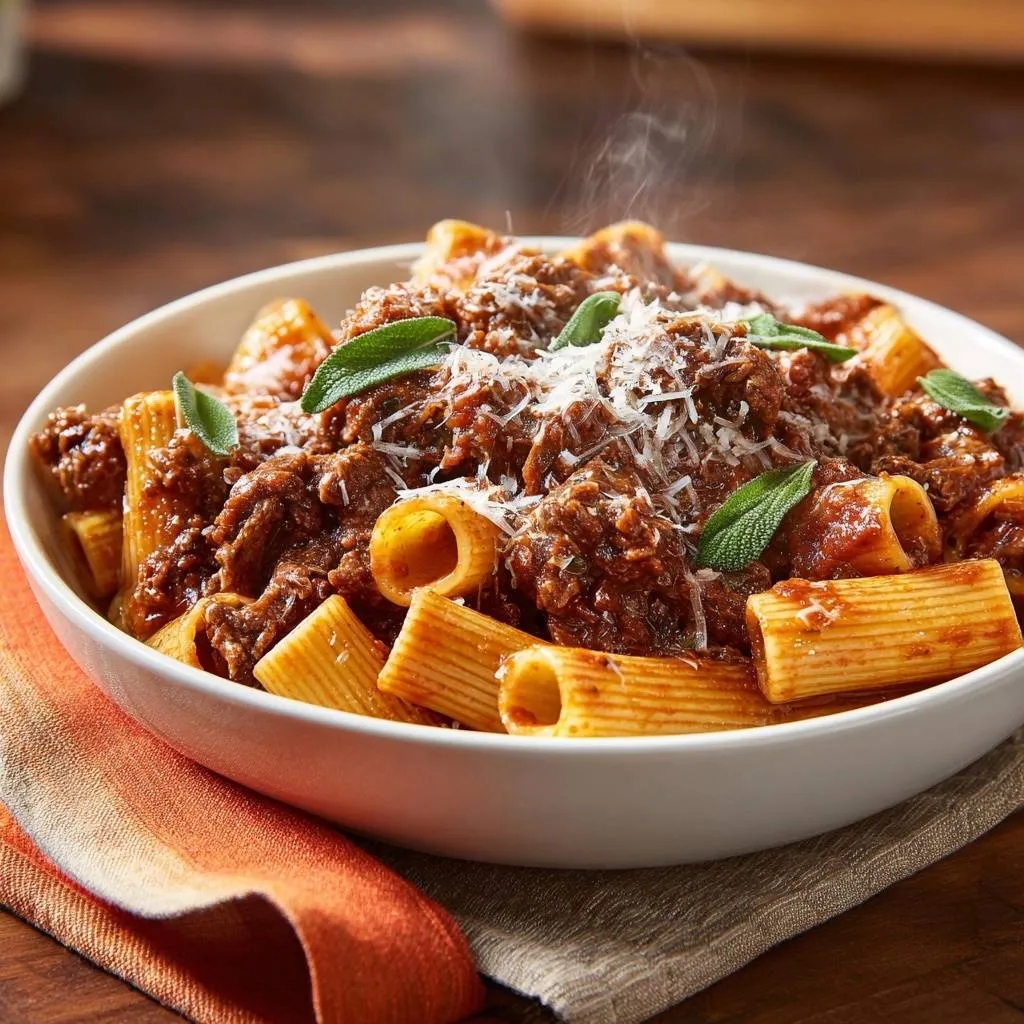
Fresh Sage Leaves in Beef Ragu
Use 12 fresh sage leaves, split six for cooking and six for frying. They release earthy notes that cut tomato acidity perfectly. Dried sage works in a pinch, but fresh crisps up gorgeous for garnish.
Crushed Tomatoes for Quick Braise
One 28-ounce can of crushed tomatoes does the trick. Their acids tenderize beef fast, way better than fresh for this speed. In addition, they thicken into a rich sauce without effort.
Science of Hot-Pan Sear in Beef Ragu
The magic in this rigatoni with beef ragu and sage comes from the sear. Heat olive oil until it shimmers and ripples. Then spread beef thin and let it sit. A deep brown crust forms, trapping juices inside.
Low heat just steams the meat dry. However, high heat triggers proteins to denature right. That leads to tenderness after a short braise. You’ll smell the savory shift as it happens.
Pro tip: If no crust shows after 3 minutes, your pan wasn’t hot enough. Crank it up next time for that juicy payoff.
Maillard Reaction for Juicy Beef
At 300°F plus, sugars and amino acids in beef react. This Maillard magic browns the surface and boosts flavor. Therefore, your ragu tastes deep and meaty, not bland.
Why Shimmering Oil Prevents Dryness
Shimmering oil ripples like it’s dancing. It hits the right temp for instant crust on thin beef layers. Don’t crowd, or it steams instead. Visual cue: Look for ripples before adding meat.
Equipment Choices for Perfect Ragu
A large skillet rules for even searing in rigatoni with beef ragu. Cast iron holds heat steady, perfect for that crust. You’ll also need a wooden spoon to break up beef without scratching.
Grab a big pot for pasta, too. Reserve that starchy water for sauce magic. For sage, a small pan crisps them fast. Simple tools, big results.
Skillet Size for Beef Ragu Searing
Go 12-inch minimum. It fits 1 pound without crowding. Smaller pans steam the beef, killing juiciness. Therefore, sear in batches if needed.
Step-by-Step: Searing Beef for Ragu Base
Start with salted water in a large pot. Boil rigatoni to al dente, about 10-12 minutes. Reserve 1/2 cup pasta water; it emulsifies later.
Meanwhile, heat 1/4 cup olive oil in your skillet over medium-high until shimmering. Add ground beef in a thin layer. Season with salt and pepper right away.
Let it sear undisturbed 2-3 minutes. You’ll see a deep brown crust form, and the smell hits savory. That’s your juiciness locked in.
Boiling Rigatoni to Al Dente
Follow package times, but taste at 10 minutes. It should have a bite. Reserve that water; it’ll save a thick sauce later.
Step-by-Step: Building and Braising Beef Ragu
Break up the beef with a wooden spoon. Cook 3-4 more minutes, stirring now and then, until browned through. Add six sage leaves; stir 20 seconds for earthy infusion.
Pour in crushed tomatoes. Scrape those browned bits off the pan bottom. Reduce to medium-low and simmer 15-20 minutes. The sauce thickens, beef tenderizes, and aromas fill your kitchen.
If it gets too thick, stir in pasta water one tablespoon at a time. Taste and adjust salt.
For a truly thick, glossy sauce on your rigatoni, explore rigatoni with beef ragu techniques.
Deglazing for Rich Ragu Flavor
Tomatoes lift every stuck bit into the sauce. Those caramelized scraps add umami depth. Don’t skip this; it’s flavor gold.
Step-by-Step: Combining Rigatoni with Beef Ragu
Add drained rigatoni to the skillet. Toss over low heat 1-2 minutes. The pasta water helps create a glossy coat on every tube.
You’ll hear a gentle sizzle and see sauce cling perfectly. That’s emulsification at work. Pro tip: Low heat prevents sticking.
Crisping Sage Leaves for Ragu Garnish
Heat 2 tablespoons oil in a small pan over medium-high. Fry remaining six sage leaves 10-15 seconds per side. They crisp to golden, releasing a nutty scent.
Drain on paper towels. The crunch contrasts the tender ragu beautifully. Sprinkle on top for that wow finish.
Avoiding Dry Beef in Ragu Builds
Crowding the pan steams beef instead of searing it. Over-stirring before crust? You lose juices. Cooking past brown dries it out fast.
Fixes are simple. Sear hot and undisturbed first. Stop browning at no pink. Then braise gently. If overcooked, pasta water revives moisture.
Another pitfall: Skipping deglaze. Those bits build flavor, so scrape well.
Fixing Overcooked Beef Ragu
Signs: Tough, crumbly texture. Add pasta water or broth while simmering. It rehydrates and tenderizes in minutes.
Pan Crowding in Beef Ragu
If your skillet’s small, cook beef in two batches. Each gets a proper crust. Wait between batches to reheat oil.
Flavor Variations on Beef Ragu Sauce
Swap ground beef for turkey or lamb. Both work with the sear. San Marzano tomatoes amp sweetness. No fresh sage? Dried oregano gives herbal punch.
Short pastas like penne hold sauce great. For vegan, lentils and mushrooms mimic the texture. Adjust simmer time slightly.
For a similar cozy meal featuring a rich beef ragu, try this cheesy tortellini with beef ragu.
For a similarly satisfying depth, consider exploring this hearty spaghetti bolognese.
Pasta Swaps for Thick Ragu
Orecchiette or pappardelle shine here. Their shapes cup ragu perfectly. Rigatoni’s still king, though.
Make-Ahead Guide for Beef Ragu
Make sauce up to 3 days ahead. Store in fridge airtight. Reheat on stove with a splash of water; it revives gloss.
Freeze sauce up to 3 months in bags. Thaw overnight, then simmer. Don’t freeze pasta; it gets mushy. Weeknight win.
Pairing Sides with Rigatoni Beef Ragu
Keep it simple with a green salad. Arugula’s peppery bite cuts richness. Garlic bread soaks up sauce like a dream.
For Your Next Meal
Round out your pasta experience with these complementary dishes.
- Consider adding some roasted vegetables to your plate with crispy Parmesan roasted zucchini, offering a nice texture contrast.
- For a refreshing counterpoint to the rich ragu, try a vibrant Caprese fusilli salad, bringing in bright, fresh flavors.
Roasted veggies add earthiness. Chianti pairs great with sage and tomatoes. Sparkling cranberry juice refreshes, too.
Rigatoni with Beef Ragu FAQ
Can I Use Dried Sage in Ragu?
Yes, use 1 teaspoon for every 6 fresh leaves. It’s less potent, so add early in the simmer. Fresh still crisps better for garnish, but dried infuses fine.
How to Fix Thick Beef Ragu Sauce?
Stir in reserved pasta water or broth, 1 tablespoon at a time. Heat low while tossing. It emulsifies back to glossy perfection without diluting flavor.
Freezing Rigatoni with Beef Ragu?
Freeze just the sauce in airtight bags up to 3 months. Thaw in fridge, reheat on stove with water. Pasta freezes poorly and turns mushy, so cook fresh.
Substitutes for Ground Beef?
Ground turkey or lamb works great; keep 80/20 fat for juiciness. Plant-based crumbles sear similarly. Adjust salt, as they vary.
Why Sear Beef for Quick Ragu?
The hot sear creates a crust via Maillard reaction. It traps juices inside, preventing dryness. Then the braise tenderizes fast for restaurant results in 30 minutes.
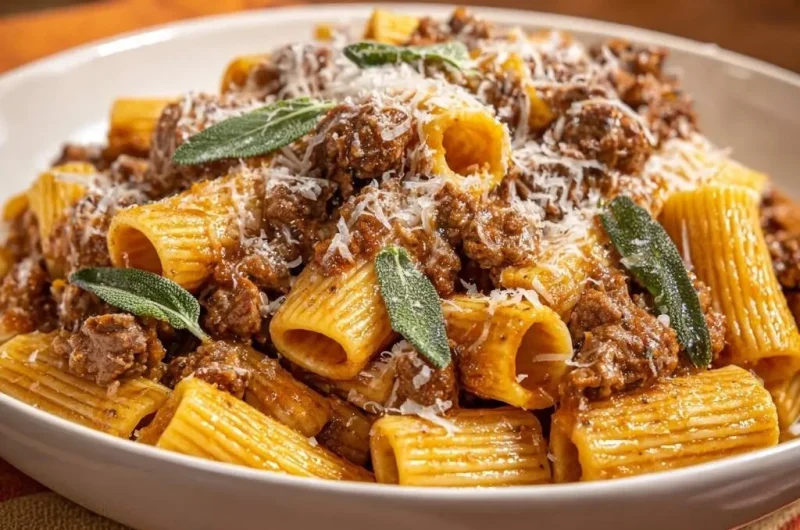
Rigatoni Beef Ragu
Course: Main CourseCuisine: ItalianDifficulty: easy4
servings10
minutes25
minutes650
kcal35
MinutesDry, crumbly beef ruins ragu. This recipe fixes it forever with a hot-pan searing trick that creates a juicy crust and locks in moisture, plus a quick braise for tenderness in just 30 minutes. Restaurant results, home cook easy.
Ingredients
1 pound rigatoni pasta
1 pound ground beef
1 (28-ounce) can crushed tomatoes
1/4 cup olive oil
12 fresh sage leaves (6 for cooking, 6 for garnish)
1 cup grated Parmesan cheese
Salt and black pepper to taste
Directions
- Bring a large pot of salted water to a boil. Cook rigatoni according to package until al dente, about 10-12 minutes. Reserve 1/2 cup pasta water, then drain.
- While pasta cooks, heat olive oil in a large skillet over medium-high heat until shimmering hot (key to no-dry-meat fix: oil must ripple). Add ground beef in a thin, even layer (dont crowd). Season with salt and pepper. Let sear undisturbed for 2-3 minutes until deep brown crust forms on bottom. This high-heat sear creates juices-trapping proteins via Maillard reaction, preventing dryness.
- Break up beef with a wooden spoon. Cook 3-4 more minutes, stirring occasionally, until just browned and no pink remains (stop here to avoid overcooking). Add 6 sage leaves, stir 20 seconds to infuse flavor.
- Pour in crushed tomatoes. Scrape up browned bits (deglaze for flavor). Reduce heat to medium-low, simmer uncovered 15-20 minutes, stirring occasionally, until sauce thickens and beef turns fork-tender. The acidic tomatoes and pan juices braise meat gently, mimicking hours-long cooking. If too thick, add reserved pasta water 1 tablespoon at a time.
- Add cooked rigatoni to skillet. Toss 1-2 minutes over low heat to coat perfectly (pasta water helps emulsify).
- For garnish, heat 2 tablespoons oil in small pan over medium-high. Fry remaining 6 sage leaves 10-15 seconds per side until crisp (watch closely). Drain on paper towel.
- Divide into bowls, top with Parmesan and crispy sage. Serve immediately. Juicy beef guaranteed!
Notes
- Key to juicy beef: Sear undisturbed in hot oil for Maillard crust. Use reserved pasta water to emulsify sauce. Fry sage leaves just until crisp to avoid burning.