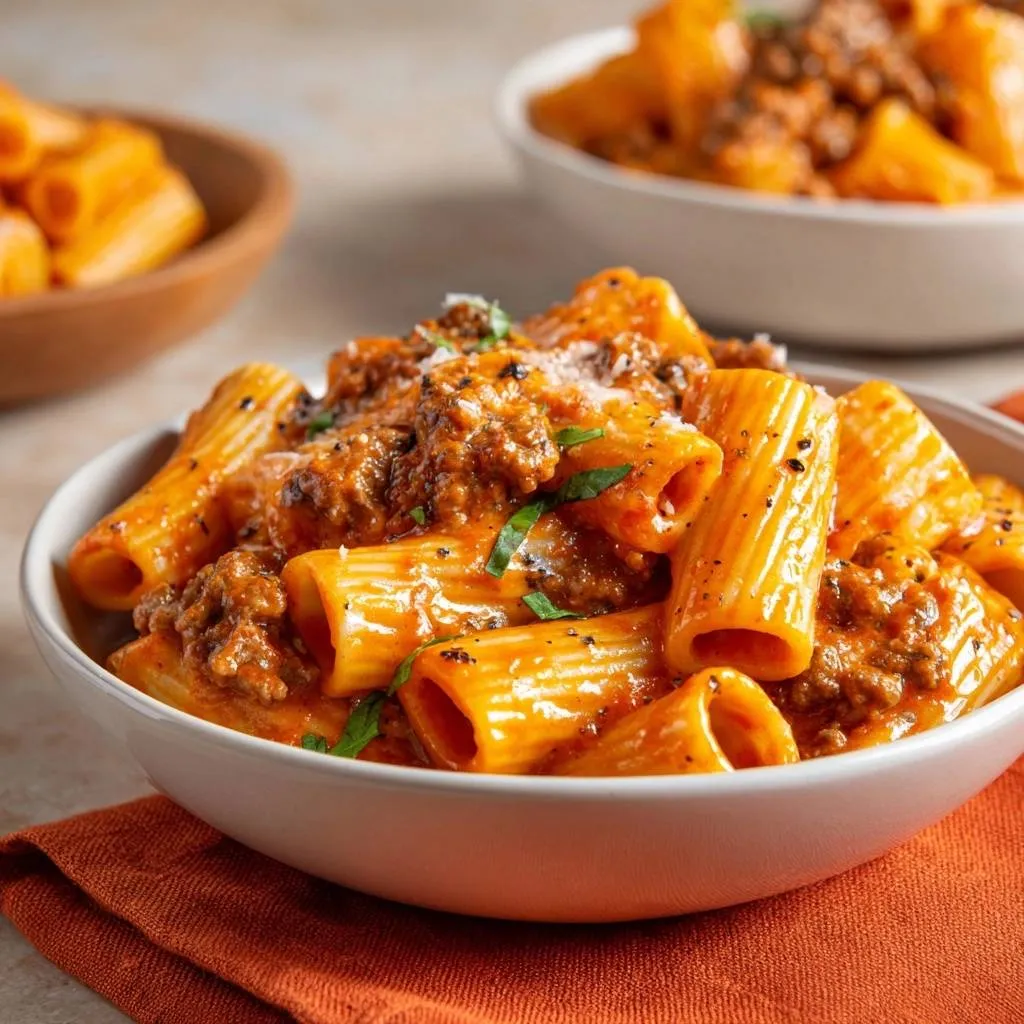
Why This Rigatoni with Beef Ragu Stays Clingy
Picture this: you crave Rigatoni with Beef Ragu, but end up with pasta floating in a watery mess. It happens all the time because most recipes skip the deep browning that renders fat and drives out moisture. However, this version fixes that with a double-reduction method. You’ll have thick, glossy sauce in under 45 minutes.
Therefore, the why boils down to science. Browning beef deeply creates a flavorful base without excess liquid. In addition, simmering tomatoes uncovered reduces them by a third. Finally, tossing with pasta water activates starch for that perfect cling.
Oh man, I’ve ruined plenty of ragus before nailing this. The secret? Render the beef fat fully before tomatoes hit the pan. That one tip prevents separation every time. Trust me, your Rigatoni with Beef Ragu will shine.
Key Ingredients for Non-Watery Beef Ragu
You need just six basics for killer Rigatoni with Beef Ragu. First, 1 pound rigatoni grabs sauce with its ridges. Next, 1 pound ground beef renders fat for richness. Then, a 28-ounce can crushed tomatoes thickens naturally. Don’t forget 2 tablespoons olive oil, salt, pepper, and 1/4 cup fresh basil.
However, quality matters. Fresh basil adds bright pop, unlike dried which tastes muted. In addition, reserve pasta water; its starch emulsifies everything glossy. These picks ensure no watery disasters.
Ground Beef: Fat Rendering Secrets
Grab 80/20 ground beef for Rigatoni with Beef Ragu. The fat renders out moisture during browning, creating a thick base. Therefore, deep color means flavor depth and no separation. Skip lean cuts; they stay watery.
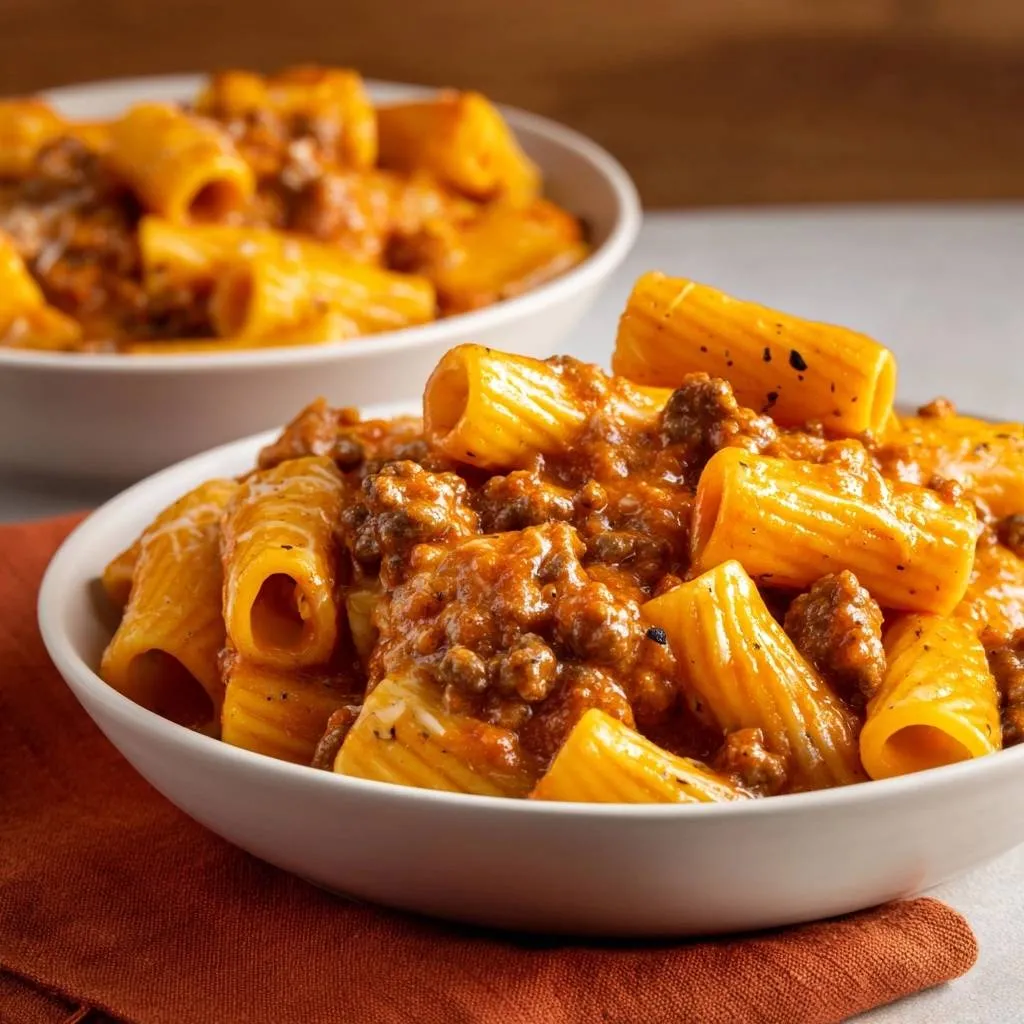
Crushed Tomatoes vs. Puree Choices
Choose San Marzano crushed tomatoes for umami punch in your beef ragu. They have no added water, so they reduce fast. Puree works too, but crushed gives better texture grip on rigatoni.
Pasta Water: The Emulsifier Hero
Boil rigatoni al dente, then reserve 1 cup pasta water. Its starch gelatinizes when tossed with sauce, binding everything glossy. Time it right; overcooked pasta weakens the emulsion.
Science of Double-Reduction in Beef Ragu
The Maillard reaction happens when you brown beef hot and fast for Rigatoni with Beef Ragu. Proteins and sugars react, building nutty flavors and expelling moisture. Therefore, rendered fat coats tomatoes perfectly.
Next, evaporation physics kicks in. Simmer uncovered so water leaves, reducing sauce by a third. No pooling liquid means thick ragu. In addition, pasta starch gelatinizes on low heat, clinging to every ridge.
This beats lazy single-simmer methods. Italian ragu traditions inspire it, simplified for home. You’ll see glossy results that scream pro. Primary keyword: Rigatoni with Beef Ragu mastery achieved.
Browning Beef for Flavor Depth
Medium-high heat renders fat from beef, forming sauce base. Moisture expels as it crisps, preventing wateriness. Stir occasionally for even depth; 8-10 minutes transforms it.
Tomato Reduction Physics
Uncovered simmer evaporates water fast at medium-low. Watch for sauce thickening; no liquid pools after 10 minutes. Stir to hit one-third reduction perfectly.
Equipment Essentials for Perfect Rigatoni Ragu
Grab a wide skillet for evaporation in your Rigatoni with Beef Ragu. It lets steam escape fast. Use a large pot for starchy pasta water too.
A wooden spoon breaks beef finely. No fancy gear needed, but cast iron upgrades browning. Therefore, everyday pans work fine at home.
Phase 1: Perfect Al Dente Rigatoni Base
Bring a large pot of salted water to a boil. Salt it like the sea for flavor. Cook 1 pound rigatoni per package until al dente, about 10-12 minutes.
Reserve 1 cup pasta water before draining. Rigatoni’s ridges excel at gripping beef ragu. However, overcooking makes it mushy; test a noodle early.
Phase 2: Browning Beef for Ragu Foundation
Heat 2 tablespoons olive oil in a large skillet over medium-high. Add 1 pound ground beef, breaking it with a spoon. Season with salt and pepper right away.
Cook 8-10 minutes, stirring occasionally. Look for deep brown bits and rendered fat; that’s your non-watery base. The aroma hits savory heaven here.
Don’t crowd the pan, or it steams instead of browns. This step ensures Rigatoni with Beef Ragu clings perfectly later.
Phase 3: Tomato Simmer and Thickening
Stir in the 28-ounce can crushed tomatoes. Bring to a simmer, then drop to medium-low. Cook uncovered 10 minutes, stirring now and then.
Sauce thickens as it reduces by a third. No liquid pooling? You’re golden. The smell builds cozy Italian vibes.
Pro tip: if too thick early, splash a tablespoon pasta water. This double-reduction nails glossy texture.
Phase 4: Pasta Water Toss for Glossy Finish
Add drained rigatoni to the skillet. Pour in reserved pasta water 1/4 cup at a time. Toss over low heat 2 minutes.
Starch emulsifies into shiny sauce that coats ridges. Stir in 1/4 cup chopped basil last for freshness. Test: sauce should cling, not slide off.
Divide into bowls, crack pepper on top. Hot and ready, this Rigatoni with Beef Ragu shines.
For an even smoother texture, consider the rigatoni with sage beef ragu.
Avoiding Watery Rigatoni with Beef Ragu Pitfalls
Under-browned beef leaves moisture; fix by cooking longer next time. Covered simmering traps steam, so always go uncovered. Excess pasta water dilutes; add gradually.
Wrong pasta like spaghetti slips off sauce. Skip the starch toss, and it separates. Therefore, follow phases exactly for success.
Overcooked Pasta Fixes
Don’t rinse al dente pasta; it kills starch. If overcooked, toss quicker to avoid mush. Next batch, set timer 1 minute early.
Sauce Separation Solutions
Redo browning to render more fat. Simmer extra 5 minutes uncovered. A pasta water splash reheats emulsion smoothly.
Make-Ahead Strategies for Beef Ragu
Cook ragu ahead; flavors deepen overnight. Store sauce separate from pasta in fridge up to 4 days. Freeze ragu in portions for 3 months.
Reheat sauce with a splash of water, then toss fresh pasta. Batch it for easy weeknights. Pro tip: vacuum seal for longer freezer life.
Flavor Twists on Classic Beef Ragu
Swap beef for ground turkey; brown same way for lean twist. Add minced garlic and onion soffritto before tomatoes for depth.
For a different take on this classic, explore a recipe for rigatoni with beef ragu and sage.
Boost with chili flakes for heat, or mushrooms for umami. Try oregano instead of basil. Keep reductions intact for no-watery wins.
Ideal Pairings for Rigatoni with Beef Ragu
Balance richness with a simple green salad drizzled in olive oil. Garlic bread soaks up sauce perfectly. Shave parmesan on top for nutty finish.
Round Out Your Meal
To complement your rich rigatoni, consider these refreshing options.
- Serve alongside a bright Caprese Fusilli Salad for a cool contrast.
- Offer a light starter like Strawberry Balsamic Bruschetta to balance the ragu.
Sparkling grape juice cuts through bold flavors. Plate family-style for warmth. These keep it simple yet elevated.
Rigatoni Beef Ragu Questions Answered
Can I Use Different Pasta for Beef Ragu?
Yes, penne’s ridges work well with beef ragu sauce. Avoid spaghetti; it doesn’t cling. Rigatoni stays king for grip.
How to Fix Watery Beef Ragu Sauce?
Simmer uncovered longer to evaporate liquid. Add pasta water only at toss stage. Deep-browner beef prevents it upfront.
Is Ground Beef Ragu Freezer-Friendly?
Absolutely, freeze sauce in portions up to 3 months. Thaw overnight, reheat with water splash. Pasta fresh each time.
Vegetarian Swap for Rigatoni Beef Ragu?
Use lentils or mushrooms; brown like beef for fat. Extend simmer 5 minutes for flavor. Starch toss keeps it glossy.
Why Reserve Pasta Water in Ragu?
Starch from al dente rigatoni emulsifies sauce into glossy bind. It clings to noodles perfectly. Skip it, and sauce separates.
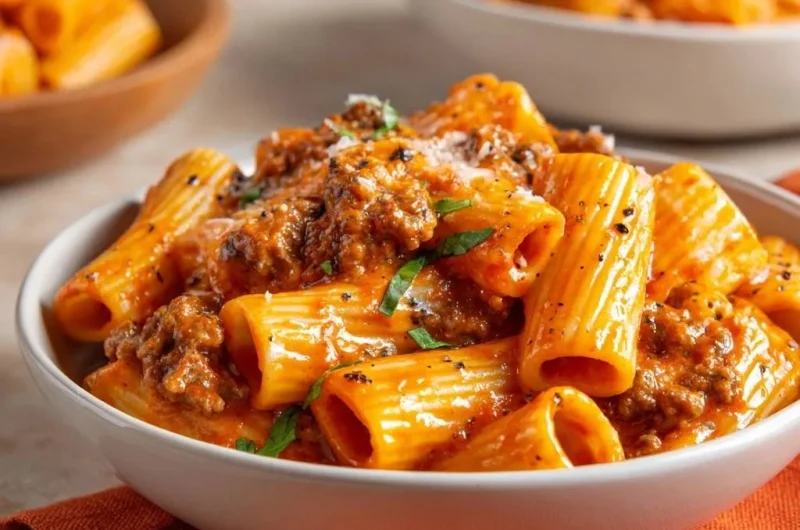
Rigatoni
Course: Main CourseCuisine: ItalianDifficulty: easy4
servings10
minutes25
minutes650
kcal35
MinutesTired of ragu that separates and leaves pasta swimming? This recipe uses a simple double-reduction and pasta water toss to create thick, glossy sauce that clings perfectly to every ridge of rigatoni.
Ingredients
1 pound rigatoni pasta
1 pound ground beef
1 can (28 ounces) crushed tomatoes
2 tablespoons olive oil
Salt and black pepper to taste
1/4 cup chopped fresh basil leaves
Directions
- Bring a large pot of salted water to a boil. Cook rigatoni according to package directions until al dente, reserving 1 cup pasta water before draining.
- While pasta cooks, heat olive oil in a large skillet over medium-high heat. Add ground beef, breaking it up with a spoon. Season with salt and pepper. Cook 8 to 10 minutes, stirring occasionally, until beef is deeply browned and fat is rendered. This renders excess moisture for non-watery base.
- Stir in crushed tomatoes. Bring to a simmer, then reduce heat to medium-low. Simmer uncovered 10 minutes, stirring occasionally, until sauce thickens and reduces by about one-third. No liquid pooling means no watery ragu.
- Add reserved pasta water, 1/4 cup at a time, to skillet with drained rigatoni. Toss over low heat 2 minutes until starch from water emulsifies sauce into glossy coating that grips every noodle.
- Stir in chopped basil. Divide into bowls, crack fresh black pepper on top, and serve hot.
Notes
- Deeply browning the beef renders excess moisture for a non-watery base. Adding pasta water emulsifies the sauce into a glossy coating.