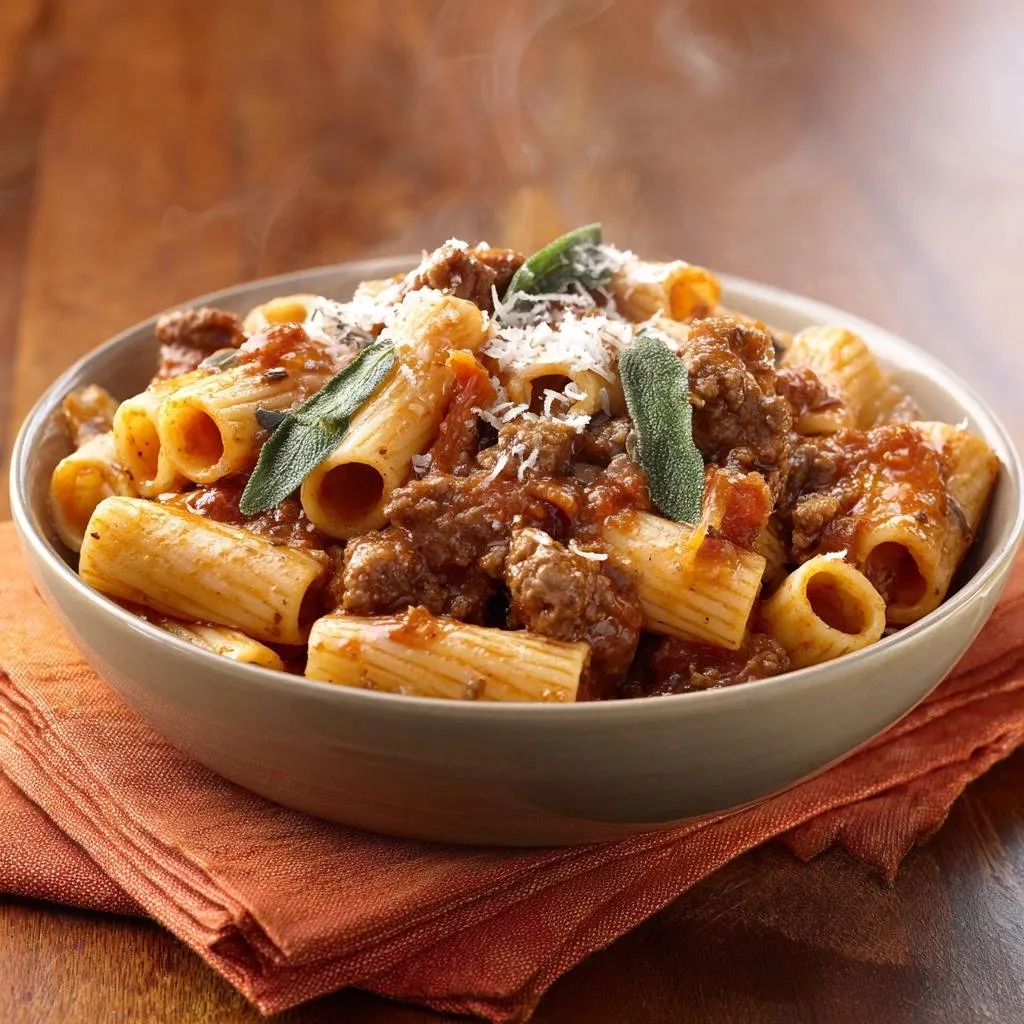
Why This Rigatoni with Sage Beef Ragu Stands Out
Ever scoop up a bite of beef ragu only to see greasy pools shining back at you? Most meat sauces turn heavy because folks stir too soon, trapping fat instead of rendering it away. This rigatoni with sage beef ragu fixes that fast. You get a rich, silky sauce that clings to every pasta tube without a hint of oiliness.
Therefore, the method here changes everything. You brown the beef hard on one side first, drain the excess, then simmer low with tomatoes and sage. That builds deep flavor while emulsifying everything perfectly. In addition, fresh sage brings an earthy punch that cuts through the richness.
Oh man, the secret lies in that undisturbed high-heat sear. It renders out 20 to 30 percent of the fat from a pound of beef, leaving just enough flavorful drippings. You’ll smell the mahogany crust forming, and taste the silkiness coat your rigatoni. It’s foolproof mastery every time.
For a similar approach to keeping your bolognese sauce thick, check out this spaghetti bolognese.
Key Ingredients for Non-Greasy Sage Beef Ragu
You start with 12 ounces of rigatoni pasta. Its thick tubes grip the silky sauce better than thinner shapes, holding every bit of ragu inside. Therefore, cook it al dente so it doesn’t turn mushy later.
Next, grab 1 pound of ground beef, ideally 80/20 for balanced fat rendering. Leaner cuts steam instead of browning, so they leave you greasy. In addition, 2 cups crushed tomatoes provide acidity that tenderizes the meat during the simmer.
Fresh sage makes this shine, with 6 leaves chopped for simmering and 2 whole ones fried crisp. Fresh beats dried because its volatile oils survive the low heat, boosting brightness. However, if you swap for turkey, add an extra tablespoon of olive oil for richness.
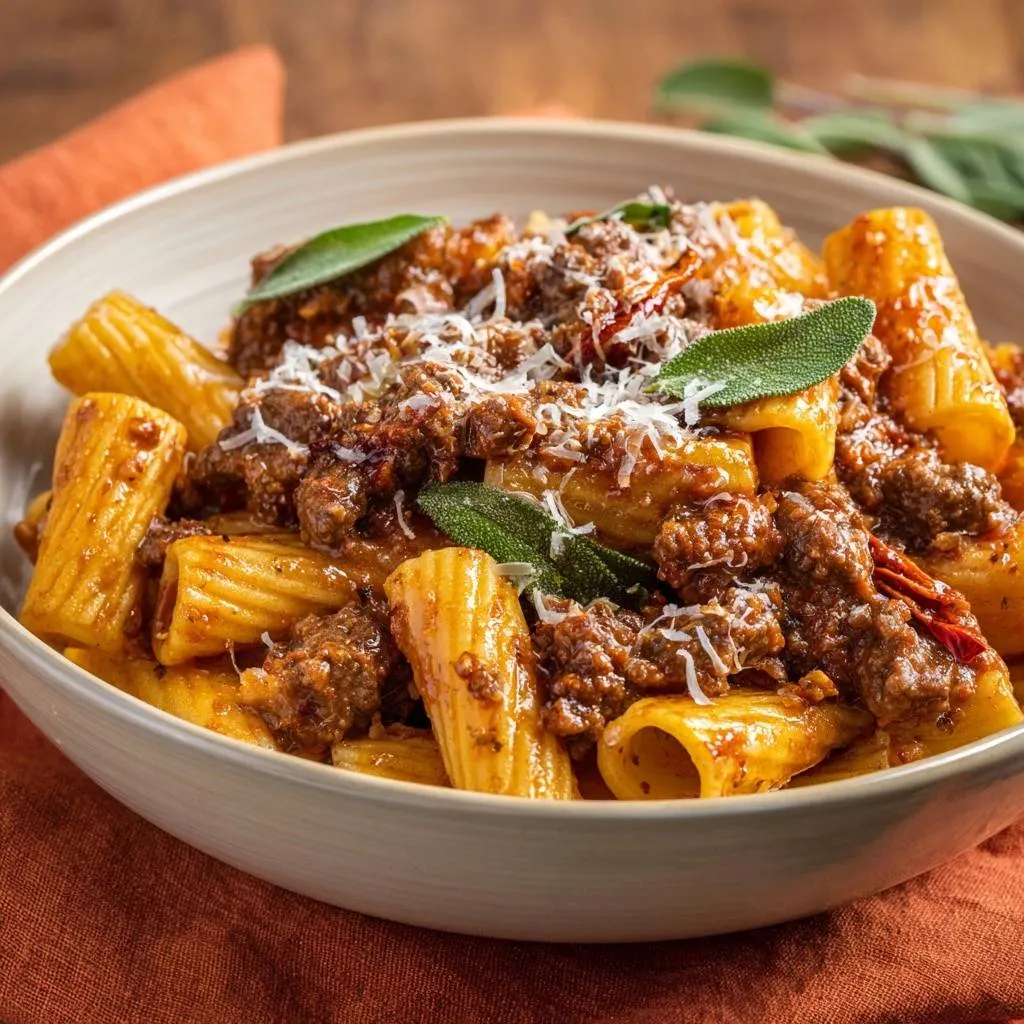
Finish with 1/2 cup grated Parmesan for umami silkiness, plus 2 tablespoons olive oil and salt and pepper. Freshly grated cheese melts smoother than pre-shredded. These simple picks create perfection.
Fresh Sage vs Dried in Beef Ragu
Chop 6 fresh sage leaves fine for the simmer; they release oils slowly into the sauce. Fry 2 whole leaves in hot oil for just 10 seconds to crisp them up as garnish. Dried sage works in a pinch, but use 1 teaspoon rehydrated in oil first. However, it lacks the punch, muting that 40 percent brightness boost from fresh.
Crushed Tomatoes for Emulsified Sauce
Crushed tomatoes give texture chunks that break down over 30 minutes into silky ragu. They balance beef richness with acidity. Passata or puree gets too smooth too fast, missing that perfect cling.
Science of Rendering Fat in Beef Ragu
The Maillard reaction kicks in during a high-heat sear over 212 degrees Fahrenheit. You crumble the beef but don’t stir for 3 to 4 minutes, so moisture evaporates and fat renders out. That avoids steaming, which traps grease in typical recipes.
Therefore, a pound of beef loses about 1/4 cup fat this way. Then, low simmer with tomatoes lets pasta water’s starch emulsify the drippings. In addition, the tomatoes’ pH tenderizes the meat further.
Think of it like making mayo: starch binds oil and water phases. Stir in reserved pasta water slowly for that glossy sheen.
High-Heat Sear vs Low Stirring
High heat melts fat at 104 degrees Fahrenheit while evaporating water at 212 degrees. Low stirring just steams everything gray. Therefore, you get max browning surface and clean render yields.
Equipment Choices for Perfect Rigatoni Ragu
Pick a large 12-inch skillet for even heat; cast iron holds it steady, nonstick drains easy. A wide pot boils pasta without crowding. Use a spider strainer for sage leaves.
The tilt-trick with paper towels beats spoon-draining because it keeps flavorful browned bits. Small pans crowd the beef and steam it. Therefore, go big for success.
Skillet Size Impact on Sauce Rendering
A 12-inch skillet spreads beef in a single layer for max browning. Smaller ones pile it up, causing steam instead of sear. Always choose wide and deep.
Step-by-Step: Building Sage Beef Ragu Base
Bring a large pot of salted water to a boil, using 1 tablespoon salt per quart. It flavors the pasta like ocean water for better sauce grip. Cook 12 ounces rigatoni al dente, testing a minute early.
Reserve 1/2 cup pasta water before draining; its warmth holds starch power. Meanwhile, heat 2 tablespoons olive oil in the skillet over medium-high. Fry 2 whole sage leaves for 10 seconds until crisp and aromatic, then remove them.
Pasta Water Boil and Reservation Technique
Salt ratio mimics seawater so noodles absorb flavor deeply. Reserve right away to trap hot starch; cold water loses binding strength.
Step-by-Step: Browning Beef Without Grease
Add 1 pound ground beef to the sage-infused oil. Crumble it loosely, then cook over high heat without stirring for 3 to 4 minutes. You’ll see a deep mahogany crust form and fat render out, smelling rich and beefy.
Break it up, cook 2 to 3 more minutes until fully browned. Tilt the pan 45 degrees, push beef aside, and sop excess fat with paper towels, leaving 1 tablespoon drippings. Season with salt and pepper now to avoid washing out flavor.
Drain Fat Tilt-Trick Execution
Push meat to one side, tilt gently, and blot with towels. This keeps the fond, those tasty browned bits, for max flavor. Spooning wipes too much away.
Step-by-Step: Simmering Silky Tomato Ragu
Stir in 2 cups crushed tomatoes and 6 chopped sage leaves. Reduce to low heat and simmer uncovered 25 to 30 minutes, stirring now and then. The sauce thickens as liquid evaporates, turning silky.
If it gets too thick, add reserved pasta water 1 tablespoon at a time while stirring. Toss in the rigatoni, coat for 1 minute. Divide into bowls, top with fried sage and 1/2 cup Parmesan.
Emulsifying with Pasta Water Precisely
Starch acts like an emulsifier, binding fat and tomatoes for gloss. Add hot water slowly over heat; it prevents separation and locks in shine.
Avoiding Rigatoni Ragu Pitfalls
Greasy sauce means you stirred too soon or skipped draining. Dry ragu skips the pasta water emulsify. Bitter sage comes from over-frying leaves; watch those 10 seconds.
For an even thicker, glossier sauce, check out this detailed guide to Rigatoni with Beef Ragu.
Mushy pasta overboils, so test early. Taste every 10 minutes during simmer to adjust. Therefore, you’ll nail it every time.
Fixing Over-Thickened Beef Sauce
Add pasta water gradually instead of broth to keep beef intensity. A 30-minute simmer reduces by 25 percent naturally. Stir in hot for best bind.
Flavor Twists on Sage Beef Ragu
Sauté garlic and onion first for soffrito base. Add mushrooms for extra umami or chili flakes for heat. Swap rigatoni for pappardelle to catch more sauce.
For vegetarian, use 1 pound mushrooms plus lentils; they mimic beef texture. Double the recipe for 4 to 6 servings easily.
Vegetarian Sage Ragu Adaptation
Mushrooms and lentils render similar fat and texture. Sage’s earthiness pops brighter without beef masking it. Follow the same sear method.
Make-Ahead Strategies for Beef Ragu
Simmer the sauce fully, cool it quick, then fridge in airtight containers for 3 days. Flavors meld beautifully. Freeze sauce flat in bags up to 3 months; cook pasta fresh.
Reheat low with a pasta water splash. Batch double for easy meal prep all week.
Pairing Sides with Rigatoni Sage Ragu
Crisp arugula salad cuts the richness with lemon. Garlic bread sopps up every drop. Roasted zucchini or broccoli adds veggie balance.
Complementary Dishes
To round out your meal, consider these complementary dishes that share similar flavors or textures.
- For a bright, vegetable addition, try our Crispy Parmesan Roasted Zucchini, which offers a delightful crunch against the tender ragu.
- If you’re looking for something warm and soothing, our Creamy Butternut Squash Soup provides a velvety counterpoint to the rich beef sauce.
Rigatoni with Sage Beef Ragu FAQ
Can I Use Dried Sage in Beef Ragu?
Yes, substitute 1 teaspoon dried sage for 8 fresh leaves. Rehydrate it in the warm olive oil first to wake the flavor. However, you’ll miss the crisp garnish punch and that fresh brightness boost.
How to Store Leftover Sage Beef Ragu?
Store in an airtight container in the fridge for up to 4 days; flavors deepen nicely. Freeze the sauce flat in bags for 3 months, but keep pasta separate to avoid mush. Thaw overnight in the fridge, then reheat low with a splash of water.
Substitute Ground Turkey for Beef Ragu?
Absolutely, use 1 pound ground turkey for a lighter version. It’s leaner, so drain less fat and add 1 tablespoon extra olive oil for richness. The same browning and simmer method works perfectly.
Why Reserve Pasta Water for Ragu?
Pasta water’s starch emulsifies the sauce, binding tomatoes and drippings into silky perfection without separation. Plain water won’t do that. Always use it warm for the strongest bind and glossy finish.
Gluten-Free Rigatoni Sage Ragu Option?
Yes, chickpea or barley-based gluten-free rigatoni holds up well. Reserve extra pasta water since GF starch is weaker. Brown and simmer the ragu the same way for full flavor.
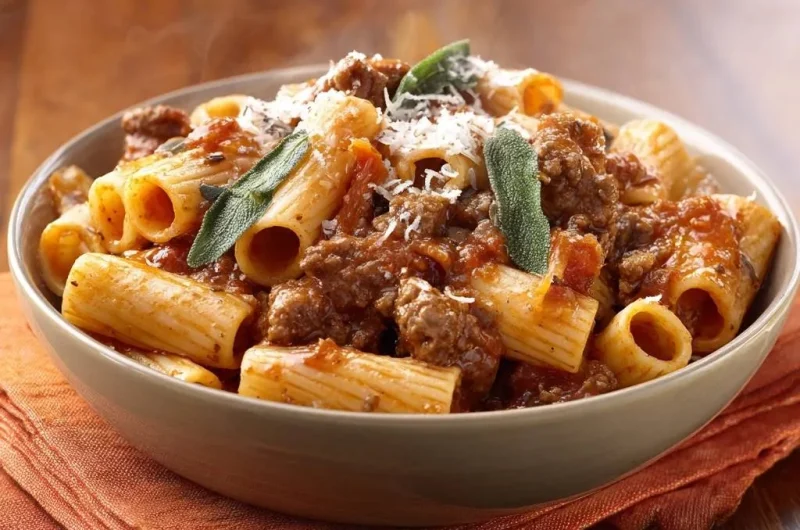
Rigatoni Beef Ragu
Course: Main CourseCuisine: ItalianDifficulty: easy4
servings10
minutes40
minutes550
kcal50
MinutesSick of meat sauces that leave greasy pools on your plate? This foolproof method browns the beef perfectly to render excess fat, drains it away, then emulsifies everything during a low simmer for a rich, silky ragu that clings to every rigatoni tube without a drop of oil.
Ingredients
12 ounces rigatoni pasta
1 pound ground beef
2 cups crushed tomatoes
8 fresh sage leaves (6 chopped, 2 whole for garnish)
1/2 cup grated Parmesan cheese
2 tablespoons olive oil
Salt and black pepper to taste
Directions
- Bring a large pot of salted water to a boil for the pasta. Cook rigatoni according to package directions until al dente, reserving 1/2 cup pasta water before draining.
- While pasta cooks, heat olive oil in a large skillet over medium-high heat. Add 2 whole sage leaves and fry for 10 seconds until crisp, then remove and set aside for garnish.
- Add ground beef to the infused oil in the skillet. Here’s the no-greasy-sauce secret: Crumble and cook over high heat without stirring for 3-4 minutes to deeply brown one side, rendering fat as it sears (not steams). Break up meat, cook 2-3 more minutes until fully browned. Drain excess fat from pan using a spoon or paper towel tilt-trick, leaving just 1 tablespoon flavorful drippings. Season with salt and pepper. Cook until no pink remains and it reaches 160°F (71°C).
- Stir in crushed tomatoes and remaining 6 chopped sage leaves. Reduce heat to low, simmer uncovered 25-30 minutes, stirring occasionally. If sauce thickens too much, add reserved pasta water 1 tablespoon at a time to emulsify into silky perfection, locking in flavor without grease.
- Toss cooked rigatoni into the sauce, mixing well to coat. Divide into bowls, top with fried sage leaves and grated Parmesan. Serve hot.
Notes
- Reserve pasta water to emulsify the sauce for silky texture. Fry whole sage leaves for crisp garnish.