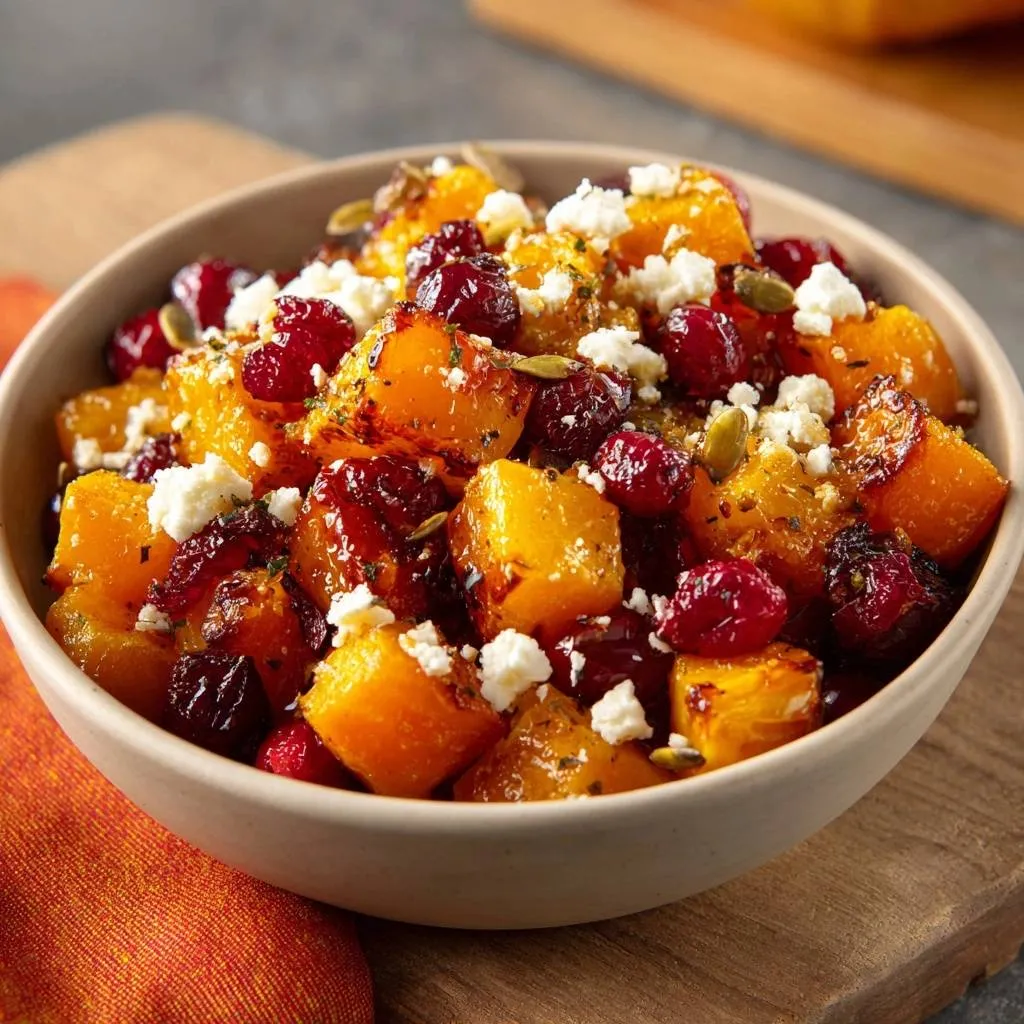
Why This Salad Transforms Fall Meals
Ever bite into roasted butternut squash that’s tough and dry? Most fall salads suffer from that leathery texture because folks skimp on oil or pile the pan too high. However, this recipe fixes it with a generous olive oil coat, single-layer roasting at 425°F, and a smart mid-way stir.
That’s why you’ll get tender, caramelized cubes every time. In addition, the cranberries plump up right in the pan, pepitas add crunch, and feta brings creamy tang. It’s seasonal perfection that serves 6 in about 30 minutes, packed with fiber from squash, antioxidants from cranberries, and protein from pepitas.
If you’re looking for other ways to use that cranberry flavor, try cranberry apple chicken salad cups.
Per serving, you’re looking at roughly 250 calories, 15g fat, 28g carbs, 6g protein. The secret? That oil creates steam pockets inside each cube for juiciness while the outside browns beautifully.
For a different take on autumn flavors, explore this apple pecan salad.
Key Ingredients for Moist Roasted Squash Salad
Start with the right butternut squash. You want a firm one, heavy for its size with tan skin and no soft spots. It peels easily, seeds cleanly, and cuts into even 1-inch cubes for uniform roasting.
Three tablespoons of olive oil matter a ton. It coats every piece generously, forming a barrier that traps moisture inside as steam while the high heat caramelizes the edges. Salt and pepper draw out natural sugars for better browning too.
Dried cranberries rehydrate in the oven’s juices during that mid-stir, adding chewy sweetness. Pepitas toast up with a nutty crunch that beats softer nuts, and 4 ounces of crumbled feta melts slightly for salty creaminess. Fresh thyme sprinkles on last for an earthy lift if you like.
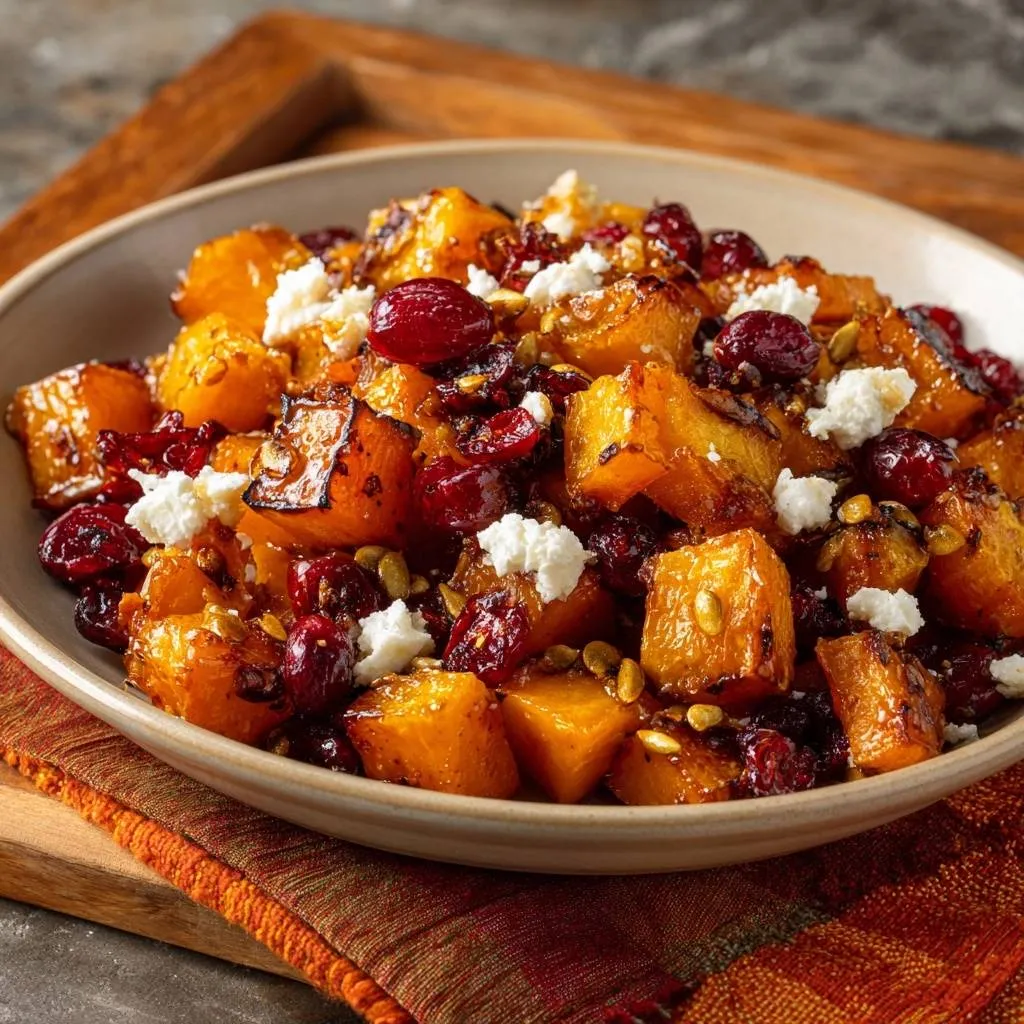
Selecting Perfect Butternut Squash
Pick a medium 2-pound squash that’s unblemished and heavy. Peel from top to bottom with a sturdy peeler, scoop out seeds, and cube into 1-inch pieces. Uniform size ensures even cooking, so no raw centers or burnt outsides.
Olive Oil and Seasoning Ratios
Toss in a large bowl with 3 tablespoons oil, 1 teaspoon salt, and 1/2 teaspoon pepper. Every cube needs coverage; this prevents dryness by creating internal steam. Skimp here, and you’ll get tough results.
Cranberries, Pepitas, Feta Balance
One cup dried cranberries plump beautifully in pan juices. Half a cup pepitas gives toasty bite without overpowering. Crumble feta by hand for even distribution; it contrasts the sweet squash perfectly. Sub goat cheese if you want sharper tang.
Roasting Technique for Tender Squash Salad
Preheat to 425°F and line a large sheet with parchment. Toss cubed squash with oil and seasonings in a bowl first. Spread in a single layer with no overlaps for max airflow and caramelization.
Roast 12 minutes until edges soften. Pull the pan, add cranberries and pepitas, then stir to coat in released juices. This redistributes moisture and plumps the fruit. Back in for 12-13 minutes till fork-tender with golden spots.
Transfer to a bowl while warm. Sprinkle feta and thyme. Serve warm or room temp; flavors deepen as it sits. Pro tip: Use two sheets if your squash crowds the pan.
Pre-Roast Prep and Oil Coating
Bowl-tossing beats drizzling on the sheet. It ensures even oil coverage, key for steam pockets that keep squash moist. You’ll smell sweet aromas starting at 8 minutes.
Mid-Roast Stir with Cranberries
At 12 minutes, the squash sweats juices. Stir in cranberries and pepitas to soak them up, preventing dry edges. This step infuses fruit with savory depth; don’t skip it.
Final Roast and Assembly
Test doneness with a fork; edges should crisp golden. Cool slightly before feta to avoid melting it fully. Thyme adds freshness; toss gently for even mix.
Science of Caramelized Butternut Squash
High 425°F heat triggers the Maillard reaction, browning sugars on squash edges for nutty flavor. Oil seals in moisture, forming steam that tenderizes from within. Therefore, you avoid the mush of low-heat steaming.
A single layer promotes airflow for crisp outsides. In addition, squash’s natural sugars caramelize alongside cranberries during the final roast. The mid-stir redistributes juices, ensuring no dry spots form.
Contrast this with crowded low-temp roasts: they trap steam and stay pale. Here, science delivers juicy, golden perfection every time.
Avoiding Dry Squash in Cranberry Feta Salad
Dry squash happens from overcrowding, skimpy oil, uneven cubes, or over-roasting. Fix it with single-layer spacing, generous toss, and precise timing. Ovens vary, so check at 10 minutes in the second roast.
Pro tip: Position on the lower rack for even heat. Use convection if available for faster crisping. Flip pieces during stir for all-around color.
Overcrowding and Layer Fixes
Pile it up, and it steams instead of roasts. Spread single-layer; grab a second sheet if needed. This airflow creates caramelized edges without sogginess.
Oil and Timing Pitfalls
Less than 3 tablespoons leaves cubes dry. Stir exactly at 12 minutes to lock in juices. Over-roast by 2 minutes, and it turns mushy; fork-test early.
Flavor Variations for Squash Cranberry Salad
Keep the roasted butternut squash cranberry feta core but tweak for fun. Drizzle maple syrup post-roast for extra sweetness, or balsamic glaze for tang. Toss with arugula for greens, or add apple slices for fresh crunch.
Scale up for holidays by doubling sheets. Quinoa makes it heartier. These swaps elevate without changing the moist magic.
Sweet and Tangy Twists
Maple boosts caramel notes; 1 tablespoon tossed pre-roast works. Balsamic glaze after assembly adds sticky zing. Fresh apple or pomegranate seeds amp tartness and pop.
Nut and Cheese Alternatives
Swap pepitas for pecans if you like softer crunch. Gorgonzola for bolder blue bite, or skip cheese for vegan with coconut yogurt dollops. Sunflower seeds keep it nut-free.
Pairing Roasted Squash Feta Salad
Grilled chicken loves the sweet-savory mix. Quinoa bowls or lentil soup make hearty mains. For holidays, it shines beside turkey or stuffing, balancing richness with bright flavors.
Round Out Your Meal
Consider these dishes to complement your roasted butternut squash creation.
- For a hearty grain option, try the Roasted Butternut Black Rice Kale Bowl, featuring similar fall produce.
- If you’re craving something warm and comforting, the Creamy Cheesy Chicken and Rice Bake offers a satisfying contrast.
Herbal tea or sparkling water refreshes alongside. Texture contrast rules: creamy feta against pepita crunch steals the show every time.
Make-Ahead Roasted Squash Salad Guide
Roast ahead and store components separate. Squash and cranberries/pepitas last 3 days in the fridge airtight. Add feta fresh to avoid sogginess.
Reheat squash gently at 350°F for 10 minutes. Freezes well up to 2 months; thaw overnight. Great for meal prep bowls all week.
Troubleshooting Roasted Squash Cranberry Salad
How do I store Roasted Butternut Squash Cranberry Feta Salad leftovers?
Keep roasted squash, cranberries, and pepitas in an airtight container in the fridge for up to 3 days. Add crumbled feta just before serving to maintain creaminess. It freezes well (squash only, up to 2 months); thaw in fridge and reheat at 350°F for 10 minutes. Assembled salad doesn’t freeze great due to feta texture changes.
Why is my roasted squash still dry in this cranberry feta salad?
Dryness comes from overcrowding the pan, too little oil, or uneven cubes. Ensure single-layer spread, generous 3-tablespoon oil toss, and 1-inch uniform pieces. Mid-stir at 12 minutes redistributes juices; always preheat fully to 425°F for proper caramelization without steaming.
Can I substitute ingredients in Roasted Butternut Squash Cranberry Feta Salad?
Yes, use acorn or kabocha squash (same roast time). Fresh cranberries work; add 5 minutes earlier and halve sugar release. Nut-free? Swap pepitas for sunflower seeds. Vegan? Skip feta or use crumbled goat cheese alternative like cashew-based. No pepitas? Toasted sunflower seeds keep crunch.
Can I serve this salad cold?
Absolutely, flavors meld beautifully cold. Roast ahead, chill components separately, then toss with feta before eating. It’s perfect for picnics or meal prep; the cranberries stay plump and feta adds cool creaminess against room-temp squash.
How do I scale up for a crowd?
Double or triple ingredients, but use multiple sheets for single-layer roasting. Rotate pans midway for even heat. Prep squash cubes ahead; roast in batches at 425°F. Serves 6 base; easily hits 12 by doubling everything precisely.
What’s the best way to know when it’s done roasting?
Fork-tender with golden-brown edges after 24-25 total minutes. Squash yields easily but holds shape; cranberries plump shiny. If edges blacken, your oven runs hot, so check at 22 minutes next time and lower to 400°F if needed.
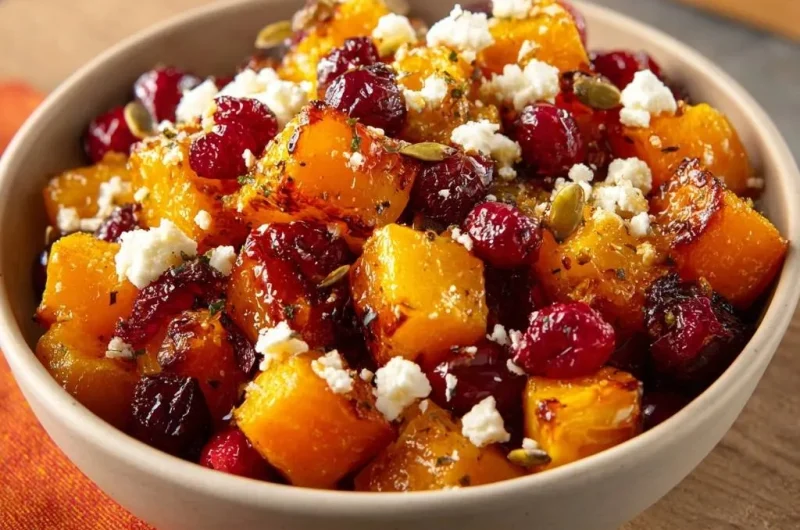
Roasted Butternut Squash
Course: SaladCuisine: AmericanDifficulty: easy4
servings15
minutes25
minutes350
kcal40
MinutesDry roasted squash ruining your fall salads? This foolproof method uses generous olive oil coating and a single-layer high-heat roast with a mid-way stir to lock in moisture and deliver tender, caramelized perfection every time.
Ingredients
1 medium butternut squash (about 2 pounds), peeled, seeded, and cut into 1-inch cubes
3 tablespoons olive oil
1 teaspoon salt
1/2 teaspoon black pepper
1 cup dried cranberries
1/2 cup pepitas (pumpkin seeds)
4 ounces feta cheese, crumbled
1 teaspoon fresh thyme leaves (optional, for garnish)
Directions
- Preheat oven to 425 degrees F. Line a large baking sheet with parchment paper.
- In a large bowl, toss squash cubes with olive oil, salt, and pepper until every piece is evenly and generously coated. This oil barrier is the key to preventing dryness, creating steam inside for tenderness while the outside caramelizes.
- Spread squash in a single layer on the prepared baking sheet, ensuring no pieces overlap. Roast for 12 minutes.
- Remove from oven, add cranberries and pepitas directly to the pan, and stir everything to redistribute oil and juices. This mid-roast stir locks in moisture from the cranberries plumping up and prevents any dry spots. Return to oven for 12 to 13 more minutes, until squash is fork-tender with golden edges.
- Transfer to a serving bowl, sprinkle with crumbled feta and thyme if using. Serve warm or at room temperature. The result: juicy, never-dry squash that steals the show.
Notes
- Serve warm or at room temperature. Fresh thyme adds a nice garnish.