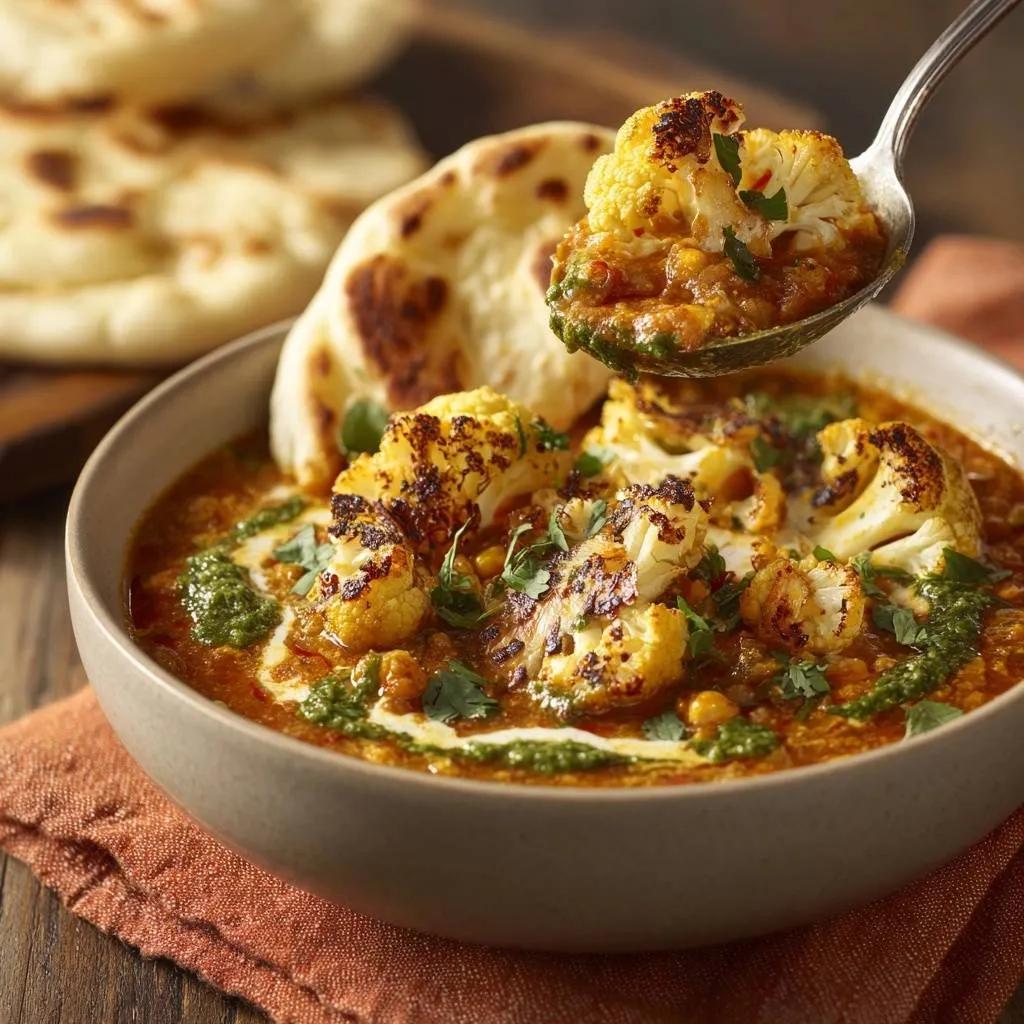
Ever bite into a curry only to find the cauliflower’s turned to mush? This roasted cauliflower chickpea curry fixes that fast. You roast the florets first at blasting high heat, so they come out with crispy, charred edges that hold up in the creamy sauce. It’s weeknight Indian food that doesn’t sacrifice texture or flavor.
Therefore, you get bold spices wrapping around protein-packed chickpeas, all with that satisfying crunch. In addition, the yogurt swirl adds vegan-friendly creaminess without heaviness. Perfect for busy evenings when you crave takeout vibes at home.
For even more tender bites and a delightful char, check out this roasted cauliflower chickpea curry.
Here’s the expertise kicker: that 450-degree roast evaporates moisture upfront, locking in crispiness through the Maillard reaction. No more soggy disappointment. You’ll taste the nutty char in every bite.
Why Roasting Transforms Cauliflower Chickpea Curry
Regular curries boil or steam cauliflower, which floods it with water and leaves it limp. However, roasting at 450 degrees F drives off surface moisture first. This prevents the mush in your roasted cauliflower chickpea curry.
In addition, the high heat triggers the Maillard reaction. Sugars and proteins brown, creating those golden, charred edges with a nutty depth. Home cooks rave about the contrast against the silky chickpea sauce.
You’ll smell the sweet caramelization as it roasts. Therefore, every floret stays firm, even after simmering. It’s the texture upgrade your curry game’s been missing.
Crisp Edges Meet Creamy Sauce
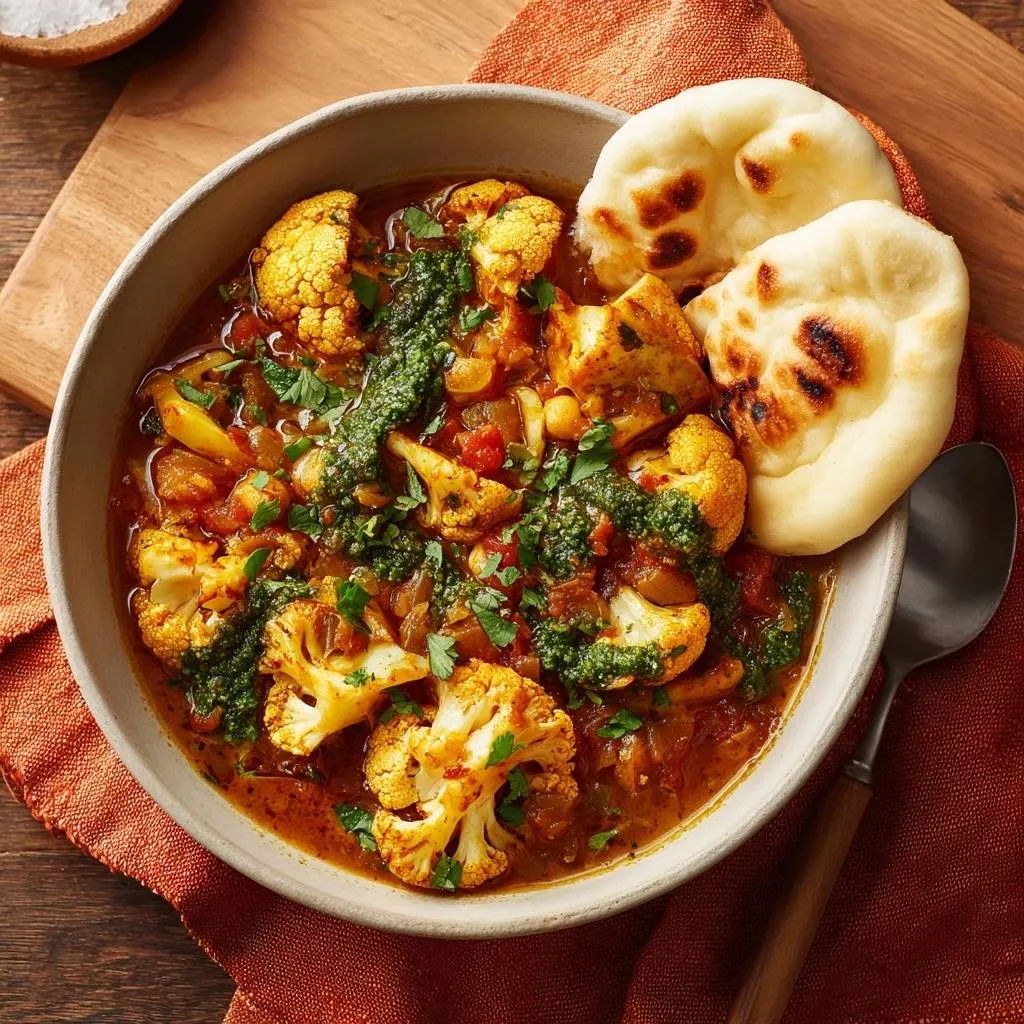
Pre-roasted florets keep their bite amid the spiced, tomato-rich base. Chickpeas add hearty chew, while yogurt smooths it all out. Side by side, boiled versions wilt; these stand tall.
The char cuts through the creaminess perfectly. You get crunch first, then cozy spice. Pure bliss in a bowl.
Key Ingredients for Roasted Cauliflower Chickpea Curry
Start with one large head of cauliflower, cut into bite-sized florets. It provides structure and absorbs spices without falling apart. Fresh is best; avoid pre-cut bags that steam easily.
Next, a 15-oz can of chickpeas, drained and rinsed, brings protein and creaminess when simmered. They’re shelf-stable heroes. In addition, two pureed tomatoes add acidity to balance the rich spices and prevent a flat sauce.
Fresh garlic, ginger, and onion build the aromatic base. Grate that 1-inch ginger piece for punch; powder won’t match. Plain yogurt, swirled in at the end, gives tang and silkiness. Swap for coconut yogurt if you want it fully plant-based.
Salt to taste keeps everything bright. Use 1/2 cup water or veggie broth for saucy flow. These simple picks make your roasted cauliflower chickpea curry pop.
Spice Blend Breakdown
Turmeric lends golden color and earthy warmth. Cumin adds smoky depth, while garam masala layers complexity with cardamom and cloves. Chili powder brings adjustable heat.
Bloom them in hot oil for 30 seconds to release oils. Store extras in a cool, dark spot for months. Measurements: 1 tsp turmeric, 2 tsp each cumin and garam masala, 1 tsp chili.
Toppings That Elevate Every Bite
Chopped cilantro adds fresh, citrusy pop. For mint-cilantro chutney, blend a handful each of mint and cilantro, one green chili, and lemon juice. It cuts the richness.
Dollop extra yogurt for cooling cream. Warm naan scoops it all up perfectly. These finishers make every bite sing.
For a different take on creamy, savory chicken, check out these Butter Chicken with Rice and Naan secrets.
Equipment Essentials for Perfect Results
You need a rimmed baking sheet for even roasting. Spread florets single-layer to avoid steaming; overcrowding ruins crispiness. A large pot handles the sauce without spilling.
Therefore, preheat your oven fully. Optional food processor purees tomatoes and makes chutney quick. Budget tip: any heavy pan works if you stir often. Keep it simple for foolproof results.
Science of Roasting Cauliflower First
At 450 degrees F, roasting caramelizes natural sugars through the Maillard reaction. This browns edges fast and boosts nutty flavor in your roasted cauliflower chickpea curry. In addition, it evaporates up to 70% of surface water.
Flip halfway for even char. Tomatoes’ acidity and yogurt’s tang stabilize the sauce’s pH, coating florets without sogginess. It’s kitchen chemistry you control.
Result? Florets that resist softening during simmer. You’ll notice the difference immediately. Pro tip: pat cauliflower dry before oiling to speed moisture loss.
Moisture Control in Detail
Pre-roast zaps surface water, so florets absorb less sauce later. Think of it like drying herbs; less liquid means more bite. Short 3-5 minute simmer preserves 80% crispness.
Over-soaked versions turn mushy fast. Here, they stay al dente. Simple swap for perfect texture.
Step-by-Step: Roasting the Cauliflower
Preheat oven to 450 degrees F. Toss florets with 1 tablespoon vegetable oil and a pinch of salt. Spread in a single layer on a baking sheet; don’t pile them up or they’ll steam.
Roast 20 minutes, flipping halfway. Look for golden-brown edges and charred spots with a sweet, nutty aroma. This step locks in crispiness for your roasted cauliflower chickpea curry. Set aside.
Safety note: use oven mitts; that sheet’s scorching. If edges blacken too much, your oven runs hot, so drop to 425 next time.
Step-by-Step: Building the Chickpea Curry Base
Heat 1 tablespoon oil in a large pot over medium. Add finely chopped onion; cook 5 minutes until soft and fragrant, not browned. Stir in minced garlic and grated ginger for 1 minute till pungent.
Therefore, add spices: 1 tsp turmeric, 2 tsp cumin and garam masala, 1 tsp chili powder, salt. Stir 30 seconds to bloom; you’ll smell the warmth explode. Pour in tomato puree and chickpeas.
Simmer 10 minutes, stirring now and then. Sauce thickens as tomatoes break down. Pro tip: if it sticks, lower heat slightly.
Step-by-Step: Combining for Roasted Cauliflower Chickpea Curry
Stir in 1/2 cup water or broth for sauciness. Nestle in roasted cauliflower gently. Simmer just 3-5 minutes to coat; any longer softens the crisp edges.
Remove from heat. Swirl in 1/4 cup yogurt off-heat to avoid curdling; it melts creamy. Ladle into bowls, top with cilantro, mint-cilantro chutney, and yogurt dollops. Serve with warm naan.
Taste the transformation: charred crunch in spicy silk. Don’t skip the gentle simmer. You’ve nailed it.
Avoiding Common Mistakes in Cauliflower Chickpea Curry
Overcrowd the baking sheet, and florets steam instead of roast. Always single-layer. In addition, over-simmering post-roast turns them mushy; stick to 3-5 minutes.
Skip blooming spices, and flavors stay dull. Stir them in hot oil briefly. For yogurt, temper by stirring a bit of warm sauce first if worried about curds.
Salt early in roasting and sauce for even seasoning. Runny sauce? Simmer longer uncovered. Thick? Add broth splash. These tweaks guarantee success in your roasted cauliflower chickpea curry.
Fixing Runny or Thick Sauce
Runny? Simmer uncovered 5 more minutes to reduce. Still thin? Stir in 1 tsp cornstarch slurry. Too thick? Whisk in broth tablespoon by tablespoon till saucy.
Taste as you go. Perfects every time.
Flavor Variations for Chickpea Curry
Stir in spinach at the end for greens that wilt just right. Add diced potatoes with chickpeas for heartiness, but roast them too. Swap chickpeas for lentils; they thicken naturally.
Round Out Your Meal
Complement your Roasted Cauliflower Chickpea Curry with these flavorful chickpea dishes.
- For a bright and refreshing addition, consider the Moroccan Spiced Carrot and Chickpea Salad, which shares the hearty chickpea base.
- Another excellent choice is the Mediterranean Zesty Chickpea Salad, offering a vibrant mix of tastes that go well with curry.
Therefore, adjust chili for heat. Seasonal tweak: roasted sweet potatoes in fall. Keep cauliflower roasted central for that signature crunch in your roasted cauliflower chickpea curry.
Pro tip: lemon zest brightens leftovers.
Make It Coconut Roasted Cauliflower Chickpea Curry
Swap yogurt for 1/4 cup coconut cream. It adds tropical silk without tang. Boost cumin slightly for balance.
Texture stays lush; nutrition gains healthy fats. Same crisp cauliflower magic.
Pairing Sides with Roasted Cauliflower Chickpea Curry
Warm naan tears perfectly for scooping. Basmati rice soaks up sauce without overpowering. Cucumber raita cools spice with yogurt, cukes, and cumin.
In addition, pickled onions add zing. Mango lassi refreshes; iced chai complements warmth. These balance the creamy heat beautifully.
Make-Ahead and Storage Guide
Roast cauliflower a day ahead; store in fridge. Sauce freezes up to 3 months in portions. Reheat gently on stovetop with splash of broth to revive sauce.
Fridge life hits 4 days in airtight container. Texture holds if you don’t re-simmer florets long. Meal prep win for your roasted cauliflower chickpea curry.
Nutrition in Roasted Cauliflower Chickpea Curry
Per serving: about 300 calories, 15g protein from chickpeas. Fiber from cauliflower and legumes keeps you full. Turmeric fights inflammation; vitamin C from tomatoes boosts immunity.
Low-cal comfort at 10g fat. Customize vegan or add quinoa for more protein. Heart-healthy spices shine here.
Troubleshooting Roasted Cauliflower Chickpea Curry
Spice Level Adjustments
Mild: halve chili powder, add bell peppers. Medium: as written. Hot: double chili or fresh chilies. Always taste sauce before adding cauliflower.
Yogurt or coconut milk tames heat further.
FAQ
How do I store leftovers of Roasted Cauliflower Chickpea Curry?
Store in an airtight container in the fridge for up to 4 days. The roasted cauliflower holds crispness better than boiled versions. For freezing, portion sauce and chickpeas separately from cauliflower; sauce freezes well for 3 months, but florets get softer upon thaw, so best fresh or fridge-only. Reheat on stovetop low with a broth splash to loosen without sogginess.
Why is my cauliflower soggy in chickpea curry?
Most likely over-simmering after roasting or overcrowding the sheet, causing steam. Roast single-layer at 450 degrees F for full char and moisture loss. Limit final simmer to 3-5 minutes max; just coat, don’t cook through. Pat florets dry pre-roast for extra insurance. This keeps that craveable bite intact.
Can I substitute ingredients in Roasted Cauliflower Chickpea Curry?
No fresh tomatoes? Use 1 cup canned puree. Ginger powder works in pinch (1 tsp), but fresh grates brighter. Yogurt swap: coconut cream or milk for dairy-free; same 1/4 cup amount. Chickpeas out? Lentils simmer same time. Keep cauliflower roasted; it’s the star for texture.
Why isn’t my sauce thickening?
Tomatoes vary in pectin; if thin after 10-minute simmer, cook uncovered 5 more minutes. Stir often to evaporate water. Desperate fix: 1 tsp cornstarch slurry stirred in off-heat. Too thick? Broth thins it perfectly. Blooming spices first helps flavor concentrate as it reduces.
Is Roasted Cauliflower Chickpea Curry vegan?
Yes, with coconut yogurt or cream instead of dairy yogurt. All else is plant-based: oil, veggies, chickpeas, spices. Top with extra cilantro and chutney. Nutrition stays high-fiber, protein-packed. Full vegan glory without losing creaminess.
How do I get more char on the cauliflower?
Broil last 2 minutes post-roast for extra sear, watching closely to avoid burn. Ensure single-layer and dry florets well. Higher racks crisp faster. Your oven’s true temp matters; test with one batch. That nutty edge elevates the whole dish.

Cauliflower Chickpea Curry
Course: Main CourseCuisine: IndianDifficulty: easy4
servings15
minutes35
minutes350
kcal50
MinutesTired of cauliflower turning to mush in curry? This recipe roasts the florets first for crispy, charred edges that stay firm even after simmering in the creamy, spiced chickpea sauce. Paired with warm naan, it’s a game-changer for weeknight Indian food.
Ingredients
1 large head cauliflower, cut into bite-sized florets
2 tablespoons vegetable oil, divided
1 can (15 oz) chickpeas, drained and rinsed
1 large onion, finely chopped
3 garlic cloves, minced
1-inch ginger, grated
2 tomatoes, pureed (or 1 cup canned tomato puree)
1 teaspoon ground turmeric
2 teaspoons ground cumin
2 teaspoons garam masala
1 teaspoon chili powder
Salt to taste
1/2 cup water or vegetable broth
1/4 cup plain yogurt
For topping:
1/4 cup cilantro leaves, chopped
2 tablespoons mint-cilantro chutney (blend cilantro, mint, green chili, lemon juice)
2 tablespoons plain yogurt
4 naan breads, warmed
Directions
- Preheat oven to 450 degrees F. Toss cauliflower florets with 1 tablespoon oil and a pinch of salt. Spread on a baking sheet in a single layer. Roast for 20 minutes, flipping halfway, until edges are golden-brown and charred. This high-heat blast locks in crisp texture and prevents sogginess by evaporating moisture before the curry stage. Set aside.
- In a large pot, heat remaining 1 tablespoon oil over medium heat. Add onion and cook 5 minutes until soft. Stir in garlic and ginger, cook 1 minute until fragrant.
- Add turmeric, cumin, garam masala, chili powder, and salt. Stir 30 seconds to bloom spices. Pour in tomato puree and chickpeas. Simmer 10 minutes, stirring occasionally, until sauce thickens.
- Stir in 1/2 cup water or broth for saucy consistency. Add roasted cauliflower. Gently simmer 3-5 minutes only, just to coat florets without softening them. The pre-roasting ensures they stay crispy. Remove from heat.
- Swirl in yogurt for creaminess. Serve in bowls topped with chopped cilantro, mint-cilantro chutney, and extra yogurt dollops. Scoop with warm naan. Perfect texture guaranteed!
Notes
- Roast cauliflower at high heat to evaporate moisture and prevent sogginess. Simmer briefly after adding to sauce to keep texture crispy. Use dairy-free yogurt for vegan version.