Let’s be honest: we’ve all suffered through that “cardboard chicken” experience. You know the one—a dry, colorless breast that requires a gallon of water just to swallow. It’s the epidemic of the weeknight dinner, but it doesn’t have to be your reality.
This Romesco Roasted Chicken and Spinach isn’t just another recipe; it’s a technique-driven solution to the flavorless white meat problem. By combining a high-heat spice sear with a vibrant, nutty Catalan sauce, we’re attacking blandness from two different angles. The result is a meal that feels like it came from a high-end bistro but takes less than an hour to pull together.
The secret to this transformation lies in the moisture management. Most people fail because they crowd the pan or skip the resting phase. I’ve found that the real trick is patting that chicken bone-dry before the spices ever touch the skin. If there’s moisture on the surface, the chicken steams instead of searing, and you lose that gorgeous mahogany crust that holds all the savory depth.
The Anatomy of Flavor: Why This Method Works
This dish relies on a two-step flavor infusion that ensures the seasoning isn’t just sitting on the surface. Firstly, we use a heavy dry rub to create a crust. When that spice-laden meat hits the hot oil, the Maillard reaction occurs, creating complex, savory compounds that provide a foundational “umami” base.
Secondly, we introduce the Romesco sauce as a wet finish. While the chicken finishes roasting in the oven, the heat helps the juices redistribute. Adding the sauce at the end provides a bright, acidic contrast to the smoky, charred exterior of the meat. It’s a balance of textures and temperatures that keeps your palate engaged with every bite.
By searing first and roasting second, you get the best of both worlds. You achieve the deep color and crispy edges of a pan-fry, but the gentle ambient heat of the oven ensures the center stays juicy. It’s a foolproof way to hit that perfect internal temperature without burning the outside of your poultry.
The Role of Smoked Paprika and Aromatics
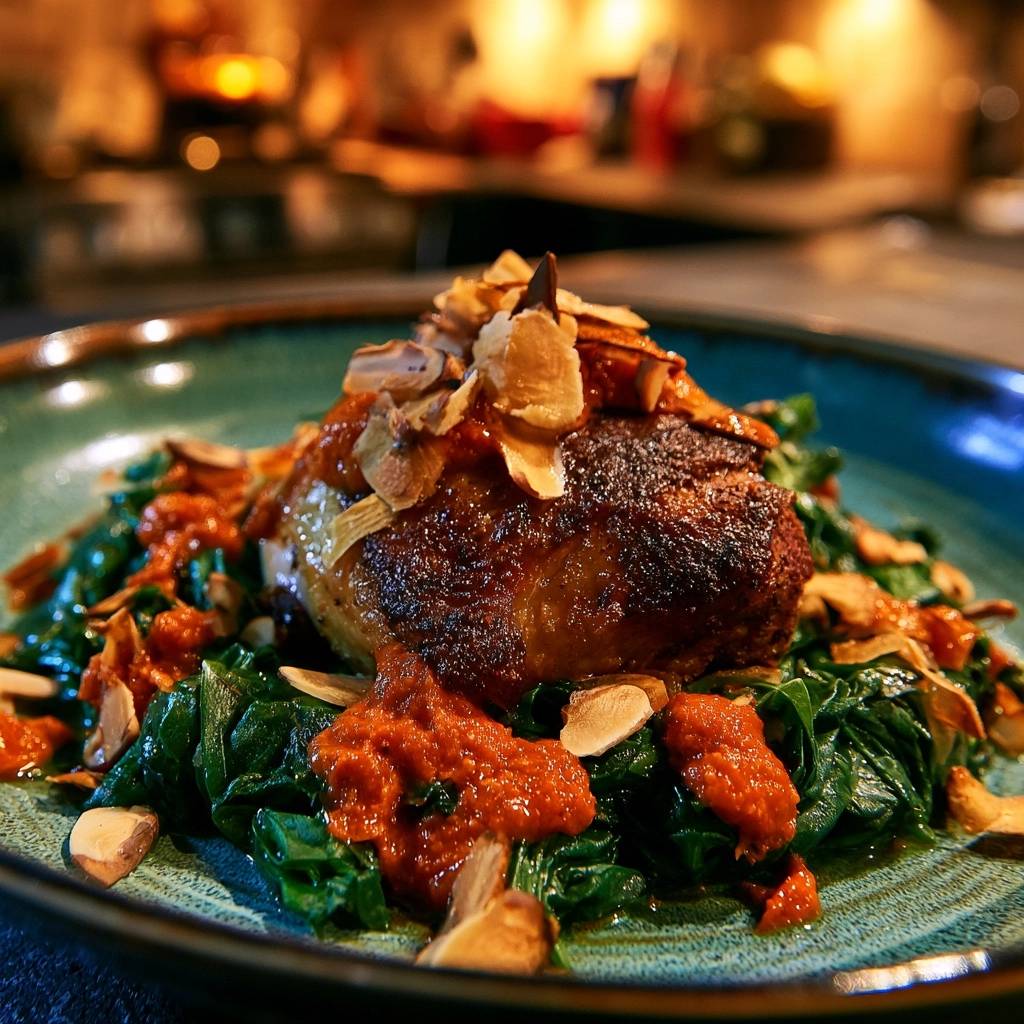
Smoked paprika is the undisputed MVP of this spice blend. Unlike sweet paprika, which mostly adds color, the smoked variety provides a wood-fired depth that mimics a grill. It gives the chicken a “cooked over coals” flavor even though you’re just using a standard kitchen range.
I prefer using garlic and onion powders for the initial sear rather than fresh aromatics. Fresh garlic has a high water content and tends to burn and turn bitter at the temperatures needed for a good sear. The powders penetrate the meat fibers more effectively and create a uniform, flavorful bark that clings to the chicken.
Understanding Romesco: A Catalan Powerhouse
Romesco sauce hails from the Catalonia region of Spain, originally crafted by fishermen to liven up the daily catch. It’s a robust blend of roasted peppers, nuts, and oil that delivers a massive flavor punch. It’s naturally thick and hearty, providing a satisfying richness without the need for heavy creams or butter.
The combination of roasted red peppers and toasted almonds creates a unique profile that is both sweet and earthy. Because it’s a rustic sauce, it doesn’t need to be perfectly smooth. That slight grittiness from the nuts is exactly what makes it feel authentic and homemade.
Essential Components for Romesco Roasted Chicken and Spinach
Quality ingredients are the backbone of this dish. When shopping for roasted red peppers, look for the jars where the peppers still have a bit of char on them. Always pat them dry with a paper towel before blending; otherwise, the excess brine will turn your sauce into a watery mess.
Fresh lemon juice is non-negotiable here. The bottled stuff often has a metallic aftertaste that can ruin the brightness of the Romesco. For the greens, baby spinach is the way to go. Its tender leaves wilt in seconds, absorbing the pan drippings without becoming tough or stringy like mature spinach can.
Don’t forget the tomato paste! It might seem like a small addition, but it provides the necessary acidity and “body” to the sauce. It acts as the glue that holds the peppers and almonds together, ensuring the Romesco clings to the chicken rather than sliding off the plate.
Selecting the Right Poultry Cuts
While this recipe focuses on boneless skinless breasts, the quality of the bird matters. I always look for air-chilled chicken. Standard chicken is often chilled in water baths, which means the meat soaks up extra liquid. Air-chilled meat is denser and takes the spice rub much better, leading to a superior sear.
Try to select breasts that are relatively uniform in size. If you have one giant piece and one small one, they won’t cook at the same rate. If your chicken breasts are very thick on one end, give them a quick pound with a meat mallet to get them to a uniform one-inch thickness. This ensures the whole piece finishes at the exact same time.
The Nut Factor: Almonds vs. Hazelnuts
Toasted almonds provide the signature crunch and earthy base for a traditional Romesco. Toasting them is a mandatory step; it releases the oils and intensifies the flavor. If you skip this, the sauce will taste flat and “raw.” Just a few minutes in a dry pan until they smell fragrant is all it takes.
If you want to switch things up, hazelnuts are a fantastic traditional alternative. They offer a slightly sweeter, more buttery finish that pairs beautifully with the smoky paprika. Some chefs even use a mix of both to get the best of both worlds in terms of texture and taste.
Step-by-Step: Achieving the Mahogany Crust
The secret to a professional-grade sear is patience. You want to heat your oil until it’s shimmering and just starting to show tiny wisps of smoke. When you lay the chicken in the pan, you should hear a loud, aggressive sizzle. If it’s quiet, your pan isn’t hot enough.
Once the chicken is in, leave it alone! Resist the urge to poke, prod, or flip it early. The meat will naturally release from the pan once that mahogany crust has formed. If you try to flip it and it sticks, it’s telling you it needs another minute. That dark color is where all the flavor lives, so don’t be afraid of a little char.
Keep an eye on the heat during this stage. If the spices start to smell like they are burning rather than toasting, turn the flame down slightly. You want a steady, high heat that browns the meat without turning the paprika bitter. It’s a delicate balance, but your nose will tell you when it’s right.
Oven Finishing for Maximum Juiciness
Moving the skillet to a 400°F oven allows the chicken to cook through evenly without drying out the exterior. This is the “gentle” part of the process. Use a meat thermometer to check the internal temperature. I usually pull my chicken out at 160°F.
Why 160°F? Because of carry-over cooking. As the meat rests on the plate, the internal temperature will continue to rise about five degrees. This brings it to the food-safe 165°F while keeping the fibers tender. If you wait until it hits 165°F in the oven, it will likely be overcooked by the time you eat it.
Building the Textured Romesco Sauce
When you’re making the sauce in the food processor, use the pulse button. You aren’t making a smoothie! You want to see tiny bits of almond and flecks of red pepper. This rustic texture is what gives the dish its “chef-y” feel and provides a great mouthfeel against the smooth chicken.
If the sauce feels too thick to pour, add a teaspoon of olive oil or water at a time until it reaches your desired consistency. It should be thick enough to hold its shape on a spoon but loose enough to coat the back of the chicken. Taste it before you finish—sometimes a tiny pinch of salt or an extra squeeze of lemon makes all the difference.
Deglazing the Skillet with Fresh Spinach
After the chicken comes out of the pan, don’t you dare wash that skillet! Those brown bits stuck to the bottom are called “fond,” and they are concentrated flavor gold. When you toss the spinach in, the moisture from the leaves will naturally deglaze the pan.
The spinach acts like a sponge, soaking up the leftover spices and chicken drippings. This step takes less than two minutes. You want the spinach to be bright green and just barely wilted. If you cook it too long, it turns gray and slimy. A quick toss with a splash of lemon juice is all you need for a perfect side.
Troubleshooting Your Roasted Chicken and Sauce
If your spices start to burn during the searing phase, it usually means your pan was too hot or you didn’t use enough oil. You can fix this by adding a splash of fresh oil to cool the pan down and lowering the heat immediately. If the crust is already too dark, just flip it and finish the other side at a lower temperature.
Is your Romesco sauce too thin? This usually happens if the peppers weren’t dried properly. You can thicken it up by adding an extra tablespoon of toasted almonds or a little more tomato paste. On the flip side, if it’s too acidic, a tiny pinch of sugar can help balance out the lemon juice and peppers.
Preventing Spice Burn in the Skillet
Olive oil has a moderate smoke point, which is perfect for this dish, but you have to manage the flame. If the oil starts smoking heavily, it’s too hot. The paprika in the rub is particularly sensitive to heat. If it burns, it becomes very bitter, so keep the chicken moving only after the initial crust has set.
Managing Moisture in Jarred Peppers
Jarred peppers are packed in a vinegar-heavy brine. If that brine gets into your sauce, it will overpower the nutty flavor of the almonds. I like to lay the peppers out on a double layer of paper towels and press down firmly. You’ll be surprised how much liquid comes out!
Flavor Variations and Ingredient Swaps
This recipe is incredibly versatile. If you aren’t a fan of almonds, walnuts make a fantastic substitute and offer a richer, more tannic flavor. For those who want a bit of a kick, adding a half-teaspoon of red pepper flakes to the Romesco sauce provides a nice back-end heat that cuts through the richness.
Not a fan of spinach? You can use kale or Swiss chard instead. Just keep in mind that heartier greens take a few extra minutes to soften in the pan. You might need to add a tablespoon of water and cover the pan for a minute to help them steam through before serving.
Plating for Texture and Visual Appeal
To make this look like a restaurant dish, use the “stacking” method. Start with a generous bed of the wilted spinach in the center of the plate. Place the chicken breast directly on top of the greens. This elevates the meat and lets the juices run down into the spinach.
Spoon the Romesco in a thick ribbon right down the center of the chicken. Finally, sprinkle those remaining toasted almonds over the top. The extra almonds aren’t just for show; they provide a necessary crunch that contrasts with the tender meat and soft sauce. It’s the finishing touch that makes the dish feel complete.
Expert Tips for Meal Prep and Storage
If you’re a meal prepper, this recipe is a dream. You can make the Romesco sauce up to five days in advance. In fact, the flavors often improve after a day or two in the fridge as the garlic and peppers meld together. Just keep it in an airtight glass jar.
When reheating the chicken, avoid the microwave if possible, as it tends to make poultry rubbery. Instead, place the chicken in a covered pan with a splash of water or broth over low heat. This creates a gentle steam that warms the meat through without drying out that precious crust we worked so hard to create.
Freezing the Romesco Base
Romesco sauce freezes beautifully. I often make a double batch and freeze the extra in ice cube trays. Once frozen, pop the cubes into a freezer bag. You can drop a couple of cubes into a hot pan to make a quick sauce for fish, roasted vegetables, or even a spread for sandwiches later in the week.
Best Side Dish Pairings
While the spinach makes this a complete meal, you might want something to soak up that extra sauce. Roasted fingerling potatoes are a natural fit, as their crispy skins mimic the texture of the chicken. A thick slice of crusty sourdough bread is also a great choice for mopping up every last drop of Romesco.
How should I store leftovers?
Store the chicken and spinach in an airtight container in the refrigerator for up to 3 days. For the best results, store the Romesco sauce in a separate small container. This prevents the chicken from getting soggy and allows you to reheat the meat without “cooking” the fresh sauce, which tastes best at room temperature or slightly warmed.
Why is my chicken dry even though I followed the steps?
The most common culprit for dry chicken is overcooking during the oven phase. Every oven is different, so a meat thermometer is your best friend. Ensure you are pulling the chicken out at 160°F and letting it rest for a full 5 minutes. This resting period allows the muscle fibers to relax and reabsorb the juices.
Can I use a different nut if I have an allergy?
If you need to avoid nuts entirely, toasted sunflower seeds or pumpkin seeds (pepitas) are excellent substitutes. They provide a similar earthy flavor and the necessary crunch for the Romesco texture. If you just have an almond allergy but can eat other nuts, walnuts or hazelnuts are the most traditional alternatives.
What if I don’t have an oven-safe skillet?
No problem! After you finish searing the chicken on the stovetop, simply transfer the pieces to a preheated baking sheet or a glass baking dish. Proceed with the oven roasting as directed. Just remember that you’ll need to pour any juices from the baking dish back into your skillet when you go to wilt the spinach so you don’t lose that flavor.
Is there a way to make the sauce without a food processor?
Yes, you can make a very rustic version by hand. Finely mince the roasted peppers and garlic with a sharp knife, and chop the toasted almonds until they are very small bits. Whisk them together in a bowl with the olive oil, lemon juice, and tomato paste. It will be chunkier than the processed version, but just as delicious!
Can I use frozen spinach instead of fresh?
I don’t recommend using frozen spinach for this specific dish. Frozen spinach has a much higher water content and a very different texture once thawed. It tends to become mushy and won’t pick up the pan flavors in the same way. Fresh baby spinach provides a bright, crisp-tender contrast that is essential to the meal’s balance.
Romesco Roasted Chicken and Spinach
Course: Main CourseCuisine: Spanish InspiredDifficulty: easy4
servings15
minutes25
minutes40
Minutes440
kcalSpanish Inspired
Ingredients
4 large boneless skinless chicken breasts
2 tablespoons smoked paprika
1 tablespoon garlic powder
1 teaspoon onion powder
1 teaspoon salt
1/2 teaspoon black pepper
3 tablespoons olive oil, divided
1 cup roasted red peppers, drained and patted dry
1/2 cup toasted sliced almonds, divided
2 cloves garlic, minced
1 tablespoon lemon juice
1 tablespoon tomato paste
1/4 teaspoon cayenne pepper (optional)
6 cups fresh baby spinach
Directions
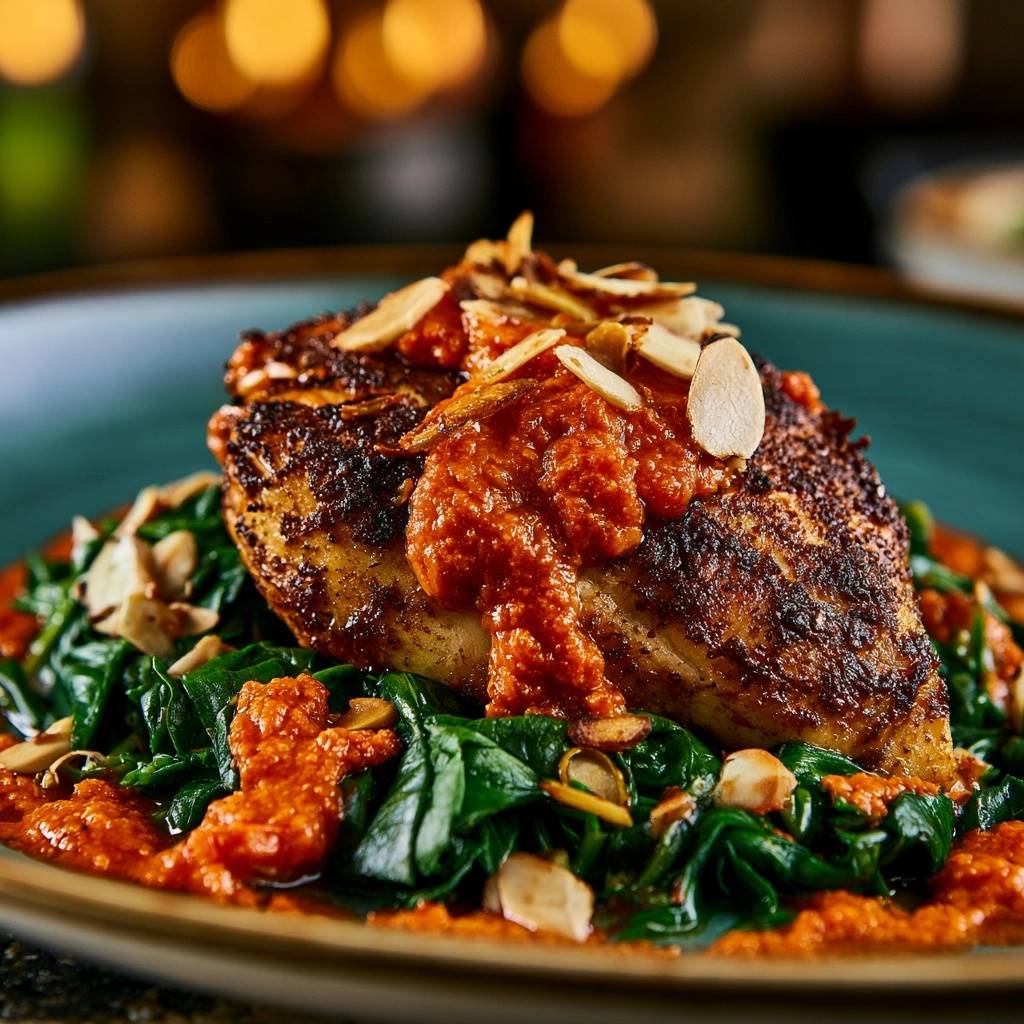
- In a small bowl, combine the smoked paprika, garlic powder, onion powder, salt, and black pepper. This heavy spice ratio is the first step to killing blandness and creating the dark, charred crust seen in the image.
- Pat the chicken completely dry with paper towels. Rub the spice mixture generously over all sides of the chicken, pressing it firmly into the meat so it adheres.
- Heat 2 tablespoons of olive oil in a large oven-safe skillet over medium-high heat. Once the oil is shimmering, sear the chicken for 4 minutes per side. Do not move the chicken prematurely; you want to develop a deep, dark mahogany crust.
- Transfer the skillet to a 400°F (200°C) oven for 10 to 12 minutes, or until the internal temperature reaches 165°F.
- While the chicken roasts, prepare the Romesco sauce. In a food processor, combine the roasted red peppers, 1/4 cup of the toasted almonds, minced garlic, lemon juice, tomato paste, and the remaining 1 tablespoon of olive oil. Pulse until thick and textured, but not a smooth puree.
- Remove the chicken from the pan and transfer to a plate. Let it rest for 5 minutes. This is crucial to keep the juices inside the meat.
- Place the same skillet (with the flavorful chicken drippings) back on medium heat. Add the spinach and a splash of water or lemon juice. Toss for 1-2 minutes until just wilted and bright green.
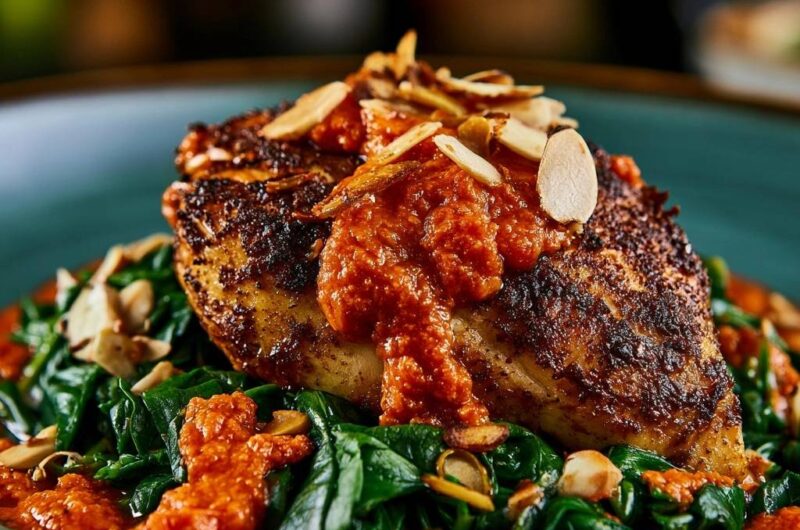
- To plate: Create a bed of wilted spinach. Place the seared chicken breast on top. Spoon a thick ribbon of Romesco sauce over the center of the chicken and around the base of the spinach. Garnish generously with the remaining 1/4 cup of toasted sliced almonds for the signature crunch and visual finish.
Notes
- Resting the chicken for 5 minutes is crucial to keep the juices inside the meat. Do not over-process the Romesco sauce; it should have a slightly chunky texture from the almonds.