Why This Braise Delivers Tender Beef Every Time
Why does your beef stew meat always turn out chewy, no matter how long you simmer it? Most folks skip the crucial sear or rush the low heat, leaving tough collagen intact. This rosemary braised beef fixes that with a simple sear-and-braise combo that guarantees fork-tender chunks every single time.
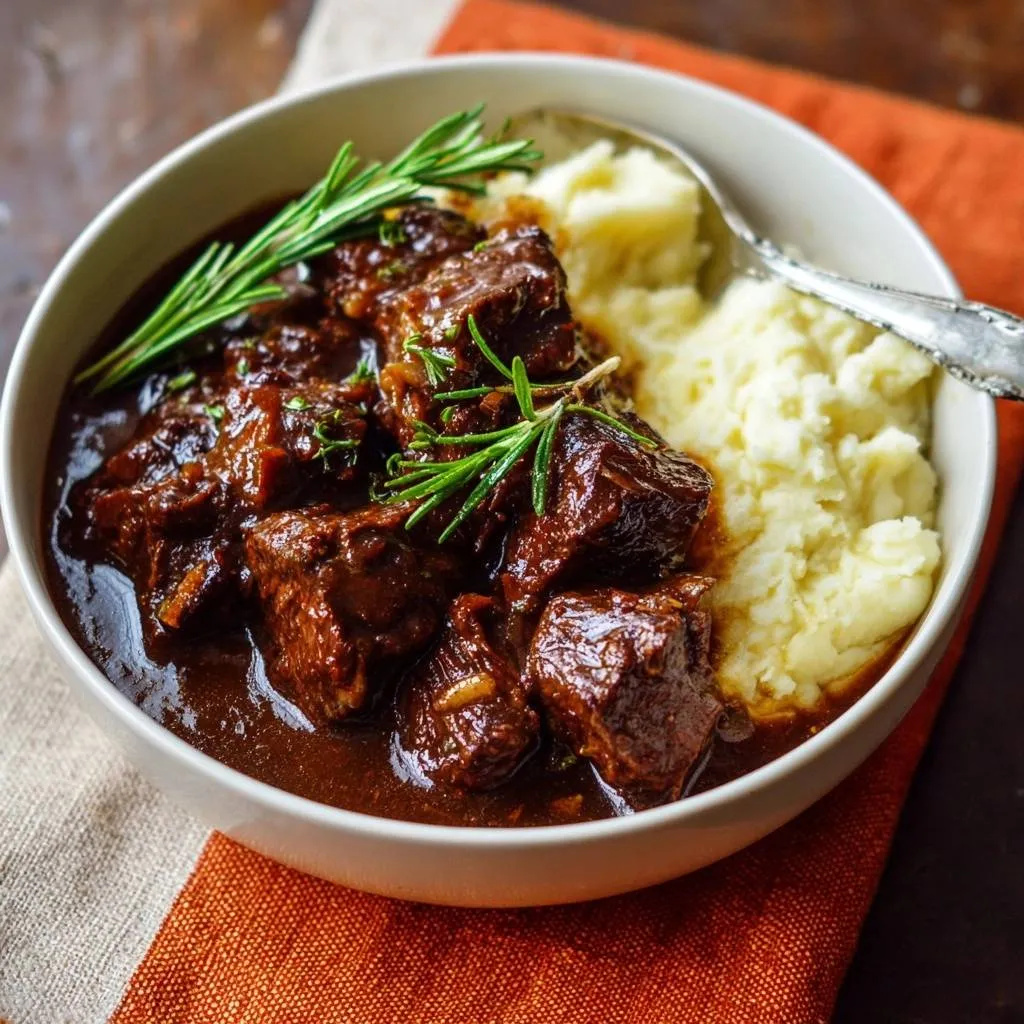
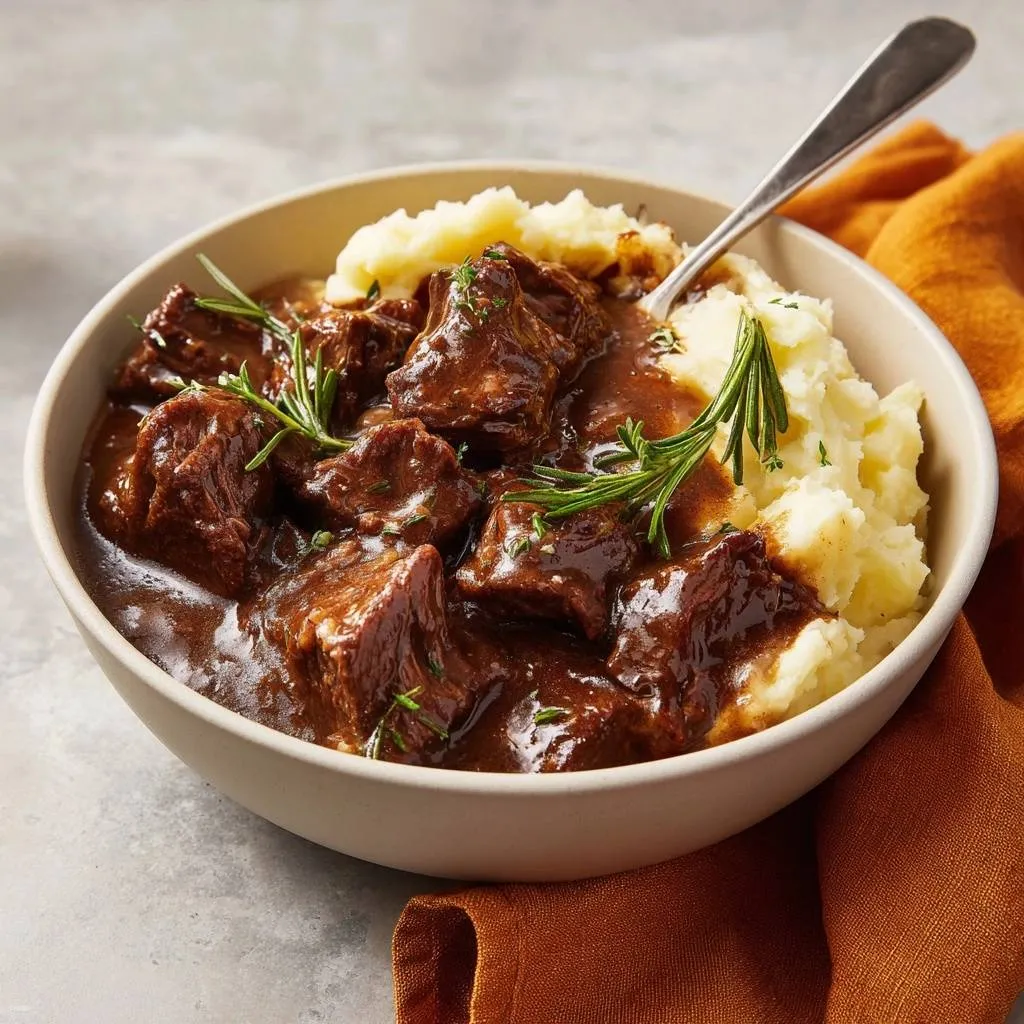
Picture glossy gravy clinging to melt-in-your-mouth beef, spooned over ultra-creamy mashed potatoes. The aroma of rosemary and caramelized onions fills your kitchen, promising cozy comfort on a chilly evening. It’s the kind of meal that makes you forget takeout exists.
Here’s the expertise kicker: pat the beef dry before seasoning. That step creates a perfect crust during searing, locking in juices and jump-starting the tenderness magic. You’ll taste the difference from the first bite.
Key Ingredients for Rosemary Braised Beef Success
Beef chuck shines here because its marbling breaks down into rich gelatin during braising. Cut into 1.5-inch cubes for even cooking, and always choose well-marbled pieces from the butcher counter. Fresh beef broth beats boxed for deeper flavor; if you use store-bought, go low-sodium to control seasoning.
Russet potatoes deliver fluffy mash thanks to their high starch content. Fresh rosemary sprigs add piney brightness that dried just can’t match, infusing the gravy without overpowering. Tomato paste brings umami depth when caramelized, building a flavor base that elevates everything.
Olive oil sears without burning, while butter makes the mash silky. Warm the milk first to avoid gumminess. For dairy-free, swap in coconut milk; it works beautifully without altering the cozy vibe.
Beef Chuck: Choosing and Prepping Cubes
Chuck’s fat marbling melts into tenderness during the braise. Aim for 1.5-inch cubes so every piece browns evenly. Pat them dry with paper towels; moisture steams instead of sears, so this step ensures a craveable crust.
Potatoes and Dairy for Silky Mash Texture
Russets fluff up better than waxy varieties due to starch. Peel them for smoothness, though skin-on adds rustic charm. Warm the milk and mash in butter gradually; cold dairy causes lumps every time.
Science of Braising Rosemary Beef to Perfection
Braising transforms tough collagen in chuck into silky gelatin at 325F. That low, steady oven heat breaks it down over 2.5 hours without drying the meat. However, searing first triggers the Maillard reaction, creating a flavorful crust that amps up the gravy.
A Dutch oven seals in moisture perfectly, unlike open pots that evaporate liquid. Boiling toughens beef, and pressure cooking can make it mushy. Therefore, this method nails tender texture with glossy sauce.
Pro tip: the tomato paste’s acidity helps tenderize further. You’ll pull fork-tender beef that shreds effortlessly, proving science serves home cooks well.
For that same tender, melt-in-your-mouth beef, explore the secrets to a truly creamy slow-simmered beef stew.
Collagen Breakdown in Low Oven Heat
At 325F, collagen converts after about 2.5 hours. Test with a fork; it should pierce without resistance. Tomato paste lowers pH, speeding the process for melt-in-mouth results.
Searing Locks Juices and Builds Flavor
Sear in batches to avoid steaming; each cube needs space for browning. Scrape those bits when deglazing; they dissolve into gravy gold. In addition, this builds layers no shortcut matches.
Essential Tools for Flawless Rosemary Braise
Your Dutch oven distributes heat evenly and seals tight for moist braising. Enameled cast iron works too, but avoid thin pots that scorch. A potato ricer beats a masher for gum-free mash.
Heat oil until shimmering for perfect searing; too cool, and beef steams. Use an oven thermometer for accuracy, since temps vary. Clean-up hack: soak the pot right after serving.
Phase 1: Searing Beef for Rosemary Braised Base
Pat beef dry, season with salt and pepper. Heat 2 tablespoons olive oil in your Dutch oven over medium-high until shimmering. Sear cubes in batches, 3-4 minutes per side, for a deep brown crust. Don’t overcrowd, or it’ll steam instead of brown.
You’ll see juices lock in as the crust forms. Transfer to a plate; this takes about 20 minutes but sets up success.
Phase 2: Building Aromatic Rosemary Broth
Lower heat to medium, add remaining oil, onion, and garlic. Saute 5 minutes until soft and fragrant. Stir in tomato paste; cook 2 minutes to caramelize for rich depth.
Return beef and juices, pour in broth and rosemary sprigs. Scrape browned bits; they make the gravy shine. Liquid should cover meat; simmer briefly before oven time. Active work: 15 minutes.
Phase 3: Hands-Off Oven Braise Magic
Cover tightly, bake at 325F for 2.5 hours undisturbed. No peeking; it releases steam and slows tenderizing. Test with a fork; rest 10 minutes for sauce to thicken naturally.
Phase 4: Creamy Mashed Potatoes Mastery
Boil peeled, quartered russets in salted water 15-20 minutes until fork-tender. Drain, then heat over low 1 minute to evaporate water; this prevents gumminess. Mash with warm milk and 3 tablespoons butter, seasoning to taste. Time it with the braise.
More to Try
To complete your rosemary braised beef meal, consider these complementary potato dishes.
- For a deeply flavorful experience, try creamy garlic mashed potatoes and gravy, a perfect match for tender braised beef.
- If you’re after a rich and satisfying side, discover creamy mashed potatoes with rich gravy, which complements the savory notes of the beef.
Final Assembly: Plating Rosemary Beef and Mash
Discard rosemary stems, skim fat if you like. Spoon beef and glossy gravy over mash. Garnish with fresh rosemary for pop. Serve hot; make-ahead by chilling overnight, then reheat gently.
Avoiding Pitfalls in Rosemary Braised Beef
Tough beef? Undercook or skip searing. Gummy mash comes from cold milk or watery potatoes. Bland gravy skips deglazing, so always scrape those bits.
Over-season early; taste after braising. At high altitude, add 30 minutes braise time. Therefore, these fixes keep it perfect.
Fixing Tough or Dry Beef Chunks
Extend braise by 30 minutes if needed, ensure uniform cubes. Poor sear means weak crust, so pat dry next time. Re-braise covered with broth if salvaging.
Preventing Watery Mashed Potatoes
Dry the pot post-drain to remove moisture. Use starchy russets, not waxy. Warm dairy prevents seizing.
Make-Ahead and Freezing Rosemary Braised Beef
Cool beef fully, then fridge in airtight container up to 3 days. Reheat covered on stovetop with a splash of broth. Freeze beef up to 3 months; thaw overnight and simmer gently.
Mash freezes in portions up to 1 month; stir well after thawing. Gravy may separate, so whisk in water. Batch-cook for easy weeknights.
Pairing Sides with Rosemary Braised Beef
Balance richness with roasted carrots or sautéed greens. A crisp salad cuts the creaminess. Sourdough sopping gravy is essential.
Sparkling apple cider complements the rosemary. In fall, add glazed parsnips for seasonal warmth.
Flavor Twists on Rosemary Braised Beef
Swap rosemary for thyme, toss in carrots or mushrooms midway. For heat, stir harissa into tomato paste. Use extra broth instead of wine for depth.
Dairy-free mash with coconut cream stays silky. Try Mexican chipotle paste for smoky fusion. These keep it fresh.
Common Queries on Rosemary Braised Beef
Instant Pot Rosemary Braised Beef Timing
Sear first on saute, add liquids, 60 minutes high pressure, natural release 20 minutes. Quick release rest, then thicken gravy on saute.
Nutrition in Beef and Mash Dish
Per serving: 600 calories, 45g protein, iron from beef, vitamin C from potatoes. High in B vitamins, potassium; hearty fuel.
Slow Cooker Adaptation Steps
Sear beef, build base on stovetop, transfer to slow cooker. Low 8 hours. Stir once halfway if possible.
For an even deeper dive into slow cooking techniques, explore slow-cooked savory pot roast.
Gluten-Free or Dairy-Free Adjustments
Check broth for gluten; use certified GF. Dairy-free: coconut or almond milk, vegan butter for mash.
Scaling for Crowd-Sized Batches
Double ingredients, use larger Dutch oven. Braise time same; check liquid midway. Serves 8 easily.
Rosemary Braised Beef
Course: Main CourseCuisine: AmericanDifficulty: medium4
servings30
minutes3
hours950
kcal210
MinutesTired of chewy beef stew meat? This recipe delivers fork-tender beef chunks every time with a simple sear-and-braise method. Paired with ultra-creamy mashed potatoes for cozy perfection.
Ingredients
2 pounds beef chuck, cut into 1.5-inch cubes
4 large russet potatoes, peeled and quartered
1 large onion, diced
4 garlic cloves, minced
3 tablespoons tomato paste
2 cups beef broth
4 sprigs fresh rosemary, plus extra for garnish
3 tablespoons olive oil
4 tablespoons butter, divided
1/2 cup milk
Salt and black pepper to taste
Directions
- Pat beef cubes dry with paper towels and season generously with salt and pepper. This preps the surface for perfect searing.
- Heat 2 tablespoons olive oil in a large Dutch oven over medium-high heat until shimmering. Sear beef in batches, 3-4 minutes per side, until deep brown crust forms. Do not overcrowd; this locks in juices and jump-starts tenderness. Remove to a plate.
- Lower heat to medium. Add remaining 1 tablespoon oil, onion, and garlic. Saute 5 minutes until softened. Stir in tomato paste and cook 2 minutes to caramelize for rich flavor base.
- Return beef and any juices to pot. Add beef broth and rosemary sprigs, scraping up browned bits. Liquid should just cover meat; add a splash more broth if needed. Bring to simmer.
- Cover tightly and transfer to 325F oven. Braise 2.5 hours undisturbed. This low-slow magic converts tough connective tissue to gelatin, guaranteeing melt-in-mouth tenderness without stringiness or dryness. Beef is done when fork pierces easily.
- While beef braises, boil potatoes in salted water 15-20 minutes until fork-tender. Drain, return to pot over low heat 1 minute to evaporate moisture (prevents gumminess). Mash with 3 tablespoons butter and warm milk until creamy. Season with salt and pepper.
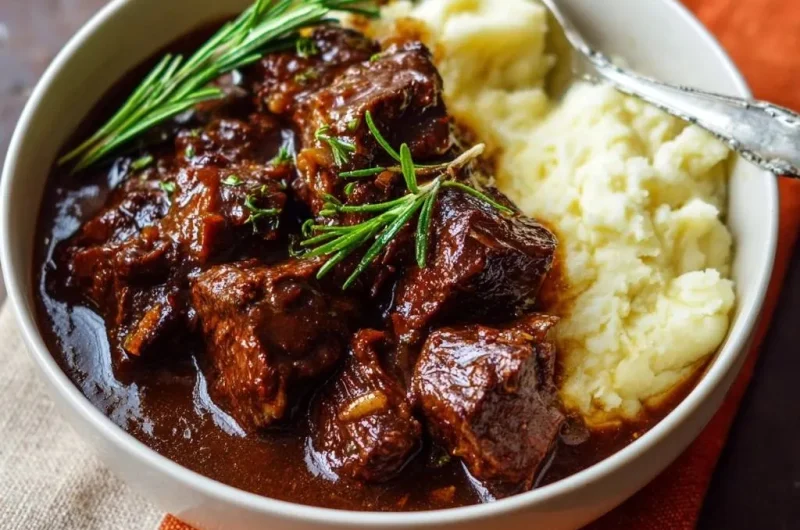
- Remove pot from oven. Discard rosemary sprigs. Skim excess fat if desired; sauce will be glossy and coat beef perfectly. Serve beef and gravy over mashed potatoes, garnished with fresh rosemary.
- Dig in to beef thats tender from the first bite!
Notes
- Braise undisturbed for 2.5 hours at 325°F to convert tough collagen to gelatin for melt-in-mouth tenderness. Sear in batches to avoid steaming and ensure a deep crust.