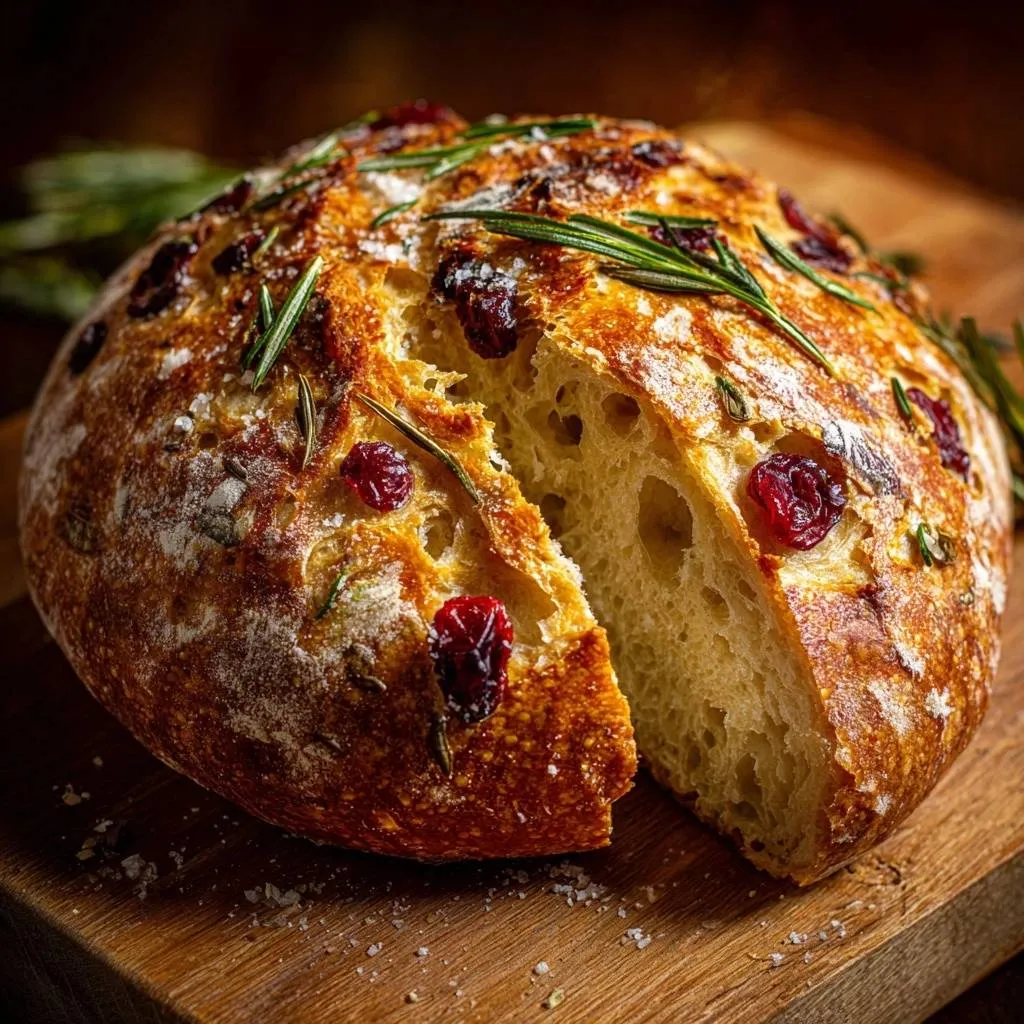
Tired of pulling dense, hockey puck loaves from your oven? This rosemary cranberry artisan bread fixes that with a no-knead method that delivers bakery-style airy crumb and those big, satisfying holes. You’ll get one gorgeous loaf, about 12 slices, with just 20 minutes active time and a total of around 24 hours. The rosemary-cranberry combo shines here, tart berries popping against earthy herb notes in every bite.
So why does this work when other recipes flop? High hydration dough ferments slowly, building gluten naturally over 18-24 hours. No fancy skills or equipment needed, just patience for the science to do its thing. Suddenly, you’re slicing into crusty perfection that rivals any boulangerie.
Here’s the expertise kicker: use water at exactly 110F. Too hot kills the yeast; too cool slows fermentation to a crawl. Nail that, and you’ll see massive oven spring in the Dutch oven, locking in air pockets for good. Oh man, that first slice? Pure joy.
Essential Components for Rosemary Cranberry Artisan Bread
Bread Flour’s Role in Structure
Bread flour packs 12-14% protein, way higher than all-purpose’s 10-11%. That extra gluten power absorbs the 75% hydration here, forming strong networks during the long rise. All-purpose works in a pinch, but expect smaller holes and less chew.
In addition, bread flour holds onto those CO2 bubbles better. Therefore, your loaf rises tall with an open crumb. Grab unbleached for the best flavor.
Instant Yeast and Long Fermentation Balance
Just 1/4 teaspoon instant yeast keeps things precise for that 18-24 hour rise. Unlike active dry, it doesn’t need proofing and kicks off fermentation right away. This tiny amount produces steady CO2, creating those signature big pockets without overproofing.
However, if you swap in active dry, dissolve it first in the warm water. That prevents weak rises and flat loaves every time.
Salt’s Dual Purpose in Flavor and Tension
Two teaspoons kosher salt strengthen gluten strands and control yeast activity during fermentation. It also sharpens the tart cranberries and piney rosemary, balancing the loaf’s flavors. Use coarse for texture; fine salt over-salts easily.
Moreover, salt slows enzymatic breakdown, preventing a sour over-ferment. Sprinkle it evenly when whisking dry ingredients.
Incorporating Dried Cranberries Precisely
Half a cup dried cranberries avoid soggy dough, unlike fresh ones that leak moisture. They rehydrate gently during the rise, bursting with antioxidants and chew. Fold them in last for even distribution.
Pro tip: chop larger pieces for better bites. In addition, their natural sugars caramelize slightly in the oven, adding sweet-tart pops.
Fresh Rosemary’s Aroma Impact
Three tablespoons finely chopped fresh rosemary, plus sprigs on top, infuse deep pine aroma without bitterness. Fresh beats dried 3:1 in potency, so don’t swap or you’ll overpower the bread. Chop leaves finely and fold in at the end.
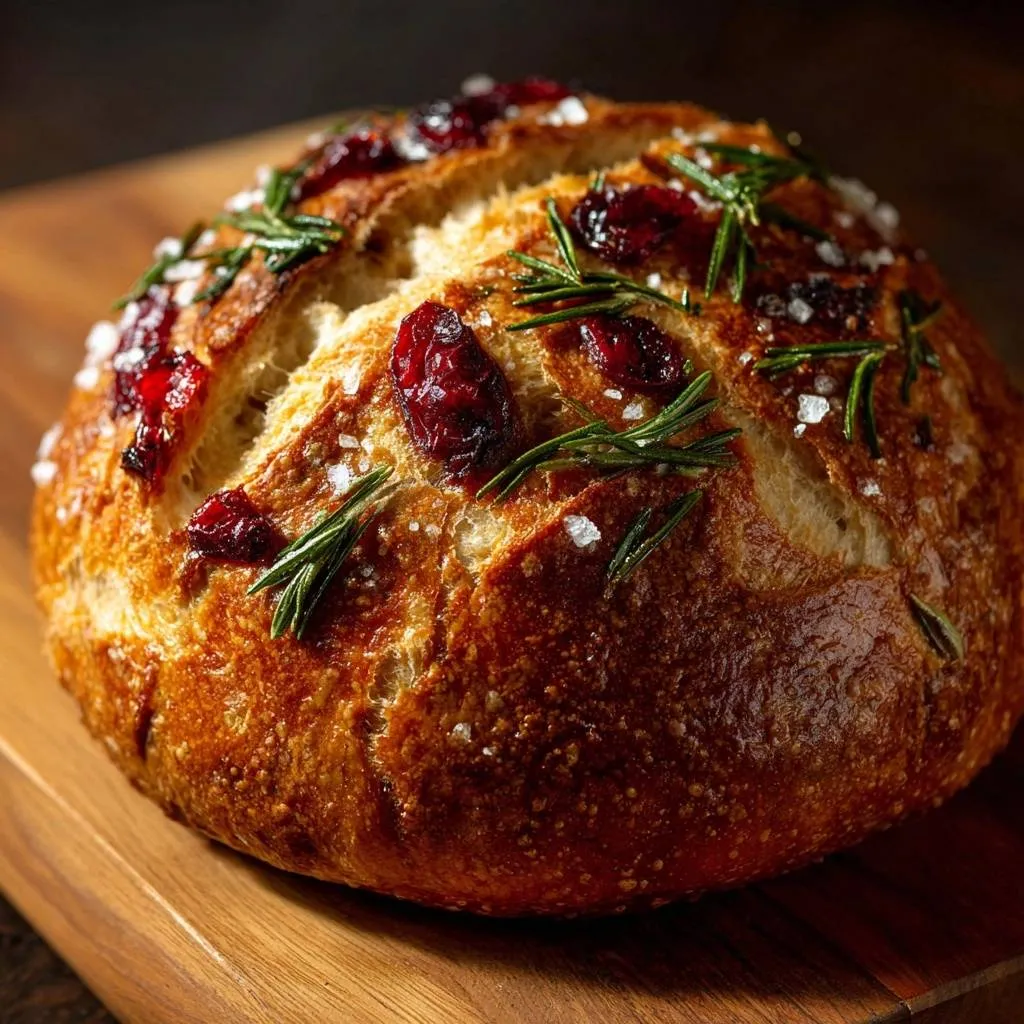
Furthermore, topping sprigs crisp up beautifully under coarse sea salt. That salty-herb crunch elevates every slice.
For more ideas that feature similar flavors, see this cranberry rosemary sea salt bread.
Science of No-Knead High Hydration Dough
Gluten Development Without Kneading
No-knead relies on autolyse, where enzymes break down flour proteins over 18-24 hours. This builds strong gluten naturally, plus stretch-and-fold later tightens it. You’ll feel the dough transform from shaggy to bubbly and elastic.
Therefore, skip the mixer; time does the work. However, resist peeking too often, or you’ll deflate those precious bubbles.
High Hydration’s Air Pocket Magic
At 75% hydration, 375g water to 500g flour lets CO2 bubbles expand freely into big artisan holes. Lower hydration doughs stay dense and chewy in a bad way. This wet mix steams open in the oven for maximum lift.
In addition, it creates a glossy, open crumb that soaks up butter perfectly. Just flour your hands well when handling; it’s sticky but worth it.
Fermentation’s Flavor Complexity Build
Slow room-temp rise at 68-75F produces lactic acid for subtle tang, complementing cranberries’ tartness and rosemary’s earthiness. Faster ferments taste flat and yeasty. Keep it draft-free for even results.
Pro tip: if your kitchen’s chilly, place the bowl in an off oven with the light on for gentle warmth.
Dutch Oven Technique for Perfect Crust
Preheating for Oven Spring Explosion
Preheat your Dutch oven at 450F for 45 minutes to create a steam chamber. Trapped moisture expands the dough 30-50% in the first minutes, giving huge oven spring. No Dutch oven? Use a covered cast iron pot or baking stone with a steam pan.
Therefore, always use oven mitts; that pot’s scorching. The result? Tall loaves with crackly crusts.
Steam’s Role in Crisp Exterior
Covered baking for 30 minutes gelatinizes starches for chewiness, while steam keeps the crust supple. Uncover for 15 minutes to trigger Maillard browning and crisp it up. Parchment paper slides right in and prevents sticking.
However, check your lid seal; loose fits let steam escape and soften the crust.
Cooling Process for Sliceable Texture
Cool on a wire rack for 2 full hours. This sets the crumb structure and evens out moisture, avoiding gumminess. Slice too soon, and steam escapes, leaving a doughy middle.
In addition, hear that crackle as it cools? That’s the sign of perfection.
Step-by-Step: Building Rosemary Cranberry Artisan Bread
Mixing Shaggy Dough Base
Whisk flour, yeast, and kosher salt in a large bowl. Pour in 110F water and stir 2 minutes max until no dry spots linger; it’ll look shaggy and sticky. Gently fold in cranberries and chopped rosemary, then cover with plastic wrap.
Let ferment 18-24 hours at room temp. You’re ready when it’s bubbly, doubled, and jiggly with a domed surface smelling sweetly fermented. Don’t overmix; preserve those air pockets.
Shaping Loose Ball Gently
Turn dough onto a floured surface. Fold edges to center 4-6 times, rotating to form a loose ball; keep handling minimal to hold bubbles. Place seam-side up on parchment in a bowl and rest 1 hour.
Therefore, it’ll puff up softly. Pro tip: flour your hands generously; the high hydration makes it tacky.
Baking Phases in Dutch Oven
Slide parchment with dough into the blazing hot Dutch oven. Scatter rosemary sprigs and coarse sea salt on top. Cover and bake 30 minutes at 450F, then uncover for 15 more until deep golden and internal temp hits 205-210F.
Listen for the hollow thump when tapping the bottom. Cool 2 hours before slicing into that airy, aromatic heaven.
Avoiding Common Rosemary Cranberry Artisan Bread Pitfalls
Preventing Dense, Flat Loaves
Dense loaves come from under-fermentation; wait for full doubling and bubbles. Use bread flour, not weak all-purpose, and rise in a draft-free spot. Over-ferment shows as collapsed, boozy smells, so check at 18 hours.
However, a warm spot speeds it safely. Always measure flour by weight for precision.
Fixing Pale or Soft Crust
Pale crusts mean low oven temp or poor steam; calibrate your thermometer and preheat fully. If soft post-bake, broil 1-2 minutes watching closely. At high altitude, drop temp 25F and add 5 minutes.
In addition, vent the lid slightly at 25 minutes if browning too slow.
Solving Uneven Cranberry Distribution
Chop cranberries to uniform bits and fold gently with a spatula. Multiple folds during shaping distribute evenly. Slicing reveals perfect pops throughout, no clumps.
Pro tip: toss berries in a teaspoon flour first to prevent sinking.
Flavor Variations for Rosemary Cranberry Artisan Bread
Nutty Additions Like Walnuts
Add or swap in 1/2 cup toasted walnuts for crunch against the soft crumb. Toast at 350F for 8 minutes until fragrant, then cool before folding. They pair beautifully with the tart berries.
Therefore, each bite gets nutty depth. Don’t skip toasting; raw nuts stay tough.
Citrus Zest Twists
Grate 1 tablespoon orange or lemon zest into the dry mix; it amplifies cranberry brightness. Use a microplane and avoid bitter white pith. Fold gently to release oils.
In addition, the citrus cuts rosemary’s pine for a festive lift.
Herb Swaps Beyond Rosemary
Try thyme or sage at the same 3 tablespoons chopped; thyme’s lemony edge loves cranberries, while sage adds savory warmth. Stick to fresh and match potency. Test small batches first.
However, rosemary remains king for that classic vibe.
Pairing Rosemary Cranberry Artisan Bread
Cheese Board Complements
Slice thick for soft brie that melts into the warm crumb, sharp cheddar for bite, or tangy goat cheese. Warm slices elevate the pairings, letting rosemary aromas mingle. It’s a crowd magnet.
Pro tip: drizzle honey over brie-slathered pieces for sweet contrast.
Soup and Salad Matches
Pair with creamy butternut squash soup; the tart bread cuts richness perfectly. Toss into arugula salads for crunch. That cranberry tang ties it all together.
Therefore, winter meals feel complete.
Breakfast and Brunch Ideas
Upgrade avocado toast with thin slices; the salt flecks shine. For French toast, soak in a cinnamon-egg batter but shorten time to preserve berries. Weekend brunch game-changer.
In addition, toast leftovers for killer croutons.
Storage and Make-Ahead for Artisan Bread
Room Temp and Freezer Longevity
Store at room temp in a paper-lined towel or bread bag up to 3 days; it stays crusty. For longer, slice and freeze in a zip bag up to 3 months. Thaw and refresh at 350F for 5 minutes.
However, don’t fridge; it stales fast. Pro tip: whole loaves freeze best unsliced.
Scaling Batches Efficiently
Double the recipe easily; use a giant bowl for mixing. Bake two loaves in separate Dutch ovens or one large. Perfect for gifting warm from the oven.
Therefore, holiday crowds love fresh loaves. Weigh ingredients for spot-on doubles.
Rosemary Cranberry Artisan Bread FAQ
Can I Use All-Purpose Flour Instead?
Yes, but you’ll get smaller air holes and less structure due to lower protein. Boost it with 2 tablespoons vital wheat gluten per 3 cups flour for closer results. Hydration stays the same; just expect a touch denser crumb.
What If My Dough Didn’t Double?
Move to a warmer spot (75-80F) like near a pilot light, or wait up to 30 hours. Test yeast viability by proofing a pinch in warm water with sugar first. Drafts or old yeast kill the rise, so check those.
Gluten-Free Rosemary Cranberry Artisan Bread Possible?
Gluten-free 1:1 blends work okay but need tweaks: reduce water by 1/4 cup and add 1 teaspoon xanthan gum. Ferment 12-18 hours max; expect a moister texture. Bread flour’s gluten magic doesn’t translate fully.
How to Tell When Fermentation Finishes?
Look for a bubbly, domed surface that’s doubled and jiggles like a happy belly. Poke test: dough springs back slowly. It smells sweetly fermented, not boozy. If flat or collapsed, it’s overdone.
Substitute Fresh Cranberries?
No, fresh add too much moisture and make dough gummy. Dry them first at 200F for 3 hours, or chop and drain a quick compote (1/2 cup berries simmered with 1 tablespoon sugar 5 minutes). Dried keep the chew perfect.
Why Is My Loaf Dense Despite Long Rise?
Under-proofing after shaping or weak oven spring from insufficient preheat. Ensure 1 full hour second rise and 45-minute Dutch oven heat. Also, measure flour by weight; scooping packs it dense.
Can I Skip the Dutch Oven?
Yes, bake on a preheated pizza stone with a steam pan (hot water in a cast iron skillet below). Cover loosely with foil first 30 minutes. Crust won’t be as epic, but steam mimics the effect closely.
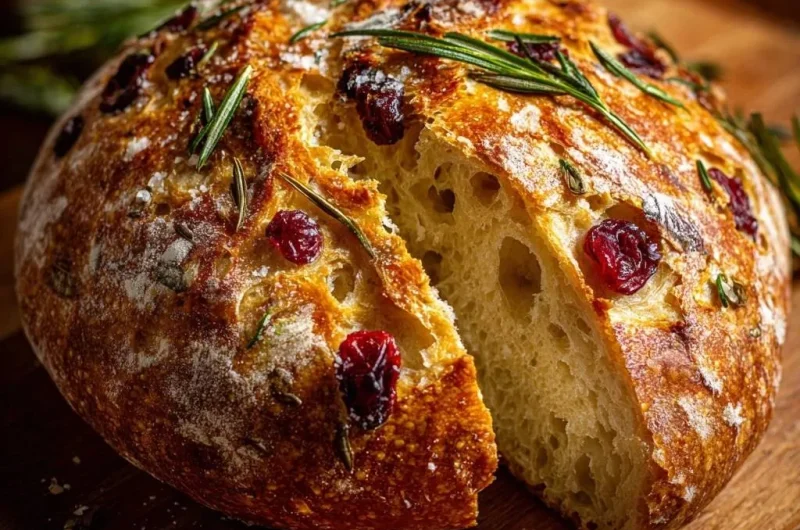
Rosemary Cranberry Bread
Course: BreadCuisine: AmericanDifficulty: medium1
loaf20
minutes45
minutes240
kcal1440
MinutesTired of dense homemade bread? This no-knead method with high hydration and long fermentation builds strong gluten naturally for big, airy holes without fancy equipment.
Ingredients
3 cups bread flour
1 1/4 cups warm water (about 110F)
1/4 teaspoon instant yeast
2 teaspoons kosher salt
1/2 cup dried cranberries
3 tablespoons fresh rosemary, finely chopped (plus extra sprigs for topping)
1 teaspoon coarse sea salt for topping
Directions
- In a large bowl, whisk together flour, yeast, and kosher salt. Add warm water and stir until a shaggy dough forms, no dry spots remain. Fold in dried cranberries and chopped rosemary. Cover with plastic wrap and let rise at room temperature for 18-24 hours. This long, slow fermentation is the key to solving dense loaves: it develops gluten strands naturally through time and CO2 bubbles, creating the open crumb structure without kneading.
- After rising, dough will be bubbly and doubled. Turn onto a floured surface. Fold edges into center 4-6 times to form a loose ball. Place seam-side up on parchment paper in a bowl, cover, and rest 1 hour.
- Preheat oven to 450F with a Dutch oven inside for 45 minutes. Carefully place dough (on parchment) into hot Dutch oven, top with rosemary sprigs and sprinkle coarse salt. Cover and bake 30 minutes.
- Remove lid, bake uncovered 15 minutes more for golden crust. The trapped steam from the Dutch oven gives massive oven spring, locking in those big air pockets for good. Cool on wire rack 2 hours before slicing. Store at room temp up to 3 days.
Notes
- Long slow fermentation (18-24 hours) develops gluten naturally for open crumb structure. Use a Dutch oven for oven spring and crust. Cool 2 hours before slicing.