Why Rosemary Pot Roast Transforms Dinners
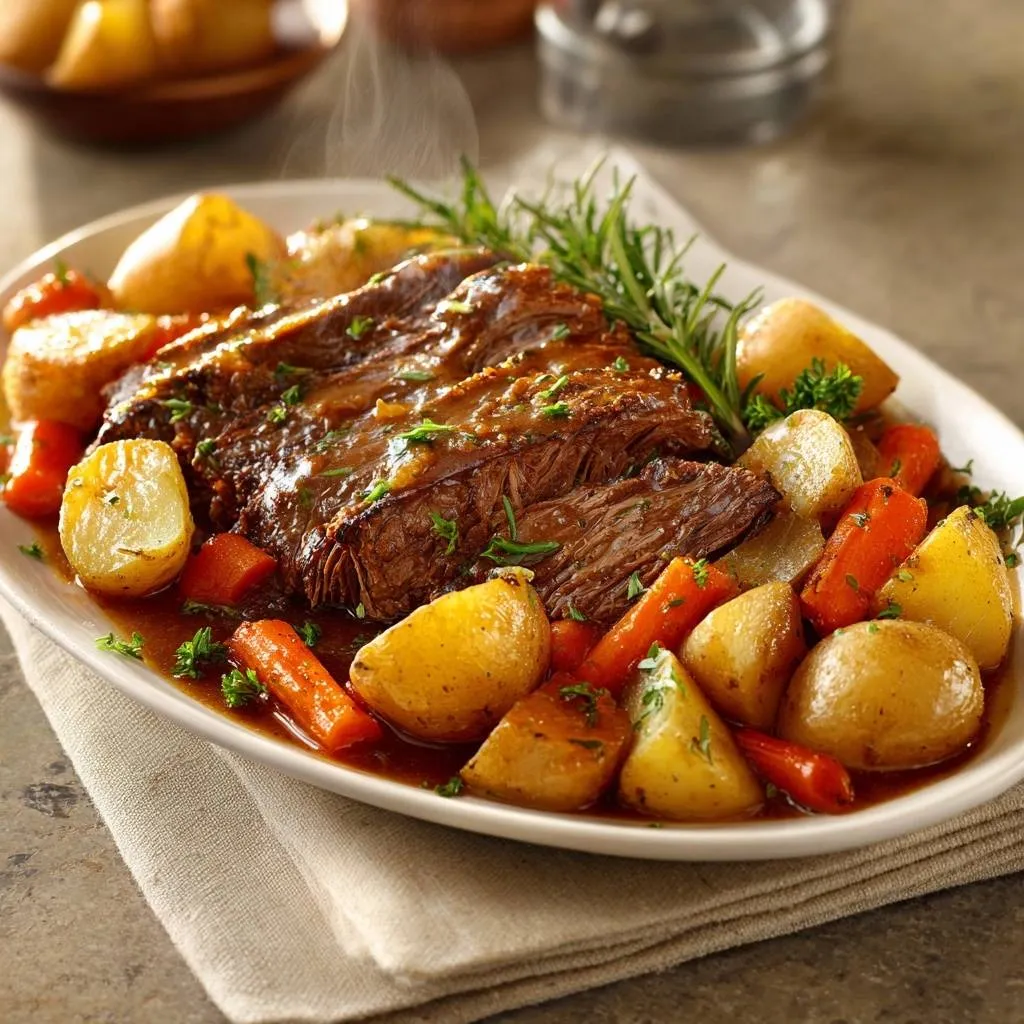
Ever pulled a pot roast from the oven only to find it chewy and tough, no matter how long you cooked it? You’re not alone. Most home cooks battle dry, stringy beef because they skip the low-and-slow braise or let steam escape. But this rosemary pot roast changes everything with its foolproof foil seal that locks in moisture for fork-tender results every time.
For a similarly hearty meal, check out this braised beef with beets.
Therefore, you get juicy beef infused with woody rosemary flavor that seeps into the potatoes and carrots. In addition, the science of collagen breakdown turns tough chuck roast into melt-in-your-mouth perfection. It’s why this rosemary pot roast beats every other version you’ve tried.
The secret lies in the airtight foil wrap over the lid. It traps steam, raising internal pressure just enough to tenderize without drying out the meat. Beginners nail it on the first go because this method forgives small mistakes.
Essential Ingredients for Juicy Rosemary Pot Roast
Start with a 3 to 4 pound beef chuck roast. Its marbling and connective tissue break down beautifully during braising, unlike leaner cuts that dry out. Grass-fed options add extra flavor, but any quality chuck works.
Next, grab 2 pounds baby potatoes, halved. They hold their shape better than full-sized ones, soaking up rosemary essence without turning mushy. For 1 pound carrots in 2-inch chunks, this size ensures even cooking alongside the beef.
Fresh rosemary sprigs, about 4, release potent volatile oils during the braise, far superior to dried which lose strength. A bunch of parsley chopped for garnish adds bright freshness at the end. Don’t skip it.
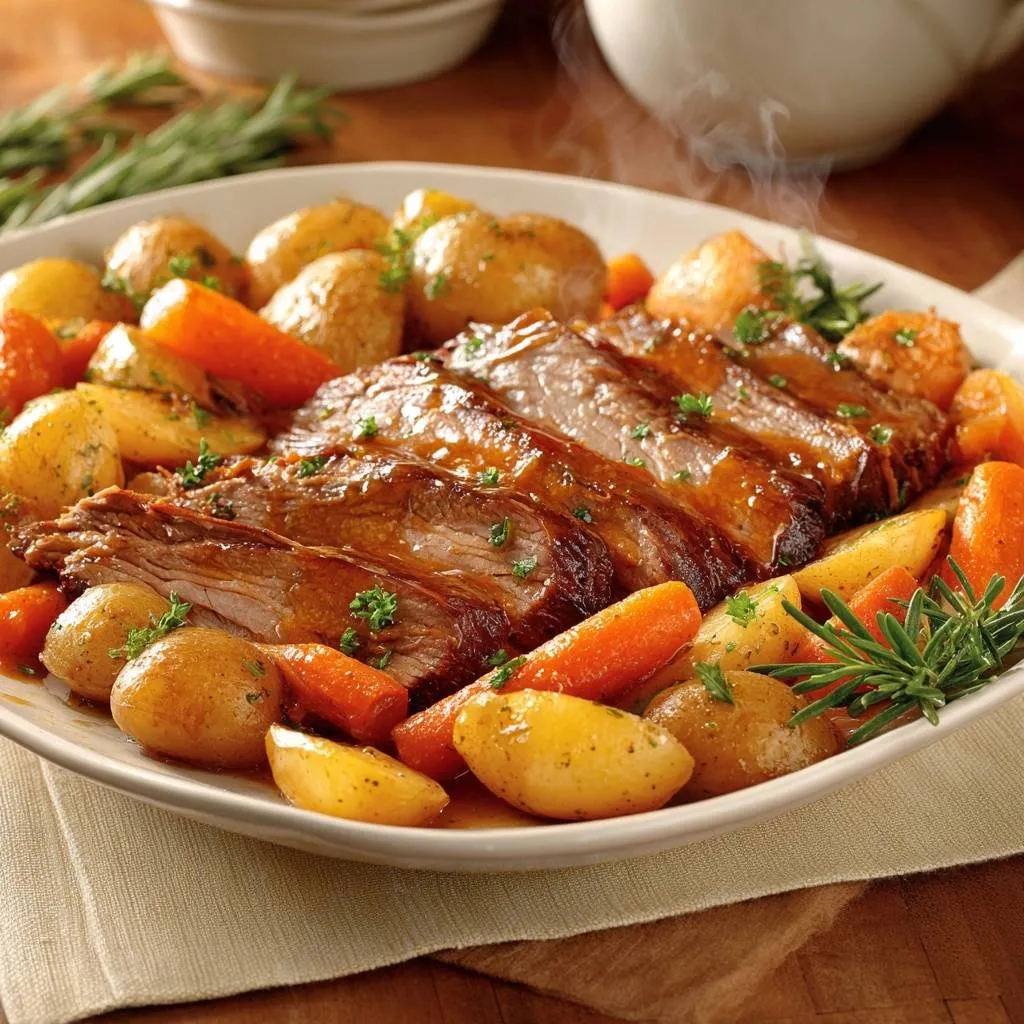
Low-sodium beef broth, 4 cups, builds umami without oversalting since you season the meat first. In addition, 3 tablespoons olive oil with a high smoke point sears perfectly. Finally, 2 teaspoons salt and 1 teaspoon black pepper create the crust.
Beef Chuck Roast: Choosing the Ideal Cut
Chuck roast shines in rosemary pot roast because its fat cap renders slowly, basting the meat. Compared to brisket, it’s more forgiving; round stays too lean and tough. Pat it dry before seasoning for better browning.
Vegetables and Herbs: Flavor Foundations
Baby potatoes and carrots pair with rosemary for earthy synergy. Halve potatoes to expose more surface for flavor absorption. Bruise rosemary sprigs lightly to release oils; parsley garnish cuts richness.
Broth and Seasonings: Building the Base
Low-sodium broth prevents a salty gravy since salt draws out meat juices. Pepper adds subtle heat for crust formation. Quality olive oil withstands high sear heat without burning.
Science of Tender Rosemary Pot Roast Braising
At 300 degrees F, collagen in chuck roast converts to gelatin between 160 and 205 degrees F internal. This low temp allows time for breakdown without toughening proteins. Therefore, your rosemary pot roast hits fall-apart texture in 3 hours.
The sear triggers Maillard reaction, creating a crust that locks in juices. Rosemary’s oils extract in the moist environment, flavoring veggies deeply. However, high heat skips this tenderizing magic.
Foil seal retains 98% moisture by trapping steam. No peeking keeps pressure steady. That’s why Instant Pots often fail; they can’t match this controlled braise.
Collagen Breakdown in Chuck Roast
Collagen needs 3 to 3.5 hours at 205 degrees F to gelatinize fully. Broth’s slight acidity speeds it up. Test with a fork; it shreds easily when done.
Role of Airtight Foil Seal
Double-wrap foil over the lid crimps edges tight, building steam pressure like a pressure cooker. No-peek rule maintains humidity. Loose seals dry out the beef.
Equipment That Ensures Perfect Rosemary Pot Roast
A cast iron Dutch oven retains even heat for braising. Enameled versions clean easily. Pair it with a heavy lid and heavy-duty foil for the seal.
Therefore, use an oven thermometer for accuracy since home ovens vary. For gravy, the broiler thickens it fast. Skip slow cookers; they don’t sear well and veggies mush.
Step-by-Step: Searing and Building Rosemary Pot Roast
Preheat oven to 300 degrees F. Pat the beef dry thoroughly; moisture steams instead of sears. Season generously with salt and pepper for a dry brine effect.
Heat olive oil in the Dutch oven over medium-high until shimmering. Sear beef 4 to 5 minutes per side. Look for a deep brown crust; it smells nutty and locks in juices.
Remove beef. Add halved potatoes, carrot chunks, and rosemary sprigs. Stir 2 minutes to coat in drippings; you’ll see them glisten and smell the herbs bloom.
Prepping and Seasoning the Roast
Salt and pepper draw out surface moisture for crispier sear. Let it sit 10 minutes if time allows. Avoid overcrowding the pot.
Achieving Deep Brown Sear Crust
High heat browns sugars via Maillard. Flip with tongs at 4 minutes; sides too. Rest beef aside while veggies cook.
Step-by-Step: Braising to Fork-Tender Rosemary Pot Roast
Nestle beef among veggies. Pour in beef broth to halfway up the meat; top with water if short. Bring to a simmer on stovetop; bubbles should be gentle.
Cover with lid, then double-wrap foil tightly, crimping edges. Braise 3 to 3.5 hours. Fork shreds beef easily at 205 degrees F.
Uncover, broil 3 to 5 minutes for thicker gravy. Shred beef lightly. Garnish with chopped parsley and extra rosemary.
Layering Veggies and Broth Precisely
Distribute veggies evenly so broth infuses all. Submerge rosemary for max flavor. Halfway broth line prevents dilution.
Oven Braise and No-Peek Discipline
Middle rack position works best. Probe internal temp at 3 hours. Rotate pot halfway if your oven heats unevenly.
Avoiding Common Rosemary Pot Roast Pitfalls
Tough beef usually means no sear or loose seal. Always brown first and crimp foil tight. Dry meat comes from peeking; steam escapes fast.
For bland flavor, use fresh rosemary and low-sodium broth. Soggy veggies? Cut carrots larger next time. Over-broth dilutes taste; stick to halfway line.
Pro tip: If undercooked, return to oven 30 minutes sealed. Tastes even better next day reheated.
Fixing Tough or Dry Beef
Check seal integrity and oven temp. Extend braise 30 minutes if needed. Sear prevents initial dryness.
Preventing Soggy Vegetables
2-inch carrot chunks and halved baby potatoes resist mush. Add them post-sear to control timing.
Make-Ahead and Storage for Rosemary Pot Roast
Sear the beef a day ahead; refrigerate. Braise fresh or reheat gently. Freezes well in portions up to 3 months.
Thaw overnight in fridge. Reheat covered in 300 degree F oven with splash of broth. Turns saucy again.
Leftovers make great sandwiches on crusty bread or hash with fried eggs. Scale up by adding 1 pound meat per 4 servings.
Pairing Sides with Rosemary Pot Roast
Crusty bread soaks up gravy perfectly. A crisp green salad with vinaigrette cuts the richness.
Roasted parsnips echo the rosemary. Sparkling cranberry juice refreshes alongside. In fall, add glazed pearl onions.
Rosemary Pot Roast Troubleshooting
Why is my rosemary pot roast still tough after 3 hours?
Most likely, the foil seal wasn’t airtight or oven temp dropped below 300 degrees F. Crimp edges tighter next time and verify with a thermometer. If needed, braise another 30 minutes until it shreds at 205 degrees F internal.
Can I make rosemary pot roast in a slow cooker?
Yes, but adjust for no sear initially. Brown beef in a skillet first, then cook low 8 hours. Veggies may soften more, and gravy won’t thicken without broiling, so stir in cornstarch slurry at end.
What’s a good vegan substitute for rosemary pot roast?
Use large portobello mushrooms or jackfruit for beef texture. Braise same way with veggie broth. They absorb rosemary flavors deeply; add smoked paprika for meaty depth. Halve time to 2 hours.
Can I do rosemary pot roast in an Instant Pot?
Absolutely, sear on saute, add ingredients, pressure high 60 minutes with natural release. It tenderizes faster but misses oven’s even braise; foil isn’t needed. Broil after for crust.
How do I scale rosemary pot roast for 8 people?
Double to 6-8 pound roast, 4 pounds potatoes, 2 pounds carrots, 8 cups broth. Use larger Dutch oven. Braise 4 hours; check at 3.5. Gravy may need reduction.
Can I substitute dried rosemary in pot roast?
Fresh is best, but use 1 tablespoon dried for 4 sprigs. Add early to rehydrate. It works but lacks fresh’s punch; bruise dried less since potency differs.
Pot Roast
Course: Main CourseCuisine: AmericanDifficulty: medium6
servings20
minutes3
hours30
minutes650
kcal230
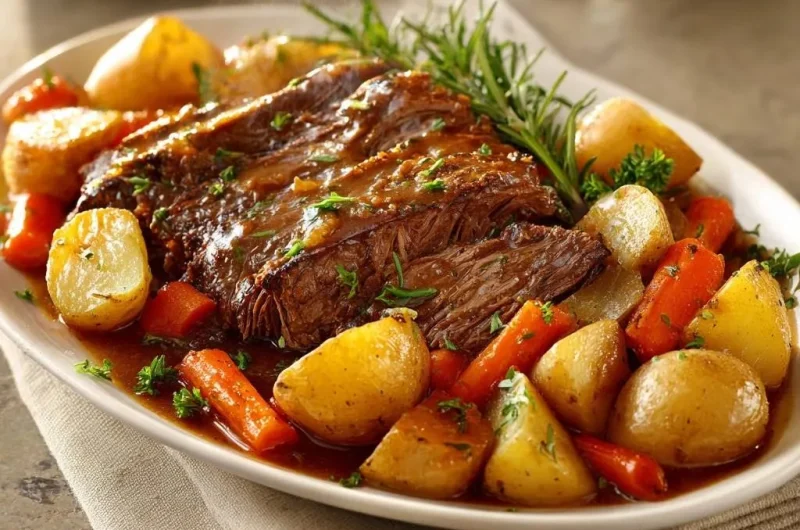
MinutesTired of pot roast that’s chewy and tough? This foolproof low-and-slow braise with a tight-seal foil cover locks in moisture and breaks down the meat to fork-tender perfection, infusing rosemary flavor into juicy potatoes and carrots.
Ingredients
3 to 4 pound beef chuck roast
2 pounds baby potatoes, halved
1 pound carrots, cut into 2-inch chunks
4 sprigs fresh rosemary, plus extra for garnish
1 bunch fresh parsley, chopped for garnish
4 cups low-sodium beef broth
3 tablespoons olive oil
2 teaspoons salt
1 teaspoon black pepper
Directions
- Preheat oven to 300 degrees F. Pat beef dry, season all over with salt and pepper. Heat olive oil in a large Dutch oven over medium-high heat. Sear beef 4 to 5 minutes per side until deep brown crust forms. This locks in juices to prevent toughness. Remove beef to a plate.
- Add potatoes, carrots, and rosemary sprigs to pot. Stir 2 minutes to coat in beef drippings.
- Return beef to pot, nestling it among veggies. Pour in beef broth until it reaches halfway up the meat (add water if needed). Bring to simmer on stovetop.
- Cover pot tightly with lid, then double-wrap with heavy-duty foil, crimping edges to create an airtight seal. This is the key: the steam trapped inside tenderizes the collagen in the beef without drying it out, guaranteeing fall-apart texture in 3 hours.
- Braise in oven 3 to 3.5 hours, until beef shreds easily with a fork (internal temp 205 degrees F). No peeking to maintain moisture.
- Remove foil and lid, broil 3 to 5 minutes to thicken gravy if desired. Shred beef slightly, garnish with chopped parsley and rosemary. Serve hot.
Notes
- The tight-seal foil cover is key to trapping steam and tenderizing the beef without drying it out. No peeking during braising to maintain moisture. Internal temperature should reach 205°F for shreddable texture.