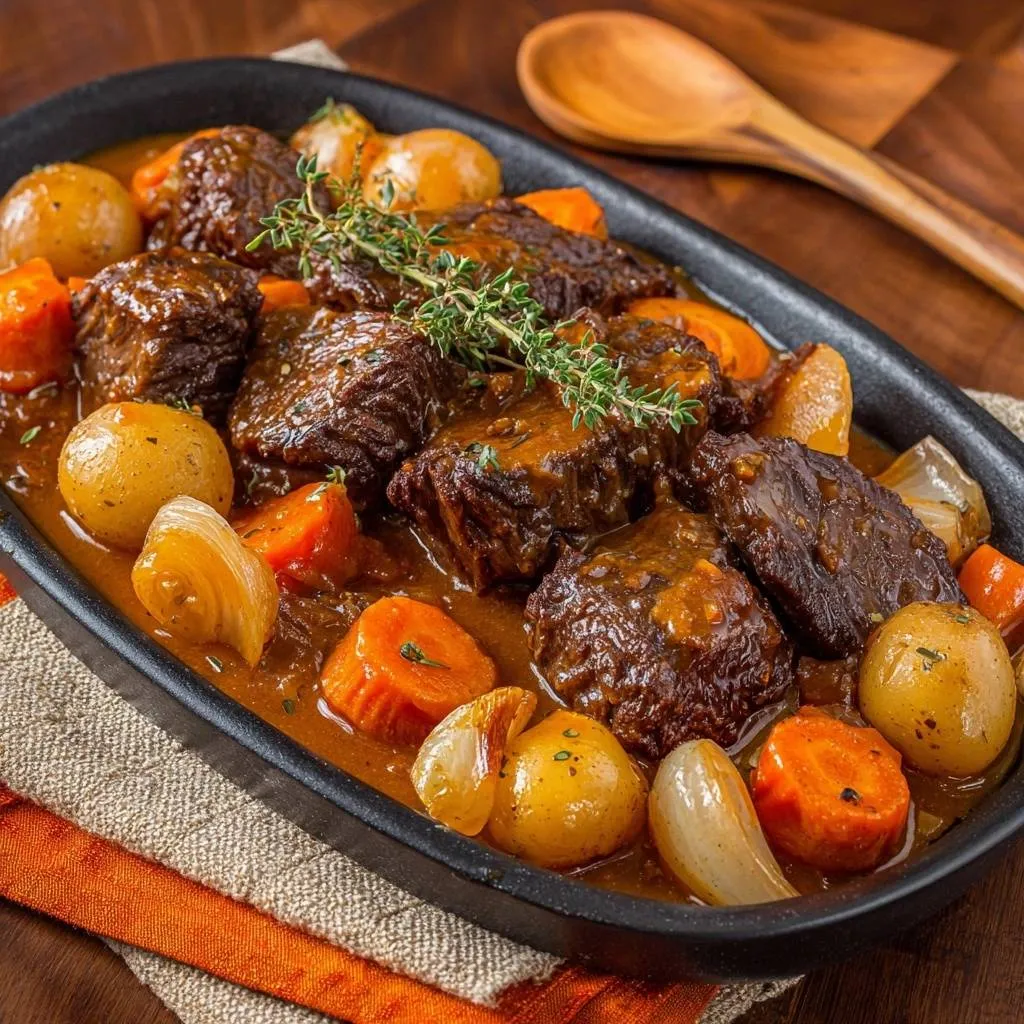
Ever simmer beef stew for hours only to end up with chewy chunks that fight your fork? This rustic beef stew changes that. You get fork-tender beef every time thanks to a simple searing trick that locks in juices before the slow braise. Dinner feels cozy and effortless.
That’s why this rustic beef stew wins over tough versions. It delivers that hearty comfort without the frustration. Plus, you control the freshness and quality right in your kitchen.
The secret lies in patting the beef completely dry before searing. Wet meat steams instead of browning, so you miss the crust that traps tenderness. Do this, and your rustic beef stew shines.
For even more fall-apart tender beef, explore slow braised beef short ribs.
Why Rustic Beef Stew Wins Winters
Cold nights call for something hearty like rustic beef stew. The slow braise fills your home with rich aromas, promising warmth in every bowl. However, most recipes fail because they skip the sear, leaving beef tough.
This version fixes that with a hot pan crust. In addition, simple ingredients transform into something special. I’ve made it through many winters, and it always hits the spot.
Therefore, you’ll crave this rustic beef stew all season. It builds deep flavors effortlessly. Get ready for tender beef that shreds with a fork.
Classic Comfort in Every Bite
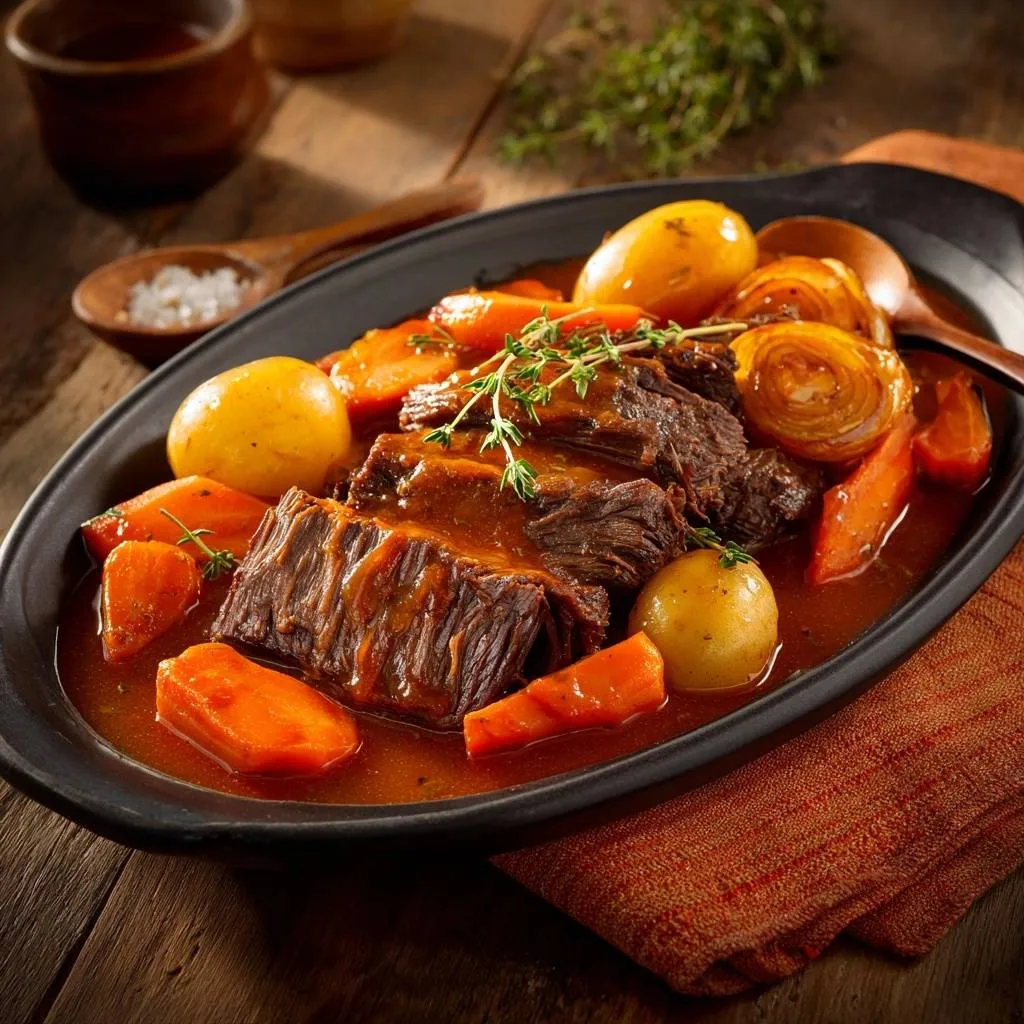
Picture tender beef chunks swimming in a savory broth, surrounded by soft potatoes and sweet carrots. The rustic beef stew offers that satisfying bite where meat melts against your teeth. Fresh thyme adds an earthy lift.
It’s pure comfort, evoking family tables on chilly evenings. Every spoonful warms you from the inside out.
Evolution from Tavern Hearty Broths
Beef stews started in medieval peasant pots, where tough cuts simmered over open fires with roots and herbs. Tavern cooks refined them into hearty broths for laborers. Today, Dutch ovens make it easy at home.
This rustic beef stew upgrades that tradition. The searing step modernizes it for tender results. It’s timeless yet better than ever.
Key Ingredients for Tender Rustic Beef Stew
Beef chuck brings marbling that melts during braising, ensuring tenderness in your rustic beef stew. Small potatoes hold their shape without turning mushy. Pearl onions and baby carrots add sweetness that withstands the heat.
For even more tender results, explore slow-braised beef short ribs.
Beef broth provides depth, while tomato paste boosts umami. Fresh thyme infuses earthiness. Salt and pepper season at key moments for balance.
Fresh ingredients beat alternatives every time. For instance, skip pre-cut veggies; they release too much water. These choices make your rustic beef stew foolproof.
Beef Chuck: Marbling Magic
Cut chuck into 2-inch cubes for rustic beef stew. The fat marbling breaks down at low heat, turning tough connective tissue silky. Source well-marbled cuts from the butcher for best results.
Vegetables That Withstand Braise
Small potatoes, pearl onions, and baby carrots resist mushiness in rustic beef stew. Peel pearl onions by blanching briefly in hot water, then slip off skins. Their size ensures bite after braising.
Broth, Paste, Herbs: Flavor Base
Beef broth builds the savory foundation for rustic beef stew. Tomato paste caramelizes for umami depth. Thyme sprigs release oils slowly; add salt late to avoid toughness.
Science of Searing in Rustic Beef Stew
Searing triggers the Maillard reaction, browning proteins and sugars on the beef surface. This creates a crust that seals juices inside for tender rustic beef stew. Without it, meat steams and stays chewy.
Pat dry first to remove moisture. Heat oil until shimmering, around 400°F. Sear in batches to maintain high heat.
Therefore, you see deep brown crusts form. This step makes your rustic beef stew restaurant-worthy. Skip it, and flavors fall flat.
Maillard Reaction Breakdown
Amino acids and sugars in beef react above 300°F, producing savory compounds. That’s the magic behind rustic beef stew’s rich crust. It locks tenderness during the long braise.
Dry Pat vs. Wet Meat Pitfalls
Pat beef with paper towels until no moisture remains. Wet meat causes steaming, preventing browning in rustic beef stew. Dry meat hits the pan and crusts instantly; compare the sizzle difference.
Dutch Oven: Heart of Rustic Beef Stew
Enameled cast iron Dutch ovens excel for rustic beef stew. They retain even heat for perfect braising. The tight lid seals moisture, mimicking old-school pots.
Stovetop to oven versatility shines here. Thin pots can’t compete; they hotspot and dry out. Use a 5-7 quart size for this recipe.
In addition, pro tip: preheat empty for best results. Your rustic beef stew benefits from uniform cooking.
Heat Distribution Advantages
Cast iron’s thick walls distribute heat evenly in rustic beef stew. No hot spots mean consistent braising. Thin pots lead to scorched bottoms.
Lid Seal for Moisture Lock
A tight lid traps steam during the 2-hour braise in rustic beef stew. This builds gentle pressure, tenderizing beef. Check for a good seal before oven time.
Step-by-Step: Mastering Rustic Beef Stew Sear
Pat 2 pounds beef chuck cubes dry, then season with salt and pepper. Heat 2 tablespoons olive oil in your Dutch oven until shimmering. Sear in batches, 3-4 minutes per side, for deep brown crusts.
Don’t overcrowd; it drops the temperature and steams the meat. Remove seared beef to a plate. This step ensures tender rustic beef stew.
Juices on the plate add flavor later. Listen for the fierce sizzle; that’s your cue it’s working.
Batch Searing Without Steam
Sear one layer at a time, 3-4 minutes per side, for rustic beef stew crust. Rotate for even browning. Batches prevent steam and guarantee tenderness.
Building Rustic Beef Stew Flavor Layers
Lower heat to medium, add 2 tablespoons tomato paste, and stir 1 minute until it darkens. Return beef and juices to deglaze. Then add potatoes, pearl onions, baby carrots, thyme, and 4 cups beef broth.
Bring to a simmer; bubbles should be gentle. This layers flavors deeply in rustic beef stew. Pro tip: add veggies in that order for even cooking.
Tomato Paste Depth Technique
Stir tomato paste 1 minute over medium heat to caramelize sugars in rustic beef stew. Watch for brick-red color; don’t burn it. This builds umami base.
Low-and-Slow Braise for Shreddable Beef
Cover tightly and braise at 300°F for 2 hours, or low stovetop simmer. Beef shreds easily with a fork when done. Oven provides steady heat without constant watching.
Remove thyme sprigs. If sauce is thin, simmer uncovered 10 minutes to thicken naturally. Taste and adjust salt; garnish with thyme.
Your rustic beef stew transforms into cozy perfection. The aroma alone draws everyone to the table.
Oven Braise vs. Stovetop
Oven at 300°F keeps steady low heat for collagen melt in rustic beef stew. Check at 1.5 hours. Stovetop needs stirring every 30 minutes to avoid sticking.
Final Thickening and Seasoning
Simmer uncovered 10 minutes for rustic beef stew sauce reduction. Pull thyme sprigs. Season salt post-cook; flavors concentrate.
Make-Ahead Rustic Beef Stew Guide
Rustic beef stew tastes better day two as flavors meld. Store in fridge up to 4 days. Freeze portions for 3 months; reheat gently in oven at 300°F to keep tenderness.
Scale up for batches by doubling ingredients, but sear in more batches. It’s perfect for meal prep. Thaw overnight in fridge first.
Freezing Cubes and Broth Separately
Freeze beef and veggies in one bag, broth separate for rustic beef stew. Recombine on reheat to avoid mush. Vacuum seal for longer freshness.
Avoiding Rustic Beef Stew Pitfalls
Tough beef comes from skipping the dry pat or overcrowding. Watery sauce means loose lid or no reduction. Bland results from early salting; season beef before searing and broth at end.
Mushy veggies happen with large cuts; stick to small sizes. Therefore, follow steps closely for rustic beef stew success. Fixes save most batches.
Fixing Chewy Beef Chunks
If beef chews in rustic beef stew, braise 30 minutes more. Root cause: poor sear from wet meat or overcrowding. Prevention starts with dry pats.
Thickening Runny Broth
Reduce uncovered; potato starch thickens rustic beef stew naturally. Avoid flour slurry; it clumps. Simmer until coats spoon.
Pairing Sides with Rustic Beef Stew
Tear crusty bread to sop up broth from rustic beef stew. A crisp green salad with vinaigrette cuts richness. Buttered noodles add comfort.
Round Out Your Meal
To complement your hearty beef stew, consider these dishes that bring different textures and flavors to the table.
- For a refreshing contrast to the rich beef, serve with our creamy herb and pea potato salad, featuring tender potatoes and bright herbs.
- Add a crunchy element to your meal with crispy fried onion strings, a perfect topping for your rustic beef stew.
Ginger beer balances the hearty flavors nicely. These sides make a full meal. Keep it simple to let the stew shine.
Bread and Salad Complements
Tear artisan bread chunks for rustic beef stew sopping. Sharp vinaigrette salad contrasts the richness perfectly. Both elevate every bite.
Rustic Beef Stew FAQ
Can I Use Stew Meat Instead?
Chuck beats generic stew meat for rustic beef stew tenderness. Stew meat mixes cuts that braise unevenly. Trim excess fat from chuck, but keep marbling. It shreds perfectly after 2 hours.
Stovetop Alternative to Oven?
Yes, simmer low on stovetop for rustic beef stew, but stir every 30 minutes. Keep bubbles barely breaking surface. Oven wins for hands-off stability at 300°F.
Vegetarian Rustic Beef Stew Swap?
Swap beef for mushrooms and lentils in vegetarian rustic stew. Use vegetable broth; boost umami with extra tomato paste. Braise same time for hearty texture mimic.
Scaling for Crowd Size?
Double ingredients for 8 servings of rustic beef stew, but use a larger pot. Sear in extra batches to avoid steaming. Braise time stays 2 hours; tastes even better scaled.
Storage Beyond Freezer?
Fridge rustic beef stew 4 days in airtight container. Freeze 3 months in portions. For longer, pressure can quarts at 11 PSI for 75 minutes; follow safety guidelines to avoid spoilage.
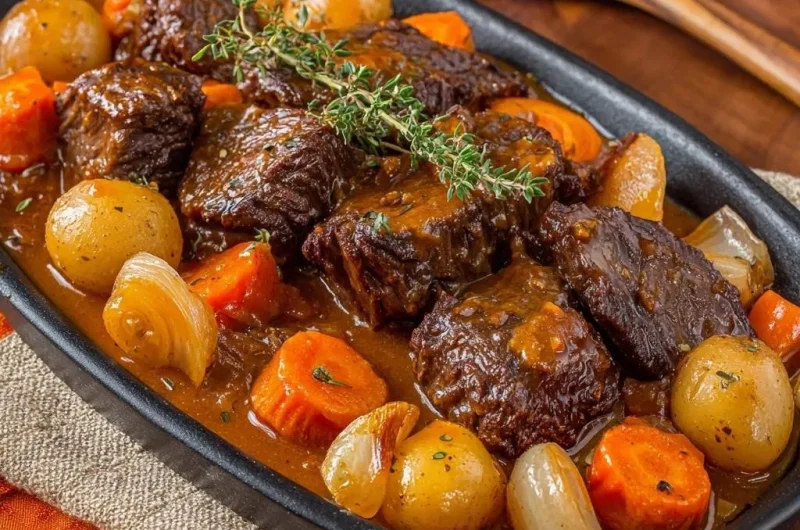
Beef Stew
Course: Main CourseCuisine: AmericanDifficulty: medium6
servings20
minutes2
hours450
kcal140
MinutesTired of chewy beef stew? This recipe delivers fork-tender beef every time using a dry-sear method that creates a flavorful crust before slow braising with potatoes, pearl onions, carrots, and thyme.
Ingredients
2 pounds beef chuck, cut into 2-inch cubes
2 tablespoons olive oil
1 pound small potatoes
1 pound pearl onions, peeled
1 pound baby carrots
4 sprigs fresh thyme, plus extra for garnish
4 cups beef broth
2 tablespoons tomato paste
Salt and black pepper to taste
Directions
- Pat beef cubes completely dry with paper towels. This is the key to no more tough beef: dry meat sears without steaming, creating a crust that traps tenderness inside. Season generously with salt and pepper.
- Heat olive oil in a large Dutch oven over medium-high heat until shimmering hot. Sear beef in batches, 3 to 4 minutes per side, until deeply browned on all sides. Do not overcrowd. Remove to a plate.
- Lower heat to medium. Add tomato paste and stir 1 minute to deepen flavor. Return beef and any juices to pot. Add potatoes, pearl onions, carrots, thyme, and beef broth. Bring to a simmer.
- Cover tightly and transfer to a 300°F oven (or simmer on stovetop over low heat). Braise 2 hours, until beef shreds easily with a fork.
- Remove thyme sprigs. If sauce needs thickening, simmer uncovered 10 minutes. Taste and adjust salt. Garnish with fresh thyme. Serve hot.
Notes
- Pat beef completely dry before searing to avoid steaming and ensure a crust that locks in tenderness. Use a Dutch oven for best results.