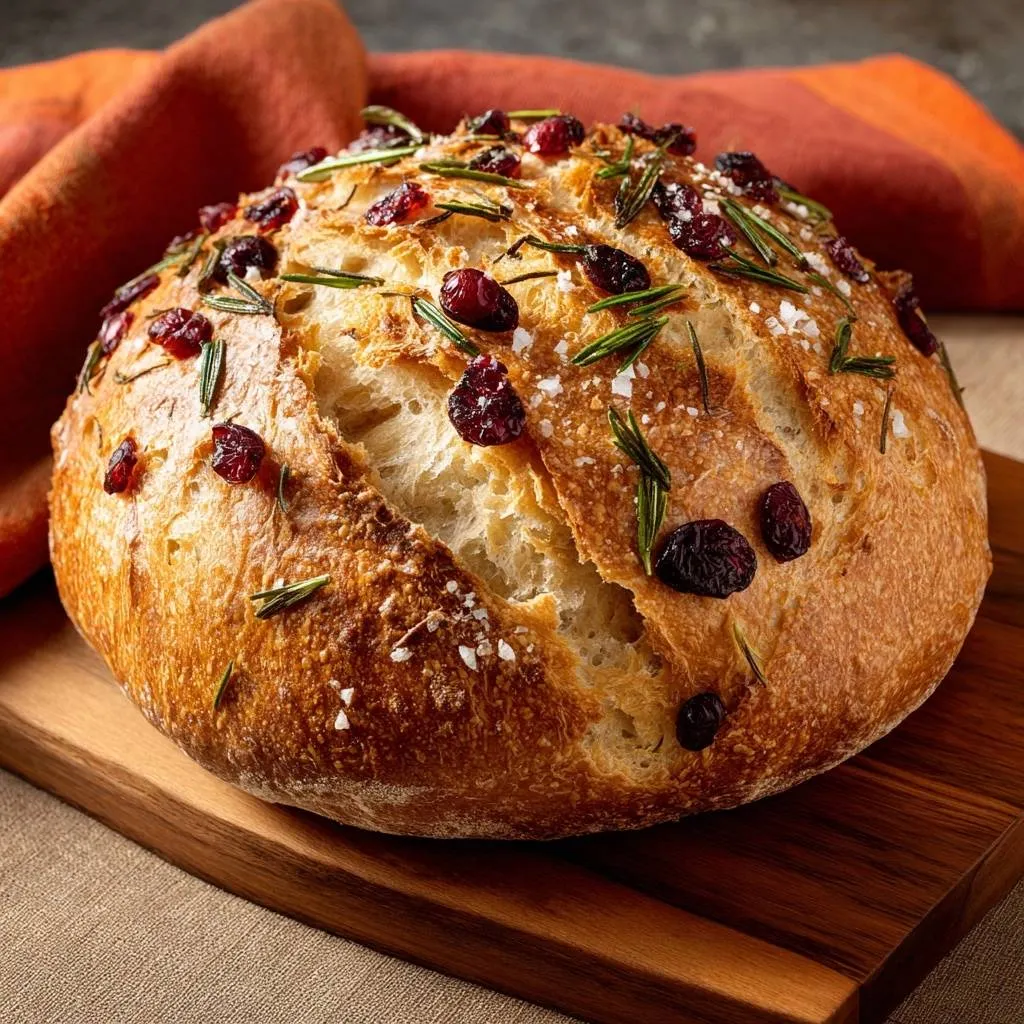
Struggling with dense, chewy homemade bread that never lives up to bakery standards? This rustic cranberry rosemary bread changes everything. You get that light, open crumb full of big air pockets without kneading a thing. Dinner table magic happens overnight, and those tart cranberries plus aromatic rosemary make every bite irresistible.
Traditional methods fail because they rush gluten development and let fruit sink to the bottom. However, this no-knead approach uses time and science to build strength naturally. In addition, the Dutch oven seals in steam for a crackly crust you crave.
The real secret lies in the 12 to 18 hour cold fermentation. It strengthens gluten slowly, trapping CO2 bubbles for that airy texture. Toss cranberries in flour first, and they stay suspended perfectly.
Why Rustic Cranberry Rosemary Bread Succeeds
No-knead bread revolutionized home baking by ditching exhausting kneading. Most loaves turn gummy from overworked dough, but this cranberry rosemary loaf thrives on patience. Therefore, you end up with a rustic crust and perfect fruit-herb balance that screams artisan.
The appeal hits hard with tart cranberries cutting through earthy rosemary. Plus, the open crumb soaks up soups or stands alone. Get ready for the science that makes this foolproof.
No-Knead Method Transforms Texture
Start with a shaggy dough, and watch it evolve into airy perfection. The no-knead method lets gluten form gently over time. In addition, fermentation creates big bubbles for that bakery-style hole structure.
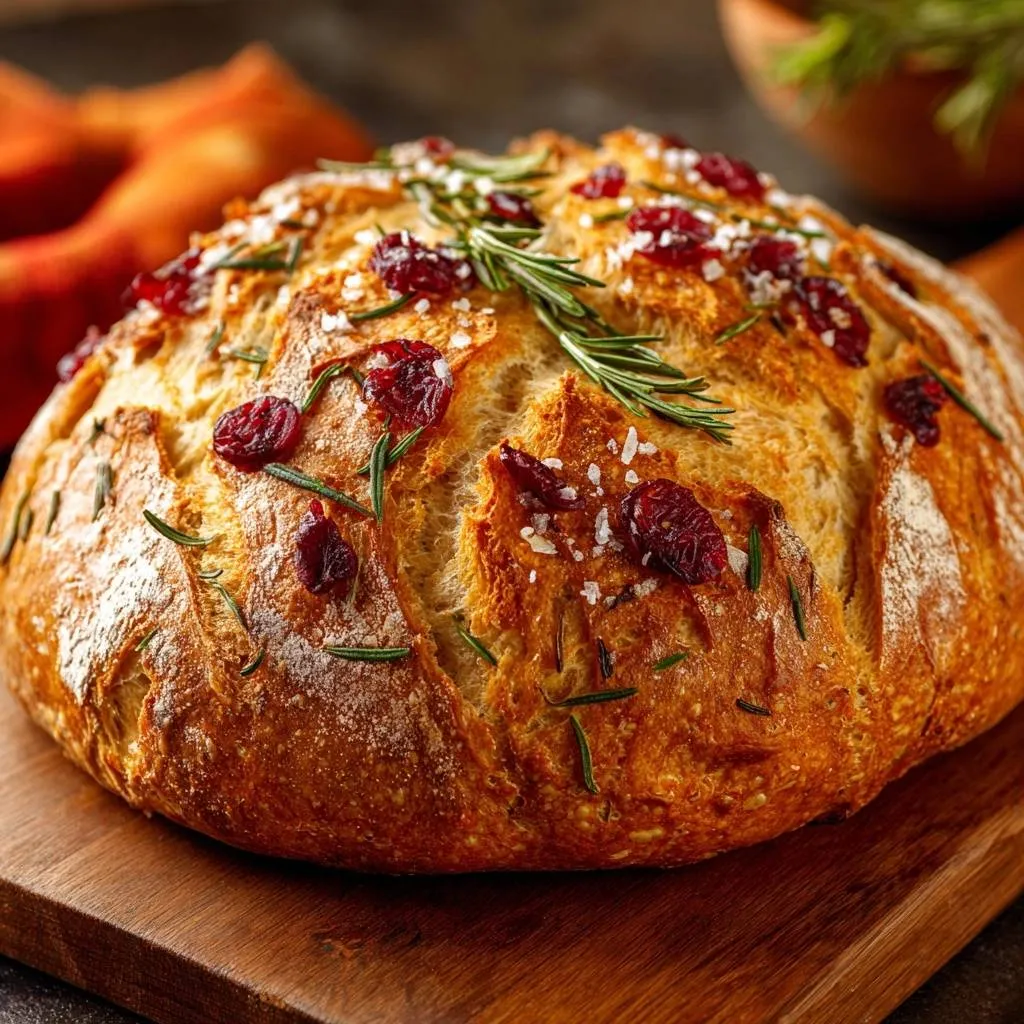
Cranberries and Rosemary Elevate Flavor
Tart-sweet cranberries add juicy pops, while rosemary brings piney warmth. Coat them right, and they distribute evenly. This duo gives your rustic cranberry rosemary bread a unique, unforgettable profile.
Essential Components for Rustic Cranberry Rosemary Bread
Every ingredient plays a starring role here. Use 3 cups all-purpose flour for balanced protein that builds gluten without toughness. Then, 1/4 teaspoon instant yeast kicks off the slow rise, and 1 1/2 teaspoons salt enhances flavors and strengthens dough structure.
Add 1 1/2 cups warm water at 110F to activate yeast gently. One cup dried cranberries bring chew and tartness, but toss them in 2 tablespoons flour first. Finally, 1/4 cup chopped fresh rosemary, divided, infuses aroma, and coarse sea salt tops for crunch.
| Ingredient | Amount | Why It Matters |
|---|---|---|
| All-purpose flour | 3 cups + 2 Tbsp | Perfect protein for gluten; no bread flour needed to avoid chewiness. |
| Instant yeast | 1/4 tsp | Low amount for long fermentation magic. |
| Dried cranberries | 1 cup | Tart bursts; flour coat prevents sinking. |
| Fresh rosemary | 1/4 cup, chopped | Fresh beats dried for bold, earthy scent; divide for even flavor. |
Flour and Yeast Foundation
All-purpose flour’s 10-12% protein forms strong gluten networks during fermentation. Instant yeast works faster than active dry, so less goes further. Therefore, skip bread flour; it makes denser results here.
Cranberries, Rosemary, and Salt Precision
Toss cranberries in flour to lock them in place and avoid dense spots. Divide rosemary for fresh hits inside and out. Coarse salt crystals add crunch and draw out moisture for crispy crust. Antioxidants in cranberries are a bonus too.
For an even more delightful crust, see this cranberry rosemary artisan bread.
Science of Open Crumb in Cranberry Rosemary Bread
Gluten networks form like stretchy webs during slow fermentation, trapping CO2 from yeast. Think natural balloons inflating inside the dough. This rustic cranberry rosemary bread’s 12-18 hour fridge time beats quick room rises every time.
Enzymes break down starches into sugars, feeding yeast for more gas. Acids develop for tangy depth and tenderness. Result? Big, irregular holes without effort.
Cold Fermentation Builds Strong Gluten
Cold slows yeast, letting enzymes tenderize flour proteins evenly. Unlike over-kneaded dense loaves, this creates resilient gluten. Therefore, your cranberry rosemary bread rises tall with open texture.
Air Pocket Formation Without Kneading
Gentle folds redistribute gases and coated cranberries evenly. Flour on fruit suspends it amid bubbles. In addition, this preserves air for those signature holes.
Dutch Oven: Key to Rustic Cranberry Bread Crust
A preheated Dutch oven traps steam for massive oven spring and chewy-crisp crust. Use a 4-6 quart size for proper heat circulation. Cast iron works too, but avoid glass; it cracks.
Safety first: Use parchment as a sling for hot transfer. This method mimics professional steam ovens perfectly. Your rustic cranberry bread emerges golden and irresistible.
Preheating for Maximum Rise
45 minutes at 450F creates thermal shock, expanding dough instantly. Parchment sling eases the drop-in. Therefore, expect dramatic rise under the lid.
Phased Method for Perfect Rustic Cranberry Rosemary Bread
Phase 1: Mix Shaggy Dough Base
Whisk flour, yeast, and salt in a large bowl. Add warm water and stir with a wooden spoon for 1 minute until shaggy. It looks messy, but that’s right; no kneading needed.
Phase 2: Coat and Fold in Cranberries, Rosemary
Toss cranberries with 2 tablespoons flour and half the rosemary in a small bowl. Fold gently into dough to distribute evenly. This prevents sinking and keeps air intact; you’ll smell rosemary blooming.
Phase 3: Initial Rise and Strengthening Folds
Cover and let rise at room temp for 2 hours until doubled and bubbly on top. Fold dough over itself 4-6 times in the bowl. These boost gluten and redistribute yeast without deflating.
Phase 4: Overnight Cold Fermentation
Cover and refrigerate 12-18 hours. Dough develops deep flavor and puffy edges. However, don’t skip this; it’s the density killer.
Phase 5: Shape and Preheat Dutch Oven
Preheat oven to 450F with Dutch oven inside for 45 minutes. Turn cold dough onto floured parchment, sprinkle with remaining rosemary and coarse salt, then fold edges under into a ball.
Phase 6: Bake for Crisp Crust
Slide parchment into hot pot, cover, and bake 30 minutes. Uncover for 15 more until deep golden; aim for 200F internal. Cool 1 hour on rack so steam escapes for clean slices.
Avoiding Density in Cranberry Rosemary Bread
| Common Pitfall | Sign | Fix |
|---|---|---|
| Water too hot | No bubbles after rise | Use 110F max; test on wrist. |
| Overfolding | Flat, tough loaf | Stick to 4-6 gentle folds. |
| Skip preheat | Pale, flat crust | 45 full minutes essential. |
Weak Gluten and Sinking Fruit Fixes
Short ferments leave weak gluten; always do 12-18 hours cold. Uncoated cranberries sink, creating dense bottoms. Flour toss and folds solve it for even, airy rustic cranberry rosemary bread.
Storage and Make-Ahead for Rustic Cranberry Bread
Store at room temp in a paper bag up to 3 days; it stays crusty. Freeze slices in a zip bag for 3 months, thaw and toast to refresh. Make-ahead: Mix dough day before, bake fresh.
Pairing Ideas for Cranberry Rosemary Bread
Slather with goat cheese or brie for creamy contrast to tart cranberries. Dip into vegetable soup or top salads for crunch. Breakfast? Toast with almond butter balances the rosemary earthiness perfectly.
Flavor Twists on Rustic Cranberry Rosemary Bread
Add orange zest to cranberries for citrus pop in your rustic cranberry rosemary bread. Stir in chopped walnuts for nutty crunch. Swap half the flour for whole wheat, but add 2 tablespoons extra water.
It’s naturally vegan. Try dried cherries instead for sweeter notes. Each twist keeps the open crumb intact.
Troubleshooting Rustic Cranberry Rosemary Bread
Why is my rustic cranberry rosemary bread dense?
Density comes from short fermentation or weak folds. Ensure 12-18 hours in the fridge; it builds gluten naturally. Also, fold 4-6 times after initial rise to trap air. Test: Dough should feel stretchy, not slack.
Why is the crust pale on my cranberry rosemary bread?
Insufficient preheat or low oven temp causes pale crust. Preheat Dutch oven 45 minutes at 450F for steam and browning. Bake uncovered the last 15 minutes; check for deep gold. Use oven thermometer if needed.
How do I store leftovers of rustic cranberry rosemary bread?
Keep at room temperature in a paper-lined bag for 3 days to maintain crust. Freeze individual slices in airtight bags up to 3 months; they thaw beautifully. Revive stale slices in a 350F oven for 5 minutes with a splash of water.
Why did the cranberries sink in my cranberry rosemary bread?
Sinking happens without the flour coat, which absorbs moisture and suspends fruit. Toss 1 cup cranberries thoroughly in 2 tablespoons flour plus half the rosemary before folding in. Gentle handling preserves air pockets too.
Can I substitute ingredients in rustic cranberry rosemary bread?
Use bread flour if you want chewier crumb, but add 1 tablespoon less water. Dried rosemary works in a pinch (1 tablespoon total), but fresh gives better aroma. No fresh cranberries; dried hold up best without sogginess.
Why is my rustic cranberry rosemary bread too sour?
Over-fermentation past 18 hours boosts acids. Stick to 12-18 hours max; dough should double but not collapse. If tangy is okay, it adds flavor depth, but bake sooner next time for milder taste.
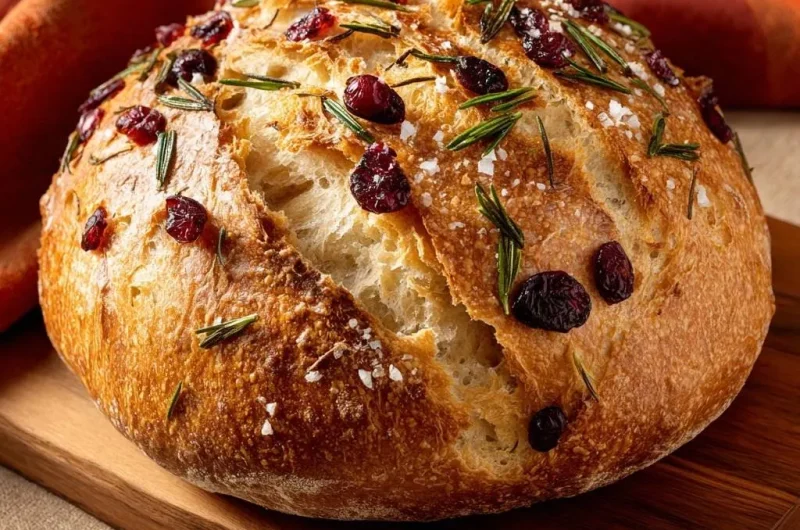
Cranberry Rosemary Bread
Course: BreadCuisine: AmericanDifficulty: medium1
loaf20
minutes45
minutes2400
kcal1080
MinutesHomemade bread often turns out dense and chewy because of weak gluten and poor air trapping. This no-knead method fixes it with a long, cold fermentation that builds strong gluten naturally for a light, open crumb full of big holes, just like bakery-style. Toss cranberries in flour to lock them in place, and bake in a hot Dutch oven for perfect rise and crust.
Ingredients
3 cups all-purpose flour
1/4 teaspoon instant yeast
1 1/2 teaspoons salt
1 1/2 cups warm water (about 110F)
1 cup dried cranberries
1/4 cup chopped fresh rosemary, divided
2 tablespoons all-purpose flour (for coating cranberries)
Coarse sea salt, for topping
Directions
- In a large bowl, whisk together flour, yeast, and salt. Add warm water and stir with a wooden spoon until a shaggy dough forms, about 1 minute. No kneading needed.
- In a small bowl, toss cranberries with 2 tablespoons flour and half the chopped rosemary to coat evenly, preventing sinking and density. Fold into the dough gently.
- Cover bowl with plastic wrap. Let rise at room temperature for 2 hours until doubled and bubbly.
- Fold dough over itself 4-6 times in the bowl to strengthen gluten without kneading. This key step redistributes yeast and air for the open crumb. Cover and refrigerate 12-18 hours. The cold, slow fermentation develops maximum gluten strength, trapping CO2 bubbles for airy texture that solves density forever.
- Place a Dutch oven with lid in oven and preheat to 450F for 45 minutes.
- Turn dough onto floured parchment. Sprinkle with remaining rosemary and coarse salt. Shape into a ball by folding edges under.
- Carefully place dough (on parchment) into hot Dutch oven. Cover and bake 30 minutes. Remove lid and bake 15 minutes more until deep golden with crisp crust.
- Cool on wire rack 1 hour before slicing. Store at room temp up to 3 days.
Notes
- Store at room temperature up to 3 days. The cold fermentation (12-18 hours) is key for airy texture and strong gluten development.