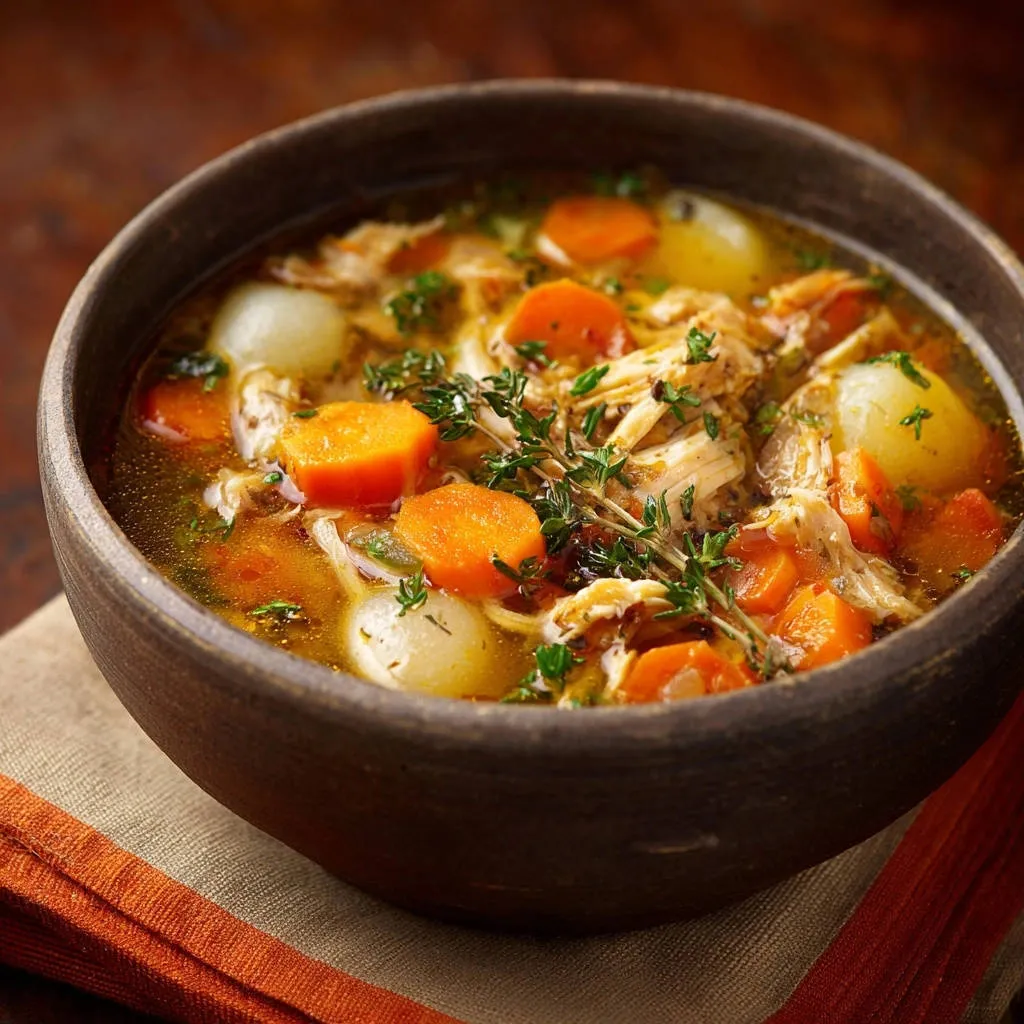
I spent years making chicken soup that tasted disappointingly flat, relying too heavily on salt and store-bought bases to achieve any depth.
The secret to transforming a simple meal into an unforgettable, deeply satisfying bowl of Rustic Shredded Chicken & Root Vegetable Soup lies in one non-negotiable technique: mastering the flavor base.
This method uses low heat to coax deep caramelization from the root vegetables, guaranteeing incredible complexity and a truly restaurant-quality result without relying on pre-made flavorings.
Forget Flat Broth: The Flavor Depth Hack for Restaurant-Quality Soup
Solving the Watery Soup Problem
Typical chicken soup recipes instruct cooks to add raw vegetables immediately into the stock and bring everything to a simmer.
This rushing results in a watery, single-note broth because the natural foundational flavors haven’t been concentrated or developed before liquid is introduced.
The Power of Caramelization: Building the Fond
The ‘Flavor Depth Hack’ involves cooking the aromatics, like carrots and onions, low and slow in fat for 10 to 12 minutes before any liquid is added.
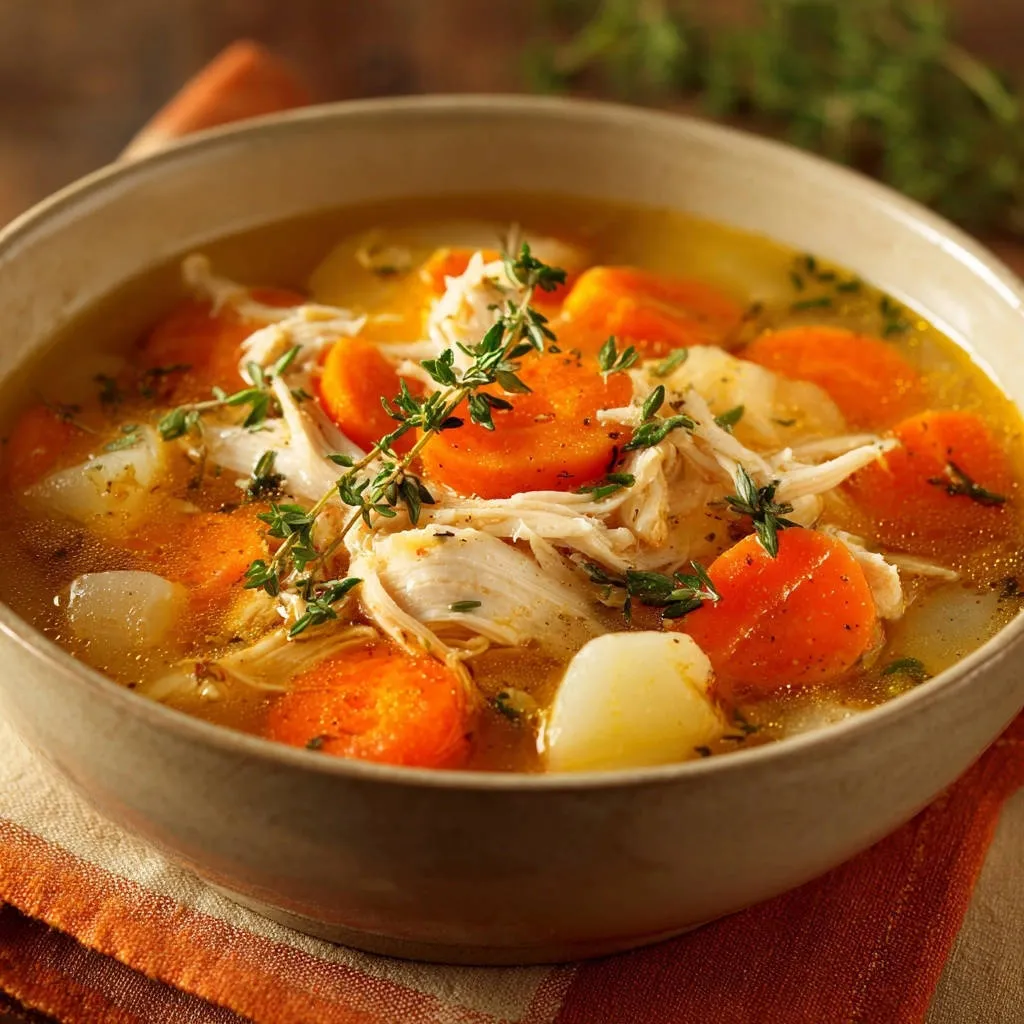
This deliberate, slow cook time allows the natural sugars to caramelize and stick lightly to the bottom of the pot, creating the highly coveted brown layer known as the “fond.” This fond is pure, concentrated flavor.
Why ‘Rustic’ Cuts Matter in This Recipe
Cutting the carrots into thick, rustic rounds ensures they cook at a slower rate and retain their shape and pleasant bite throughout the simmer.
Smaller, delicate cuts would break down into mush during the necessary prolonged cooking time, compromising the appealing texture of the finished soup.
Ingredients for Success: Building a Robust Rustic Base
The Essential Aromatic Duo: Carrots and Onions
Carrots and onions provide a crucial balance of sweet and savory notes, forming the backbone of this comforting broth.
Pearl onions or small waxy potatoes contribute a desirable creaminess and richness that helps set this Rustic Shredded Chicken & Root Vegetable Soup apart.
If pearl onions are unavailable, parsnips or large chopped yellow onions work well, although they will slightly alter the final texture and sweetness.
Selecting the Best Chicken Stock (Low-Sodium is Key)
Using low-sodium chicken stock is essential for controlling the final salt balance of your soup.
Since we are reducing and concentrating the flavor significantly through the deglazing technique, a standard stock would become overwhelmingly salty after simmering.
The Protein Choice: Pre-Cooked Shredded Chicken
Using pre-cooked shredded chicken breast or thigh provides maximum efficiency and critical control over the final texture.
Chicken is added only at the end and heated through quickly, preventing the muscle fibers from seizing up and becoming tough or dry.
Aromatic Anchors: Dried Thyme and Fresh Parsley
Dried thyme is robust and holds up well during the long cooking process, infusing the base with earthy, warm notes.
Fresh parsley and the finishing sprig of thyme introduce bright, volatile oils that elevate the finished dish and add necessary visual appeal and aroma.
Prep and Gear: Setting Up Your Soup Station
Essential Tools for Your Rustic Shredded Chicken Soup
A large, heavy-bottomed pot or Dutch oven (critical for even heat distribution).
A sturdy wooden spoon or heat-proof spatula (for aggressive deglazing).
A sharp knife and cutting board.
Prepping the Rustic Root Vegetables
The key is uniformity in the thick carrot rounds, about 1/2 to 3/4 inch thick, and ensuring pearl onions or small potatoes are peeled but kept whole.
These large, thick cuts ensure they withstand the prolonged simmer without breaking down into a paste when the soup is finished.
From Prep Bowl to Perfect Bowl: Mastering the Soup Technique
Low and Slow: Building the Caramelized Fond (Step 2 Focus)
Begin by heating the olive oil in your heavy-bottomed pot over medium-low heat to ensure even cooking and prevent burning.
Add the carrots, onions, salt, pepper, and dried thyme, then step away, stirring only occasionally, for the full 10 to 12 minutes.
This is the most critical time: look for the vegetables to become deeply softened and slightly sticky, with small brown bits (the fond) starting to accumulate on the pot bottom.
The Deglazing Technique (Step 3 Focus)
Carefully pour in the initial 1/2 cup of chicken stock to stop the cooking and create steam immediately.
Use your wooden spoon to aggressively scrape up every single brown bit stuck to the bottom of the pot; this is the pure, concentrated essence of your root vegetables.
Simmer this liquid for just one minute until it reduces slightly; this ensures the intense caramelized flavor is fully integrated into the broth foundation.
The Main Simmer and Testing for Tenderness (Step 4 Focus)
Add the remaining stock and increase the heat to bring the soup to a gentle boil, then immediately reduce the heat back down to a low simmer.
Partially cover the pot and cook for 15 to 20 minutes; monitor closely for tenderness.
The vegetables are perfectly cooked when they are tender throughout but still firm enough to hold their shape and resist mushiness when pierced with a fork.
Integrating the Chicken and Final Adjustments (Step 5 Focus)
Stir in the pre-cooked shredded chicken and cook just until it is heated through, approximately 3 to 5 minutes, ensuring it remains tender.
Taste the broth carefully and adjust the salt and pepper levels; if the soup tastes a bit flat, a tiny splash of lemon juice or sherry vinegar can brighten the overall profile and achieve optimal flavor balance.
Chef’s Notes: Elevating Your Rustic Shredded Chicken Soup
Maximizing the Umami Bomb (Stock Enhancement)
For an unbeatable, deep savory flavor (umami), drop a small parmesan rind into the broth at the start of the main 15-minute simmer.
Alternatively, a tiny dash of high-quality fish sauce added at the very end provides complex, savory depth without adding a fishy taste.
Ingredient Swaps for Seasonal Variation
Experiment with other hearty root vegetables such as diced celery root (celeriac) or cubed rutabaga for a different earthy profile.
You can swap thyme for fresh rosemary or sage during the simmering phase to give the Rustic Shredded Chicken & Root Vegetable Soup a warmer, more woodsy character.
Why Fresh Herbs are Non-Negotiable for Finishing
Fresh herbs like parsley and thyme contain highly volatile oils that are destroyed during long cooking times.
Adding them at the very end ensures a clean, vibrant contrast that instantly brightens the appearance and cuts through the soup’s rich, savory base.
For a similar bright, clear flavor, explore Lemon Chicken Orzo Soup.
Troubleshooting and Storage: Keeping Your Soup Fresh and Flavorful
My Broth Tastes Too Salty
If your soup is oversalted, add a few chunks of raw, peeled potato during the final simmer; the starch will absorb some of the excess sodium before the potatoes are removed.
Alternatively, add a splash of plain water or unsalted chicken stock to dilute the concentration until the flavor is balanced.
The Vegetables Are Mushy
Mushy vegetables are a clear sign of overcooking or initially cutting the pieces too small.
Always use a timer for the simmering phase and start checking the tenderness of your root vegetables around the 15-minute mark to prevent them from breaking down.
Optimal Freezing and Thawing Instructions
This soup stores beautifully in an airtight container in the refrigerator for 3 to 4 days.
To freeze, cool completely before transferring to freezer-safe containers, ensuring you leave a 1-inch headspace for liquid expansion.
Thaw overnight in the refrigerator and reheat slowly on the stovetop to maintain the best possible texture of the tender root vegetables.
Complementary Dishes
To round out your meal featuring this hearty chicken soup, consider these dishes.
- For a warm, savory addition, pair your soup with golden cornbread and herb stuffing, offering comforting flavors.
- The fresh herbs and creamy texture of this herb and pea potato salad make a pleasant contrast to the soup.
Serving Suggestions: What to Pair with Rustic Shredded Chicken Soup
The Perfect Bread Pairing
A rustic, thick-crusted sourdough loaf or warm, flaky homemade buttermilk biscuits are the ideal pairings for dipping and soaking up the rich broth.
The slightly sour flavor and chewy texture of the sourdough beautifully complement the richness of the chicken broth.
Complementary Side Salads
Serve alongside a simple side salad featuring crisp, bitter greens like arugula or endive.
Dress the salad lightly with a sharp lemon vinaigrette to provide a refreshing, acidic cut that balances the deep, savory nature of the soup.
Frequently Asked Questions About Root Vegetable and Chicken Soup
Can I make this Rustic Shredded Chicken & Root Vegetable Soup vegetarian?
Yes, you can easily adapt this recipe by swapping chicken stock for a high-quality mushroom or vegetable broth, focusing heavily on developing the initial caramelized fond with the root vegetables.
Add plant-based proteins such as canned chickpeas, white beans, or hearty mushrooms (cremini or shiitake) during the final simmer for fullness.
Is it better to use chicken breast or chicken thigh?
Chicken thighs are generally preferred for soup due to their higher fat content, which keeps them moist and flavorful during the heating phase.
Chicken breast works well for a leaner soup but requires vigilance; it must be added only at the end and heated quickly, as it tends to dry out faster.
Can I add pasta or rice to the soup?
You can certainly add small pasta shapes (like ditalini or elbow macaroni) or rice to make this dish heartier.
If you enjoy adding pasta shapes, you might also like a comforting bowl of classic chicken noodle soup.
To prevent the starches from absorbing all the liquid and becoming mushy, cook the starch separately and add it only when serving, or cook it directly in the soup during the final 10 minutes of the simmer only.
Ready to Impress? Share Your Rustic Shredded Chicken Soup Masterpiece!
Mastering the low-and-slow caramelization technique is the single greatest tool you can acquire for superior homemade soup.
Once you taste the incredible depth achieved by properly building the fond, you will never rush the start of a soup again. Now, gather your ingredients and enjoy this deeply comforting masterpiece.

Shredded Chicken Root Vegetable Soup
Course: Soups-StewsCuisine: AmericanDifficulty: easy4
servings15
minutes40
minutes240
kcal55
minutesStop making watery broth! This rich, restaurant-quality chicken soup achieves incredible depth of flavor by slow-caramelizing the root vegetables before simmering. Deglazing the pot scrapes up the fond, guaranteeing a complex and comforting bowl every time.
Ingredients
1 tablespoon olive oil
1 cup chopped carrots, in rounds (about 2 large carrots)
1 cup peeled pearl onions or small waxy potatoes
1 teaspoon dried thyme
1/2 teaspoon black pepper
1/4 teaspoon kosher salt
6 cups low-sodium chicken stock
2 cups pre-cooked, shredded chicken breast or thighs
1 sprig fresh thyme, for garnish
2 tablespoons fresh parsley, chopped
Directions
- Prepare the vegetables by chopping the carrots into thick, rustic rounds and peeling the pearl onions or small potatoes. Set aside.
- The Flavor Depth Hack: Heat the olive oil in a large heavy-bottomed pot or Dutch oven over medium-low heat. Add the carrots and onions. Sprinkle with salt, pepper, and dried thyme. Cook these vegetables low and slow for 10 to 12 minutes, stirring occasionally. You are not just softening them; you need the sugars in the vegetables to start caramelizing slightly and sticking to the bottom of the pot. Do not rush this step.
- Deglaze and Build: Pour 1/2 cup of the chicken stock into the pot. Use a wooden spoon to scrape up all the delicious brown bits (the fond) stuck to the bottom of the pot. This is concentrated flavor. Simmer for 1 minute until the liquid reduces slightly.
- Simmer the Soup: Add the remaining 5 1/2 cups of chicken stock to the pot. Increase the heat to medium-high and bring the soup to a gentle boil. Reduce the heat immediately to a low simmer, cover the pot partially, and let it cook for 15 to 20 minutes, or until the carrots and onions are tender but still hold their shape.
- Finish and Serve: Stir in the pre-cooked shredded chicken and cook just until the chicken is heated through (about 3 to 5 minutes). Taste the soup and adjust salt and pepper if needed. Ladle the soup into bowls and garnish generously with fresh chopped parsley and a fresh sprig of thyme before serving.
Notes
- Do not rush Step 2 (Flavor Depth Hack); proper caramelization is essential for a restaurant-quality rich broth.