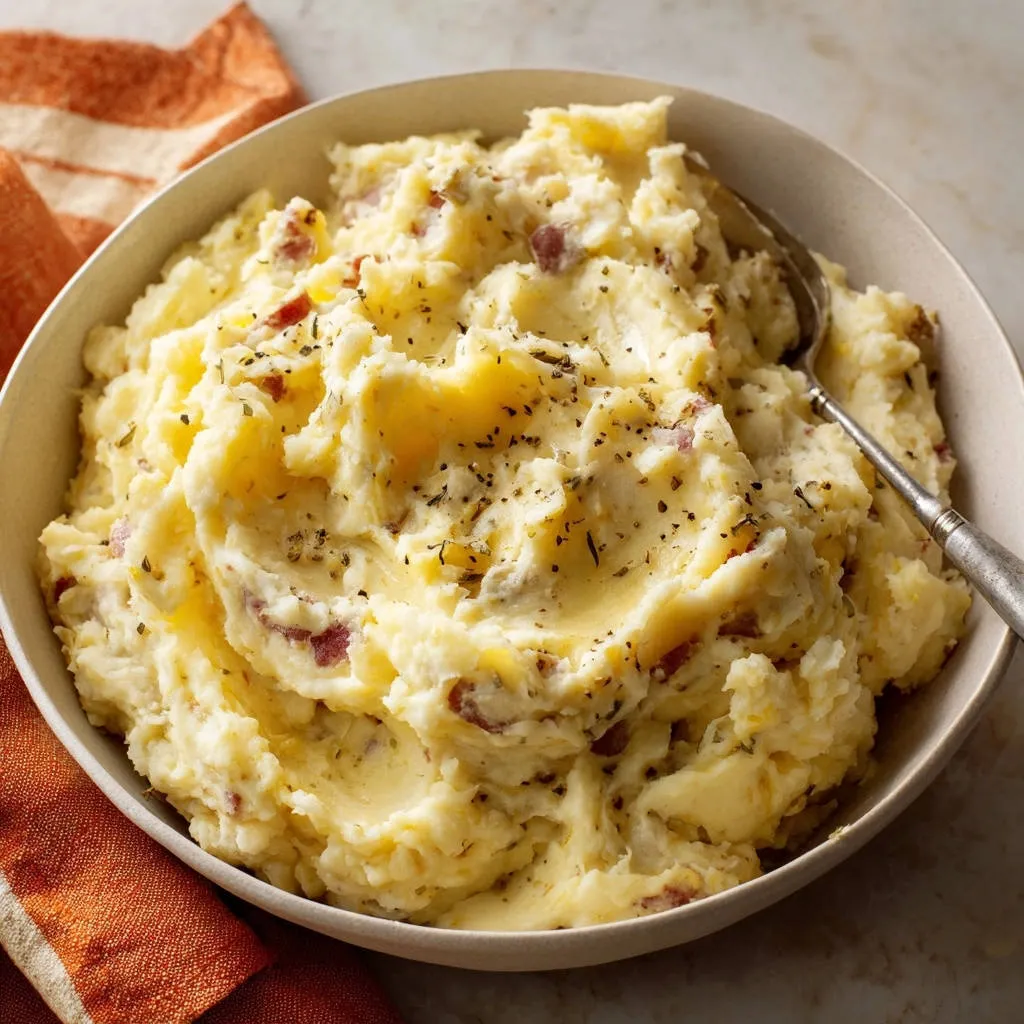
I spent years battling the common culprit of gluey, sticky mashed potatoes, only to realize the fix was simpler than I ever imagined: a critical moisture-removal step. This guaranteed method for Rustic Skin-On Mashed Potatoes ensures a fluffy interior and a luxurious, creamy texture every time.
Trust me, once you master this technique-the “Fluffy Fix”-you will never worry about gluey results again.
The “Never Gluey” Secret: Why This Recipe is Your New Favorite
Embracing the Rustic Texture: Why We Keep the Skin On
Leaving the skin on Red or Yukon Gold potatoes dramatically boosts the dish’s nutritional value, retaining fiber and vitamins often lost during peeling.
More importantly, the skins provide textural interest and depth, delivering the authentic, hearty flavor essential for truly rustic mashed potatoes.
Understanding the Starch Problem (And How We Solve It)
Potatoes contain starch granules. When these granules rupture from being over-mixed in water (or excessive liquid), they release sticky compounds like amylopectin.
This process results in the unpleasant, sticky, wallpaper-paste texture we call “gluey.”
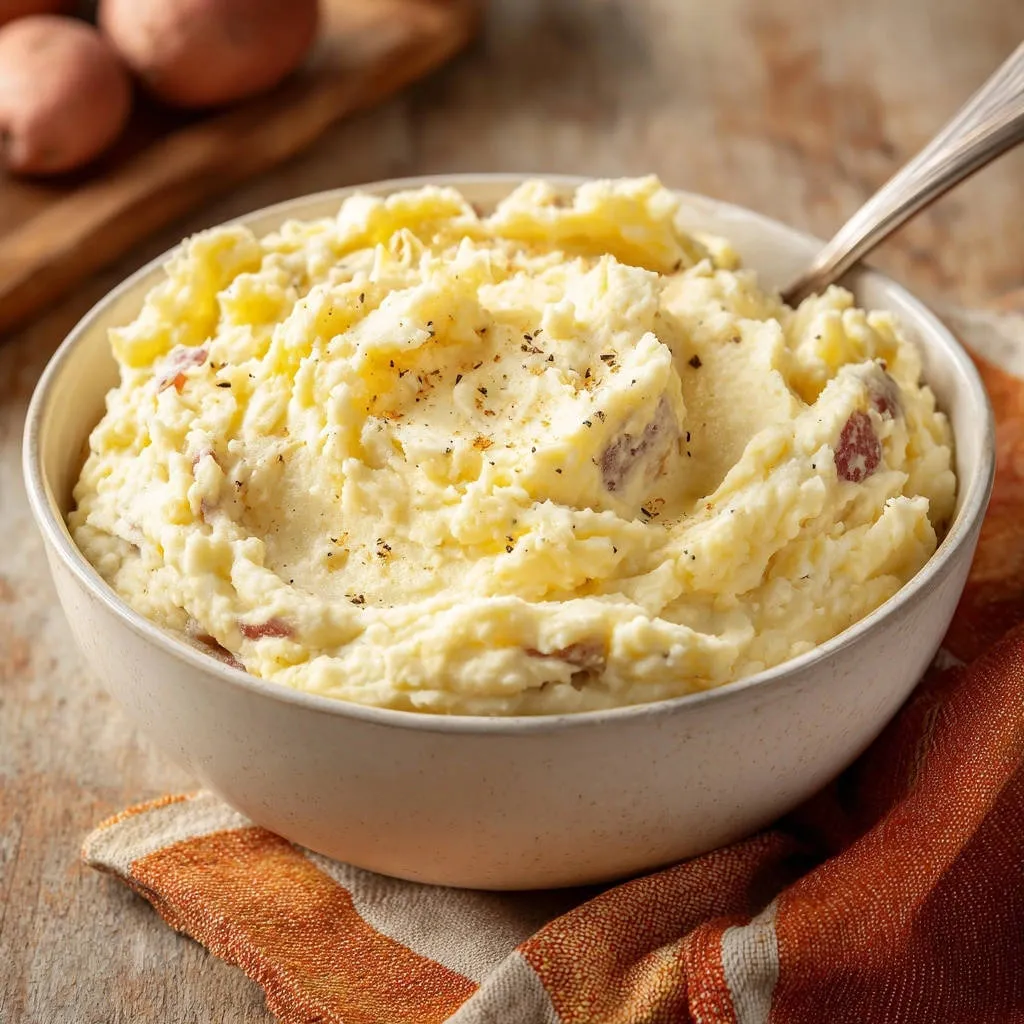
The crucial steam-drying technique prevents this by evaporating surface moisture before mashing, significantly reducing the risk of starch cells breaking down prematurely.
Quick Prep and Minimal Fuss
The decision to keep the skins on immediately shaves valuable time off your prep work, making this recipe ideal for weeknight dinners and holidays alike.
Because we use low-starch potatoes, the quartering and boiling process is also quick and efficient, streamlining the entire cooking experience.
Building the Best Bite: Choosing Your Potatoes and Enrichments
Red vs. Yukon Gold: Selecting the Perfect Base
Both Red and Yukon Gold potatoes hold their shape well and provide a creamy texture without becoming overly starchy.
Yukon Golds offer a slightly more buttery flavor naturally, while Red potatoes provide a cleaner white interior contrast against the skin.
For a similar take that amplifies the garlic and creaminess, check out fluffy loaded garlic mashed potatoes.
The Role of Warm Dairy (Why Temperature Matters)
Warming the butter and dairy (half-and-half or milk) is paramount to preventing a dense, cold final product.
Warm liquids absorb into the hot, fluffy potato cells instantly and efficiently, maintaining the internal temperature necessary for the best incorporation.
Adding cold liquid causes the starch cells to seize up and the potatoes to cool too quickly, resulting in a heavier, less luxurious mash.
Subtle Aromatics: Kosher Salt and Dried Thyme
Salting the cooking water heavily ensures the potatoes are seasoned internally, creating foundational flavor that cannot be achieved by surface seasoning alone.
Dried thyme contributes a savory, classic background note that complements the richness of the butter without overshadowing the natural potato flavor.
Essential Tools for Mashed Potato Perfection
While the process is straightforward, the right equipment can make the difference between lumpy and luscious.
- The Potato Masher or Ricer:
For a rustic texture, the traditional handheld masher is ideal as it leaves desired small chunks and avoids the temptation to overwork.
A ricer, while delivering an impossibly smooth result, requires more effort and may not suit the chunky nature of Rustic Skin-On Mashed Potatoes.
- The Sturdy Stockpot:
A pot large enough to boil the potatoes is also essential for the critical steam-drying step, as it retains the residual heat needed to evaporate moisture.
- Rubber Spatula:
Emphasize using a gentle tool for mixing in the dairy to prevent overworking the starch-folding is far safer than vigorous beating.
Mastering the Technique: Step-by-Step to Fluffy Rustic Skin-On Mashed Potatoes
- Preparation and Salting the Water:
Ensure potatoes are quartered to cook evenly. Starting in cold, heavily salted water is non-negotiable for flavor penetration.
The water should taste noticeably salty; this foundational seasoning carries throughout the potato cells.
- Achieving Fork-Tender Perfection:
Do not boil violently; simmer gently. The potatoes must be easily pierced but not falling apart, which takes around 15 to 20 minutes.
Overcooked potatoes absorb too much water and are highly prone to becoming gluey later.
- The Crucial Steam-Drying Technique (The Fluffy Fix!):
This is the most critical step. Immediately after draining, return the potatoes to the empty hot pot and dry over low heat for 2-3 minutes.
Vigorously shaking or stirring to release moisture ensures the excess water evaporates, preventing starch overload and the dreaded gluey texture.
- Warming the Butter and Cream Mixture:
While the potatoes dry, gently melt the butter into the half-and-half/milk. Using warm liquid keeps the potatoes hot and absorbs more efficiently.
Keep the mixture just warm-do not allow it to boil or scorch.
- Mashing Without the Stress:
Remove the pot from the heat completely before mashing. Use your tool of choice (masher for rustic chunks) and stop mashing the instant you achieve your desired consistency.
For an even smoother result, explore how to achieve creamy garlic mashed potatoes.
Focus on crushing the flesh, leaving the skins mostly intact for texture.
- Gentle Mixing and Final Seasoning:
Slowly pour the warm liquid while using a wooden spoon or spatula to fold and stir just until incorporated. The less mixing here, the better.
The goal is incorporation, not aeration, to maintain the integrity of the fluffy, dried potato cells.
- Final Touches:
Stir in the thyme and pepper, then taste test. Potatoes require a surprising amount of salt; adjust until the flavors pop.
Garnish with fresh pepper for aromatic complexity and serve immediately while piping hot.
Troubleshooting & Chef’s Secrets for Mashed Potato Mastery
Stop Right There: The Danger of Overworking the Mash
Once you add the liquid, the potatoes are highly vulnerable to releasing excessive starch. Use folding motions with a spatula rather than aggressive stirring.
Even if you followed the steam-drying step, aggressive mixing post-dairy addition is the fastest way to ruin your perfect fluffy mashed potatoes.
Perfect Temperature: How to Serve Mashed Potatoes Piping Hot
Mashed potatoes lose heat quickly. Serve them in a pre-warmed bowl or keep them covered over a saucepan of simmering water (a bain-marie) until the moment of plating.
You can also cover the pot tightly and wrap it in a clean kitchen towel immediately after finishing for up to 30 minutes of residual heat retention.
Fixing Potatoes That Tasted Flat or Bland
If the final mash tastes dull, it almost always needs more salt. Do not be afraid to add another half-teaspoon of Kosher salt, tasting as you go, to enhance all the flavors.
A small splash of vinegar or lemon juice can also brighten overly rich flavors if needed, but usually, proper salting is the primary solution.
Achieving Next-Level Creaminess with Optional Add-ins
For an even richer flavor profile, consider blending in a spoonful of sour cream or Boursin cheese at the very end. The added fat and tang elevate the dish.
Crispy bacon bits or sautéed chives folded in just before serving also provide welcome textural contrast and intense savoriness.
Pairing Perfection: Serving Suggestions and Make-Ahead Strategies
Sides That Shine: The Best Entrees for Rustic Mashed Potatoes
These savory, robust potatoes are the ideal complement to slow-cooked meats like pot roast or braised short ribs, providing a hearty base for rich pan sauces.
What to Serve Alongside
Round out your meal with these complementary dishes.
- For a hearty main course that pairs well with creamy potatoes, consider these slow-braised beef short ribs, known for their tender texture.
- If you’re looking for a simpler, baked option, try these sheet pan sausage and potato wedges, which offer a different take on roasted vegetables.
For a holiday meal, they pair beautifully with traditional roast turkey or a simple baked ham.
Their comforting heft also makes them excellent alongside seared hanger steak or simple crispy fried chicken.
Storing Leftovers and Reheating Without Drying Out
Store leftovers in an airtight container for up to three days. When reheating, the potatoes may be stiff.
Reheat gently on the stovetop over low heat, stirring in an extra splash of half-and-half or milk until the creamy texture returns.
Avoid high heat when reheating in the microwave, using short bursts and stirring between each interval to prevent drying out.
Can I Make These Rustic Skin-On Mashed Potatoes Ahead of Time?
Yes, you can prepare them completely up to two days ahead. The key is to store them in a tightly sealed container in the refrigerator immediately after cooling.
When ready to serve, use the stovetop reheating method described above, being careful not to overcook or scorch the bottom of the pot.
Quick Answers: Frequently Asked Questions About Rustic Skin-On Mashed Potatoes
Do I need a potato ricer for this rustic recipe?
No, a potato ricer is only necessary if you desire an impossibly smooth texture. For Rustic Skin-On Mashed Potatoes, a traditional handheld masher is preferred to allow for natural chunks and texture.
Why did my potatoes turn green or gray?
Potatoes can discolor if they react with aluminum cookware or if they are held uncovered for too long before mashing. The discoloration is harmless, but serving immediately helps maintain a vibrant white/yellow color.
Is Half-and-Half mandatory, or can I use heavy cream?
Half-and-Half provides a perfect balance of richness without being too heavy. You can substitute heavy cream for a decidedly richer, more decadent texture, but you may need slightly less of it.
Can I substitute dried herbs with fresh herbs?
Absolutely. If using fresh thyme, double the amount listed in the recipe.
Stir the fresh herbs in right before serving to maximize their bright flavor and aroma; do not cook them into the warm dairy mixture.
Time to Enjoy Your Rustic Mashed Potato Triumph!
You now hold the definitive method for creating the creamiest, fluffiest Rustic Skin-On Mashed Potatoes-free forever from the fear of a gluey texture.
Mastering the steam-drying technique is the culinary secret that will elevate every holiday meal and comforting weeknight dish moving forward.
Share this recipe with friends and family, and prepare for rave reviews. Happy mashing!
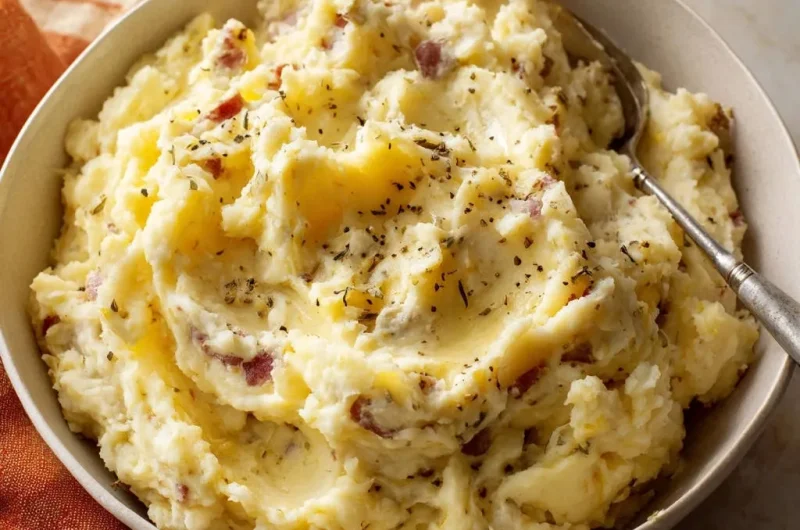
Mashed Potatoes
Course: Side DishCuisine: AmericanDifficulty: easy6
servings10
minutes25
minutes370
kcal35
minutesAvoid gluey mashed potatoes forever! This recipe uses a crucial drying step (The Fluffy Fix) right after boiling, ensuring a perfect, smooth, and fluffy texture. Keeping the skin on Yukon Golds or Red Potatoes adds a delicious rustic depth.
Ingredients
3 pounds Red Potatoes or Yukon Gold Potatoes, scrubbed and quartered (skin on)
1 tablespoon Kosher Salt, plus more for seasoning
1/2 cup Unsalted Butter (1 stick)
1 cup Half-and-Half or Whole Milk
1/2 teaspoon Dried Thyme
1/2 teaspoon Freshly Ground Black Pepper, plus more for serving
Directions
- Prepare the potatoes: Place the quartered potatoes in a large stockpot and cover them with cold water by about 1 inch. Add the 1 tablespoon of Kosher Salt to the water.
- Cook the potatoes: Bring the water to a boil over high heat, then reduce heat and simmer uncovered until the potatoes are fork-tender and easily pierced, about 15 to 20 minutes.
- Drain and dry (The Fluffy Fix): Drain the potatoes completely using a large colander. Immediately return the drained potatoes to the empty hot pot. Place the pot back on the burner over low heat for 2 to 3 minutes. Shake the pot gently or stir constantly with a spoon during this time. The goal is to steam off all excess moisture clinging to the potatoes. This crucial step prevents the starch cells from breaking down later, which causes the gummy texture.
- Prepare the enrichments: While the potatoes are drying, combine the butter and half-and-half (or milk) in a small saucepan and heat gently until the butter is fully melted and the mixture is very warm or just barely simmering. Keep this warm until ready to use.
- Mash the potatoes: Remove the pot from the heat. Using a potato masher or potato ricer, mash the potatoes until they reach your desired consistency, leaving some chunks for a rustic texture. Be careful not to overwork them.
- Combine ingredients: Slowly pour the warm butter and cream mixture into the mashed potatoes while gently stirring with a rubber spatula or wooden spoon. Stir only until the liquid is incorporated.
- Season: Stir in the dried thyme and pepper. Taste and add more salt if necessary. Serve immediately, garnished with additional pepper.
Notes
- The critical step is draining and drying the potatoes completely in the hot pot to steam off excess moisture and prevent a gummy texture.