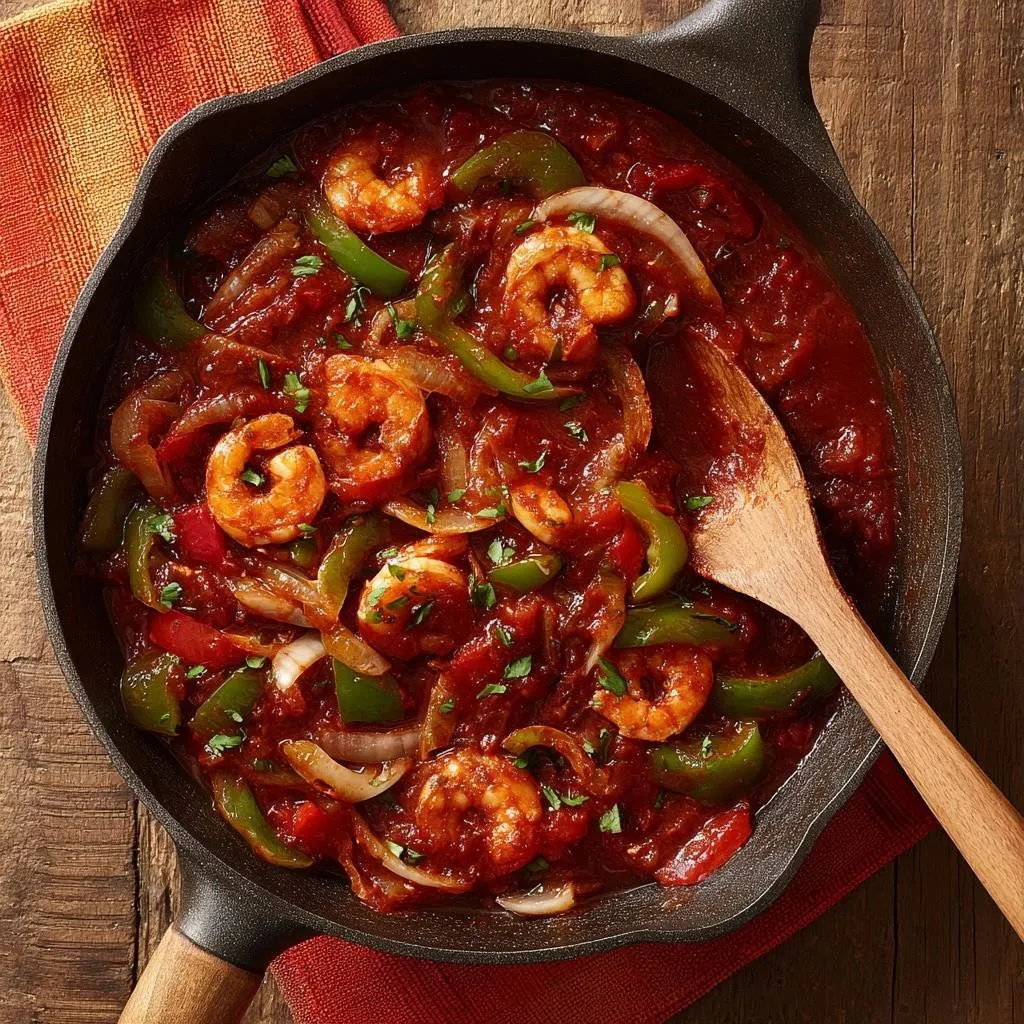
Ever bite into shrimp that’s tough and rubbery in a sauce? It ruins the whole dish. But this saucy skillet shrimp and peppers fixes that fast with a simple trick: nestle fresh shrimp into hot sauce for just 2-3 minutes until they curl and pink up. You’ll get plump, juicy results every time, no more chewy disappointment.
Why does this work so well? Everything happens in one pan in about 20 minutes. First, you build a rich tomato sauce with peppers and onions that soak up all the flavors. Then, the shrimp finish it off without overcooking. It’s vibrant, easy, and way better than takeout.
Here’s the expertise booster: always pat the shrimp bone-dry before adding them. That moisture zap lets them sear right in the bubbling sauce, locking in juices instead of steaming. Trust me, it’s the game-changer for tender skillet shrimp and peppers.
Key Ingredients for Saucy Skillet Shrimp and Peppers
Large shrimp form the star here because they stay juicy even with quick cooking. Their size means more meat and less risk of toughness. Pat them dry, and they absorb the sauce’s flavors perfectly.
Green bell peppers bring a crisp bite that softens just right in the skillet. They contrast the sweet onions, which you slice thin for even caramelization. Together, they create a flavorful base without overpowering the shrimp pepper skillet.
Crushed tomatoes give the sauce body and richness. They thicken naturally as they simmer, unlike fresh ones that need more time. Olive oil handles the high heat well, while fresh parsley adds a bright finish at the end.
Salt and pepper go in early on the veggies. This draws out moisture for better browning. However, taste the sauce before adding shrimp to fine-tune.
Selecting Plump Shrimp for Skillet Sauces
Go for 16/20 count large shrimp; they’re ideal for saucy skillet shrimp and peppers. Peel and devein them yourself for freshness control. If frozen, thaw in cold water to avoid wateriness.
Pat dry with paper towels right before cooking. This removes surface moisture so they sear, not steam. Skip it, and you’ll end up with watery sauce.
Peppers and Onions: Building Flavor Foundation
Slice green bell peppers into thin strips for quick, even cooking. They keep a mild crunch that pairs great with the tender shrimp. Avoid thick cuts, or they’ll stay raw in spots.
Thinly slice the yellow onion so it caramelizes fast without turning mushy. This builds sweetness for your shrimp pepper skillet. Use a sharp knife for uniform pieces.
Equipment Essentials for Skillet Shrimp and Peppers
A 12-inch cast iron skillet shines for this dish. It retains heat evenly, searing veggies perfectly before the sauce simmers. Nonstick can work, but it lacks that sear power.
Stainless steel is fine too, if preheated right. However, avoid small pans; crowding steams everything. Large size keeps shrimp in a single layer for even cooking.
Why Cast Iron Excels in Saucy Skillet Shrimp
Cast iron distributes heat steadily, preventing hot spots that scorch sauce. Its seasoning creates a natural non-stick surface for shrimp sear. Wipe it clean after, and it’ll last forever.
Mastering the Sear: Vegetables First in Saucy Skillet
Heat olive oil until it shimmers over medium-high. Add onions and peppers, then season with salt and pepper right away. This pulls out moisture for faster browning.
Saute 5-7 minutes, stirring every minute or so. Look for softened veggies with browned edges and a sweet aroma. Don’t overcrowd, or they’ll steam instead of sear.
Medium-high heat kickstarts the Maillard reaction for flavor. If edges blacken, lower it slightly. Perfect browning sets up your saucy skillet shrimp and peppers base.
Achieving Perfect Veggie Browning Edges
Browned edges come from the Maillard reaction when sugars and proteins hit high heat. Stir occasionally to rotate pieces. Visual cue: slight char without burning.
Avoid overcrowding; give space for steam escape. If needed, lower heat after initial sear.
Building the Rich Tomato Sauce Base
Stir in 2 cups crushed tomatoes once veggies soften. Bring to a simmer, then drop to medium-low. Cook 5 minutes, stirring to thicken.
This lets pectin release and evaporation happen naturally. Taste and adjust salt or pepper. You’re aiming for a rich, coating sauce, not watery.
Medium-low prevents scorching. Stir often so sugars don’t stick. Spoon test: it should cling lightly when ready.
Thickening Sauce Without Over-Reducing
Tomatoes thicken via natural sugars and evaporation. Simmer gently; too high boils off flavor. Drag a spoon through; if it holds a trail, it’s done.
Shrimp Timing Secret for Saucy Skillet Perfection
Pat shrimp dry thoroughly. Nestle them into the bubbling sauce in a single layer. Cook undisturbed for 2 minutes.
For a similar approach to perfectly cooked shrimp, check out this Southern Shrimp and Grits recipe.
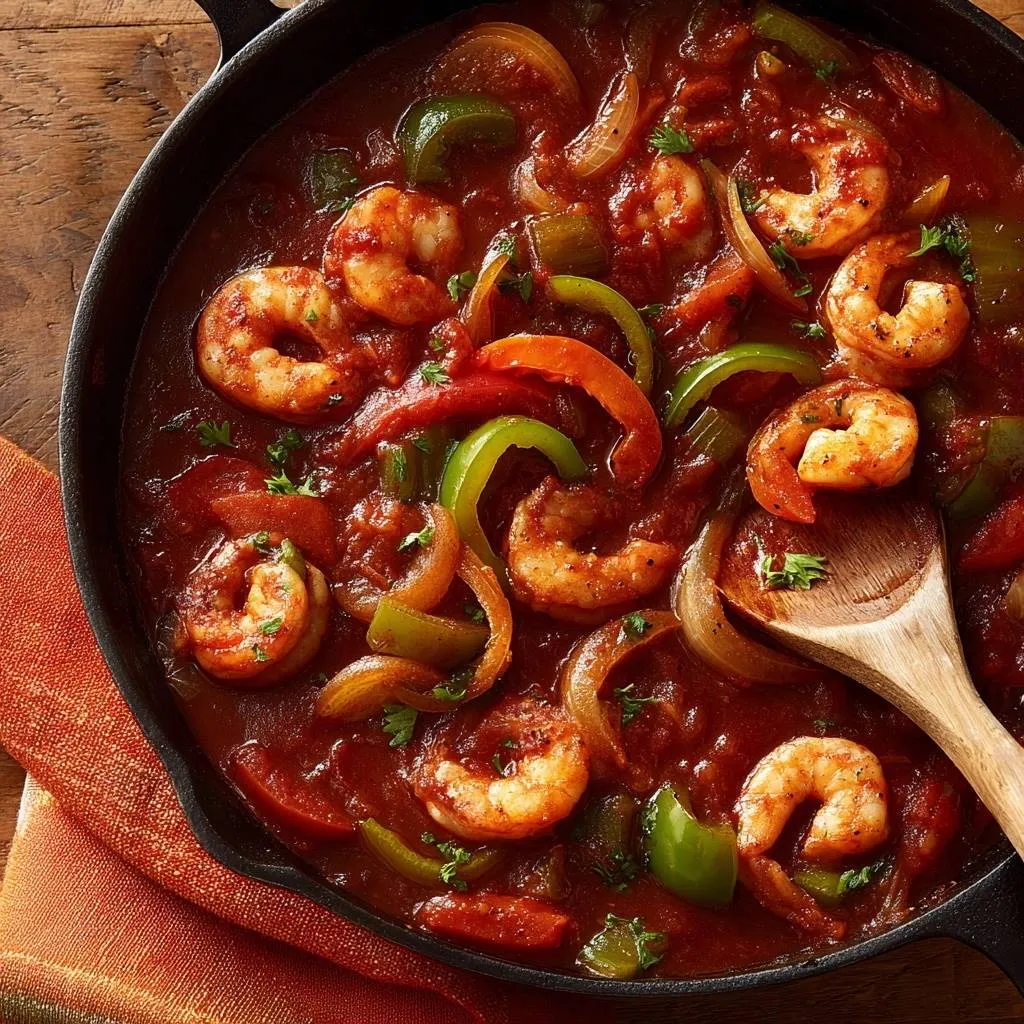
Gently flip, then cook 1 more minute until pink, opaque, and C-shaped. Remove from heat immediately. This quick poach in hot sauce keeps them tender.
Boiling toughens proteins; this method gently cooks to 140°F. Therefore, no rubbery shrimp in your skillet shrimp and peppers.
2-Minute Cook: Locking in Shrimp Juiciness
Shrimp proteins coagulate around 140°F, turning opaque. A loose C-curl signals doneness; tight curl means overcooked. Off-heat stops carryover cooking.
Avoiding Common Mistakes in Skillet Shrimp and Peppers
Don’t overcrowd shrimp; they steam and toughen. Skip the dry pat, and sauce turns watery. High-heat sauce boils off flavor instead of simmering.
Under-season veggies early, and the dish tastes flat. Fix by layering salt. Rubbery shrimp? You overcooked; watch the curl.
Pro tip: use fresh parsley at the end for brightness. It cuts the richness perfectly.
Pat-Dry Step: Preventing Watery Saucy Skillet
Wet shrimp release moisture, diluting sauce and preventing sear. Press gently with paper towels. Do this last minute for best results.
Overcooking Signals in Shrimp Pepper Skillet
Tight curl and translucency loss mean overdone. Rescue undercooked ones by returning to low heat briefly. Always err under; carryover finishes them.
Flavor Variations for Saucy Skillet Shrimp and Peppers
Add garlic or paprika with veggies for depth. Swap green peppers for red or yellow for sweetness. Chili flakes bring heat without changing the one-pan ease.
Try basil instead of parsley for Italian vibes, or cilantro for brightness. Scallops work as a protein sub; cook similarly. Keep it simple to shine.
Pro tip: smoked paprika adds smokiness. Stir it in early for even flavor.
Spicy Kick Additions to Shrimp Pepper Sauce
Chili flakes or fresh jalapeño go in with veggies. Start mild, taste sauce, add more. Heat blooms during simmer.
Perfect Pairings for Saucy Skillet Shrimp and Peppers
Serve over basmati rice; it soaks up sauce perfectly. Quinoa adds nutty chew for gluten-free. Crusty bread scoops every drop.
Green salad balances richness. Sparkling cranberry juice refreshes alongside. Serves 4; double for crowds.
Rice Types That Complement Pepper Shrimp Sauce
Basmati fluffs with 1.5:1 water ratio; rinse first. Jasmine steams sticky to hold sauce. Cook separately, then spoon skillet over top.
Make-Ahead Guide for Skillet Shrimp and Peppers
Prep veggies and sauce up to 2 days ahead; store chilled. Reheat gently on stovetop. Add fresh shrimp at the end to avoid toughness.
Freeze sauce only for 1 month; thaw overnight. Don’t freeze shrimp. Scale up by using two skillets for even cooking.
Troubleshooting Saucy Skillet Shrimp and Peppers
Why Are My Shrimp Tough?
Overcooking is the culprit; shrimp toughen past 140°F. Stick to 2-3 minutes in hot sauce, watch for C-curl. Remove heat fast to stop carryover.
Sauce Too Thin?
Simmer longer on medium-low to evaporate water and release pectin. Stir often. If needed, add a teaspoon cornstarch slurry, but crushed tomatoes usually suffice.
Veggies Soggy?
High heat from the start sears them dry. Don’t stir too much early; let edges brown. Thin slices cook evenly without steaming.
Bland Flavor?
Season in layers: salt veggies first, taste sauce before shrimp. Fresh parsley boosts at end. Adjust pepper for kick.
Skillet Sticking?
Preheat oil to shimmer before adding food. Cast iron needs good seasoning. If stainless, deglaze with a splash of water after veggies.
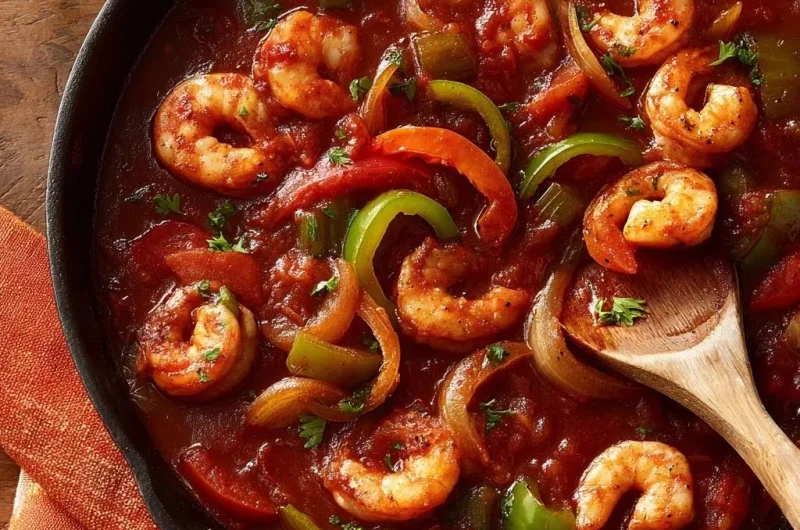
Skillet Shrimp and Peppers
Course: Main CourseCuisine: AmericanDifficulty: easy4
servings10
minutes15
minutes240
kcal25
MinutesTired of rubbery shrimp? This one-pan skillet dish delivers plump, tender shrimp with a simple trick: add them fresh to hot sauce for just 2-3 minutes until they curl and pink up, locking in juices without overcooking. Served with peppers, onions, and crushed tomatoes.
Ingredients
1 lb large shrimp, peeled and deveined
2 green bell peppers, sliced into strips
1 large yellow onion, thinly sliced
2 cups crushed tomatoes
2 tablespoons olive oil
1/4 cup fresh parsley, chopped
Salt and black pepper to taste
Directions
- Heat olive oil in a large cast iron skillet over medium-high heat until shimmering. Add sliced onions and bell peppers. Season with salt and pepper. Saute 5-7 minutes, stirring occasionally, until softened and edges brown slightly.
- Stir in crushed tomatoes. Bring to a simmer, reduce heat to medium-low, and cook 5 minutes, stirring to thicken into a rich sauce. Taste and adjust salt and pepper.
- Pat shrimp dry with paper towels (key for tenderness). Nestle shrimp into the hot sauce in a single layer. Cook undisturbed 2 minutes, then gently flip and cook 1 more minute until shrimp are pink, opaque, and just curled. Remove from heat immediately to prevent toughening.
- Sprinkle with chopped parsley. Serve hot over rice or with crusty bread. Perfect tender shrimp guaranteed!
Notes
- Pat shrimp dry before adding to sauce for maximum tenderness. Remove from heat immediately once cooked to prevent toughening. Serve over rice or with crusty bread.