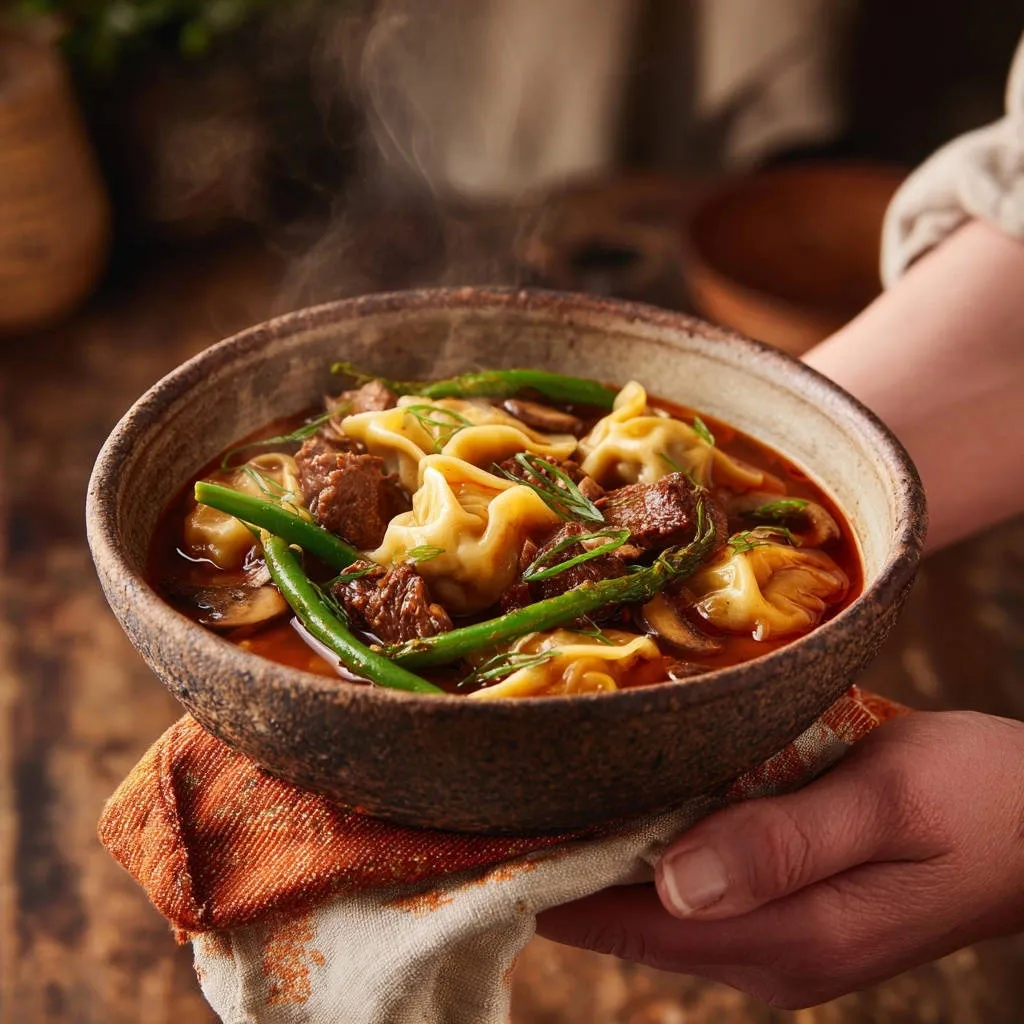
For years, my quest for the perfect, hearty beef stew was consistently undermined by dumplings that would tragically dissolve, turning my rich broth into a sad, starchy mess.
I cracked the code with one simple, separate cooking step, ensuring every spoonful of this Savory Beef and Dumpling Bowl delivers deep flavor without the mushy texture.
For a truly satisfying base, consider the rich flavors in a hearty beef stew.
This is the definitive guide to achieving truly fork-tender beef and silky dumplings, proving that comfort food can be both satisfyingly complex and reliably simple.
The Secret Weapon Against Mushy Dumplings: Why This Recipe Works
Deep, Rich Flavor Development
The foundation of any great stew is built on the initial technique, starting with a powerful, deep sear of the beef chunks.
This initial browning activates the Maillard reaction, locking in intense flavor and color before the long, slow simmer extracts those deep, savory notes into the broth.
The Game-Changing Solution to Starchy Stews
The common mistake is adding raw or frozen dumplings directly to the main stew, which causes them to release excessive starches into the liquid.
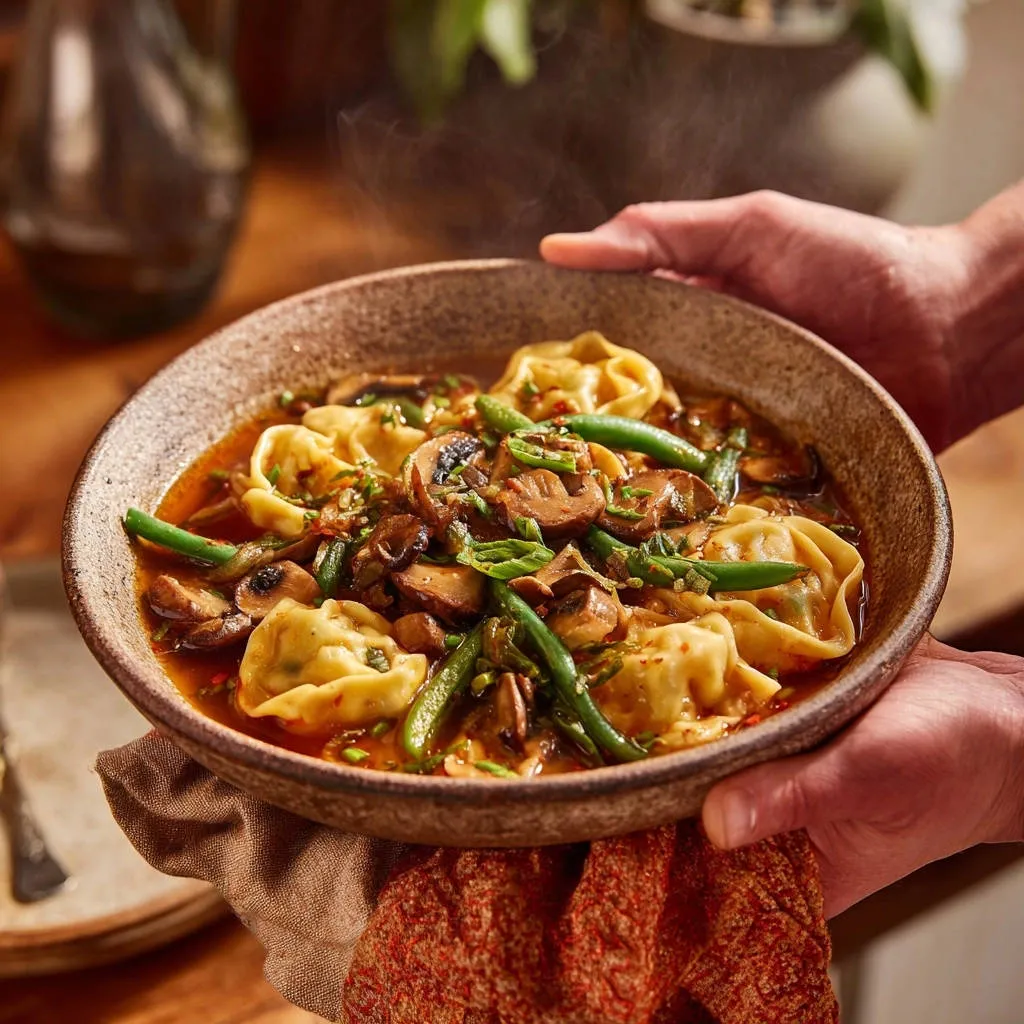
By pre-boiling the dumplings in separate, salted water, we effectively rinse off that surface starch, allowing them to remain silken, firm, and fully intact when submerged in the final stew.
Hearty Comfort in a Customizable Bowl
This recipe provides deeply satisfying comfort, serving as the perfect, warming meal for cold evenings or when you crave a nourishing stew.
The bowl is highly versatile; you can easily use store-bought potstickers, delicate wontons, or even small cheese tortellini style dumplings depending on your preference.
Building the Umami Foundation: Key Ingredients for the Savory Broth
Selecting the Right Beef Cut for Tender Results
Use traditional beef stew meat, typically chuck or round, which is rich in connective tissue that requires long, slow cooking to break down into gelatin.
For even more tender cuts, learn how to achieve truly slow braised beef short ribs.
Ensure your chunks are cut uniformly into one-inch pieces; this guarantees that every piece of beef achieves uniform, melt-in-your-mouth tenderness.
The Aromatic Trifecta: Onion, Garlic, and Fresh Ginger
These three fresh ingredients form the essential aromatic base, providing foundational warmth and complexity to the overall flavor profile.
Freshly grated ginger adds a necessary, bright complexity that perfectly complements the savory soy sauce and rich beef.
The Liquids and Savory Boosters: Broth, Soy Sauce, and Chili Oil
Using low-sodium beef broth is essential as it allows you to control the final seasoning precisely, preventing the stew from becoming overly salty.
Soy sauce is crucial for developing a deep umami foundation, while a touch of chili oil or paprika adds appealing color and a gentle, comforting warmth.
The Thickening Agent: Mastering the Cornstarch Slurry
A properly prepared cornstarch slurry ensures the broth achieves a rich, luxurious coating consistency instead of a thin, watery soup.
It is vital to mix the cornstarch with cold water first; this prevents the starch granules from clumping together and creating undesirable lumps when added to the hot liquid.
Mastering the Sear and Simmer: Step-by-Step Savory Beef and Dumpling Bowl Guide
- Step 1: Achieving the Deep Beef Sear
Pat the beef chunks absolutely dry using paper towels before searing; any residual moisture will steam the meat instead of allowing it to brown.
Sear the beef in batches over medium-high heat until deeply browned on all sides, building the essential, deep flavor foundation via the Maillard reaction.
- Step 2: Sautéing Aromatics and Deglazing
Reduce the heat to medium and add the diced onion, cooking until soft while aggressively scraping up the browned fond stuck to the bottom of the pot.
Stir in the minced garlic and grated ginger last, cooking them for only about one minute until their fragrance blooms, ensuring they do not burn and turn bitter.
- Step 3: The Long, Slow Simmer for Fork-Tender Meat
Return the beef to the pot, stir in the savory boosters and liquids, and bring the mixture just to a gentle, low simmer, avoiding a harsh, rolling boil.
Cover the pot and allow it to cook undisturbed for 60 to 90 minutes, checking the beef until it is easily pierced and shreds slightly with a fork.
- Step 4: Incorporating the Slurry and Vegetables
Stir the cornstarch slurry vigorously right before pouring it in slowly, stirring the stew constantly until it reaches the desired, slightly thick consistency.
Add the trimmed green beans next and continue simmering for just five minutes, ensuring they retain their vibrant green color and necessary tender-crisp bite.
- Step 5: The Dumpling Doctrine (The Crucial Separate Boil)
While the stew finishes, bring a separate small pot of heavily salted water to a boil and cook the dumplings entirely according to their package directions.
This independent cooking process removes the external starches, which is the key technique to solving the frustrating “gummy dumpling problem” inherent to stews.
- Step 6: Final Assembly and Garnish
Use a slotted spoon to transfer the hot, fully cooked dumplings directly into individual serving bowls.
Ladle the rich, thick Savory Beef and Dumpling Bowl stew generously over the top and garnish immediately with fresh, thinly sliced green onions for brightness and color.
Complementary Dishes
Round out your meal with these dishes that pair well with hearty beef and dumplings.
- For a fresh contrast, add this Spicy Peanut Crunch Salad, offering a delightful snap to your dinner.
- Consider this Creamy Green Bean and Egg Salad for a different texture and a satisfying addition.
Chef’s Corner: Elevating Your Savory Beef and Dumpling Bowl
Pre-Seasoning the Beef
Salting the beef 30 minutes before you plan to cook it will draw out surface moisture, which then results in a much better crust when searing.
This method not only ensures a superior sear but also allows the salt to penetrate deeper into the meat fibers, seasoning the beef from within.
Maximizing Depth with Tomato Paste
For an extra layer of caramelized savory flavor, stir in one tablespoon of tomato paste after the onions are soft in Step 2.
Cook the paste for two minutes until it slightly darkens-a process known as pincage-before adding the garlic and ginger to build complex flavor.
Don’t Discard the Dumpling Water
Save about half a cup of the starchy water used to boil the dumplings; it is an incredibly useful tool for consistency adjustments.
If the stew thickens too much overnight, a tablespoon or two of this reserved starch water can thin it out when reheating without diluting the rich flavor.
Troubleshooting Your Stew: Fixing Tough Beef and Watery Broth
Problem: The Beef Chunks are Still Tough
Toughness means the connective collagen has not yet fully broken down, regardless of the time elapsed; the only solution is always more low, gentle heat.
Ensure your pot lid forms a tight seal to retain internal moisture and maintain a very low simmer-just a bare, sporadic bubble-and simply extend the cooking time until the meat is fork-tender.
Problem: The Broth is Too Thin After Adding the Slurry
If the broth doesn’t thicken, the cornstarch has not simmered long enough to fully activate, or the cold water ratio was slightly off.
Prepare a secondary, small slurry (1 teaspoon cornstarch to 2 teaspoons cold water) and stir it in, ensuring you bring the entire mixture back to a low simmer for at least five minutes to allow the starches to bloom.
Problem: The Final Flavor is Too Salty or Flat
If the stew tastes too salty, add a few large chunks of raw potato to the simmering broth for 20 minutes; the potato will naturally absorb some of the excess sodium.
If the flavor is flat, add a quick finishing splash of rice vinegar or lemon juice right before serving; acidity cuts through the richness and brightens the overall savory profile.
Serving Suggestions and Essential Make-Ahead Strategy
Best Companions for Your Savory Beef and Dumpling Bowl
Pairing this rich, hearty stew with something acidic or fresh provides an excellent contrast that cuts through the heaviness of the beef and dumplings.
A quick Asian-style slaw made with shredded cabbage, carrots, and a vinegar dressing, or simply serving the stew alongside plain, fluffy white rice, works beautifully.
Storage, Reheating, and Make-Ahead Prep
The rich beef stew base (without any dumplings added) can be prepared up to three days in advance and stored tightly sealed in the refrigerator.
Crucially, dumplings must always be cooked fresh right before serving; never store them submerged in the broth or they will swell, become mushy, and disintegrate.
To serve leftovers, gently reheat the stew base on the stovetop, bringing it to a low simmer, and then proceed with Step 5 and 6 using freshly cooked dumplings.
Frequently Asked Questions About Dumpling Variations and Substitutions
Can I Use Homemade Dumplings Instead of Store-Bought?
Yes, homemade dumplings work excellently, but monitor their cooking time carefully, as they can sometimes be thicker or release slightly more starch than commercial products.
Ensure they float to the surface and are fully cooked through in the separate boiling water before transferring them to the finished bowl.
What is the Best Substitution for Beef Broth?
Chicken stock is the best alternative, providing a savory depth without drastically altering the overall flavor profile, though the final stew may be slightly less dark and robust.
Vegetable broth can be used but may require additional boosting with a deeper seasoning like extra soy sauce or a spoonful of mushroom powder to compensate for the missing meat notes.
Are there Vegetarian Substitutions for the Meat?
Yes, dense cubes of seitan or large, meaty shiitake mushrooms provide an excellent textured alternative to the stew meat.
If omitting beef, reduce the simmering time significantly to just 15-20 minutes, which is enough time for the flavors to meld without overcooking the plant-based substitute.
Ready to Impress? Share Your Savory Beef and Dumpling Bowl Masterpiece!
Mastering the Savory Beef and Dumpling Bowl is far easier than you might think, provided you stick religiously to the separate dumpling cooking technique.
You now possess the expert knowledge required to create a profoundly flavorful, comforting stew that remains beautifully textured, perfect for impressing guests or simply treating yourself.
Gather your ingredients, utilize the Chef’s Corner tips, and enjoy the pure satisfaction of serving up this rich, foolproof masterpiece tonight!
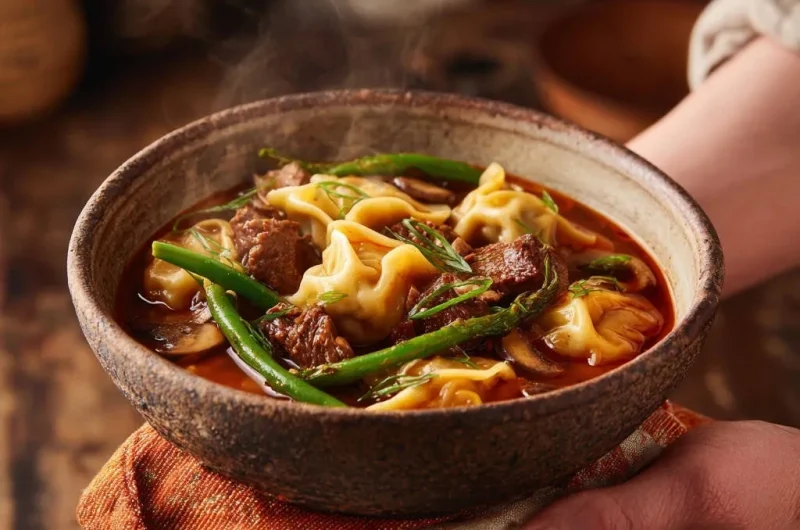
Beef and Dumplings
Course: Main CourseCuisine: AsianDifficulty: medium4
servings20
minutes1
hour550
kcal80
minutesSay goodbye to sad, starchy dumplings! This hearty beef stew utilizes a simple but critical separate boiling step to ensure your dumplings remain silky and perfectly structured while soaking up a rich, umami-packed broth full of tender beef and vegetables.
Ingredients
1 pound beef stew meat, cut into 1 inch chunks
1 tablespoon cooking oil
1 large yellow onion, diced
4 cloves garlic, minced
1 tablespoon fresh ginger, grated
8 ounces sliced cremini mushrooms
1 teaspoon salt
1/2 teaspoon black pepper
1/4 cup soy sauce
1 tablespoon chili oil (or use paprika for color and slight warmth)
4 cups beef broth (low sodium)
1/2 cup water
1 cup fresh green beans, trimmed
12 to 16 store-bought or frozen dumplings (wontons, potstickers, or tortellini style)
2 tablespoons cornstarch mixed with 3 tablespoons cold water (slurry)
2 green onions, thinly sliced, for garnish
Directions
- Sear the Beef: Pat the beef chunks very dry. Heat the cooking oil in a heavy bottom pot or Dutch oven over medium-high heat until shimmering. Add the beef in batches if necessary so you do not crowd the pan. Sear until browned deeply on all sides, about 6 to 8 minutes total. Remove the beef and set aside.
- Build the Broth: Reduce the heat to medium. Add the diced onion to the pot and cook until soft, scraping up any browned bits from the bottom. Add the minced garlic and grated ginger and cook for 1 minute until fragrant.
- Simmer: Return the beef to the pot. Stir in the sliced mushrooms, salt, pepper, soy sauce, and chili oil/paprika. Pour in the beef broth and 1/2 cup of water. Bring the mixture to a low simmer, cover, and cook for 60 to 90 minutes, or until the beef is fork-tender.
- Thicken and Add Vegetables: Stir the cornstarch slurry and pour it slowly into the simmering broth. Stir until the broth thickens slightly (this process ensures a rich coating, rather than a watery soup). Add the trimmed green beans and continue to simmer for 5 minutes, or until the beans are bright green and tender-crisp.
- Solve the Gummy Dumpling Problem (The Key Technique): While the broth finishes simmering, bring a separate small pot of salted water to a boil. Add the dumplings and cook them completely according to package directions (usually 3 to 5 minutes) until they float and are cooked through. This separate boiling removes excess starch and prevents them from disintegrating or turning gummy when submerged in the final stew.
- Assemble and Serve: Use a slotted spoon to transfer the fully cooked dumplings directly from the boiling water into serving bowls. Ladle the hot, rich beef and vegetable stew generously over the dumplings. Garnish immediately with fresh sliced green onions and serve hot.
Notes
- The key technique is to boil dumplings separately before adding to serving bowls to prevent gumminess and excess starch in the stew.