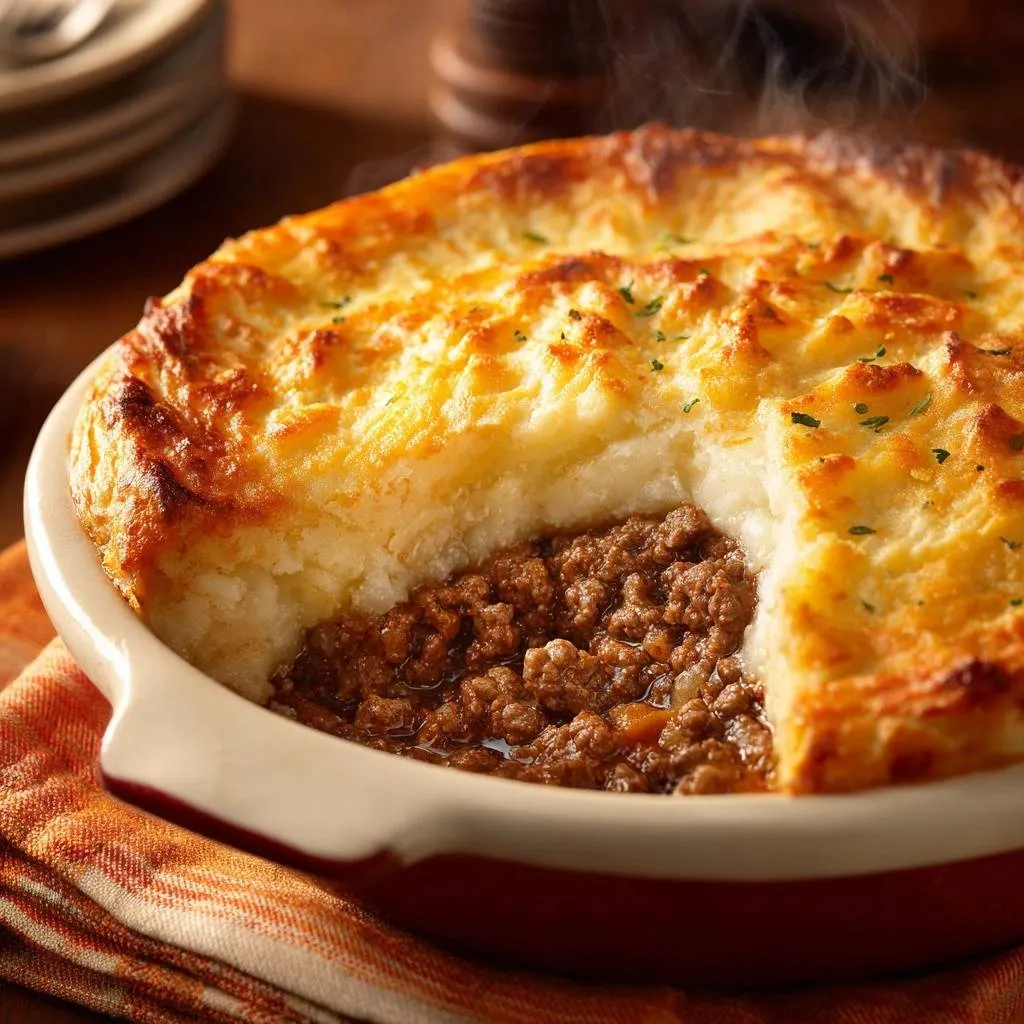
Ever dug into Shepherd’s Pie only to hit a wall of gummy, gluey mashed potatoes that ruins the whole cozy vibe? You’re not alone. This recipe fixes that frustration fast with one game-changer: ricing the potatoes instead of mashing them aggressively.
Therefore, you get a light, airy topping that contrasts perfectly with the savory beef filling below. No heavy starch release means every bite stays fluffy and inviting. It’s comfort food done right, without the sinker.
Here’s the expertise kicker: always rice the hot potatoes straight from the boil, then fold in warm milk and butter gently. That keeps the cells intact for peak fluffiness. Trust me, it’ll elevate your pie every time.
Why Ricing Transforms Shepherd’s Pie Topping
Starch Science: Avoiding Gummy Mashed Potatoes
When you mash potatoes hard with a mixer or fork, you rupture cell walls and release excess starch. That starch turns into glue, especially in Shepherd’s Pie where the topping needs to hold up over hot filling. However, ricing presses potatoes through small holes with minimal damage, so you end up with dry, fluffy results.
Food processors whip in too much air and gum things up fast. Stand mixers overwork the starch even more. In addition, a simple fork gently breaks them if you lack a ricer, but go slow to avoid toughness. You’ll smell the sweet potato steam rising, pure perfection.
This trick makes your Shepherd’s Pie topping pipeable and light. No more dense cap weighing down the beefy goodness underneath.
For an extra light topping consistently, explore tips for Shepherd’s Pie with No-Sinking Mash.
Russet Potatoes: Ideal Choice for Shepherd’s Pie
Russets shine in Shepherd’s Pie because their high starch content absorbs dairy without getting watery. Waxy potatoes like reds stay firm but turn gluey when riced. Therefore, pick firm russets with clean skins, no sprouts.
Peel them thickly to remove eyes, then quarter for even boiling. Store extras in a cool, dark spot for up to two weeks. That way, they’re always ready for fluffy topping duty.
Oh man, the fork-tender bite after boiling? It’s the start of magic in every slice.
Essential Ingredients for Shepherd’s Pie Filling
Ground Beef and Aromatics Breakdown
One pound of 80/20 ground beef gives just enough fat for flavor without greasiness in Shepherd’s Pie. Finely chop the large onion to release sugars slowly, building sweetness. Dice carrots small so they soften evenly, adding earthiness.
These ratios create depth: onions mellow the beef’s richness, carrots balance with subtle crunch. Sauté first to caramelize edges gently. You’ll hear the sizzle and catch that homey aroma filling your kitchen.
Pro tip: pat beef dry before cooking for better browning and less splatter.
Gravy Builders: Broth, Paste, Flour Role
Tomato paste delivers umami punch, concentrating flavors in the Shepherd’s Pie gravy. Two tablespoons of flour toast briefly to thicken without lumps. Beef broth, two cups, brings savory richness that clings to every veggie and meat bit.
Warm the half-cup milk before folding into riced potatoes with one tablespoon butter; cold dairy causes separation and heaviness. Shredded cheddar melts smoothly for cheesiness. Season salt and pepper late to taste the gravy’s true depth first.
In addition, this combo keeps things hearty yet light. Nutrition bonus: carrots sneak in vitamins without overpowering.
For a similar hearty yet veg-forward experience, check out this cheesy sweet potato and beef bake.
History and Evolution of Shepherd’s Pie
From Cottage Pie to Shepherd’s Pie Origins
Shepherd’s Pie traces to 19th-century Britain, where shepherds used lamb scraps under mashed potatoes. Cottage Pie swapped beef for working-class families. Post-WWII, rationing pushed creative veggie-heavy versions across Ireland and Scotland.
Regional twists added peas or parsnips for thrift. Today, it endures as economical comfort, warming bellies on cold nights. Our riced topping modernizes it, dodging gummy pitfalls for fluffier nostalgia.
Therefore, every forkful nods to those roots while tasting fresher than ever.
Global Twists on Classic Shepherd’s Pie
Indian versions spice with curry, Mexican ones layer beans and chilies. However, this beef-focused recipe stays pure to let riced potatoes shine universally. Ricing adapts anywhere, keeping toppings light amid bold flavors.
It’s versatile comfort that travels well.
Step-by-Step: Boiling and Ricing Potatoes
Perfect Boil for Fork-Tender Results
Preheat your oven to 400 degrees F first. Quarter two pounds of peeled russets and boil in well-salted water for 15 minutes until a fork slides in easily. Drain thoroughly in a colander, shaking to release steam; excess water makes soggy mash.
Russets quarter best because their size ensures even cooking. You’ll see them go from firm to buttery soft. Avoid overboiling, or they absorb too much liquid.
Ricing Technique for Fluffy Shepherd’s Pie Mash
Pass the hot potatoes through a ricer right into a bowl for fluffiest texture. No ricer? Gently break with a fork, but skip the mixer. Fold in warm half-cup milk, one tablespoon butter, half-cup cheddar, salt, and pepper using a spatula until just combined.
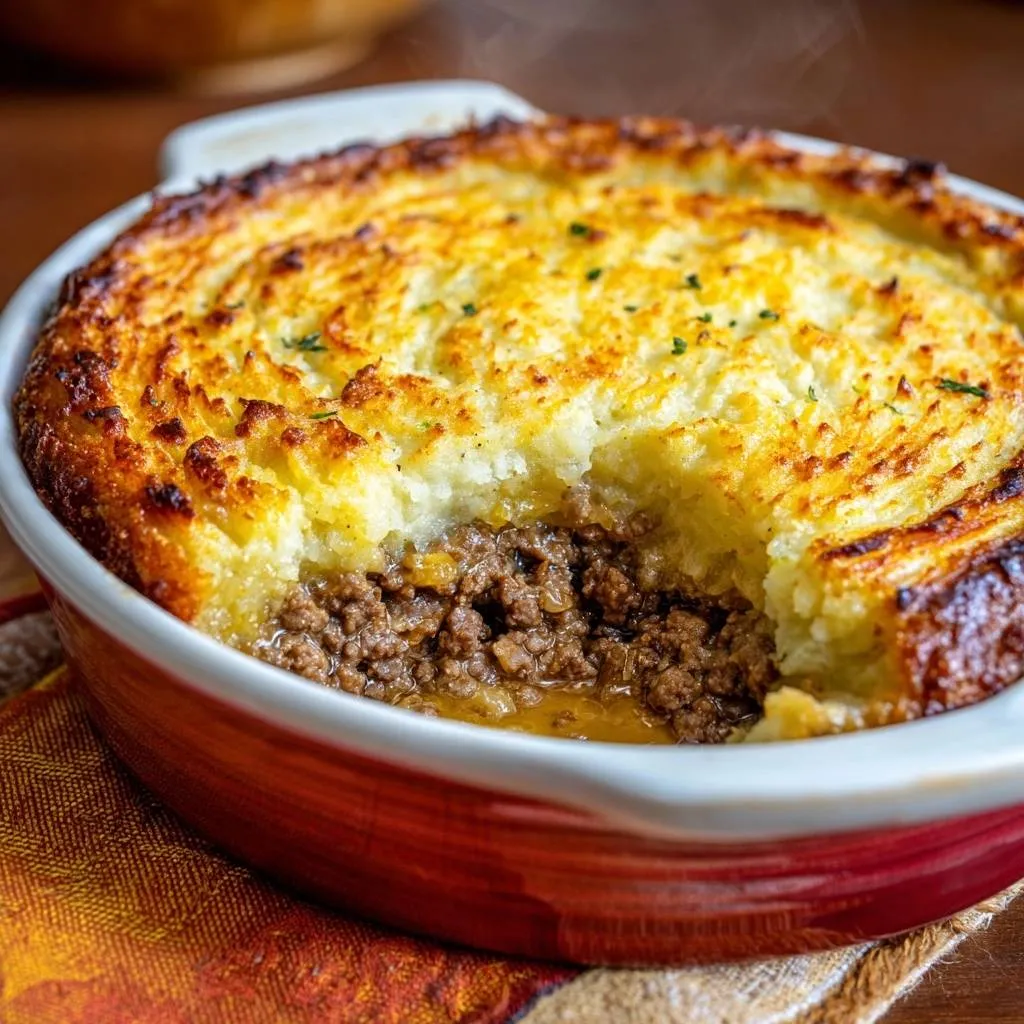
Look for light, airy peaks that hold shape. Overmixing releases starch, so stop when fluffy. The cheese melts in warm, adding creamy pull.
Pro tip: warm dairy separately to emulsify smoothly without lumps.
Building Savory Shepherd’s Pie Beef Filling
Sautéing Vegetables in Butter Base
Melt one tablespoon butter in a skillet over medium heat. Add chopped onion and diced carrots, cooking five minutes until softened and fragrant. This order lets onions sweeten first, carrots catch up without mush.
You’ll spot translucent edges and smell deepening savoriness. Don’t rush; low heat builds flavor layers for Shepherd’s Pie magic.
Browning Beef and Thickening Gravy
Add one pound ground beef, browning for seven minutes while breaking it up. Drain excess fat to prevent oiliness. Stir in two tablespoons tomato paste and flour, cooking one minute to activate.
Gradually whisk in two cups beef broth over five minutes for lump-free, thick gravy. Season with salt and pepper. It should coat the back of a spoon richly.
Watch the color shift from pink to deep brown, aromas intensifying.
Assembling and Baking Shepherd’s Pie
Layering Filling and Potato Topping
Spoon beef mixture into a 9-inch baking dish. Dollop riced potatoes on top, spreading evenly to the edges for a steam-tight seal. Gaps let filling bubble over, so press gently with a spatula.
This layering traps juices, keeping everything moist inside.
Oven Timing for Crispy Golden Top
Bake at 400 degrees F for 25 to 30 minutes until golden and crispy. Broil two minutes for extra crunch, watching closely to avoid burning. Garnish with chopped parsley and rest five minutes; resting sets the structure for clean slices.
The top crackles satisfyingly, filling steams warmly below.
Make-Ahead and Freezing Shepherd’s Pie Guide
Prep Tricks for Busy Weeknights
Assemble fully up to two days ahead, cover, and chill. Or freeze unbaked for three months. Bake straight from freezer, adding 15 to 20 minutes.
Prep filling and mash separately for flexibility. Portion into singles for quick meals. Thaw overnight for best texture.
Pro tip: label bags with dates to stay organized.
Freezer Storage and Thawing Best Practices
Wrap assembled pie airtight in foil and plastic. Freeze filling alone in zip bags, flatten for space. Thaw in fridge overnight, then bake as directed.
Mash freezes well up to three months; refresh with a pat of butter post-thaw. Always reheat to 165 degrees F safely.
Avoiding Shepherd’s Pie Common Pitfalls
Fixing Soupy Filling or Dense Topping
Soupy filling comes from skipping fat drain or undercooking flour. Always toast it one minute and simmer gravy fully. For dense topping, you overmixed; next time rice fresh and fold lightly.
Watery veggies? Pat dry before sautéing. These fixes keep your Shepherd’s Pie sliceable and craveable.
Edge Sealing for No Leakage
Spread mash firmly to dish edges, creating a barrier. Use a 9-inch dish to avoid thin spots. Broil risks charring, so position rack low and monitor.
No leaks means perfect presentation every time.
Flavor Variations for Shepherd’s Pie
Cheese and Herb Swaps
Swap cheddar for gouda for nuttier melt or Irish cheddar for sharper bite. Stir in thyme or rosemary with parsley for herbal lift. Add peas or corn sparingly to filling for pops of sweetness.
These tweaks keep the classic vibe fresh without overwhelming.
Protein and Vegetable Tweaks
Use lamb for traditional Shepherd’s authenticity or ground turkey for leaner fare. Fold mushrooms into beef for umami depth, keeping gravy ratios intact. Peas integrate seamlessly too.
Balance keeps the dish hearty yet adaptable.
Perfect Pairings for Shepherd’s Pie
Simple Vegetable Sides
Steamed green beans or broccoli cut the richness with crisp freshness. Roasted root veggies echo the carrots warmly. A simple green salad adds bite.
These sides make the meal complete and light.
Round Out Your Meal
Here are a couple of ideas to complement your Shepherd’s Pie with Fluffy Riced Potato Topping.
- For a fresh counterpoint, consider this grilled chicken kale and cabbage power salad, which brings a bright, crisp texture to the meal.
- Another excellent choice is the creamy herb and pea potato salad, offering a different take on potato with fresh herbs and peas.
Beverage and Bread Matches
Ginger beer cuts through the savoriness with zing. Crusty rolls sop up gravy perfectly. They complement the pie’s warmth beautifully.
Shepherd’s Pie FAQ
Can I Make Shepherd’s Pie Vegetarian?
Yes, swap beef for lentils or mushrooms, using one pound cooked. Keep veggie sauté and gravy steps, sub vegetable broth. Ricing potatoes stays essential for fluffy topping contrast. Adjust simmer time for tenderness.
Why Use a Ricer for Potatoes?
Ricing minimizes starch release by gently extruding potatoes, preventing gumminess. Fork works okay gently, but mixers and processors overwork. Result: light, airy mash perfect for Shepherd’s Pie.
How Long Does Shepherd’s Pie Last?
Store in fridge up to 4 days airtight. Freezes well assembled for 3 months. Reheat covered at 350 degrees F until hot, or microwave portions.
Best Dish Size for Even Baking?
A 9×9-inch or 2-quart dish bakes evenly for 4-6 servings. Double for crowds in 9×13. Avoid oversized to prevent thin topping.
Gluten-Free Shepherd’s Pie Adaptation?
Replace flour with 1:1 gluten-free blend or cornstarch slurry. Use gluten-free broth. Riced potatoes remain naturally GF and fluffy.
Shepherd’s Pie
Course: Main CourseCuisine: AmericanDifficulty: medium6
servings20
minutes45
minutes450
kcal65
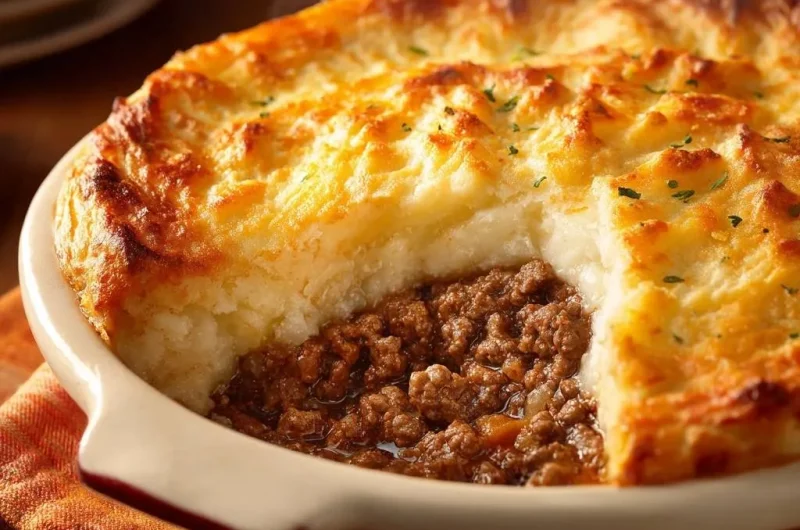
MinutesSick of heavy, gluey mash sinking your shepherd’s pie? This recipe nails fluffy, perfect potato topping with one simple trick: rice the boiled potatoes instead of mashing, and fold in warm dairy gently. No mixer, no gumminess, just light perfection over savory beef filling.
Ingredients
2 pounds russet potatoes, peeled and quartered
1 pound ground beef
1 large onion, finely chopped
2 carrots, diced
2 cups beef broth
2 tablespoons tomato paste
2 tablespoons butter, divided
1/2 cup milk, warmed
1/2 cup shredded cheddar cheese
2 tablespoons all-purpose flour
Salt and pepper to taste
Fresh parsley, chopped for garnish
Directions
- Preheat oven to 400 degrees F. Boil potatoes in salted water until fork-tender, about 15 minutes. Drain well.
- For the no-gummy mash trick: Pass hot potatoes through a ricer into a bowl (or use a fork to gently break them up, avoiding a mixer). Warm milk and 1 tablespoon butter separately. Fold warm milk and butter into riced potatoes gradually with a spatula until just combined and fluffy. Stir in cheese, salt, and pepper. Set aside. This ricing method prevents starch release that causes gumminess.
- In a skillet over medium heat, melt remaining 1 tablespoon butter. Add onion and carrots, cook until softened, 5 minutes.
- Add ground beef, cook until browned, breaking it up, about 7 minutes. Drain excess fat. Cook until no pink remains and it reaches 160°F (71°C).
- Stir in tomato paste and flour, cook 1 minute. Gradually add beef broth, stirring to thicken into gravy, 5 minutes. Season with salt and pepper.
- Transfer beef mixture to a 9-inch baking dish. Dollop fluffy mash on top, spread evenly to edges for a seal.
- Bake 25-30 minutes until top is golden and crispy. Broil 2 minutes for extra crunch if needed. Garnish with parsley. Let rest 5 minutes before serving.
Notes
- Ricing the potatoes prevents starch release that causes gumminess. No mixer needed for fluffy mash. Broil for extra crispy top.