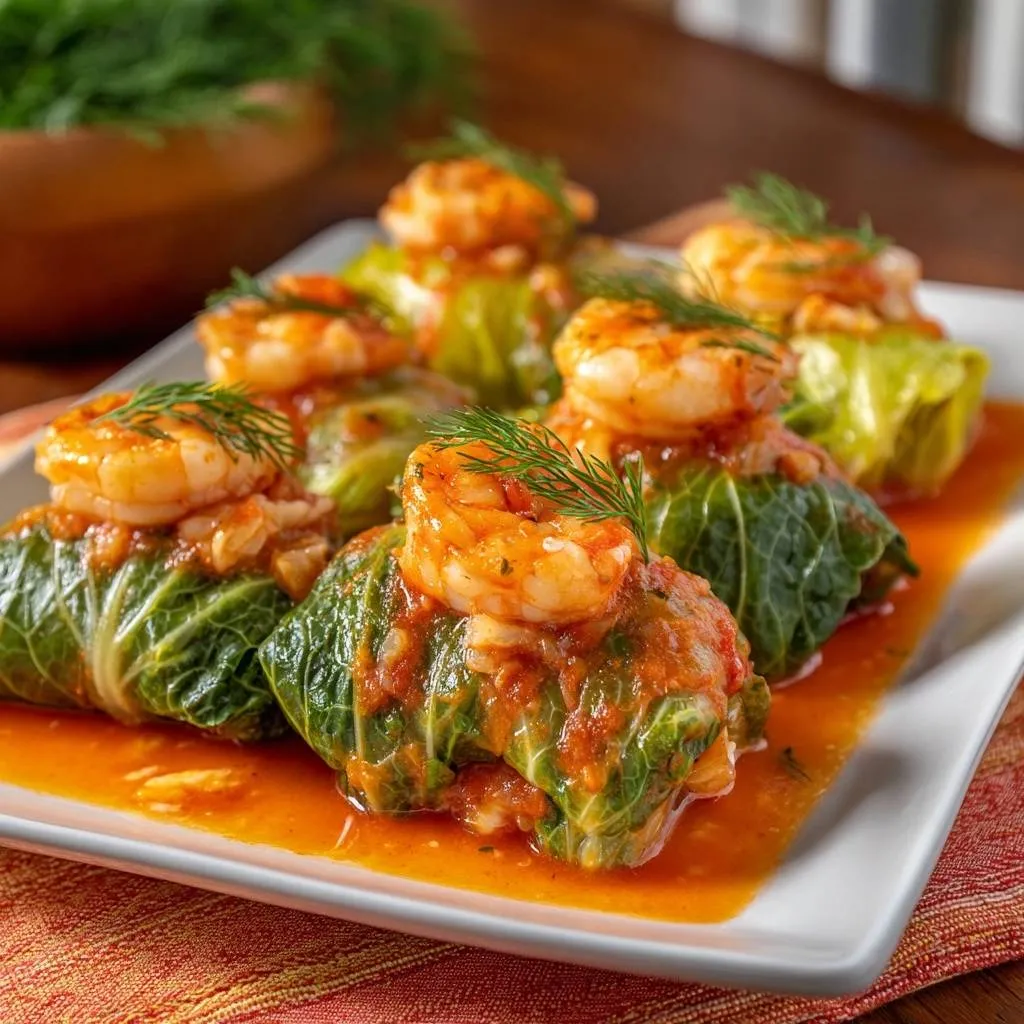
Ever wrestled with cabbage leaves that split right when you’re rolling? You know the drill: they tear, the filling spills, and dinner’s a mess. But this shrimp dill cabbage rolls recipe fixes that frustration fast with a simple freeze-thaw trick. No boiling, no stink, just pliable leaves that wrap perfectly around juicy shrimp.
Therefore, you get plump rolls swimming in a bright dill-tomato sauce that bursts with flavor. It’s the seafood twist on a cozy classic that lights up weeknight dinners. Plus, it’s low-carb and packed with lean protein, so you feel good about every bite.
For more bright tomato goodness, try this burst tomato feta shrimp bake.
Here’s the expertise kicker: freezing the whole cabbage head creates ice crystals that gently pry the leaves apart. That means 12 intact wrappers every time, not the usual 6 from boiling. You’ll nail tear-free rolls on your first try.
For a different take on stuffed cabbage, explore mushroom stuffed red cabbage rolls.
Why Shrimp Dill Cabbage Rolls Transform Dinners
These rolls blend Eastern European comfort with a fresh seafood spin. Picture vibrant green leaves hugging pink shrimp, all glossy in red sauce. The dill cuts through with herbal zing, making each forkful pop.
In addition, they’re quicker than beef versions since shrimp cooks in minutes. Prep takes 20 minutes active plus thaw time, serves 4-6, and clocks in at about 150 calories per roll. No-boil ease means less cleanup too.
Complementary Dishes
To round out your meal, consider these dishes that pair well with shrimp and cabbage.
- For a fresh and vibrant addition, try the Grilled Chicken Kale and Cabbage Power Salad, featuring similar greens.
- If you’re in the mood for another chicken option, the Creamy Zesty Chicken and Corn Salad offers a different flavor profile that complements seafood.
However, the real win is that aromatic lift from simmering sauce. It fills your kitchen with warmth, turning ordinary cabbage into something crave-worthy.
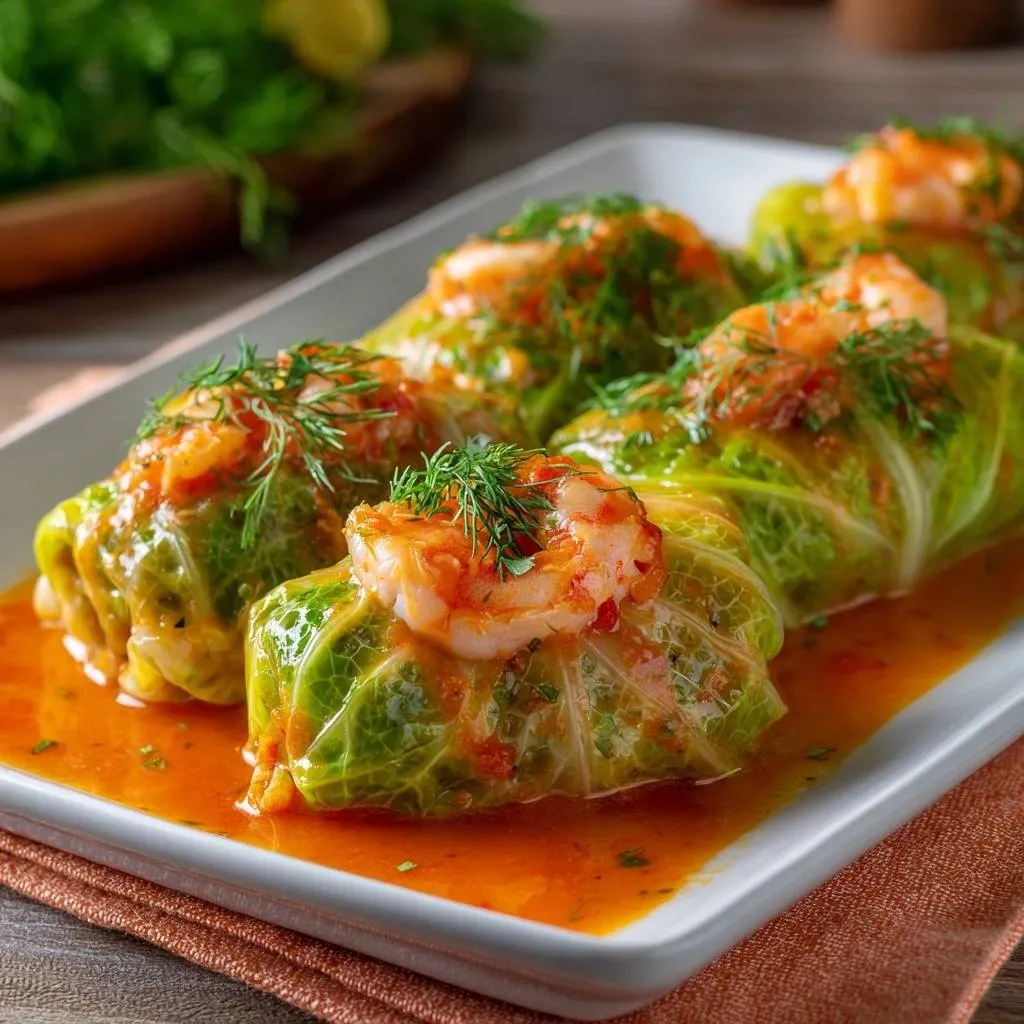
Health Edge of Shrimp Dill Cabbage Rolls
Each serving packs 20g protein from shrimp, keeping you full without the heaviness. Cabbage brings fiber and vitamins for gut health, while dill fights inflammation.
Shrimp adds omega-3s and selenium for immunity boosts. Therefore, it’s keto and paleo-friendly, totally gluten-free. Low-cal and fat too, at around 150 per roll.
Core Ingredients for Flawless Shrimp Dill Cabbage Rolls
Grab 1 large head green cabbage (2-3 lbs), 1 pound large shrimp (peeled, deveined, tails off), one 28-oz can crushed tomatoes, 1/4 cup chopped onion, 2 garlic cloves minced, 1/4 cup fresh dill chopped (plus sprigs), 2 tbsp olive oil, 1 tsp salt, 1/2 tsp black pepper, 1 tsp paprika. Yields 12 rolls.
Wild-caught shrimp taste sweeter; fresh dill packs more punch than dried (use double if substituting). Green cabbage pliables best post-freeze over red. No onion? Try leeks for mildness.
Selecting and Prepping Cabbage for Rolls
Pick a firm 2-3 lb green head. Core by slicing out the thick stem center to ease peeling later. Freeze-thaw keeps nutrients intact, skips blanching’s sulfur smell.
Shrimp and Fresh Dill Essentials
Go for 21-25 count shrimp; they fit perfectly without crowding. Devein by slicing along the back and rinsing. Chop dill fine to release oils, one bunch gives 1/4 cup.
Tomato Sauce Building Blocks
Crushed tomatoes blend smooth, unlike diced chunks. Paprika adds smokiness; sauté in olive oil for neutral base. Onion-garlic ratio builds depth without overpowering.
Freeze-Thaw Secret: Perfectly Pliable Cabbage Leaves
Core the cabbage, slip into a zip-top bag, freeze overnight. Thaw in fridge 2 hours or cold water 30 minutes till leaves loosen. Peel off 12 large outer ones, pat dry. Trim thick veins for flat rolling.
This yields tear-proof leaves every time. You’ll smell faint sweetness as they soften, no brittle edges. Pro tip: full freeze avoids partial cracks.
Science of Ice Crystal Layer Separation
Water expands 9% when frozen, prying cell walls apart gently. Leaves separate naturally without cooking fibers. Boiling denatures proteins, risks tears; this keeps them supple.
Building the Dill-Tomato Sauce Base
Preheat oven to 375°F. Heat oil in skillet till it shimmers, add onion and garlic. Cook 3 minutes till soft and fragrant, not browned.
Stir in tomatoes, paprika, salt, pepper, half the dill. Simmer 10 minutes; sauce thickens as pectin releases and water evaporates. Taste and tweak salt. Yields 2 cups.
Layering Aromatics for Depth
Onion first softens sweet; add garlic last to dodge bitterness. Bloom paprika in oil extracts full flavor. Balance keeps it bright.
Assembling Tight Shrimp Dill Cabbage Rolls
Lay a leaf flat on a board. Place 2 shrimp at base, tails out, add 1 tsp sauce and dill pinch. Fold sides in, roll burrito-tight, place seam-down in dish.
Snug them in a single layer; repeat for 12 in 10 minutes. Sauce keeps filling moist, prevents drying. Feel the satisfying tuck as it seals.
Tucking and Securing Rolls Evenly
Trimmed veins make bases flat; roll with even pressure to avoid bursts. Check seam hugs tight. All even means uniform cooking.
Baking Shrimp Dill Cabbage Rolls to Perfection
Pour remaining sauce over. Cover with foil, bake 25 minutes till shrimp pink and curl. Uncover last 5 for glossy sauce set.
Rest 5 minutes; shrimp hit 140°F internally, stay juicy. Garnish dill sprigs for fresh aroma punch. Hot and saucy, they’re irresistible.
Monitoring Doneness Without Overcooking
Probe thickest shrimp part; aim 140°F. Look for opaque pink curl, not rubbery. Visual beats guesswork every time.
Avoiding Pitfalls in Shrimp Dill Cabbage Rolls
Don’t skip full thaw, or leaves stay brittle. Single layer prevents soggy bottoms; pat leaves extra dry. Use raw shrimp, never pre-cooked.
Simmer sauce just right, or it turns bitter. Pro tip: taste early, adjust dill for zing. Freezer burn? Double-bag cabbage.
Rescuing Torn Leaves or Dry Shrimp
Patch small tears with extra leaf bits. Dry shrimp? Splash more sauce pre-bake. Roll on, they’ll still taste great.
Flavor Twists on Shrimp Dill Cabbage Rolls
Swap shrimp for scallops or crab; they hold firm. Leeks or fennel for onion, lemon zest brightens sans dill. Add cumin or chili flakes for kick.
Vegan? Tofu cubes plus mushrooms mimic texture. Scale down to 1 shrimp per roll for apps. Keeps it versatile.
Seafood Swaps and Herb Alternatives
Scallops match shrimp firmness, sweeter bite. Fennel echoes dill’s anise without overlap. Profiles stay balanced.
Make-Ahead and Storage for Cabbage Rolls
Assemble rolls, fridge up to 24 hours pre-bake. Bake full batch, cool, then freeze 3 months. Thaw overnight in fridge.
Reheat oven at 350°F for 20 minutes covered. Microwave in bursts, stir sauce. Whisk if it separates.
Freezing Whole Batches Intact
Tray-freeze rolls first, then bag airtight. Label with date. Thaws evenly, no mush.
Pairing Sides with Shrimp Dill Cabbage Rolls
Crisp cucumber-dill yogurt salad cuts richness. Quinoa pilaf adds nutty chew, roasted beets bring earthiness. Simple and fresh.
Sparkling grape juice’s acidity matches tang; light wheat sparkling water refreshes. Plate rolls center, sauce pooled, sides around for color pop.
Troubleshooting Shrimp Dill Cabbage Rolls
How do I store leftovers and do they freeze well?
Store baked rolls in an airtight container in the fridge up to 3 days. Reheat covered at 350°F for 15-20 minutes to keep moist. They freeze excellently whole for 3 months; tray-freeze first, then bag. Thaw overnight in fridge, bake from thawed at 375°F 20 minutes. Sauce might separate slightly, so stir before serving. Avoid refreezing thawed rolls to prevent texture loss.
Why are my cabbage leaves still tearing?
Incomplete thaw is the culprit; brittle leaves snap easily. Ensure full overnight freeze and 2-hour fridge thaw or 30-minute cold water. Pat very dry post-peel. If a few tear, patch with scraps or use inner leaves. Trim veins thinner next time for flexibility. This method usually gives 12 perfect ones.
Can I substitute ingredients in shrimp dill cabbage rolls?
No fresh dill? Use 2 tbsp dried, but add early to sauce for rehydration. Swap shrimp with firm tofu or mushrooms for vegan; use same quantity. Crushed tomatoes out? Blend diced with immersion blender for smoothness. Onion-sensitive? Leeks work mild. Green cabbage is best; savoy tears easier post-freeze.
Why is my sauce too thin or bland?
Thin sauce needs longer simmer; cook uncovered 5 extra minutes for evaporation and pectin thickening. Bland? Boost with more dill, salt, or paprika pinch. Taste after aromatics; adjust before tomatoes. Fresh garlic helps too, overcooked turns bitter. Simmer yields glossy 2-cup batch perfect for 12 rolls.
How do I know shrimp are cooked without drying them out?
Pull at 140°F internal in thickest part; they’ll curl pink and opaque. Over 145°F toughens them. Foil cover steams gently 25 minutes. Visual: C-shape done, O-shape over. Resting firms them juicy. Fresh raw shrimp cook fast; pre-cooked overdoes it.
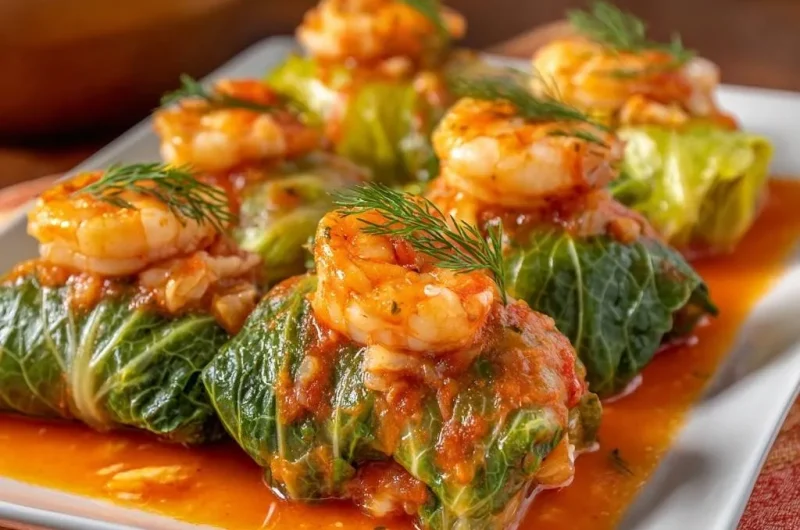
Shrimp Cabbage Rolls
Course: Main CourseCuisine: AmericanDifficulty: medium12
rolls (serves 4-6)30
minutes40
minutes250
kcal70
MinutesStruggling with cabbage leaves that rip every time you roll? This dead-simple freeze-thaw trick softens them perfectly pliable without boiling mess or tears, locking in flawless rolls packed with juicy shrimp and bright dill-tomato sauce.
Ingredients
1 large head green cabbage
1 pound large shrimp, peeled and deveined, tails removed
1 (28-ounce) can crushed tomatoes
1/4 cup chopped onion
2 cloves garlic, minced
1/4 cup fresh dill, chopped, plus extra sprigs for garnish
2 tablespoons olive oil
1 teaspoon salt
1/2 teaspoon black pepper
1 teaspoon paprika
Directions
- Start the no-torn-leaves solution: Core the cabbage by cutting out the thick center stem with a knife. Place the whole head in a zip-top bag and freeze overnight. The next day, thaw in the fridge for 2 hours or under cold running water until leaves loosen (about 30 minutes). Gently peel off 12 large outer leaves, one by one, patting dry. Each leaf will be perfectly soft, flexible, and tear-proof from the ice crystal expansion that separates layers naturally, no boiling required. Trim thick veins for even rolling.
- Preheat oven to 375 degrees F. Heat olive oil in a skillet over medium heat. Add onion and garlic, cook 3 minutes until soft. Stir in crushed tomatoes, paprika, salt, pepper, and half the chopped dill. Simmer 10 minutes for a thick sauce.
- Lay a cabbage leaf flat. Place 2 shrimp at the base, add 1 teaspoon sauce and pinch of dill. Roll tightly like a burrito, tucking sides in, and place seam-side down in a baking dish. Repeat with remaining leaves and shrimp.
- Pour remaining sauce over rolls. Cover with foil and bake 25 minutes until shrimp are pink and just cooked through. Uncover for last 5 minutes to set sauce.
- Garnish with dill sprigs. Serve hot, sauce spooned over. Enjoy tear-free perfection!
Notes
- Freezing expands ice crystals to naturally separate cabbage layers for tear-proof leaves. Use large outer leaves for best rolling.