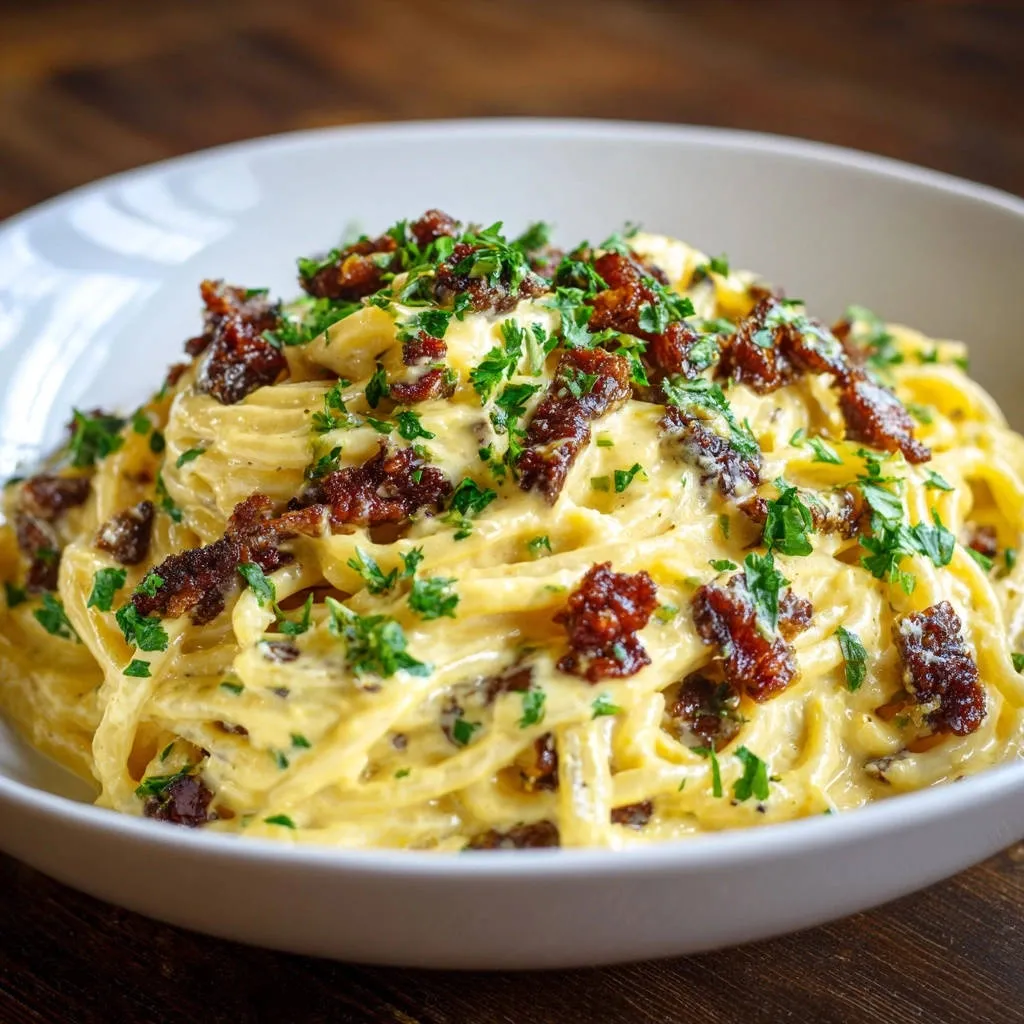
The dread of watching an egg-and-cheese pasta sauce turn into grainy, scrambled chunks used to keep me from perfecting authentic Italian dishes at home. After years of experimenting, I cracked the code: the secret to truly luxurious, Silky Creamy Spaghetti lies not in the ingredients, but in one simple, fail-safe tempering technique.
This method guarantees a rich, perfectly emulsified pasta with a beautiful glossy coating every single time, making restaurant-quality weeknight luxury attainable.
For a different fresh take on pasta, try this vibrant basil pesto spaghetti.
Say Goodbye to Scrambled Eggs: The Fail-Safe Emulsification Method
The Pitfalls of Traditional Carbonara (And How We Fix It)
The core challenge in making traditional creamy pasta sauces is managing the temperature of the egg yolks.
When egg proteins encounter high, direct heat-especially when added straight to a hot pan or steaming pasta-they coagulate instantly, leading to the undesirable chunky, scrambled texture we dread.
Our method focuses on ensuring the egg mixture reaches a high enough temperature to cook slightly and melt the cheese, but gradually enough to prevent the proteins from seizing.
The Purpose of Tempering: Stabilizing the Silky Sauce Base
Tempering is the controlled process of slowly raising the temperature of sensitive ingredients, like eggs, before introducing them to intense heat.
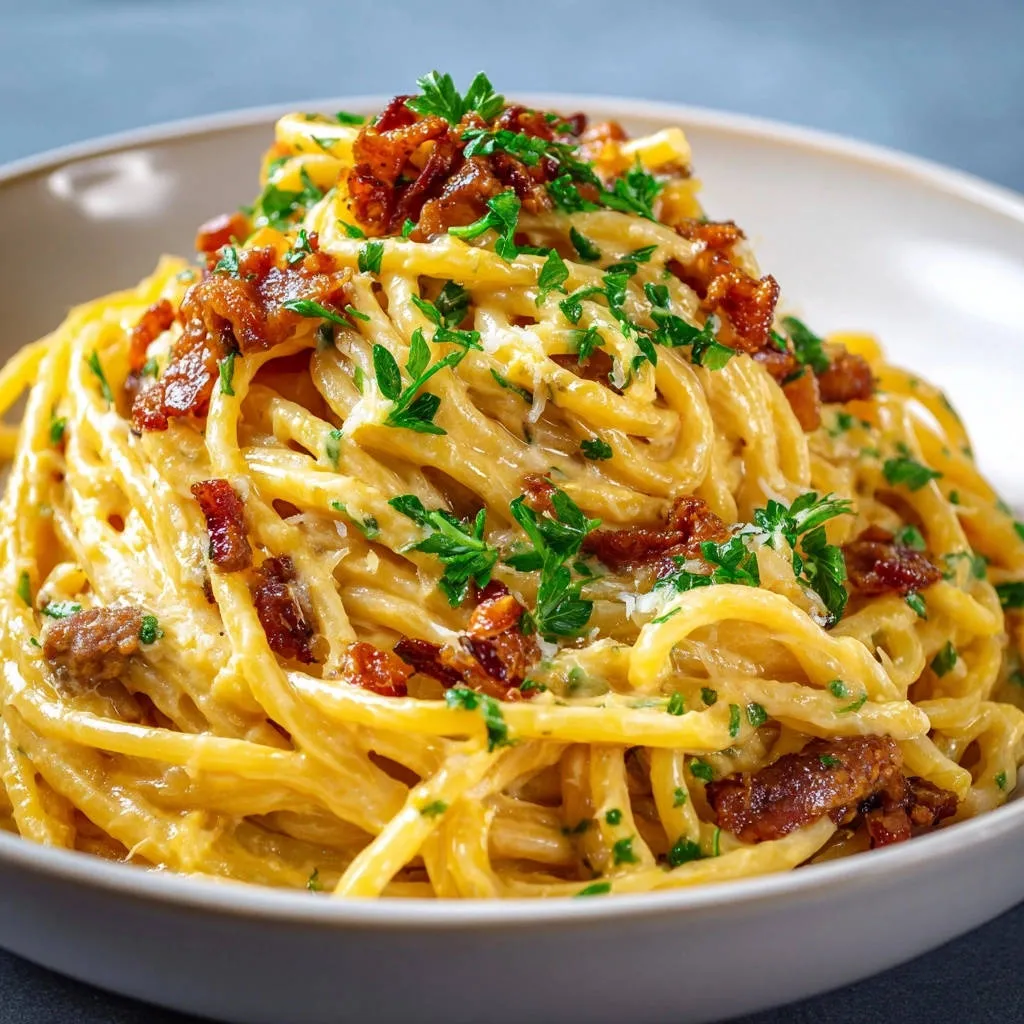
By vigorously whisking hot, starchy pasta water into the cold egg-and-cheese paste, we safely elevate the mixture’s temperature.
This critical step stabilizes the emulsion base, ensuring that when the mixture hits the hot pasta later, it transforms into a cohesive, velvety sauce rather than breaking apart.
What Exactly Is a Perfect “Silky Creamy Spaghetti” Sauce?
The ideal sauce texture should be richly cohesive, enveloping every single strand of spaghetti rather than puddling at the bottom of the bowl.
A perfect sauce is glossy, often described as luminous, indicating a successful emulsification of fat, water, and proteins.
It should never be gummy from too much starch or thin and soupy from too much liquid; it achieves a luxurious, clingy creamy coating.
The Building Blocks: Essential Ingredients for Ultimate Richness
Choosing Your Cheeses: The Role of Pecorino Romano and Parmesan
The combination of these two aged, hard Italian cheeses is non-negotiable for achieving profound depth of flavor.
Pecorino Romano, made from sheep’s milk, delivers a sharp, tangy flavor profile and a necessary salinity to cut through the richness of the egg yolks and fat.
Parmesan (Parmigiano-Reggiano) offers nutty, more subtle savory notes and helps create a smoother melt thanks to its lower moisture content compared to many other cheeses.
The Importance of Bacon Fat (Guanicale Substitute)
While traditional recipes call for beef bacon (cured lamb jowl), diced beef or turkey bacon serves as an excellent, readily available substitute to achieve the necessary fat structure.
The rendered fat is essential because it acts as the primary emulsifying agent, binding the egg and starchy water into a stable, rich sauce.
We purposefully leave two tablespoons of this reserved rendered fat in the large skillet, as this is where the spaghetti receives its initial coating and temperature boost.
Pasta Choice and Prep: Why Very Al Dente Matters
Spaghetti or linguine are classic shapes, but the preparation is key: they must be cooked until “very al dente,” about one minute shy of the package instructions.
This slight undercooking prevents the pasta from turning mushy when it is rapidly tossed in the hot skillet later in the process.
Crucially, cooking the pasta until very al dente maximizes the release of starch into the cooking water, making that reserved liquid thicker and far more effective for stabilizing the emulsion.
Mastering the Method: A Step-by-Step Guide to Silky Creamy Spaghetti
-
Phase 1: Achieving Ultimate Crispy Bacon
In the large skillet, slowly render the diced bacon over medium heat until the pieces are deeply brown and fully crisp.
Removing the crispy pieces immediately using a slotted spoon and setting them aside ensures they remain crunchy and prevents them from softening later in the sauce.
Once the bacon is removed, ensure you turn the heat completely OFF under the skillet; residual heat will be sufficient for the subsequent steps.
-
Cook and Reserve the Starchy Water
Cook the pasta in well-salted boiling water until very al dente, ensuring it maintains a firm bite.
Just before draining, reserve a generous 1 1/2 cups of the starchy cooking water-this is liquid gold for your sauce’s texture.
The water must remain hot for the tempering step to be successful, so keep it close by.
-
Phase 2: Creating the Thick Emulsion Paste
In a separate medium bowl, whisk together the egg yolks, finely grated Parmesan, Pecorino Romano, and cracked black pepper.
Continue whisking until this mixture forms a thick, pale yellow, uniform paste-it should look almost like thick dough before the tempering liquid is introduced.
-
The Critical Tempering Step (Off the Heat!)
This is the fail-safe secret: Add only 1/2 cup of the hot reserved pasta water to the egg/cheese paste, pouring it in slowly and whisking vigorously without interruption.
The goal is to transition the thick paste into a thin, smooth liquid consistency, guaranteeing the eggs are tempered and ready to bind seamlessly.
-
Phase 3: Combining the Pasta and Fat
Immediately transfer the piping hot, drained spaghetti directly into the large skillet that contains the reserved two tablespoons of rendered fat.
Toss the noodles rapidly for about 30 seconds to fully coat them in the fat, which adds flavor and keeps the surface temperature high for the imminent emulsification.
-
Creating the Silky Sauce: Continuous Vigorous Tossing
While still tossing the pasta in the skillet (which remains completely off the heat source), pour the tempered egg and cheese mixture over the noodles.
Toss continuously and vigorously for 1 to 2 minutes; the residual heat from the pasta and the fat melts the cheese and transforms the liquid into a perfect, glossy coating.
If the sauce looks too thick or dry, add a small splash of the remaining reserved pasta water, one tablespoon at a time, until the spaghetti is beautifully coated with a silky consistency.
-
Finishing Touches and Immediate Serving
Taste the dish and adjust the seasoning with salt if necessary (remembering the cheeses are already salty).
Divide the pasta immediately into warm serving bowls, as the sauce will quickly seize and thicken as it cools.
Garnish each portion generously with the reserved crispy bacon pieces and fresh chopped parsley.
Chef’s Secrets: Elevating Texture and Fixing Common Issues
Temperature Control is Everything: If your skillet is too hot, even after tempering, the sauce will break. Always remove the skillet from the burner completely before adding the egg mixture and keep it off the heat during the entire toss.
The Magic of Microplaning: For the smoothest sauce, ensure your Pecorino and Parmesan are grated extremely finely, ideally using a Microplane or the smallest holes on a box grater.
Larger chunks of cheese take longer to melt and dissolve into the sauce, which often leads to an unpleasant grainy texture.
Addressing a Dry Sauce: If your sauce becomes too thick, dry, or sticky mid-toss, use the reserved pasta water sparingly to loosen it.
Add only one tablespoon at a time, toss rapidly for 10 seconds, and repeat until the desired silky consistency is reached-never pour in large quantities.
The Power of Fresh Cracked Pepper: While pre-ground pepper works, freshly cracked black pepper is integral to the authentic flavor profile of this type of creamy pasta dish.
Use a mortar and pestle or a high-quality pepper mill to coarsely crack the peppercorns right before using them for maximum aroma and bite.
Beyond the Classic: Variations and Serving Suggestions
Creative Topping Swaps for the Silky Creamy Spaghetti
While the smoked bacon is traditional for providing essential fat and salty flavor, you can swap it out based on preference or availability.
High-quality crispy bresaola provides a similar savory note, or you can use beef bacon, cut into small cubes and rendered slowly.
For a richer, earthier flavor, try topping the dish with small, toasted wild mushrooms sautéed in olive oil, providing a deep umami contrast to the sharp cheese.
Making it Vegetarian: Cheese and Oil Emulsification
It is absolutely possible to achieve a rich, creamy coating without any meat fat by relying entirely on high-quality oil and the starches.
Instead of rendering bacon, heat 3-4 tablespoons of robust extra virgin olive oil or unsalted butter in the skillet, ensuring the pan is immediately removed from the heat.
The oil/butter will combine with the egg, cheese, and starchy water to form a stable, velvety vegetarian version of this emulsified pasta.
What to Serve Alongside This Rich Dish
Because the Silky Creamy Spaghetti is incredibly rich and flavor-forward, choose light, acidic, or fresh sides for balance.
A simple arugula salad dressed lightly with lemon juice and olive oil provides the perfect peppery, acidic counterpoint.
Roasted asparagus or blanched green beans, finished with a dash of salt and fresh garlic, offer a vibrant green contrast without competing with the pasta’s complexity.
Frequently Asked Questions About Silky Creamy Spaghetti
Can I make this Silky Creamy Spaghetti ahead of time?
Unfortunately, no, this is not a make-ahead dish. The nature of an egg and cheese emulsified sauce means it must be created and served immediately while the pasta is still very hot.
As the pasta cools, the cheese and egg proteins seize and solidify, resulting in a thick, sticky mass that cannot be properly reheated.
However, you can prep the ingredients ahead: grate the cheeses, dice the bacon, and separate the egg yolks to save time before the final cooking rush.
What if my sauce is still too grainy?
Graininess usually indicates one of two issues: either your cheese was not grated finely enough, or the skillet you added the sauce to was still too hot, causing the cheese to melt unevenly.
To try and rescue a grainy sauce, immediately remove the pasta from the skillet and place it in a cold bowl.
Add a tiny splash of hot reserved liquid and toss vigorously off-heat; sometimes, the added moisture and movement can help fully dissolve the remaining cheese particles.
Can I use whole eggs instead of just egg yolks?
While you could substitute whole eggs, using only egg yolks is highly recommended for achieving the perfect glossy emulsion.
Yolks contain a high concentration of fat and lecithin, which are essential binding agents for the sauce.
Whole eggs introduce extra protein (from the whites) and water, significantly increasing the chance of the mixture scrambling or becoming unstable when heated.
Ready to Ditch the Scramble? Enjoy Your Perfect Plate!
Mastering this single tempering technique is the key that unlocks a lifetime of successful, restaurant-quality creamy pasta dishes at home.
You now possess the expert knowledge needed to confidently bypass the pitfalls of traditional methods and reliably create that perfect glossy, silky coating.
Try this method tonight and experience the true joy of rich, flawlessly emulsified pasta. We invite you to share your success and let us know how your perfect plate of Silky Creamy Spaghetti turned out!
Spaghetti
Course: Main CourseCuisine: ItalianDifficulty: easy4
servings10
minutes15
minutes550
kcal25
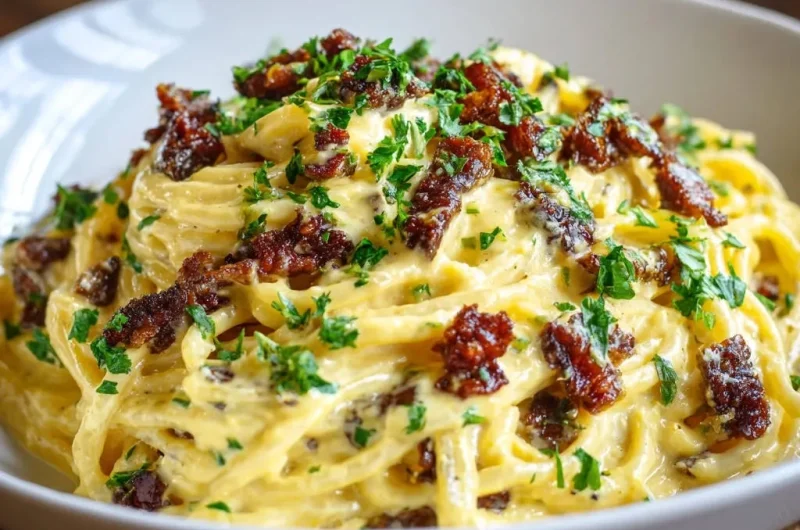
minutesThis recipe solves the age-old problem of scrambled eggs in pasta sauce. By mastering a simple temperature trick—tempering the egg and cheese mixture off the heat—you achieve a rich, glossy, and perfectly smooth coating for your spaghetti. It’s the easiest path to restaurant-quality results for a quick weeknight meal.
Ingredients
12 ounces spaghetti or linguine
2 whole large egg yolks
3/4 cup finely grated Parmesan cheese, plus more for garnish
1/2 cup finely grated Pecorino Romano cheese
4 ounces smoked turkey bacon or beef bacon, diced small (or similar crispy topping)
1 teaspoon fresh cracked black pepper
Salt, to taste
2 tablespoons chopped fresh parsley, for garnish
Directions
- Prepare the Crispy Topping: In a large skillet (large enough to hold all the pasta later), render the diced smoked turkey or beef bacon over medium heat until deeply crisp and brown. Remove the crispy pieces using a slotted spoon and set aside on a paper towel. Leave 2 tablespoons of the rendered fat in the skillet. Turn off the heat under the skillet completely.
- Cook the Pasta: Bring a large pot of salted water to a boil. Cook the spaghetti according to package directions until very al dente (about 1 minute less than directed). Just before draining, reserve 1 1/2 cups of the starchy pasta cooking water.
- Prepare the Emulsion Base: In a medium bowl, whisk together the egg yolks, grated Parmesan, grated Pecorino Romano, and cracked black pepper until a thick, pale yellow paste forms. This paste is what needs to be tempered.
- The Fail-Safe Emulsification (The Solution): Crucially, the skillet must be off the heat for this step. Add 1/2 cup of the hot reserved pasta water into the egg/cheese paste slowly, whisking vigorously the entire time until the mixture is thin and smooth. This step tempers the eggs, raising their temperature safely without cooking them, preparing them for the pasta.
- Combine and Toss: Transfer the very hot, drained spaghetti directly into the large skillet containing the 2 tablespoons of reserved rendered fat. Toss rapidly for 30 seconds to coat the noodles.
- Create the Silky Sauce: While still tossing the pasta in the skillet (which is still off the heat), pour the tempered egg and cheese mixture over the pasta. Toss continuously and vigorously for 1 to 2 minutes. The residual heat of the pasta and the fat will melt the cheese and thicken the sauce into a rich, glossy coating. If the sauce looks too thick or dry, add a splash of the remaining reserved pasta water, one tablespoon at a time, until the sauce is perfectly creamy and coats every strand.
- Finish and Serve: Taste and adjust seasoning if needed. Divide the pasta immediately into warm serving bowls. Garnish each serving with the reserved crispy bacon pieces and a generous sprinkle of fresh chopped parsley. Serve immediately.
Notes
- The skillet must be completely off the heat before adding the emulsified egg and cheese base to ensure a silky, unscrambled sauce.