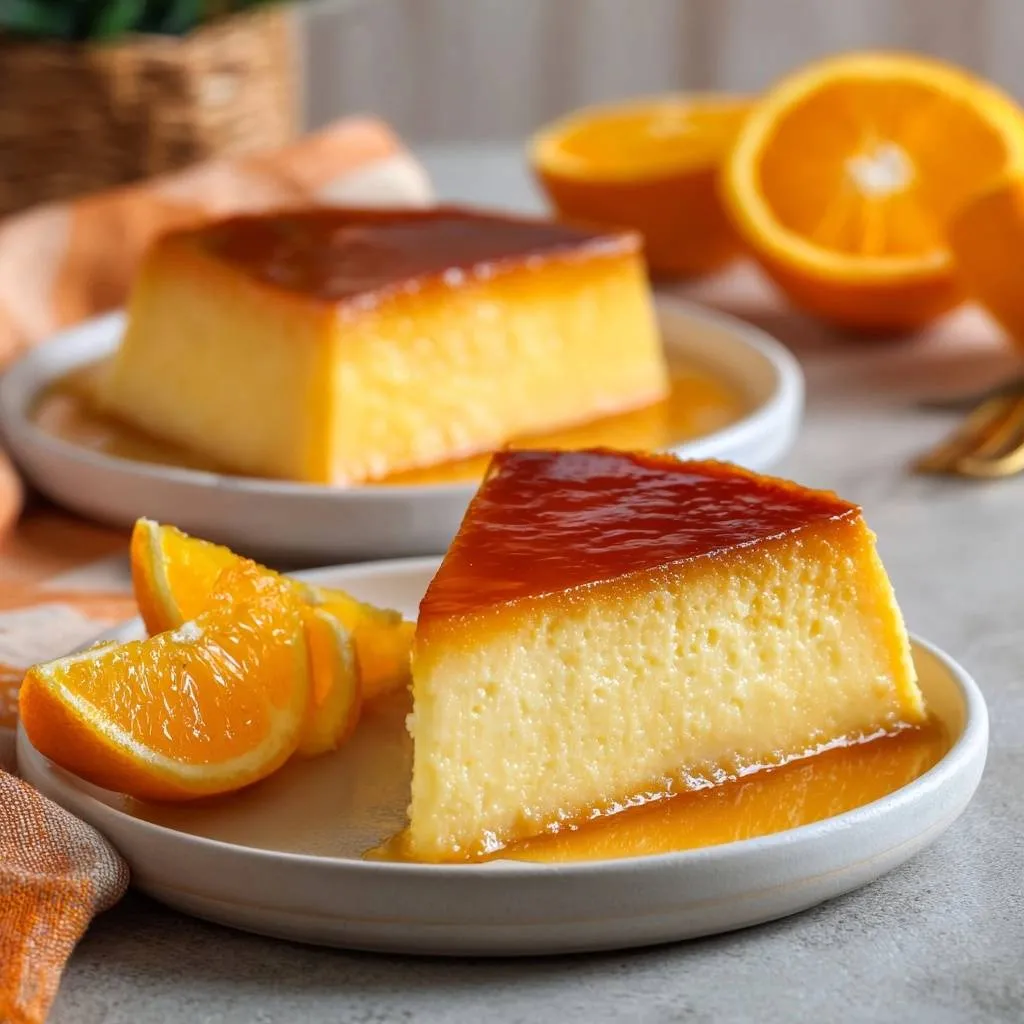
Ever unmolded a flan only to watch it crack and cling desperately to the ramekin? That heartbreak ends here. This silky orange flan slides out flawlessly every time, thanks to a hot water dip and thick caramel coating. You’ll get that perfect wobble with bright citrus sunshine bursting in every creamy bite.
For a similar experience without the cracks, explore this passion fruit flan.
So why does this recipe deliver where others fail? It nails the caramel’s supersaturation for a sturdy base and uses precise custard ratios for silkiness. In addition, the orange zest and juice add vibrant aroma without overpowering the tender set.
Here’s the expertise kicker: strain the custard through a fine mesh sieve after tempering. This removes any egg bits or zest fibers, ensuring ultra-smooth texture. No more grainy disappointments.
Core Elements for Silky Orange Flan
Whole milk forms the custard’s rich backbone because its higher fat content emulsifies beautifully with eggs. Therefore, it creates that luxurious mouthfeel you crave. Skip skim milk; it leads to watery results.
Orange zest packs intense essential oils for aroma, while fresh juice balances sweetness with gentle acidity. Use granulated sugar for purity; it caramelizes evenly without impurities causing crystallization. These ratios yield six perfect portions.
Caramel Coating Ingredients
Combine 3/4 cup granulated sugar with 1/4 cup water. The water ensures even dissolution, preventing crystal formation. Cook to deep amber for a thick, glossy layer that grips sides yet releases cleanly.
Custard Base Components
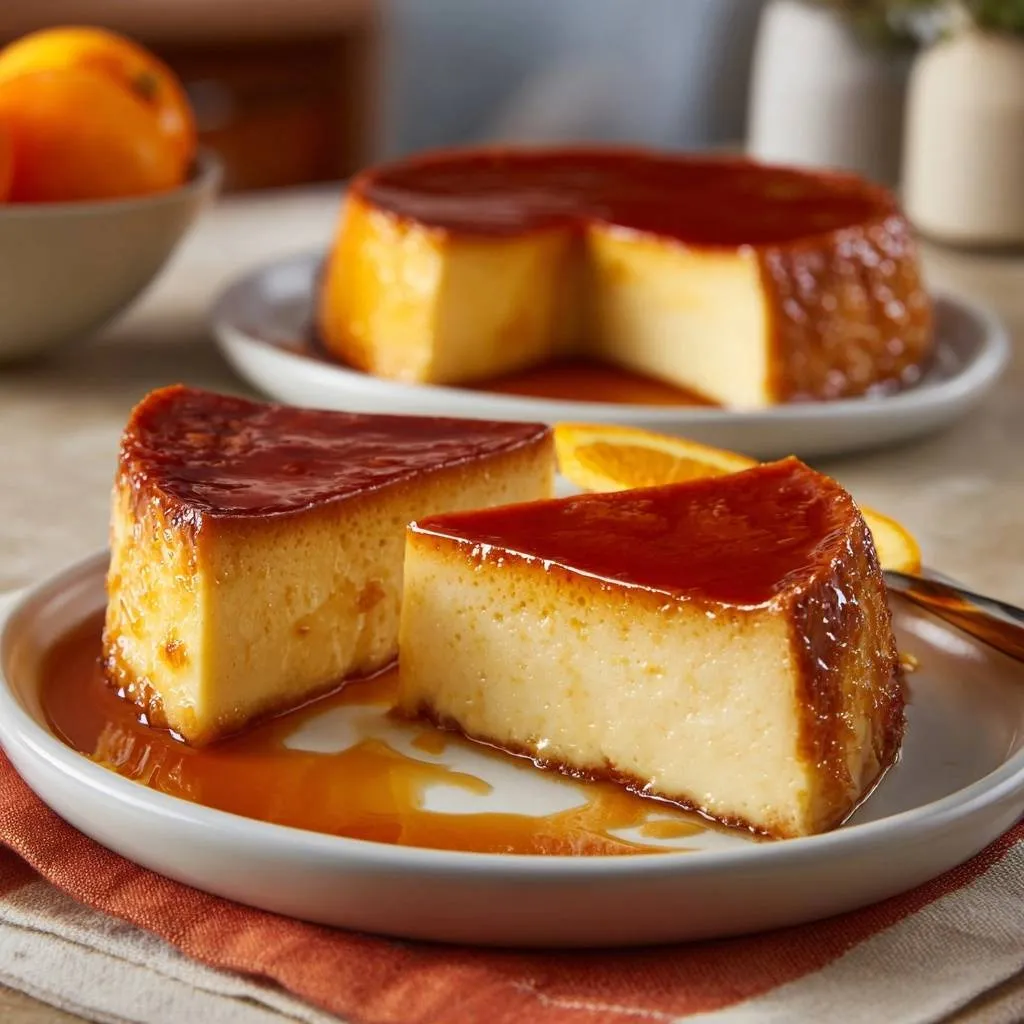
Whip up 2 cups whole milk, 4 large eggs, 1/2 cup sugar, zest of 2 oranges, 1/4 cup fresh orange juice, and 1 teaspoon vanilla. Eggs provide proteins for setting, while zest’s oils shine brighter than extract. Strain everything for lump-free silkiness.
Science of Caramel and Custard Setting
Caramelization kicks off at 320°F via the Maillard reaction, turning sugar into deep amber without bitterness. However, stop at 356°F to avoid burning. This method creates a supersaturated coating that bonds yet melts on cue.
Custard sets as egg proteins coagulate between 160-180°F in the gentle bain-marie. The slight jiggle signals perfect doneness; centers firm up during cooling. Orange acids stabilize the mix, preventing curds.
Caramelization Stages Explained
Start with bubbling dissolution, then clear syrup, light amber, and finally deep color in about 8 minutes. Avoid stirring afterward; it invites graininess. Pour hot for side adhesion that holds firm until unmolding.
Custard Protein Dynamics
Egg lecithin binds milk fats into emulsion, while low pH from juice cuts curdling risk. Straining ditches chalazae and bits for pure silk. Therefore, your flan jiggles like a dream.
Equipment Choices for Flawless Silky Orange Flan
Opt for six 6-ounce ramekins; they promote even heat and portion control. Metal conducts faster than ceramic, but glass works if preheated. A large baking dish holds the water bath steadily.
Fine mesh sieve catches imperfections, and a pitcher with spout fills precisely. Plus, keep hot tap water ready for the dip. Each tool boosts release success.
Ramekin and Baking Dish Setup
Preheat oven to 350°F and place ramekins in the dish first. Fill water halfway up sides for diffused steam heat. This prevents thermal shock and uneven baking.
Sieving and Pouring Tools
Choose a sieve with tight mesh to retain zest flavor minus fibers. Pitcher’s spout avoids spills. These ensure smooth, even pours every time.
Phased Method for Silky Orange Flan
Follow these phases for guaranteed success. Timings and cues make it foolproof. You’ll smell the citrus magic building.
Phase 1: Caramel Coating Creation
Over medium heat, stir sugar and water until dissolved, then simmer undisturbed 8 minutes to deep amber. Quickly pour 2 tablespoons per ramekin, tilting to coat sides thickly. Let harden 5 minutes; this barrier stops all sticking.
Phase 2: Custard Mixture and Strain
Warm milk until steaming. Whisk eggs, sugar, zest, juice, and vanilla, then slowly temper in milk. Strain into a pitcher and fill ramekins just below caramel lines. Smooth tops gently.
Phase 3: Water Bath Baking
Add hot water halfway up ramekins. Bake at 350°F for 40-45 minutes; edges set but centers jiggle like Jell-O. Cool in bath 30 minutes to avoid cracks.
Phase 4: Chilling and Unmolding
Chill covered 4 hours or overnight. Run a thin knife around edges, dip bottom in hot water 15-20 seconds to loosen caramel. Invert onto plate; lift ramekin for perfect slide. Garnish with orange slices.
For more tips on ensuring a perfect release, check out this foolproof release technique.
Avoiding Stuck Flan Pitfalls
Thin caramel dooms flan to sticking, so coat generously. Overbaking toughens edges; stick to the jiggle test. Always strain to nix lumps that ruin texture.
Water bath ensures even cooking, dodging rubbery spots. Cold unmolding fails; the hot dip melts bonds precisely without warming custard.
Caramel Sticking Fixes
Dip exactly 15-20 seconds; longer heats the flan. Use a sharp knife at a 45-degree angle. Thick coating plus this combo guarantees release.
Baking Doneness Checks
Jiggle centers lightly; they should quiver but not slosh. Poke test works too: slight spring-back means done. Overbake shows puffed, cracked tops.
Custard Texture Troubles
Graininess comes from unstrained bits or cold milk shocking eggs. Temper slowly and sieve always. Proper temps yield velvet smoothness.
Flavor Twists on Silky Orange Flan
Swap orange zest for lemon or lime for tart twists. Add a pinch of cardamom to custard for warmth. These keep the silky release intact.
Scale by halving for two; double needs larger dish and 5 extra bake minutes. Pro tip: taste zest level before mixing.
Citrus and Spice Adjustments
Try zest of 1 orange plus 1 lemon for balance. Boost vanilla to 1.5 teaspoons if skipping spice. Fresh always trumps bottled.
Scaling and Dietary Swaps
Double recipe fills 12 ramekins; watch water levels. For plant-based, use full-fat coconut milk and aquafaba for eggs, but test set time.
Pairing Sides with Silky Orange Flan
Fresh berries cut through richness with juicy pop. Shortbread crumbles add welcome crunch. Textures make each bite exciting.
Sweet Companions to Your Flan
Round out your dessert experience with these delightful baked treats.
- For a warm, spiced breakfast or brunch option, consider these glazed pecan cinnamon rolls, offering a different texture of sweet indulgence.
- If you’re craving something chocolatey and fun, try these chocolate sprinkle donuts for a bakery-style treat.
Mint leaves brighten the citrus. Simple contrasts elevate this dessert.
Fruit and Crunch Companions
Macerate berries in a bit of sugar for syrupy match. Nut-free biscotti shards provide buttery bite without nuts.
Beverage Matches
Herbal tea tempers creaminess. Sparkling water refreshes the palate. Both highlight orange vibrancy.
Storage Guide for Silky Orange Flan
Store covered in fridge up to 5 days; flavors deepen overnight. Freezing works in ramekins; thaw slowly in fridge and redip for reflow.
Make ahead for events; chill fully first. Stacking ramekins saves space.
Fridge and Freeze Methods
Wrap individually in plastic, then foil. Thaw 8 hours, dip to loosen. Caramel stays glossy.
Batch Prep Strategies
Bake day before; unmold same day. Stack loosely in fridge. Perfect for parties.
Silky Orange Flan Queries
Why Dip in Hot Water?
The brief 15-20 second dip melts the caramel bond at the base without heating the chilled custard. It ensures clean release every time, unlike dry unmolding that cracks flan.
Large Mold Adaptation?
Yes, use a 9-inch round pan; bake 50-60 minutes at 350°F, checking jiggle. Water bath still halfway up sides for even set.
Milk and Egg Substitutes?
Whole milk’s fat is key; low-fat works but firms less silkily. Sub 2 tbsp aquafaba per egg for vegan, but increase bake by 5 minutes.
Weeping or Cracking Causes?
Weeping from temp shocks; cool fully in bath first. Cracks from overbaking or rough handling. Jiggle test and gentle unmold fix it.
Scaling for Smaller Batches?
Halve everything for 3 ramekins; caramel 6 tbsp total, custard 1 cup milk. Bake 35-40 minutes. Same methods apply perfectly.
Can I Skip the Straining Step?
No, straining removes egg strands and zest bits for true silkiness. Skip it, and you’ll get a grainy texture that detracts from the creamy vibe.
Why Whole Milk Over Others?
Its 3.5% fat emulsifies with eggs for superior creaminess and stable set. Alternatives like almond milk separate or weep due to lower fat and proteins.
Orange Flan
Course: DessertCuisine: AmericanDifficulty: medium6
servings20
minutes45
minutes240
kcal300
MinutesSick of flan that clings to the mold and shatters on the plate? This recipe nails the foolproof release with a hot water dip and generous caramel coating that melts just right for perfect slides out every time.
Ingredients
Caramel:
3/4 cup granulated sugar
1/4 cup water
Custard:
2 cups whole milk
4 large eggs
1/2 cup granulated sugar
Zest of 2 oranges
1/4 cup fresh orange juice
1 teaspoon vanilla extract
Directions
- Preheat oven to 350 degrees F. Place six 6-ounce ramekins in a large baking dish.
- Make caramel: In a saucepan over medium heat, combine sugar and water. Stir until sugar dissolves, then cook without stirring until deep amber, about 8 minutes. Immediately pour 2 tablespoons into each ramekin, tilting quickly to coat bottoms and sides generously. This thick layer is key to preventing sticking. Let harden 5 minutes.
- Make custard: Warm milk in a saucepan until steaming. Whisk eggs, sugar, orange zest, juice, and vanilla in a bowl. Slowly whisk in warm milk. Strain through a fine mesh sieve into a pitcher for smoothness.
- Pour custard evenly into ramekins, filling to just below caramel-coated sides. Pour hot water into baking dish to reach halfway up ramekins.
- Bake 40 to 45 minutes until edges are set but centers jiggle slightly. Cool in water bath 30 minutes, then chill covered in fridge 4 hours or overnight.
- Unmold flawlessly: Run a thin knife around edges of one ramekin. Dip bottom in hot tap water 15 to 20 seconds to soften caramel bond without warming custard. Place plate over top, invert quickly, and lift ramekin. Caramel will flow perfectly, releasing flan intact. Repeat for others. Garnish with orange slices. Serve chilled.
Notes
- The thick caramel layer and hot water dip ensure flawless unmolding every time. Chill overnight for best results.