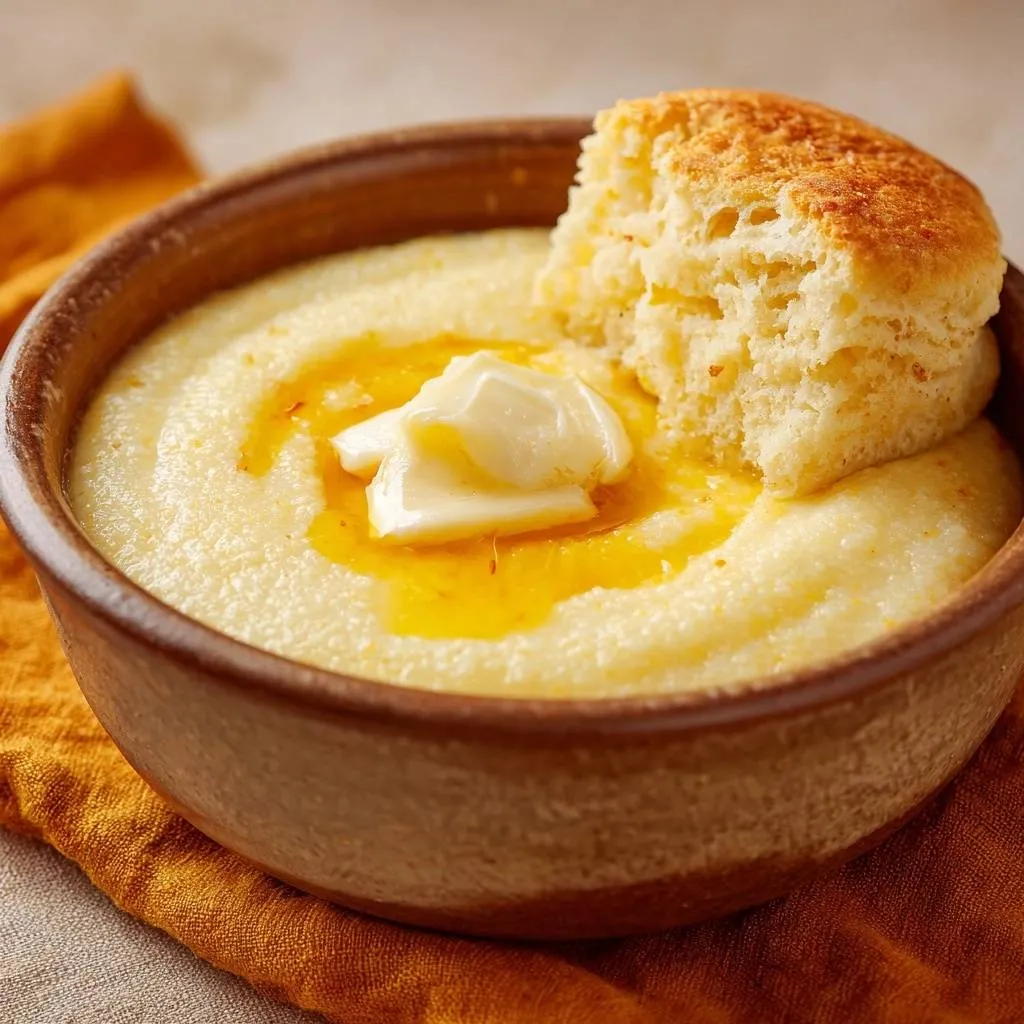
Why Silky Southern Grits Transform Breakfast
Picture this: you’ve got a pot of grits that look more like gravel than the dreamy, velvety base for your Southern breakfast. Most folks end up with lumps because they dump the grits in all at once. But these Silky Southern Grits change everything with a simple whisking trick that delivers restaurant-level smoothness in under 30 minutes.
That’s why you’ll crave them daily. They transform basic ingredients into something luxurious. In addition, they pair perfectly with a warm biscuit for that ultimate comfort hit.
Here’s the pro tip that seals it: always pour the grits into boiling liquid in a thin stream while whisking like mad. This disperses the grains evenly, preventing any clumps from forming right from the start. You’ll get lump-free Silky Southern Grits every single time.
Stone-Ground Grits and Key Ingredients Breakdown
Stone-ground grits form the heart of Silky Southern Grits. They have a coarser texture than instant varieties, which means they absorb liquid slowly for superior creaminess. However, you need the right technique to unlock that silkiness.
Whole milk brings richness thanks to its fat content, creating a lush mouthfeel. Water works for a lighter version, but milk elevates the dish. Salt enhances all the flavors without overpowering them.
Unsalted butter, divided for stirring in and topping, adds glossy perfection. Use 1 cup stone-ground grits, 4 cups whole milk, 1 teaspoon salt, and 4 tablespoons butter. Shop for fresh stone-ground grits in the grain aisle; they’re worth seeking out for Silky Southern Grits.
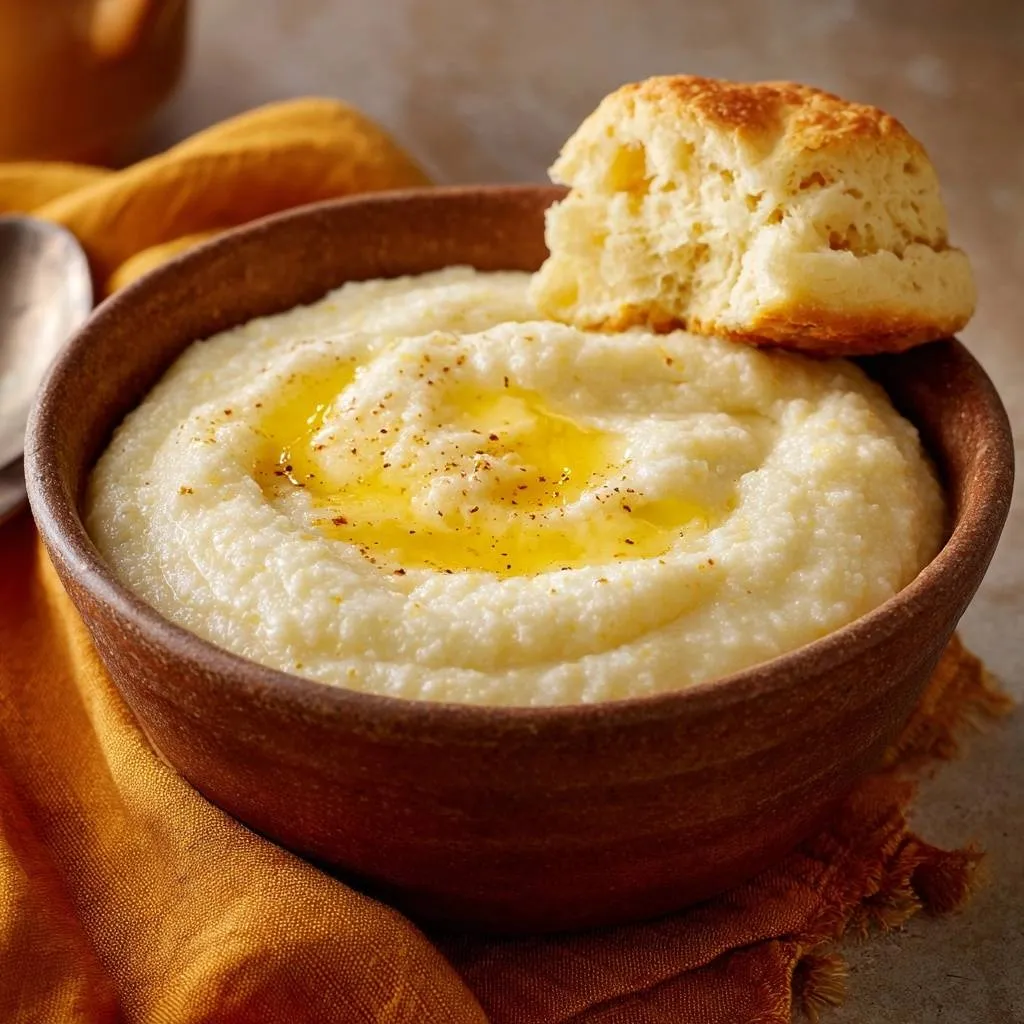
Choosing Stone-Ground Grits for Texture
Stone-ground grits come from a milling process that keeps the bran intact, giving coarser grains that hydrate evenly during slow cooking. This leads to tender, creamy results instead of mush. Store them in an airtight container in a cool spot to avoid staleness.
Whole Milk vs. Water in Silky Grits
Whole milk’s fat coats the starches for extra creaminess and a calcium boost. It boils steadily without separating. Water makes lighter Silky Grits, but skip skim milk; it fails to deliver the same body and often leads to thin results.
Science of Lump-Free Silky Southern Grits
Starch gelatinization happens when grits hit hot liquid, swelling the grains for creaminess. Whisking prevents retrogradation, where starches clump back together. Therefore, low heat after boiling avoids scorching the bottom.
Control the heat to manage viscosity; it thickens as starches release. This ties into Southern tradition of patient simmering for perfection. You’ll master lump-free Silky Southern Grits with these basics.
Common mistake? High heat throughout. Instead, drop to low right after boiling to let hydration build smoothly.
Whisking Technique Prevents Grits Clumps
Pour grits in a thin stream while whisking vigorously; the motion shears apart any potential clumps, like making pasta dough. Keep it up for 1-2 minutes until smooth. This physics ensures even dispersion in your Silky Southern Grits.
For even smoother results, check out this creamy no-lump technique.
Essential Tools for Perfect Silky Grits
A wire whisk beats a spoon hands down for Silky Southern Grits tools. It aerates and breaks up bits better. Grab a medium heavy-bottomed saucepan, about 2-3 quarts, for even heat distribution.
Skip nonstick; it hides sticking issues. An optional thermometer helps pros hit ideal simmering temps around 180°F. Budget picks include a $10 whisk and thrift-store pot.
Heavy bottoms prevent hot spots, keeping your Silky Southern Grits silky from start to finish.
Wire Whisk vs. Spoon Showdown
A whisk’s wires disperse lumps far better than a spoon’s flat surface. Spoons leave pockets of dry grits. Always whisk for smooth Silky Southern Grits.
Step-by-Step: Boiling and Whisking Silky Grits
Start by bringing milk and salt to a rolling boil over medium-high heat. Watch it closely; it rises fast. Stir occasionally to prevent a skin from forming.
Boil Milk Without Overflow Disaster
Use medium-high heat in a tall-ish pot. Stir right before it boils to break surface tension. If it bubbles up, yank it off the heat briefly.
Stream Grits While Whisking Constantly
Drop heat to low. Whisk hard while adding grits in a steady thin stream. Do this for 1-2 minutes; the mix turns smooth and fragrant fast.
Simmering Phase for Ultra-Creamy Texture
Partially cover the pot and simmer on low. Stir every 3-4 minutes with the whisk to scrape the bottom and keep it creamy. Cook 20-25 minutes until tender and thick; it should hold spoon ridges.
Add a milk splash if it thickens too much. You’ll smell sweet corn notes developing. This rhythm builds the ultra-smooth texture in Silky Southern Grits.
Pro tip: test doneness by tasting; grains should be soft, not crunchy.
Stirring Rhythm Keeps Grits Smooth
Whisk in figure-eights every 3-4 minutes to lift stuck bits without deflating the creaminess. This prevents a scorched flavor. Consistency is key here.
Finishing Silky Grits with Butter Gloss
Off heat, stir in 2 tablespoons butter until it melts into a glossy emulsion. Divide into bowls. Top each with 1/2 tablespoon butter to melt slowly, creating pools of luxury.
Serve right away with a warm biscuit for dipping. The heat makes that butter sheen irresistible. Don’t wait; it firms up quick.
Southern Origins of Silky Southern Grits Tradition
Grits trace back to Native American hominy, dried corn treated with alkali. Southerners adopted it as a staple by antebellum times. Slow cooking became the path to creaminess.
In biscuits-and-grits meals, they provide comforting heft. Regional twists exist, like cheesier versions up north. Still, plain Silky Southern Grits shine in their simplicity.
Round Out Your Meal
To create a complete and satisfying meal alongside your silky Southern grits, consider these complementary dishes.
- For a seafood option that echoes the creamy texture, try Blackened Salmon with Creamy Thyme Sauce, pairing well with the richness of grits.
- If you prefer poultry, the Skillet Lemon Caper Chicken offers a bright, zesty counterpoint that complements the comforting grits beautifully.
Today, they anchor brunches everywhere. Their evolution celebrates patient, flavorful home cooking.
Avoiding Pitfalls in Silky Southern Grits
Lumps form from poor pouring or no whisking. Too thick? Add milk gradually. Gritty texture means undercooked grains or instant types; stick to stone-ground.
High heat scorches the milk proteins, turning it bitter. Prevention starts with low simmer after boil. Always taste and adjust salt at the end.
Fixing Lumps After They Form
Grab an immersion blender for a quick pulse, or strain through a fine mesh. Whisk in hot milk to loosen. It salvages most batches into smooth Silky Southern Grits.
Texture Troubleshooting Guide
Grainy? Cook longer on low. Gluey from over-stirring? Next time, ease up after incorporation. Balance fixes watery or stiff results perfectly.
Flavor Twists on Silky Southern Grits
Stir in shredded cheddar at the end for cheesy Silky Southern Grits. Top with sautéed shrimp for a Lowcountry vibe. Veggie lovers, add chopped greens during simmer.
For a truly satisfying meal, consider trying our creamy shrimp and grits next.
Keep portions the same; these build on the creamy base. Each twist keeps the lump-free magic intact. Experiment confidently.
Ideal Pairings for Silky Southern Grits
A warm biscuit is non-negotiable; its flaky layers dunk perfectly into the creaminess. Fried eggs add runny yolk contrast. Pair with plant-based sausage for balance.
Sautéed greens cut the richness. For brunch, serve family-style with these sides. Crisp elements offset the silky texture beautifully.
Make-Ahead Guide for Silky Grits
Cook ahead and fridge for 3 days in an airtight container. Reheat on stovetop with a milk splash, whisking vigorously. Freeze portions up to 1 month; thaw overnight first.
Batch for crowds by doubling ratios. Re-whisk brings back that fresh silkiness every time.
Silky Southern Grits FAQ
Can I Use Water Instead of Milk?
Yes, water makes lighter Silky Southern Grits with the same method. It boils faster but lacks milk’s fat for richness. Add extra butter to compensate; results stay smooth and tasty.
How to Reheat Leftover Silky Grits?
Stovetop is best: add a splash of milk, heat on low while whisking until creamy, about 5 minutes. Microwave in short bursts with stirring works too. Avoid drying out by covering loosely.
Best Grits for Ultra-Smooth Results?
Stone-ground grits win for their coarse texture that creams up perfectly after slow cooking. Avoid instant; they turn gummy. Look for fresh-milled bags from Southern mills for top silkiness.
Vegan Swaps for Silky Southern Grits?
Use full-fat plant milk like oat or coconut, and swap butter for plant-based oil or margarine. Whisk the same way; it emulsifies beautifully. Salt stays the same for authentic flavor.
Scaling Recipe for Larger Batches?
Double everything for 4 servings: 2 cups grits, 8 cups milk, 2 tsp salt, 8 tbsp butter. Use a larger pot and whisk steadily. Cook time stays 20-25 minutes; stir more frequently.
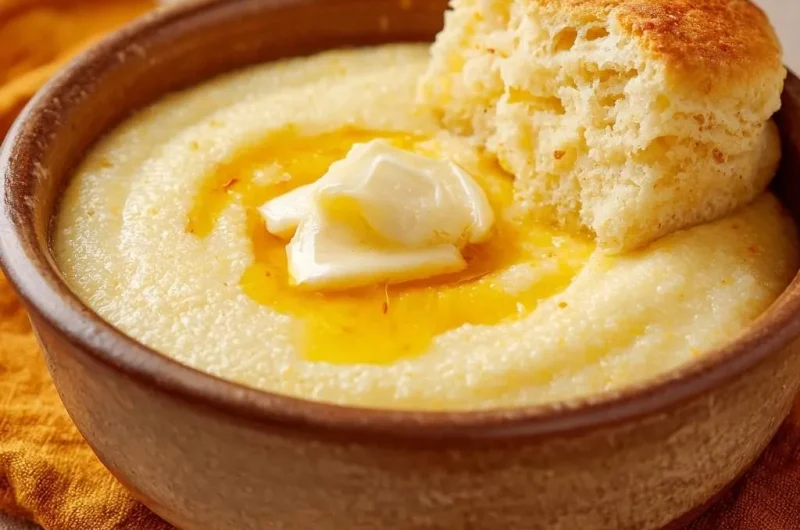
Grits
Course: Side DishCuisine: AmericanDifficulty: easy4
servings5
minutes25
minutes550
kcal30
MinutesSick of gritty, lumpy grits that never turn creamy? This foolproof whisking technique delivers restaurant-smooth results every time, topped with melting butter and perfect for dunking a warm biscuit.
Ingredients
1 cup stone-ground grits
4 cups whole milk (or water for lighter version)
1 teaspoon salt
4 tablespoons unsalted butter, divided
1 warm biscuit, for serving (store-bought or homemade drop biscuit)
Directions
- Bring the milk and salt to a rolling boil in a medium saucepan over medium-high heat. Watch closely to avoid overflow.
- Reduce heat to low. The secret to no lumps: Whisk vigorously with a wire whisk while slowly pouring in the grits in a thin, steady stream. This prevents clumps from forming by evenly dispersing the grains as they hit the hot liquid. Keep whisking for 1-2 minutes until fully incorporated and smooth.
- Cover partially and simmer on low, stirring every 3-4 minutes with the whisk to maintain creaminess and release any sticking bits. Cook 20-25 minutes until thick and tender, adding a splash of milk if needed.
- Remove from heat. Stir in 2 tablespoons butter until melted and glossy.
- Divide into bowls. Top each with 1/2 tablespoon butter to melt luxuriously. Serve immediately with a warm biscuit for dipping. Enjoy lump-free perfection!
Notes
- Use stone-ground grits for best texture. Water can substitute milk for a lighter version. Serve immediately for optimal creaminess.